Web design and development services from one accountable team, not three vendors and a handoff document.
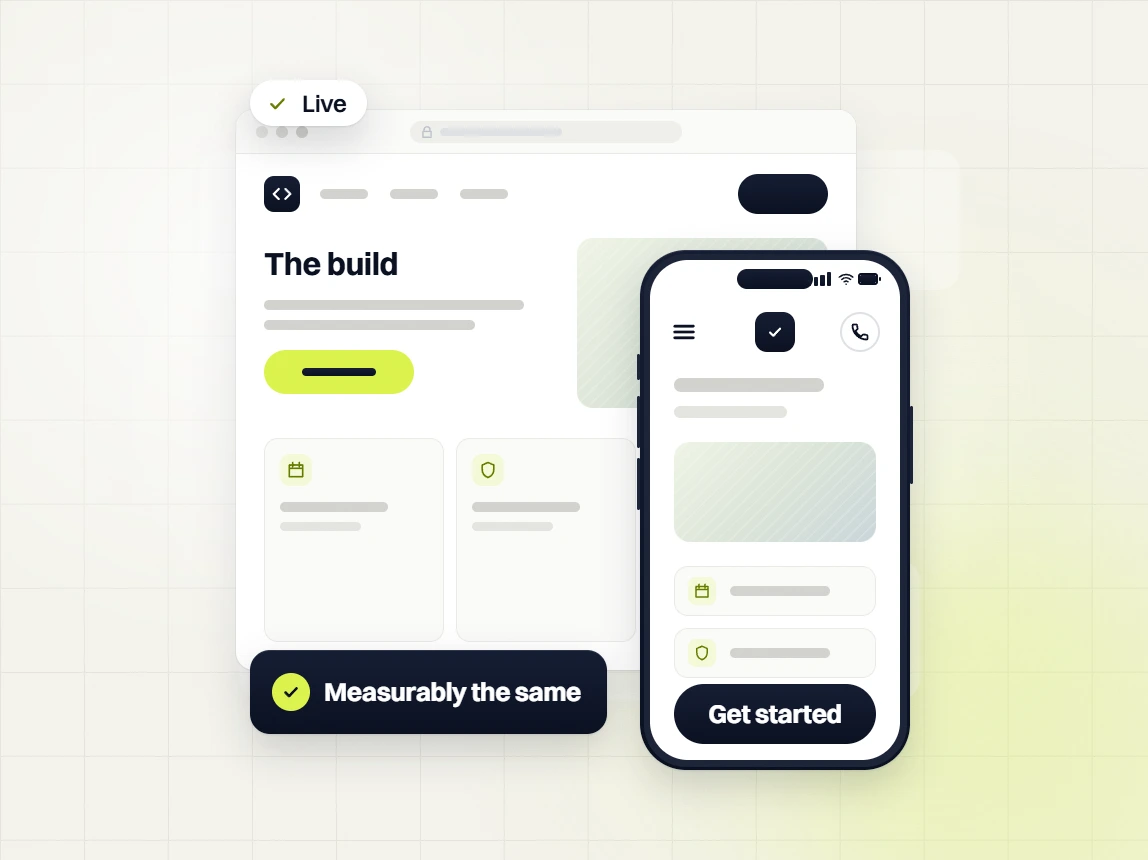
Senior designers and engineers under one contract. The designer who drew the page is in the room when the engineer builds it. The gap between Figma and production is measured in single-digit pixels, not weeks of back-and-forth. You stop paying for the handoff. The whole project ships under one accountable senior strategist.


The handoff is where projects die. We do not have a handoff.
You have probably been through this before. The designer ships beautiful Figma files. The developer says half of it cannot be built that way. The designer revises. The developer pushes back again. Three weeks of margin vanish into a Slack channel nobody owns.
That gap exists because you hired two vendors. Each one optimizes for their own contract. Neither one is accountable for the final product. The compounding cost is real, and it shows up in every project we audit.
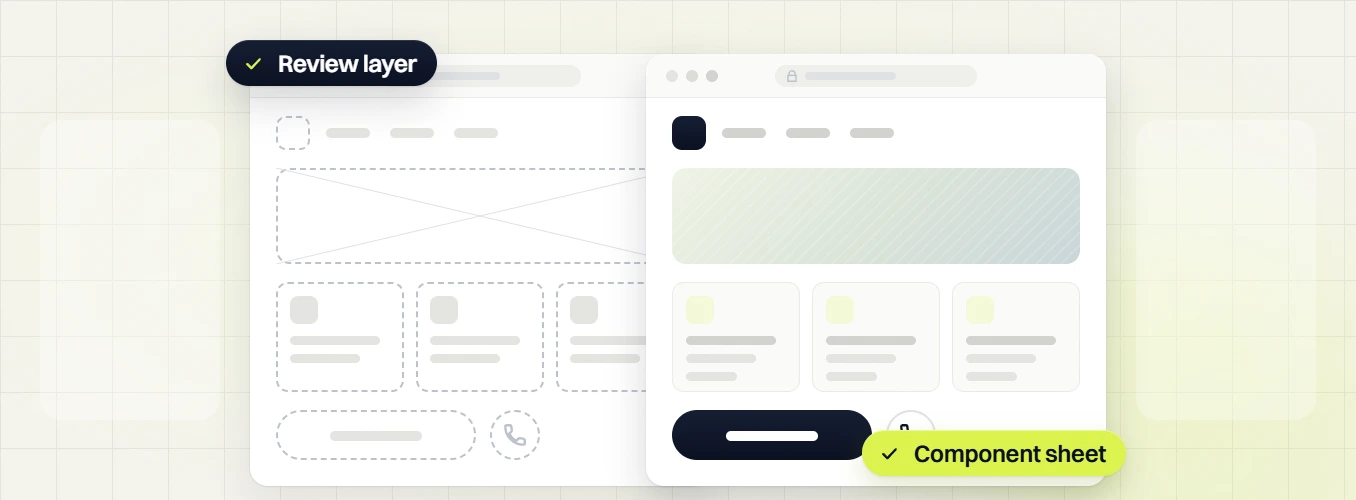
Web design and development services delivered by one team remove the gap entirely. The senior strategist owns the outcome. The designer and engineer share a daily standup. Figma files get validated against the actual codebase before sign-off, not after.
See client outcomesOne SOW, two disciplines
Design and engineering bundled. No double-billing for handoff meetings. No "that is a developer question" deflections.
Figma to production in days
Design system tokens map directly to the codebase. Components ship one to one. Iteration happens in the same week, not the same quarter.
Senior pod, no rotation
One senior strategist, one senior designer, one senior engineer. Same team kickoff through launch. No junior account managers between you and the work.
What you actually get from our web design and development services.
Fixed scope. Fixed timeline. Fixed outcomes. Each phase below has a defined deliverable, a written sign-off, and a date you can put in a calendar.
Discovery that earns the brief.
Two weeks. Stakeholder interviews, analytics review, technical audit of your current stack, competitor benchmark, sitemap workshop. The output is a written brief that your founder, your dev lead, and your marketing director can all sign off on before we move a pixel or write a line of code.
-
✓
Stakeholder interviews3 to 5 working sessions across founder, sales, marketing, and engineering leads.
-
✓
Technical auditCurrent stack, hosting, integrations, dependencies, performance baseline.
-
✓
Competitor benchmarkSide-by-side comparison of 5 direct competitors on mobile, desktop, and conversion path.
-
✓
Written brief and sitemap20 to 30 pages: ICP, message map, page architecture, conversion goals, technical scope.
Design built against the codebase, not for it.
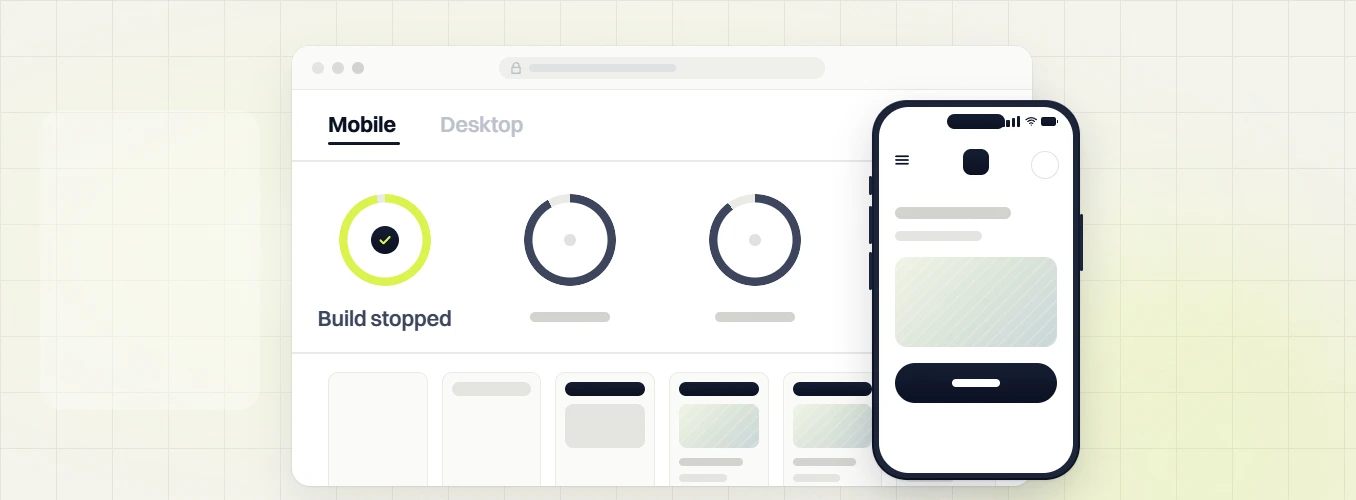
Mobile-first design system. Phone view designed first, decided first, signed off first. Every component validated by the engineer in the same week it is drawn. You get a Figma file your team owns, not a deck you cannot edit.
-
✓
Design system and tokensType scale, color, spacing, button library, form library. Fully documented and engineer-validated.
-
✓
Mobile-first page designsHome, services, product, pricing, contact, blog. Phone view first, desktop second.
-
✓
Interactive prototypesClick-through Figma prototypes tested on real devices before sign-off.
-
✓
Component handoff packageStorybook or equivalent component library shipped with the engineer.
Engineering on the stack that fits your team.
WordPress with custom blocks. Webflow if your team prefers no-code editing. Next.js for headless commerce and high-performance frontends. Sitecore or custom for enterprise. The recommendation comes from the audit, not from what we want to build this quarter.
-
✓
Production-ready buildFully responsive across phone, tablet, desktop, and large displays.
-
✓
CMS your team can editEditor experience your marketing team can actually use without a developer.
-
✓
Core Web Vitals green at launchLCP under 1.8s mobile, CLS under 0.05, INP under 200ms. Verified before launch.
-
✓
WCAG 2.1 AA accessibilityAxe automated scans, manual audit, NVDA and VoiceOver screen-reader tests.
Integrations that survive your next CRM change.
Salesforce, HubSpot, Pipedrive, Marketo, Klaviyo, ActiveCampaign. Forms, scheduling, payment, analytics, custom APIs. Built with documented abstraction layers so the next time your business swaps platforms, the swap is days not months.
-
✓
CRM integrationInquiries route in with source tagging, lead score field mapping, and custom properties.
-
✓
Marketing automation hooksForm submissions trigger workflows in HubSpot, Marketo, or Klaviyo without breaking on edge cases.
-
✓
Analytics wired correctlyGA4, Meta CAPI, LinkedIn Insight, and Microsoft Clarity configured against your conversion events.
-
✓
Schema markupOrganization, Service, FAQPage, BreadcrumbList, Article. Validated against Google structured data tool.
Launch, then 30 days of monitoring.
Cutover happens off-hours. We watch Search Console, error logs, and Core Web Vitals for 30 days. After day 30, you can take the keys and go, or move onto a maintenance retainer. Ongoing work bills separately, so the project budget is the project budget.
-
✓
Launch runbookDocumented cutover steps, rollback plan, named team responders.
-
✓
301 redirect mapEvery legacy URL mapped to its new destination before DNS flip.
-
✓
Search Console daily reviewIndex status, coverage errors, and ranking drift watched for 30 days.
-
✓
Hand-off documentationCMS guide, deployment instructions, environment access, repo access.
The 45-minute call, then a written summary, then a scoped quote.
A senior strategist runs the first call. Not an account executive. Not a sales rep. The same person who would lead your engagement if you proceed.
Talk to a senior strategist.
45 minutes. They review your current site, ask about your business goals, and walk through the three highest-leverage fixes you could ship next month even without us. You leave with three things to act on, hire us or not.
Day 1Written diagnostic in 48 hours.
The gaps we identified, a directional fee range, and a timeline. Yours to keep. We have helped teams use it to brief other agencies. We would rather you get the work done well somewhere than not at all.
Day 3Scoped SOW in 5 business days.
Fixed-price, milestoned, signed before any work starts. Change requests get scoped and quoted separately so you decide instead of discover.
Day 8Discovery starts inside 14 days.
Live work product inside week 3. First design concepts inside week 6. Production launch in week 12 to 16 depending on scope. No 60-day discovery phase that produces a PDF and nothing else.
Day 14What separates this web design and development agency from the alternatives.
Most options sit in four buckets: the freelance designer plus separate dev shop, the offshore agency, the big in-town firm, the internal team. We sit between them, with the strengths of each and the weaknesses of none.
Senior pod on every account.
One senior strategist, one senior designer, one senior engineer. The strategist on the sales call is the strategist on the project. Same team, same Slack channel, same accountability, kickoff through launch.
No junior rotationFlat-fee, design and dev bundled.
One SOW covers both disciplines. No handoff overhead. No second contract once design wraps and engineering starts. No percent-of-budget markup. The cost is the cost, written on this page.
Flat feeYou own everything at the end.
Code in your repo. Design system in your Figma. Vendor accounts in your name. No agency lock-in. No proprietary CMS. Most clients save the cost of a junior developer by year two, because their in-house team can extend the work.
Full ownershipThe clients we work with best share three things in common.
Most web design and development companies pitch every business that walks in the door. We do not. The fit profile below tells you in 60 seconds whether the call is worth booking.
Mid-market B2B and service businesses.
You have a senior internal stakeholder, usually a founder, COO, or marketing director, who has been through one bad agency engagement. Your current site is more than three years old. Phone bounce rate is above 50 percent. You want both design quality and engineering depth from the same team.
Most commonBusinesses with custom backend logic.
You need a marketing site that also handles real workflows. Pricing calculators, gated content, custom dashboards, CRM-tied scheduling, multi-step intake forms, payment integrations. A pure design agency cannot build this. A pure dev shop will not get the UX right. You need both.
Custom integrationsRegulated industry firms.
Legal, healthcare, financial advisory, manufacturing with ITAR. The site clears bar advertising rules, HIPAA, or FINRA disclosure before a single visitor sees it. Accessibility is enforceable. Compliance review is built into discovery, not bolted on at the end of QA.
HIPAA / Bar / FINRAThree things you will not see from us. No exceptions.
The fastest way to know if a web design and development agency is the right fit is to ask what they refuse to do. Most agencies dodge the question. Below is our list, in plain language, so you can hold us to it. If we ever quote you outside these rules, walk away.
The differences between agencies show up in the contract, the invoice, and the way change requests get handled six weeks into a project. The lines below are where those differences live.
No percent-of-budget pricing
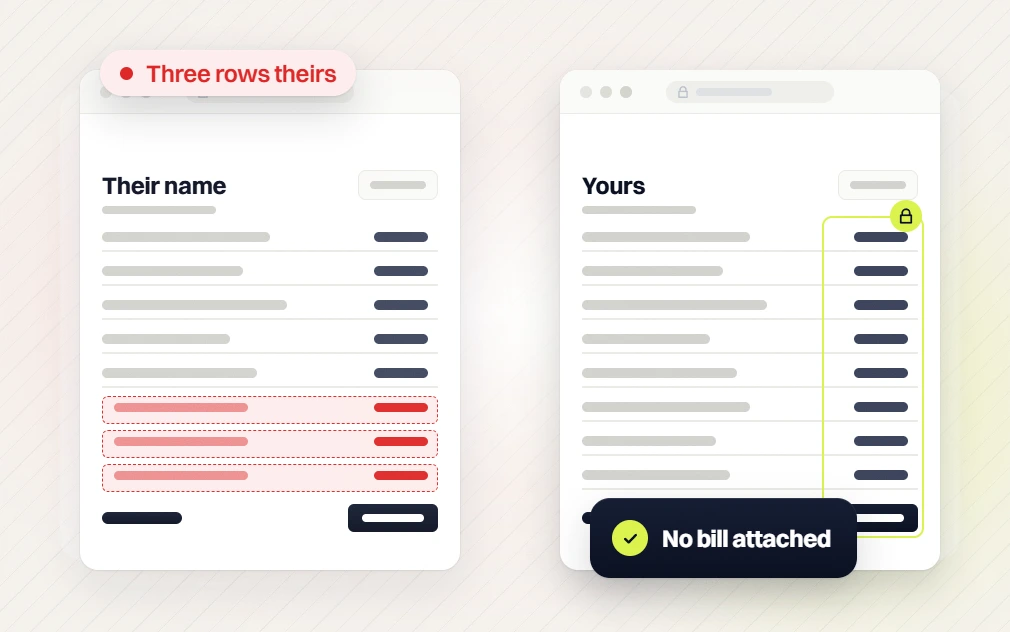
The cost is the cost. No markup that scales with your media spend. No surprise retainer auto-renews.
No offshore engineering after kickoff
Your designer and engineer are in New York. No surprise handoff to a midnight team after the SOW signs.
No proprietary CMS lock-in
We build on platforms you own. WordPress, Webflow, Next.js, Sitecore. No custom-locked admin that needs us forever.
What conversion-led design actually moves.
Frequently asked questions about our web design and development services.
If your question is not here, send it directly. We reply within one business day.
Why combine design and development under one team?
Because the handoff is where most projects lose time and quality. When the designer and engineer share a daily standup, you avoid the back-and-forth that adds three to six weeks to a typical split-vendor project. You also pay one team to own the outcome, instead of two teams blaming each other when something does not work.
What if I already have a designer or developer?
Common. We work three ways: full design and development, design only paired with your dev team, or engineering only against your existing design. Pick the slice that fits. The pricing scales linearly so you only pay for what you use.
What stack do you build on?
WordPress with custom blocks for content-heavy sites where your team needs editorial flexibility. Webflow for design-driven brands with a small content footprint. Next.js for headless commerce and high-performance frontends. Sitecore for enterprise. Shopify Plus for ecommerce. We recommend based on your stack, your team, and your editing workflow, not based on what we want to build.
Do you handle custom integrations?
Yes. CRM integrations (Salesforce, HubSpot, Pipedrive, Marketo), scheduling (Calendly, Acuity, NexHealth), payment (Stripe, Braintree, Authorize.net), analytics (GA4, Meta CAPI, Segment), and custom REST or GraphQL APIs. Every integration ships with a documented architecture diagram so your next engineer can extend it.
Do you migrate from our old site?
Yes. Content migration is in-scope on Custom Build and Enterprise tiers. We audit your existing content first. About one in three pages typically gets retired during migration because the page was not earning its keep. The rest gets cleaned up, rewritten if needed, ported, and tied into a 1 to 1 redirect map so SEO equity transfers.
What about SEO during the rebuild?
A 301 redirect plan covers every URL on the old site. Schema markup goes in by default. Internal linking gets rebuilt around the new sitemap. Most clients see a temporary organic dip in the first two weeks post-launch, then a recovery to baseline by week six, then growth above baseline by month three. We track this in Search Console and share the data weekly.
Will the build be accessible?
WCAG 2.1 AA conformance is the baseline. Color contrast, focus order, keyboard navigation, screen-reader landmarks, alt text, accessible forms. We run Axe scans, manual audits, and screen-reader testing with NVDA on Windows and VoiceOver on Mac and iOS. Documentation lives with the project so your team can defend the work if a demand letter ever arrives.
What happens after launch?
Two paths. Monthly maintenance retainer from $299 per month covers ongoing edits, security updates, plugin and dependency upgrades, and small new features. Project-by-project work quoted as needed. We do not bill hourly for either. Most clients move onto the retainer because it is cheaper than hiring part-time engineering for the long tail.
How fast is your team?
Standard responses inside one business day. Production deploys weekly during the build phase. Critical bug fixes inside 24 hours during the 30-day post-launch monitoring window. After that, response times depend on your maintenance tier.
Do you work near me?
Most clients are not in New York, where our team is based. Web design and development services run remotely as standard. Working sessions over Zoom, async progress through a shared dashboard, weekly demos. Quarterly in-person sessions are an option for enterprise clients in the tri-state area.
The cost of waiting is measurable.
Four reasons businesses end up in a worse spot 12 months later because they pushed the rebuild to next quarter, and the one after that.
Google indexes mobile first.
Every week your site loads in four seconds on a phone is a week you bleed organic traffic to a faster competitor. The traffic does not come back when you fix the site. You stop losing more of it.
Compounds weeklyTech debt grows quietly.
Every plugin update, every CRM integration patch, every Stripe API change adds fragility to an old build. A site put together by two vendors three years ago is one PHP version away from breaking. Senior engineering today is cheaper than emergency triage in six months.
Compounds quarterlyDemand letters keep rising.
Letters to small business websites have grown year over year for six consecutive years. Remediation under legal pressure runs roughly ten times the cost of a clean build done right. We have helped clients respond to demand letters. The bill is real.
Growing riskEarly starts beat late ones.
A project that begins in March launches in July, well before the September peak. A project that begins in October launches in January, missing November and December entirely. The calendar does not care about your roadmap.
Calendar pressure