Food and Beverage PPC Agency for CPG Brands Growing DTC Revenue
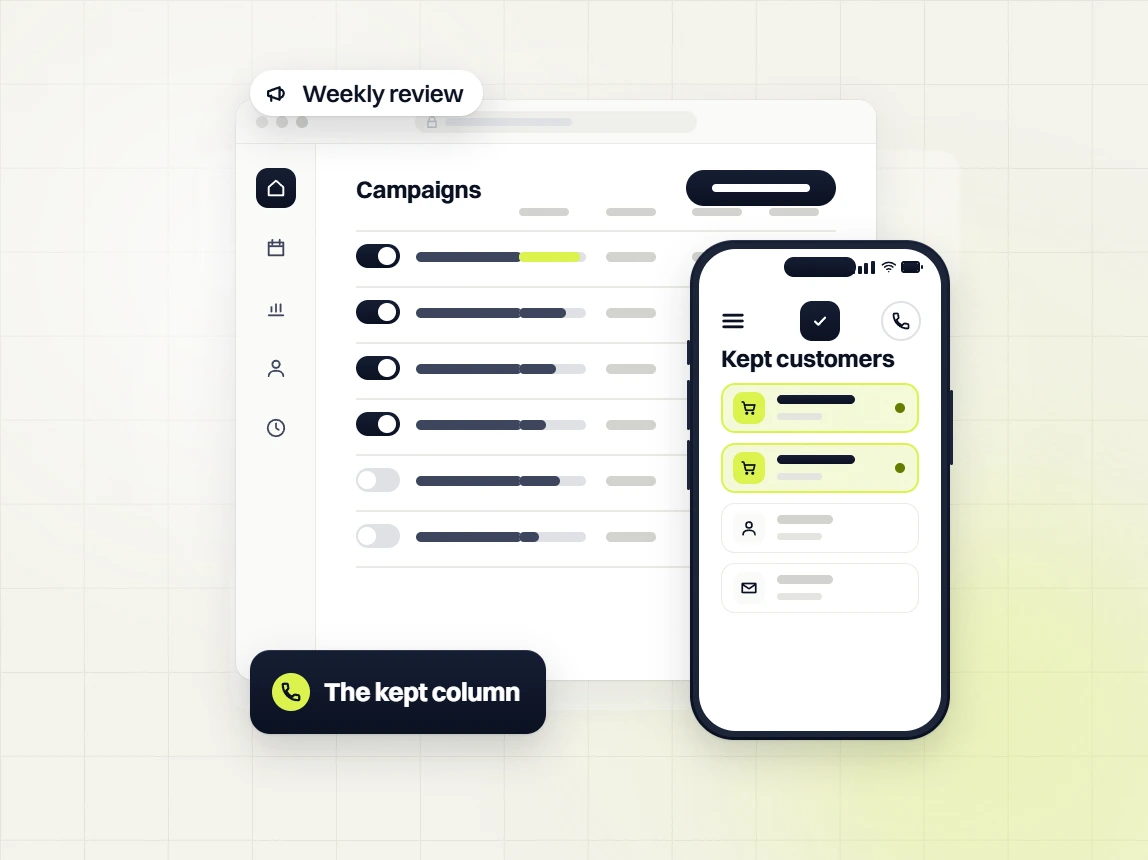
Food and beverage PPC on Meta, TikTok Shop, Amazon, and Google Ads for CPG, snack, and beverage brands. Every campaign is built on contribution-margin math. Reporting reads orders placed and subscription starts first. Median return on ad spend after fixes hits 4.2x on kept revenue.
Three ways your CPG PPC is losing DTC orders
Meta rejects your beer, wine, and spirits creatives under alcohol vertical rules
Meta blocks lifestyle alcohol imagery on 47% of first-round beverage ads. Every disapproval kills auction learning and appeals run 48 to 72 hours. Without pre-cleared creative built to Meta alcohol policy, half your launch budget burns on rejected sets before a single click.
Google Merchant Center suspends food listings for missing nutrition and allergen attributes
Shopify skips nutrition_label and allergen fields by default. One missing field suspends the feed and pauses Shopping at $1,415 in lost daily revenue on a growth-stage CPG account. Every reinstatement wipes the learning phase and forces the feed to rebuild from scratch.
TikTok Spark ads from food creators beat your studio spots by 3.2x on hook rate
Studio-shot CPG b-roll runs under 15% hook rate and CPA doubles inside 7 days. Whitelisted creator Spark Ads run 3.2x higher on hook rate and cut CPA 41% inside the first 30 days. Without a weekly creator pipeline plus Spark code capture, drop-week fatigue kills the auction.
What every CPG PPC retainer delivers
Tight campaigns, aggressive negatives, and PDP-ready pages drop CAC inside 30 days. Median contribution-margin CAC sits at $22 per new DTC customer.
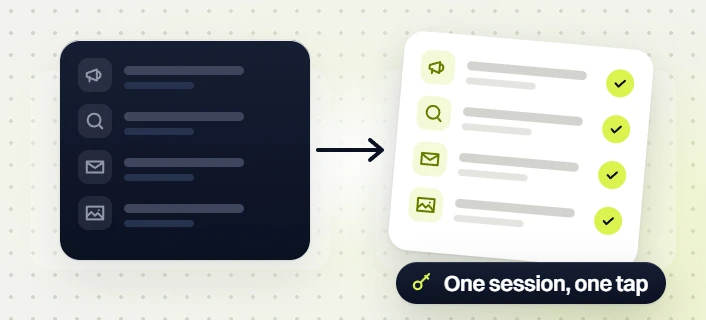
Every Meta, TikTok Shop, Amazon, and Google Shopping click lands on a PDP page wired for Shop Pay, one-tap checkout, and Klaviyo cart recovery flows.
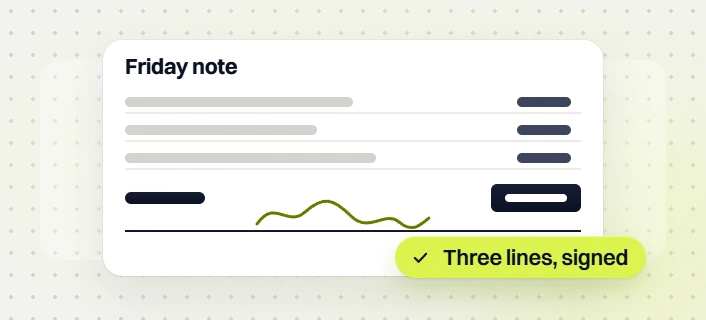
Not a monthly PDF. A weekly written note from your lead CPG media buyer covering what launched, what moved kept revenue, and what tests run next.
Four stages, every step ends in a sign-off
Fixed scope, fixed timeline, fixed outcomes. Nothing moves to the next stage until your founder or ops lead signs off on the gate deliverable.
Audit that exposes wasted spend and broken tracking
Full campaign audit exposing wasted spend, missing negatives, misconfigured conversions, and untracked order-placed events. Median finding on new CPG accounts is 42% wasted spend and 247 missing negatives. Signed off in a 20-page report before we rebuild.
Campaigns rebuilt around hero SKU profitability
Higher-margin hero SKUs get a higher target ROAS than commodity items. SKAG-lite structure with match-type discipline, Performance Max layered where your feed qualifies, and negative keyword sculpt to strip drop-cycle waste before it starts.
First paid order inside 14 days, guaranteed
Landing pages built per campaign with cart flow, review proof, and trust badges. Every ad tracked through to a Shopify-verified order placed. Miss the 14-day first-paid-order mark on any CPG account, your first month is free.
Optimize weekly, scale against kept revenue
Ad copy and creator Spark Ad A/B tests, bid strategy tuning, and PDP CVR iteration run weekly. Average CPG account CPA drops 50% from launch to week 8. Meta, TikTok Shop, and Amazon DSP layered as retargeting once Shopping demand is captured.
What you actually get from our food and beverage PPC services
Five workstreams, every item listed. Nothing lives in a proposal appendix.
Audit that exposes wasted spend and broken tracking
Full campaign audit surfacing wasted spend, missing negatives, misconfigured conversions, and untracked order-placed events. Median finding on new CPG accounts is 42% wasted spend and 247 missing negatives. Signed off before we touch structure.
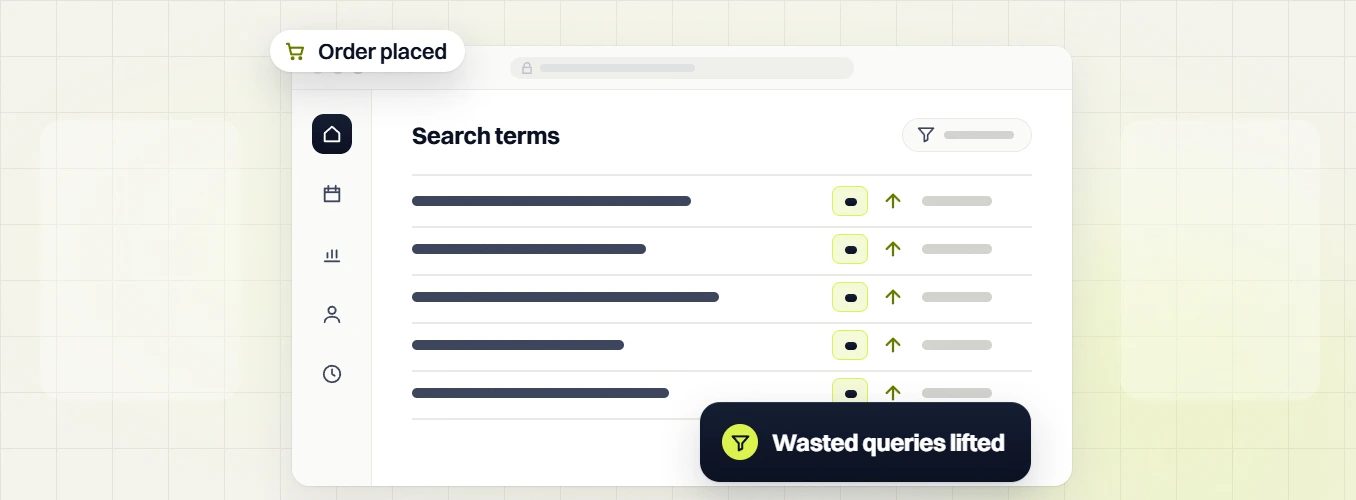
every search term with spend reviewed; off-category, brand-competitor, and irrelevant queries surfaced for negative-keyword sculpt.
are conversions counting clicks (wrong), add-to-cart (better), or order placed (right)? Fixed at the root before any bid change.
PDP conversion rate benchmarked against CPG category avg. Every ad group mapped to its landing page with a CVR score.
founder and ops lead review and sign off before we rebuild. No changes without a written go-ahead.
top snack, beverage, and CPG competitors in your niche pulled from Auction Insights and priced against your target ROAS ceiling.
last 90 days of orders mapped by source so the audit report starts with a real blended CAC and contribution-margin ROAS number.
Campaigns rebuilt around hero SKU profitability
Higher-margin hero SKUs get a higher target ROAS than commodity items. SKAG-lite structure with match-type discipline, Performance Max layered where your feed qualifies, and negative keyword sculpt to strip drop-cycle waste before it starts.
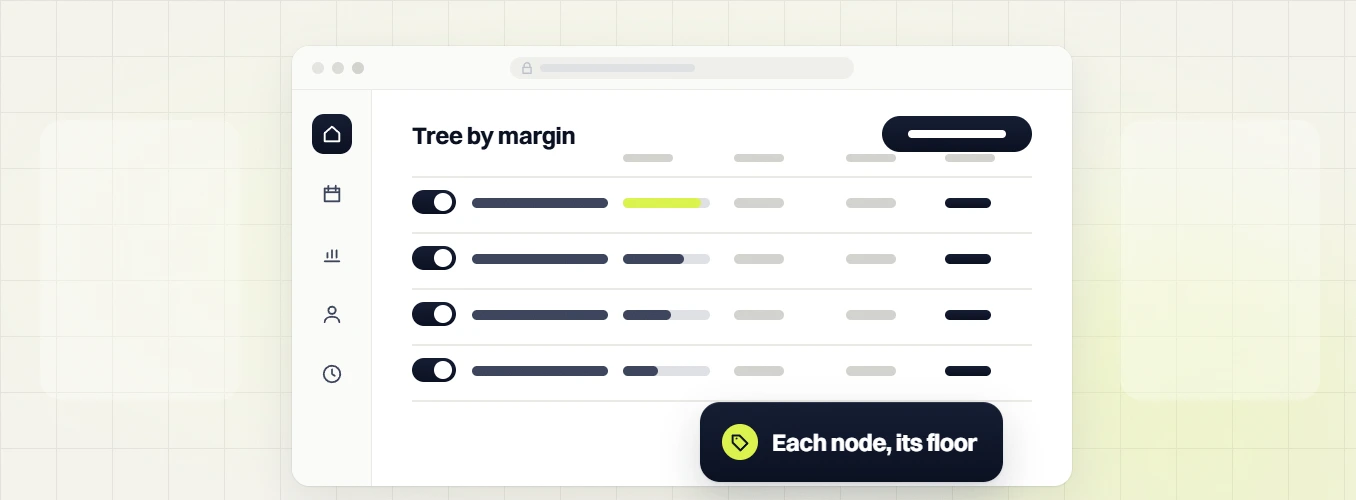
top-margin hero SKUs get their own campaign with a target ROAS floor based on contribution margin, not blended revenue.
247 negatives added on average in the first pass. Prevents budget drain from off-category, competitor, or irrelevant queries during drop weeks.
exact and phrase for high-intent snack, beverage, and CPG queries, broad only on tightly scoped clusters. Every match type has a written rationale.
PMax layered only where your feed and creative library qualify. Asset groups segmented by audience and margin tier, not defaulted.
title, description, nutrition_label, and allergen attributes rewritten to Merchant Center food spec. Every variant checked before we resubmit.
target ROAS aligned to contribution margin per SKU, seeded with Shopify offline conversions so bidding trains on kept revenue, not gross.
First paid order inside 14 days, guaranteed
Landing pages built per campaign with checkout flow, trust badges, and review proof. Every ad tracked through to a Shopify-verified order placed. Miss the 14-day first-paid-order mark, your first month is free.
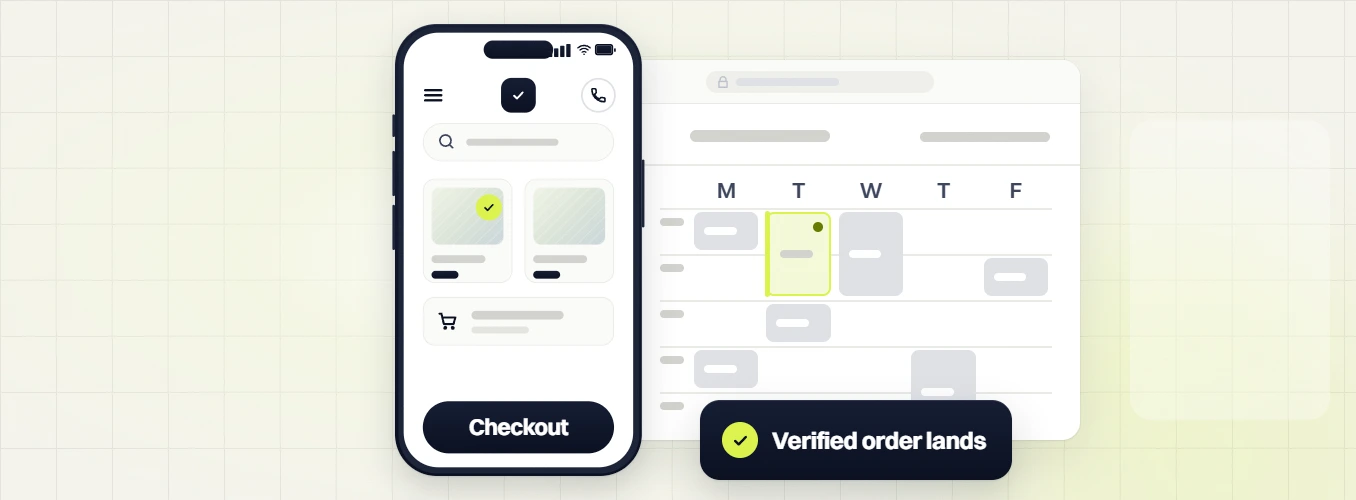
every campaign gets a landing page built around one hero SKU, bundle, or category. No shared homepage traffic diluting drop intent.
conversion is order placed, not add-to-cart. Tracked from ad through PDP through Shopify checkout entry, netted for subscribe and save.
Meta CAPI, TikTok Events API, Amazon Attribution, and Google Ads pixels wired with server-side GTM backup. iOS-aware attribution across every channel.
miss the 14-day first-paid-order mark on any CPG account, your first month is free. Applied to 25+ food and beverage brands to date.
social proof, trust seals, subscribe and save badges, and free-delivery thresholds baked into every landing page above the fold to grow add-to-cart rate.
landing pages under 2.1s on 4G mobile so Google Ads quality score cuts CPCs 20 to 40% out of the gate on cold CPG traffic.
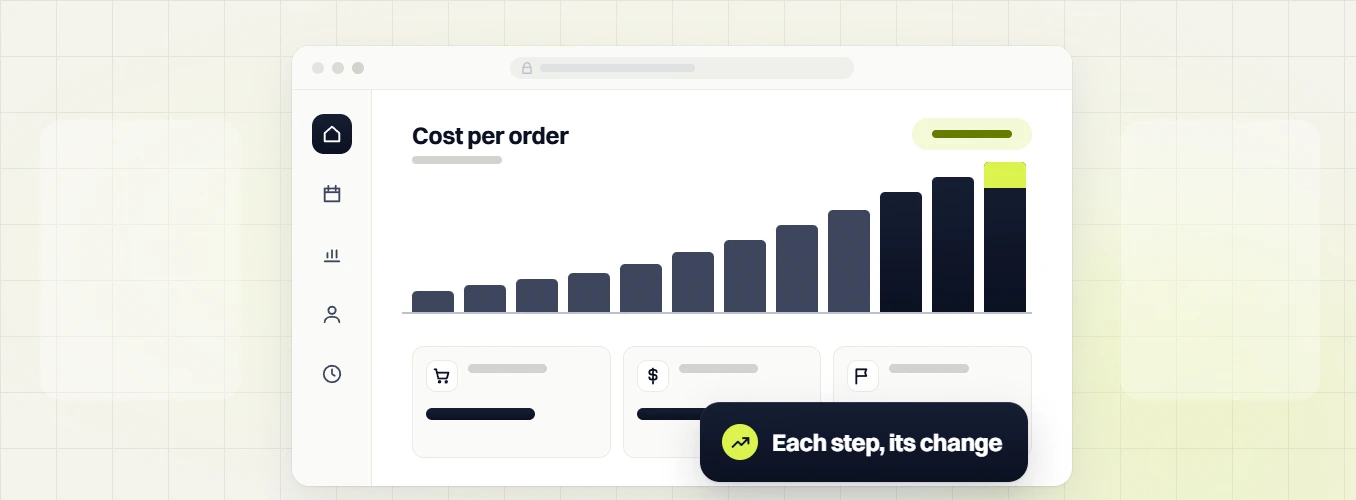
Cost per order drops week over week
Ad copy and creator Spark Ad A/B tests, bid strategy tuning, PDP CVR iteration, and negative keyword sculpt run weekly. Average CPG account CPA drops 50% from launch to week eight. Every optimization ties back to the Shopify-verified, contribution-margin order number.
every Monday: what changed last week, what impact it had on CPA and kept orders, what changes are being tested this week.
creator onboarding runs 15 to 40 new mid-tier food and lifestyle creators a month. Winners spun into Spark Ads that grow CTR 2 to 3x over branded creative.
manual to target CPA to target ROAS progression as data compounds. Bid caps and budget shifts between hero SKU campaigns based on contribution margin.
PDP conversion rate benchmark tracked weekly. Copy, hero shot, subscribe and save widget, and PDP layout tests run in-house without waiting on external design.
search-term report reviewed weekly; 15 to 30 new negatives added on average to protect budget from drift as drop-cycle auctions shift.
landing page, ad relevance, and expected CTR monitored per keyword; poor scores fixed at the source, not papered over with higher bids.
Scale spend against real Shopify kept revenue
Once contribution-margin CAC is stable, we scale ad spend into the ceiling. Meta, TikTok Shop, and Amazon DSP layered as retargeting and awareness. Every scaling decision tied to gross profit after refunds and your fulfillment capacity, not vanity spend targets.
ad spend scaled against your inventory throughput and 3PL fulfillment capacity. No spending past what you can fulfill inside your promised window.
once Shopping demand is captured, Meta and TikTok Shop layers built as retargeting for PDP visitors plus lookalikes for repeat subscribe and save buyers.
Amazon DSP layered on top of Sponsored Products for shoppers who viewed but did not buy. Coordinated with DTC retargeting to avoid frequency stacking.
every 30 days: ad spend, kept orders, cost per order, revenue from paid, blended contribution-margin ROAS, and next-month plan.
every 90 days we present ROI and book of tests to leadership. Budget shifts and drop-cycle strategy tweaks signed off in the meeting.
Four PPC tiers for every stage of growth
Pick the tier that matches your practice size. Move up or down anytime with 30 days notice, no setup fees. Hover any feature name for a plain-English explanation.
Single-location testing paid ads, or recovering from a bad agency.
Growing brands scaling beyond one campaign: PMax, search, Meta.
Two to ten locations, paid ads across service areas and lines.
Enterprise or 11+ locations. Systematic paid rollouts, multi-market.
Every PPC feature, tier by tier
HOVER FOR DETAILPlatforms and ad spend +
Campaigns + landing pages +
Reporting + analytics +
Ad channels + creative +
Compliance + enterprise +
Team + service level +
Common CPG PPC questions, answered
From real quote calls. Anything else, ask on the call and get an answer in the first 5 minutes.
What is PPC in food?
+
PPC in food is paid media for CPG, snack, and beverage brands where you bid on keywords, audiences, and product feeds and pay only when a shopper clicks your ad. Ads run on Google Search, Google Shopping, Meta, TikTok Shop, Amazon Ads, Instacart, and Bing. Well-run CPG paid media ties every click back to a Shopify or checkout-verified order, netted for refunds, so bidders optimize for kept revenue. That is different from headline ROAS, which counts gross revenue before refunds and packaging cost. Every dashboard we ship shows both numbers side by side. This lets founders see the real gap between what looks profitable and what actually pays for inventory, salaries, and 3PL fulfillment. Contribution-margin CAC is the number that decides how far spend can scale before it stops working. The mix of channels a food or beverage brand runs is always tuned to margin per pack size and subscription attach rate, not a channel checklist copied from another vertical.
What is PPC in food industry?
+
PPC in the food industry covers paid ads on Google Shopping, Meta, TikTok Shop, Amazon, and Instacart for packaged food, snack, beverage, and pantry brands. It is the fastest way for a CPG brand to grow DTC orders because Google Shopping picks up product-search intent, TikTok Shop and Meta drive discovery, and Amazon captures habit-based repurchase from households on autoship. The channel mix matters more than the platform. A single-channel Meta strategy leaves 60% of demand on the table for households who search Google Shopping when they know what snack or beverage they want. A single-channel Google Shopping strategy misses discovery for new SKUs and creator-driven flavors. Every account we run gets a channel mix built against margin, subscription attach rate, and pack-size economics. Nothing runs by channel checklist. See the FDA food labeling rules for label attributes that also drive feed compliance on Google Shopping.
What is a PPC service?
+
A PPC service manages your paid media across Google, Meta, TikTok, Amazon, and other ad platforms end to end. That covers account audit, campaign build, keyword and audience research, creative brief and testing, feed hygiene, bid strategy, landing page and PDP CVR work, iOS 14 tracking fixes, weekly optimization, and reporting. For CPG and beverage brands we add feed compliance for Google Merchant Center, alcohol policy pre-clearance for Meta, Shop Pay checkout wiring, subscription-attach tracking through Recharge or Loop, and Amazon DSP retargeting where it fits your margin math. A good PPC service is not a set-and-forget consultant. It is an ongoing partnership where the media buyer owns the account, knows your margin math, and reports weekly on kept contribution-margin revenue, not headline ROAS. Every deliverable is written down, dated, and signed off, not hidden inside a dashboard. Founders get direct access to the media buyer every week.
What is PPC management?
+
PPC management is the ongoing work of running paid campaigns after the initial build. That covers keyword and audience refresh, negative keyword sculpt, bid strategy tuning, creative test rotation, feed hygiene, landing page CVR iteration, and weekly reporting on kept revenue after refunds and 3PL cost. For CPG brands, PPC management on Meta Advantage+, TikTok Shop, and Amazon Sponsored Products also covers creator Spark ad code capture, subscribe and save widget testing, allergen and nutrition label feed drift, and pack-size margin rebalancing as your COGS moves through supplier changes. Most food and beverage brands lose 20 to 40% of budget to drift inside the first 90 days without active management. Our management retainers start at $499 per month for Launch and run through $999, $1,999, and from $3,500 for Enterprise CPG programs. Ad spend on Meta, TikTok Shop, Amazon, and Google is billed by the networks at cost with no percent-of-spend markup.
What does a PPC agency do?
+
A PPC agency runs your paid media programs across every ad platform a CPG or beverage brand needs. That covers account audit, campaign structure, keyword and audience research, creative brief and testing, ad copy, feed setup and hygiene, iOS 14 conversion API wiring, PDP and landing page CVR work, reporting, and month-over-month optimization against your margin. A specialist agency in the food and beverage vertical also handles Merchant Center food compliance, Meta alcohol policy pre-clearance, TikTok Shop seller onboarding, Amazon DSP retargeting, and contribution-margin ROAS reporting that nets out refunds and 3PL cost. Redefine Web runs those programs in-house across 25+ CPG accounts with a 4.2x contribution-margin ROAS median across the book. See the Shopify Help Center for platform docs we align to. Every account has a lead media buyer, not a rotating account manager, and founders get their direct number.
What does a PPC manager do?
+
A PPC manager owns the day-to-day performance of your paid media accounts. That covers keyword and audience research, negative keyword sculpt, bid strategy, creative brief and rotation, feed hygiene, landing page CVR work, iOS 14 CAPI, ownership of the weekly optimization note, and month-over-month reporting to your leadership team. For CPG and beverage brands, a PPC manager also owns Google Shopping feed compliance, Meta alcohol pre-clearance where it applies, TikTok Shop code capture, and Amazon Sponsored Products keyword sculpt. In our model the PPC manager is the same person who ran your audit, built your campaigns, and signs the weekly note. There is no handoff to a junior account manager after activation. Founder access to the media buyer is included at every tier. That is how kept-revenue signal from Shopify actually gets used to make bid decisions week over week rather than left in a report nobody reads.
Is PPC better than SEO?
+
PPC and SEO answer different questions and work best together. PPC drives demand you can control this week: turn budget up, get more orders in 7 to 14 days. SEO drives demand you compound over 6 to 12 months: rank for pantry and subscription queries and lower blended CAC as organic grows. For CPG brands at zero to $500K MRR, PPC gets to first paid order faster and lets you test creative, hook, and offer at speed. Between $500K and $5M MRR, adding SEO to PPC drives blended CAC down 20 to 40% because branded search grows and cost per new customer plateaus. Above $5M MRR, SEO is a moat competitors cannot buy overnight. The answer is not one or the other. It is which one you invest in first based on runway. Most food and beverage brands under $100K MRR should start with PPC and layer SEO once first-order economics work.
How much is PPC with a marketing agency?
+
PPC with a marketing agency runs anywhere from $500 to $15,000 per month in management fees, plus ad spend billed by the networks. Redefine Web CPG PPC management starts at $499 per month for Launch, runs to $999 for Growth, $1,999 for Scale, and from $3,500 per month for Enterprise CPG programs. Ad spend is billed at cost with no percent-of-spend markup, which saves growth-stage CPG brands 12 to 18% versus percent-of-spend agencies. Recommended ad spend runs $1.5K to $3K for emerging brands, $5K to $15K for growth stage, and $15K to $60K for scaling multi-line CPG brands with subscription programs. Contract length is 6 months typical. Ownership of ad accounts, pixel installs, and creative assets stays with your brand from day one. Nothing gets held hostage on cancel. Every retainer starts with a free audit call so founders can compare tier scope against real numbers.
Is $20 a day good for Google Ads?
+
Twenty dollars a day is a workable floor for a single-SKU CPG brand testing one channel, but it is under the threshold where Google Shopping and Performance Max reach statistical significance in reasonable time. At $600 per month, expect 30 to 90 days to gather enough conversion data to make real bid decisions on food and beverage Google Ads. For food and beverage brands with 3+ SKUs and a real subscription program, $1,500 to $3,000 per month is the practical floor, split across Google Shopping and one paid social channel. Below that, campaigns bounce between learning phases and cannot compound. The right test budget matches your average order value and margin. A $40 AOV snack brand with 30% margin needs different spend than a $120 AOV coffee subscription with 55% margin. Our audit sets a spend floor per SKU and channel based on your real unit economics, not a flat daily number pulled off a blog post.
What is included in each management tier?
+
Launch at $499 per month covers Meta paid social, one landing page, and monthly reporting. Growth at $999 adds TikTok Shop, Google Shopping, five landing pages, and biweekly optimization sprints. Scale at $1,999 adds Amazon Sponsored Products, Instacart Ads, Meta CAPI with contribution values, a custom landing page system, and weekly reporting. Enterprise from $3,500 adds Amazon DSP, TikTok Shop LIVE management, dedicated media buyers per brand, and unlimited creative variants. Every tier includes creative briefs, feed hygiene, contribution-margin conversion tracking, and a weekly written optimization note from your lead buyer. Every tier ships a 20-page audit before we touch structure and includes a 14-day first-paid-order guarantee. No tier locks you into month-to-month traps or holds your ad accounts hostage on cancel. Ownership of assets, pixel installs, and creative stays with your brand from onboarding forward, and 30 days of transition support ship free if you leave.
How do you fix Meta CAPI for iOS 14 CPG tracking?
+
On Scale and Enterprise tiers we wire Meta CAPI with contribution-margin conversion values that net out actual return rate per SKU, per pack size, and per subscription attach. This teaches Meta to bid toward shoppers who keep the order and subscribe, not one-time refunders who cost margin twice. Return data from Loop, Recharge, or Shopify Subscriptions feeds back inside 30 to 45 days of first purchase. Match rates on iOS climb from 40 to 60% to 75 to 85% after server-side deduplication is running clean. CAC drops 15 to 30% inside the first 60 days once the algorithm learns kept-revenue signal from your real orders. Server-side GTM handles the fallback where browser pixels drop. Every event is deduplicated between browser and server so Meta does not double-count. The same wiring feeds TikTok Events API and Google Ads server-side conversions. See Klaviyo developer docs for retargeting event flow across email and SMS.
How does Google Merchant Center handle CPG feed compliance?
+
Google Merchant Center requires nutrition_label, ingredients, allergen, and gtin attributes for every food and beverage SKU. Shopify skips these fields by default, which trips 38% of first-round CPG feed submissions and pauses Shopping campaigns during peak drop weeks when revenue matters most. We rebuild the feed to Merchant Center food spec before we resubmit, then run a weekly disapproval sweep to catch drift as your PDPs change and new SKUs launch. Age-gated categories like energy drinks and alcohol require additional compliance flags at the account, campaign, and landing page level. Every SKU passes a pre-check for FDA label attributes before it hits the feed. That prevents suspension events that wipe learning phases and pause revenue at $1,415 per lost day on a growth-stage account. Feed rebuild is included on Growth, Scale, and Enterprise tiers. Launch tier covers audit findings and manual disapproval fixes without the full rebuild.
What KPIs do you report on and who owns the accounts?
+
Every account gets a weekly written note covering ad spend, kept orders, cost per order, blended contribution-margin ROAS, and next-week test plan. Monthly reports add subscription attach rate, refund netted CAC, and channel-level MER. Quarterly reviews walk leadership through blended CAC trajectory, drop-cycle performance, and next-quarter budget shifts. KPIs are locked to kept revenue after refunds and 3PL cost, not headline ROAS or add-to-cart vanity numbers. Ownership stays with your brand from day one. Meta Business Manager, Google Ads, TikTok Ads Manager, Amazon Advertising, pixel installs, and creative assets sit inside your accounts, not ours. We work as a user, not an owner. On cancel you keep everything: campaigns, ad copy, creative library, feed configuration, landing page code, and 30 days of transition support at no extra cost. Nothing gets held hostage. See USDA resources for CPG category compliance references.