Food and Beverage Marketing Agency to Grow Subscription Revenue
Food and beverage marketing agency for CPG, snack, beverage, and natural-food brands from launch through national retail. Shopify or WooCommerce builds, SEO, Meta and TikTok Shop media, and Klaviyo lifecycle programs. Every campaign reports on subscription LTV and blended cost per new customer, so you always know which channel earned the order.
Three problems draining subscription retention from every CPG brand
Retail burns cash while DTC subscription CAC climbs
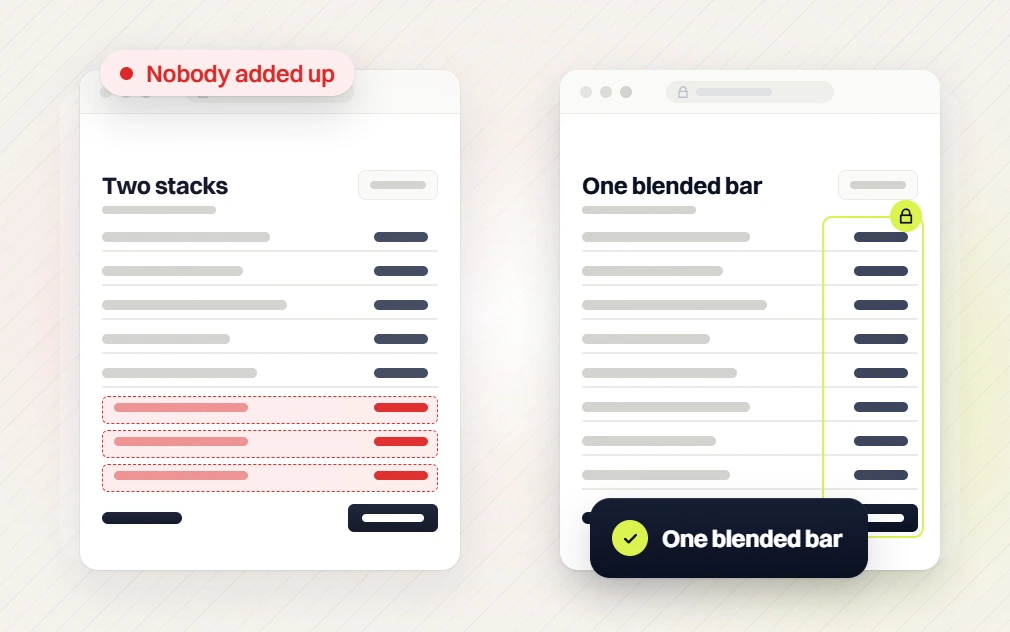
Whole Foods and Erewhon take 40% margin. Meta CAC runs $38 to $62. Nobody tracks trade vs paid CAC together, so budget follows feelings, not math.
Cold-chain freight wrecks DTC contribution margin
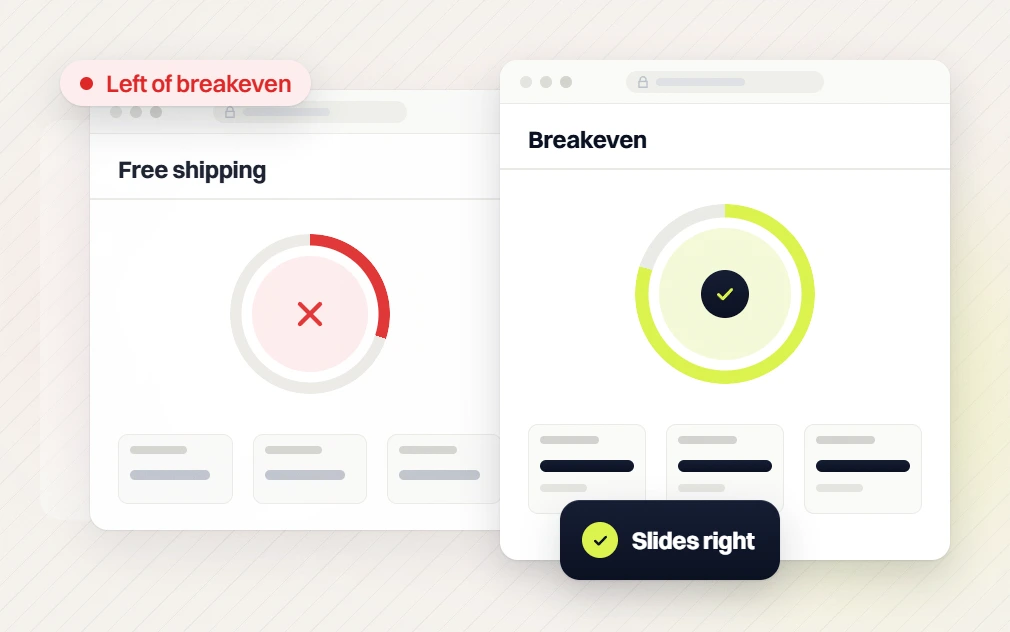
Refrigerated boxes cost $15 to $35 in gel packs. Free shipping is set at $60 while breakeven runs $105 in-region and $185 out-of-region every order.
Half of subscribers cancel before shipment three
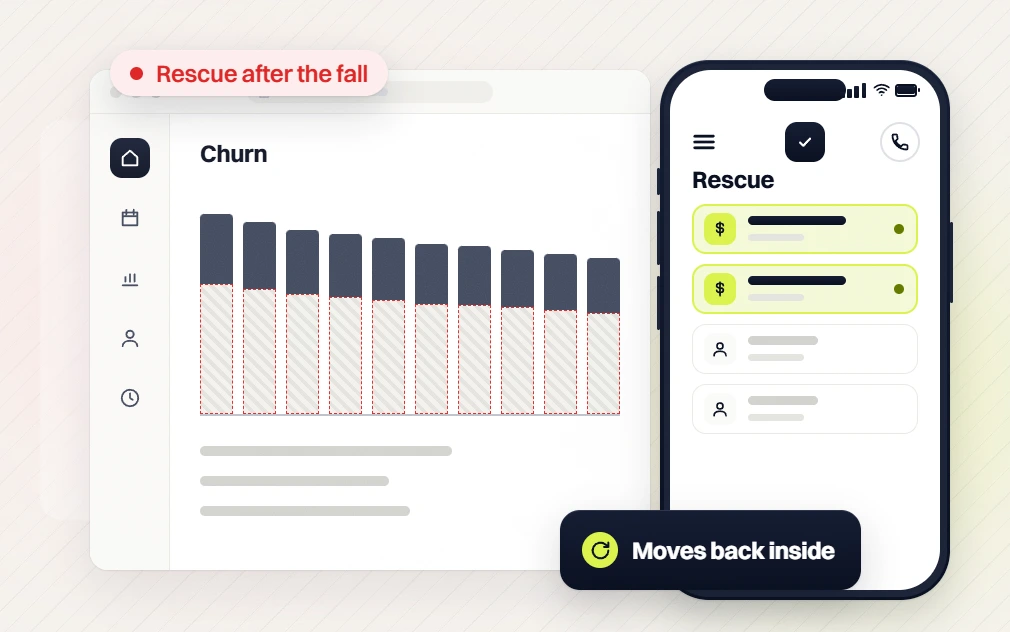
Half of subscribers cancel by shipment 3. Recharge has no pause option and Klaviyo win-back fires on day 90, weeks after real churn has hit already.
Four food and beverage services, one accountable team
Each pillar is a full program. Run any one on its own or bundle all four into one retainer with a single point of contact. Every pillar reports against subscription LTV, blended CAC, and orders placed.
Food and beverage stores built to convert first orders
Shopify and WooCommerce builds engineered around your hero SKU mix, subscription flow, and store locator. Every page tuned to first-order conversion and repeat revenue. Owned by you at handoff.
Food and beverage SEO on category and occasion queries
Technical fixes, food and beverage content built around what shoppers actually search, plus digital PR. Programs that pay back inside twelve months.
Paid ads reported on orders placed and subscription LTV
Meta, TikTok Shop, Amazon, and Google Shopping media buying by CPG media buyers. Every campaign tied to first-order revenue and repeat rate.
Hosting, uptime, and monthly upkeep
LiteSpeed hosting, weekly security scans, monthly optimization, plus small content edits included. Page-speed and plugin health stay covered every month.
Explore maintenance plansFour stages, every step tied to booked outcomes
Same rhythm on every brand. Audit before we spend a dollar. Position before we launch an asset. Build against the offer. Scale against orders placed and subscription retention.
Diagnose the funnel
Site, Shopify, ad accounts, email flows, and post-purchase surveys. Channel-by-channel teardown against orders placed and subscription retention.
Sharpen the offer
Nail the hero SKU mix, subscription posture, and target buyer. Every PDP, ad, and email built off one positioning brief.
Build the assets
Launch the storefront, PDPs, subscription flow, and Shopify-linked tracking. Weekly written notes so every asset has a live date.
Compound the growth
Compound paid, SEO, retention, and creator wins. Weekly review tied to orders placed and subscription retention.
Not every food and beverage agency reports the same things
Most CPG marketing agencies report on impressions and ROAS. Shopify templates report on nothing. Here is what actually shows up in your Shopify and Klaviyo when we run the program.
Real brands, real numbers
What is a CPG agency?
+
A CPG marketing agency runs brand awareness, DTC acquisition, and retail sell-through for consumer packaged goods brands. That covers paid media on Meta, TikTok, Amazon, and retail media networks, Shopify storefront and subscription flow, Klaviyo lifecycle, creator affiliate, and retail syndication content for chain buyers. The best food and beverage marketing agency partners plan against subscription LTV and blended CAC, not headline ROAS. Redefine Web works with CPG brands doing $500K to $40M in net revenue, most on Shopify Plus or Recharge. Every campaign ties to CM3 after cold-chain shipping, promo discounts, and returns. Learn how Shopify handles subscription and retail feeds so we can budget the tech stack against your unit economics from day one.
What is food and beverage marketing?
+
Food and beverage marketing is the promotion of food and drink products to shoppers across paid, owned, and earned channels. For a modern CPG brand that means paid social on Meta and TikTok, TikTok Shop, and retail media (Amazon, Instacart, Whole Foods 365). It also covers Klaviyo email and SMS lifecycle, SEO on recipe and comparison keywords, and creator affiliate on Instagram and TikTok. The plan is set by shipping economics, retailer placement, and subscription unit economics. Every claim on packaging and paid creative has to line up with FDA food labeling rules before it goes live. Performance is judged on blended CAC and subscription contribution margin after shipping, not on ROAS in isolation.
What is CPG marketing?
+
CPG marketing is the growth stack behind consumer packaged goods brands sold through grocery, natural, club, mass, and DTC. It sits on four levers: brand positioning, retail sell-through, DTC subscription acquisition, and shopper marketing at the shelf. A food and beverage marketing agency running CPG right will balance paid media (Meta, TikTok, Amazon Ads, Instacart Ads) with owned channels (email, SMS, subscription) and retail media dollars. Category authority comes from creator content, recipe SEO, and PR. Every dollar reports against blended CAC, subscription LTV, and CM3 after cold-chain and promo. USDA-tracked category trends published by USDA often set the ceiling for what a brand can charge on shelf.
What is the meaning of food marketing?
+
Food marketing is the work of moving grocery buyers and households from unaware to loyal on a specific food or beverage brand. That is a mix of packaging, shelf positioning, paid media, creator content, sampling, recipe content, and lifecycle email. For a food and beverage marketing agency the meaning is practical: what does the SKU cost to ship cold, what price will Whole Foods buyers accept on shelf, what CAC does the DTC funnel support, and what subscription cadence keeps a household ordering month after month. Every plan we run starts with three numbers: contribution margin per unit after packaging, cold-chain shipping, and platform fees. Target blended CAC based on 90-day repeat rate. Target subscription LTV over 6 months. Once the unit economics are clear, the channel mix follows.
How to market a new drink product?
+
Market a new drink product by pairing DTC subscription with a tight retail placement plan, then feeding both from the same paid social budget. Meta and TikTok drive first-order sampling and subscription starts on the DTC storefront. Geo-fenced Meta ads run within a 5-mile radius of Whole Foods, Sprouts, and Erewhon stores that carry your SKU. In-store QR codes on shelf talkers push shoppers to a repeat-purchase subscription for 15% off. On DTC, cut the 12-pack SKU to a 6-pack trial to hit a lower first-order price. Klaviyo win-back at day 45 recovers 12% to 18% of first-order cancels. TikTok Shop creator seeding at launch generates the first 500 orders under $18 blended CAC, which sets the target every paid channel then matches.
What are the current trends in the beverage industry?
+
The beverage industry trends moving budget in 2026 include functional beverages (prebiotic soda, adaptogenic drinks, protein waters, mushroom coffee) and better-for-you snacks with clean ingredient decks. TikTok Shop is a primary acquisition channel for founders under 40. Retail media (Amazon Ads, Instacart Ads, Walmart Connect) is taking share from Meta on lower-funnel intent. Subscription fatigue is real: brands that let shoppers pause, swap, and skip in-portal hold 22% more subscribers past day 90. Creator affiliate is replacing traditional influencer flat fees on 60% of new CPG launches. Non-alcoholic craft beer, spirits, and wine are the fastest-growing subcategory in the alcohol adjacent space. Ready-to-drink formats are replacing single-serve powders across protein and hydration.
What is CPG vs FMCG?
+
CPG stands for consumer packaged goods, FMCG stands for fast-moving consumer goods. The two terms describe the same product category from different angles. CPG is the North American term for packaged food, beverage, personal care, and household goods sold through retail and DTC. FMCG is the term used across Europe, Asia, and Latin America for the subset of CPG that turns over inventory quickly (weeks, not months). Every food and beverage marketing agency will use both terms based on the client base. Perishables (fresh dairy, refrigerated beverages, deli, meat) sit inside FMCG because they move fast off shelf. Shelf-stable snacks and pantry staples sit inside broader CPG. The marketing playbook does not change by term. What changes is the shipping economics, shelf-life math, and retailer syndication schedule.
How to become a food marketer?
+
Become a food marketer by learning three stacks: brand and packaging, DTC growth on Shopify plus Meta and TikTok, and retail sell-through with Whole Foods, Sprouts, Kroger, and Amazon. Start on the DTC side because the feedback loop is fastest. Run $50 to $100 a day on Meta and TikTok against a Shopify checkout with clear unit economics. Learn what CAC, LTV, and CM3 look like at your price point. Move into retail by pitching indie natural stores first, then regional chains, then the national buyers at Whole Foods and Sprouts. The best food and beverage marketing agency people have run at least one brand of their own or worked in-house at a CPG founder team. Category expertise (beverage, snack, protein, functional) beats generic marketing every time.
How much does a food and beverage marketing agency cost per month?
+
Managed food and beverage marketing retainers at Redefine Web start at $599 per month and scale to $6,500 per month depending on channel mix and ad spend under management. Shopify storefront rebuilds are quoted separately as fixed-price projects starting at $1,500. Ad spend is billed direct to your credit card, not marked up through the agency. At the $599 tier you get Meta paid social, Klaviyo email lifecycle, and one weekly written report. At the $1,999 tier you add TikTok, TikTok Shop, and Amazon PPC. At the $3,500-plus tier you add retail syndication for Whole Foods, Sprouts, and Erewhon buyers, plus a full creator affiliate program. Standard engagement runs 6 months. No lock-in beyond the initial term, and everything is owned by you at handoff.
How do you handle cold-chain and shipping constraints?
+
Food and beverage marketing has to respect shipping economics that beauty and apparel do not. Cold-chain shipping runs $15 to $35 per order on refrigerated SKUs. Heavy-package rates hit 12-pack beverages with dim-weight surcharges. Short-shelf-life products carry expiration-date math that limits how long inventory can sit in a 3PL. The paid media plan gets built around those numbers. Free shipping thresholds are set from true breakeven, not from Shopify defaults. Subscription cadence gets matched to product consumption rate, not the platform default of 30 days. We route DTC fulfillment through regional 3PLs so a Northeast household is not paying to ship gel packs from a West Coast warehouse. The reporting shows what each order actually clears after shipping, not gross revenue.
Do you handle TTB compliance for alcohol brands?
+
Yes. For alcohol brands (craft beer, spirits, ready-to-drink cocktails, wine, non-alcoholic craft), TTB label approval, state-by-state DTC shipping rules, and platform-specific ad compliance are treated as gating requirements. Every label and every claim goes through a TTB check before it goes to the printer. Meta and TikTok both restrict alcohol creative, so ad copy and imagery follow the platform ad policy for alcohol at all times. State-specific DTC shipping is mapped against Sovos or ShipCompliant so the storefront blocks orders from restricted states at checkout. Formula approval adds weeks on flavored malts and RTDs, and we build that timeline into the launch calendar. Non-alcoholic craft (beer, spirits, wine adjacent) has its own paid social rules that differ from full-strength SKUs, and we run those creative variants on separate ad accounts.
Do we own the food and beverage marketing accounts and data?
+
You do. Every Meta, TikTok, Google, and Amazon account is built in your brand name with your logins. GA4, Klaviyo, Shopify admin, and every tracking pixel are in your name. Redefine Web has agency access, not ownership. If you leave, you leave with everything: creative files, audience files, keyword lists, negative keyword lists, Klaviyo flows, and current campaign structures. Handoff documentation is delivered inside 7 days. Retail-facing assets (Whole Foods sell sheets, Sprouts brand pages, Amazon A+ Content decks, TTB-approved label files) are also yours. Every food and beverage marketing agency should work this way. If any current vendor is holding your ad accounts or your Shopify code hostage, that is a red flag and worth switching over.