Legal Marketing Agency Built for Signed Cases, Not Clicks
Legal marketing for law firms across personal injury, family, criminal defense, employment, immigration, IP, and estate planning. Redefine Web runs the growth engine for 30+ firms across the US, from solo practices to multi-office regional groups. Websites, SEO, LSA, and Google Ads tied to signed cases in Clio, MyCase, PracticePanther, Filevine, or Lawmatics. You get a weekly written note on what moved and where budget is producing.
Three problems every law firm is losing signed cases on
ABA 7.3 kills the direct-retargeting playbook
ABA 7.3 bans real-time solicitation of prospects with a specific legal need. Get flagged once and the platform freezes your account and every asset.
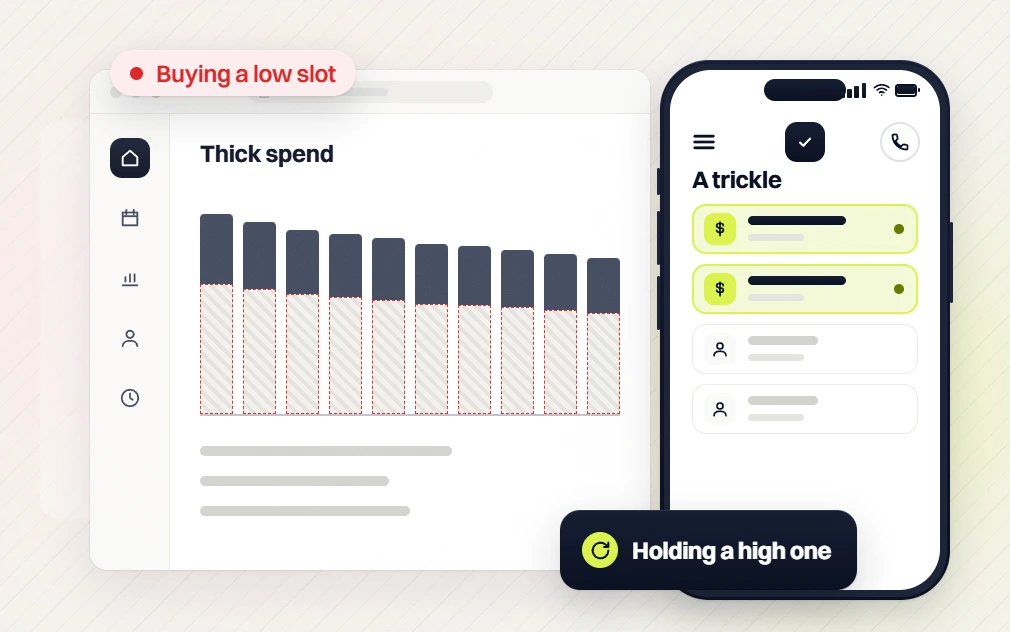
Legal keywords hit $1,090 per click, LSA owns pack
PI keywords hit $1,090 per click. LSA plus Justia push you below the fold. CPA passes $2,400 and quality slips while budget disappears on bad intent.
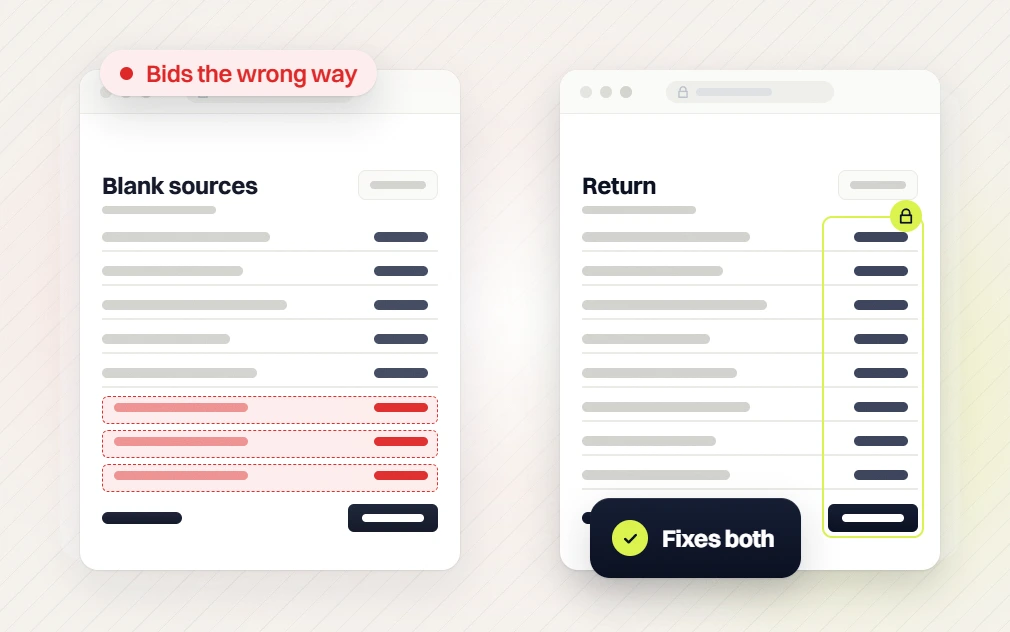
Clio and MyCase see intake, not the paid ad click
Clio Grow and MyCase see intake, not click. 62% of signed cases get credited to none, so Google Ads doubles down on the wrong keywords and CPA rises.
Four legal marketing services, one accountable team
Every service reports to the same roadmap and the same number: signed cases in Clio, MyCase, PracticePanther, or Filevine.
Law firm websites that book signed consults
Sites built to convert, engineered around your practice areas and fee mix. Not a design case study, a signed-case machine. Owned by you at handoff with the accounts, GA4, and Clio integration intact.
Law firm SEO that owns the map pack
Technical fixes, practice area content written to searches prospects actually make, city-level pages, and E-E-A-T signals from attorney bios, bar admissions, and case results. Programs that pay back inside twelve months.
Paid ads tied to signed cases, not clicks
Google Ads, LSA, and Meta paid ads tied to signed cases and revenue per matter, not click-through rate. Every campaign owned by one paid media lead per account with negative-keyword lists cleared for ABA 7.3.
Hosting, uptime, and monthly updates
LiteSpeed hosting, weekly security scans, monthly speed work, plus small content edits included. Zero worry about page speed, broken plugins, or expired SSL on a live intake page.
EXPLORE MAINTENANCE PLANSFour stages, every step tied to signed cases
Same rhythm on every firm account. Audit before we spend a dollar. Scale only against the case management number.
Diagnose the funnel
Site, Google Business Profile, LSA, ads, and Clio or MyCase baseline audited. Every gap named and priced before a dollar moves.
Sharpen the offer
Positioning, practice area pages, and intake paths rebuilt against your top 3 revenue practice areas with ethics review on every asset.
Build the assets
Site, campaigns, and review flywheel go live weekly. Every asset in your firm accounts, in the firm name.
Compound the growth
Weekly tests against Clio Grow or MyCase signed cases. Budget scales only where verified case revenue already exists.
Not every legal agency reports the same things
Ask any agency these six questions on the sales call. The answers separate reporting from accountability.
Real firms, real numbers.
How to do marketing for a law firm?
+
Law firm marketing runs on five compliant channels. Google Business Profile plus verified reviews wins the map pack. Local SEO on practice-area pages and city pages captures organic. Google Screened Local Services Ads (LSA) sit above the fold on high-intent queries. Paid search on bottom-funnel keywords fills gaps. A written referral program keeps the pipeline warm between paid pushes. Every channel needs a clear intake path that syncs to Clio, MyCase, PracticePanther, or Filevine so signed cases attribute back to the source.
Legal marketing works only if it clears ABA Model Rule 7.1 on truthful communication and Rule 7.3 on solicitation. Start with your two highest-margin practice areas, own those before spreading budget across four more.
What is the best way to advertise a law firm?
+
The strongest advertising mix for a US law firm blends Google Screened LSA at the top of the SERP, local SEO on practice-area and city pages, and Google Business Profile with 100+ verified reviews. Add paid search on bottom-funnel intent (for example “car accident lawyer near me”) and a small retargeting layer that stays inside ABA 7.3 rules. Skip billboards and radio for small firms. The ROI on a law firm marketing program almost always beats broadcast for the first $10K/month.
Every ad must carry an attorney advertising disclosure, name a responsible attorney, and clear state bar rules for your jurisdiction. See Justia’s legal advertising overview for state-by-state guidance. Track everything to signed cases, not clicks, or you scale the wrong keywords.
How much do lawyers spend on advertising?
+
SBA guidance for professional services puts marketing spend at 7% to 10% of gross revenue for firms in growth mode, and 2% to 5% for mature firms in maintenance. Personal injury firms in top metros routinely spend $25,000 to $100,000 per month on paid channels alone. Boutique family, immigration, and estate practices land closer to $2,000 to $6,000 per month across SEO plus LSA plus a small paid search budget.
Law firm marketing benchmarks matter less than cost per signed case. A blended CPA of $250 to $500 for family, $600 to $1,200 for PI in mid-tier metros, and $1,500 to $3,000 for PI in top metros is the yardstick. Anything above those without a plan to lower it means the mix is wrong.
What does attorney advertising mean?
+
Attorney advertising is any communication a lawyer or law firm makes to the public about legal services, including websites, social posts, Google Ads, LSA, print, billboards, TV, and directory listings. Under the ABA Model Rules of Professional Conduct, every state bar treats these communications as regulated speech. Rule 7.1 requires truthfulness. Rule 7.2 governs paid endorsements and referral fees. Rule 7.3 restricts real-time solicitation of a prospective client who has a specific legal need.
A compliant attorney marketing program tags every asset as “Attorney Advertising”, names the responsible attorney, includes any state-required disclosures (Florida, Texas, and New York have stricter rules), and never promises a specific outcome. Get flagged once and platforms freeze your ad account for weeks.
Is it ethical for an attorney to advertise?
+
Yes. Attorney advertising has been protected commercial speech since Bates v. State Bar of Arizona (1977). The ABA Model Rules and every state bar allow paid advertising as long as it is truthful, not misleading, and clears rules 7.1 through 7.3. A law firm can run Google Ads, LSA, SEO content, billboards, social ads, and direct mail so long as every asset carries the required “Attorney Advertising” label, names the responsible attorney, and avoids comparative claims like “best lawyer” or guaranteed outcomes.
Where lawyers get in trouble is Rule 7.3 solicitation of a specific prospect with a known legal need, retargeting pixels that fire on injury-lead-form abandonment, and testimonials that promise a specific outcome. a law firm marketing agency that respects the ethical rules will map every campaign to a state bar checklist before it goes live.
What do legal marketers do?
+
Legal marketers run the growth channels a law firm cannot easily staff in-house. That means building and maintaining the firm website, running SEO on practice-area and city pages, managing Google Ads and LSA campaigns, monitoring Google Business Profile and reviews, running email nurture for past clients and referrers, and reporting monthly on signed cases against spend. Senior legal marketers also handle content strategy, ethics review on ad copy, and PR outreach to legal directories.
Inside a legal marketing services engagement, work splits across a paid media lead (Google Ads, LSA, Meta), an SEO lead (technical, content, GBP), a web lead (site changes, tracking, intake paths), and one accountable point of contact. Everything reports back to a single number, signed cases in the firm’s case management system.
What is a good law firm marketing budget?
+
SBA guidance for professional services is 7% to 8% of gross revenue for marketing spend. High-growth firms (20%+ annual growth) spend 16.5% on average per Thomson Reuters Institute. A mature small firm doing $2M in revenue typically spends $12,000 to $16,000 per month across web, SEO, LSA, and Google Ads. A newer solo doing $400K might spend $2,500 to $4,000 per month and focus 80% of budget on GBP plus one paid channel until a repeatable CPA lands.
Law firm marketing budgets fail when they split evenly across six channels. Concentrate. Own one channel, then add the second when the first has a locked CPA under target.
Does SEO work for law firms?
+
Yes, and for most practice areas legal SEO delivers the lowest blended cost per signed client after month 6. Legal search intent is high commercial intent, meaning people who type “car accident lawyer” or “estate planning attorney” are ready to hire, not window shop. A ranked practice-area page compounds monthly at zero incremental CPC, unlike Google Ads which resets to $0 the moment budget stops.
Firms lose money on legal SEO when they pay for generic backlinks, thin blog posts, and city pages built from templates. Winning SEO for a law firm needs technical fixes, unique practice-area content answering real client questions, city-level landing pages with local proof (case results, attorney bar admissions, review counts), and E-E-A-T signals like attorney bios linked to the state bar. Full guide in the ABA Law Practice marketing hub.
How much do personal injury lawyers spend on advertising?
+
PI firms sit at the top of legal advertising spend. Entry-level PI firms typically spend $3,000 to $5,000 per month on paid ads, mid-tier firms $10,000 to $30,000, and top-metro PI firms in Houston, Los Angeles, New York, Chicago, and Miami often spend $50,000 to $250,000 per month across Google Ads, LSA, TV, and out-of-home. Blended cost per signed case runs $800 to $3,500 depending on metro, referral share, and channel mix.
PI legal marketing works only when Google Ads and LSA route through call tracking that syncs to Litify, Filevine, or CASEpeer for signed-case attribution. Without that loop, budget doubles down on the wrong keywords and CPA climbs by 30 to 60% inside a quarter.
What is Google Screened for lawyers?
+
Google Screened is the Local Services Ads (LSA) product for licensed attorneys. Verified firms show above the classic 10 blue links with a green Google Screened checkmark. Google charges per qualified lead, not per click, and lets clients call the firm directly from the ad. Eligibility requires business insurance, active bar license, background check on the responsible attorney, and license verification in every state you serve.
Google Screened wins on cost per signed case in most metros because you pay only for a real inquiry, not a click. But it competes with SEO and Google Ads on the same query, so a full law firm marketing program budgets for LSA plus organic plus paid search, not one instead of the others.
What is the best marketing for law firms?
+
There is no single best channel. The proven mix for a small firm is Google Business Profile plus 100+ verified reviews, local SEO on practice-area and city pages, Google Screened LSA, Google Ads on high-intent keywords, and a referral flywheel from past clients and adjacent attorneys. Each channel does one job. GBP wins the map pack. SEO compounds monthly. LSA fills top of SERP. Google Ads owns bottom-funnel intent. Referrals reduce blended CPA.
The strongest mix is the mix that lands the lowest cost per signed case in your practice area and metro, reported monthly against your case management system. A single-channel bet almost always underperforms a two- or three-channel mix that has a clear reporting loop.
How do you attract law firm clients?
+
Show up in the three places your prospect looks first: Google (organic, LSA, GBP), the state bar directory, and referral networks. Every practice-area page answers the actual question the prospect typed. Every ad promises a specific action (“Free consult in 30 minutes”, “Same-day case review”), not vague trust language. Every intake path syncs to Clio Grow, MyCase Convert, or Lawmatics so no lead sits in a spreadsheet.
law firm marketing services that attract signed clients focus on intent match, not brand-building. A billboard tells the market you exist. A ranked practice-area page and an LSA slot capture the prospect who is looking to hire this week. Prioritize the second, add the first only after your CPA is under target on the compounding channels.
How much does a law firm marketing agency cost per month?
+
Redefine Web retainer tiers run $499, $999, $1,999, and from $3,500 per month for Foundation, Growth, Authority, and Enterprise. Foundation covers one channel plus reporting for a solo or newer firm. Growth adds a second channel and a written monthly plan. Authority covers three channels with a named account lead. Enterprise runs full law firm marketing services across web, SEO, LSA, Google Ads, and content with a weekly cadence.
Law firm marketing agency pricing across the market ranges $1,500 to $25,000 per month depending on channels, metro, and practice area. Percent-of-ad-spend pricing is common but rewards the agency for spending more, not for lower CPA. Fixed-fee retainers align the agency to signed cases, not spend.
Do we own the ad accounts, website, and case data?
+
Yes, you own everything. Google Ads, Local Services Ads, Google Business Profile, Meta Business Manager, GA4, Search Console, the WordPress site, and any Clio Grow, MyCase, or PracticePanther attribution flows built during the engagement sit in your firm accounts in your firm name from day one. Redefine Web operates on delegated access via Google Ads MCC and Meta partner links, never on ownership.
At the end of any law firm marketing services engagement you keep every asset, every account, every dashboard, and every content file. Documentation on account structure and login handoff ships with the offboarding note. That contract detail is written into the master service agreement, not left to a phone call, so there is never a fight over access.