"They kept the process simple and focused. Understood our goals as a dental practice and stayed focused on improvements that would make the website and ad campaigns more effective."
Healthcare Digital Marketing
to Book More Patients.
One team runs your website, SEO, Google Ads, Meta, and lifecycle emails across every service line and every location. Every campaign reports on appointments booked in your EHR, not clicks. HIPAA-aware from the first form we push live.
Three places
multi-specialty practices lose appointments and reimbursement.
These are the specific issues our first audit finds on most healthcare sites. Any of them familiar?
Specialty procedure pages are nowhere on the map.
"Sleep apnea near me" and "same-day pediatric" search volume goes to national brands or hospital systems. Your service-line pages are unindexed or ranked page 3.
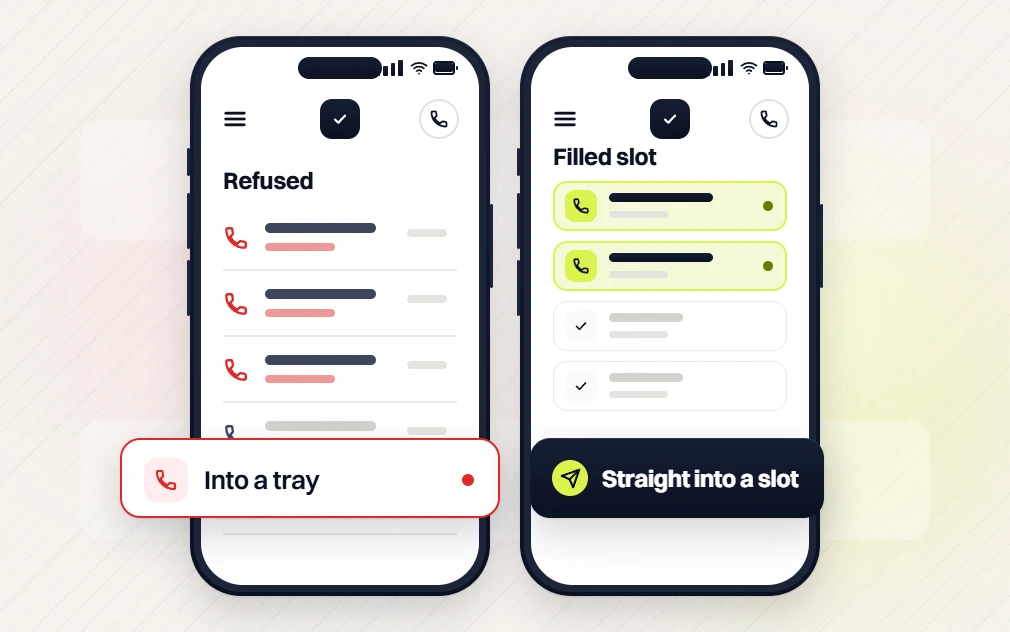
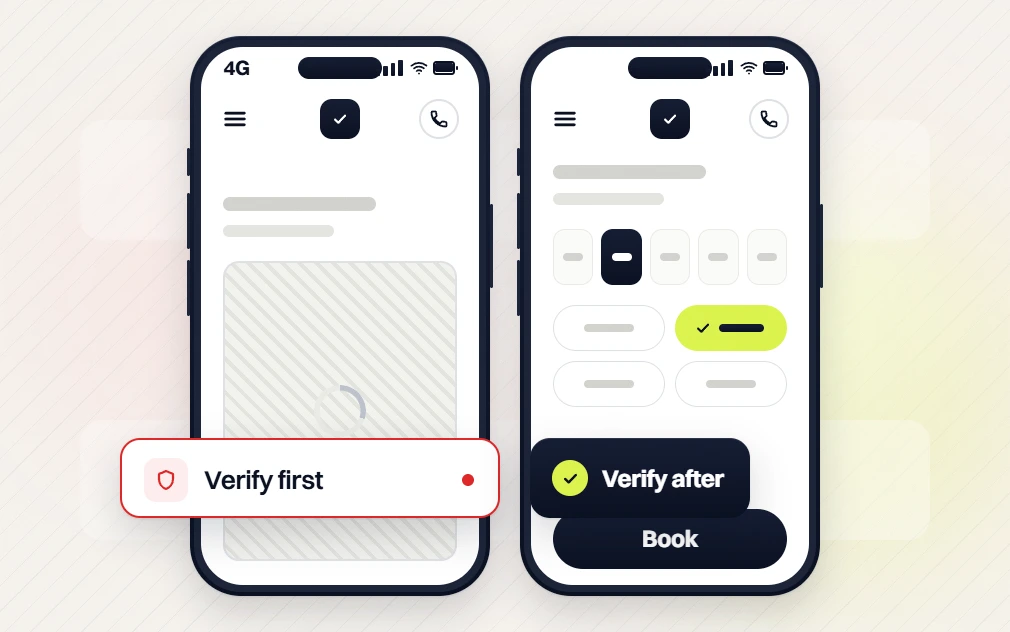
Insurance verification blocks 30% of intended bookings.
Prospects want to book online but face 2 pages of insurance forms + eligibility calls. 3 in 10 drop off before an appointment gets on the calendar.
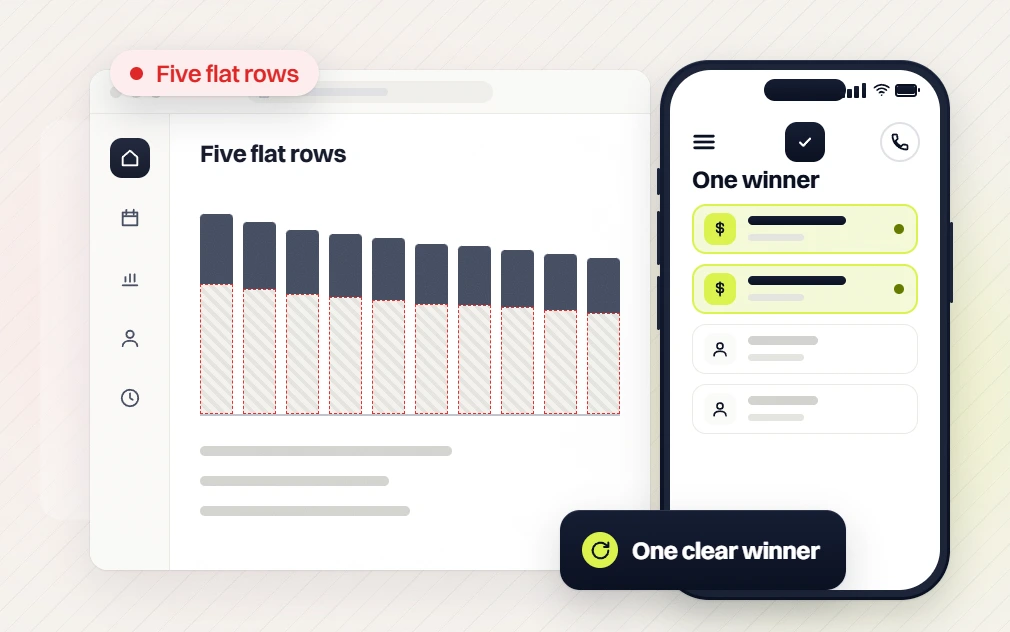
Referrals are a blindspot in your paid + organic mix.
Google Ads, Meta, and organic all report form fills. Nobody reports which channel drove the specialist referral that turned into $12K in reimbursement.
Four services.
One accountable team.
Each pillar is a full program. Run separately or bundled into one retainer with a single healthcare strategist. Every program reports on appointments booked and revenue per patient.
Healthcare websites that book new patients.
Built-to-convert websites engineered around your target patient procedures and revenue mix. Not a Dribbble entry, a booking machine. You own it at handoff.
Healthcare SEO that owns the map-pack.
Technical fixes, intent-mapped healthcare content, and digital PR. Programs that pay back inside twelve months.
Explore healthcare SEO →Paid ads measured against new patient appointments.
Google + Meta media buying by healthcare media buyers. Every campaign tied to appointments booked and revenue per patient, not to click-through rate.
Explore healthcare PPC → Website MaintenanceHosting, uptime, and monthly updates.
LiteSpeed hosting, weekly security scans, monthly optimization, plus small content edits included. Zero worry about page-speed or broken plugins.
Explore maintenance plans → Marketing RetainerBundled monthly retainer from $599/mo.
HIPAA-safe content, local SEO, GBP, Google Ads, and review automation under one healthcare strategist. Foundation $599, Growth $999, Scale $1,499, or custom. billing.
See retainer tiers →Four stages
that book real appointments across every service line.
Same rhythm on every practice. Audit before we spend a dollar. Position before we launch an asset. Build against the offer. Scale against booked appointments in your EHR.
Diagnose the funnel
Site, service-line pages, GBP, ad accounts, and EHR intake tracking. Channel-by-channel teardown against booked appointments and reimbursement per patient.
Sharpen the offer
Nail the specialty mix, insurance posture, and target patient. Every service-line page, ad, and sequence built off one positioning brief.
Build the assets
Launch the site, service-line pages, and EHR-linked tracking. Weekly written notes, nothing stalled in draft.
Compound the growth
Compound paid, organic, and referral wins. Weekly review tied to booked appointments and reimbursement per specialty, not clicks.
What real clients say about the work.
Every quote below is verified by Clutch through a direct call with the client. No cherry-picking.
Real practices.
Real receipts. No borrowed logos.
Three engagements where we tied the work to booked appointments. Numbers verified with the practice owner.
See what our 3 free fixes could earn back.
Drop your numbers in. Assumes a 20% relative visitor-to-booked improvement, which is what our first audit typically finds on non-optimized sites in your vertical.
Frequently
asked.
If your question is not here, book a 30-minute call. A healthcare strategist answers directly on the call.
What does a healthcare marketing agency do differently from a generalist agency?
A healthcare marketing agency runs SEO, PPC, website design, and lifecycle automation with HIPAA-aware tooling, payer-mix awareness, and EMR-tied conversion tracking. Generalist agencies do not. That gap is where most medical practice marketing budgets get wasted on clicks that never turn into booked patients.
Specifics that matter. Healthcare marketing agencies use HIPAA-compliant form endpoints, understand insurance verification workflows, know the difference between an appointment request and a booked appointment, and track completed visits back to the campaign that produced them. Generalist agencies default to Google Analytics goals that count form fills, not booked patients.
The result: healthcare digital marketing programs from specialist agencies typically cost 15 to 30 percent less per booked patient than generalist programs at the same media spend.
How much does healthcare marketing cost per month?
Managed healthcare marketing retainers at Redefine Web run $999 to $6,500 per month depending on channel mix, media budget, and practice size. A single-location practice on SEO plus PPC lands around $1,800 to $2,800 per month in fees. A multi-location group across SEO, PPC, and lifecycle sits in the $4,000 to $6,500 range.
Website builds are separate fixed-price projects starting at $1,500. Ongoing website care plans start at $199/mo. Ad spend to Google and Meta is billed by the platforms directly and lives on top of the retainer.
What drives the fee up or down. Number of locations, number of service lines, number of ad channels, and whether HIPAA-compliant form and CRM integrations need to be built from scratch or already exist. See the individual service pages linked above for exact tier pricing on healthcare SEO, healthcare PPC, healthcare website design, and healthcare website maintenance.
How long before healthcare marketing shows results?
Healthcare PPC produces the first booked patient appointment inside 7 to 14 days of launch. Healthcare SEO shows first ranking gains in 6 to 8 weeks and steady traction by month 4. Website builds launch in 6 to 12 weeks and convert from the day they go live.
Month-by-month expectations for a typical medical practice marketing program. Month 1: PPC campaigns live, first patient appointments booked from paid, SEO technical audit complete. Month 3: PPC cost per booked patient stabilized, SEO map-pack rankings moving. Month 6: SEO traffic contributing 20 to 40 percent of booked patients. Month 12: SEO typically produces 50 to 70 percent of new patient volume at a lower blended cost per acquisition.
Practices that skip website upgrades slow every other channel. A slow, non-mobile site drops PPC conversion by 30 to 50 percent regardless of ad spend.
Which healthcare digital marketing channels produce the best return on investment?
For single-location practices under $5M in revenue, PPC plus a converting website produces the fastest return. Healthcare digital marketing budgets in this range should split 50 to 60 percent PPC, 25 to 35 percent SEO, and 10 to 20 percent lifecycle email.
For multi-location groups and DSOs, local SEO wins on blended cost per booked patient by month 6. Map-pack rankings across multiple ZIP codes compound in a way PPC cannot. Enterprise healthcare marketing budgets typically split 40 percent SEO, 35 percent PPC, 15 percent lifecycle, and 10 percent brand.
Lifecycle email and dormant patient reactivation delivers the highest ROI of any channel when measured on incremental revenue. A well-run reactivation flow brings back 8 to 12 percent of inactive patients per campaign at near-zero incremental cost.
Do you work with healthcare businesses outside the United States?
No. Redefine Web focuses exclusively on U.S. healthcare marketing engagements. HIPAA compliance, state-by-state privacy laws, payer mix, and search behavior differ enough that non-U.S. work requires a different playbook than we run.
We serve every U.S. state, including specialty and rural markets. Multi-state DSOs and hospital-affiliated practices are common in our client mix.
What we do not take on: Canadian OHIP-based practices, UK NHS practices, EU practices, and Australian Medicare practices. Referrals to trusted specialist agencies in those regions are available on request during a discovery call.
How many healthcare marketing clients do you take per market?
One healthcare marketing client per competing service line per local market. If we run PPC or SEO for a single-doctor primary care practice in a mid-size metro, we will not sign a second primary care practice in that same metro. Non-competing specialties in the same city (a dermatologist and a chiropractor, for example) are fine.
What counts as a "market" depends on population density. In dense metros like NYC, LA, Chicago, we split by ZIP or neighborhood cluster. In smaller markets we treat the entire metro as one exclusive zone.
Existing clients get first right of renewal. If a competitor asks us to bid in your market, we tell them no while your contract is active. Locked exclusivity is included on Growth tier and above.
Do we own the healthcare marketing accounts, website, and data?
Yes. Every ad account, website, Google Business Profile, analytics property, CRM record, and tracking pixel is built in your practice name using your logins. Redefine Web has admin access during the engagement. If you leave, we hand back full ownership within 5 business days.
What you keep on cancellation. Google Ads account with full campaign history. Meta Business Manager with pixel and audience history. WordPress site with theme, plugins, and content. GA4 property with 4+ years of historical data. Booking form submissions and CRM records. Domain registrar control.
No lock-in on data or platforms. No exit fees. No hidden switching costs. Owning your marketing stack is standard scope, not an upgrade.
Does healthcare marketing include lifecycle email and patient reactivation?
Yes. Healthcare marketing retainers on Growth tier and above include lifecycle email flows: new patient welcome, appointment reminder, no-show follow-up, dormant patient reactivation, review request, and annual recall. All flows integrate with your EMR or booking tool through HIPAA-compliant middleware.
Reactivation flows typically bring back 8 to 12 percent of dormant patients (defined as no visit in 12+ months) at near-zero incremental cost. That is often the highest-ROI campaign in a healthcare digital marketing program.
Tools supported: Weave, Solutionreach, PatientPop, Klara, Doctible, Twilio for SMS, plus custom EMR endpoints for RevolutionEHR, Athenahealth, and Epic-affiliated practices. Setup and flow authoring is included in the monthly fee.
What are the contract terms and pricing model for a healthcare marketing agency retainer?
Healthcare marketing agency retainers run 6 months minimum on Launch and Growth tiers, 12 months on Scale and Enterprise. That window covers onboarding, baseline stabilization, and enough monthly reports to prove the numbers before renewal.
Pricing model is flat monthly retainer, never a percentage of ad spend. If your PPC budget doubles, our fee stays the same. Website builds are separate fixed-price projects, not billed hourly.
Four tiers per service line: Launch (single-location, single-channel), Growth (multi-channel, high-volume single location), Scale (multi-location groups), and Enterprise (DSOs, hospital systems, multi-state chains). See individual service pages for exact tier pricing.
Can medical practice marketing scale across multiple locations and specialties?
Yes. Multi-location and multi-specialty medical practice marketing programs run on our Scale and Enterprise tiers. Standard scope covers location-aware SEO site architecture, per-location Google Business Profile management, per-location analytics, per-location PPC campaigns, and consolidated leadership reporting.
What multi-location adds. City-level and neighborhood-level SEO pages for each location so a Manhattan patient search does not compete with a Brooklyn location. Per-location conversion tracking so each doctor sees their own booked patient number. Per-location review generation with automated request flows. Regional PR and content when the group operates in one metro.
Onboarding time scales with location count. A 3-location group launches in 4 weeks. A 10-location group launches in 8 to 10 weeks with a per-location handoff schedule.
How does healthcare marketing handle HIPAA compliance and patient privacy?
Every healthcare marketing engagement uses HIPAA-aware tooling from day one. That covers form endpoints, email storage, ad tracking, CRM integration, and any tool that touches protected health information (PHI). A signed BAA is available on request for all healthcare digital marketing clients.
What HIPAA-aware means in practice. Contact and appointment request forms route through servers we control with encrypted-at-rest storage, not through default WordPress or Gmail flows. Google Ads and Meta conversion pixels use hashed identifiers (not raw email or phone). Tracking scripts are configured to exclude PHI fields. Email marketing uses HIPAA-compliant SMTP relays like Mailgun HIPAA or Postmark.
Multi-state practices get a state-by-state privacy review covering CCPA (California), Washington My Health My Data Act, and any state-specific medical privacy laws applicable to your patient base.
Book a free 30-minute
Healthcare marketing audit.
A healthcare strategist runs the call. Three vertical-specific growth fixes you can apply, with or without us. Written summary in your inbox the next business day.
Book your free healthcare audit.
Drop your email. A healthcare strategist reviews your funnel and books the 30-minute audit within one business day.