Skip to content
NOW BOOKING NEW ENGAGEMENTS BOOK A STRATEGY CALL ↗
RW · PET PRODUCT MARKETING HUB

Pet Product Marketing Agency to Grow Subscription Revenue

Pet product marketing for DTC brands, subscription programs, and multi-channel operators. Redefine Web runs the growth engine for 22+ pet brands as a pet DTC marketing partner. Shopify stores, pet SEO, Meta and TikTok Shop ads, Amazon, and Klaviyo lifecycle, tied to orders placed in your Shopify admin and revenue per pet parent. Every campaign is measured on subscription attach at a median $24 acquisition cost after month 3.

22+
Pet brands we run programs for
3.2x
Avg subscription retention year one
$24
Median cost per new subscriber
pet product marketing agency dashboard tracking booked outcomes and revenue metrics
SHOPIFY-TIED · MEDIAN $24 CAC
Trustpilot 4.7/5 ★★★★★
Clutch 5.0/5 ★★★★★
Google 5.0/5 ★★★★★
DesignRush 4.9/5 ★★★★★
GoodFirms 5.0/5 ★★★★★
F6S 5/5 ★★★★★
4.9 WEIGHTED AVERAGE · 120+ VERIFIED REVIEWS ACROSS 6 PLATFORMS
01 WHERE PET BRANDS LOSE REVENUE

Three problems every pet brand is losing revenue on

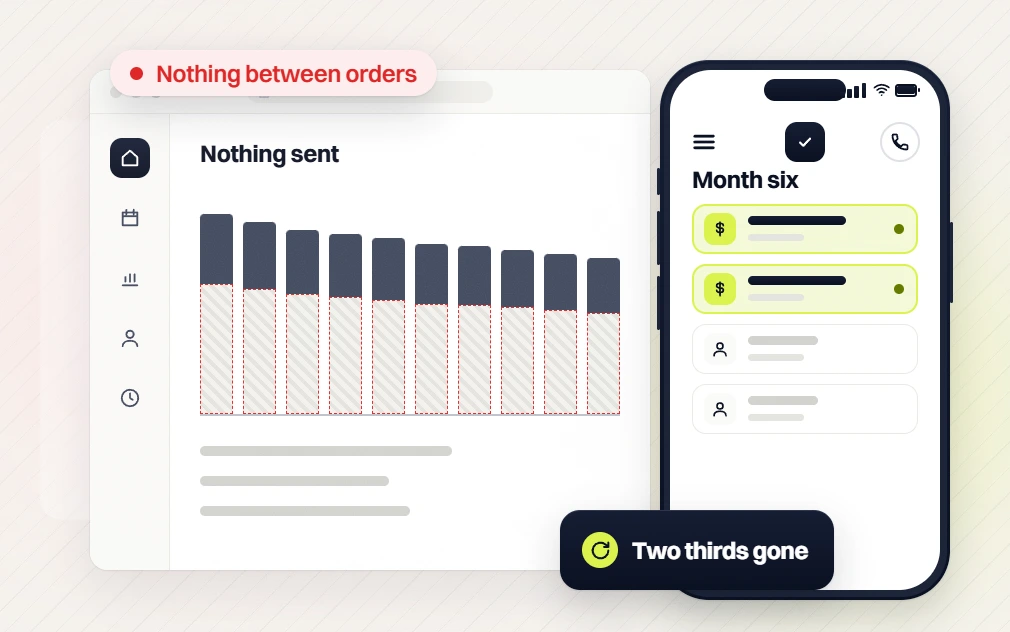
pet product marketing agency challenge card visualizing a common growth blocker
PROBLEM 01 · RETENTION

Pet-food subscribers cancel between month 3 and 6

68% of pet-food subscribers churn by month 6 when Klaviyo does nothing between orders. Recharge has no pause, no swap, and no easy cancel-save flow.

THE FIX . SUBSCRIPTION CADENCE + CANCEL-SAVE FLOW
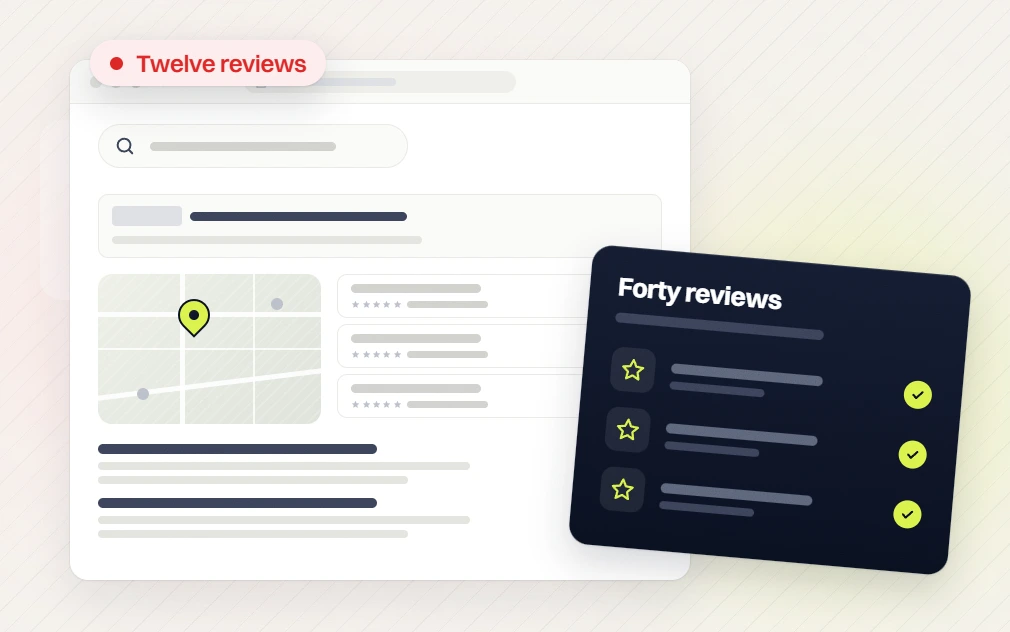
pet brand marketing challenge card visualizing a common growth blocker
PROBLEM 02 · CHANNEL MIX

Chewy lists your SKU at 3x DTC and wins the buyer

Chewy and Amazon list your SKU at 3x DTC price and win the buyer on 40 reviews vs your 12. Your DTC store has lower price and lower review counts.

THE FIX . CHANNEL PRICE FLOOR + REVIEW VELOCITY
pet industry marketing challenge card visualizing a common growth blocker
PROBLEM 03 · AD POLICY

Meta rejects 40% of your pet-supplement creatives

Meta rejects 40% of pet-supplement creatives. FDA CVM claim rules ban the whole language stack, CPMs spike, and safer angles sit untested each month.

THE FIX . CLAIM INVENTORY + AAFCO REVIEW STACK
02 WHAT WE DO FOR PET BRANDS

Four pet marketing services, one accountable team

Each pillar is a full program. Run any one on its own or bundle all four into one retainer with a single point of contact. Every hour is measured against orders placed and revenue per pet parent.

WEB DESIGN + DEVELOPMENT

Pet stores built to convert first orders

Shopify stores built around your target buyer, breed and weight recommendations, and auto-deliver UX. Not a design case study, an orders machine. Owned by you at handoff.

New subscription started chicken recipe, Thu 2:10 → RECHARGE
Explore pet web design
SEO · CATEGORY + BREED

Pet SEO that ranks category and breed queries

Technical fixes, pet products content written to the searches buyers actually make, and digital PR. Programs that pay back inside twelve months.

PPC · DTC + MARKETPLACES

Paid ads measured against orders placed

Google, Meta, TikTok Shop, and Amazon media buying with post-purchase tracking and Shopify reconciliation, optimized to cost per subscriber by SKU, not cost per click.

Explore pet PPC
WEBSITE MAINTENANCE

Hosting, uptime, and monthly updates

LiteSpeed hosting, weekly security scans, monthly optimization, plus small content edits included. Zero worry about page-speed or broken plugins.

Explore maintenance plans
PREFER EVERYTHING BUNDLED Plans from $599/mo. One point of contact. All four pillars under one monthly cadence. See pet retainer plans
03 HOW WE RUN PET ACCOUNTS

Four stages of pet marketing, every step tied to orders placed

Same rhythm on every pet brand. Audit before we spend a dollar. Position before we launch an asset. Build against the offer. Scale against orders placed in your Shopify admin.

01 WEEK 1

Diagnose the funnel

Site, Shopify, ad accounts, Klaviyo flows, and post-purchase surveys. Channel-by-channel teardown against orders placed and subscription attach per cohort.

✓ SIGN-OFF: 3 WINS READY TO APPLY
02 WEEKS 2 TO 4

Sharpen the offer

Nail the hero SKU mix, subscription posture, and target buyer. Every PDP, ad, and email built off one positioning brief.

✓ SIGN-OFF: SKU MIX + OFFER LOCKED
03 WEEKS 4 TO 12

Build the assets

Launch the storefront, PDPs, subscription flow, and Shopify-linked tracking. Weekly written notes, nothing stalled in draft.

✓ SIGN-OFF: ASSETS LIVE, FULLY OWNED
04 MONTH 3 ONWARD

Compound the growth

Compound paid, SEO, retention, and creator wins. Weekly performance review tied to orders placed and subscription attach.

✓ SIGN-OFF: ORDER TRACKING LIVE
04 HOW WE COMPARE

Not every pet agency reports the same things

Most pet marketing agencies report on impressions and clicks. Shopify template shops report on nothing. Here is what actually shows up in your Shopify admin when we run the program.

WHAT YOU ACTUALLY GET REDEFINE WEB TYPICAL AGENCY DIY
Reports on orders placed and subscription attach (not clicks) . .
One accountable pet brand lead you can name . .
Integrates with Recharge, Skio, Stay Ai, Klaviyo . .
Coordinates DTC + Amazon + Chewy + TikTok Shop as one plan Sometimes .
Pet content written by writers who cover pet DTC Sometimes .
Breed and life-stage creative segmentation on Meta and TikTok . .
Owned Shopify source you keep at handoff . Yes
Selected clients we've run full marketing programs for
  • Armanino
  • Bsh
  • Delicate Dental
  • Goverment Legal Services
  • Hightop Health
  • Lifestance
  • Marmalade
  • Montegra
  • Ncdenttal
  • Oxford Capital
  • Paquin Carrol
  • Pco Bookkeepers
  • Peaceful Mmind Psychology
  • Peak Accounting Solutions
  • Pel Rehabilitation Medicine
  • Riversaas
  • Rosenbaumm
  • Smmile Design
  • Stanhope Capital
  • Stellla Maris
  • Tilghman
  • Toyota
  • Uptime
  • Vpdental
  • Willentz
06 FAQ

Frequently asked questions

How to promote pet products?

+

Promoting a pet product line in 2026 runs on 4 stacked layers. Paid social on Meta and TikTok Shop covers cold acquisition, targeted by breed, life stage, and pet-parent demo. Amazon and Chewy handle high-intent brand and category searches, with review velocity as the CVR driver. Klaviyo lifecycle email tied to Recharge subscription cuts month-3 and month-6 churn, and Klaviyo’s developer docs spell out the flow triggers most brands miss. SEO on ingredient, breed, and life-stage queries (senior cat food, puppy training treats, grain-free dog food) beats marketplace listings on organic terms with buyer intent. A working pet marketing partner runs all 4 in parallel and reports on blended CAC and subscription contribution margin, not first-order ROAS. Any promotion plan that skips Amazon or Klaviyo loses about 30% of the addressable revenue since marketplace-defense and repeat-purchase math sit in those channels. Pet parents research across 4 to 6 touchpoints before the first order, so cross-channel measurement matters more than channel-picking.

Is selling pet products profitable?

+

Selling pet products is one of the more profitable DTC categories when the unit economics work. Pet supplements and functional treats carry the highest gross margins at 65 to 75%, with strong subscription attach since consumption is daily. Premium dog and cat food sits at 45 to 60% margin and drives the highest lifetime value since a household stays on one food for years. Toys and enrichment run 55 to 70% margin but low repeat rates. Litter is tough since shipping weight kills unit economics unless you own manufacturing. The unit economics that support a $50M+ brand in 5 years combines supplements plus premium food with a subscription hook. AAFCO-compliant labeling is a requirement for food and supplements, and the AAFCO model regulations spell out what claims and nutritional adequacy statements need to sit on the package. Below 55% blended gross margin, DTC pet products struggle to fund paid media at profitable CAC targets, so category pick and co-manufacturer selection matter more than the launch creative.

How much does a pet product marketing agency cost per month?

+

Redefine Web pet retainers start at $599/mo for a single-channel program (Amazon SEO or Klaviyo lifecycle) and scale to $1,999/mo for a full DTC plus marketplace plus subscription program. Custom retainer programs above $2,000/mo run on scoped statements of work. Media spend on Meta, TikTok Shop, Google, and Amazon Ads runs separately and depends on your CAC target. Most 7-figure pet brands run $6,000 to $20,000/mo in blended media plus the retainer. Everything reports on blended CAC and subscription CM3, not agency-side vanity metrics. Contracts run 6 months and cover a Shopify + Recharge + Klaviyo stack, and platform work on the storefront uses Shopify’s help documentation as the reference for merchant-facing config so nothing sits in a black box. Media spend gets billed on your accounts, ad account access stays with your team, and every asset built during the retainer belongs to you at handoff. Monthly reporting lands on the first business day of the month with a written summary and a call-review slot.

How do you advertise pet products on Facebook and Instagram without getting rejected?

+

Meta rejection rates for pet supplements and functional treats sit around 40% across the pet products advertising category. Cut it under 10% by pre-clearing every ingredient claim against Meta health policy and the FDA CVM rules for pet food and supplements. Ban words like prevents, treats, cures, heals. Use structure or support instead (supports joint mobility, helps digestion). Keep before-and-after photos off the primary image. Route flagged creatives through Meta appeals with an AAFCO substantiation doc attached. The FDA Animal + Veterinary center publishes what qualifies as a drug claim versus a food claim for pet products, and that distinction drives which words get flagged. A cleared claim library goes to your creative team so nothing gets built that will fail review. Ad copy still needs to sell the benefit, so the workaround is showing the outcome (a dog running, a cat scratching a post) alongside compliant language rather than making the drug-level claim directly.

Should a new pet brand sell on Amazon, Chewy, or DTC first?

+

Launch DTC on Shopify first if the product has a subscription hook (food, supplements, litter, treats). You build first-party email and SMS on Klaviyo, keep 100% of margin, and control the pet-parent relationship. Add Amazon at month 4 once you have 20 organic reviews and a repeatable ad-account structure. Add Chewy at month 9 once you clear their vendor-onboarding minimums and can hold $8K+ in inventory. Launching Amazon or Chewy first burns your DTC pricing power and gives the platform your customer data. DTC first, marketplaces to defend brand queries and win keyword real estate. Pet brand marketing on Amazon works when 20+ reviews and a full A+ content module land before Sponsored Products spend goes up. Chewy works when the SKU fits their auto-ship program and margins survive their retail markup. A disciplined pet brand marketing partner sequences the launches so nothing burns capital in the wrong channel, and reports channel-level CAC at month 3, 6, and 12 to catch the shift when marketplaces start cannibalizing DTC subscribers.

What is a healthy subscription retention rate for a pet food brand?

+

Healthy pet-food subscription retention benchmarks: 80% at month 1, 62% at month 3, 48% at month 6, 32% at month 12. Anything below 40% at month 6 means the Klaviyo cancel-save flow, product-swap logic, or delivery-cadence options don’t exist. The three fixes that move the number: 1) a 3-touch Klaviyo save flow on cancellation with a cadence-change offer, 2) a Recharge portal that lets pet parents skip 1 order without cancelling, 3) a product-swap upsell on order 2 based on the pet profile they submitted at checkout. Pet industry marketing teams that hit above-benchmark retention pair those fixes with a monthly cohort review, splitting new subscribers by acquisition channel and hero SKU. That review flags which acquisition source produces high-LTV pet parents and which ones churn out at month 2. Kill the channels that churn, double the channels that hold. Retention math beats acquisition math after the first $1M in ARR since paid media compounds only when the second and third orders land, and every 5-point retention gain lifts LTV enough to fund a $2 to $4 CAC bump.

How big is the pet supplement market and is it worth entering in 2026?

+

The US pet supplement market crossed $2.7B in 2024 and grows 8 to 10% year over year through 2030 per Packaged Facts. Dogs account for 77% of volume, cats 21%. The winning brands sit in functional categories: joint, calming, digestive, immune, skin and coat. Barriers to entry are moderate: an AAFCO-compliant label, a co-manufacturer that runs small batches, and $40K to $75K in launch media to hit escape velocity on Amazon plus DTC. The category is worth entering if you own a claim angle and can hit 60%+ gross margin at co-man pricing. Pet industry marketing work on a supplement launch skews to claim-library setup (what the FDA CVM allows vs what Meta will accept), Amazon listing prep with 7 A+ modules, and a Klaviyo welcome flow that educates the pet parent on why the ingredient matters. The brands that stall in year 1 skipped the claim-library work and burned budget on rejected Meta creative. Year-1 revenue targets that hit $600K to $1.2M come from a 3-SKU launch, not a 10-SKU launch, since ad-account structure and review velocity concentrate faster on fewer SKUs.

Do you specialize in dog food and dog treat brands or all pet categories?

+

We run pet brand marketing programs for dog food, dog treats, cat food, cat litter, small-animal treats, pet supplements, and pet accessories. 68% of our active pet clients are dog food and treat brands since that’s where the DTC subscription math works cleanest. We also run 4 cat-supplement brands and 2 pet-accessory brands on Shopify + Amazon. What matters is not the species, it’s whether the product has a subscription hook, a repeat-purchase window under 90 days, and 55%+ blended gross margin. We turn down categories that don’t hit those thresholds since retainer math doesn’t work without the repeat purchase. Small-animal and reptile brands can work when the accessory attach rate is high, but standalone food SKUs in low-repeat categories usually need a broader retail strategy before DTC scales. Every onboarding starts with a category profitability check so we don’t spend media on a SKU that can’t hit target CAC by month 6.

How long does it take to see results from pet product marketing?

+

Meta and TikTok Shop paid social show first-order ROAS signal in 14 to 21 days once the pixel has 50 purchase events. Amazon SEO and PPC start moving keyword rank in 30 to 45 days. Klaviyo lifecycle flows raise repeat-purchase rate within one full billing cycle (35 days). Google SEO on ingredient and breed queries takes 90 to 120 days for page-1 movement on mid-difficulty terms. The full subscription CM3 payback picture takes 6 to 9 months since you’re measuring order 2, 3, and 4 revenue against blended CAC. Anyone promising 30-day full-stack pet marketing results is quoting a single channel and burying the compound growth math. The right way to track it: monthly cohort report on month-1, month-3, and month-6 revenue per pet parent, split by acquisition channel and hero SKU. That report exists in Klaviyo plus a Shopify order tag setup we run during onboarding, and it’s the same report we use to shift media budget quarterly.

What is the best pet brand marketing strategy for a DTC startup under $2M?

+

Under $2M ARR, the winning pet brand marketing stack is 1 product hero SKU on Shopify + Recharge, Meta and TikTok Shop for cold traffic, Klaviyo welcome + subscription flows, and Amazon as a brand-defense channel. Skip Google Ads on generic terms (dog food, cat treats) since bids are $6+ and Chewy outbids you. Run Google only on your brand name plus long-tail (best salmon oil for senior labradors). Invest 60% of media in Meta, 25% in TikTok, 15% in Amazon PPC. Content: 1 UGC creator per week on paid, 2 organic Reels per week. This mix compounds to a $5M run rate in 18 months if the product hits. The trap most sub-$2M pet brands fall into is spreading media across 5 channels at $30/day each. Nothing works at that spend floor. Pick 2 channels, spend $150/day each, and expand only after cohort payback lands under 90 days on the primary channel. Above 90 days payback, cut spend by 30% and rework the offer before scaling further.

How do you scale a pet product brand on Amazon?

+

Amazon scaling for pet products runs on 4 levers stacked in this order: 1) fix the listing (7 A+ modules, brand story, 6 lifestyle images, 3 infographic images with feeding chart or dosing chart), 2) push review velocity with Vine plus a Post-Purchase Insert that routes to a Klaviyo review-request flow, 3) run Sponsored Products on 40 competitor and category terms with a $60/day starting budget per SKU, 4) stack Sponsored Brands and Sponsored Display for defense on your branded terms. Add Subscribe and Save at 5% discount once you cross 25 reviews. A launched pet SKU hits $20K/mo on Amazon inside 90 days with this stack. Amazon marketplace work here is 40% listing prep and 60% ongoing PPC bid management with a weekly search-term report review. Amazon’s algorithm rewards click-through rate and conversion rate, so a cleaner listing beats a bigger bid on almost every category term. Reviews plus main-image A/B testing move CVR more than any ad-account tweak.

When should a pet brand hire an agency vs an in-house marketing team?

+

Hire a pet product marketing agency between $500K and $8M ARR when you need Meta buyer, Amazon operator, Klaviyo builder, SEO writer, and creative producer skills but can’t afford 5 senior hires ($650K+ loaded cost). Move in-house above $8M ARR when the media spend justifies a dedicated director plus 2 channel managers. Some functions stay agency forever (Amazon consulting, technical SEO, Shopify dev) because in-house hires get bored and quit. The rule: hire in-house for weekly recurring work, keep agency for specialist work and channel expansion. Redefine Web scopes this split into every retainer so the handoff plan lives in the contract, not in a post-mortem. Most $10M+ pet brands run a hybrid: 3 in-house generalists plus agency support on paid, Amazon, and creative production. The split shifts every 12 months as the brand grows or contracts around a channel. Reviewing that split quarterly beats waiting for a channel to underperform. The trigger to move a function in-house is when it consumes 30+ hours per week of agency time and the workload is predictable.

FREE — 30 MINUTES — NO PITCH

Book a free growth audit.

Walk away with three fixes you can ship the same week — whether or not you hire us.

24-HOUR RESPONSE 300+ AUDITS RUN ZERO OBLIGATION