Redefine Web

B2B SaaS Marketing Agency to Grow Qualified Pipeline

B2B SaaS marketing agency running the full stack for growth-stage SaaS teams. Custom websites, technical SaaS SEO, LinkedIn and Google Ads, and lifecycle automation. Every program reports on signed deals, ARR, and demos booked. Retainers from $1,499/mo, verified with sales-tagged revenue.

See where you rank → Free. Written report, yours to keep.
40+
SaaS teams served
3.4%
avg visitor → demo booked
12 mo
median engagement
SAAS MARKETING RETAINER
$1,499
/mo
fixed · published · no % of ad spend
✓Site + SEO + ads · one team
✓Reported against the CRM
DEMOS BOOKED / MO
26 → 58
↗
SAAS TEAM · 90 DAYS · CRM-VERIFIED
✓ HUBSPOT · SALESFORCE · PIPEDRIVE
Trustpilot4.7/5★★★★★25+
Clutch5.0/5★★★★★40+
Google5.0/5★★★★★5+
DesignRush4.9/5★★★★★29
GoodFirms5.0/5★★★★★20
F6S5/5★★★★★
4.9 WEIGHTED AVERAGE · 120+ VERIFIED REVIEWS ACROSS 6 PLATFORMS

Three problems every B2B SaaS operator is losing pipeline on

If any of these looks familiar, the free website audit names the fix and what it's worth, before you spend a dollar.
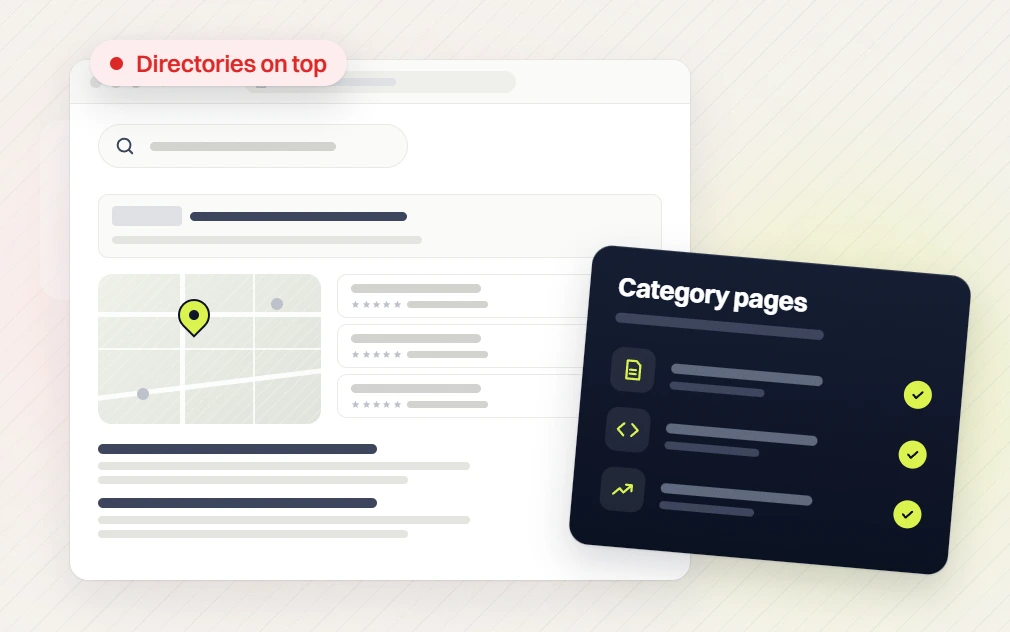
B2B SaaS marketing search results with directories on top and a checked category pages card
PROBLEM 01 · PIPELINE

G2 and Capterra own every category term you rank

G2 and Capterra outrank you on every category query. Your product pages have zero comparison schema. Buyers hit their listing first, never yours.

✓THE FIX · CATEGORY + COMPARISON PAGES IN 60 DAYS
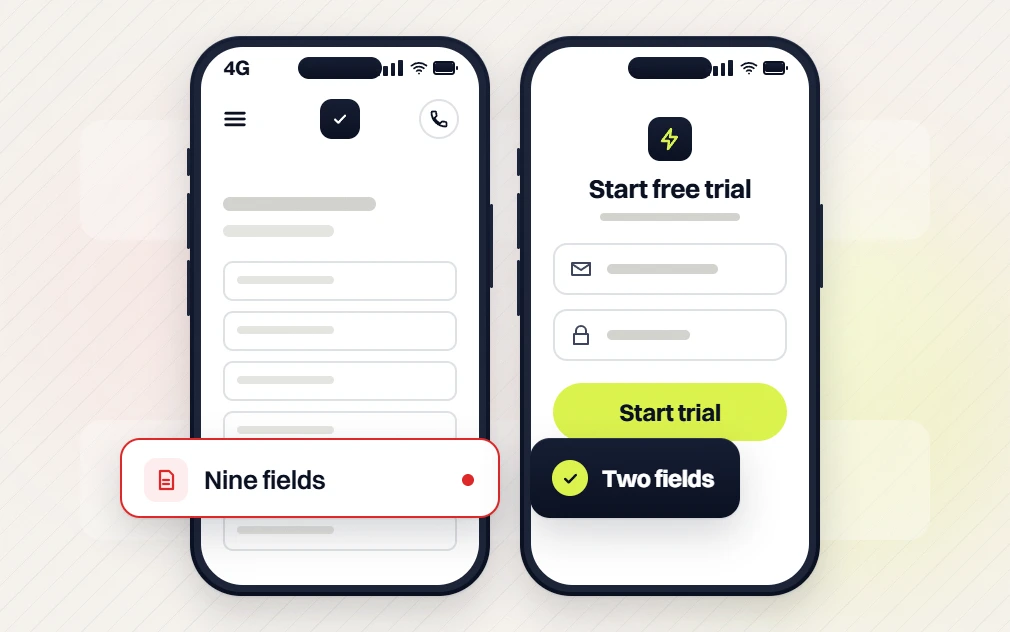
B2B SaaS marketing signup forms on two phones comparing nine fields with a two field start free trial
PROBLEM 02 · CONVERSION

Homepage hides pricing and asks 9-field demo form

Buyers want price, screenshots, and a 2-field trial. You hide all three. Cold traffic bounces in 8 seconds and form-fill rate stalls at 1.4% monthly.

✓THE FIX · PRICING PAGE + FRICTIONLESS TRIAL FLOW
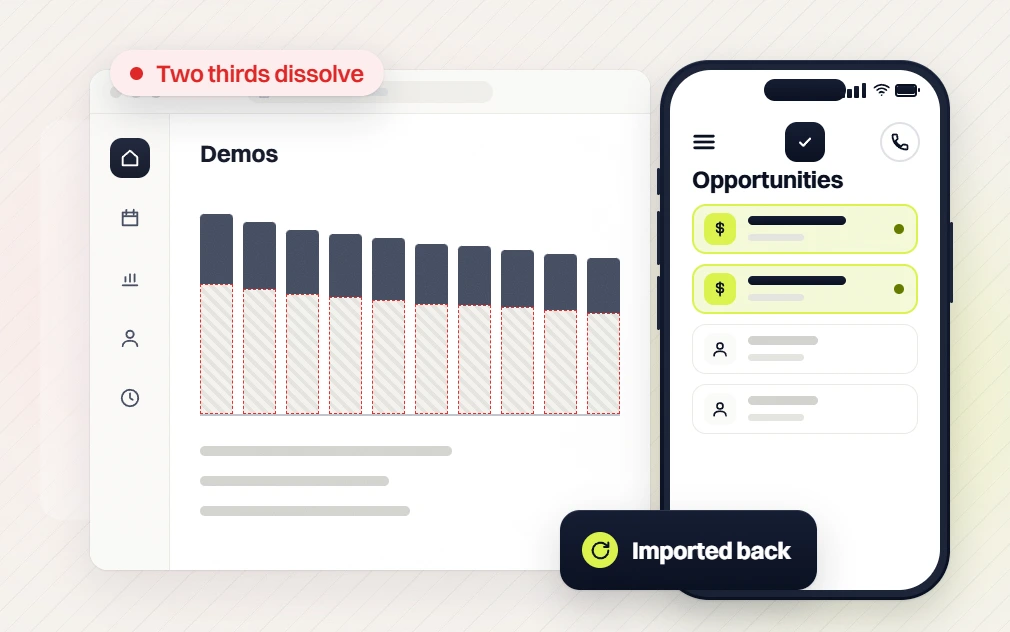
B2B SaaS marketing demos chart where two thirds dissolve, with opportunities imported back on a phone
PROBLEM 03 · ATTRIBUTION

Paid campaigns optimize to fills, buying junk demos

Google Ads optimizes to form fills, not signed ARR. 62% of demos never open a real opportunity. Sales writes off pipeline as junk traffic monthly.

✓THE FIX · HUBSPOT + SALESFORCE OFFLINE IMPORT

Four B2B SaaS marketing services, one accountable team

Each pillar is a full program. Run any one on its own or bundle all four into one retainer with a single point of contact. Every hour is measured against signed deals and pipeline efficiency.

PREFER EVERYTHING BUNDLEDPlans from $1,499/mo. One point of contact. All four pillars under one monthly cadence. SEE SAAS RETAINER PLANS →

Four stages, every step tied to booked outcomes

Same rhythm on every account. Audit before we spend a dollar. Position before we launch an asset. Build against the ICP. Scale against demos booked and pipeline, not form fills.

WEEK 1

Diagnose the funnel

Site, product-led pages, ad accounts, CRM, and revenue tracking. Channel-by-channel teardown against demos booked, pipeline, and CAC payback.

✓SIGN-OFF: 3 WINS READY TO APPLY
WEEKS 2 TO 4

Sharpen the offer

Nail the ICP, pricing story, and trial-to-paid path. Every category page, ad, and lifecycle sequence built off one positioning brief.

✓SIGN-OFF: ICP + OFFER LOCKED
WEEKS 4 TO 12

Build the assets

Launch the site, product pages, funnels, and CRM-linked tracking. Weekly written notes to your leadership, nothing stalled in draft.

✓SIGN-OFF: ASSETS LIVE, FULLY OWNED
MONTH 3 ONWARD

Compound the growth

Compound paid, SEO, and product-led wins. Weekly review tied to demos, pipeline, and CAC payback, not click-to-form ratios.

✓SIGN-OFF: PIPELINE + CAC TRACKING LIVE

Not every SaaS agency reports the same things

Most B2B SaaS marketing agencies report on impressions and clicks. Template SaaS sites report on nothing. Here is what actually shows up in your CRM when we run the program.

WHAT YOU ACTUALLY GET
REDEFINE WEB
TYPICAL AGENCY
DIY
Reports on demos booked and pipeline (not clicks)
✓
NO
NO
One accountable lead you can name
✓
NO
NO
Integrates with HubSpot, Salesforce, Pipedrive
✓
NO
NO
Owned website source you keep at handoff
✓
NO
NO
SaaS content written by writers who cover B2B SaaS
✓
SOMETIMES
NO
Category page + G2 / Capterra optimization
✓
YES
NO
Named lead for the full engagement
✓
NO
YES
Case studies See all case studies

Real SaaS teams, real numbers

A sampling of recent engagements that match this work.
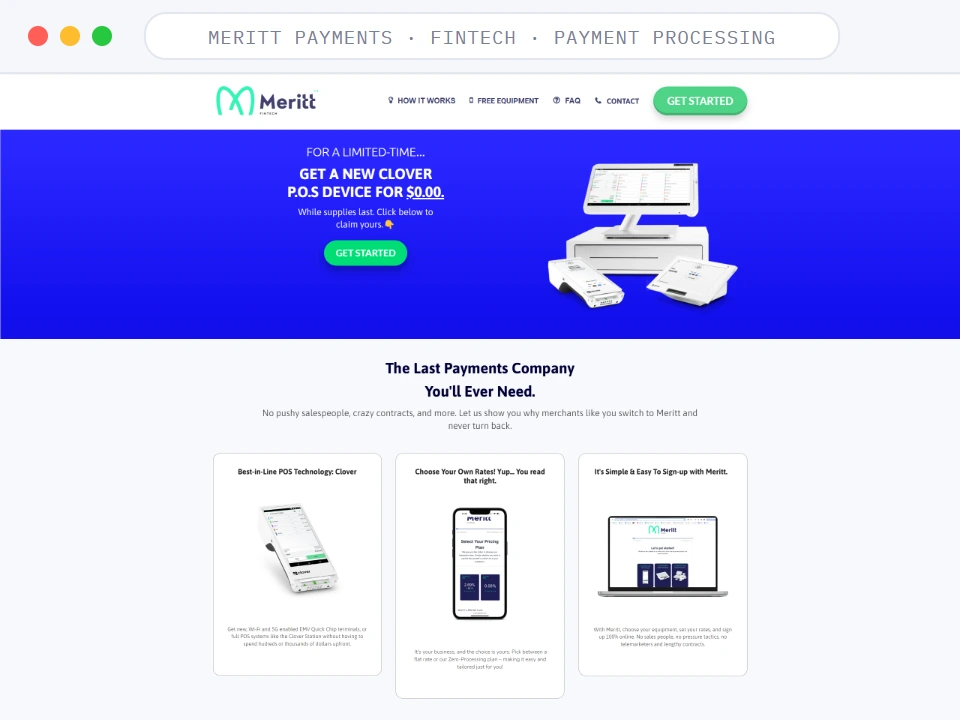
Homepage of Meritt Payments, a Fintech · Payment Processing business, shown in a browser window
Fintech · Payment Processing

Grew Meritt Payments traffic 108% and cut CPA 65% with a bilingual rebuild.

Meritt Payments, a payment processing fintech, had a site overloaded with plugins. Pages took 10 seconds to load, and the English and French versions were poorly built. We designed a fast, light custom site with clear calls to action and a proper bilingual SEO structure. Organic traffic grew 108% in 6 months, CPA fell 65% and 500+ keywords reached page one in the first year.

Read the Meritt Payments case study →
108%
Organic traffic
-65%
CPA
500+
First-page keywords
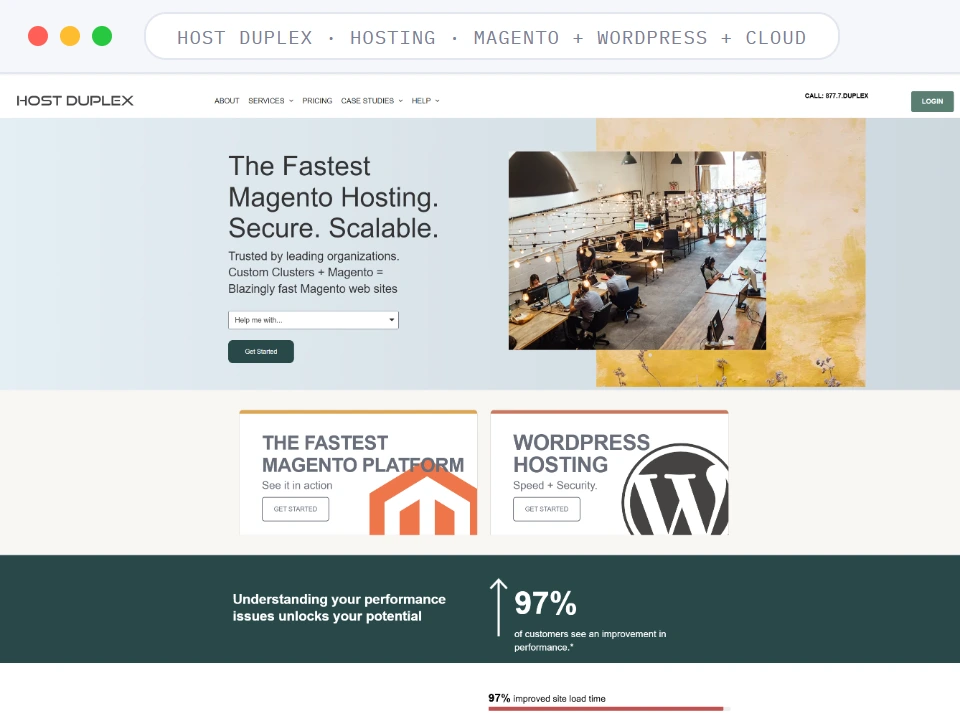
Homepage of Host Duplex, a Hosting · Magento + WordPress + Cloud business, shown in a browser window
Hosting · Magento + WordPress + Cloud

Cut Host Duplex page load to sub-second with a clean rebuild.

Host Duplex sells high-performance hosting, yet its own website took 8+ seconds to load. We rebuilt it on a lightweight WordPress theme and swapped plugins for custom code. Chat and tracking stayed, without slowing the site. Pages now load in under a second, with 65% fewer server requests and about 5K more organic visits.

Read the Host Duplex case study →
-65%
Server requests
-85%
Page load
+5K
Organic visits
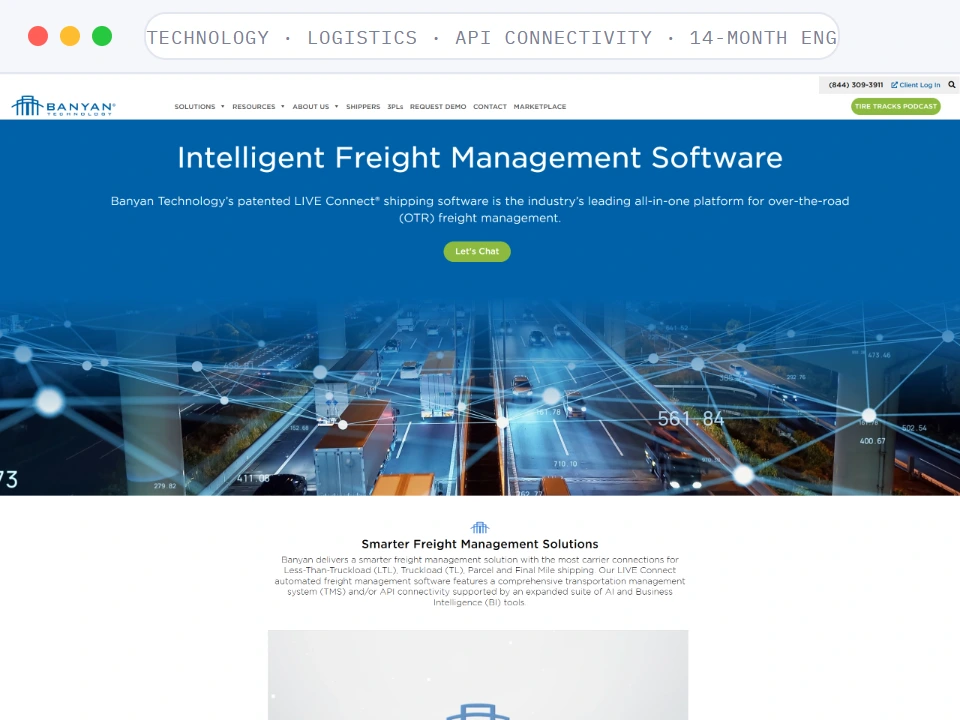
Homepage of Banyan Technology, a Logistics · API Connectivity · 14-Month Engagement business, shown in a browser window
Logistics · API Connectivity · 14-Month Engagement

Grew Banyan Technology engagement 320% with optimized Google Ads.

Banyan Technology links shippers and carriers through its freight API platform. Rising CPCs and frequent algorithm changes made its Google Ads hard to scale. Over 14 months, we ran keyword targeting based on research, separate campaigns on Google and Meta, constant bid tuning and real-time tracking. Engagement rose 320%, the conversion rate reached 5.48% and cost per conversion held at $56.01 across $476K in ad spend.

Read the Banyan Technology case study →
5.48%
Conversion rate
$56.01
Cost-per-conversion
$476K
Ad spend managed

See what our 3 free fixes could book back

Move the sliders to your numbers. The model assumes a conservative 20% conversion lift.

Projected revenue

Today you're booking , the three fixes are worth at a conservative 20% lift.

Free · Written findings · Yours to keep

Frequently asked questions

Anything else, the audit answers it in writing.

Prefer to talk?
hello@redefineweb.com →

B2B SaaS marketing pulls qualified buyers into a subscription software product through paid, organic, lifecycle, and product-led channels. It behaves nothing like marketing a one-time purchase. The buying cycle is long, the buyer is a committee, and revenue only counts once a paid plan renews. So the metrics that matter for B2B SaaS marketing are signed ARR, CAC payback, and pipeline coverage, not clicks or MQLs. A good program treats every marketing dollar as a pipeline investment and reports numbers back to your finance team on the same schedule sales does. The channel mix on any healthy program starts with three pillars: paid search on bottom-funnel intent, category and comparison SEO built on real buyer questions, and a lifecycle sequence that nurtures trials into paid plans. LinkedIn Ads layer on when your ACV clears $15K. Content, PLG loops, and community programs enter the mix once the paid and organic base produces predictable weekly demos. Every asset a program produces plugs into your CRM so the CFO and CRO see the same number your sales VP does.

SaaS stands for software-as-a-service. In marketing it refers to the whole class of subscription cloud tools that sell recurring access to a product instead of a one-time license. SaaS marketing programs sell trials, demos, and renewals, not shrink-wrapped boxes. The work centers on educating a buying committee, running category and comparison SEO, converting free trials to paid, and reporting on ARR, retention, and expansion revenue. Good SaaS marketing looks nothing like ecommerce marketing since one deal can pay for two years of program cost. Every touch has to earn trust and speak to a buying committee of four to seven people. Product-led signals, integrations pages, security documentation, and pricing transparency all sit inside the SaaS marketing surface. A program that ignores lifecycle and only optimizes acquisition burns out on trial-to-paid friction. The healthiest B2B SaaS marketing programs report on activated users and expansion revenue alongside new logo growth, since retention math dominates lifetime value.

SaaS growth marketing is the set of tactics used to expand the customer base and revenue of a software company. Paid acquisition, SEO, lifecycle email, in-product messaging, referral loops, and pricing tests all sit under it. The point is compounding revenue, not one-off campaigns. A good SaaS growth marketing program has a live pipeline model, weekly experiments running, and a clear read on which channel actually pays back CAC in under 12 months. Search engines reward the same technical hygiene Core Web Vitals flag, so growth teams that fix page speed and stability tend to outperform teams that only chase channels. Growth marketing at the mid-market level shifts from pure acquisition to expansion revenue and net revenue retention. That means account-based plays, product-qualified lead scoring, and lifecycle sequences that trigger on in-app events. The teams that hit rule-of-40 economics run growth marketing as a compounding system, not a channel-hopping race.

The rule of 40 says a healthy SaaS company should have combined revenue growth rate and profit margin totaling at least 40 percent. A company growing 60 percent per year at a negative 20 percent margin still passes. A company growing 15 percent at a 25 percent margin also passes. Below 40 combined and unit economics start to slip. Investors and boards use the rule as a quick health check on B2B SaaS marketing spend. It signals whether the business is scaling efficiently or burning runway to chase top-line growth that will not compound. A rule-of-40 breach usually points to broken CAC payback, not too little pipeline. Marketing has two levers under the rule. Compress CAC payback so growth costs less, or expand net revenue retention so every acquired dollar returns more over time. Both work. What does not work is buying more traffic when the trial-to-paid rate is broken, since that path only accelerates the burn side of the equation.

A B2B marketing agency runs demand-generation programs for companies that sell to other businesses. The work covers positioning, category SEO, paid acquisition on Google and LinkedIn, lifecycle email, sales enablement, and pipeline reporting. Unlike consumer agencies, a good B2B SaaS marketing agency reports on demos booked, pipeline sourced, and signed ARR, not impressions or reach. Retainers typically bundle strategy, media buying, content, and CRO under one accountable lead. Good agencies plug into HubSpot or Salesforce so the CFO and CRO see the same numbers on the same dashboard. The best B2B agencies also operate on a shared roadmap with your in-house team, not a walled-off scope of work. That means your product marketer and their lead work off the same positioning brief, your RevOps lead and their analyst debug attribution together, and your leadership gets one weekly note that ties every activity back to pipeline. Agency and in-house working as one team is the pattern that produces compounding growth.

Managed B2B retainers run between $2,500 and $25,000 per month at most agencies, depending on channel mix and media budget under management. At Redefine Web, B2B SaaS marketing retainers start at $1,499 per month for Foundation and scale to Enterprise starting at $6,000. Foundation covers one channel plus reporting. Growth adds a second channel plus lifecycle. Scale runs the full paid, SEO, and lifecycle stack across one dedicated account lead. Enterprise adds multi-product or multi-BU coverage. Media spend is billed direct to your ad accounts, never marked up, and website builds are scoped separately as fixed-price projects from $2,500. Contracts typically run six months so the program has time to compound past the first attribution window. Cheaper retainers exist but almost always mean offshore execution against a template. The rule of thumb is that any B2B agency charging under $2K per month is running with junior staff on a copy-paste plan, and results reflect the price.

No. SaaS is a product delivery model, not an agency category. SaaS means software-as-a-service, where buyers rent access to cloud software on a subscription. A SaaS marketing agency is a different thing: an agency that markets SaaS products for the companies that build them. The confusion comes up because some marketing tools are sold as SaaS platforms, like HubSpot or Marketo, and agencies use them to run programs. A B2B SaaS marketing agency uses SaaS platforms internally while running growth programs for SaaS founders. The two categories overlap in tools, not in service model. A software vendor sells a product. An agency sells outcomes: pipeline, demos, closed revenue. When founders ask this question, they usually mean whether they can hire an agency that specializes in their industry. The answer is yes. A vertical-focused B2B SaaS marketing agency knows the buying committee, the platforms, and the metrics that matter to a software business.

Common B2B SaaS examples include Salesforce for CRM, HubSpot for marketing automation, Slack for team chat, Zoom for meetings, Notion and Asana for project management, Snowflake for data warehousing, Stripe for payments, Twilio for communications APIs, and Datadog for observability. All sell recurring subscriptions to other businesses instead of one-time software licenses. Each has an ICP, a pricing page, a trial or demo path, and a category on G2 and Capterra. Any B2B SaaS marketing program has to cover the same shape: buyer education, category ranking, conversion path, and lifecycle nurture to move trials to paid. Vertical SaaS examples run the same play at industry scale: ServiceTitan for home services, Toast for restaurants, Procore for construction, Guidewire for insurance. Vertical SaaS marketing tends to lean harder on integrations and workflow content since the buyer already knows the pain. Horizontal SaaS marketing leans harder on category education. The channel mix stays similar, only the message weight shifts.

The right B2B SaaS marketing agency for LinkedIn ads reports on pipeline sourced, not impressions or click-through rate. Look for three signals. First, they run LinkedIn Campaign Manager inside your own account, not theirs, so you keep every asset at handoff. Second, they push offline conversions from your CRM back into LinkedIn so bidding optimizes to signed opportunities. Third, they report weekly on cost per SQL and cost per closed deal, with pipeline attribution flowing through HubSpot or Salesforce. Redefine Web runs LinkedIn programs on this contract and reports on pipeline every Monday. Bid strategy sits inside your account. Creative production stays with your brand guidelines. Every prospect that enters an ad audience shows up in your CRM with the campaign attribution attached, so your sales team sees the ad path when they open the record. This is how LinkedIn spend earns a seat next to Google spend on the pipeline dashboard, instead of getting written off as brand-building.

Managed retainers at Redefine Web run $1,499, $2,499, $3,999, and Enterprise starting at $6,000 per month. Foundation covers a single channel plus reporting. Growth adds a second channel plus lifecycle. Scale runs the full B2B SaaS marketing stack across paid, SEO, and lifecycle with a dedicated account lead. Enterprise adds multi-product or multi-BU coverage. Website builds are scoped separately as fixed-price projects starting at $2,500. Media spend is billed direct to your ad accounts, never marked up. Every retainer includes weekly written notes, monthly executive review, and quarterly roadmap tied to pipeline and CAC targets. Reporting sits inside your GA4, HubSpot, or Salesforce so your CFO sees the same numbers your CRO sees. Onboarding runs two weeks: kickoff, audit, positioning brief, then first assets shipped. Contracts run six months so campaigns get past the first attribution window before renewal. Cancellation notice is 30 days. Every credential, dashboard, and automation stays with you at handoff. Nothing walks out the door with our team.

Yes. Lifecycle email, in-product messaging, trial-to-paid conversion sequences, expansion revenue plays, and win-back flows sit inside every B2B SaaS marketing retainer at the Growth tier and above. We build inside HubSpot, Marketo, Customer.io, Braze, Iterable, or Intercom, whichever your team already runs. We do not force a tool switch. The reporting layer plugs into your existing GA4, HubSpot, or Salesforce so pipeline attribution stays clean and the CRO sees the same numbers your CFO does. Every automation is documented in your workspace so your team can edit, pause, or extend it without a support ticket back to us. Trigger logic is written in plain English inside the automation notes. Segmentation rules live in your CRM, not in a private ops tool we own. When the retainer ends you keep every sequence, every audience, every event map, and every dashboard intact. The lifecycle system stays productive without our team on it, which is the point.

You own everything. Google Ads, LinkedIn Campaign Manager, Meta Business Manager, GA4, Search Console, HubSpot or Salesforce, Segment or RudderStack event streams, your marketing site, and your GitHub or Webflow project. All accounts are created in your company name with your billing on file. Our team joins as invited collaborators. When the retainer ends, we hand off admin, remove our seats, and you keep every asset, every dashboard, every automation, and every rule set intact. Documentation stays with you. This ownership rule is non-negotiable at Redefine Web on every B2B SaaS marketing engagement. Same rule applies to source code: any custom-built landing page, tracking snippet, or backend integration we write ships to your repository under your license. No white-label lock-in, no proprietary tag manager, no process we hold hostage. If you decide to bring the work in-house or switch agencies, we send a clean handoff document and step aside. Trust runs both directions on a well-scoped retainer.
FREE · WRITTEN IN 24 HOURS · NO PITCH

Get your free website audit.

A written report in your inbox within 24 hours, with three fixes you can ship the same week, whether or not you hire us.

WRITTEN IN 24 HOURS · 10,000+ SITES RUN · 300+ CLIENTS SINCE 2021