Dental Marketing Agency to Grow New Patients Predictably
Dental marketing for practices, growing groups, and DSOs. Redefine Web runs the growth engine for 30+ practices as a dental practice marketing partner. Custom dental websites, dental SEO, dental PPC, and patient reactivation, tied to appointments in your PMS and revenue per patient. Every campaign is measured on new patients booked at a median $84 acquisition cost after month 3.
Three problems every dental owner is losing revenue on
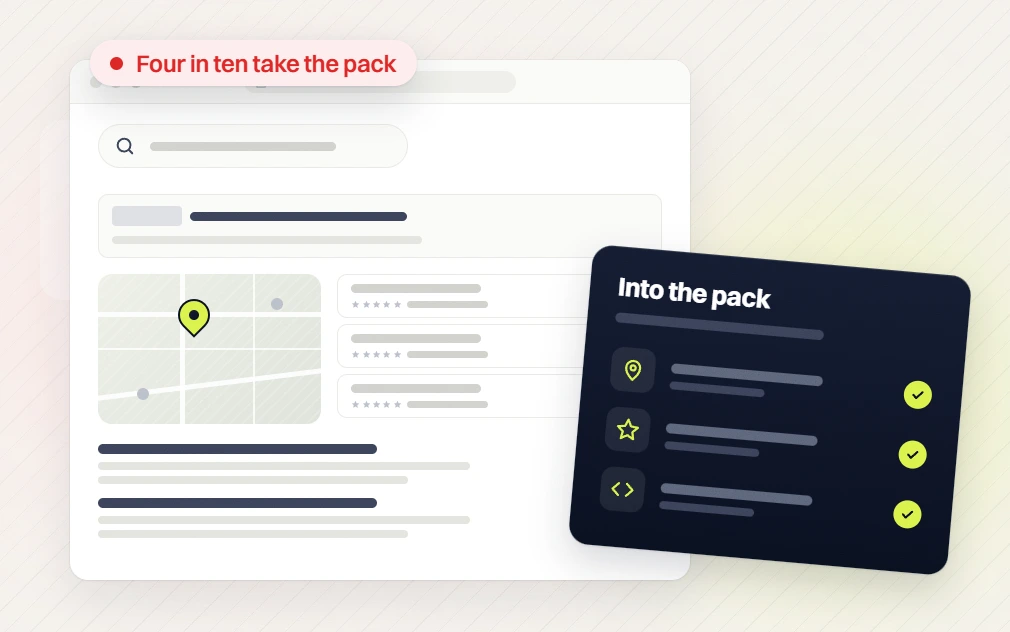
You rank #1 for practice name, invisible in 3-pack
44% of dental searches click the 3 map-pack spots. A slip from position #4 to #7 in Google costs a busy practice 30 to 60 phone calls each month.
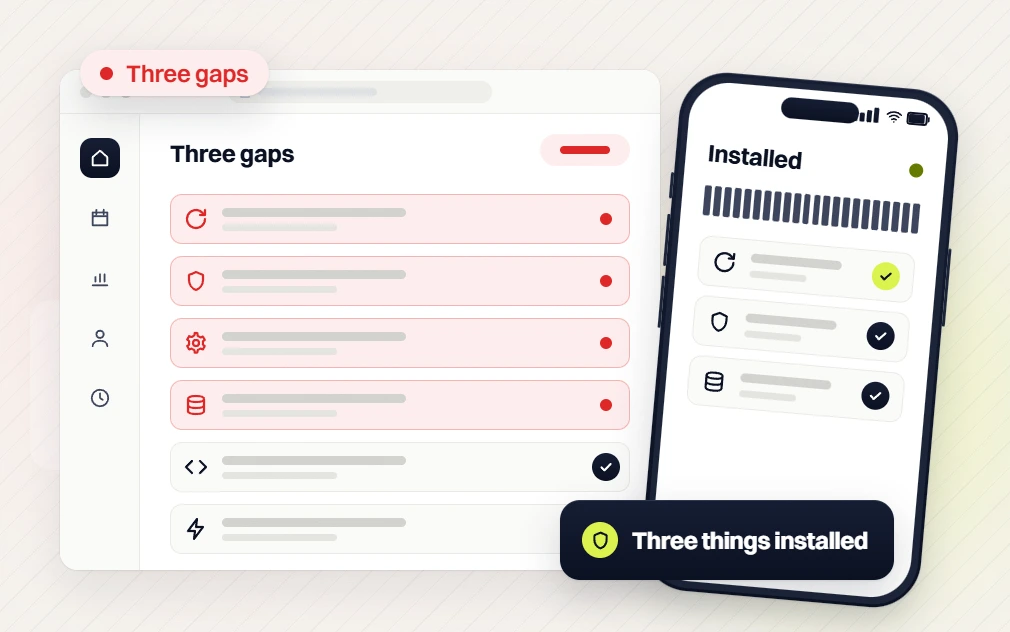
Dental site reads like a brochure, not a booking tool
Patients decide in 8 seconds. No insurance list, no click-to-book, and no procedure pricing costs a practice 3 to 6 new patient bookings every week.
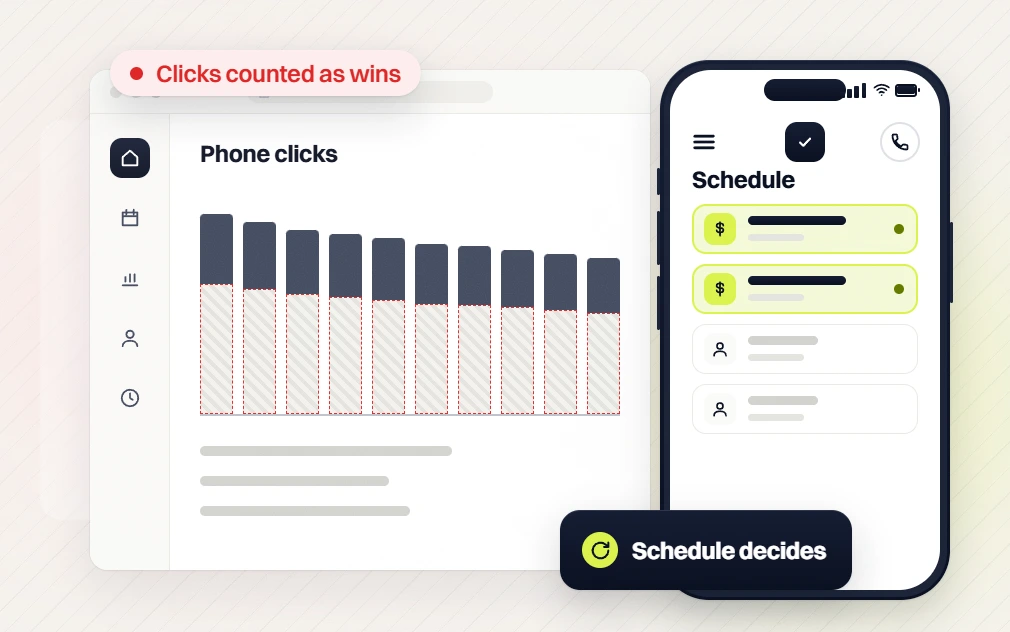
Ad reports show "conversions" but zero booked patients
Google Ads counts phone clicks as wins. Dentrix counts booked chairs in the schedule. You pay $217 per phantom conversion and $0 on real revenue.
Four services for growing practices, one accountable team
Each pillar is a full program. Run any one on its own or bundle all four into one retainer with a single point of contact. Every hour is measured against appointments booked and revenue per patient.
Dental websites that book new patients
Sites built to convert, engineered around your target procedures and revenue mix. Not a design case study, a booking machine. Owned by you at handoff.
Dental SEO that owns the map pack
Technical fixes, dental content written to the searches patients actually make, and digital PR. Programs that pay back inside twelve months.
Explore dental SEOPaid ads measured against booked appointments
Google Ads and Local Services Ads with call tracking and PMS reconciliation, optimized to cost per booked patient by procedure, not cost per click.
Explore dental PPCHosting, uptime, and monthly updates
LiteSpeed hosting, weekly security scans, monthly optimization, plus small content edits included. Zero worry about page-speed or broken plugins.
Explore maintenance plansFour stages, every step tied to booked appointments
Same rhythm on every practice. Audit before we spend a dollar. Position before we launch an asset. Build against the offer. Scale against booked appointments in the PMS.
Diagnose the funnel
Site, GBP, ad accounts, PMS tracking, and recall systems. Channel-by-channel teardown against booked appointments and revenue per patient.
Sharpen the offer
Nail the procedure mix, target patient, and offer. Every downstream page, ad, and sequence built off one positioning brief.
Build the assets
Launch the site, landing pages, funnels, and PMS-linked tracking. Weekly written notes, nothing stalled in draft.
Compound the growth
Compound paid, SEO, and recall wins. Weekly performance review tied to new-patient appointments and production.
Not every dental agency reports the same things
Most agencies report on impressions and clicks. Wix templates report on nothing. Here is what actually shows up in your PMS when we run the program.
Real practices, real numbers
How much does dental marketing cost?
+
Most US dental practices spend 3% to 7% of collections on marketing, or $2,500 to $12,000 per month for a single-doctor office. Growing practices under 3 years old push closer to 7% to 10% while they build a patient base. At Redefine Web, retainers start at $499 per month for the Foundation tier, scale to $999 for Growth, $1,999 for Authority, and $3,500+ for Enterprise. Media spend is billed separately and paid straight to Google, Meta, and LSA. Blended across our 30+ practices, new patients book at a median $84 per acquisition by month 3. A single-doctor practice collecting $1.2M per year lands in the $3,000 to $6,000 monthly range for retainer plus media. Multi-location groups scale per office based on chair capacity. For a broader look at practice-level budget planning, see the American Dental Association’s marketing plan guide. If you are unsure which tier fits, we build a written 30/60/90 plan on day one so the retainer maps to the channels you actually need.
How to market dental services?
+
Effective patient growth stacks 5 channels tied to appointments booked in your PMS. First, a fast dental website with the insurance list above the fold, click-to-call, individual procedure pages, and a working booking widget. Second, dental SEO focused on the Google 3-pack, GBP optimization, and treatment-specific pages that match how patients search. Third, dental PPC across Google Ads, Local Service Ads, and Meta, measured against cost per booked patient not cost per click. Fourth, reputation systems that pull 4 to 6 fresh 5-star reviews weekly and hold your Google rating above 4.7 stars. Fifth, patient reactivation from your PMS (Dentrix, Open Dental, Eaglesoft, Curve) that pulls dormant patients back on the schedule. Each channel reports to one KPI: new patients booked and revenue per patient. Practices that run all 5 in sync typically hit a median $84 cost per new patient by month 3 and add 40 to 90 booked chairs per quarter without raising media spend. Every campaign gets weekly written notes on what moved.
Who is the best dental marketing agency?
+
The best agency for your practice is the one that ties every hour of work to appointments booked in your PMS, owns a documented growth process, and hands ownership of the website, ad accounts, and analytics back to you. Look for 5 traits: PMS-tied conversion tracking (Dentrix, Open Dental, Eaglesoft, Curve), one named account lead you can reach directly, transparent monthly pricing, real case studies with cost per new patient, and no clawback clauses on your data. Redefine Web runs the growth engine for 30+ practices, DSOs, and growing groups with a median $84 cost per booked patient by month 3. Compare 3 shortlisted agencies on those 5 traits before signing. Ask each finalist to walk you through 2 practice references and share their median cost per new patient. If a partner reports impressions and clicks instead of booked patients, keep looking. Booking chairs is the number that pays the bills, and any dental marketing agency worth a retainer knows that on day one.
Who is the best dental marketing company?
+
The strongest agencies share 4 traits: they measure work against booked appointments in your PMS, they specialize in dental (not generalist shops who add dentistry to a service list), they publish real case studies with cost per new patient, and they let you own your website source code, Google Ads account, and Google Business Profile from day one. Redefine Web sits inside that shortlist for practices, growing groups, and DSOs. Every retainer opens with a written 30/60/90 plan, weekly performance notes, and monthly reporting on new patients booked. If a partner cannot name their median cost per new patient, hides pricing, or holds your ad accounts under their MCC without child-account access, that is a signal to keep looking. Ask for a reference call with 2 current practice clients before you sign. Ask for a written data-ownership clause in the contract. Ask which PMS integrations they run. A provider that ducks those 3 questions is not the right partner.
What is the 2 2 2 rule in dentistry?
+
The 2-2-2 rule in dentistry is a patient education standard: brush twice a day, for two minutes each time, and visit the dentist every 6 months (two visits a year). It is a memorable framework practices use in new-patient onboarding, recall reminders, and social content. From a patient acquisition angle, the 2-2-2 rule is a strong recurring theme for reactivation SMS, blog content, and hygiene recall automation. Practices that build a monthly content cadence around 2-2-2 messaging (visual reminders, short-form video, patient education blog posts) tend to see a 15% to 25% rise in hygiene recall show rates. Redefine Web builds those content sequences into the retainer and pipes them through your PMS so every dormant hygiene patient gets a personal touchpoint on the 6-month cycle without your front desk touching the send button. The same content library feeds your GBP posts, Instagram Reels, and email newsletter so one asset works across 4 channels. Simple rule, real revenue impact.
What is the 80 20 rule in dentistry?
+
The 80/20 rule in dentistry says 80% of a practice’s revenue comes from 20% of its patients or procedures. Applied to dental practice marketing, it means your marketing budget should over-index on the procedures and patient segments that drive the top of your P&L: implants, aligners, cosmetic cases, full-arch, and high-value hygiene patients. Redefine Web audits every new practice against that ratio before we spend a dollar on media. We pull production reports from Dentrix, Open Dental, Eaglesoft, or Curve, identify the 20% of procedures driving 80% of revenue, and rebuild the campaign structure to feed that mix. Practices that run this cut typically drop blended cost per new patient by 15% to 30% inside 90 days because the ad platforms stop optimizing for cleanings and start optimizing for money treatments. Landing pages get rebuilt around those procedures with insurance-first messaging, before-and-after galleries, and a click-to-book widget wired to your PMS. The 80/20 cut is one of the fastest levers in a first-90-day plan.
What does a dental marketing agency actually do?
+
An agency runs the full growth stack for a practice, group, or DSO. Five moving pieces tied to appointments booked in your PMS: dental website design (fast on mobile, insurance list up top, treatment pages by procedure, click-to-call above the fold, working booking widget), dental SEO (map pack, treatment pages, GBP optimization), dental PPC (Google Ads, Local Service Ads, Meta), reputation and review generation, and patient reactivation via Dentrix, Open Dental, Eaglesoft, or Curve. One retainer, one point of contact, monthly reporting on new patients booked. Redefine Web tracks every campaign against booked chairs in your schedule, not phone clicks that never showed up. The typical outcome is a median $84 cost per new patient by month 3, weekly written notes on what moved, and a 30/60/90 plan you can hold us to. Retainers start at $499 per month on Foundation and scale to $3,500+ on Enterprise. Media spend is billed separately and paid to Google, Meta, and LSA. You own every asset from day one.
How long before dental marketing produces new booked patients?
+
Different channels move on different timelines. Google Ads and Local Service Ads produce booked patients inside 7 to 14 days of launch. Meta cost per lead settles by day 30 and cost per new patient by day 45. Dental SEO shows first map-pack movement in weeks 6 to 8, steady presence for money treatments by month 4, and compounding organic traffic by month 6. Patient reactivation from your PMS hits within 5 to 10 business days of launch because you are messaging people who already know your practice. Every Redefine Web retainer opens with a written 30/60/90 plan so you know which channels report which numbers on which day. If a channel misses its 90-day target, we shift budget without waiting for a quarterly review. Practices that run all 5 pillars in sync typically see 40 to 90 net-new booked patients per quarter by month 4. Cost per booked patient settles at the median $84 mark once PMS-tied conversions are firing on every ad platform. First-week reports show volume, not efficiency.
What is patient reactivation and how does it work?
+
Patient reactivation is the automated outreach that gets dormant patients back on the schedule. A typical dental practice sits on 800 to 3,000 patients who have not been in for 12+ months. Reactivation stacks 4 flows: 9/12/18-month dormant sequences by SMS and email, 6-month hygiene recall automation, post-treatment review requests, and birthday triggers with a routine cleaning offer. Segments are pulled straight from Dentrix, Open Dental, Eaglesoft, or Curve. A single 12-month reactivation sweep typically brings back 40 to 120 patients per practice at a media cost near $0. Redefine Web builds and runs the sequences inside your existing PMS, no separate reactivation software required. Reactivation is included on the Growth retainer ($999 per month) and above, and the flows keep running month over month. Practices that add reactivation to a paid-media program typically see a 20% to 30% drop in blended cost per new patient because a share of production comes back for free. Every message is measured against booked appointments in the schedule.
What is DSO marketing and how is it different?
+
DSO stands for Dental Support Organization, a corporate entity that handles marketing, HR, billing, and IT for a group of dental offices under one management umbrella. DSO marketing runs differently than single-practice marketing. Redefine Web programs for DSOs cover location-level GBP setup, per-office budget allocation based on chair capacity, per-region reporting for regional VPs, 21-day launch checklists per new acquisition, and phased rollout in tranches of 6 to 10 locations. One shared brand playbook, per-office media budgets, and monthly per-region P&L dashboards. For GBP setup at scale across new locations, we follow Google’s multi-location business profile guidelines. Enterprise DSO retainers start at $3,500 per month and scale with location count. Every acquired practice gets standardized reporting inside 21 days so regional VPs read the same dashboard across every office. Attribution rolls up from per-office PMS data to regional dashboards so field ops teams see the same numbers as the corporate marketing lead.
Does the program tie to appointments in Dentrix, Open Dental, and Eaglesoft?
+
Yes. Redefine Web pushes booked-appointment data from your PMS back into the ad platforms. Integrations today: Dentrix, Open Dental, Eaglesoft, Curve, Denticon, Dentrix Ascend, and Weave. Booked-appointment conversions push back to Google Ads via Enhanced Conversions and to Meta via CAPI. Setup runs 5 to 10 business days per integration. Practices with PMS-tied conversions typically drop cost per new patient by 20% to 40% over the first 90 days because the ad platforms optimize toward booked chairs, not phone clicks that never showed up. Every conversion event is stamped with the source campaign, keyword, and landing page so you know which channel booked which patient. If your PMS is not on that list, we build a Zapier or CSV bridge so the reporting still works. The reporting dashboard rolls up daily so your front desk lead and marketing lead read the same booked-patient number every morning. Setup is included in every retainer from Foundation ($499 per month) and up.
Do we own our dental website, ad accounts, and analytics after handoff?
+
Yes. Every dental website, Google Ads account, Local Service Ads account, Google Business Profile, Meta Business Manager, GA4 property, and Search Console record we set up is in your name with your logins from day one. If a practice leaves Redefine Web, the whole system stays with the practice. Domains stay with your registrar, ad accounts stay in your Google MCC child login, and website source code lives on a repo we hand to you at handoff. Nothing gets clawed back and no one holds your data hostage. Contract length is 6 months on Growth and above so both sides commit to a real growth window, then rolls monthly after that. We hand over a written handoff document with logins, campaign structure, PMS integration keys, and reporting playbooks so a future team (in-house or another agency) can pick up without a rebuild. This ownership stance sits at the center of every dental practice marketing retainer we run.