Food and Beverage SEO Services That Rank Recipe and Ingredient Queries
Rank on the recipe, ingredient, and comparison searches shoppers actually type. Real content for category pages, PDPs, and Recipe schema across your CPG catalog. Retainers start at $499 per month.
Three ways your CPG brand is losing orders to search
Recipe pages go live without schema, so Google renders plain blue links
Most Shopify and WooCommerce food themes skip Recipe, Product, and Offer schema. Google renders plain blue links while every category competitor shows star ratings, cook time, and image carousels on the same query. Shoppers click the pretty result.
Amazon Fresh and Instacart outrank your own site on brand plus product searches
Amazon Fresh, Instacart, and grocery aggregators rank above you on brand plus SKU searches. You collect a retailer margin at best. Roughly 47% of brand-plus-product clicks route through third-party carts before touching your Shopify.
Serious Eats and food creators rank for every best-of search in your category
Serious Eats, Bon Appetit, EatingWell, and TikTok food creators own every best-of and buyer-guide search. Your SKU never lands in the roundup. Shoppers pick from the list Serious Eats surfaced, and you never see the click.
Three outcomes every food and beverage SEO retainer produces
Content, tech fixes, and earned links push your food and beverage pages in front of high-intent shoppers by month 4. Recipe and ingredient covered.
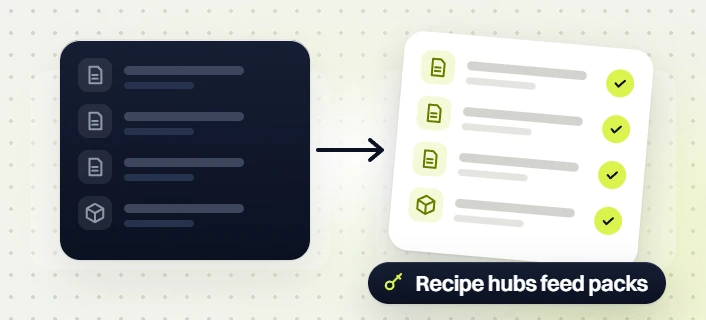
One page per hero SKU and recipe hub, each mapped to real shopper intent, launched with Recipe, Product, and FAQPage schema plus internal linking.
Weekly ranking dashboards and a written monthly report. Every ranking gain traced back to real organic orders and subscriptions in Shopify Plus data.
Four stages. Every step ends in a sign-off
Fixed scope, fixed timeline, fixed outcomes. Nothing moves to the next stage until your leadership signs the gate deliverable. Your launch calendar does not slip.
Audit that exposes every gap
Technical audit against Core Web Vitals and indexation, content audit against the 15 CPG category clusters we prioritize for food and beverage, backlink audit including toxic-link disavow, and store audit covering Google Merchant Center, review posture, and NAP consistency for retail locators. Every fix scored, sized, and prioritized in a 30-page written report.
Keyword strategy tied to category revenue
We build the food and beverage keyword cluster map (protein bar subscription, prebiotic soda, cold brew concentrate, and 12 more category clusters) and lay every keyword against search intent. Each cluster gets an MRR projection so you know which content pays back first. The 90-day priority queue is signed off before work starts.
On-page + technical fixes go live weekly
Category and collection pages written, Recipe plus Product plus FAQPage schema added, thin content expanded, broken links repaired, Core Web Vitals pushed to green, XML sitemap and robots.txt cleaned, Merchant Center disapprovals resolved. Four pages per week. Every push in the weekly written report.
Digital PR, citations, and revenue-tied reporting
Digital PR earning coverage in food publications like Serious Eats, Bon Appetit, Food52, and EatingWell. Review flow tuned for volume and rating growth. Weekly rank tracking on 300+ target keywords. Monthly written report ties organic traffic to Shopify-verified orders so every dollar of SEO spend traces to real revenue.
What you actually get from our food and beverage SEO services
Five workstreams, every item listed. Nothing lives in a proposal appendix or a phase-two column.
Diagnose before we prescribe
Every food and beverage SEO engagement opens with a full audit across four disciplines, scored and prioritized by order-placed impact. You see the fixes that pay back first, the toxic links pulling rankings, and the Merchant Center disapprovals costing you Shopping impressions. Sign-off before any content or link work starts.
crawl, indexation, render blocking, LCP / CLS / INP scored against CPG competitors in your segment.
snack bar, functional beverage, cold brew, prebiotic soda, hot sauce, protein powder, and 9 more.
every referring domain scored, spam and PBN patterns flagged, disavow file drafted for Google review.
feed disapprovals, GTIN coverage, category tags, Amazon Best Sellers Rank, and Instacart listings mapped.
One page per query shoppers search
Every category cluster gets its own 1,500-word page written in-house by food editors. Recipe hubs, ingredient sourcing pages, comparison content, and category buyer guides. Each page ships with Recipe or Product schema, clean internal linking, and copy built around the real questions grocery buyers ask before checkout.
category archives and hero SKU pages rewritten for real shopper intent, size and flavor variants covered.
1,500+ words each with real food photography, cook times, nutrition data, and your SKU as a swap-in ingredient.
Recipe, Product, ItemList, Offer, AggregateRating, BreadcrumbList, and FAQPage schema validated before publish.
real questions from customer service tickets and PAA data, structured for AI-extraction and rich snippets.
Fix Shopify debt, rank on Amazon Fresh
Roughly 68% of CPG shoppers search both Google and Amazon Fresh or Instacart before buying. We clean Shopify duplicate content between /products/ and /collections/products/, wire Recipe plus Product schema, and optimize Amazon Fresh and Instacart listings in parallel. The 3 channels stack.
duplicate content between /products/ and /collections/products/ resolved, canonical tags corrected, variant URLs cleaned.
title, bullet points, product description, backend search terms, and A+ Content optimized for Best Sellers Rank movement.
GTIN coverage, category taxonomy, disapproval resolution, and Shopping feed schema fixed inside 30 days.
LCP under 1.8s, CLS under 0.05, INP under 200ms on collection and PDP templates. Verified in Lighthouse and CrUX.
Earned links from real food publications
Ranking above Amazon Fresh, Instacart, and retailer aggregators takes real editorial authority. We earn placements in Serious Eats, Bon Appetit, Food & Wine, EatingWell, Food52, The Kitchn, and Eater through real journalist outreach, gifting flows, and buyer-guide inclusions. Every link is manually reviewed, prior toxic links disavowed.
Serious Eats, Bon Appetit, Food & Wine, EatingWell, Food52, The Kitchn, Eater pitched by a real PR lead, not a bot.
best-of roundups, buyer guides, gift lists, and pantry-staple features your SKU line belongs in.
food editor and creator networks matched to your brand for coverage and defensible authority signals.
spam and PBN links inherited from prior agencies filed in a disavow file for Google review inside 30 days.
Every report ties to Shopify orders
A live ranking dashboard tracks 300+ food and beverage keywords in real time. A written monthly report reconciles organic sessions against Shopify Plus verified orders. You know exactly which keyword drove which order and how much revenue every ranking gain produced. Rank #1 with an empty cart does not count.
300+ keywords refreshed weekly with movement flags on money terms so you see gains before month-end.
organic sessions tied to verified orders and revenue pulled from Shopify Plus, not to keyword counts.
Best Sellers Rank movement, category rank, review velocity, and retailer share-of-voice trended monthly.
Search Console, GA4, Merchant Center, and Tag Manager stay in your accounts. Walk away from us, the footprint stays.
Four SEO tiers for every stage of growth
Pick the tier that matches your practice today. Move up or down with 30 days notice. Hover any feature name for a plain-English explanation of what it moves in your funnel.
Single-location testing local SEO, or recovering from a bad agency.
Growing brands owning the local pack. Organic tied to bookings.
Two to ten locations, organic across service areas and lines.
Enterprise or 11+ locations. Systematic SEO for new openings.
Every SEO feature, tier by tier
HOVER FOR DETAILPages + content +
SEO + local +
Reporting + analytics +
Support + onboarding +
Compliance + enterprise +
Team + service level +
Other +
Three brands, real numbers
Common food and beverage SEO questions
Straight answers on pricing, timelines, Shopify technical debt, and what actually gets done each month. If your question is not here, book the audit call.
How much should SEO services cost?
+
SEO services for food and beverage brands typically cost between $499 and $5,000+ per month depending on catalog size, revenue stage, and channel scope. At Redefine Web, food and beverage SEO services start at $499/mo on Visibility for early CPG brands under $1M in annual revenue, $999/mo on Traffic for DTC brands between $1M and $5M, $1,999/mo on Dominance for scaling CPG brands ready to own their category, and from $3,500/mo on Enterprise for national CPG groups with multi-channel distribution across Whole Foods, Kroger, and Target. Every retainer is a flat monthly fee on a 6-month term with no setup charges or hidden fees. Content, technical work, backlink outreach, and monthly reporting are included on every tier. Shoppers, households, and grocery buyers all reach your SKUs through the same content library your retainer builds each month. The Shopify Help Center covers store baselines every CPG brand should hit before starting a paid SEO retainer with any agency.
How much should I expect to pay for SEO?
+
Most food and beverage brands pay $1,000 to $5,000 per month for a real SEO retainer that produces monthly content, technical fixes, link earning, and reporting. Pricing below $500 usually means content-only or link-only scope with no technical or channel work included in the retainer. On our Traffic tier at $999/mo, growing DTC food brands get 4 to 6 new SEO pages a month, Recipe and Product schema deployed, backlink outreach to food publications, Google Merchant Center feed cleanup, and a monthly written report tied to Shopify orders. On Dominance at $1,999/mo, scaling CPG brands add Amazon Fresh SEO, Instacart optimization, digital PR to food publications, and 8 to 12 pages a month. Enterprise from $3,500/mo covers national CPG groups with multi-channel distribution across Whole Foods, Kroger, Target, and Amazon Fresh. Households find your brand across every channel that carries it, and grocery buyers see consistent shelf presence in search. The quote you sign is the invoice you pay.
What are the 4 types of SEO?
+
The 4 types of SEO are on-page SEO, off-page SEO, technical SEO, and local SEO. On-page covers page-level content: titles, headings, body copy, Recipe schema, Product schema, and internal linking across category and PDP pages. Off-page covers earned signals: backlinks from food publications, editorial coverage, digital PR, and gifting outreach to food creators and editors. Technical SEO covers site performance: Core Web Vitals, indexation, canonical tags, and Shopify or WooCommerce fixes at the theme level. Local SEO covers Google Business Profile and retailer locators if your brand sells through physical grocery stores or has a headquarters location shoppers search near. Food and beverage SEO services touch every category because CPG shoppers, grocery buyers, and households search across recipe, ingredient, brand, and retailer queries every day. All 4 layers get audited and worked on our Traffic tier and above, and reported monthly with clear month-over-month movement. The USDA lists ingredient standards that on-page content should match to earn organic trust.
What is a CPG agency?
+
A CPG agency is a marketing partner that specializes in consumer packaged goods brands: food, beverage, personal care, and household items sold through DTC sites and retail channels like Whole Foods, Target, Kroger, Amazon Fresh, and Instacart. A CPG SEO agency focuses on the search side: ranking category pages, PDPs, recipe hubs, and ingredient content that grocery buyers and shoppers search before checkout. Redefine Web works with CPG brands from launch through national distribution, taking every account through the same audit-first workflow. We know Shopify Plus, WooCommerce, and BigCommerce technical debt, we know Recipe and Product schema at the theme level, and we know how food publications like Serious Eats, Bon Appetit, and EatingWell decide which SKUs land in a roundup. FDA and USDA labeling implications get read into every on-page claim we write. Households and grocery buyers get pages that answer real questions about ingredients, sourcing, and use. Check the FDA food section before finalizing on-page nutrition or health claim copy.
What is a recipe schema?
+
Recipe schema is structured data (Schema.org markup) that tells Google a page contains a recipe. It surfaces cook time, ingredient list, cuisine, star ratings, and a thumbnail directly in the SERP as a rich result, replacing plain blue links with a visual card that pulls the click. Food and beverage SEO install Recipe schema on every recipe hub the retainer produces, validated against Google’s Recipe structured data documentation before publish. Recipe schema markup covers name, image, description, author, prep time, cook time, total time, recipe yield, ingredient list, instructions, and aggregate rating pulled from your review app. Pages with valid Recipe schema get 20 to 40 percent higher click-through rates than plain blue links on the same query. Shoppers see the pretty result and click, and households save the recipe to a list. The full field list and required properties are documented at Google’s Recipe structured data guide. Recipe schema is included on every food and beverage SEO tier we run.
What is product schema SEO?
+
Product schema SEO is structured data on PDP and collection pages that tells Google a page sells a product. It surfaces price, availability, star rating, review count, and shipping info in the SERP as a rich result. On Shopify, Product schema is often broken or partial by default: variants missing GTIN, offers missing price ranges, aggregate rating not wired to the review app. Food and beverage SEO services fix the schema at the theme level so every PDP renders Product, Offer, and AggregateRating markup on the SERP. Category pages get ItemList and BreadcrumbList schema so collection URLs earn rich results too. Product schema pairs with Recipe schema on recipe pages that feature a hero SKU as a swap-in ingredient. Both types show up in Google Search Console under the Enhancements report where you can track valid, warning, and error counts across your catalog and see which templates need work. Fixing schema is one of the fastest ranking gains on most Shopify stores selling to grocery buyers and shoppers.
How long does food and beverage SEO take to move organic traffic?
+
Food and beverage SEO produces first ranking movement in 6 to 8 weeks and meaningful organic traffic by month 4. Category-defining searches like best hot sauce, gluten-free protein bar, and clean prebiotic soda usually rank by month 4 to 6. Compounding organic traffic and blended CAC gains land by month 6 to 9, with subscription order growth trailing by 2 to 3 months. Recipe content ranks fastest because Google surfaces Recipe schema aggressively on food queries with a visual carousel. Ingredient content ranks slower but converts higher because buyer intent is peaked at the ingredient-research stage. Timeframes shift with domain age, backlink profile, and how many established food brands already own the keywords in your category. The 90-day roadmap we write in month 1 gives you an honest forecast for your specific site and catalog. Shoppers looking for your category find you by month 4, grocery buyers doing brand-vs-brand research find you by month 6, and households doing repeat searches find you across every channel.
What is included in food and beverage SEO services on every tier?
+
Food and beverage SEO services include product page optimization for CPG SKUs, collection page SEO, recipe content, ingredient content targeting turmeric, matcha, prebiotics, and whey protein as ranking targets, brand-vs-brand comparison content, a full technical audit, Google Merchant Center feed cleanup, and monthly written reporting tied to organic customer acquisition cost. Higher tiers add author-led editorial content, competitor backlink acquisition, digital PR to food publications like Serious Eats, Bon Appetit, Food & Wine, and Food52, plus Amazon Fresh and Instacart SEO on product listings and A+ Content. Every retainer covers 4 to 12 new SEO pages per month depending on tier and catalog size. Every page is written by our in-house food content team, briefed against the top-ranking pages Google surfaces on the target query, and fact-checked against your ingredient claims and nutrition data. Shoppers and households get pages that answer the real questions grocery buyers ask before adding a SKU to cart on your Shopify store.
Do food and beverage SEO services cover Shopify and WooCommerce technical SEO?
+
Yes. Technical SEO is included on every food and beverage SEO tier we run. Shopify has known technical debt (duplicate content between /products/ and /collections/products/, slow default themes, missing Recipe schema, missing Product schema on some templates) that we clean up in the first 30 days of onboarding. WooCommerce has different issues (unindexed cart-URL parameters, product variation URLs, plugin conflicts on canonical tags, sitemap gaps) that we fix in the same window. Core Web Vitals get audited monthly against real user data from the Chrome UX Report so we track field data, not just lab data. Schema markup for Product, Recipe, MenuItem, Review, AggregateRating, and BreadcrumbList runs on every relevant page. If a technical issue costs a ranking, we fix it inside the retainer, not as an extra charge. Shopify Plus stores get variant-URL cleanup and metafield restructuring as part of the audit. Grocery buyers and shoppers reach fast, indexable pages that convert on mobile and desktop.
What does a food and beverage SEO agency do for Amazon Fresh and Instacart listings?
+
A food and beverage SEO agency handles Google SEO, Amazon Fresh SEO, and Instacart SEO because CPG shoppers search all 3 channels before checkout. On Amazon Fresh we optimize product titles, bullet points, product description, backend search terms, and A+ Content for the top-ranked keywords in your category. On Instacart we optimize product name, description, image order, and category tagging so grocery buyers add your SKU to a cart at the top of the search. Amazon SEO is measured on Best Sellers Rank, organic keyword rank on the top 50 terms, and Amazon PPC ACoS reported weekly. Instacart is measured on category rank, share of search voice, and organic add-to-cart rate. Brands ranking on Google plus Amazon plus Instacart usually see net-new customer revenue 30 to 50 percent higher than brands ranking on one channel alone. Amazon Fresh and Instacart SEO are included on Dominance and Enterprise tiers, add-on for lower tiers, priced per SKU listing on the retainer.
Do you guarantee food and beverage SEO rankings on specific keywords?
+
No SEO agency can honestly guarantee a specific ranking on a specific keyword because Google controls the algorithm and the SERP shifts weekly on food queries. Any agency that promises a top-3 position by a specific date is guessing. What we guarantee is a written 90-day roadmap, a monthly written report tied to organic revenue, and a ranking commitment on every retainer: if we do not move measurable ranking positions in the first 90 days, we work free until we do. The clock starts on day 1 of live work, not on the contract signing date. The commitment assumes site edit access, GA4 access, Google Merchant Center access, Google Search Console, and Shopify or WooCommerce admin access are in place before kickoff. Recipe pages, PDP pages, and category pages all count toward the 90-day ranking commitment. Households, shoppers, and grocery buyers find you through every page type in the queue, and the commitment covers ranking gains across every content type we produce.
How does food and beverage SEO handle backlinks and food-publication PR?
+
Food and beverage SEO earn backlinks through food publication PR at Serious Eats, Bon Appetit, Food & Wine, EatingWell, The Kitchn, and Eater, recipe roundup inclusions, ingredient science citations from nutrition blogs, and gifting outreach to food creator and editor networks. Toxic backlinks from a prior agency (link farms, private blog networks, foreign anchor text spam) get disavowed in the first 30 days of the retainer through the Google Disavow tool. Every link is earned through outreach or editorial coverage, never bought or exchanged. Food influencer mentions that link to retailers get reclaimed to your brand site through direct outreach so the equity lands on your Shopify domain, not on a marketplace listing. Most food and beverage brands add 6 to 20 quality backlinks per month once the outreach flow is live, with food publication placements running at 1 to 4 per quarter on Dominance and above. Shoppers reach your brand through editorial coverage they trust and act on.