
The best SEO for chiropractors is not one vendor and not one tactic. It is the vendor whose stack fits your market, whose team hits benchmarks that move new patients into your calendar, and whose contract lets you exit clean if the numbers do not show up. Most clinic owners search the phrase, land on a list of the top ten agencies, and pick the one with the loudest testimonial reel. That is not how good decisions get made in this category. Rankings without booked appointments are vanity. Vendor selection has to start from the appointment side and work backward to the tactics that fill the schedule.
This guide walks you through the real benchmarks a competent SEO program should hit at months 3, 6, and 12. You get the map pack ranking targets, the click share benchmarks, the new patient call conversion rates, and the retainer math tied to each level of investment. Then you get the SEO stack itself, broken down by what to buy, what to build in-house, and what to skip. Read straight through in ten minutes. Then run the numbers against your current program and see where the gaps sit.
Retainer math for what the best SEO companies for chiropractors really cost
These vendors price their retainers on the scope of work, not on your practice revenue. That distinction matters, so pay close attention. Vendors who quote against revenue are extracting value instead of pricing delivery. A clean scope-based quote covers named team hours per month, specific deliverables, and specific KPIs. Match the retainer to the scope. Match the scope to your market competition. Match the market competition to your growth targets. Anything else is guesswork dressed up as strategy.
For a light single-location retainer covering Google Business Profile management, basic citation maintenance, monthly ranking review, and light content production, expect $1,500 to $2,500 per month. For a full-service single-location retainer covering all six layers of the SEO stack, expect $2,500 to $4,500 per month. Multi-location practices and larger single-location practices in top-30 metros with heavy competition land at $4,500 to $8,000 per month. Above $8,000 for one location is usually a brand-premium purchase, not a deliverables purchase. Below $1,500 for one location is usually white-label automation that adds no real value at all.
Break-even math on a $2,500 retainer
A $2,500 monthly SEO retainer costs $30,000 per year. So if your average new patient value across the first six months of treatment is $1,200, you need 25 new patients per year attributable to SEO to break even. A competent program should deliver 60 to 120 new patients per year in most markets by month twelve. That is 2.4x to 4.8x return on the retainer. Anything less and you are subsidizing the vendor. Anything more and you found a real partner. Run this math on your specific new patient value before signing anything. If the math does not work at the vendor’s proposed retainer, negotiate down or walk. For clinics that want a lighter start, our own agency runs SEO retainers from $999 per month for foundation-tier work and $1,499 for growth-tier programs.
Scope-based versus performance-based pricing
Some vendors offer performance-based pricing where the retainer scales with delivered results. Sounds appealing on the pitch deck. Rarely works in practice. Performance pricing pushes the vendor to chase easy wins, ignore long-term brand building, and drop the account the moment results plateau. Scope-based pricing keeps the vendor executing the plan every month regardless of the ranking curve. Scope-based with a 90-day evaluation gate is the most balanced structure for both sides. Performance-based sounds better in a sales pitch. Scope-based delivers better across a twelve-month window every single time.
Vendor evaluation framework for finding the best chiropractor SEO company
Finding a strong vendor for your practice runs on a five-part evaluation framework. Team quality, tactical stack, transparency, contract terms, and cultural fit. Score every vendor against all five. Rank them side by side. Choose the vendor whose weakest score is still acceptable, not the vendor whose strongest score is highest. Consistency beats peaks across a twelve-month engagement, so build for the floor. SEO is a slow-compound game where a single weak layer drags every other layer down with it.
Team quality means named team members with real SEO backgrounds, not sales staff dressed up as senior leads. Tactical stack means all six layers covered in-house, not four with two silently subcontracted. Transparency means shared dashboards, named references, and honest answers on what they cannot do. Contract terms mean a 90-day evaluation gate, content ownership at cancellation, and admin access rights held by you. Cultural fit means the vendor can talk to your front desk, your billing team, and your clinical staff without translating everything into agency jargon. Score every candidate against all five before you decide.
The local pack captures a large share of all local search clicks, which is why map pack rank matters more than any other lever for a clinic. Every vendor scorecard should weight map pack execution above traditional organic execution for that reason alone.
If a vendor’s account manager runs 40 practices at once, you get 30 minutes of real attention per week no matter what the sales deck promises. Ask the ratio before you sign.
Team quality is the leading indicator
Ask which named person will run your account day to day. Ask what their background is. Ask how many accounts they manage in parallel. Ask what percent of your retainer covers their time versus overhead. Good SEO people manage 8 to 15 accounts each. Great SEO people manage 5 to 10. Sales people rebadged with a shinier title manage 40. So if your account manager runs 40 accounts, you get 30 minutes of their attention per week regardless of what the sales deck claims. Team quality decides delivery quality. Everything else on the vendor scorecard is negotiation around the edges of that one truth.
Transparency signals every clinic owner should demand
Real vendors share dashboards you can log into anytime. Real vendors send raw call recordings when you ask. Real vendors give you honest answers on what they cannot do. Real vendors admit when a strategy is not working and switch. Real vendors show you the invoices from every subcontracted service so you know what you are paying for. Vendors who hide any of that are hiking their margins on things you have not agreed to. Trust the ones who show their work. Walk away from the ones who dodge basic transparency questions on the first call.
Chiropractic clinic case study on SEO benchmarks that actually hit
Pain Cure Clinic came to us as a chiropractic and wellness practice dealing with a hard problem. Skepticism about chiropractic treatment, a saturated local market, and outdated digital infrastructure. Their website lacked condition-focused content, so keyword rankings sat flat. Educational materials were sparse. Video and testimonials were almost absent. Patient acquisition still ran on phone-and-paper with no automated email nurture, no referral program, and no online booking. Paid ads returned poor numbers because the intake funnel leaked at every step. New patient appointments averaged 40 per month across the practice.
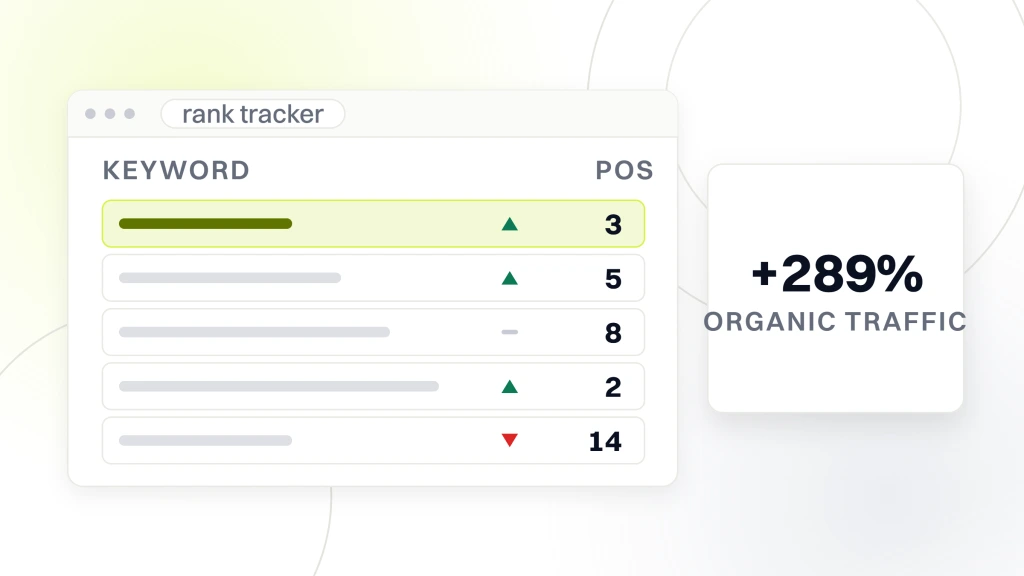
We rebuilt the program end to end. Condition-specific SEO content around back pain, sciatica, and neck pain. An educational hub of articles, infographics, videos, and FAQs. Local SEO domination through Google Business Profile plus location landing pages. High-intent PPC on Google and Facebook aimed at qualified inquiries. Online booking that removed friction from intake. Segmented email automation for nurture. A referral program that incentivized word-of-mouth. Results at 12 months. New patient appointments up 205% to about 122 per month, organic traffic up 289%, and reviews up 162% with the Google rating climbing from 4.3 to 4.9 stars. That is the shape of an SEO program that pays for itself many times over.
Transferable plays for chiropractic clinics
Fix the tracking first. Broken analytics hides both good and bad performance and makes every downstream decision guesswork. Then prioritize commercial URLs that already earn organic clicks over greenfield content. Add pillar-cluster content around your highest-intent symptom and treatment topics. Build backlinks through relationships with local wellness bloggers, sports medicine practitioners, chiropractic schools, and area event pages. Time the content calendar to peak demand cycles. Post-holiday injury waves in January. New year wellness resolutions. Summer sports injury peaks in June and July. Every play maps cleanly to any chiropractic practice with a similar competitive dynamic.
Benchmarks the program hit and why
The program hit its benchmarks because the client accepted the diagnosis, funded the right activities, and reviewed the numbers weekly with the team lead. Vendor discipline matters. Client discipline matters equally. The strongest SEO programs are collaborations between an accountable vendor and an engaged practice owner. Passive clients get passive results even from active vendors, so momentum requires two-way communication. Show up for the weekly meetings. Read the reports before the meeting starts. Ask hard questions. Push back when the numbers miss. That client contribution is what makes the vendor contribution really pay off.
Tools the best SEO for chiropractors programs really use
A strong SEO program for chiropractors runs on a specific tool stack. Not because tools are magic. Because the reporting, tracking, and diagnostic layers require paid software that most clinics will not buy directly. When you buy a retainer, you buy access to the tool output indirectly. Understand what tools a real program uses, so you can spot a vendor that lacks them and cannot deliver the reporting depth you actually need.
Expect a competent vendor to run Ahrefs or SEMRush for ranking and backlink analysis. Screaming Frog for technical audits. BrightLocal or Whitespark for citation management. CallRail or CallTrackingMetrics for phone call attribution. Google Search Console and Analytics 4 as the source of truth. Local Falcon or similar for map pack ranking grids across your service area. If your vendor cannot name their tool stack in the first meeting, either they have no tools or no idea what tools their team uses. Both are red flags. A vendor with a real tool stack answers this question in 30 seconds without hesitation.
No CallRail. No Search Console access. No rank tracker. Every missing tool maps to a specific delivery gap, so treat tool absence as a hard walk-away signal.
Reporting tools shape what gets measured
Every reporting tool measures something different, and the measurement choice shapes what the vendor optimizes for. If the vendor only measures Search Console impressions, they will chase impressions. If they measure map pack rank on tracked terms, they will chase map pack rank. If they measure call volume tied to source, they will chase calls. Pick the measurement first. Then hire the vendor whose default measurement matches your goal. Impression chasing feels productive and books zero patients. Rank chasing books some patients. Call and appointment chasing books the most patients of all three.
Tool absence as a diagnostic signal
A vendor without CallRail or equivalent call tracking cannot measure new patient calls separately from existing calls. A vendor without Search Console access cannot see actual click data from Google. A vendor without a rank tracking tool cannot show week over week ranking movement. A vendor without citation management software cannot maintain NAP consistency at scale. Every tool absence maps to a specific delivery gap. Absence of any tool from the standard stack is a signal to walk. Presence of every tool is a signal that the vendor knows what SEO delivery requires in 2026.
Why SEO for chiropractors focuses local and never national
Chiropractic SEO always means local SEO. Not national SEO. Chiropractic care is geographically bound. Your patients drive from a 15 to 30 minute radius around your practice. National ranking on a term like chiropractic care is worthless because the searcher is not in your city. Anyone selling you national SEO for a chiropractic clinic is selling you the wrong product. Push back on that framing every time it comes up in a discovery call.
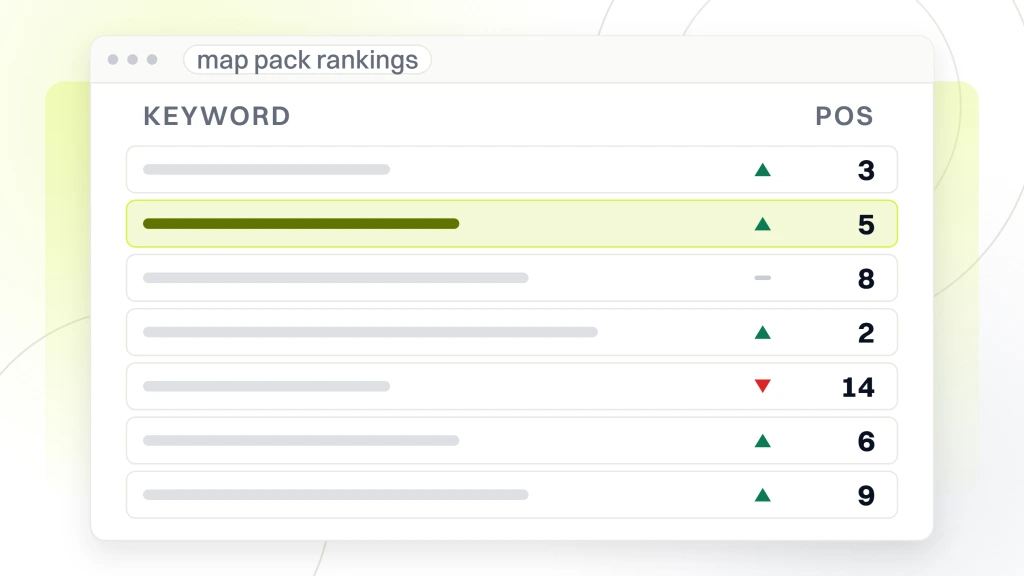
Local SEO focuses on map pack rank, Google Business Profile authority, review acquisition, local citations, and city-specific content. The tactics differ from national SEO in every layer. The vendor stack differs. The reporting differs. The success metrics differ. A vendor with strong national SEO experience but no local specialization will run the wrong plays for your clinic. Ask what percentage of the vendor’s book is local-focused work. Anything under 70% is a warning sign. The strongest local SEO agencies run 90% or more local work, because the chiropractic industry runs on local search almost entirely.
Map pack rank in the top 3 drives 60 to 80% of organic new patient calls for most clinics. Optimize the map pack first, always, and treat organic as the second lever.
The map pack is the primary battleground
The Google map pack shows three local businesses at the top of the search results page for any local-intent query. Chiropractic search queries are almost always local intent. Terms like chiropractor near me, back pain relief chicago, or chiropractor open saturday all trigger the map pack. Ranking in the top three of the map pack drives 60% to 80% of all organic new patient calls for most chiropractic clinics. Every other SEO metric matters less than map pack rank on your top five service keywords. Optimize accordingly. Buy accordingly. Report accordingly.
Organic listings are the second layer
Traditional organic listings below the map pack drive the other 20% to 40% of organic patient acquisition. Content pages ranking for symptom-specific queries. Landing pages ranking for treatment-specific queries. Blog posts ranking for informational queries that convert on retargeting. These matter, and they compound over time, but they sit second behind the map pack. Optimize the map pack first. Add organic optimization as the second lever. A vendor who obsesses over organic rankings while ignoring the map pack is running the wrong priorities for a chiropractic clinic. Correct that framing on day one of the engagement.
What to buy versus what to build in-house
Every SEO program for a chiropractic clinic should include some vendor-delivered work and some in-house work. The split depends on your team, your budget, and your bandwidth. But the general rule holds across most clinics. Buy the specialized work. Build the operational work. Buy the technical SEO audit. Build the review acquisition workflow. Buy the content strategy. Build the front desk call tagging discipline that turns rankings into revenue.
Vendors do their best work on activities that require specialized tools, subject matter expertise, or scale advantages. Technical SEO audits require paid tools like Ahrefs or SEMRush and years of pattern recognition. Content strategy requires knowledge of your competitive field and search intent patterns most clinics do not track. Backlink acquisition requires relationships in your city and time to nurture them. Buy all three. Your team does its best work on activities that require inside knowledge of your practice. Review acquisition requires knowing every patient by name. Call tagging requires front desk training and daily reinforcement. Content input requires knowing what your patients really ask. Build all three.
What to buy from a vendor
Buy the technical audit as a project. Buy the citation cleanup as a project. Buy the ongoing citation management as a retainer line. Buy the content strategy and production. Buy the on-page optimization work. Buy the technical fixes on page speed and schema. Buy the backlink acquisition through digital PR. Buy the monthly ranking review and reporting. Every one of these activities requires tools and expertise the average clinic does not have and will not build inside a reasonable budget.
What to build in-house
Build the review acquisition workflow inside your patient checkout process. Build the front desk call tagging as a daily discipline. Build a running document of patient questions that feeds your content brief. Build a photo library of your clinic that feeds Google Business Profile posts. Build the process for updating hours, services, and pricing on your Google Business Profile whenever they change. Every one of these is quick in-house work no vendor can do better than you can, and strong SEO programs coach clinics through getting them right. Doing them well amplifies everything the vendor is doing on the specialist side.
Where to start if you want the best chiropractor SEO option today
Start with your current numbers before evaluating any vendor. Pull the last twelve months of Google Analytics. Note new patient calls per month. Note current map pack rank on your top five service keywords. Note current review count and average rating. Note total citation count and NAP consistency. These baseline numbers set the terms for every vendor conversation. They also give you the yardstick to measure improvement against once a program is running.
Then shortlist three vendors, review each against the five-part evaluation framework, and call three references for each. The vendor you choose should score consistently across all five categories with no obvious weak spot. Signing with a vendor whose weak spot matches your risk tolerance is fine. Signing with a vendor whose weak spot matches your business-critical need is a mistake you will pay for at month nine. When you’re ready to see the full ranking stack laid out with implementation steps, our SEO for chiropractors guide walks through every layer. For the vendor red flag list before your next discovery call, our How to choose an SEO company writeup covers the ten disqualifying red flags. For the specific comparison methodology across shortlisted vendors, our Best SEO companies guide runs the vendor comparison approach. For the local ranking foundation every clinic needs, our Local SEO post walks through the map pack work. And for the fully integrated program that pairs SEO with paid and content, our Chiropractor marketing services page shows the full stack. Also review Ahrefs on local SEO for benchmark data across service industries.