
Choosing the right chiropractor SEO company decides how much of your new patient calendar comes from Google over the next 12 months, and most clinic owners pick wrong on the first try. You will meet 3 kinds of vendor on any shortlist. The pure sales team with no SEO staff. The white label reseller who passes on whatever their supplier hands over. And the small operator with real SEO chops and a thin case study wall. Sorting the 3 takes a checklist, not a hunch. This guide gives you that checklist.
You will get the red flags to watch on a discovery call, the KPIs any real SEO partner will commit to on paper, the contract clauses that decide who owns your data at month 12, and a vetting sequence that has stopped patients from signing bad 6-month retainers. Read straight through in about 10 minutes.
KPI questions to ask a chiropractor SEO company before you sign
Every vendor conversation should surface the KPI list they will commit to in writing. A chiropractor SEO company that dodges any of these questions is telling you what they will not measure once you sign. Every answer should be specific, numeric, and tied to a review cadence. Get the answers in the proposal, not on a phone call, so the record is clean.
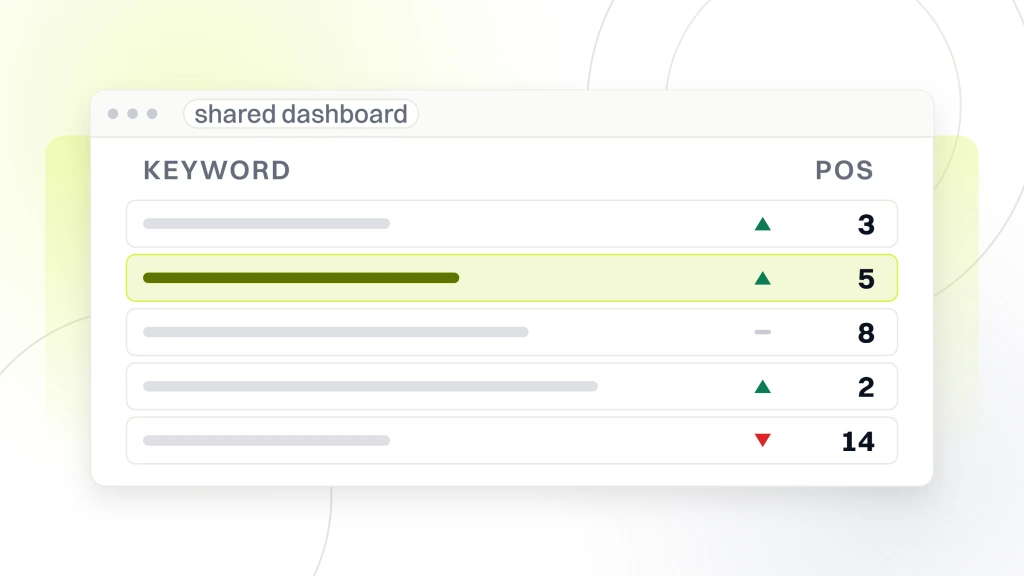
| KPI question | Weak answer | Strong answer |
|---|---|---|
| Which keywords will you commit to? | “We will work on many terms” | 25 to 40 named local keywords in a shared dashboard |
| How do you measure new patient calls? | “Total call volume” | CallRail with new versus returning tagging by the front desk |
| What is your target for map pack rank? | “Improve local visibility” | Top 3 for at least 60% of tracked terms by month 6 |
| How often do you review rankings? | Monthly report | Weekly internal review, monthly client dashboard, quarterly strategy call |
| What happens if rankings dip? | “We keep working” | Named recovery playbook with a 30-day fix window |
Call tracking is where the truth about SEO services for chiropractors lives
Ask directly about call tracking. A serious operator sets up CallRail, ServiceTitan Calls, or an equivalent with dynamic number insertion, so every SEO-driven call gets tagged to the source page, keyword group, and campaign. Your front desk should mark every incoming call as new patient, existing patient, or spam inside the first 30 seconds. SEO services for chiropractors that skip this tracking cannot show new patient results, only total call volume.
Total call volume climbs when existing patients reschedule. New patient calls pay the rent. Get the call tagging live in week 1, not month 3. Without that data, every ranking claim in month 6 is a story, not a proof.
The attribution model that holds up
Multi-touch attribution across search, map pack, direct, and referral is the standard any credible chiropractor SEO company should run. Your first-time patient often searches once, clicks 2 competing sites, comes back 3 days later via direct traffic, and books after seeing a Facebook remarketing ad. Any vendor claiming 100% credit for every booking, or claiming none of them, is ignoring the funnel.
A real report shows assisted conversions, first-touch, and last-touch side by side. Ask to see a sanitized version of a real dashboard on the sales call. If they cannot show one, they do not have one.
Chiropractor SEO agency contract terms that decide who keeps your data
The contract with a chiropractor SEO agency is where you either protect your data assets or hand them away. Every SEO engagement builds intellectual property. Optimized page content. Citation lists. Backlink profiles. Ranking dashboards. Keyword research files. That IP should belong to your practice at month 12, not to the vendor who leaves with it when you cancel.
Read every SEO contract 3 times before signing. Who owns the content produced? Who owns the ranking data? Who owns the backlink profile? Who holds admin access on your Google Business Profile and Google Search Console? Who controls your CallRail account? What happens at cancellation? What notice period applies? Is there a non-compete that stops the vendor from taking another chiropractic client in your zip code? Every one of these terms is negotiable if you ask before signing. None of them is negotiable after.
Content and citation ownership
Confirm in writing that every page of content, meta description, schema block, and citation the vendor builds is your property when the contract ends. Some vendors treat content as work-for-hire only during the retainer and reclaim it at cancellation. When you fire them, your GBP reverts to a blank slate. Fight that clause.
Every citation, every page, every image, and every alt tag should belong to your practice permanently. Get it in writing before you sign. Anything else is a hidden switching cost that shows up right when a bad relationship needs to end.
Admin access on your own accounts
You should hold owner-level admin access on every account the vendor touches. Google Business Profile owner. Search Console owner. Google Analytics owner. CallRail admin. WordPress admin. If the vendor asks you to grant them owner access and downgrade yourself to manager, refuse. Owner plus manager is the standard. Vendor as owner is a trap.
A vendor with owner access can lock you out of your GBP in an afternoon, forcing a 2-week recovery with Google support. Keep the crown jewels in your hand. Vendors who push back on the owner rule are protecting future control, not your practice.
A chiropractic case study on picking the right chiropractor SEO company
Pain Cure Clinic, an independent chiropractic practice competing with regional franchise groups, came to us after firing a chiropractor SEO company that had promised rank-one guarantees. The prior vendor used template landing pages, generic citation submission services, and a monthly report that measured impressions only. Rankings had slipped over 8 months. New patient bookings had dropped in double digits. The practice was ready to walk away from SEO entirely before we walked them through what a real vetting process looks like.

Our team ran a full local SEO rebuild with named strategists, weekly ranking review, and CallRail attribution tied to page and keyword source. Patient appointments climbed 205% on the annual curve. The rebuild did not use any tactic the fired vendor could not have used. What changed was operator discipline, real tracking, and honest reporting. The lesson every clinic owner should take is that vendor selection matters more than tactic selection when the underlying tactic set is table stakes.
What worked in the rebuild
Weekly ranking review kept the team accountable to leading indicators. Real call tracking replaced impression counting. The team rewrote every landing page for real local search intent, not the template a previous vendor kept recycling across every chiropractic client. Citations were audited, deduplicated, and corrected. Content followed the searcher’s real question, not a keyword density formula.
The team lead met with the owner every Thursday at 8 am for 20 minutes. That single meeting drove more accountability than any dashboard, since it forced both sides to talk about the same funnel every week. Meeting cadence is a cheap lever most vendors skip.
Transferable lessons for chiropractic clinics
Every move in that rebuild transfers to any chiropractic practice one for one. Real call tracking. Weekly review meetings. Content built from actual patient questions, not keyword lists. Citation cleanup as a foundation activity, not an afterthought. Named strategists with real accountability. Every one of those levers is available to any clinic willing to demand them from a vendor. Refuse anything less. When you’re ready to see how the full local SEO stack fits together, our Local SEO writeup walks through the entire foundation.
How the best SEO companies for chiropractors run diligence differently
Serious operators treat diligence as a 2-way street. They interview you as hard as you interview them. They want to see your Google Business Profile, your Search Console data, and your last 12 months of Analytics. The best SEO companies for chiropractors skip nothing at intake. Vendors who bypass this step are selling, not delivering.
A serious vendor also declines some accounts. If your website is on a proprietary chiropractic practice management platform that blocks meta editing, a real SEO firm names the migration cost before selling you a retainer. If your NAP has drifted across 200 citations, they price citation cleanup as a project, not a retainer line item. If your review count sits under 30 and a competitor holds 400, they name the reputation gap as the number one problem to fix. Vendors who take every account no matter the setup are chasing revenue, not results.
Diligence questions the vendor should ask you
Watch for the questions a real vendor asks. What is your average new patient value across the first 6 months? What is your target monthly new patient volume? What zip codes do 80% of your patients come from? What is your current booked appointment rate per lead? What is the phone answer rate at your front desk? Which insurance carriers do you accept?
Those are the questions of an operator who knows ranking without booking is a vanity outcome. If the sales call is 45 minutes of features and 5 minutes of intake, you are hearing a pitch, not a plan. Reverse the ratio.
References who will pick up the phone
Ask for 3 named client references and call all 3 before signing. Ask each reference how long they have worked with the vendor, what got delivered in the first 90 days, what got delivered in the second 90 days, and if they would sign again knowing what they know now. If 2 of 3 references are lukewarm, walk. If 1 of 3 won’t take your call, walk. If all 3 sound scripted, walk.
Real references speak differently than scripted ones and complain about small friction points. Perfect references are a warning sign. Ask reference #3 for a reference of their own. Second-degree references almost never get coached.
Pricing benchmarks for chiropractor SEO company retainers in 2026
Competent chiropractic SEO firms sit inside a specific pricing band, and knowing that band protects you from both sides of the market. Vendors priced too low cannot afford to do real work. Vendors priced far above the band are usually charging brand-name premium without delivering brand-name results. The middle is where competent operators live.
Expect $1,500 to $2,500 per month for a competent local SEO retainer on a single location chiropractic clinic. Expect $2,500 to $4,500 per month for a full-service retainer that adds content production, citation management, and technical maintenance. Multi-location practices with 3 or more offices land at $4,500 to $8,000 per month across the group. Anything under $800 per month is either a bot-driven fake service or a subcontracted white-label product that adds no value. Anything over $10,000 per month for a single-location clinic is usually the practice paying for name recognition rather than deliverables.
- Single location. $1,500 to $4,500 per month
- Two to 3 locations. $3,500 to $6,500 per month
- Four-plus locations. $6,000 to $12,000 per month
- One-time website SEO overhaul. $8,000 to $25,000 as a project
- Citation cleanup as a one-time project. $1,500 to $4,000
- Content production per long-form piece. $250 to $900
Why cheap vendors cost more in year one
A $500 per month SEO vendor cannot afford to do the citation work, the content production, the technical fixes, and the ranking analysis your clinic needs. What that vendor delivers is a monthly ranking report with impressions data and a 2-line summary saying everything is going great. The retainer cost is low. The opportunity cost is high. Twelve months of $500 per month with no ranking movement is $6,000 you wish you had spent on the $2,500 per month vendor who would have doubled your new patient volume. Do not solve for the retainer number. Solve for the outcome number.
When paying premium is worth it
Premium SEO makes sense in 3 specific scenarios. Your practice sits in a top-30 US metro with fierce competition and 8 or more well-funded competitors. Your practice runs multiple locations and needs coordinated multi-location chiropractic marketing with lease-aware landing pages. Or your practice runs a specialty like sports chiropractic or prenatal care that benefits from thought leadership content and PR-grade backlinks. Outside those 3 cases, competent mid-market SEO delivers 80% of the outcome at 40% of the premium price. Run the math on your market before overpaying.
Building a 90-day gate into your chiropractor SEO company contract
A 90-day evaluation gate protects both sides of the relationship. You get a formal review point where either side can exit if performance is not tracking. The vendor gets a milestone they can hit with real ranking movement, real citation cleanup, and real page optimization. Every credible chiropractor SEO company should accept this structure without pushback.
Write the 90-day gate as a set of measurable milestones. Foundation citations cleaned to a specific target, usually 40 to 60 primary citations aligned to your correct NAP. On-page optimization completed on the top 10 pages by traffic potential. Google Business Profile fully populated with services, hours, photos, and Q&A. Ranking review dashboard shared with weekly updates. Then agree on the movement expected by day 90. Rankings should be climbing on tracked terms even if they have not fully arrived. Impressions should show growth in Search Console. New patient calls should show measurable pickup on CallRail. If the milestones hit and the movement is there, keep going. If they miss, exit clean.
Exit terms that let you leave without penalty
The exit clause at day 90 should let you cancel with 30 days notice and no penalty fee if agreed milestones miss. Every vendor will tell you the standard contract is 12 months, no exit. Every vendor will negotiate this term if you push. A 6-month minimum with a 90-day review point is a fair middle ground for both sides. If your vendor refuses to add any exit clause under any condition, they are protecting themselves against poor delivery. That is a signal about the delivery, not about the industry norm.
Milestones that separate real work from theater
Real milestones look like specific completed deliverables. Not vague activity reports. Foundation citations built to a named directory list. Home page rewritten with a specific meta title and description. Service pages published for each condition treated with 700-plus words of original content per page. Google Business Profile services expanded with every condition listed and pricing added where compliant. Review acquisition automation configured with a named platform.
Every one of those is provable in 90 days by anyone who does the work. Vendors who report only on time spent are running theater, not delivery. Insist on artifacts, not hours. Screenshots, live URLs, a shared dashboard link, and a citation spreadsheet. If a chiropractor SEO agency cannot show artifacts at day 90, they did not do the work.
Where to start if you are shortlisting a chiropractor SEO company right now
Start by writing down your current numbers before you talk to any vendor. Monthly new patient volume from Google. Monthly total call volume. Current map pack rank on your top 5 service keywords. Current review count and average rating. Current number of active citations. These numbers give you the baseline every vendor conversation should reference. Without them the vendor sets the yardstick. With them you do.
Then shortlist 3 vendors, not one. Two chiropractic specialists and one strong local generalist. Run every one of them through the checklist in this guide. Ask every one of them the same 5 KPI questions. Read every proposal against the same pricing benchmarks. Call every one of their references. Pick the chiropractor SEO company whose plan matches your reality and whose team matches your bandwidth.
When you’re ready to see how a full local SEO program should look before signing, our SEO for chiropractors guide covers the full stack. For the checklist of what a real vendor should deliver in the first 90 days, our Chiropractor SEO checklist lists every task with a completion definition. For the vendor selection criteria specific to top-market clinics, our Best SEO for chiropractors writeup walks through benchmarks. And if you want to see the ranking side connected to full-service chiropractic marketing, our Chiropractor marketing services page shows the integrated program. Also review Search Engine Land for the current state of local SEO best practice.