Enterprise SEO tools are platforms sold to organizations running one very large site or many sites, priced by scale rather than by feature list, and more often quoted than published. What separates them from the mid-market tool your team already uses is not better keyword data. It is seat management, crawl ceilings, security controls and a contract.
Getting the choice wrong costs you in two directions. Buy too small and your crawler stops halfway through the site while eleven people share three logins. Buy too big and you commit to a year of a platform that four people open and nobody acts on.
You should know where we stand before any of the argument below. We sell enterprise SEO programs, and we sell, resell and take commission on none of the platforms compared here, so a reader who decides to hire help rather than buy software might hire us. We also do not publish our own enterprise prices, which is exactly the practice this article is about to hold against several vendors.
What separates an enterprise SEO platform from a mid-market tool
Not the reports. Put the top self-serve tier of a research tool next to the entry tier of an enterprise SEO platform and a lot of the feature list matches. What changes is everything wrapped around the features.
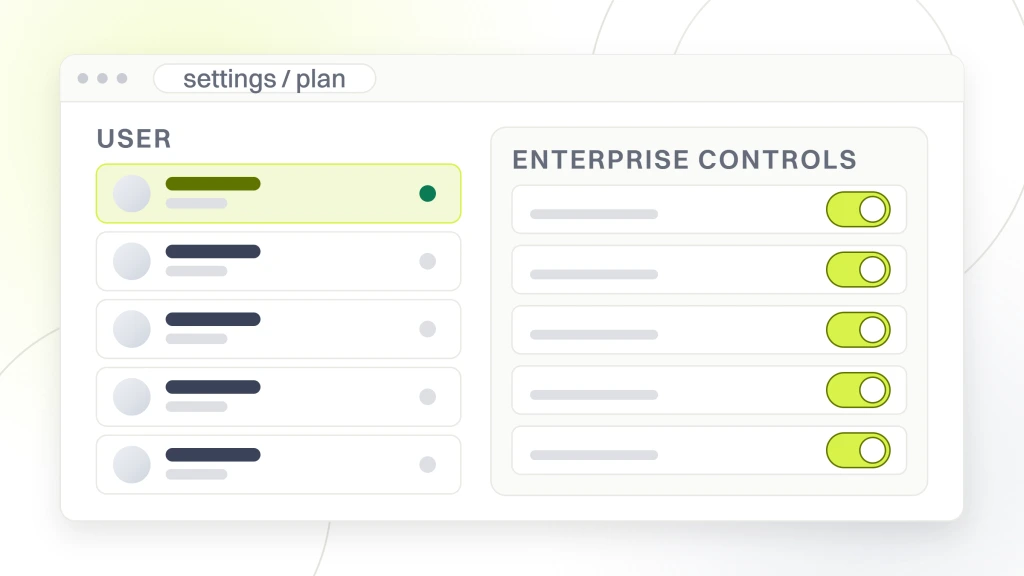
Ahrefs makes the line easy to see because it publishes both sides of it. Every self-serve tier on its pricing page says “1 user included”, and extra seats are sold at “$40/mo each”, “$60/mo each” and “$80/mo each” as you move up. Its Enterprise plan is listed at $1,499 a month with “Annual commitment required”, and what that buys over the $449 Advanced plan is “Uncapped API access”, “SSO & enterprise-grade security”, “Access management & audit log” and “Unlimited historical data”.
Read that list again. None of it is a search feature. It is single sign-on, permissions, an audit trail, an uncapped API and data retention, which is what your security, IT and legal teams ask about before anyone gets a login.
Semrush draws the same line in a different place. Its self-serve ladder tops out at Advanced, listed at $549 a month for “40 websites to monitor” and “5,000 keywords to track daily”. Above that sits Semrush for Enterprise, where the page says “Custom pricing available” and the feature list turns into “Unlimited projects & custom limits”, “Multi-million-page crawling”, “SSO, team governance & audit logs”, “Dedicated account manager” and “Enterprise SLA & 24/7 support”.
So the working definition is commercial rather than technical. An enterprise tier is the point where the published number stops, the limits become negotiable, the governance controls appear and a named human is assigned to your account. Whether the crawler underneath got better is a separate question, and often it did not.
The four categories of enterprise SEO software, and what each one is for
Enterprise SEO software is not one market. Treating it as one is how organizations end up paying two vendors to crawl the same site.
- Suites. Conductor, BrightEdge, seoClarity and Semrush for Enterprise. One place for rankings, content briefs, site health, dashboards and the reporting your stakeholders read.
- Crawl and log platforms. Botify, Lumar and seoClarity’s technical package. Built to crawl a very large site repeatedly and to read what your server logs say actually happened.
- Index and research data. Ahrefs and Semrush on their self-serve tiers. You are buying the index and the keyword database, not the workflow around it.
- The free Google layer. Search Console, plus its bulk data export, which most buyers forget is there.
That last one deserves a check before you sign anything. Google’s own documentation describes the bulk export as a way to “Schedule a daily export of your Search Console performance data to BigQuery”, and says you get “all the performance data available to Search Console for your property, with the exception of anonymized queries”. If part of your case for a platform is that Search Console will not give you enough rows, test the export first, because the row cap you are complaining about lives in the interface rather than in the data.
This article is about what large organizations buy under contract. If your question is which no-cost checker to run against one site, we compared the free SEO tools worth your time separately, and the only thing that changes at enterprise scale is how fast their limits bind.
What an enterprise SEO software pricing comparison can and cannot show
Roughly half this market publishes a number and the split is not the one you would guess. The research tools publish. The suites built for large organizations mostly do not.
| Vendor | Price published | What the page states | Seats |
|---|---|---|---|
| Ahrefs | Yes | Enterprise at $1,499 a month, annual commitment required | 1 included, $100 a month per extra user |
| Semrush | Self-serve only | Advanced at $549 a month, Enterprise is “Custom pricing available” | Additional users add-on, “Starting at $45/mo” |
| seoClarity | Yes, as starting figures | $2,500, $3,200 and $4,500 a month by package | “Unlimited users” |
| Conductor | No | Three tiers with usage limits, no figure against any of them | Usage priced, not per seat |
| BrightEdge | No | Pricing page is a contact form | Not stated |
| Botify | No | The pricing link resolves to a demo request | Not stated |
| Lumar | No | “Fill out the form to get your price quote now” | Not stated |
Read the middle column rather than the left one. A published price is not a cheaper price. It is a price set before anybody looked at your site, which makes it useful for a budget line and close to useless in a negotiation. It also covers the license and nothing else. Implementation, seats beyond the plan, API credits, migrating your historical data in and the person who runs it are separate lines that no vendor above prices.
seoClarity is the clearest of the published set. Its pricing page lists a research and content package from $2,500 a month, a technical package from $3,200 and an Enterprise package from $4,500, then says plainly that “All packages are priced based on the number of domains and keywords tracked.” Its own FAQ explains why those are starting figures, naming professional services add-ons and discounts for bulk tracking and multi-year agreements.
The quote-only vendors are not hiding. BrightEdge’s pricing page is a contact form whose body text reads “We would be more than happy to discuss our product and pricing with you.” Botify’s pricing link resolves to a demo request. Lumar’s pricing page ends with “Fill out the form to get your price quote now”. Conductor publishes three tiers with usage limits attached and no figure next to any of them.
Run one test on any comparison of enterprise SEO tools, including this one. Look at who owns the domain, then look for that owner in the list. Conductor’s own academy ranks the nine best platforms in this category and puts Conductor first. Not dishonest, and not independent either.
This page is published by an agency with a stake of its own, which shapes what we emphasize just as surely. Every figure in this article was read off the vendor’s own page on 18 September 2026, and pricing moves, so treat each one as the start of your own check rather than a quote you can hold anybody to.
Seats, and why enterprise SEO platforms price them so differently
Seats are where an enterprise SEO tools budget quietly doubles, and the four vendors below take four different positions on them.
- Ahrefs includes one user on every plan and sells more at $40, $60 and $80 a month as you climb the self-serve tiers, then “$100/mo per user” on Enterprise.
- Semrush sells an Additional Users add-on “Starting at $45/mo” against a base plan that also includes one login.
- seoClarity lists “Unlimited users” on its rankings package, so the fee moves with keywords and domains instead of headcount.
- Conductor makes it a selling point, saying its pricing is “built around the value you get, not the seats you buy” and that its “usage-based model” charges for what you use.
Conductor’s own guide names the number it is arguing against, listing “Additional user seat charges ($100-$300+ per user per month)” among the hidden costs of buying at this level. That is one vendor characterizing a market it competes in, so treat it as a claim rather than a rate card. It still tells you the range people are being quoted.
Most of the people who need the data will never do the work. A regional marketing lead who opens one dashboard a month costs the same seat as the analyst who lives in the tool all day. Price that honestly and a per-seat platform can lose to a usage-priced one on an identical feature set, or beat it, depending entirely on your org chart.
Where SEO software for enterprises stops keeping up
Limits fail before features do. Three of them decide whether a tool survives contact with a large estate.
Crawl ceiling. Ahrefs lists “1,500,000 crawl credits” on its $449 Advanced plan. Conductor’s published tiers step from “1,000 Pages Analyzed” on Essentials to “25,000 Pages Analyzed” on Growth, and its monitoring product steps from “100,000 Pages Monitored” to “500,000 Pages Monitored” before the Enterprise tier replaces the number with monitoring for websites of any size. Hold those against, say, an estate of 400,000 live URLs across six country domains and the shortlist writes itself.
Tracked keywords and properties. Semrush’s top self-serve tier covers “40 websites to monitor” and “5,000 keywords to track daily”. Ahrefs Advanced covers “50 projects” and “5,000 tracked keywords”. Conductor’s entry tier lists “3 Tracked Websites”. A brand with a domain per market burns through those counts on geography alone, before anyone has tracked a commercial term.
Freshness. seoClarity sells “Daily or weekly rank tracking” as a choice rather than a given, and that choice is a cost line. Daily tracking across 60,000 terms is a different purchase from weekly tracking across 5,000, even when the interface looks identical in a demo.
One limit survives whatever you buy. Every platform here reports on the site it can reach, and what Google actually fetched is a question for your server logs, which is a different purchase. What else changes about a technical review at this size is covered in our piece on the enterprise technical SEO audit.
Why no enterprise SEO tool can fix your release cycle
Here is the part no pricing page mentions. A subscription buys you detection, and nothing downstream of it. Your people, your queue and your sign-off are not for sale.
Our own enterprise page names four places these programs stall, and only one of them is a data problem. The other three are a development queue that puts search tickets behind product work, reporting that leadership cannot read, and vendor sprawl, where as we put it “Regional teams hire their own vendors and the work collides.” A platform helps with the first and, on a good day, with half of the third. It cannot write your ticket, attend your sprint planning or get brand and legal to sign off on a template change.
That is why our audit page says “The tool output is the raw material, not the deliverable.” A crawl returning 40,000 issues has made no decision. Somebody still has to turn it into a template-level change with an owner, a scope and an acceptance criterion, and that somebody is a person on a payroll rather than a line in a subscription.
Reporting has the same shape. The number your executives act on is not a rank chart, and our write-up of an enterprise SaaS SEO strategy goes through the reporting standard a finance team will accept and the tooling stack behind it. If what you actually need is a diagnosis rather than a subscription, our SEO audit ships as a written report instead of a dashboard login.
One platform, or enterprise software for SEO assembled piece by piece
Suite vendors make a consolidation argument and it has real force. Conductor puts it directly on its pricing page, saying “Our end-to-end platform has all your needs covered. No sunk costs into duplicate tools.” Fewer contracts, one security review, one login to provision and deprovision, one support relationship.
Test it against what you will still be running afterward. Most enterprise teams keep a desktop crawler for one-off investigations, Search Console because it is the only first-party record of what Google did, a spreadsheet because that is where prioritization actually happens, and whatever the analytics team already owns. If the suite cancels none of those, you have added a layer rather than consolidated one.
There is a self-hosted end of this question too. A share of what a suite charges for exists as maintained open source, and we went through the open source SEO tools that are actually maintained and where the real maintenance cost lands. For a large organization the arithmetic runs differently than for a small team, because a developer’s hours carry an internal rate while a procurement process quietly carries none.
The practical version is a list. Write down every job your search work needs done, mark who does it today, then mark which subscription the suite lets you cancel. If nothing gets canceled, price the suite as an addition.
What enterprise SEO agency software has to do that in-house tools do not
If you buy for an agency rather than for one brand, the requirements change shape. You need client separation so one account team cannot see another’s data, permissions granular enough to give a client read access without giving them your whole workspace, reporting that carries your branding rather than the vendor’s, and a cost structure that survives a client leaving.
Vendors sell into this deliberately. Ahrefs lists “Agency directory listing” as an Advanced-tier feature. Semrush sells a Lead Generation add-on at $90 a month for a “Branded profile on the Semrush Agency Partners platform” and a “Semrush verified badge”, and a Pro Report add-on at $20 a month whose feature list includes “Branding and white-labeling”. Those are packaging features rather than search features, and they are priced separately for that reason.
Seat policy matters more here than anywhere. An agency adding an account manager per client pays that cost every time it wins work, which is why an unlimited-user model can beat a cheaper per-seat one inside a year.
If you are the client rather than the agency, ask which platform your vendor uses and who owns the data when the relationship ends.
Our own answer is on our enterprise page, which says “We work in your stack. Search Console, GA4, and whatever crawl and rank platform you already license. If you have none, we bring ours and hand the data over at the end.” You can see how that reporting reads in our client case studies. Get the equivalent sentence in writing from whoever you hire.
When an enterprise local SEO tool is a separate purchase
Multi-location brands hit a category boundary that catches buyers out. Rank tracking by location is not listings management, and the platforms above mostly do the first.
Semrush shows the boundary on its own ladder. Local SEO appears as a discovery feature, and “Multi-location/device” tracking is a Pro+ tier capability. That tells you where you rank in each market, which is not the same thing as keeping 200 store records accurate across every directory that matters.
The test that separates the two is whether the tool writes to anything. A platform that reads your site and reads the results page cannot update a store’s opening hours in fifty directories, collect reviews at branch level or generate the location pages your locator links to. A listings product that handles those fifty directories cannot tell you which template is suppressing your category pages.
So budget two lines rather than one. Where they collide is rank tracking by location, which both categories sell, so read both contracts rather than paying twice for the same grid.
Should you buy the platform or hire the help
We sell the second of those, as stated at the top. Here is the argument anyway, with our thumb visible on the scale.
Start from the size of the number. Conductor’s own guide states that “Enterprise SEO platforms typically cost between $30,000 and $200,000+ annually”, which is a vendor describing its own market and should be read that way. Whatever your figure turns out to be, it is a recurring cost that buys capability rather than output.
Enterprise SEO tools multiply a team you already have. They do nothing at all for a team you do not. Three situations, and they resolve differently.
- You have two or more full-time search people and engineers who ship their tickets. Buy the platform. The bottleneck is visibility across a site too big to hold in your head.
- You have one marketing manager who also owns email and paid. The platform will be opened twice and abandoned. Buy the work, or buy a smaller tool and somebody’s hours.
- You have the team but no agreement on what is wrong. Buy the diagnosis first. A platform bought to settle an internal argument just gives both sides more charts.
Our own page says “We do not publish enterprise SEO packages, because no two programs share a scope.” That is the same practice we just held against four vendors, and the same criticism applies to us. The defense is identical too, which is that you should ask for a written breakdown before signing and refuse to proceed without one. What that breakdown tends to contain is set out in what an SEO audit really costs.
How to compare enterprise SEO platforms in six weeks
Selection projects run long because nobody wrote down what they were selecting for. Six weeks is enough if you do the unglamorous parts in week one.
- Week 1, write the estate down. Live URL count per domain, template count, content management system, release cadence, and the name of the team that can actually deploy a change.
- Week 1, write the seat list. Every person who needs access, each one marked operator or viewer. This single list moves more money than the feature matrix does.
- Week 2, shortlist three. Not six. Six vendors means six demos, six security questionnaires and a quarter gone.
- Weeks 3 and 4, trial on identical work. Same site section, same two tasks, same week, run by the same person on each platform.
- Week 5, security and procurement in parallel. Start the review while the trials run. A single sign-on requirement discovered in week six restarts the whole thing.
- Week 6, negotiate limits and term. On quote-only platforms the crawl ceiling, the seat count and the contract length move more readily than the headline figure.
The trials are where most of these processes go soft. A vendor-run demo on a vendor-chosen dataset proves only that the vendor knows the product, which was never in question.
The questions that separate the best enterprise SEO tools from the best demo
Put these in writing and send them to every shortlisted vendor at the same time. Each one is answerable with a number or a yes, which is the point.
- What is our crawl ceiling expressed in URLs a month, and what happens to the URL after the last one?
- How many seats are included, what does the next one cost, and is a read-only seat priced differently?
- Is there a minimum term, and does a trial roll into it automatically?
- How long is our data retained, and what do we get to take with us if we leave?
- Is single sign-on on our tier or the tier above it?
- What is the API rate limit, and is API usage counted against the same allowance as crawling?
- Which of these numbers is contractual and which is a fair-use expectation somebody can revise?
- Can we run a sandbox against our own data, not a sample site, before we sign?
- What does renewal look like in year two if our URL count doubles?
Two answers tell you most of what you need. A vendor who converts credits into URLs for you without being pushed has thought about your site. A vendor who cannot say which limits are contractual is telling you those limits are negotiable in both directions, including after you sign.
What we would do first with an enterprise SEO tools shortlist on your desk
We would write one sentence naming the decision the platform is supposed to make possible. Not a capability, a decision. Something like knowing which of 600 templates to fix next quarter, or being able to tell the board what organic contributed to pipeline.
Then we would hold each vendor against that sentence and cross off every feature that does not serve it. Then count the people who genuinely need a login and price the shortlist again, because that number usually reorders it. Then ask, for the top two, who writes the ticket after the platform finds the issue, and whether that person exists yet.
If nobody has answered that last question, buy a diagnosis before you buy a subscription, because a year of findings with no owner is the most expensive outcome available here. Our free website audit gives you a written report with ranked fixes that you can hand to any developer, or hold your shortlist against.