Enterprise saas seo is the search practice tuned for Fortune 500 buying committees, $100K plus deal sizes, and 6 to 18 month sales cycles. It is not a bigger version of SMB SaaS search. The mechanics change. Keyword architecture maps to ABM account lists rather than volume charts. Content answers procurement, security, and integration questions rather than founder blog topics. Pipeline attribution runs through Salesforce or Dynamics rather than a marketing automation tool alone. Reporting lands on the CFO desk with pipeline sourced from organic search on slide 1.
Written for CMOs and heads of demand generation at multi region SaaS clients between $50M and $500M ARR. Pull the retainer bands, the ABM content patterns, and the 90 day plan template into your hiring doc as you read. Every strong partner we watch work at Fortune 500 scale shares 3 habits that weaker shops fake in the pitch call.
| Program scope | Monthly retainer | Team shape | Pipeline-to-spend by month 12 |
|---|---|---|---|
| Foundation, 1 region | $1,499 to $3,500 | 2 to 3 seat pod | 2x to 3x |
| Growth, 2 regions | $2,499 to $12,000 | 4 seat specialist pod | 3x to 4x |
| Scale, 3 regions | $3,999 to $28,000 | 5 to 7 seat specialist pod | 3x to 5x |
| Enterprise, 4 plus regions | From $6,000 to $90,000 | Multi region team plus legal review | 4x to 8x |
What the retainer should cover
Every band should cover strategy hours, content production, technical fixes, multi region hreflang work, security whitepaper support, and monthly reporting tied to pipeline. If any of those 6 items are extras, the fee band above is wrong. Ask the finalist for real hours on a real calendar. A vague answer means the mix has never been priced honestly, and the account drifts in month 4 when the pod runs out of pattern.
Negotiate scope, never fee
Negotiate scope, not fee. Cut fee 20% and the pod still owes 100% of the work. The math never lands. Trim scope instead. Fewer content pieces per month, one less technical audit per quarter, or one region deferred to a second wave. Trimming fee without scope burns out the pod, and burned out pods produce templated work by month 6. Related retainer shape at SaaS Marketing Retainer Plans from $1,499/mo.
ABM alignment is the core of enterprise saas seo
ABM alignment is where the practice separates from every other SaaS search program. The Fortune 500 buyer research pattern runs across 5 to 12 people on a committee. IT reads security whitepapers. Finance reads TCO briefs. Procurement reads vendor risk documents. The business unit reads comparison pages and vertical case studies. Every one of those 5 audiences searches on distinct query patterns. A general SaaS SEO program serves the founder or head of growth persona and misses 4 of the 5 audiences on the committee.
Map the ABM account list against the query patterns each role uses. Fund the content that answers each role. Track pipeline sourced from organic search back to first touch keyword by account, not by session. Roughly 40% of Fortune 500 target keywords never show on a volume driven keyword tool because the queries are long tail committee questions. A pod that only works from Ahrefs volume data will miss most of the pipeline.
6 content patterns that move a Fortune 500 committee
The approach relies on 6 content patterns. Comparison pages at committee depth with security, compliance, and integration coverage. Vertical use case guides that map the product to a named industry problem. Security whitepapers under 12 pages with an SOC 2, ISO 27001, and pen test summary. TCO briefs with 3 year cost modeling for finance. Migration guides that de risk the transition off a legacy vendor. Category primers that establish the product surface in a new region. Fund those 6 patterns and cut everything else from the calendar. A blog roundup of 20 vendor picks never closes a Fortune 500 deal. If you are shopping partners, our full breakdown at the best saas seo agencies shortlist walks the finalist scoring rubric an enterprise buyer needs.
Attribution wired to the ABM account list
Attribution runs at the account level, not the session level. A Fortune 500 buyer touches your site 12 to 40 times across the 6 to 18 month cycle. Some touches come from named accounts. Some come from anonymous IPs that only resolve at demo booking. First touch shows which keyword opened the door. Multi touch shows which content moved the deal into a demo. Wire both models into Salesforce or Dynamics before the first content sprint publishes. Skip that plumbing and every monthly report from month 3 onward reads as guesswork against the CFO.
Multi region execution inside enterprise saas seo
Multi region execution is the second discipline that separates the practice from mid market SaaS search. A Fortune 500 SaaS brand typically sells across North America, EMEA, and APAC at minimum. Each region has its own procurement rules, currency display, language, compliance regime, and buyer intuition. Hreflang, subdomain versus subdirectory governance, CDN policy, and localization workflow are all technical calls with revenue consequences. Get the technical foundation wrong and half the regional pipeline never materializes.
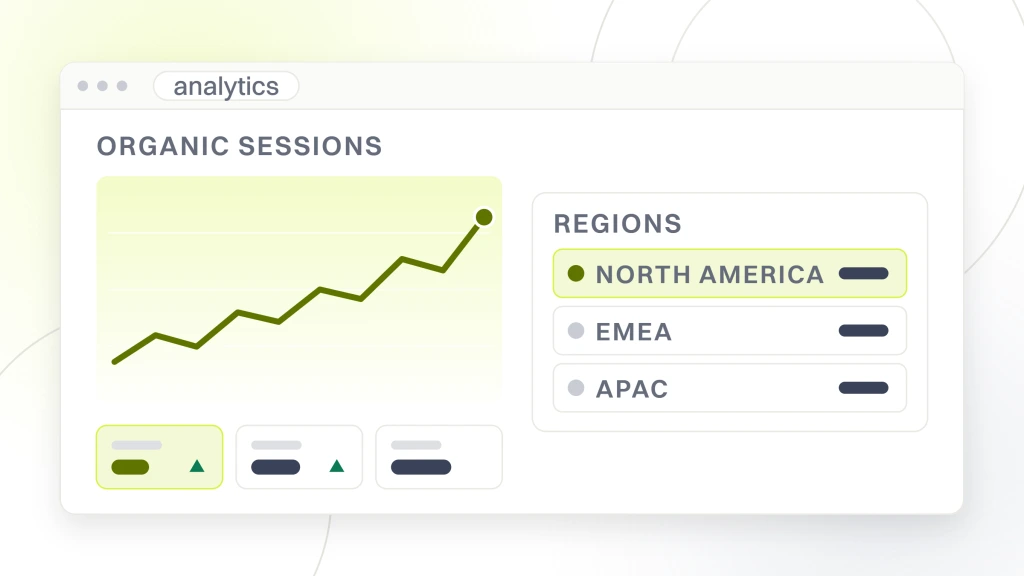
Subdomain versus subdirectory for regional sites is a scoping call, not a rule. Subdirectory keeps domain authority consolidated and works well up to 3 regions. Subdomain isolates regional performance above 3 regions when local teams need governance and a separate deployment cadence. Pods that arrive with a firm rule have not run enough programs. See web.dev on Core Web Vitals for the technical bar both patterns need to hit at every region.
Content cadence per region
The healthy content cadence runs 6 pieces per region per quarter on the growth band and 10 pieces per region per quarter on the enterprise band. Any less and the regional pipeline stalls by month 6. Any more and quality drops as writers stretch across markets they do not know. Localization is not translation. A US comparison page rewritten for the EMEA buyer includes GDPR framing, EUR currency, regional data residency options, and case studies from EMEA logos. That rewrite work takes 40% of the effort of the original piece and only gets scoped correctly by a pod that has run multi region programs on 3 prior accounts.
Technical patterns that hold at 4 plus regions
4 plus regions demands 6 disciplines. Hreflang governance across every canonical variant. Subdomain or subdirectory strategy consistent with deployment cadence. CDN policy that serves the right region without breaking canonical signals. Search Console verified on every subdomain. Structured data localized on every regional page. Core Web Vitals under 2 seconds mobile at every region. Miss any one and regional pipeline underperforms the model by 25 to 40%.
Reporting standard the enterprise saas seo CFO expects
The reporting standard is pipeline first, rank last. Pipeline sourced from organic search on slide 1. CAC payback by channel on slide 2. Regional pipeline breakdown on slide 3. Rankings and traffic in the appendix. That is the shape the CFO wants in front of them when the marketing budget hits the quarterly review. Anything that leads with rankings has not made the enterprise reporting shift yet.
Ask each finalist for a sample monthly report from a peer account with client data redacted. Read it end to end. If pipeline sourced from organic search shows up later than slide 4, the agency has not made the reporting shift. If pipeline attribution against closed won revenue is absent entirely, the agency runs a traffic first playbook Fortune 500 CFOs stopped funding years ago.
Monthly cadence that holds through a 6 to 18 month cycle
The healthy cadence is a 45 minute monthly call on the first Tuesday, a written recap the same day, and a quarterly business review with the CFO on quarter close. Skip the monthly call and issues stack quietly for 90 days. Overbuild it and the pod resents the meeting overhead. 45 minutes with real numbers and honest tradeoffs, once a month. That rhythm is what the best pods hold themselves to and what the mediocre pods skip halfway into year 1.
The one slide the CFO wants
The CFO slide holds 4 numbers. Pipeline sourced from organic this month. Prior 3 months trend. CAC payback for organic sourced customers versus paid sourced. Ratio of pipeline to spend on the search program. All 4 numbers on one slide. Everything else is appendix. That is the slide the best pod puts in front of the CFO every month and it is why those retainers renew through year 3. Rankings and traffic are the how. Pipeline is the why. Show the why first every time.
2 real engagements and the pipeline they produced
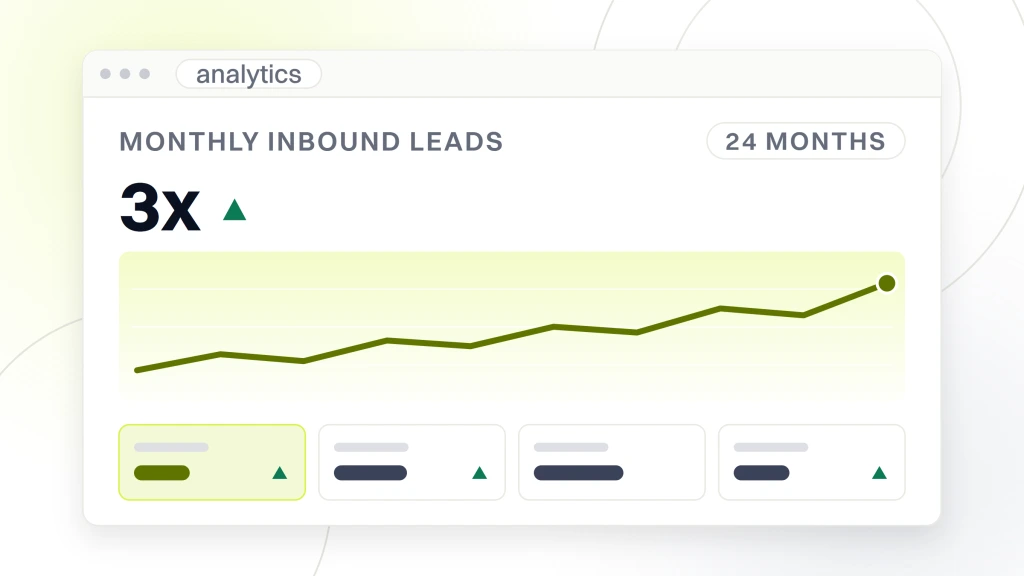
Rapyd Financial Network ran a 24 month specialist retainer across the fintech payments vertical with a multi region footprint spanning UK, EU, and APAC. Quarter 1 fixed the technical foundations across every regional subdomain. Quarter 2 built out the 6 SaaS content patterns in English then localized 4 of them for EU. Quarters 3 and 4 scaled the winners and layered link acquisition on top. Inbound sales pipeline crossed 1.8 million pounds across those 24 months, monthly inbound leads tripled from roughly 5 to 15+, and organic traffic climbed 5x from the baseline the team started on in month 0.
The pattern that moved most of the Rapyd Financial Network pipeline was disciplined attribution work in the CRM followed by category level content sprints that positioned the platform against the specific comparison keywords its fintech buyers searched. 6 category pages, 4 alternative-to pages, and 8 use case guides in a single quarter. Technical foundation work and link building were necessary and were not the primary levers. Related silo work at Search Engine Optimization Services.
Rocket Software. 300% activation and 3,000 customers in week 1
Rocket Software brought a specialist pod in for a launch window engagement. The pod ran a targeted keyword architecture around the activation funnel, layered comparison content against the primary category competitors, and wired pipeline attribution back through Salesforce before the first content sprint published. Activation climbed 300% inside the first month. 3,000 customers acquired inside the first week. 400+ new subscribers daily post launch on a steady curve. That pattern happens when the pod knows to fix attribution before it publishes content, not after. More on this at SEO for SaaS strategy.
What worked across both engagements
2 moves produced most of the pipeline growth in every account. First, rebuilding the marketing automation stack so organic sourced pipeline could be attributed cleanly through Salesforce back to first touch keyword. Without that reporting the CFO would never have signed off on the retainer expansion in year 2. Second, a category level content sprint that positioned the SaaS brand against the specific comparison keywords its buyers were searching. That combination is the pattern the best pods deliver as table stakes, not as an upsell.
What broke and how a strong pod handled it
A regional replatform in month 8 of the Rapyd engagement broke a set of URL structures across EU. The team wanted to skip building a proper redirect map to save engineering time. Skipping it would have cost roughly 30% of the existing EU organic base. The retainer pod pushed back hard, walked the CTO through the traffic risk with 3 peer examples, the redirect map was built, and the ranking hold survived. A weaker pod would have accepted the shortcut, watched the traffic drop 30%, and blamed the replatform in the next monthly report.
Tooling stack every enterprise saas seo pod runs
The tool stack runs 5 layers on every account. Ahrefs or Semrush for keyword research, competitor mapping, and rank tracking across regions. Screaming Frog or Sitebulb for full site crawls per subdomain. Search Console verified on every subdomain and subdirectory with no exceptions. Google Analytics 4 with clean channel grouping segmented by region. A CRM wired to attribute organic sourced pipeline back to first touch keyword across the ABM account list. That 5 layer stack is table stakes at every enterprise SaaS engagement, and any finalist missing one layer is running a 2019 playbook.
Above 3 regions, add DebugBear or Calibre for Core Web Vitals monitoring per region, Clearscope or Frase for content briefs, a schema testing pipeline that runs on every pull request, and a translation memory system that keeps localization consistent quarter over quarter. Enterprise SaaS adds legal and compliance review tooling plus a dedicated staging environment mirror for schema validation. Link building at enterprise scale still matters.
Attribution tooling wired to closed won
Attribution requires clean UTM discipline on every link into the site, first touch and multi touch tracking in Salesforce or Dynamics, and a monthly reconciliation pass with revenue operations. Miss any one and the pipeline number becomes unreliable within a quarter. The best agency builds the reconciliation pass into the standard monthly deliverable, not into an extra project. A crisp answer to that question means the pod does this on every account. A vague answer means the pod expects you to figure it out.
Content ops tooling that keeps a 4 region calendar honest
Airtable or Notion for the editorial calendar with a view per region. Frase or Clearscope for briefs. A weekly editorial sync that runs 20 minutes rather than 60. Skip any one and content publishes late or reads thin. Overbuild any one and the pod spends more time updating the calendar than writing content. Healthy pattern: one page calendar, 3 page brief, weekly sync that starts and finishes on time regardless of region count.
First 90 days of an enterprise saas seo engagement
The best pods run the same 90 day plan on every new Fortune 500 account. Week 1 is discovery. Full site crawl per region, ABM account list intake, keyword architecture kickoff, CRM audit for attribution readiness. Weeks 2 through 4 are technical foundations plus strategy documents. Weeks 5 through 8 are the first content sprint plus the reporting infrastructure. Weeks 9 through 12 are the first rank movement, first published wave localized to 2 regions, and first monthly report to the CFO.
Slippage past 10 days signals execution discipline, not work difficulty. A pod that misses the week 4 milestone is either understaffing the account or running too many accounts in parallel.
Technical foundations in the first 30 days
Rendering verification per region. Canonical policy audit across subdomains. Sitemap health check per region. Search Console coverage on every subdomain and subdirectory. Core Web Vitals baseline on the top 20 landing pages per region. Schema coverage audit. Robots and indexation policy review. Hreflang tag validation across every canonical variant. These 8 checks are the first month of any real engagement. Skip any one and the ranking curve either delays or plateaus somewhere in month 5. Fix all 8 inside 30 days and content investment starts returning at 2x to 3x the pre fix rate.
Content wave in weeks 5 through 12
6 published pieces in the first content sprint on the primary region. 2 category primers, 2 comparison pages, 1 alternative-to page, and 1 use case guide. Each piece hits the SaaS content pattern floor of 2,000 words minimum with original data or original quotes. Localize the 2 comparison pages for a second region by week 12. That is the standard bar the best pods hold. Anything thinner and the pieces underperform against ranking competitors that have been publishing at that depth for years. Roadmap at SaaS SEO Checklist and technical layer at Technical SEO for SaaS.
Choosing a partner this quarter
Pick your enterprise saas seo partner this quarter. Draft your shortlist of 5 agencies today. Send 90 day plan requests to 3 of them by Friday. Book peer CMO reference calls at your ARR band and region count next week. Sign by end of week 4. Every strong partner we know shares 3 habits. They lead with pipeline sourced from organic search, they name the strategist by first and last name in the first 30 seconds, and they offer a 90 day exit clause before you ask for one. Test for those 3 habits on every finalist and half the shortlist rules itself out by the second call.
9 out of 10 CMOs we talk to spend 8 to 12 weeks on the agency choice. That is too long. The right pod gets spotted inside 3 conversations. Past 4 weeks usually means someone on the buying side has not written the scoring rubric down. Write it. Run it. Sign the contract. The compounding curve does not start until the pod is on the account.
One last honest signal
The best agency at your stage will tell you something you did not want to hear inside the first 30 minutes of the sales call. They will name a hard tradeoff, walk the math with you, and offer to structure the retainer around it. Agencies that only reflect your assumptions back at you are selling. Agencies that push back on your assumptions in the pitch call are the ones that will push back on mediocre work 6 months in. That pushback is the single most predictive signal of a durable engagement. Pick the agency that made you slightly uncomfortable in the room. That is almost always the pod that moves the pipeline.