
National search engine optimization services are the play when your customer base is the whole US, not one zip code. You are not chasing the map pack in Tulsa. You are up against publishers, direct-to-consumer brands, and Fortune 1000 sites with in-house editorial groups. This guide covers what real national search engine optimization services include, what they cost in 2026, how to shortlist providers without regret, and how to tell a real national program from a repackaged local one dressed up in a bigger invoice.
You get pricing bands from live 2026 deals, the six workstreams every national SEO retainer should include, a vendor-selection framework you can run in eight weeks, and how to structure the internal team so the program runs at national scale from month one. Written for marketing directors, VPs of growth, and founders whose product goes live in all 50 states. Read straight through in about ten minutes, or skim to the retainer table if you need a fast answer on 2026 pricing.
National SEO pricing bands and what each band delivers
National SEO pricing lands in four bands in 2026. Entry sits at $2,500 to $5,000 per month for small national brands with one product line. Mid runs $5,000 to $12,000 per month for growing brands with two or three product lines. Upper covers $12,000 to $28,000 per month for competitive verticals like SaaS, fintech, and health. Elite runs $28,000 to $75,000 per month for Fortune 1000 sites and multi-brand portfolios. Each band buys a different team size, delivery cadence, and time-to-impact curve. National search engine optimization services scale their delivery model to the retainer band, not the other way around.
| Band | Monthly retainer | Team size | Content output | Fit |
|---|---|---|---|---|
| Entry | $2,500 to $5,000 | 2 to 3 | 4 to 8 pages/mo | Small national brands, single category |
| Mid | $5,000 to $12,000 | 4 to 6 | 8 to 20 pages/mo | Growing brands, 2 to 3 product lines |
| Upper | $12,000 to $28,000 | 6 to 10 | 20 to 40 pages/mo | Competitive verticals, established brands |
| Elite | $28,000 to $75,000 | 12 to 20 | 40 to 80 pages/mo | Fortune 1000, multi-brand, multi-region |
Entry band fit and limits
The entry band fits national brands with one product line, a competitive but not dominant category, and a founder or marketing lead ready to stay hands-on through onboarding. You get a strategist, a part-time technical resource, and a content writer or freelance rotation. You will not get major digital PR at this band, and link acquisition stays limited to earned mentions and light outreach. Programs at this band produce visible ranking gains inside six months and meaningful revenue impact starting around month twelve, once the roadmap is defended against random pivots.
Upper band fit and expectations
The upper band suits established national brands in competitive verticals like SaaS, fintech, ecommerce, or health. You get a full pod with digital PR budget, monthly technical work, editorial calendar coordination with brand and product, plus executive reporting cadences. Programs at this band produce measurable business impact starting at month six and defend market share against direct competitors indefinitely if the retainer continues. Cut the retainer and the market share erodes back over 12 to 24 months as competitors compound content and links behind the paywall of your absence.
How to shortlist the best search engine optimization services in USA
The best national search engine optimization services in USA share four traits worth using as filters. Published case studies with named clients and real metrics. A founder who can go deep on a technical question in a discovery call without deferring to a specialist. An editorial group that has published in the client’s category before. And reference clients willing to take a 30-minute call before the contract is signed.
Start with 8 to 12 candidates. Filter to 5 via written proposals. Filter to 3 via reference calls. Negotiate the final 2 head to head. Full shortlist cycle: 8 to 12 weeks of calendar time. Skipping the reference calls is the shortcut most marketing teams take, and it is also the reason most SEO vendor picks get regretted by month 6. Reference clients tell you what the sales team will not, and the truth shows up in the third question, not the first.
Proposal red flags
Proposals that promise specific ranking positions inside 90 days are dishonest at face value. Proposals that quote page one on 50 keywords in 90 days are worse. Proposals that skip the technical audit line item are underscoped and will bill it later as scope creep. Proposals that bundle SEO with an unrelated service like paid social or email marketing at a package rate are dodging the price question so nobody sees the SEO margin. A clean national SEO proposal shows the six workstreams as separate line items, the team on each, and the deliverable cadence per month in black and white.
Reference call structure
Book 30 minutes with one current client and one former client. Ask five questions on each call. What did the vendor promise at kickoff. What did they really deliver in the first six months. What decision did they make that you disagreed with and how did it resolve. If the assigned team lead left, would you keep the contract. Would you rehire them if you started the search today. Answers to those five filter out most vendors inside two calls, and the former-client answer to question four is where the truth lives.
Structuring the internal team for a national SEO program
National search engine optimization services need three internal roles named before kickoff to run at full velocity. A marketing owner who signs off on strategy and unblocks decisions. A content operations lead who owns brand voice and legal review. An engineering liaison with 15 to 20% of their week carved out for SEO tickets. Miss any one of the three roles and the program stalls inside a quarter, and the excuses land the same way every time.
The engineering liaison is the most common gap. Without a named engineer, technical recommendations sit in a Jira backlog for a quarter before going live. With a named engineer, technical work compounds monthly. Programs that push technical fixes live inside 30 days always have a named engineer with time carved out at kickoff. This is negotiated with engineering leadership before the retainer is signed, not assumed after. Guidance from Google Search Central covers the technical fundamentals every liaison should know cold.
The marketing owner
The marketing owner is usually a director or senior manager inside the marketing function. They own the SEO roadmap, present quarterly results to leadership, and coordinate with product marketing on category launches. They spend 15 to 25% of their week on the vendor relationship. If the role gets pushed onto a coordinator or associate, the program loses its internal advocate and stalls at the first stakeholder disagreement. Match the seniority of the internal owner to the retainer band, or the vendor will run the program past the internal team.
The content operations lead
The content operations lead owns brand voice, legal review, and publishing workflow. They review agency-delivered drafts against the style guide, coordinate legal review on sensitive claims, and manage the CMS publishing schedule. They spend 10 to 20% of their week on SEO content review at the mid-band retainer. Without this role, agency-delivered content stalls at brand review, and the publishing calendar slips by two to three months. That cascades into missed link-earning momentum and delayed traffic gains that show up in QBR three quarters later.
Measurement, reporting, and quarterly business review cadence
National search engine optimization services report on three cadences: weekly technical health, monthly program report, and quarterly business review. Each report answers a different question and serves a different stakeholder. Trying to serve every stakeholder with one long report is the failure mode of most vendor reporting, and it is the reason CFOs quietly stop reading the deck by month four.
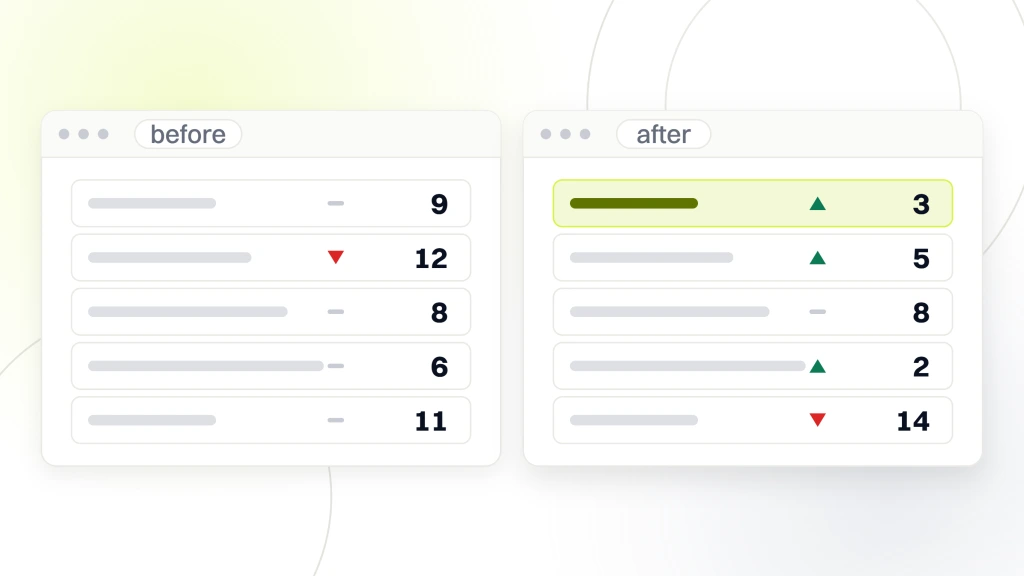
The weekly technical report covers crawl errors, indexation, Core Web Vitals, and structured data breakage. The monthly program report covers content published, links earned, ranking movement on the top 50 keywords, and organic traffic growth. The quarterly business review ties organic to revenue, pipeline, and product-adoption metrics that the CFO reads. QBRs are where vendors earn or lose their next four quarters of funding. Bring a revenue story to QBR, not a ranking story. Ranking stories bore CFOs and get retainers cut in Q3.
Honest attribution on organic revenue
Honest attribution on organic revenue uses a first-touch model plus a multi-touch model shown side by side. First-touch shows what SEO opens. Multi-touch shows what SEO assists. Neither is the full truth on its own. Vendors that pick the model that flatters their numbers most are being dishonest with the client. Vendors that show both and explain the tradeoffs are the ones you want reporting into your CFO’s Monday deck.
Share of voice against named competitors
Share of voice against named competitors is the metric that matters most on national programs. You track the top 200 keywords in the category, measure position for you and each named competitor, and report the shift quarterly with a rolling four-quarter chart. A rising share of voice curve is defensible market share you can point at in a board meeting. A falling share of voice curve is the leading indicator that competitors are outpacing you on content or links. Report share of voice at every QBR. Do not hide behind organic traffic when share of voice is the honest story.
National SEO in the most competitive verticals
The most competitive national SEO verticals are SaaS, fintech, ecommerce, health, legal, and higher education. Each vertical has category incumbents with 8 to 15 years of compound authority and content depth measured in tens of thousands of pages. Breaking in requires 18 to 30 months of continuous investment plus a differentiating strategy that does not pretend to fight incumbents on their home turf in year one.
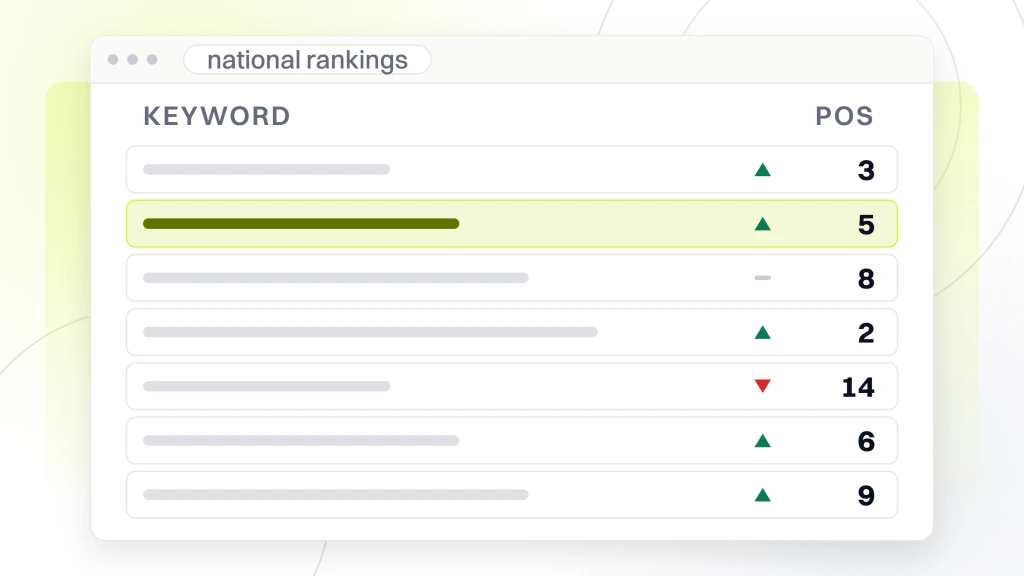
The pattern that works in competitive verticals: pick a narrow topic where incumbents have shallow coverage, build 40 to 100 pages of best-in-category depth on that topic, earn 60 to 150 authority links pointed at those pages, then expand from that beachhead to adjacent topics year by year. The pattern that fails: try to compete on the head terms directly with a general content strategy. Head terms belong to incumbents by default. Long-tail-to-head expansion is the only viable path in for challengers under five years old with a budget below elite band.
SaaS national SEO
SaaS national SEO targets integration searches, comparison searches, and use-case searches. Retainers run $12,000 to $35,000 per month. Content velocity: 20 to 40 pages per month across the funnel. Product marketing sits at the table with SEO on category expansion decisions from week one. Programs that separate product marketing from SEO produce content that ranks but does not convert. Programs that pair them produce content that ranks and converts, which is what CFOs really fund past year two. Our own work with Automation Anywhere ran the same integrated pattern and cut cost per lead from $1,936 to $63, a 97% reduction, while scaling qualified leads from 150 per month to nearly 8,000 (a 100x jump) and raising ad impressions 300% across global markets.
Ecommerce national SEO
Ecommerce national SEO covers category pages, product detail pages, buying guides, and comparison content. Retainers run $8,000 to $28,000 per month for mid-market brands and higher for national chains. Technical SEO on ecommerce carries more weight than on SaaS because faceted navigation and JavaScript rendering breakage compound quickly on 10,000-plus SKU catalogs. Programs that skip technical audits on ecommerce sites are running an incomplete playbook, and the traffic curve stalls at month 8.
Digital PR as the link-acquisition engine on national programs
Digital PR is the single highest-ROI workstream on national search engine optimization services. One campaign that earns Forbes, Fast Company, and vertical trade coverage produces 40 to 120 backlinks, a 10x brand-search volume gain for three to six months, and topical authority that compounds for a year or more of downstream rankings.
The core mechanic: original research anchored on data the client already owns or can commission. A payroll software brand surveys 2,000 small business owners on hiring plans. An HR platform surveys 500 CHROs on 2026 compensation trends. A fintech surveys 1,500 credit users on debt behavior. The data becomes an annual report, gets PR distribution through a partner firm, and earns coverage in tier-one and tier-two publications. Budget $80,000 to $180,000 per campaign. Run one to two campaigns per year for compounding effect.
Survey infrastructure and data quality
Survey infrastructure covers respondent panels, question design, data cleaning, statistical analysis, and report design. You either buy a panel from a firm like Prolific, Pollfish, or CivicScience at $6 to $25 per completed respondent, or you use your own audience for a proprietary sample. Panel purchases work for broad consumer topics. Proprietary samples work for niche B2B topics where the audience is the differentiator. Data quality decides whether tier-one publications will cite the research. Sloppy sampling gets rejected on the first pitch. Rigorous sampling gets cited for years.
The PR firm partnership
The PR firm partnership is one of the highest-yield decisions on the program. SEO agencies pitching journalists directly hit a reply-rate ceiling around 4 to 8%. PR firms with 10-year relationships get replies at 20 to 40%. The premium pays for itself when the campaign closes with Forbes coverage instead of niche blog roundups. Split the workflow cleanly. The SEO agency owns the research and content package. The PR firm owns the media distribution. Ask any prospective SEO vendor which PR firms they partner with by name. Vague answers mean they run PR in-house at reply rates that will not close national coverage.
AI search visibility and LLM answer inclusion
AI search visibility is the new workstream on national programs. Google’s AI Overviews, ChatGPT Search, Perplexity, and Claude answer citations now steer 15 to 30% of informational query traffic away from traditional blue links. National search engine optimization services that ignore LLM answer inclusion are leaving a rising share of top-funnel traffic on the table. The mechanics are different from classic SEO. LLMs cite pages with clear entity definitions, tight fact-block paragraphs, and structured data that maps to Schema.org types like Article, FAQPage, HowTo, and Organization.
Practical steps for AI search inclusion. First, add crisp 40-to-60-word answer paragraphs under every H2 that maps to a common question. Second, mark up author credentials, publish dates, and organization data with JSON-LD Schema. Third, publish original data points LLMs cannot pull from anywhere else. Fourth, track brand mentions in AI answers weekly using tools like Profound, Otterly, or AthenaHQ. Programs that measure LLM citation share weekly are 6 to 12 months ahead of programs that ignore the surface.
Contract terms and how to negotiate the retainer
National SEO contracts run 12 to 24 months. The 12-month term is standard. The 24-month term earns a 5 to 12% discount in most negotiations. Anything shorter than 12 months means the vendor cannot recover their onboarding investment, which either drives the price up 20 to 40% or lowers the delivery quality once the ramp is done. Anything longer than 24 months without a mid-contract break clause protects the vendor at your expense.
Termination clauses should allow either party to exit with 60 to 90 days notice after month six. Ownership of deliverables, keyword research, content drafts, and reporting dashboards should transfer to the client on termination. Non-solicit clauses should be reciprocal on both sides. Payment terms are typically net-30 or 50% upfront on quarterly billing. Push back on anything that traps you without giving you an exit lane. The best vendors do not need contract traps to keep clients. They keep clients on results, and their retention rate proves it.
Where the retainer is negotiable
The retainer is negotiable on scope, not on rate. Push for a 24-month term at a discount. Push for one added workstream at the mid-band price. Push for extra content pages in return for a longer commitment. Do not push for a lower hourly rate. Vendors that cut hourly rates compensate by lowering the seniority of the assigned team, which is the exact opposite of what you want in a national program. Better to buy fewer hours from senior talent than more hours from junior talent that produces work you have to redo.
Planning for a graceful exit
Plan for a graceful exit from day one. That means keeping keyword research, content drafts, and technical audit findings in a shared workspace the client controls, not on the vendor’s private tools. It means Google Analytics 4 and Search Console access owned by the client, not by the vendor’s account login. It means the reporting dashboard sits on the client’s Looker Studio or BigQuery, not the vendor’s paid dashboard tool. When exit day comes, you walk with everything. Vendors that resist this setup are protecting their own switching cost at your expense.
When to hire national search engine optimization services versus keep it in-house
Hire national search engine optimization services when your internal team lacks the specialist bench for technical SEO, digital PR, or editorial production at national volume. Keep it in-house when you already have the specialists and just need coordination. The wrong answer either way costs 12 to 18 months of program time, plus the salary or retainer that funded the wrong bet.
An in-house national SEO team at full staffing runs 4 to 8 people. Loaded cost: $450,000 to $1.2 million per year. Agency retainer at mid-band: $60,000 to $150,000 per year plus $30,000 to $150,000 for project add-ons. The cost math favors agency at 60 to 70% of comparable scope. The quality math favors whichever option has the specialist bench available. Most companies land on a hybrid: in-house strategy plus content plus product marketing coordination, agency for technical SEO plus digital PR plus editorial production. That hybrid captures the best of both. For the operating stack, our search engine optimization services retainer covers the workstreams most in-house teams outsource first.
The hybrid in-house plus agency model
The hybrid model works when the internal marketing owner has clear line-of-sight into the agency’s day-to-day and the agency treats the internal team as a peer, not as a client to manage. Weekly syncs cover priorities. Monthly reviews cover results. Quarterly reviews cover strategy shifts. When any of the three cadences slips, the program drifts inside a quarter. Set the cadence at kickoff and defend it against calendar creep. Related work on our enterprise search engine optimization services post covers the coordination pattern at even larger scale.
Signals it is time to hire an agency
Hire an agency when technical debt tickets are older than 90 days on average, when content publishing has slipped for two quarters running, when the internal team cannot describe the share-of-voice curve against named competitors on demand, or when the CMO cannot see a clear organic revenue story at the last two board meetings. Any one of these signals is enough to run a shortlist. Two together is a mandate. Small and mid-market national brands can also learn from our search engine optimization services for small business guide on where entry-band programs fit.
Wrapping up national SEO services
National search engine optimization services are a 12 to 24-month commitment to compound organic revenue against national competitors on a scoreboard the CFO reads. Retainers run $2,500 to $75,000 per month depending on scope, category competition, and site size. The work covers six workstreams end to end, and any vendor missing two or more is running an incomplete program on a full-price fee that the traffic curve will expose by month eight.
Shortlist 8 to 12 vendors, filter to 3 via reference calls, negotiate the final 2 head to head, and set up the internal team with a named marketing owner, content operations lead, and engineering liaison before the first sprint starts. The programs that compound past year two are the ones with the internal team wired right on day one. When you’re ready to scope, our SEO retainer starts at $999 per month at the small-business band and scales up on a defined ladder.