
SEO services in 2026 look nothing like the 2019 top-10 lists most buyers still lean on. AI Overviews rewrote how SERPs pay out, Google’s spam sweeps thinned the field, and the vendors still standing share three plain traits. Real technical depth on the site, real editorial voice in the writing, and reporting you can audit without a decoder ring. Everyone else stitched thin content to cheap link buys and watched their client rankings collapse.
This guide walks the honest tiering, the scope fit by business size, the vetting checklist to run on any shortlisted vendor, and a real client story from our own book. Read it straight through in about nine minutes. You’ll leave with a shortlist you can call this week, not another 30-vendor directory to wade through. Bring the shortlist to your team and have them pressure-test it. That’s how good vendor choices get made, and it’s how you skip a $60,000 mistake baked into a 12-month contract.
What best search engine optimization services really mean in 2026
Top-tier SEO services in 2026 mean vendors who deliver measurable ranking gains, real editorial content, and defensible link acquisition, backed by transparent reporting and a fair contract. A vendor missing any one of those five is not best-tier, no matter what their homepage claims.
The old definitions of best leaned on award lists, agency directories, and Clutch reviews. Those still count, yet they lag reality by 12 to 18 months. The 2026 definition weighs delivery quality more heavily. Google’s algorithm swings hit low-quality vendors harder, and if a shortlisted agency dropped 30% of client rankings during a recent core update, that shows up in reviews only 6 to 9 months later. The Clutch profile you’re reading today may reflect a firm that’s already dying. Ask about post-update performance directly, and watch for the pause before the answer.
Signals that separate the best-tier vendors
Best-tier vendors publish before-and-after case studies with real ranking screenshots and real traffic curves, not just percentage gains scrubbed of context. They keep the same SEO lead on your account for the length of the retainer, so nothing gets relearned every quarter. They cite the specific pages they built, the specific links they placed, and the specific technical fixes they delivered last month. Second-tier vendors send a monthly PDF with pretty charts and no work log.
Another quiet tell is how a vendor talks about failure. Ask which of their last five engagements underperformed and why. A best-tier answer names the client type, the miss, and the fix. A second-tier answer either dodges or claims every client won. Nobody wins every account, so a perfect record is a lie, not a resume.
Best search engine optimization services by vendor tier
Top-tier SEO vendors split cleanly across four tiers in 2026. Solo consultants, boutique agencies, mid-market shops, and enterprise firms. Each tier serves a different buyer, and picking the wrong tier is the fastest way to burn 12 months of runway.
Solo consultants
Solo consultants run 3 to 8 client accounts at once, price at $1,500 to $4,000 per month, and put the founder on every call. That’s the good news. The bad news is capacity. When a consultant gets sick, goes on holiday, or picks up a bigger client, your work slows. Great fit for a business under $2 million in revenue that needs one senior brain on the strategy and can wait 5 to 7 business days for turnaround. Bad fit for anyone who needs weekly velocity.
Boutique agencies
Boutique agencies run 15 to 40 accounts with 4 to 12 staff, price at $3,500 to $12,000 per month, and give you a small pod. Usually an SEO lead, a writer, a link outreach person, and a technical audit lead. Best fit for businesses between $2 million and $30 million in revenue that want senior thinking and delivery muscle without the overhead of a bigger shop. This tier has the highest quality-per-dollar band in 2026 for most small and mid-size buyers.
Mid-market agencies
Mid-market agencies run 60 to 200 accounts with 30 to 120 staff, price at $8,000 to $25,000 per month, and layer account managers between you and the people doing the work. Best fit for businesses over $30 million in revenue that need process, reporting cadence, and a broad service menu including PPC, paid social, and content production. Weak fit for buyers who want direct SEO lead access. You’ll get it in the first 30 days, then you’ll get an account manager.
Enterprise firms
Enterprise firms run 200-plus accounts with 250 to 2,000 staff, price at $25,000 to $150,000 per month, and staff every discipline in-house. Best fit for global brands with regulated content, multi-country SEO, and executive stakeholders who need polished reporting. Bad fit for anyone who wants senior attention on a $10,000 monthly budget. You’ll be the smallest client on the roster, and it’ll feel like it.
Top search engine optimization services by industry
Best-tier SEO delivery changes by industry more than most buyers expect. A vendor who books plumbers to page one may bomb a dental account, and a healthcare specialist may have no idea how to rank an ecommerce category page. Match the vendor’s client roster to your vertical before anything else. The pitch deck will always claim experience across every industry. The case studies rarely back it up.
Dental practices, med spas, and clinics need vendors who understand review velocity, Google Business Profile optimization, and HIPAA-safe content. Our dental SEO services page walks the exact structure a strong dental engagement uses, and the numbers behind it.
Healthcare groups, hospital networks, and specialty clinics need YMYL-aware content, medical author credentials, and technical audit chops for large legacy sites. Our healthcare SEO services outline how the tier plays out for larger patient volumes.
Home services businesses, HVAC, plumbing, roofing, and electrical, need local pack dominance, service-area page depth, and paid-plus-organic layering. Our home services SEO page shows the play by play.
Vertical fit questions to ask
Ask the vendor to name their five largest clients in your industry, the length of each engagement, and the two hardest problems they’ve solved for that industry. A best-tier answer flows in under three minutes. A second-tier answer stalls, name-drops one client, and pivots to a general capabilities pitch. That pivot is the disqualifier.
The best search engine optimization service vetting checklist
The best search engine optimization service vetting checklist has seven items. Run every shortlisted vendor through all seven before the sales call ever happens. This is the single highest-return 30 minutes in the entire buying process.
- A live case study for a client in your business size and industry, with ranking screenshots and traffic curves
- Two reference calls from clients in your business size and industry, done off-script
- A sample monthly report from an active client, redacted for privacy but not for content
- The name and LinkedIn of the SEO lead who will run your account, plus their tenure at the firm
- A written scope for the first 90 days with deliverable counts, not vague verbs like ongoing
- Contract exit terms in plain language, with the termination clause read aloud on the call
- A specific answer to how they adapted to AI Overviews in the last 18 months
Most buyers get burned skipping steps 2 and 4. Reference calls are where you learn what the vendor is really like to work with, not what their sales team scripted for the pitch. Exit terms are where you find out whether you can leave when performance slips. A vendor who cannot produce two happy clients on a reference call is either brand new or hiding bad reviews. Exit terms demanding 90-plus days notice, or restricting asset transfer, are protection for the vendor against you leaving, and the language will read that way when you find it.
What each checklist item filters out
Item 1 filters out vendors who cannot show real work. Item 2 filters out vendors whose clients would rather ghost than talk. Item 3 filters out vendors with template reporting. Item 4 filters out bait-and-switch agencies. Item 5 filters out vendors who charge for hours, not outcomes. Item 6 filters out vendors with predatory contracts. Item 7 filters out vendors stuck in a 2021 playbook. Seven filters. Most shortlists lose 4 to 6 vendors by the end of them, and that’s the point.
Best search engine optimization services in USA versus offshore
US-based SEO agencies charge 2 to 5 times what offshore teams charge. That’s the plain math. The harder question is whether the price gap pays for itself in ranking outcomes for your specific market. For competitive US-market SEO in English, the answer is almost always yes. For ecommerce SEO on a global catalog, the picture flips.
US-based SEO agencies win on content requiring cultural nuance, on link outreach to US publications where relationships matter, and on client responsiveness when you need answers inside your business hours. They tend to charge 2 to 5 times what offshore teams charge, and for competitive US-market SEO, the price gap usually pays for itself in ranking outcomes. Google’s Search Central blog makes clear that content quality matters more than volume, which favors well-resourced US agencies.
When offshore actually fits
Offshore teams fit non-English markets, high-volume technical SEO on massive catalogs where the labor cost matters more than the editorial quality, and back-office deliverables like schema markup, image compression, and internal link audits. They rarely fit link outreach to US publications, brand voice content, or PR-adjacent digital work. Match the deliverable to the geography, not the whole engagement.
A real best-tier engagement in the field
A New Jersey business intelligence consultancy came to us with a common but painful setup. It had no marketing team, and one founding partner ran client work plus all sales and marketing. It had no content plan, no CRM and no lead nurture. Then we delivered the work.
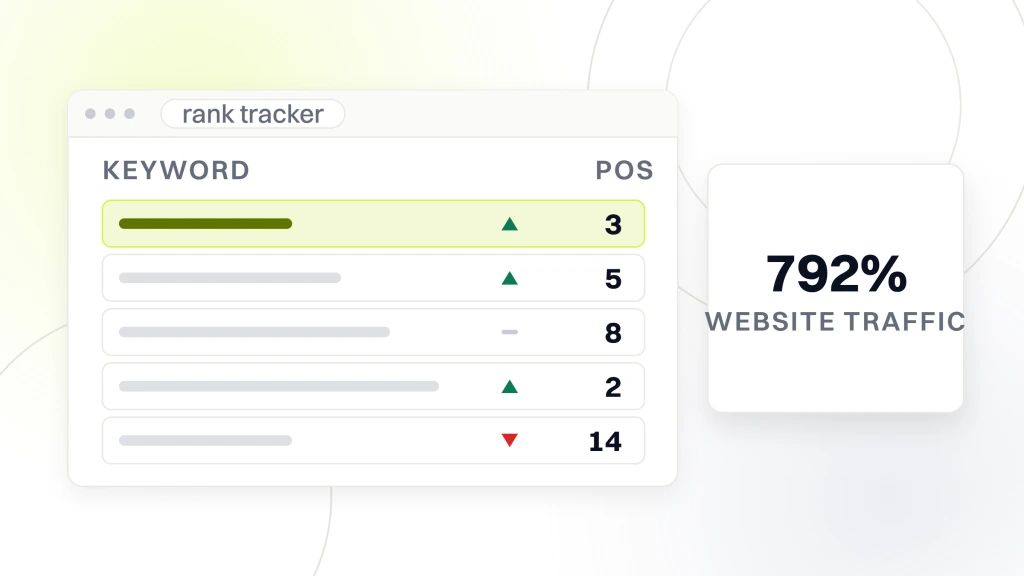
We redesigned the website, set up Insightly CRM with email automation, and built landing pages, content and sales collateral. From 2023 to 2024, website traffic climbed 792%. Marketing qualified leads rose 450%, and landing page conversion rates peaked at 47%.
Three things made this a best-tier engagement. First, the scope covered the whole system the firm lacked, from the website to the CRM to the sales collateral. Second, the CRM tied every lead to its source, so results were measurable. Third, reporting ran weekly and tied back to the CRM, so the client always knew what was happening. Any vendor claiming best-tier work should be able to describe engagements with the same three qualities. If they cannot, they are not best-tier.
Reporting transparency across best-tier vendors
Reporting is where second-tier vendors get exposed. A best-tier vendor sends you a monthly report by the 15th of the following month, with rankings movement, traffic curves, conversions, and the specific work done. A second-tier vendor sends a quarterly deck stacked with stock chart images and vague narrative.
Ask for a sample monthly report during the vetting process. If the vendor cannot produce one since it is a template they reuse for every client, that is your first signal about how customized the work will be. If the report has a section titled work performed with a bulleted list of activities and hours, that vendor is trying to earn the retainer. If the report is 40 slides of colored charts and no clear work log, the vendor is hiding what they did not do.
What a monthly report should contain
A useful monthly SEO report holds six sections. Executive summary with the three most important numbers. Rankings by keyword tier with month-over-month movement. Traffic breakdown by page and source. Conversions with source attribution. Work log with hours by category. Next month priorities with dates. Everything else is decoration. If your vendor’s report skips any of these six, ask why. The answer usually tells you more than the report itself.
Reporting cadence expectations
Monthly reports are the standard. Weekly Slack or email updates during the first 30 days of onboarding are fair to ask for. Quarterly executive reviews for larger retainers make sense. Anything more frequent than weekly is usually vendor performance theater, and anything less frequent than monthly is vendor accountability avoidance. Set the cadence in the contract so both sides know the deal upfront. Reporting fights that start in month 4 are almost always contract fights that should have been settled in month 0.
How best search engine optimization services adapted to AI search
Google AI Overviews changed how SERPs pay out. Best-tier vendors adapted by restructuring content for extraction, tightening entity coverage, and building author authority. Vendors that stalled saw client rankings drop 15% to 40% in the first 12 months of AI Overview rollout.
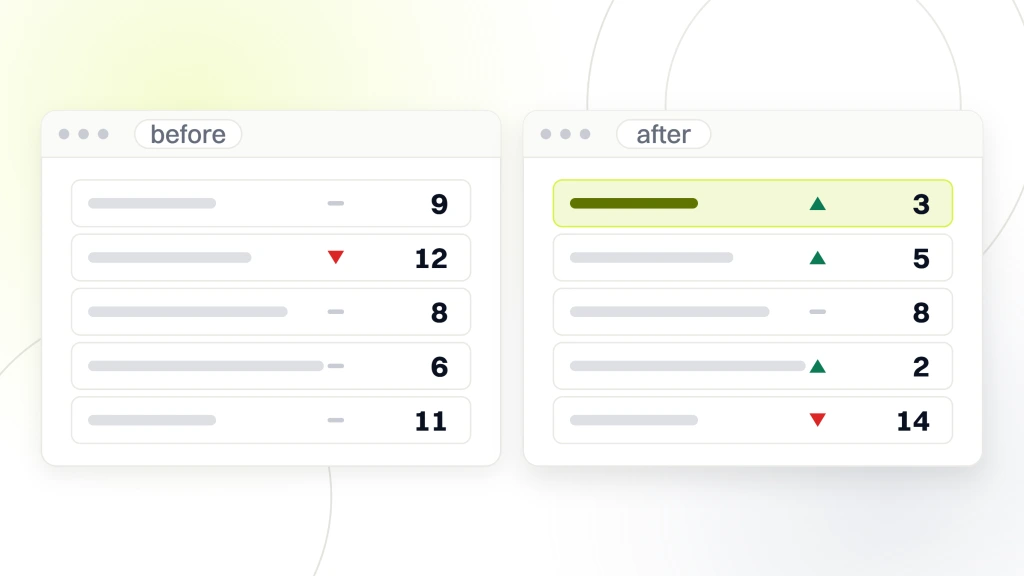
Content structured for AI extraction has three properties. Answer-first paragraphs of 40 to 60 words directly under every question H2. Comparison tables that pull key data into structured formats. First-person action language where honest, since AI systems weight first-hand experience signals. If your prospective vendor cannot explain how they write for AI Overview extraction, they are working from a 2021 playbook. Move on.
Entity coverage on the page
Entity coverage means the page mentions the topical entities the top-ranking pages share. For a beauty salon SEO page, the copy should mention Google Business Profile, NAP citations, local pack, review velocity, service pages, booking system integration, Instagram, and TikTok. Not as keywords, but as the topic’s entities. Best-tier vendors run entity gap analysis before writing every major piece. Second-tier vendors write to a keyword and stop there.
Author authority signals
Author authority signals include a real byline with real Person schema, an author page with bio and credentials, LinkedIn sameAs links, published work at other outlets, and topic-specific expertise notes. AI systems weight author authority when deciding which page to quote. Second-tier vendors publish content under Admin or The Team. Best-tier vendors put a real person’s name, credentials, and topic history on every piece.
Top search engine optimization services 2026 pricing versus quality
Best-tier SEO pricing sits at $2,500 to $25,000 per month depending on business size. Below $1,500, the trade-offs get harder. Below $800, you are almost always buying template work at scale. Above $30,000 without enterprise complexity, you are paying for brand and overhead.
The relationship between price and quality is not linear. A $6,000 boutique retainer often delivers more value than a $12,000 mid-market retainer for the same business, since the boutique puts the founder on your account and the mid-market puts three account managers between you and the SEO lead. Match the retainer to the scope, not to your ego. If you want the biggest name on the shortlist, be ready to pay for the overhead that name carries.
Matching budget to vendor tier
A $1,500 monthly budget fits a solo consultant or a boutique starter package. A $3,500 monthly budget fits a boutique full engagement. An $8,000 monthly budget fits a boutique senior-tier engagement or a mid-market entry level. A $15,000-plus monthly budget fits a mid-market full engagement or enterprise entry. Above $30,000, you are usually at enterprise. The mistake most buyers make is stretching to hire above their tier, then getting mediocre attention and end up the smallest client on that agency’s roster.
Quality per dollar analysis
Quality per dollar peaks in the boutique tier for most small and mid-size businesses. You get the SEO lead’s direct attention, faster turnaround, and lower overhead built into the rate. Quality per dollar dips in the mid-market tier since you pay for account management layers. Quality per dollar can peak again at enterprise if you need global reach or specialized deliverables only larger agencies staff.
The final decision framework
Vendor shortlisting comes down to four questions. Does the vendor fit your business size and industry. Does the scope match what you need this quarter. Does the pricing fit your budget with room to scale. Does the contract let you exit when performance slips. Four yes answers, sign the deal. Anything less, keep looking.
Do not let a slick pitch talk you out of the four-question framework. Every vendor’s pitch is optimized to close, not to disclose. The framework filters for delivery, not sales polish. If the person on the sales call cannot answer all four questions with specifics, ask for the SEO lead who will run your account and repeat the questions. the SEO lead knows the truth. The salesperson knows the pitch. Buy from the SEO lead, not the pitch.
- Confirm business-size fit by asking about their smallest and largest current clients
- Confirm scope match by walking through the specific deliverables you need month one
- Confirm pricing fit by asking what a 20% retainer increase would buy at month 12
- Confirm exit terms by reading the termination clause line by line before signing
The month-one check
Whichever vendor you sign, run a month-one check. Did they deliver everything the scope promised. Did they hit the reporting cadence. Did they surface any technical issues nobody had noticed. Did the SEO lead show up on the kickoff calls. Any misses in month one usually turn into bigger misses by month three. Have the exit conversation early if the answers are not clean. Waiting until month six to have the exit conversation costs you five months of runway you cannot get back.
The six-month check
Month six is where you decide whether to renew and at what size. Look at the ranking movement on your target keywords, the traffic curve, the conversion count, and the ratio of revenue produced to retainer spent. Talk to the SEO lead directly about what worked, what did not, and what they would change with a fresh start. Best-tier vendors welcome this conversation since they know the answers make them stronger. Second-tier vendors dodge it. Our Search Engine Optimization Services lay out the six-month review cadence directly in the contract.
Picking the best search engine optimization services for your next 12 months
The best SEO vendors in 2026 are the ones that pass the vetting checklist, fit your scope, price to your budget, and let you exit when things break. That is a much simpler frame than reading top-10 directory lists all week. Use it. It works.
If you want to see how our team stacks against the checklist, we are transparent about scope, pricing, and exit terms on our services page. Our case studies show real ranking curves and real revenue outcomes for clients across dental, healthcare, home services, ecommerce, and B2B. Bring your business specifics to a call, and we will walk through exactly what we would do in the first 90 days, and what the retainer number would be to run it well.