Dental Marketing Retainer Plans That Fill Chairs
A dental marketing retainer built for solo practices, dental groups, and DSOs. One accountable dental lead runs local SEO, Google Ads, GBP, content, review automation, and PMS-verified reporting. Plans from $599/mo.
Three numbers every dental owner can hold us to
Google Ads reports 412 form fills. Dentrix shows 118 patients. Nobody knows which channel drove it
SEO, Google Ads, and web traffic can't tie back to booked patients in the PMS. Media spend flows to whatever click count looks busiest, not to the channel that actually fills chairs.
Insurance verification stalls kill 38% of paid clicks before the booking form finishes
A $84 click ends at a coverage question the site can't answer, so the patient bounces and books with the practice down the street that shows eligibility on-page.
Your GBP sits at 47 reviews and the competitor across the street sits at 312 and owns the local pack
Reviews are the biggest local-pack ranking factor after proximity. A stalled review flow costs three-to-six new patients a month to the practice with the review flywheel.
Three outcomes every dental retainer produces
Content, local SEO, GBP, and paid media all run from one plan. Booked appointments trace back to source in one dashboard, so you know which channel to fix.
Automated post-visit SMS review requests, tracked GBP posts, and per-location response management. Practices on retainer add 40+ Google reviews in 90 days.
Stop paying five vendors for one confused report. A dedicated dental lead owns the roadmap, does the work, and reports on booked patients every month.
Four stages. Every step ends in a sign-off
Fixed scope, fixed cadence, fixed accountability. Nothing moves to the next stage until your leadership signs off in writing.
Full audit + PMS baseline
Site, GBP, ad accounts, PMS, and review flow scored against booked-patient revenue. 30-page report with the top 3 revenue-moving fixes.
12-month roadmap
Quarterly roadmap sized against procedure profitability. Implants over cleanings because LTV is 10x. Written MRR projection per quarter.
One named lead runs it
Google Ads, Meta, LSA, Local SEO, GBP, content, and reactivation all executed by a single dental lead. No handoffs. One number to call.
Quarterly scale review
Owner + practice manager review of booked patients, production revenue, and next-quarter budget. Every shift signed off before it runs.
What you actually get from our dental marketing retainer
Five phases, every item listed. Fixed scope, defined deliverable per phase, written sign-off on the calendar.
Week one audit + PMS baseline pulled
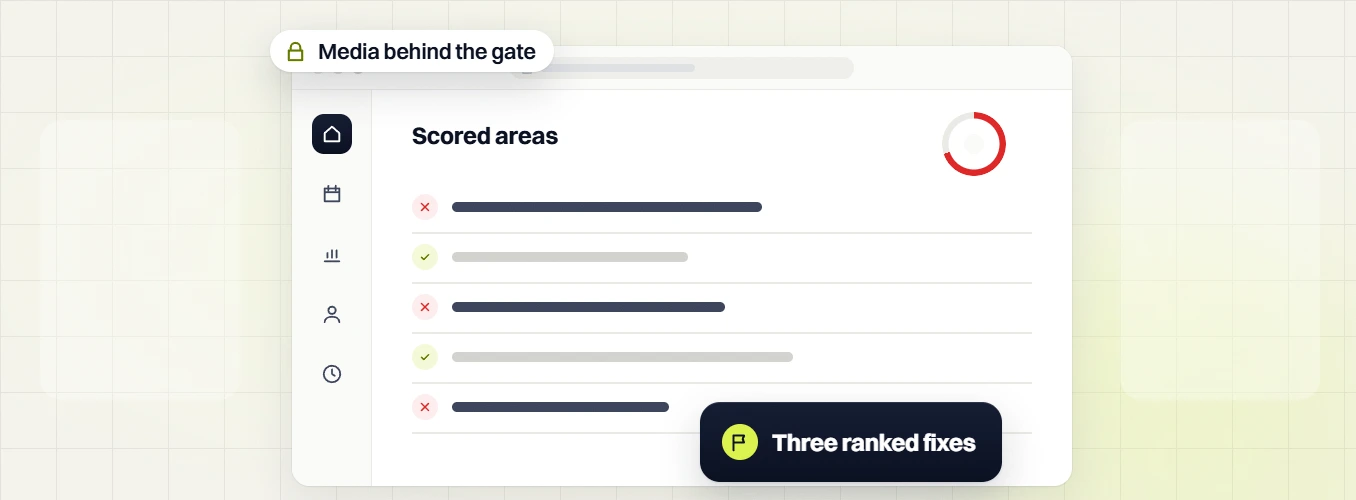
Site, GBP, ad accounts, PMS, and review flow all audited against booked-patient revenue. Written 30-page report with the top 3 revenue-moving fixes signed off by owner + practice manager before we spend a dollar of media.
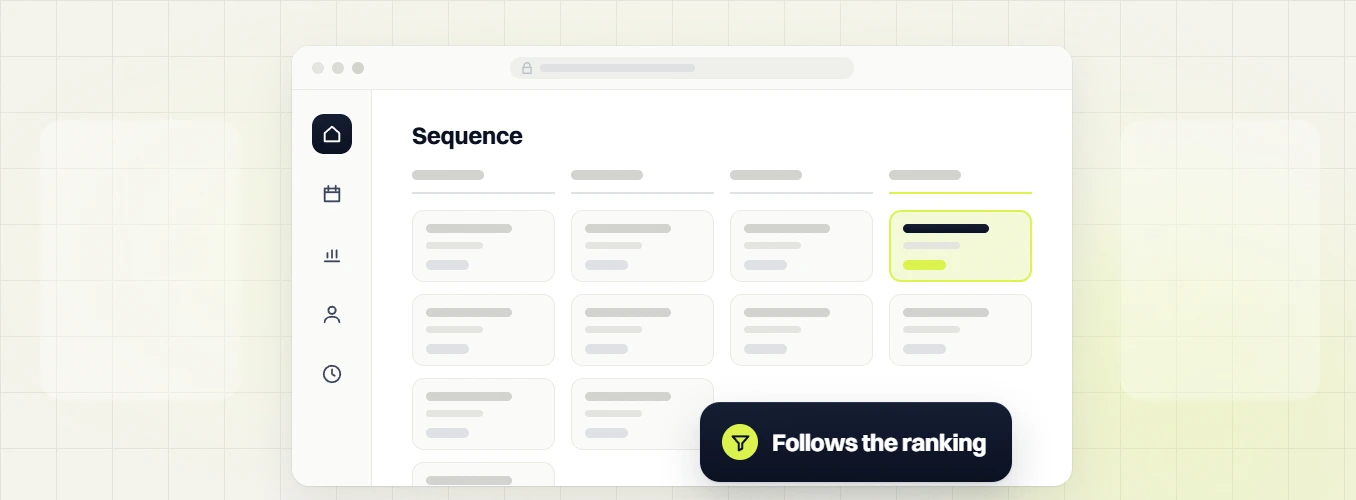
Google Ads, Meta, SEO, GBP, and reactivation systems scored against booked-patient revenue impact.
Dentrix, Eaglesoft, Open Dental, or Curve booking and production data captured as day-one baseline.
Every finding, every prioritized fix, every revenue projection in writing; owner and practice manager sign off.
What we do first is signed off, not sprung on you; prioritized by dollar impact and fix-time.
GBP counts, review velocity, and pack position benchmarked against the top three practices in your zip.
Where clicks stop being tracked, where PMS data stops being pulled, where the gap between them is.
12-month roadmap tied to procedure profitability
Weeks 2 and 3 build a 12-month quarterly roadmap sized against your procedure profitability. Implants get priority over cleanings because the LTV is 10x. Every quarter has a written MRR projection so you know what should hit the PMS.
Q1 to Q4 planned by campaign, cluster, and content piece; every quarter has an explicit sign-off gate.
Implants, aligners, and cosmetic lead. Cleanings and hygiene layered as base load, not headline focus.
Q1, Q2, Q3, Q4 targets sized against real market data plus your production capacity.
How much goes to Ads, SEO, content, and GBP each month; adjusted quarterly on what performs.
Which content, offer, or landing page most moves higher-ticket cases past first consult.
Dormant patients segmented by last-visit date and procedure type; win-back cadence written up front.
Every channel run by one named dental lead
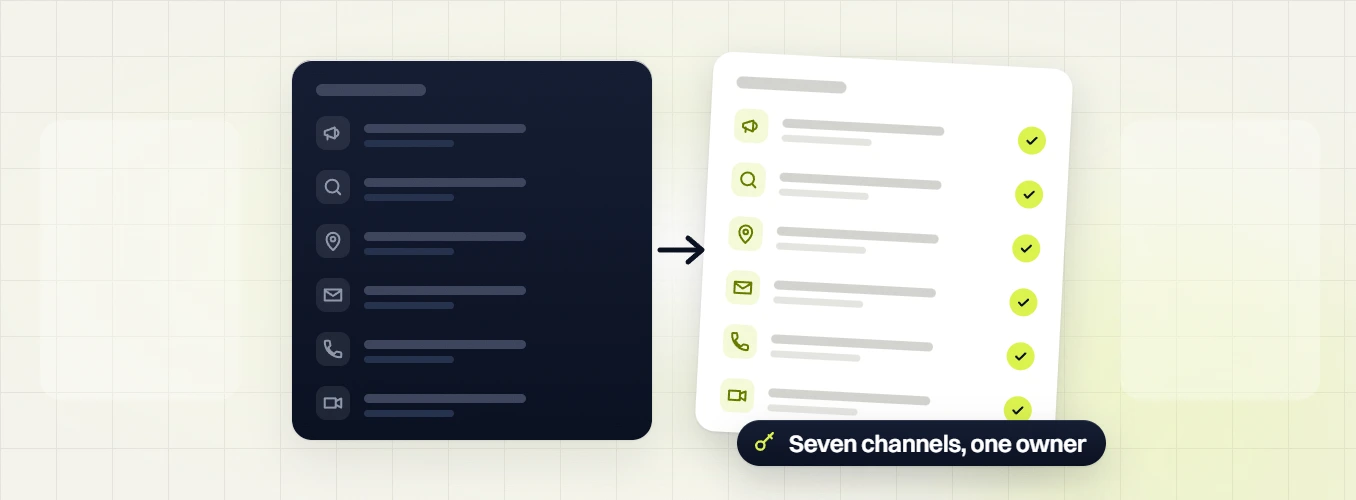
From month 1, Google Ads, Meta, LSA, Local SEO, GBP, content, and reactivation are all executed by a single accountable dental lead. No handoffs between agencies. No cross-team blame. One number to call for every question about the account.
Every paid channel run by the same lead; attribution built once, not fought over.
Organic, local pack, review flow, and citations all coordinated as one connected program.
Monthly editorial calendar tied to keyword priority and case-acceptance drivers on your PMS.
Dormant-patient sequences, post-treatment review requests, and recall follow-up wired to your PMS.
Ad copy, keywords, landing pages, GBP posts; every test measured against a booked-patient number.
Every Google review answered inside 24 hours in a voice matched to your practice tone.
Weekly testing tied to PMS-verified booked patients
Every week, cross-channel testing runs against PMS-verified booked patients. Ad copy, landing page CVR, keyword targeting, GBP post cadence, reactivation SMS timing; every test measured against the number that actually fills chairs, not clicks or impressions.
Every booked patient tagged to the click, keyword, or reactivation trigger that drove them.
What we tested last week, what won, what went live this week; three-line summary, no dashboard hunt.
A/B tests on hero, offer, form, and time-slot picker; measured against booked appointments only.
If SEO is compounding faster than PPC, budget moves; every shift signed off in the monthly report.
Two new ad copy variants per campaign per month; losing creative rotated off within 14 days of first data.
Negatives, geo caps, and audience layering tuned weekly to the searches that book high-ticket cases.
Quarterly scale reviews tied to production revenue
Every 90 days, the owner and practice manager review what booked patients drove, what production revenue closed, and what next-quarter budget should look like. Scale decisions are grounded in your PMS plus your production capacity, not agency spend targets.
Booked patients by channel, production value from marketing, cost per booked patient; all PMS-verified.
Ad spend and content velocity sized against your chair capacity and hygienist bandwidth; no overspend.
Explicit sign-off on next quarter allocation across channels; no surprise invoices, no hidden shifts.
Rolling 12-month view of MRR growth, CAC trend, LTV trend, and production growth; owner-first metrics.
When a group is ready for site two, prep runs in parallel with the current retainer, no re-onboarding.
Roadmap for pushing higher-margin cases (implants, clear aligners) up in the mix as capacity opens.
Four retainer tiers for every stage of growth
Pick the tier that matches your practice stage. Move up or down anytime with 30 days notice. Ad spend billed separately at pass-through, never through us.
Solo practices, one growth program, not five vendors.
Solo or two-provider, adding paid + monthly recall on Foundation.
Two to four providers, high-ticket cases. Adds Meta + nurture.
Multi-location or premium groups. Per-location run, rollup reports.
Every retainer feature, tier by tier
HOVER ANY FEATURE FOR A PLAIN-ENGLISH EXPLANATIONContent +
SEO +
Paid media +
Reviews + reputation +
Reporting + strategy +
Real practices, real numbers
Asked by dental owners, answered
From real quote calls with practice owners. Anything else, ask on the strategy call and get an answer in the first 5 minutes.
How much does a marketing retainer cost?
+
A marketing retainer typically runs between $500 and $10,000 per month depending on scope, market size, and channel mix. A dental marketing retainer at Redefine Web starts at $599/mo on Foundation, $999 on Growth, $1,999 on Scale, and from $3,500/mo for custom Enterprise scope covering multi-location and DSO practices. Every tier is billed as a flat monthly fee. Ad spend passes through at cost, not marked up, so the fee you pay us stays predictable and the media budget stays yours. Most single-location practices land on Growth or Scale, where Google Ads management, local SEO, GBP, content, and review flow are bundled under one dental lead who reports on booked patients from the PMS every month. The Foundation tier is built for solo owner-operators who want local SEO, GBP, and review flow without paid ads yet. Enterprise scope is priced per location and per specialty because the media budget and reporting complexity scale with practice count. See the American Dental Association for practice benchmarks that inform tier fit.
How much does dental marketing cost?
+
Dental marketing costs vary by channel and practice size. A DIY approach on GBP and organic social costs nothing but staff time, though the opportunity cost of a distracted front desk is real. A performance-only vendor charging per booked appointment lands between $200 and $600 per patient with no fixed monthly fee, which reads good until you scale and the invoice moves faster than the practice can absorb. A dental marketing retainer with an agency running Google Ads, local SEO, GBP, content, and review flow together sits between $500 and $10,000 per month depending on scope. Our retainer tiers start at $599/mo on Foundation and cap at $1,999 on Scale for single-location practices, then move to custom Enterprise scope from $3,500/mo for multi-location and DSO practices. Ad spend bills separately at pass-through cost, never through us, so every dollar of media budget goes to Google or Meta directly. The retainer fee stays predictable while the media budget scales with production capacity.
What is the retainer fee in an advertising agency?
+
The retainer fee is the flat monthly amount an advertising agency charges for a fixed scope of work, separate from media spend. For a dental marketing retainer, the fee covers the labor and tools to run local SEO, Google Ads management, GBP, content, review flow, landing page CRO, and monthly reporting on booked patients from the PMS. Ad spend that goes to Google, Meta, or Local Service Ads is billed as pass-through at cost, on top of the retainer fee, so the agency has no incentive to inflate ad spend. Our fees start at $599/mo on Foundation, $999 on Growth, $1,999 on Scale, and from $3,500/mo on Enterprise. A retainer buys accountability and continuity, not just hours. The dental lead who runs the plan in month 1 is the same person who runs it in month 12, so context stays inside the account and every quarter builds on the last. Pod rotation and account manager churn are the two biggest hidden costs of a cheap retainer.
Who is the best dental marketing company?
+
The best dental marketing company is the one that ties every dollar of spend to booked patients in the PMS, not the one with the loudest brand. Look for a fixed monthly fee, one named dental lead who does the work, pass-through ad spend billed at cost, a written 6-month plan, and reporting that starts with booked appointments from Dentrix, Eaglesoft, Open Dental, Curve, or Denticon. Ask for a case study with real PMS numbers, not click counts. Ask how the agency handles insurance verification questions on the site, because 38% of paid clicks bounce on coverage questions the site does not answer. Ask who owns the Google Ads account, the GBP, and the review flow after cancellation. A dental marketing retainer that scales past month 12 is one where the same dental lead runs the account start to finish. Redefine Web runs on that model with 30+ practices on retainer, 94% retention past month 12, and every plan scoped against practice capacity. See our case studies before you commit to any vendor.
What is included in a dental marketing retainer?
+
Every dental marketing retainer covers content, local SEO on the practice website, Google Business Profile management, review generation, and monthly reporting on booked patients from the PMS. Growth and Scale add Google Ads management, Meta retargeting, landing page CRO tests measured against booked appointments, and patient nurture email flows on Klaviyo or a dental-friendly ESP. Enterprise scope adds per-location GBP, rollup dashboards for regional ops, programmatic treatment SEO across implants, aligners, and hygiene, and a dedicated dental lead with weekly reporting instead of monthly. Every retainer tier is delivered by one accountable dental lead, not a rotating pod. Ad spend passes through at cost, never marked up. Reporting is written, not just dashboards, so the practice owner reads three lines every Monday on what tested last week and what won. Setup and audit run inside week 1 with sign-off before we spend a dollar of media. Set up your Google Business Profile before we kick off so the local SEO work compounds from day one.
How long does a dental marketing retainer contract last?
+
The initial term is 6 months. After month 6, the retainer converts to a 30-day rolling agreement with cancel-any-time written notice. There is no 12-month or 24-month lock, no cancellation fee, and no scope penalty on exit. Six months is the minimum window to move SEO past the initial ranking lag on Google and run two full Google Ads optimization cycles, so retainers shorter than that tend to under-deliver on the SEO half of the plan. Practices that continue past month 6 typically stay 18 to 36 months, and 94% of our active retainers renew past the first 12-month mark. Termination requires written notice by email or letter to your dental lead. On exit, the practice keeps the Google Ads account, the GBP, the website, and every landing page built during the retainer. Nothing is held hostage. A written 30-day transition period covers reporting handoff and access checklist so the next agency or in-house hire steps in cleanly.
How fast will a dental marketing retainer produce booked patients?
+
Google Ads on the Growth or Scale tier typically produces the first booked appointments inside 14 to 21 days after launch. Cost per new patient stabilizes in month 2 to 3 as Google learns the audience and Enhanced Conversions push booked-patient revenue back to the platform. SEO moves slower, with first ranking gains between 8 and 12 weeks and steady organic patient volume from month 4 onward. GBP and review flow start compounding local pack gain inside 30 days once the review request cadence is running from the PMS. Case-acceptance and higher-margin procedures like implants and aligners layer in from month 3 as landing page CRO tests close. A dental marketing retainer is compounding work, not one-and-done, so the biggest gains usually land between month 6 and month 12. Practices that stay past month 12 typically see the ratio of organic booked patients to paid booked patients flip in favor of organic, which drops blended cost per new patient sharply and unlocks room to reinvest media budget into higher-margin service lines.
Does the retainer integrate with our PMS?
+
Yes. Dentrix, Eaglesoft, Open Dental, Curve Dental, and Denticon integrations are supported. Wiring covers new-patient lead push from web forms into the PMS and revenue attribution flow from the PMS back into Google Ads via offline conversion imports. That lets ad platforms bid on booked patient revenue instead of raw form fills. Practices on the setup typically cut cost per new patient by 30 to 50% inside the first 90 days on Ads. The dental marketing retainer includes the PMS wiring in the Foundation tier and up. If your PMS is not on the supported list, we build the integration inside week 1 of the retainer as part of the audit baseline. No extra setup fee. Practices that book by phone get call tracking wired the same week, so calls that turn into booked appointments feed the same reporting stack. The PMS wiring is the single biggest lever on cost per patient, which is why it happens week one every time.
Does the retainer run Google Ads to booked appointments?
+
Yes. Growth and Scale dental marketing retainers include Google Ads management wired to booked appointments as the primary conversion event. That covers Local Service Ads for eligible practice types, Search for direct service queries, and Performance Max for branded and map coverage. Enhanced Conversions and offline conversion imports push booked patient revenue from the PMS back to Google, so the platform bids on real revenue and not form fills. Foundation tier does not include Google Ads management, but adding a Google Ads scope on top of Foundation is available for $499/mo, priced separately from ad spend. Ad spend always passes through at cost, never marked up. Weekly test cycles cover ad copy, keywords, landing page CVR, and negative keyword lists, with two new ad copy variants per campaign per month and losing creative rotated off within 14 days of first data. Every budget shift between campaigns is signed off in the monthly report.
Does the retainer cover GBP, reviews, and local SEO?
+
Yes. Every retainer covers Google Business Profile posts weekly, review generation flows tied to visit completion in the PMS, review response inside 24 hours, and local SEO with per-service and per-location landing pages where relevant. Reviews are the single biggest local pack ranking factor after proximity, so the PMS-triggered review request cadence usually adds 40+ verified Google reviews in the first 90 days on retainer. Local SEO covers on-page work, schema (LocalBusiness and Service), citation cleanup across the top 40 dental directories, and per-neighborhood landing pages where the search volume supports one. GBP category, service list, and Q&A are audited monthly. Location-level response management keeps the response voice matched to the practice tone. For DSOs and dental groups, per-location GBP and review programs run under one rollup dashboard so the CEO sees group-level pack coverage while each practice manager sees their own location detail. Review disputes and takedown requests are handled by the dental lead.
Can a dental marketing retainer work for multi-location practices or DSOs?
+
Yes. Multi-location and DSO practices typically start a dental marketing retainer on the $1,999 Scale tier and move to custom Enterprise scope from $3,500/mo for 5 or more practices. Per-location Google Ads, per-location Google Business Profile management, location-level review programs, and consolidated rollup dashboards for regional or central ops are all covered by the retainer. A dedicated dental lead handles every location under one plan with one point of contact. Multi-location work uses a rollup dashboard so the CEO sees group-level performance while regional managers see per-location detail. Onboarding for a second or third location takes 2 weeks, half the standard onboarding window, because the reporting stack is already live. DSO retainer reporting rolls booked patients, production revenue, cost per new patient, and cost per booked appointment up to group level, with drill-down to any single location. Regional pods stay consistent, not rotated, so ops leads talk to the same dental lead every week.
Can we switch tiers mid-contract if the practice grows?
+
Yes. Moving from Foundation to Growth, or Growth to Scale, on the dental marketing retainer takes effect on the next billing cycle. There is no re-onboarding fee and no scope reset. Practices typically upgrade in month 3 or month 4 once Google Ads volume clears the Foundation tier ceiling, or when a second service line like clear aligners or implants goes into the growth plan. Downgrades follow the same 30-day notice rule as cancellation. The dental lead who runs the retainer stays the same on tier changes, so no context is lost across the account. Every tier change is written up in the monthly report and signed off before the billing cycle switches. Practices that grow past Scale into multi-location territory move to Enterprise pricing after a scoping call that covers per-location media budget, chair capacity, and hygienist bandwidth per week. The move is designed to feel like an internal handoff, not a re-onboarding.