Real Estate Marketing Agency for Brokerages and Agent Teams
Real estate marketing for brokerages, agent teams, and PropTech operators. Redefine Web ties IDX websites, real estate SEO, Google + Meta ads, and CRM automation to closed listings and buyer contracts in Follow Up Boss or kvCORE. Every hour is judged on showings booked and signed transactions at a median $78 cost per booked showing.
Three problems draining showings from every brokerage
Zillow Premier Agent auction sets your lead cost
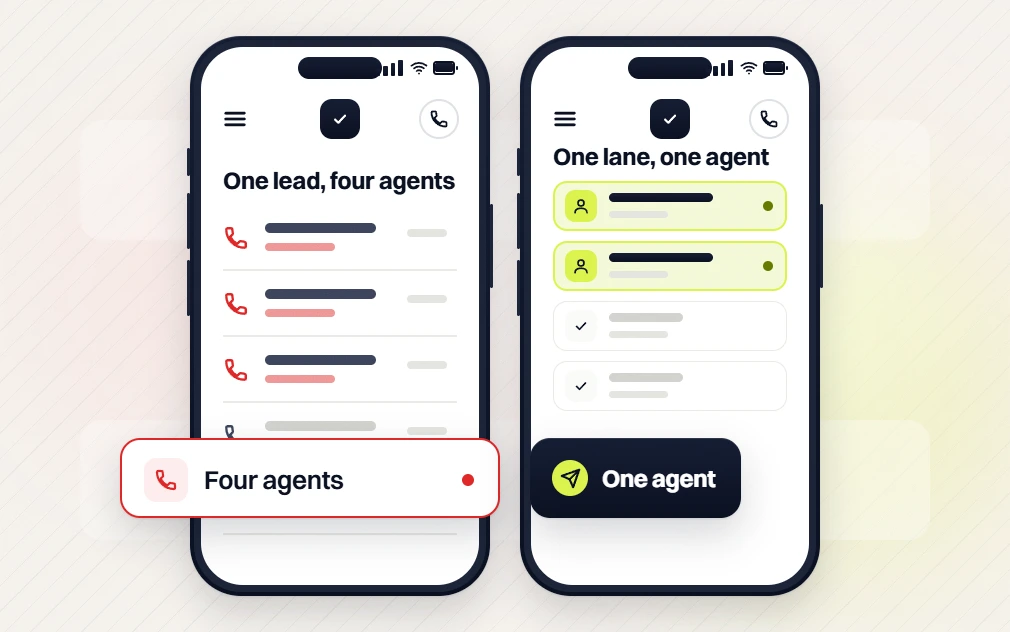
Zillow Premier Agent auction sets your cost at $80 to $250 per shared lead. Follow Up Boss inbox sees 4 competing agents on the same lead every hour.
IDX feed spawns 8,000 pages Google never indexes
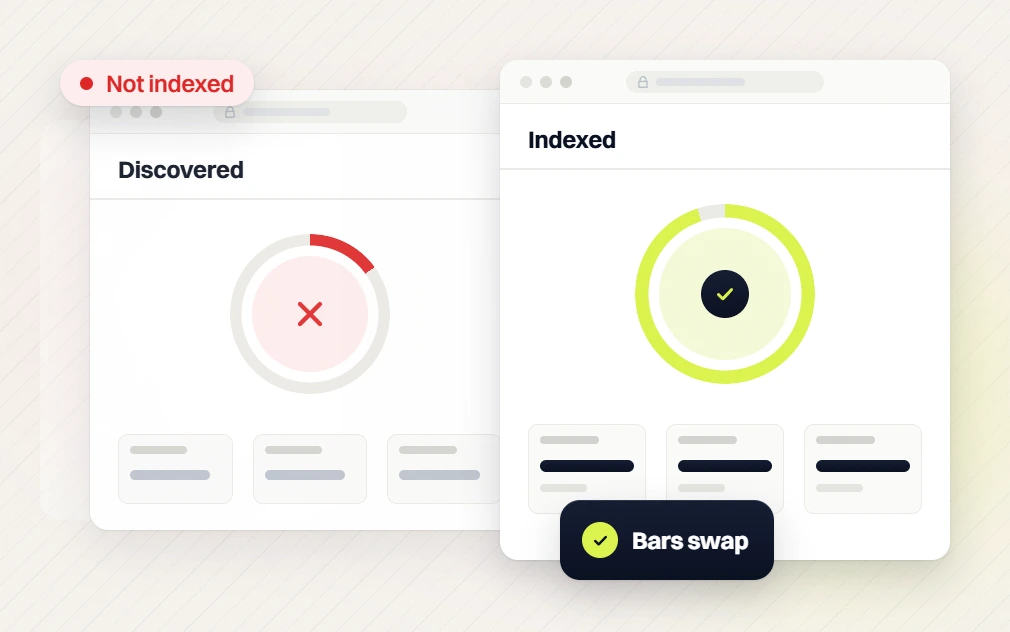
IDX Broker and Real Geeks spawn 8,000 JS pages. 92% sit in Discovered, not indexed while neighborhood pages get zero organic buyer sessions monthly.
Seller funnel is 11% of budget but 74% of GCI
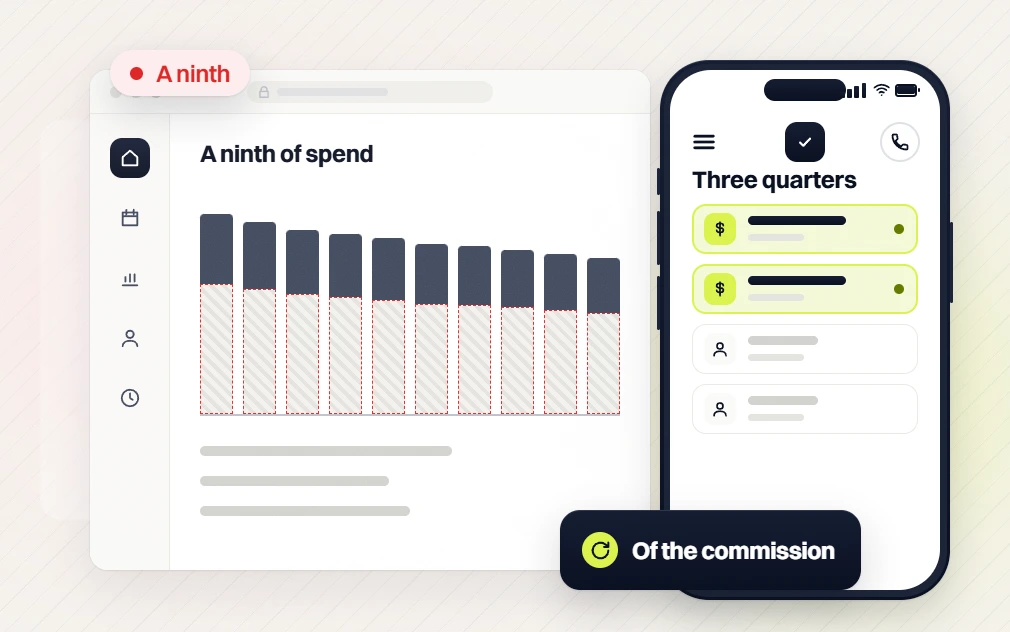
Sellers get 11% of ad spend and drive 74% of gross commission. No home-valuation flow, no seller-side content, no capture on seller-intent queries.
Four real estate marketing services, one accountable team
Each pillar is a full program. Run any one on its own or bundle all four into one retainer with a single point of contact. Every hour ties back to showings booked and closed transactions in your CRM.
Real estate websites that book showings
IDX-integrated sites built to convert, engineered around your farm areas, target buyer, and commission mix. Not a design case study, a showing-booking machine. Owned by you at handoff.
Real estate SEO that owns neighborhood queries
Technical IDX fixes, neighborhood + property content written by writers who cover real estate, and digital PR. Programs that pay back inside twelve months.
Paid ads tied to booked showings
Google Ads and Meta media buying with call tracking and CRM reconciliation, optimized to cost per booked showing and per signed listing, never click-through rate.
Explore real estate PPCHosting, uptime, and monthly updates
LiteSpeed hosting, weekly security scans, monthly optimization, plus small content edits included. Zero worry about page-speed or broken IDX plugins.
Explore maintenance plansFour stages, every step tied to closed deals
Same rhythm on every brokerage. Audit before we spend a dollar. Position before we launch an asset. Build against the buyer. Scale against showings booked and closed transactions.
Diagnose the funnel
Site, GBP, ad accounts, Follow Up Boss, and showing pipeline. Channel-by-channel teardown against showings booked and closed deals per agent.
Sharpen the offer
Nail the neighborhood focus, buyer profile, and listing story. Every listing page, ad, and sequence built off one positioning brief.
Build the assets
Launch the IDX site, neighborhood pages, listing flow, and CRM-linked tracking. Weekly written notes, nothing stalled in draft.
Compound the growth
Compound paid, SEO, and referral wins. Weekly review tied to showings booked and closed deals, not portal clicks.
Not every real estate agency reports the same things
Most real estate marketing agencies report on impressions and clicks. Portal-only strategies report on nothing beyond leads sent. Here is what actually shows up in your CRM when we run the program.
Real brokerages, real numbers
How much should a real estate agent spend on marketing?
+
Most working agents spend 8 to 15% of prior-year GCI on marketing. A first-year agent at $60K GCI usually invests $5K to $9K across CRM, headshots, farm mailers, Zillow Premier Agent, and light Google Ads. A top producer at $500K GCI runs $40K to $75K spread across real estate SEO, Google Ads, Meta listing ads, YouTube, and a lifecycle stack. Brokerages typically budget 6 to 10% of gross commission at the brand level on top of what agents spend on their own book. Our $599/mo bundled retainer gives agents and small teams a predictable line item instead of pay-per-lead billing.
What is real estate digital marketing?
+
Real estate digital marketing is the mix of online channels that puts buyer and seller leads into a brokerage CRM. That means an IDX-integrated website tied to a RESO-compliant MLS feed, real estate SEO for neighborhood and property queries, Google Ads on high-intent buyer and seller phrases, Meta ads for listing promotion, YouTube for tours, and lifecycle email inside Follow Up Boss or kvCORE for the 6 to 18 month buying cycle. At Redefine Web every program starts with a joint GCI model. We look at average commission, sales cycle, current lead-to-close rate, and target monthly closings, then work backward to a lead volume goal by channel.
Do realtors charge clients for marketing?
+
No. In a standard listing agreement, the seller pays a commission at closing (usually 2.5 to 3% per side under the NAR settlement rules from August 2024). That commission covers pricing guidance, MLS syndication, photography, staging consult, ad spend, showings, negotiations, and paperwork. Sellers do not get billed line-item for marketing. Some luxury brokerages ask sellers to fund upgraded video or print for homes above $2M, but that is disclosed upfront and rare below the luxury tier. Our real estate marketing programs work with the brokerage or agent side, not the seller. You pay the retainer, we run the paid, SEO, and lifecycle work that drives listings and buyer contracts.
How do new real estate agents get leads?
+
New agents get leads from 5 places: sphere of influence (past coworkers, friends, family), open houses (host as many as possible, including for other agents), a small IDX website with 15 to 25 neighborhood pages ranking on Google, Zillow Premier Agent or Realtor.com Connections Plus if the ZIP is affordable, and consistent Meta ads to a home-valuation landing page for seller leads. Skip cold calling FSBO and expired listings for the first 90 days. They convert under 2% and burn goodwill fast. A working sphere plus 3 open houses a month plus a cheap PPC test on ‘realtor near me’ in your farm ZIP will produce first paid contracts in 60 to 120 days.
Where do most real estate agents get their clients?
+
About 65% of client transactions for the average agent come from repeat clients and referrals from past clients, sphere-of-influence contacts, and open houses, per the NAR Member Profile. Roughly 20% come from internet leads (portal buys, IDX website, PPC, social ads, agent SEO). Another 10 to 15% trace to farming, signage, and prospecting. Top producers skew heavier toward owned digital channels because a converting IDX site plus lifecycle nurture compounds year over year, while portal-lead cost per closed deal keeps climbing. Our real estate marketing programs move the internet-lead share from 15% to 40% inside 12 months without cutting the referral engine.
What is the best marketing strategy for real estate agents?
+
The best real estate marketing strategy for a working agent is an owned-channel stack that ends the pipeline’s dependence on Zillow rentals. Start with an IDX-integrated website whose neighborhood pages and listing detail pages actually rank on Google. Add Google Ads on high-intent buyer and seller queries in your farm area. Layer Meta ads for every new listing so past-client lookalikes see it within 24 hours of MLS entry. Wire everything into Follow Up Boss or kvCORE with a lifecycle drip for the 6 to 18 month buying cycle. Past-client stay-in-touch and referral sequences typically double repeat-and-referral revenue inside 12 months.
How much does a real estate marketing agency cost per month?
+
Redefine Web bundled retainers start at $599/mo. Single-channel programs (real estate PPC or SEO) run $499, $999, $1,999, or from $3,500 per month by channel mix, content velocity, and media budget under management. IDX website builds are scoped separately as fixed-price projects at $1,500, $3,500, $7,500, or $25K+. The $599/mo bundled retainer covers foundation work across paid, SEO, and lifecycle. Growth and Scale tiers add media budget, content velocity, and multi-market coordination for brokerages running paid across several metros. Website maintenance runs $199, $299, or $499 per month. Ad spend is billed separately by the networks.
What CRMs do you work with for real estate?
+
We integrate with every major real estate CRM: Follow Up Boss, kvCORE, Real Geeks, BoomTown, Chime, Sierra Interactive, LionDesk, Wise Agent, and HubSpot. For teams on Salesforce or a general CRM, we build the routing and lifecycle work there too. Every lead source (Google Ads, Meta ads, IDX form, home valuation page, portal parser) fires into the CRM with a source tag and hidden fields for campaign, ad group, and landing page. Lead scoring, drip enrollment, and round-robin routing sit inside the CRM you already pay for. We do not force a CRM switch. If yours is a mess, we will flag it in the audit and suggest a migration path, but the choice stays yours.
How do you handle NAR MLS rules and the August 2024 commission settlement?
+
Every campaign we run respects NAR MLS syndication rules and the buyer-broker written agreement requirement from the August 17, 2024 settlement. IDX listing pages carry accurate broker attribution, MLS rules of use compliance, and clear disclosure of commission structure where required. Landing pages for buyer leads include the buyer representation agreement conversation upfront (not buried after form submit) so agents can sign clients before showings. Seller landing pages avoid banned language around ‘guaranteed’ offers or commission promises. Fair housing language sits on every property-related page. We keep a compliance checklist by state because rules differ.
Can you help us stop paying Zillow Premier Agent so much?
+
Yes, that is the core of most engagements. We do not kill Zillow spend on day one because your pipeline depends on it. We build an owned-channel replacement over 90 to 180 days: an IDX site that ranks on neighborhood and property queries, Google Ads on ‘realtor near me’ and long-tail buyer queries in your farm ZIPs, Meta ads on every new listing to past-client lookalikes, and a lifecycle drip in Follow Up Boss for the 15 to 40% of Zillow leads that go cold. Once owned-channel volume matches 50% of your Zillow lead flow at a better cost per closed deal, we pull Premier Agent budget back.
Do we own the ad accounts, IDX website, and CRM integration?
+
You own everything. Google Ads, Meta Business Manager, YouTube Ads, GA4, Search Console, Google Business Profile, your IDX feed contract, your CRM integration (Follow Up Boss, kvCORE, LionDesk, HubSpot, or Salesforce), and your website. All accounts are created in your name with your billing. Agency users get access as invited collaborators. The reason is honest incentives. Agencies that own client accounts have room to hold data hostage on offboarding. We do not want that pressure point. If you leave, you leave with everything intact: ad accounts, pixels, analytics history, CRM integrations, IDX feed config, and the codebase for anything we built.
How long before real estate marketing shows closed deals?
+
Real estate PPC produces first qualified buyer or seller leads in 7 to 14 days. Meta ads for listings drives showing requests once creative is live. Real estate SEO shows first ranking gains on neighborhood and property queries in 6 to 8 weeks with steady traction by month 4. IDX website builds go live in 8 to 12 weeks and improve conversion immediately. Closed deals lag leads by the length of the buying cycle. Residential buyers typically close in 60 to 180 days from first inquiry. Sellers can close in 30 to 90 days if already listed. Signed listings from seller-side campaigns typically appear within 30 to 60 days.
Can you scale marketing across multiple offices or agent teams?
+
Yes. Multi-office and multi-team real estate marketing programs sit at the Scale and Enterprise tiers. Enterprise covers per-office location pages with local SEO architecture, per-team agent branding within the parent brokerage, and consolidated reporting for leadership. Multi-office work adds location-aware URL architecture, per-office Google Business Profile management with guidance from Google’s local ranking documentation, per-office review generation, and per-office paid geo-targeting so budget does not cannibalize across markets. Brokerages with 5+ offices usually graduate to Enterprise for portfolio-level information architecture. Multi-team work supports individual top-producer teams inside a parent brokerage brand so they get dedicated landing pages and reporting without a separate contract.