Skip to content
NOW BOOKING NEW ENGAGEMENTS GET A FREE STRATEGY SESSION ↗
RWECOMMERCE WEBSITE DESIGN

Ecommerce Website Design to Convert More Store Visitors

Custom storefront builds for DTC brands on Shopify Plus, Shopify Hydrogen, headless Next.js, and BigCommerce. We build the PDP, checkout, mobile flow, and Klaviyo triggers around your margin mix. Recent stores launch at a 3.8% conversion rate.
60+
DTC + ECOMMERCE BRANDS BUILT
2.8x
AVG ROAS YEAR ONE
$799
LAUNCH TIER STARTS AT
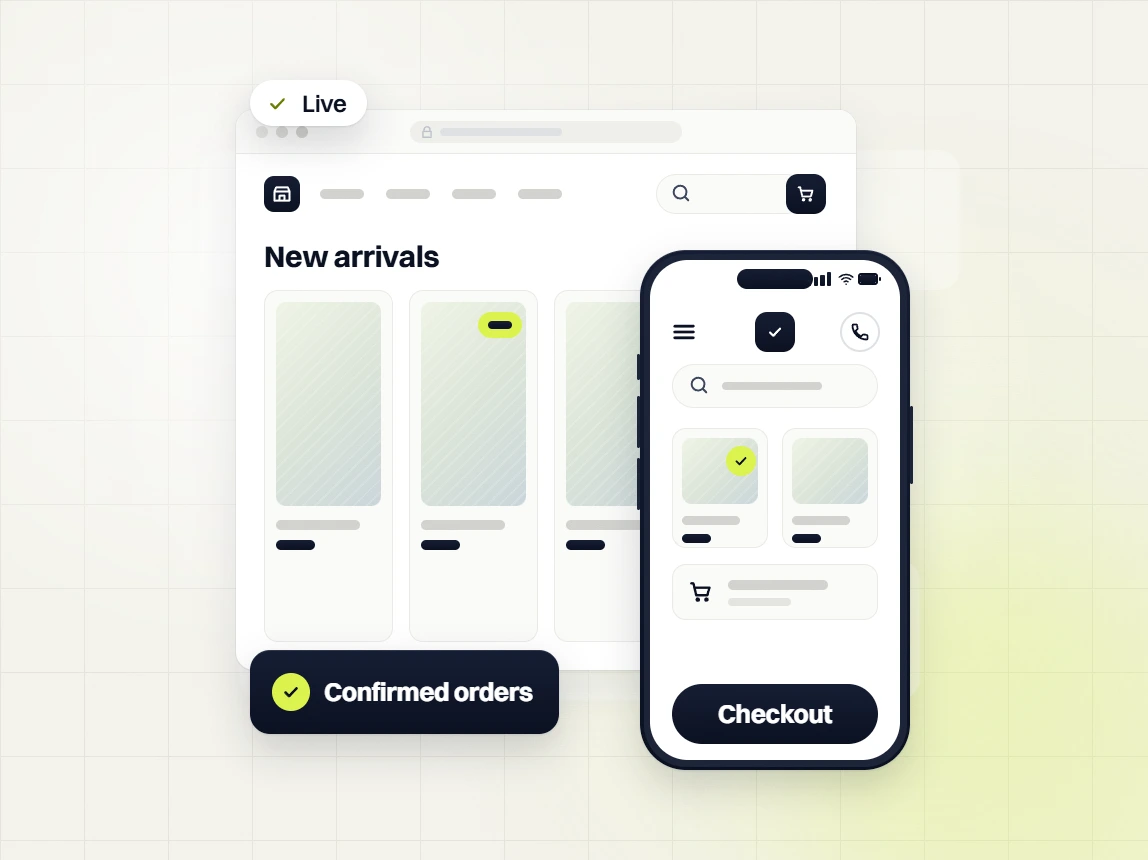
ecommerce website design dashboard tracking booked outcomes and revenue metrics
SHOPIFY-VERIFIED CONVERSIONS
3.8%
LAUNCH-DAY CVR
Trustpilot 4.7/5 ★★★★★
Clutch 5.0/5 ★★★★★
Google 5.0/5 ★★★★★
DesignRush 4.9/5 ★★★★★
GoodFirms 5.0/5 ★★★★★
F6S 5/5 ★★★★★
4.9 WEIGHTED AVERAGE · VERIFIED BY STORES THAT ACTUALLY PAID US
01 THE PROOF

Three ecommerce website design numbers you can hold us to

ecommerce website design challenge card visualizing a common growth blocker
PROBLEM 01 · SPEED

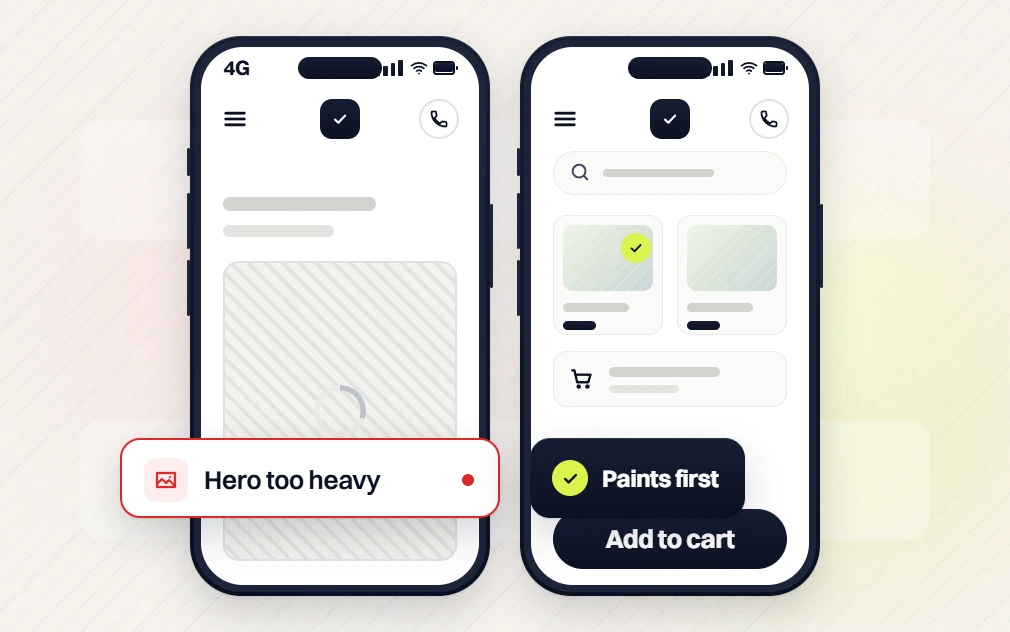
Stock Shopify Dawn loads 2MB heroes, LCP 4.1s

Stock themes load 2MB heroes and stack 40+ apps on the page. LCP hits 4.1 seconds on Android and 22% of paid clicks bounce before the fold paints.

ecommerce web design agency challenge card visualizing a common growth blocker
PROBLEM 02 · CONVERSION

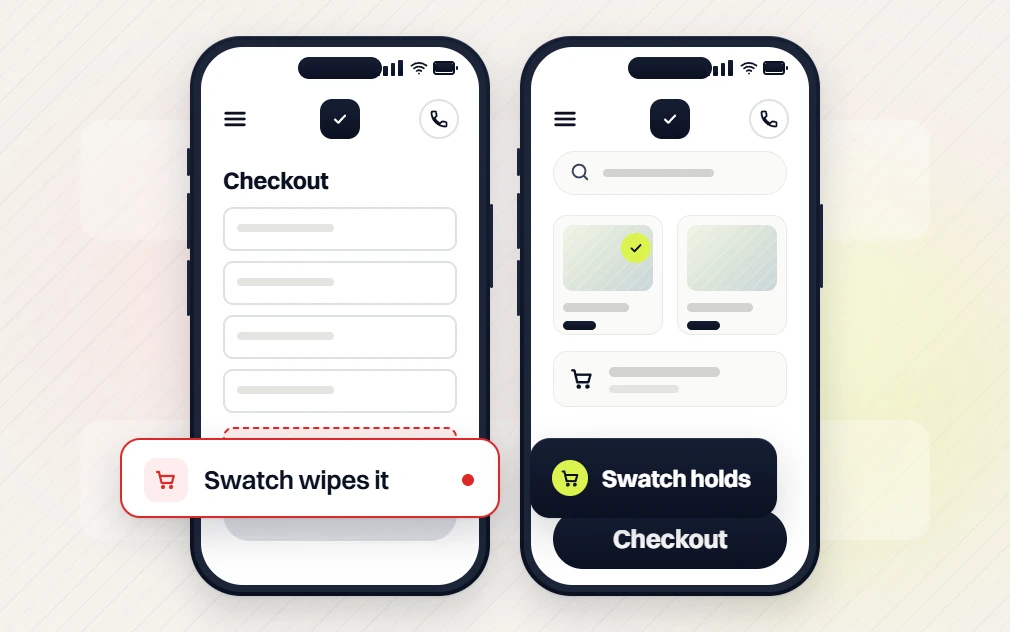
PDP variant pickers and checkout drop 68% of carts

Variant swatches redirect on every click and Shop Pay is hidden below the fold. Mobile carts abandon at 68% and paid CVR never clears 1%.

ecommerce website design company challenge card visualizing a common growth blocker
PROBLEM 03 · APP BLOAT

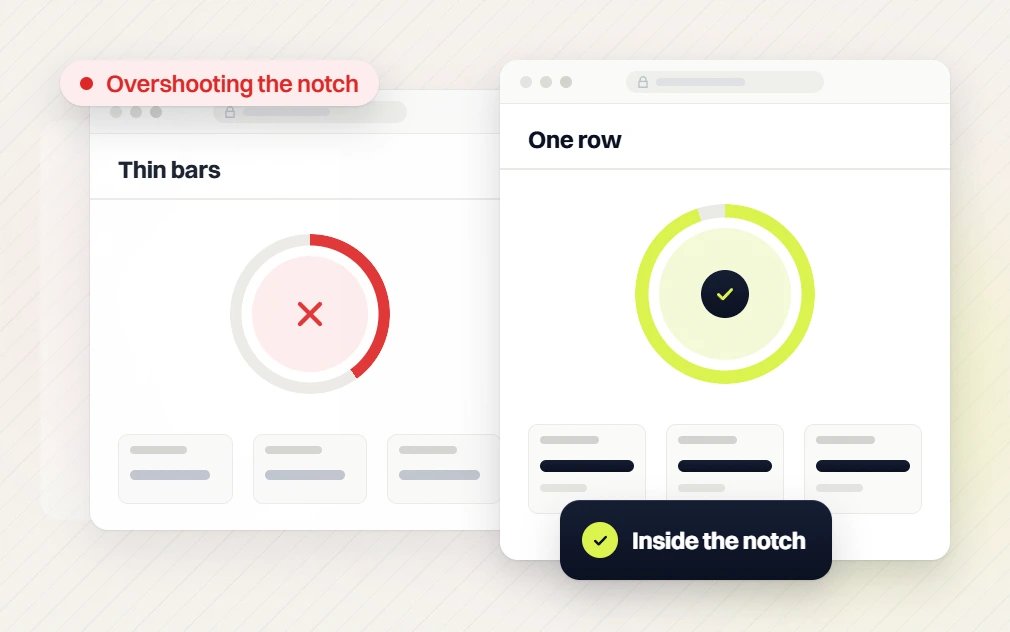
Review and upsell apps stack 38 scripts per page

Klaviyo, Yotpo, and Rebuy stack 38 scripts. Total blocking crosses 900ms and Core Web Vitals fails on every group. Google Ads Quality Score drops with it.

02 THE OUTCOMES

Three outcomes every storefront build produces on launch day

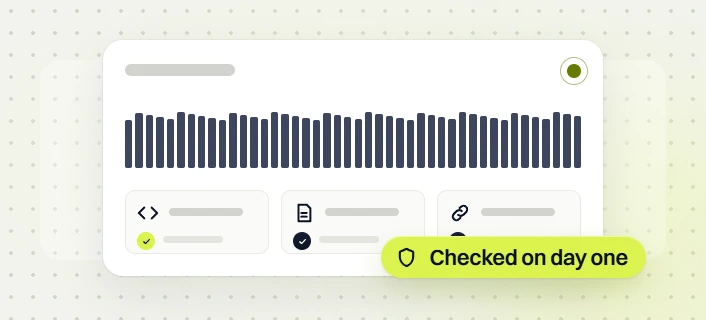
ecommerce web design agency outcome showing tracked performance improvement
Higher visitor to order rate from launch day one

Conversion-first architecture, faster PDPs, and a shorter mobile checkout move the number that puts orders on the board within 60 days of launch.
ecommerce website design company outcome showing tracked performance improvement
Ecommerce SEO baked into the storefront build

Every page launches with product and collection schema, targeted metadata, and search intent baked into URL slugs. Zero SEO retrofit six months out.
ecommerce website design services outcome showing tracked performance improvement
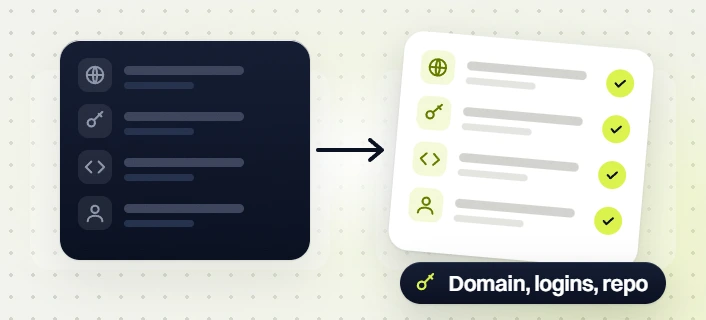
Owned by your team at storefront handoff day one

Your domain, your CMS logins, your team trained on Shopify Plus or Hydrogen. Take the whole storefront and repo with you if we ever part ways.

03 · HOW IT RUNS

Four ecommerce website design stages, every step ends in a sign-off

Fixed scope, fixed cadence, fixed accountability. Nothing moves to the next stage until your owner or ops lead signs off in writing.

01 WEEKS 1-2

Discovery that earns the brief

A 20-30 page brief signed by owner, ops lead, and marketing lead. Founder interview, technical audit of your current storefront and Shopify Plus, benchmark against 5 ecommerce peers, and product data mapping. Nothing moves until it is locked.

✓ SIGN-OFF: BRIEF LOCKED
02 WEEKS 3-6

Design for your customer, not Dribbble

Mobile-first design system with ecommerce conversion patterns baked in from wireframe stage. Every component engineer-validated the same week it is drawn. You walk away with an editable Figma file your team owns.

✓ SIGN-OFF: DESIGN SYSTEM
03 WEEKS 7-12

Engineering that hits 98 PageSpeed

Shopify Plus themes, Shopify Hydrogen, or headless Next.js by default. Core Web Vitals as an acceptance criterion. Klaviyo, ReCharge, Yotpo, and Loop Returns wired to Shopify. GA4, Meta CAPI, Google Ads pixels with server-side backup.

✓ SIGN-OFF: STAGING QA
04 WEEK 13 + 30 DAYS

Launch, then 30 days of monitoring

Cutover runs off-hours with the whole team on a bridge. Search Console, error logs, Shopify orders, and Core Web Vitals watched daily for 30 days. On day 31 you take the keys and go, or roll into a maintenance retainer.

✓ HANDOFF
04 DELIVERABLES

What you actually get from an ecommerce build

Five phases, every item listed. Fixed scope, defined deliverable per phase, written sign-off on the calendar.
ecommerce website design deliverable panel visualizing scope of work

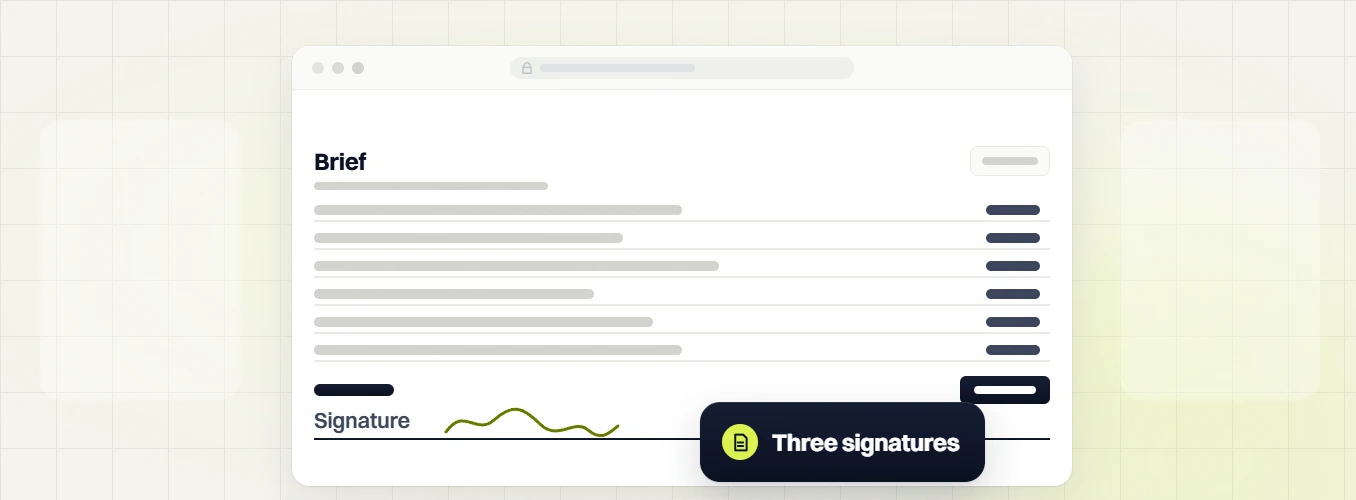
Discovery that earns the brief in 2 weeks

You walk out of week 2 with a 20 to 30 page brief signed off by your owner, ops lead, and marketing lead. Founder interview, technical audit of your current storefront and Shopify Plus, benchmark against 5 ecommerce peers, and product data mapping get you there. Nothing downstream moves until it is locked.
✓ 2 WEEKS ✓ 30-PAGE BRIEF ✓ SIGN-OFF LOCKED
Book a 30-Min Audit
INCLUDED IN EVERY BUILD
Leadership interviews
3-4 working sessions with owner, ops lead, and marketing lead. How customers currently discover you and why they convert or bounce.
Technical audit
Current storefront, Shopify Plus, ad accounts, analytics, pixel setup, and CWV baseline against Core Web Vitals thresholds.
Competitor benchmark
Side-by-side comparison of 5 ecommerce peers on mobile, desktop, conversion path, and organic visibility.
Written brief + sitemap
20-30 pages: target customer persona, page architecture, conversion goals, and Shopify Plus integration plan.
Product data map
SKU inventory, variants, metafields, and image-asset mapping ready for the new catalog to load without gaps.
Redirect + tracking plan
Legacy URL map, 301 spec, and analytics-tracking plan drafted before design so nothing gets bolted on later.
Book a free 30-minute ecommerce audit. Written summary next business day.
A DTC-BUILT ENGINEER ON THE CALL · 3 STOREFRONT FIXES YOU CAN APPLY · 6-12 WEEK BUILDS
Request a Free Audit
05 PRICING

Four web design tiers for every stage of growth

Every line item listed. The quote you get is the invoice you pay. Take any tier as a project fee, or split it into the flat monthly plan.

STARTER
$1,500
OR $250/MO · SINGLE DOCTOR

Fast, credible site converting existing reputation.

THE FOUNDATION:
Custom 8-page website build
Contact form + click-to-call
On-page SEO + Maps setup
Hosting + nightly backups
2 content edits per month
Next-business-day support
Get this quote
MOST PRACTICES
GROWTH
$2,500
OR $400/MO · GROWING PRACTICE

Full booking engine: scheduling, checkout, customer reporting.

EVERYTHING IN STARTER, PLUS:
Live scheduling integration
Landing page per revenue
Objection-handling copy
Missed-call auto text-back
Bookings and leads report
4 edits/mo, same-day
Get this quote
MULTI-LOCATION
$3,500
OR $550/MO · 2–5 LOCATIONS

One brand, every office found, location-level tracking.

EVERYTHING IN GROWTH, PLUS:
Landing page + map/location
Per-location call tracking
Per-location review routing
Team member profile pages
Quarterly review call
6 monthly edits (all sites)
Get this quote
enterprise operator / CUSTOM
$5,000+
CUSTOM SCOPE · 6+ LOCATIONS

Design system the whole group launches on. Ops-team-spec integrations.

EVERYTHING IN MULTI, PLUS:
Shared design system
Custom integrations
Rank-safe migrations
Dedicated account lead
Direct Slack access
SLA-backed ticket support
Scope my build
EVERY TIER: MONTHLY PLAN AVAILABLE · 30-DAY LAUNCH · 90-DAY REBUILD GUARANTEE · YOU OWN SITE, DOMAIN + DATA

Every web design feature, tier by tier

HOVER ANY FEATURE FOR A PLAIN-ENGLISH EXPLANATION
Website + design +
FEATURE STARTER GROWTH MULTI-LOCATION ENTERPRISE OPERATOR / CUSTOM
Pages included 81525CUSTOM
Custom design, no tpl
Landing page per revenue
Team member profile pages
Shared design system
Booking + patients +
FEATURE STARTER GROWTH MULTI-LOCATION ENTERPRISE OPERATOR / CUSTOM
Contact form + click-to-call
Live scheduling integration
Objection-handling copy
Missed-call auto text-back
Review automation PER OFFICEPER OFFICE
SEO + visibility +
FEATURE STARTER GROWTH MULTI-LOCATION ENTERPRISE OPERATOR / CUSTOM
On-page SEO + schema
Google map listing SETUPREBUILDPER OFFICEPER OFFICE
Location pages
Rank-safe migration AT SCALE
Copy from interview
Care + support +
FEATURE STARTER GROWTH MULTI-LOCATION ENTERPRISE OPERATOR / CUSTOM
Hosting, SSL + backups
Content edits per month 246CUSTOM
Support response NEXT DAYSAME DAYSAME DAYSLA
Bookings and leads report
Quarterly review call
Dedicated lead + Slack
THE 12-MONTH MATH

See what a $400/mo dental site could book back.

Slide in your practice numbers. Assumes a 32% relative conversion improvement, below the median gain on our dental rebuilds.

MONTHLY SITE VISITORS 2,000https://redefineweb.com/mo
AVERAGE PATIENT VALUE $1,200
CURRENT CONVERSION RATE 2%
EXTRA REVENUE · PER MONTH
$0/mo
Extra patients booked $0/mo
Projected over 12 months $0/mo
Get my $400/mo quote →
Directional estimate, not a promise. Your quote comes with the real math for your practice.
06 COMMON BUILD QUESTIONS

Asked by DTC founders, answered

From real quote calls with founders and ops leads. Anything else, ask on the strategy call and get an answer in the first 5 minutes.

PREFER TO TALK?
+1 (855) 999 9131
hello@redefineweb.com →

How much does it cost to design an ecommerce website?

+

Ecommerce website design at Redefine Web starts at $799 for the Launch tier and runs to $18,000 or more for enterprise Shopify Plus and headless builds. Every quote is fixed price, no scope-creep bills, no hourly billing surprises. Growth-stage DTC brands usually land in the $1,299 to $1,999 band with full PDP, cart, and Klaviyo work in scope. Three inputs move the number: SKU count, platform choice (Shopify 2.0 vs Shopify Plus vs headless), and integrations like subscriptions, 3PL, reviews, and loyalty apps. A 20-SKU Shopify 2.0 store lands near the Launch tier. A 500-SKU Shopify Plus store with subscriptions and B2B wholesale lands at $18,000 or more. Pay-monthly plans at $99, $199, and $349 cover teams that want to spread the build across the year. Every quote is written and locked before work starts. No hourly billing, no surprise change orders after design lock. Every tier comes with a written scope, a launch checklist, and a full 30 days of post-launch support included at no extra cost.

How much does it cost to make an ecommerce site?

+

The floor to make an ecommerce site with a real designer is $799 at the Launch tier here. That covers a Shopify 2.0 store on a conversion-tested theme, 20 SKUs loaded, a working checkout, GA4 and Meta Pixel wired in, and a launch checklist signed off before DNS cuts. Under $500 buys a DIY drag-and-drop template, not a design service. Between $1,299 and $1,999 you get custom PDP work, Klaviyo email flows built out, and payment options tuned to your margin mix. Above $3,500 you move into Shopify Plus, headless, or B2B wholesale territory. Platform fees are separate: Shopify runs $29 to $2,000 per month depending on tier, and headless builds carry Vercel or Netlify hosting on top. Shopify’s full pricing breakdown is public at help.shopify.com. Payment processing takes another 2.4 to 2.9% plus $0.30 per order on top. Every quote from us lists the platform fee separately so the total monthly run rate is visible before you sign.

How much should I pay for an ecommerce website?

+

Pay $799 to $1,999 for a small catalog under 50 SKUs on Shopify 2.0. Pay $3,500 to $10,000 for a mid-market DTC store with subscriptions, custom PDP work, and Klaviyo flows. Pay $18,000 or more for Shopify Plus, headless Next.js on Shopify Hydrogen, or B2B wholesale with net terms and account portals. Anything under $500 for a full custom build is a red flag. That price point almost always means a stock theme copy, no PDP work, and no launch QA. What actually protects the budget is a fixed-scope contract, weekly design reviews with sign-offs, and a launch checklist you approve before DNS cuts over. Agencies that quote by the hour without a scope document usually run 40 to 60% over the original estimate. Get the scope locked before you write the first check. Ask for a written phase plan with milestones tied to invoices. Ask for the deliverables list per phase in writing. If either is missing, keep interviewing.

How long does an ecommerce website design project take?

+

Most storefront projects launch in 6 to 12 weeks. Launch and Growth tier builds go live in 6 to 8 weeks. Scale and Enterprise builds on Shopify Plus or Hydrogen go live in 8 to 12 weeks once integrations and subscription flows are locked in. Rebuilds off an existing catalog move faster than a brand launching from scratch. The gate on timeline is content and product data, not design work. Brands that show up with clean product copy, photography, and a locked SKU list go live inside 6 weeks. Brands writing copy during the build add 2 to 4 weeks. Every project opens with a written kickoff plan, weekly review calls, and a phase sign-off sheet that keeps the timeline honest. If a milestone slips, you know before the next invoice, not after it. We publish the project Trello or Notion board on day one so the whole team can see where every deliverable stands in real time. Nothing hides.

Which is the best ecommerce website builder?

+

Shopify 2.0 is the best ecommerce website builder for DTC brands under $10M annual revenue. It launches fastest, has the deepest app ecosystem, hosts PCI at the platform level, and the checkout on it is the fastest conversion path on the market. Shopify Plus opens up when you need B2B wholesale, multi-storefront, or Shopify Scripts. WooCommerce is the best pick for content-heavy brands already on WordPress. BigCommerce fits complex catalogs with heavy variant logic and no transaction fees. Shopify Hydrogen or headless Next.js with a Shopify backend fits stores that need marketing pages to push live faster than themes allow. Full Shopify feature and app documentation lives at help.shopify.com. We build on all five and pick the platform on the intro call based on your catalog, team, and integrations. Never off a stock sales deck. The platform pick is a 5-year decision because migrations are expensive, so we get it right up front.

How do I build my own ecommerce website?

+

To build your own store, pick a platform (Shopify 2.0 for speed, WooCommerce for full control, BigCommerce for large catalogs), buy a domain, load 10 to 20 products with real photography, wire a payment processor, and test the full checkout on a real phone before you promote it. Budget 40 to 60 hours for a first-time build on Shopify. Skip the DIY route if your catalog is over 100 SKUs, you need subscriptions or B2B wholesale, or your PDP needs custom variant logic. Those builds break stock themes and cost more to fix later than to design right the first time. The core skills a DIY build needs are basic HTML and CSS, product photography, conversion copywriting, and analytics setup. Anything missing from that list is what a real agency actually gets paid for. Start with one product SKU, get the checkout dialed, then add the rest of the catalog. It is the only path that catches PDP problems before you have 500 items to fix.

Can I create an ecommerce website for free?

+

You can create an ecommerce website for free with WooCommerce on WordPress, but you still pay for hosting ($10 to $50 per month), a domain ($12 per year), an SSL certificate (free with most hosts), and payment processing fees on every order. Shopify’s free trial runs 3 days, then $29 per month for the Basic plan. Square and Ecwid have free tiers with tight transaction limits. Free tiers hit their ceiling fast. Storage caps kick in around 500 products, transaction fees eat 2 to 3% of gross revenue, and stock free themes cap conversion rate near 1%. A free build works to validate a product idea with 5 to 10 SKUs and one landing page. Past that, the platform lock-in and conversion drag cost more than a proper build would have. Free is real until the store starts making real money. When monthly revenue clears $5,000, the free tier stops paying for itself and the platform upgrade or full rebuild becomes the bottleneck to any further growth.

Does ecommerce website design include SEO?

+

Yes. Technical SEO, product and collection schema, sitemap hygiene, canonical rules, Core Web Vitals work, and clean URL structure are baked into every build tier. The new storefront launches indexable, fast on mobile, and ready to rank on category and product queries. Core Web Vitals targets and passing thresholds are documented at web.dev/vitals. Ongoing SEO with content, backlink work, and monthly rank tracking is a separate retainer starting at $599 per month. If the goal is organic growth after launch, we scope the build and the retainer together so the site foundations line up with the ranking targets from week one. Rebuilds off an older store carry a full URL redirect map with them so no ranking equity gets dropped on cutover. Alt text, structured data, and internal linking patterns get set up on the build side. No SEO retrofit six months out. Every launch comes with a Search Console screenshot on day one.

Do you integrate ecommerce websites with Klaviyo, ReCharge, and 3PL?

+

Yes. Klaviyo, Postscript, Attentive, ReCharge, Yotpo, Judge.me, Loop Returns, and most 3PL integrations go live on every build tier we offer. Klaviyo email and SMS flow templates for welcome, abandoned cart, browse abandonment, post-purchase, and winback get built and tested before launch day. Klaviyo’s own template library and flow guides live at klaviyo.com/blog. CRM tie-ins to HubSpot, Salesforce, and Ortto are supported on Growth tier and above. Integration work covers three layers: product data sync so inventory and price stay accurate across the whole stack, customer data sync so email, SMS, and support all see the same profile, and tracking sync so blended CAC and repeat-purchase rate report against clean deduplicated data. All three layers get QA tested before we hand the whole storefront over to you. Documentation gets written for each integration so a new team member on your side can pick up the stack without a rebuild call.

Can you migrate an existing store to a new ecommerce website design?

+

Yes. Migrations from WooCommerce, BigCommerce, Magento, and older Shopify themes to a new storefront happen every quarter here. The process protects existing organic traffic with a full URL redirect map, migrates product data cleanly, and re-implements tracking before the DNS cut. Migrations run 8 to 12 weeks depending on catalog size and integrations. We build the new store on staging, QA every purchase path from PDP through Klaviyo confirmation email, and cut DNS after you sign off. Post-launch monitoring runs for 30 days so any rank drop or tracking break gets caught inside 48 hours. Historical order data, customer records, subscription contracts, and abandoned cart lists all carry over. If your current store is on a platform we do not build on, we still scope the migration and hand the source data to your new stack. Legacy blog content, category descriptions, and internal links all move with the redirect map so nothing gets orphaned.

Do you handle PCI, cookie consent, and ADA on ecommerce websites?

+

Yes. PCI compliance is handled at the platform level on Shopify and Shopify Plus, so you never touch card data on your side. Cookie consent, GDPR, CCPA, and state-level privacy banners get wired into every build as a launch requirement. Consent Mode v2 is wired into GA4 and Google Ads by default so paid tracking survives cookie opt-outs. Accessibility gets treated the same way. Every build launches to WCAG 2.1 AA on the storefront, PDP, cart, and checkout paths. Contrast, keyboard navigation, screen reader labels, and form error handling get tested by hand before the launch checklist gets signed. Ongoing ADA audits and a documented accessibility statement come with the maintenance retainer if you need documented posture for legal or procurement reviews. Nothing about compliance is bolted on after launch here. Compliance work sits inside every phase, not as a separate scope. Documentation comes as a PDF you can hand to legal on day one.

What conversion rate should we expect from a new ecommerce website?

+

Well-built stores convert 2 to 5% of qualified traffic for most DTC categories. Beauty and supplements often push 3 to 6% with strong Klaviyo flows behind them. Furniture and higher-consideration verticals sit at 1 to 2% with a higher AOV. We baseline your current site conversion rate before launch so the post-launch comparison is honest. Conversion rate is a function of offer, product-market fit, price, and traffic quality more than design alone. Design carries the checkout, the PDP, and the storefront navigation. Offer and product carry the rest. We flag which lever matters most on the intro call so you know where the ecommerce website design work will and will not move the number. Every build ends with a full 30 days of post-launch conversion monitoring so any drop off the launch baseline gets diagnosed inside a week. If the checkout underperforms, we push live the fix as part of the 30-day window at no extra cost to you.

Do you offer ongoing support after an ecommerce website launches?

+

30 days of post-launch support is included with every engagement we take on. That covers bug fixes, integration issues, and analytics QA on your side. After the first 30 days, ongoing support moves to the monthly maintenance plan at $199, $299, or $499 per month. The maintenance plan handles theme updates, security patches, backups, uptime monitoring, and content changes. If you want the storefront to keep improving after launch through CRO tests and roadmap work, the ecommerce marketing retainer starts at $599 per month and picks that up. All ownership stays with you: your name on the domain, your logins on Shopify or the CMS, your team fully trained, and your repo on your GitHub. You can leave anytime you want. Nothing ever gets held hostage on our side. Cancel with 30 days notice, download the exports, and go your own way. Every retainer client gets a monthly written report with the numbers that matter and the next month roadmap.

FREE — 30 MINUTES — NO PITCH

Book a free growth audit.

Walk away with three fixes you can ship the same week — whether or not you hire us.

24-HOUR RESPONSE 300+ AUDITS RUN ZERO OBLIGATION