Client Dashboard →
Q4 capacity now open. Roadmap in 5 business days.
Book strategy call
Healthcare Marketing Retainer

Healthcare Marketing Retainer Plans to Lower Patient Acquisition Cost.

Healthcare marketing retainer that runs HIPAA-safe content, local SEO, Google Ads, GBP, review automation, and specialty referral funnels. Healthcare marketing plans and packages from $599 per month with quarterly reviews built in, cancel with 30 days notice.

0
Practices we run retainers for
0
Retention past month twelve
$0
Foundation tier starts at, per month
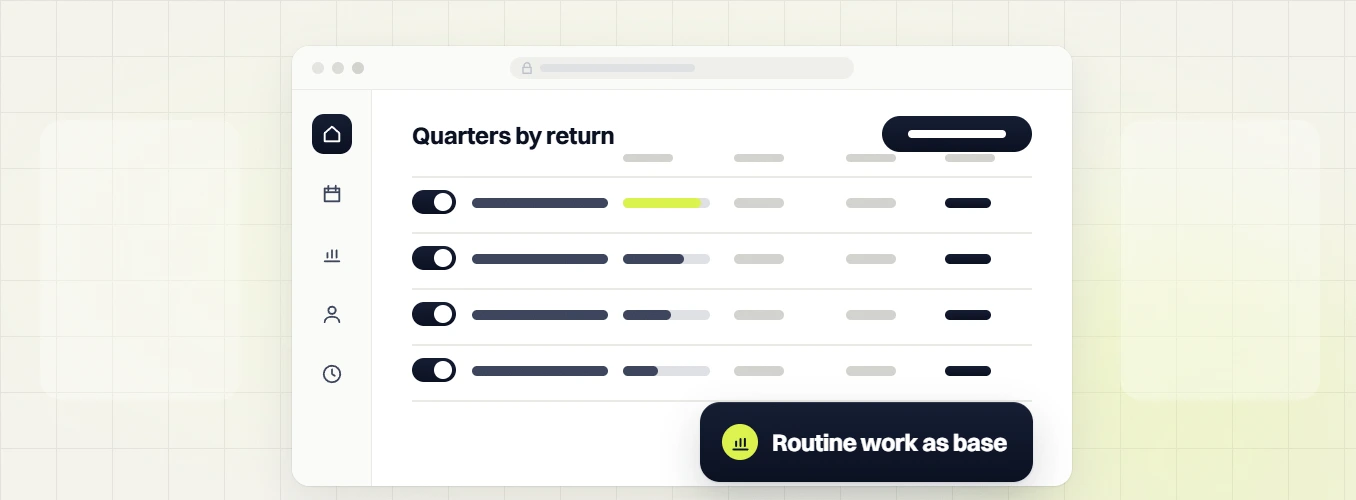
Healthcare marketing retainer dashboard preview - Redefine Web
30+ accounts under retainer One strategist across every channel Tied to appointment booked not clicks or impressions $599/mo starting price
Selected healthcare brands we run retainers for
Alira HealthDelicate DentalHighTop HealthLifeStanceNC DentalPeaceful Mind PsychologyPEL Rehabilitation MedicineSmile DesignVP DentalArmaninoBSHGovernment Legal ServicesMarmaladeMontegraOxford CapitalPaquin CarrollPCO BookkeepersPeak Accounting SolutionsRiverSaaSRosenbaumStanhope CapitalStella MarisTilghman BuildersToyotaUptimeWillentz
Reviews across 5 platforms
Verified by people who actually paid us.
Trustpilot
4.7/5
★★★★★
25+ verified reviews
5.0/5
★★★★★
40+ verified reviews
GGoogle
5.0/5
★★★★★
5+ verified reviews
DDesignRush
4.9/5
★★★★★
29 verified reviews
gGoodFirms
5.0/5
★★★★★
20 verified reviews
What you get

Three outcomes
every healthcare retainer produces.

Nothing here is "reach" or "impressions". Every outcome maps to a booked visit, a specialty referral captured, or a payer-mix problem solved.

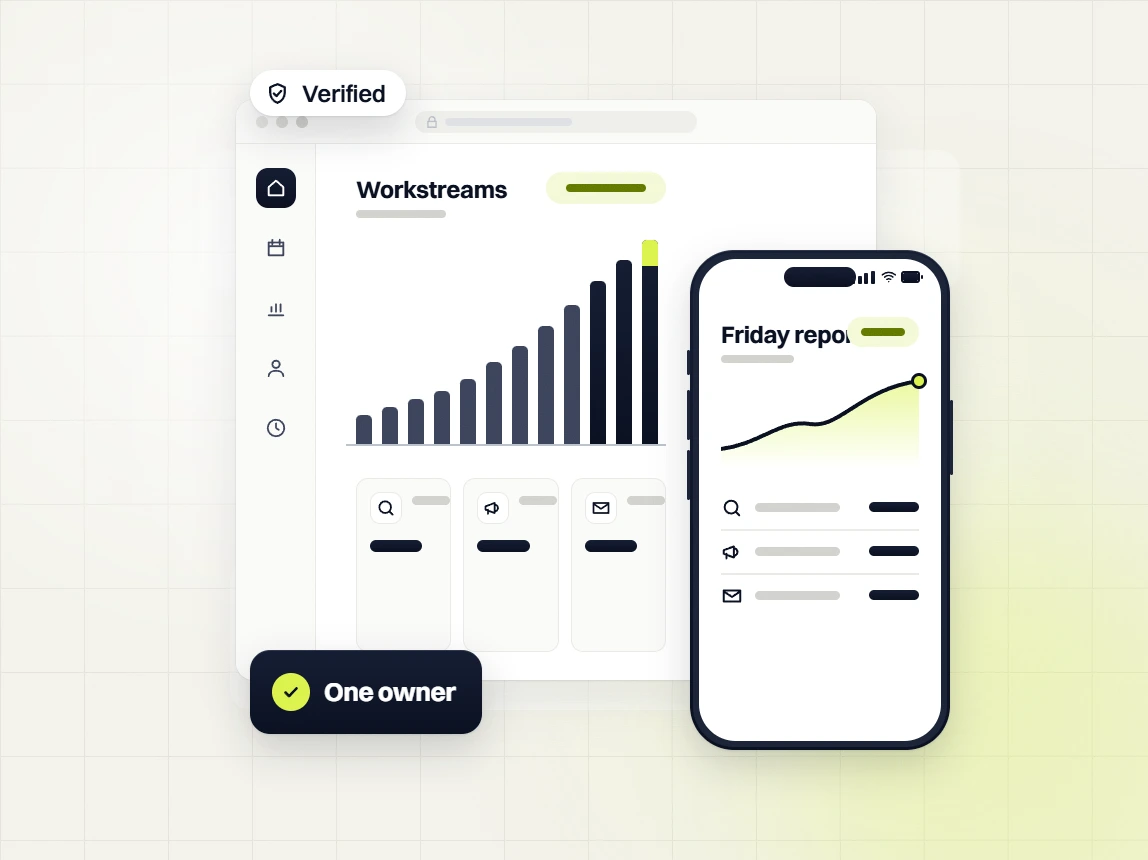
Healthcare retainer outcome 1 mockup: A booked patient pipeline you can see. for healthcare services tied to appointment booked.
Outcome 01

A booked patient pipeline you can see.

Content, local SEO, GBP, and paid media running from the same plan. Booked visits trace back to the source in a shared dashboard, HIPAA-safe. When intake dips, you know which channel to fix, not which vendor to email.

Healthcare retainer outcome 2 mockup: Specialty referral leakage closed. for healthcare services tied to appointment booked.
Outcome 02

Specialty referral leakage closed.

Referral-specific landing pages, provider-directory pages, and nurture emails wired to your intake. Practices on our retainer typically recover 15 to 30% of "referred out" specialty volume inside 90 days.

Healthcare retainer outcome 3 mockup: One healthcare retainer lead. One monthly report. for healthcare services tied to appointment booked.
Outcome 03

One healthcare retainer lead. One monthly report.

You stop paying five vendors and getting one confused report. A healthcare retainer lead owns the roadmap, pushes the work live, and shows up on the monthly call with what moved on patient volume and payer mix.

// What is included

What you actually get from our healthcare marketing retainer.

Fixed scope. Fixed timeline. Fixed outcomes. Each phase below has a defined deliverable, a written sign-off, and a date on the calendar.

Healthcare Marketing Retainer phase 01 - Discovery illustration for healthcare marketing retainer services showing healthcare booked appointments + patient LTV tied to appointment booked.

Full brand audit + Epic baseline in week one.

Week one. Site + ad accounts + review flow + email flow all audited against appointment booked revenue. Written 30-page report with the top 3 revenue-moving fixes signed off by owner + ops lead before we spend a dollar.

Phase duration
1 week
Sign-off
Top 3 fixes locked
// Deliverables
  • Multi-channel audit
    Google Ads + Meta + SEO + email + review flow all scored against appointment booked revenue impact.
  • Epic baseline pulled
    Epic, Athenahealth, DrChrono data captured as day-one baseline.
  • Written 30-page audit
    Every finding, every prioritized fix, every revenue projection in writing. Owner + ops lead both sign off.
  • Top 3 revenue fixes locked
    What we do first is signed off, not sprung on you. Prioritized by dollar impact + fix-time.
Healthcare Marketing Retainer phase 02 - Strategy illustration for healthcare marketing retainer services showing healthcare booked appointments + patient LTV tied to appointment booked.

12-month roadmap tied to service profitability.

Weeks two through three. 12-month quarterly roadmap sized against priority service profitability. Higher-margin services get prioritized. Every quarter has a written revenue projection so you know what should hit the pipeline.

Phase duration
2 weeks
Output
Quarterly roadmap + revenue proj.
// Deliverables
  • Quarterly channel roadmap
    Q1-Q4 planned by campaign, cluster, content piece. Every quarter has explicit sign-off gate.
  • Priority service profitability sort
    Highest-margin services first. Category expansion layered as base load, not headline focus.
  • Written revenue projection per quarter
    Q1, Q2, Q3, Q4 targets sized against real market data + fulfillment capacity.
  • Budget scoping per channel
    How much goes to Ads, SEO, content, email each month. Adjusted quarterly based on what performs.
Healthcare Marketing Retainer phase 03 - Execution illustration for healthcare marketing retainer services showing healthcare booked appointments + patient LTV tied to appointment booked.

Every channel running under one named strategist.

Ongoing month 1+. Google Ads + Meta + Local SEO + review flow + content + email + retention flows all executed by a single accountable strategist. No handoffs between agencies. No cross-team blame. One number to call.

Cadence
Monthly execution rhythm
Team
One accountable strategist
// Deliverables
  • Google Ads + Meta
    Every paid channel run by the same strategist. Attribution built once, not fought over.
  • Local SEO + GBP + citations + schema
    Organic + local + review flow + citations all coordinated as one program.
  • Healthcare content + service pages
    Monthly editorial calendar tied to keyword priority + service page conversion leverage.
  • Patient retention flows
    Winback sequences, post-appointment booked review requests, follow-up all wired to your Epic.
Healthcare Marketing Retainer phase 04 - Optimization illustration for healthcare marketing retainer services showing healthcare booked appointments + patient LTV tied to appointment booked.

Weekly testing tied to Epic-verified appointment booked.

Every week. Cross-channel testing tied to Epic-verified appointment booked. Ad copy, landing page CVR, keyword targeting, review request timing, retention cadence - every test measured against the number that pays your bills.

Cadence
Weekly test cycles
Attribution
Epic-verified - not clicks
// Deliverables
  • Cross-channel attribution
    Every appointment booked tagged to the click, keyword, or retention trigger that drove it.
  • Weekly written test notes
    What we tested last week, what won, what went live this week.
  • Landing page + conversion-flow CVR iteration
    A/B tests on hero, offer, form, - measured against appointment booked, not form fills.
  • Budget shifting between channels
    If SEO is compounding faster than PPC, budget moves. Every shift signed off in the monthly report.
Healthcare Marketing Retainer phase 05 - Growth illustration for healthcare marketing retainer services showing healthcare booked appointments + patient LTV tied to appointment booked.

Quarterly scale reviews tied to real revenue.

Every 90 days. Quarterly review with the owner + ops lead showing what appointment booked drove, what closed revenue looks like, what next-quarter budget should be. Scale decisions grounded in your Epic + capacity, not agency spend targets.

Cadence
Quarterly scale review
Metric
Revenue + capacity
// Deliverables
  • Quarterly revenue attribution
    This quarter: appointment booked by channel, revenue from marketing, cost per appointment booked - all Epic-verified.
  • Scale-to-capacity model
    Ad spend + content velocity sized against your capacity + throughput. No overspending past what you can deliver.
  • Next-quarter budget locked
    Explicit sign-off on next quarter allocation across channels. No surprise invoices, no hidden shifts.
  • Year-over-year growth report
    12-month rolling report showing revenue growth, CAC trend, LTV trend. Owner-first metrics only.
Retainer tiers

Four tiers for every practice size.

Pick the tier that matches your practice stage. Move up or down anytime with 30 days notice. Ad spend billed separately at pass-through. Hover any feature name for a plain-English explanation.

01 · Foundation
$599/mo

Solo practices that want an accountable growth program running without a five-vendor stack. HIPAA-safe content, local SEO, GBP, and review automation, run monthly.

Solo practices
  • 2 blog posts per month
  • On-page SEO patches (monthly)
  • Google Business Profile management
  • Automated review requests (HIPAA-safe)
  • Monthly performance report
  • Healthcare retainer lead owns the account
Start with Foundation
03 · Scale
$1,499/mo

Multi-specialty practices with referral programs, telehealth, and portal engagement goals. Adds Meta ads, specialty funnel A/B tests, and referral nurture sequences.

Multi-specialty & telehealth
  • Everything in Growth
  • Meta Ads management (up to $2k spend)
  • Booking-funnel A/B tests, bi-weekly
  • 4 blogs + 1 specialty page per month
  • Patient nurture email sequences
  • Bi-weekly reporting + strategy call
  • Landing page CRO tests, bi-weekly
Start with Scale
04 · Enterprise
Custom

Multi-specialty groups, hospital systems, and IDNs. Per-location run with rollup reporting, dedicated strategist, payer-mix analytics, and programmatic condition SEO.

Health systems & IDNs
  • Everything in Scale
  • Per-location Google Ads + GBP
  • Rollup dashboard for regional / central
  • Programmatic condition SEO
  • Dedicated strategist + weekly reporting
  • Custom ad spend cap (no ceiling)
  • Quarterly executive review
Request a proposal

Need scope beyond the Scale tier? We also run full-service healthcare marketing retainers from $4,000/mo for practices with larger ad budgets, multi-specialty operations, or hospital-system rollouts.

Compare every deliverable by category.

Tap any section to expand or collapse. Hover a feature name for a plain-English explanation.

Content3 features
Feature01 · Foundation02 · GrowthPopular03 · Scale04 · Enterprise
Blog posts per month246+
Specialty / condition pages1/mo2+/mo
Patient nurture emailsSequencesCustom
SEO4 features
Feature01 · Foundation02 · GrowthPopular03 · Scale04 · Enterprise
On-page SEO patches
Google Business Profile mgmtPer location
Local citations + link building
Programmatic condition SEO
Paid media3 features
Feature01 · Foundation02 · GrowthPopular03 · Scale04 · Enterprise
Google Ads managementUp to $6kUnlimited
Meta Ads managementUp to $2kUnlimited
Landing page CRO testsBi-weeklyWeekly
Reviews + reputation2 features
Feature01 · Foundation02 · GrowthPopular03 · Scale04 · Enterprise
Automated review requests
Review response management
Reporting + strategy3 features
Feature01 · Foundation02 · GrowthPopular03 · Scale04 · Enterprise
Reporting cadenceMonthlyBi-weeklyWeekly
Strategy calls45 min bi-wkDedicated
Dedicated strategist
Healthcare retainers in the wild

Programs that compounded.

Client case studies for this vertical are being compiled with signed consent. In the meantime, ask about specialty-referral recovery, telehealth enrollment, and payer-mix work on the 30-minute audit call. All numbers can be shared under NDA.

Healthcare Retainer FAQ

Common
retainer questions.

If your question is not here, book the 30-minute strategy call. A healthcare retainer lead answers on the call, not a sales rep.

How much does a healthcare marketing retainer cost per month?

A healthcare marketing retainer at Redefine Web starts at $599/mo on the Foundation tier for solo and single-specialty practices, $999/mo on Growth for practices adding paid media, and $1,499/mo on Scale for multi-specialty groups running service-line specific campaigns. Enterprise is custom-scoped for hospital systems, IDNs, and physician groups with 25 or more providers.

Foundation covers HIPAA-safe content, local SEO, Google Business Profile per provider, and review automation across the top medical review sites. Growth adds Google Ads with HIPAA-compliant conversion tracking, landing page CRO, and patient nurture email. Scale layers on HIPAA-safe Meta campaigns, per-service-line funnels (cardiology, orthopedics, GI, women's health, primary care), and referring-physician outreach.

Ad spend is billed by Google and Meta straight to the practice through a signed BAA-friendly setup. Three inputs move which tier fits: number of providers and service lines, whether campaigns need to reach both direct patients and referring physicians, and how many practice locations feed into a consolidated dashboard.

How does the healthcare marketing retainer stay HIPAA-compliant on ad tracking and analytics?

Every healthcare marketing retainer runs against the HHS Office for Civil Rights December 2022 guidance and its 2024 updates on tracking pixels. The practical rule: any pixel that could combine a patient identifier with a URL suggesting a condition, provider, or appointment is PHI and requires either a BAA or removal.

That means the standard Meta Pixel, standard Google Analytics 4, and standard TikTok Pixel do not go on any authenticated patient portal, appointment scheduling page, or condition-specific landing page without an approved workaround. The retainer wires server-side tagging through a HIPAA-eligible endpoint (Google Tag Manager Server, or a custom Cloud Run container with a signed BAA), scrubs the URL path of any condition or provider identifier before hashing, and passes only aggregated conversion events back to Google Ads and Meta.

All non-BAA vendors that touch PHI get pulled off the site. Every landing page runs through a compliance review before launch. Nothing gets published that could surface in an OCR enforcement action or an HHS resolution agreement.

How does the healthcare retainer report on payer mix and commercial versus Medicare patient acquisition cost?

The healthcare marketing retainer separates new-patient reporting by payer mix because commercial, Medicare, Medicare Advantage, and Medicaid patients pay the practice materially different amounts per encounter. Commercial patients (BlueCross, United, Aetna, Cigna, Humana commercial) usually generate two to five times more revenue per encounter than Medicare fee-for-service depending on specialty.

Medicare Advantage sits in the middle and matters heavily for specialties with high-volume older patients (cardiology, endocrinology, orthopedics). Medicaid pays lowest but often has the highest search volume in urban markets. The retainer imports payer at time of scheduling into the campaign report so the practice sees new-patient CAC by payer type.

Campaign optimization biases spend toward commercial-heavy geographies and service lines when the goal is revenue growth, and toward Medicare Advantage when the goal is fee-for-service volume for a specific line like joint replacement or cardiology. Weekly reports show cost per new patient, cost per booked encounter, and payer-adjusted revenue per acquisition.

Can the medical practice marketing retainer promote physician recruiting and provider hiring?

Yes. Physician recruiting sits inside the retainer on Scale and Enterprise tiers because the recruiting funnel uses the same paid channels and content operations as patient acquisition. Physician recruiting campaigns target Doximity, LinkedIn, physician-specific job boards (PracticeLink, PracticeMatch), and Google Search for locum, permanent, and partnership-track opportunities.

Cost per qualified physician applicant runs $850 to $4,500 depending on specialty and geography (primary care and psychiatry lower, cardiology and orthopedics higher, rural markets highest). The retainer builds a physician recruiting landing page for each open role with compensation range, call schedule, EHR platform, patient volume expectations, and quality-of-life details that recruiters can send to prospects.

Applicant tracking integrates with Greenhouse, Lever, and other ATS platforms most practices already use. Practices actively recruiting typically fill roles 30 to 90 days faster with a paid-search recruiting funnel running alongside their in-house recruiter or search firm.

How does the healthcare marketing retainer handle referring physician relationships and PRM tracking?

Referring physicians drive 40 to 75 percent of new patients for most specialty practices, so the healthcare marketing retainer treats physician liaison outreach as a first-class channel alongside consumer paid media. Referring-physician campaigns target primary care doctors, urgent care groups, hospitalists, and other specialists within the referral network.

Channels include physician-targeted content (CME-adjacent clinical updates, case studies, referral guidelines), direct mail with tracked response codes, physician liaison field visits scheduled through the CRM, and paid search targeting HCP-only keywords. Physician relationship management (PRM) platforms like Salesforce Health Cloud PRM, Healthgrades Physician CRM, or a custom build in HubSpot get wired to the retainer report so the practice sees referrals originated by outreach separately from organic referrals.

Weekly reports show new referring physicians activated, referrals per referring provider, and the estimated revenue impact of the top 20 referring physicians. Physician liaison teams get monthly reports listing which referring providers are cooling off and need a touch.

Which EMR and practice management systems does the healthcare retainer integrate with?

The healthcare marketing retainer integrates with Epic (via App Orchard or MyChart), Cerner Oracle Health, athenahealth, NextGen Healthcare, eClinicalWorks, Allscripts, Greenway, Kareo, DrChrono, and Practice Fusion. Every integration passes through a HIPAA-compliant middleware layer with a signed BAA on both sides.

Data flow covers appointment booking status (scheduled, confirmed, arrived, no-show, complete), encounter type and CPT code where surfaced by the EMR API, payer at time of scheduling, and provider assigned. The retainer report ties these back to the campaign that acquired the new patient so cost per booked encounter and revenue per new patient show up per channel and per service line.

Enterprise tier for hospital systems and IDNs adds native connections to enterprise data warehouses on Snowflake, BigQuery, or Databricks. If the practice runs a bespoke EMR or an older on-premise system, integration gets scoped in week one through HL7 FHIR, Redox, or Rhapsody depending on what the practice already has in place.

How does the healthcare retainer handle Google Business Profile for a multi-provider practice?

Google Business Profile setup for a healthcare practice runs at two levels. The location GBP represents the physical office. Each individual provider gets a linked physician profile that appears when patients search the provider by name. Both matter for new-patient acquisition, and the retainer manages both.

Location GBP covers primary category (Medical Clinic versus specific specialty like Cardiologist or Orthopedic Surgeon), services list matched to the practice's fee schedule, weekly Google Posts, review response on every review under five stars within 24 hours, and monthly Q&A seeding. Individual provider profiles cover accurate credentials, board certifications, hospital affiliations, insurance plans accepted, and linkage to Healthgrades, Zocdoc, Vitals, WebMD Care, and Doximity so profile data stays consistent.

Practices with multiple locations get one GBP per location with unique provider rosters. New patients booked from GBP typically show up in the report inside 14 days of setup. Local pack ranking movement on condition-plus-city queries lands in three to eight weeks depending on how competitive the geography is.

Can the retainer report on new patients versus established patients and encounter volume?

Yes. Every healthcare marketing retainer separates new-patient acquisition from established-patient encounter volume because the marketing math and clinical operations math differ. New patients (never seen at the practice or not seen in 3-plus years, per CMS definition) carry a higher per-encounter revenue and a longer downstream lifetime value.

Cost per new patient typically lands at $60 to $220 for primary care, $150 to $650 for surgical specialties (orthopedics, cardiology, GI, urology), and $250 to $1,400 for high-acuity subspecialties (interventional cardiology, spine surgery, joint replacement).

Established-patient retention marketing sits inside the retainer as a separate scope with lower cost per encounter and different creative. Recall campaigns for annual physicals, chronic condition follow-ups, and specialty-specific re-engagement (mammography, colonoscopy, cardiology stress test recall) drive established encounters at $8 to $35 per booked appointment because these are patients the practice has already acquired. The monthly report shows both funnels on the same page.

How much ad spend does a medical practice need for the paid side of a healthcare marketing retainer?

The practical floor for meaningful paid media on a healthcare marketing retainer sits at $2,500 per month combined across Google Search, Local Service Ads where the specialty is eligible, and HIPAA-safe Meta. Below that number Google's Smart Bidding does not accumulate enough conversion signal to bid intelligently on booked appointments.

Most Growth-tier practices run $4,000 to $12,000 per month in paid media. Scale-tier multi-specialty groups run $12,000 to $45,000 per month. Hospital systems on Enterprise run $50,000 to $500,000 per month.

Cost per booked appointment varies wildly by specialty: primary care at $28 to $85, dermatology and urgent care $45 to $140, women's health $65 to $180, cardiology and orthopedics $150 to $650, specialty surgery $300 to $1,800. The retainer opens with a written media plan that maps spend by channel and service line and shows expected booked new patients per month by month six. Practices with tight payer mix restrictions get a plan that biases spend toward commercial-heavy zip codes and search terms.

Does the healthcare retainer handle online reputation management across Healthgrades, Zocdoc, Vitals, and WebMD Care?

Yes. Physician review sites drive a meaningful share of new-patient decisions, so the healthcare marketing retainer wires review request automation, monitoring, and response management across Google Business Profile, Healthgrades, Zocdoc, Vitals, RateMDs, WebMD Care, RealSelf where the practice offers aesthetic procedures, and Doximity for the provider-facing side.

Review requests fire after the visit through email or SMS with the patient's preferred contact channel and land on a smart-routing page that sends five-star patients to the practice's chosen public review site and lower-rated patients to a private feedback form. Response management covers every review under five stars within 24 hours across every site the practice appears on.

Reputation reporting shows average rating movement per site, review volume by month, and net promoter trends over time. Practices new to this typically see average rating on Google move from 3.8 to 4.6 over the first 90 days once a proper review cadence lands in place. Higher ratings compound because Google Business Profile map pack ranking correlates strongly with review count and average score in most competitive medical markets.

Can the healthcare marketing retainer scale across multiple locations, hospital systems, or health system service lines?

Yes. Multi-location practices, health systems, IDNs, and physician group holdings sit on the Enterprise tier because rollup reporting, per-location strategist assignment, and centralized brand governance all matter. Typical setups run from a 5-location physician group up to a 40-hospital IDN with 15 service lines and 800 providers.

Each location gets its own GBP, its own paid campaigns, its own landing pages targeted at the local geography, and its own share of physician liaison outreach. Service lines (cardiology, orthopedics, oncology, women's health, primary care, urgent care, behavioral health) get their own campaign structure because search intent and average new-patient revenue differ.

The rollup dashboard shows per-location and per-service-line CAC, booked new-patient encounters, and net revenue impact. System-level marketing directors see the whole book on one page. Individual location administrators see only their own performance to keep the dashboard usable. Contract structure for health systems typically runs a master services agreement plus per-service-line statements of work so scope can grow as new lines come online.

How is Redefine Web different from other healthcare marketing retainer agencies?

Three practical differences from most agencies running a healthcare marketing retainer. One, every account runs under a single strategist who has worked inside a medical group, health system marketing team, or practice administration role. That means the media plan understands payer mix math, service-line contribution margin, referring-physician dynamics, and HIPAA marketing compliance. Not a generalist swapping vocabulary from a dental deck.

Two, every dollar of paid spend tracks through to booked new-patient encounters in Epic, athenahealth, NextGen, eClinicalWorks, or whichever EMR the practice runs, with payer type and service line attached. Not clicks. Not form fills. Booked encounters with revenue attached.

Three, the ad accounts, GBP listings, website, analytics property, and call tracking numbers stay in the practice's name. If the retainer ends, the practice walks away with the accounts, the historical data, and the running campaigns intact. Flat-fee monthly. No percentage of ad spend. Six-month initial term, rolling monthly after. Signed BAA from day one. That is the offer.

Get started

Book a free 30-minute
Healthcare Marketing Retainer audit.

Healthcare retainer lead on the call. Three specific growth fixes you can apply, with or without us. Written summary in your inbox the next business day.

Healthcare retainer lead on the call
Three fixes ranked by impact
Written recap next business day
Primary path

Book your free healthcare marketing retainer audit.

Drop your email. A healthcare retainer lead reviews your practice and books the 30-minute audit within one business day.

  • This field is for validation purposes and should be left unchanged.
Free for practices doing $500K+ annual net revenue. We respond within 4 business hours.
Time to first booked visit
14 days
Practices on active retainers
40+
Median patient acquisition cost after fixes
$118