Legal Marketing Retainer Built for Signed Cases and Booked Consults
One retainer that runs legal SEO, LSA and GBP under Attorney category, Google Ads on money practice areas, LinkedIn ABM for B2B litigation, thought-leadership content, and Clio or MyCase attribution. Bar-compliant work reviewed against ABA Model Rules 7.1, 7.2, and 7.3. Legal marketing plans and packages from $499 per month with quarterly reviews built in.
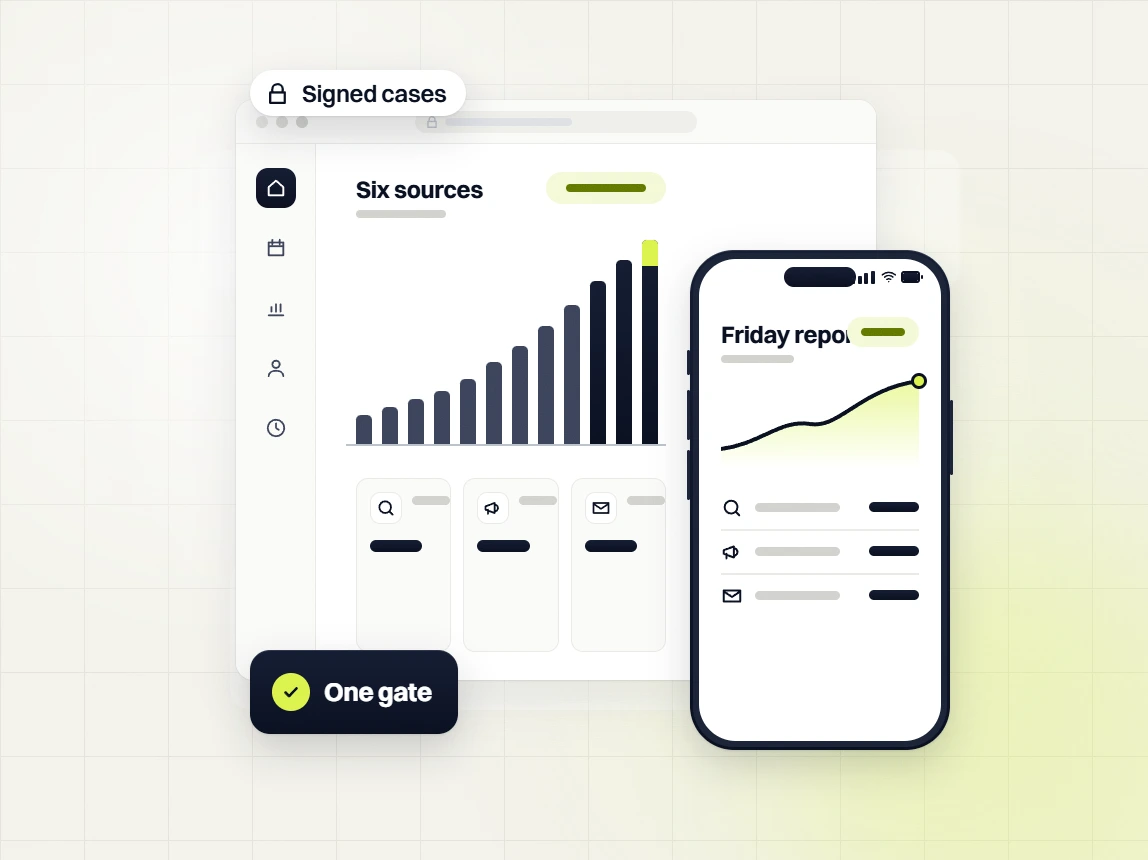
Four numbers every managing partner can hold us to
Clio Grow and MyCase miss most first-touch sources because intake forms never capture the LSA or GBP click that drove the call
Clio Grow logs the intake. MyCase logs the matter opened. Neither maps the 30-to-90-day consumer legal buying cycle back to the LSA ranking, GBP click, or FindLaw citation that seeded the consult call. Marketing partners defund the channels that opened the door because they never show up in the case management report. Offline conversion imports plus multi-touch attribution across a full 90-day window fix it before the next partner meeting.
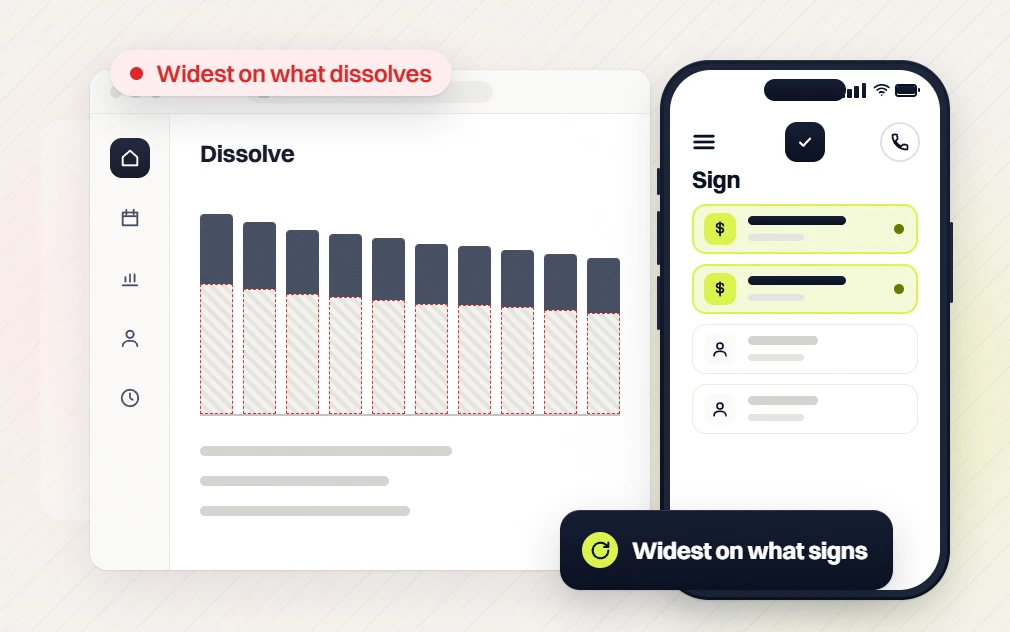
LSA and the local pack burn budget on wrong practice areas while LegalMatch, Avvo, and FindLaw aggregators outrank your firm on money keywords
Open-audience Google Ads pays for family and consumer bankruptcy clicks that never sign a retainer. LegalMatch, Avvo, FindLaw, and Justia occupy the local pack for PI and DUI queries where your partners want the case. Practice-area LSA plus GBP under Attorney category wired to the money practice areas puts spend where the signed cases are, not where the impressions are cheapest.
Intake volume climbs but signed-case rate sits at 12% because no post-consult follow-up runs on inbound requests
Google Ads gets the call. LSA gets the click. Neither survives the gap between consult and signed engagement letter. Post-consult nurture plus 15-minute response routing on inbound requests, all wired to Clio Grow or MyCase, moves signed-case rate from 12% into the 22-to-28% range across the book.
Three outcomes every legal marketing retainer produces
LSA, GBP under Attorney, practice-area SEO, and named-account LinkedIn ABM run from one plan. Every inbound tagged by source before it hits an attorney.

Practice-area pages, attorney bios with real case results, and bar-compliant proof pre-sell your firm. Calls open warmer, close faster, land at higher fees.

You stop paying five vendors and getting five spreadsheets. One legal marketing lead owns the roadmap and reports signed cases plus case value by practice area.
Four stages, every step ends in a sign-off
Fixed scope, fixed cadence, fixed accountability. Nothing moves to the next stage until your managing partner signs off on the phase deliverable. Every asset in bar-regulated states runs through partner review before publish.
Full firm audit + Clio baseline
Site, Google Business Profile under Attorney category, LSA account, Google Ads, Clio Grow or MyCase intake flow, and content library all audited against qualified consults booked and signed cases. Written 30-page report with the top 3 revenue-moving fixes signed off by managing partner + intake lead before we spend a dollar.
12-month roadmap tied to practice area profitability
Quarterly roadmap sized against practice area profitability. Higher-fee work (PI, M&A, IP litigation, estate planning) leads over commodity family and traffic matters. Every quarter has a written signed-case projection so partners know what should hit the intake calendar.
Every channel running under one named lead
Google Ads, LSA, GBP, LinkedIn ABM, SEO, thought-leadership content, attorney bylines, and email nurture all executed by a single accountable legal marketing retainer lead. No handoffs between agencies. No cross-team blame. One number to call.
Quarterly scale review
Weekly test cycles tied to Clio-verified consults booked and signed engagement letters. Quarterly review with managing partner + intake lead showing what consults drove, what signed case value looks like, what next-quarter budget should be.
What you actually get from our legal marketing retainer
Five phases, every item listed. Fixed scope, defined deliverable per phase, written sign-off on the phase gate.
Full firm audit + Clio baseline in week one
Week one. Site, Google Business Profile under Attorney category, LSA account, ad accounts, Clio Grow or MyCase intake flow, and content library all audited against qualified consults booked and signed cases. Written 30-page report with the top 3 revenue-moving fixes signed off by managing partner + intake lead before we spend a dollar.
Google Ads, LSA, GBP under Attorney category, SEO, LinkedIn, and content library all scored against qualified consult and signed-case impact for the firm.
Clio Grow, MyCase, PracticePanther, Filevine, or Lawmatics pipeline and matter revenue data captured as day-one baseline for attribution.
Every finding, every prioritized fix, every signed-case projection in writing. Managing partner + intake lead both sign off on scope.
What we do first is signed off, not sprung on you; prioritized by dollar impact and time-to-fix on the firm roadmap.
The top three peer firms benchmarked on LSA ranking, GBP under Attorney category depth, LegalMatch and Avvo profiles, and practice-area content coverage.
Where ABA Model Rule 7.1, 7.2, and 7.3 exposure sits on the current site, ads, and testimonials, and where state bar analog rules add jurisdictional risk.
12-month roadmap tied to practice area profitability
Weeks 2 and 3 build a 12-month quarterly roadmap sized against your practice area profitability. PI, M&A, IP litigation, and estate planning lead where fee volume supports it. Every quarter has a written signed-case projection so partners know what should hit the intake calendar.
Q1 to Q4 planned by campaign, practice-area content cluster, and attorney byline; every quarter has an explicit sign-off gate on scope.
Higher-fee practice areas lead. Commodity family and traffic matters layered as base load, not headline focus.
Q1, Q2, Q3, Q4 targets sized against real market data plus your attorney and paralegal capacity for the year ahead.
How much goes to LSA, GBP, Google Ads, SEO, LinkedIn ABM, and content each month; adjusted quarterly based on what performs against signed cases.
Which peer firms, medical providers, insurance adjusters, and industry associations most drive downstream referrals into your intake pipeline.
Prior clients segmented by last-matter date and practice area; nurture cadence written up front for email, LinkedIn, and direct outreach inside bar-compliant boundaries.
Every channel run by one named legal marketing lead
From month 1, Google Ads, LSA, GBP under Attorney category, LinkedIn ABM, SEO, thought-leadership content, attorney bylines, and email nurture are all executed by a single named legal marketing lead. No handoffs between agencies. No cross-team blame. One number to call.
Every paid channel run by the same lead; multi-touch attribution built once, not fought over across two vendors.
Organic, practice-area pages, LegalMatch, Avvo, Martindale, SuperLawyers, FindLaw, and Justia profiles all coordinated as one connected legal marketing program.
Monthly editorial calendar tied to keyword priority, buyer-stage intent, and practice areas your firm actually wants to grow.
Prior-client sequences, post-matter review requests, and quarterly check-ins wired to Clio Grow, MyCase, or PracticePanther inside ABA 7.3 boundaries.
Ad copy, keywords, landing pages, LinkedIn creative; every test measured against a booked-consult number, not clicks.
Every Google, Avvo, Martindale, and SuperLawyers review answered inside 24 hours in a voice matched to your firm tone and bar-compliant response rules.
Weekly testing tied to Clio-verified consults booked
Every week, cross-channel testing runs against Clio-verified consults booked and signed engagement letters. Ad copy, landing page CVR, keyword targeting, review request timing, and nurture cadence all measured against the number that pays your bills.

Every consult booked tagged to the LSA click, GBP tap, keyword, or LinkedIn touch that drove the prospect in.
What we tested last week, what won, what went live this week; three-line summary, no dashboard hunt.
A/B tests on hero, offer, form, and Calendly slot picker; measured against booked consults only, not clicks.
If SEO is compounding faster than PPC, budget moves; every shift signed off in the monthly retainer report.
Two new ad copy variants per campaign per month; losing creative rotated off within 14 days of first read.
Negatives, geo caps, and named-account audience layering tuned weekly to the searches that book higher-value cases.
Quarterly scale reviews tied to real case revenue
Every 90 days, managing partner and intake lead review what consults drove, what signed case value looks like, what next-quarter budget should be. Scale decisions grounded in your Clio or MyCase data and attorney capacity, not agency spend targets.
Consults booked by channel, case value from marketing, cost per signed case; all Clio-verified numbers net of no-shows and disqualified inquiries.
Ad spend and content velocity sized against your attorney and paralegal capacity; no pipeline you cannot service, no overspend.
Explicit sign-off on next quarter allocation across channels; no surprise invoices, no hidden shifts.
Rolling 12-month view of pipeline growth, CAC trend, case value trend, and signed-case growth; managing-partner-first metrics.
When a firm is ready for a new office or lateral hire group, prep runs in parallel with current retainer, no re-onboarding tax.
Roadmap for pushing higher-fee practice areas up in the mix as attorney capacity opens each quarter.
Four retainer tiers for every stage of growth
Pick the tier that matches your practice stage. Move up or down anytime with 30 days notice. Ad spend billed separately at pass-through, never through us.
Solo practices, one growth program, not five vendors.
Solo or two-provider, adding paid + monthly recall on Foundation.
Two to four providers, high-ticket cases. Adds Meta + nurture.
Multi-location or premium groups. Per-location run, rollup reports.
Every retainer feature, tier by tier
HOVER ANY FEATURE FOR A PLAIN-ENGLISH EXPLANATIONContent +
SEO +
Paid media +
Reviews + reputation +
Reporting + strategy +
Real firms, real numbers
Asked by managing partners, answered
From real quote calls with PI, family, IP, criminal defense, and estate planning firm partners. Anything else, ask on the strategy call and get an answer in the recap.
How much does a legal marketing retainer cost per month?
+
Our attorney marketing retainer runs $499 to $1,999 per month across three published tiers, with Enterprise quoted from $3,500 for multi-office firms and top-100 practices. Foundation at $499/mo fits solo attorneys and boutique firms running LSA, one core practice-area SEO page, and a monthly attorney byline. Growth at $999/mo is where most single-office firms land once they add Google Ads on money practice areas, quarterly practice-area content, and named-account LinkedIn ABM for B2B litigation. Scale at $1,999/mo fits 4-to-15 attorney firms layering multi-practice content, post-consult nurture, and bi-weekly landing-page tests. The tier moves with firm stage, not with your ad spend. We do not skim a percentage of media. Ad accounts stay in your name. Every plan runs a six-month initial term, then rolls with 30 days notice. Every asset ships reviewed against ABA Model Rules 7.1 and 7.2 before it goes live. Firms that outgrow Scale roll to Enterprise without a re-onboarding fee or scope reset.
What does a legal marketing retainer include each month?
+
Every legal marketing retainer delivers four things a boutique firm cannot easily run in-house. Two-plus SEO articles or attorney bylines, monthly on-page and practice-area page fixes, active LSA and GBP under Attorney category management, and CRM nurture flows wired to your Clio Grow or MyCase. Growth adds Google Ads on up to $3,000 in monthly spend, monthly landing-page tests, and a named-account LinkedIn ABM layer for B2B litigation and estate work. Scale layers multi-practice content, post-consult nurture, and bi-weekly intake A/B tests. Every tier includes one named account lead who owns the account end to end. No handoffs between an SEO team, an ads team, and a content team. Monthly reports show consult volume, signed cases, cost per case, and channel mix on a single page you can hand to any partner without translation. Review response and reputation management run in the background across Google, Avvo, Martindale, and SuperLawyers, with every response drafted inside bar-compliant boundaries.
How long before a legal marketing retainer starts booking consults?
+
Google Ads on the Growth tier usually books its first qualified consult inside 10 to 21 days from launch, once conversion tracking and the landing page are live. LSA and GBP under Attorney category compound over 3 to 8 weeks depending on review velocity and category depth. Practice-area SEO ranking on queries like “personal injury attorney NYC” or “immigration lawyer Miami” tends to move in weeks 8 to 14. Steady organic consult flow lands by month 4 to 6. LinkedIn ABM for B2B litigation and estate work runs on a 30-to-90-day named-account cycle. We report on qualified consult volume and signed engagement letters separately so long-cycle referral deals do not look broken when they are just delayed. First signed case typically closes between month 2 and month 5 depending on practice area and average consult-to-signed conversion for your existing intake process. Firms that start with a healthy review count and an existing GBP under Attorney category usually hit steady state a month earlier than firms starting cold.
How do you handle ABA Model Rules and state bar compliance on ads and content?
+
Every asset in bar-regulated states runs through partner review before publish. That covers ABA Model Rule 7.1 on communications, 7.2 on advertising, and 7.3 on solicitation, plus every state analog: NY Rules of Professional Conduct 7.1, CA Rule 7.1, FL 4-7, TX 7.02, and every state variant on results claims, testimonials, and prior-client outreach. Redefine Web assigns a bar-aware content editor on every account. Every article, LinkedIn post, and landing page is reviewed for prohibited language, guaranteed outcomes, comparison with peers by name, undisclosed testimonials, or missing jurisdiction disclaimers, before it goes live. Attorney advertising disclosure, jurisdiction disclaimer, and results disclaimer sit on every page. If a state bar has a pre-clearance requirement, we route the asset and hold publish until confirmation. Ad accounts stay in the firm name so the audit trail is yours. Historical assets are re-audited annually against updated bar guidance so a rule change never leaves a live ad or landing page out of compliance.
Does the retainer work for multi-office firms and top-100 practices?
+
Yes, on Growth tier and above. Multi-office firms need per-office GBP under Attorney category, per-practice-area landing pages, and referral funnels that speak to peer firms, medical providers, and insurance adjusters. Foundation covers a solo attorney or boutique firm but does not scale to multi-office or multi-practice work. Scale at $1,999/mo runs per-office GBP, dedicated practice-area landing pages, and a referral-tracking layer that separates paid consults from partner-referred consults. Enterprise from $3,500/mo fits top-100 firms and multi-office practices with 5-plus partners, custom Clio, MyCase, or Filevine integration, and BigQuery or Snowflake pipelines for firm-wide reporting on signed cases. We have run law firm marketing retainer engagements with firms opening a second office mid-contract without a retainer restart. Multi-office rollout adds a 4-week onboarding for the new office GBP, LSA setup, and per-office practice-area landing pages. Regional or national firms with 5-plus offices get a dedicated Slack workspace and a weekly cross-office intake sync built into the retainer.
Does the retainer integrate with Clio, MyCase, PracticePanther, Filevine, or Lawmatics?
+
Yes. Clio Grow, MyCase, PracticePanther, Filevine, Lawmatics, and Litify are all supported for consult attribution, engagement letter workflow, and offline conversion imports into Google Ads. The engineering lead maps your case management stack in week one so LinkedIn ABM lists, GA4 signed-case imports, and the reporting dashboard all pull from the same source. If you run QuickBooks Online or LawPay for firm billing, we integrate through the matter revenue layer instead. Calendly and Chili Piper handle consult attribution when direct case management access is not available. Enterprise adds custom BigQuery or Snowflake pipelines when a multi-office firm needs to roll spend, consults, and signed case value into one view. CallRail records every intake call under a bar-compliant recording notice so the attorney marketing retainer team can score intake quality against actual signed-case rate week over week. When the case management vendor releases a new integration API, we push the update inside the next monthly release cycle at no added cost.
How much should a law firm spend on marketing per month?
+
Most established law firms spend 3 to 8 percent of gross revenue on marketing, weighted higher for PI, mass tort, and consumer practice areas. For a $250,000/month single-office firm, that is $7,500 to $20,000 total marketing budget. Split it as $999 to $1,999 in retainer fees plus $4,000 to $15,000 in Google Ads, LSA, and LinkedIn media on Growth or Scale. Firms under 24 months open often invest higher, closer to 10 percent of gross, to accelerate qualified consult flow while directory citations and organic search compound. Multi-office firms on Scale or Enterprise usually run flat retainer plus per-office ad budgets in the $3,000 to $8,000 range. Every retainer opens with a written media plan mapping spend to practice-area keyword cluster and expected consult CAC by month. Budget shifts quarter over quarter based on what actually books signed cases, not on last quarter allocation. The goal is loaded cost per signed case that supports the fee model for each practice area. Every retainer number is verified against firm accounting quarterly.
How much Google Ads and LSA spend does a legal marketing retainer need?
+
The practical floor for legal Google Ads is $2,000 per month in most markets, and $5,000 per month if PI, DUI, or mass tort keywords are in the mix. Under those numbers, Google Smart Bidding cannot get enough conversion signal and consult CAC stays noisy. Local Services Ads run on a pay-per-lead model and typically cost $40 to $150 per validated lead depending on practice area. Most Growth tier firms spend $3,000 to $8,000 per month in Google Ads media and $500 to $2,000 in LSA. Typical cost per signed case lands in the $400 to $1,200 range for family and estate work, and $1,500 to $4,500 for PI, DUI, and litigation. Scale tier firms layering LinkedIn ABM for B2B litigation usually add $2,000 to $5,000 in named-account spend. Every plan opens with a written media roadmap mapping spend to practice-area keyword cluster. Spend caps are set jointly with the managing partner every quarter and never quietly raised mid-quarter. Nothing scales silently mid-quarter without a written partner approval.
Does the retainer cover LinkedIn ABM for B2B litigation and estate work?
+
Yes. LinkedIn ABM is core to every Growth tier and above for firms handling M&A litigation, IP, employment class action, corporate defense, estate planning, and tax controversy. Solo attorneys on Foundation get a company page refresh, weekly attorney-authored posts, and organic follower growth. Growth adds a 50-to-100 named-account matched audience on LinkedIn, with sponsored content and message ads targeting general counsel, CFOs, and CEOs by title, seniority, and firm size. Scale runs multi-persona ABM (GC, CFO, VP Tax, family office principal) with unique creative per persona and a dedicated retargeting stack. Named accounts move from cold impression to booked consult in 30 to 90 days on average once the sequence is warmed. Enterprise layers 6sense or Demandbase for firmographic intent signal on top of the LinkedIn ABM base. Every LinkedIn message and sponsored post ships reviewed against ABA Rule 7.3 solicitation limits before it reaches a targeted general counsel or in-house team.
Is a legal marketing retainer better than hiring in-house?
+
An in-house marketing coordinator at a law firm costs $65,000 to $95,000 fully loaded and covers one role well. Typically LSA management, LinkedIn, and event coordination. What breaks in-house is the specialist stack. A part-time coordinator cannot double as a Google Ads media buyer, an on-page SEO writer, a bar-aware content editor, and a Clio integration engineer at the same time. A law firm marketing retainer at $499 to $1,999 per month replaces that specialist stack. You get a named legal marketing lead plus behind-the-scenes access to media buyers, SEO writers, and engineers, all pooled across the agency legal book. The math works when you compare loaded coordinator cost against Growth tier plus $4,000 in managed ad spend. Firms that keep a coordinator for events and CLE work usually pair them with a Growth or Scale tier retainer for the media and content specialist work. That combination hits the widest surface area for the fewest dollars in most single-office firms.
What is the contract length on a legal marketing retainer?
+
Every retainer runs a six-month initial term. That is the honest floor for legal search intent, LSA review velocity, and practice-area content clusters to compound into steady signed-case flow. After the initial six months, the retainer rolls month to month on 30 days written notice from either side. There is no annual auto-renewal trap, no cancellation fee, and no clawback of setup work. We chose six months over one-month billing because two months of paid media and one month of SEO content is not enough time to move signed cases in a real legal market. Firms that need a shorter runway are usually better served by our project pricing on a single practice-area campaign rather than a full monthly retainer. Every quarter includes a written review so partners see what worked, what shifted, and what the next 90 days look like. The term never auto-extends. Managing partners always get a 30-day heads up before any renewal conversation.
What happens to the marketing assets if we cancel the retainer?
+
Everything built on our retainer stays yours on cancellation. Practice-area landing pages, attorney bio pages, blog articles, LinkedIn creative, Google Ads account, LSA account, GBP under Attorney category, and CallRail phone numbers all transfer or stay in the firm name to begin with. Ad accounts are opened under the firm from day one. GA4, Google Tag Manager, and Search Console access sit in your firm workspace. The Clio Grow or MyCase integrations remain functional after the retainer ends because they live inside your case management stack. Reporting dashboards in Looker Studio transfer on a shared link. The only items that do not transfer are internal Redefine Web planning docs and the shared media buying pool access. Cancellation requires 30 days written notice after the six-month initial term. Final invoice covers work delivered through the notice period only. A handoff call at the end covers where every asset lives, what needs paid renewal, and what the incoming team should touch first.
What KPIs does the monthly report cover for a legal marketing retainer?
+
Every monthly report leads with signed cases per channel, cost per signed case, average case value, and 90-day pipeline projection. Under that, we show qualified consults booked, consult-to-signed rate by practice area, and average time from first touch to engagement letter. Channel detail covers LSA cost per validated lead, Google Ads cost per consult, GBP under Attorney category rank and call volume, LinkedIn ABM named-account penetration, and organic ranking movement on money practice-area keywords. Every number ties back to a Clio Grow, MyCase, PracticePanther, Filevine, or Lawmatics record so partners can drill from the dashboard into a specific matter. Reports run monthly on the same day, with a quarterly deep review that adds year-over-year trend, budget shift recommendations, and next-quarter scale decisions. No vanity metrics. Impressions and click volume live in the appendix, not the headline. Every retainer includes a quarterly written narrative that reads like a partner memo, not a dashboard export.