
Dental DSO Marketing Rollout Built for Multi-Location Groups
Multi-location dental groups and PE-backed platforms get one platform, not 20 retainers. Every practice launches in 21 days on a shared template, with per-region P&L dashboards, PMS-tied bookings, and a clean M&A handoff pack ready for exit.
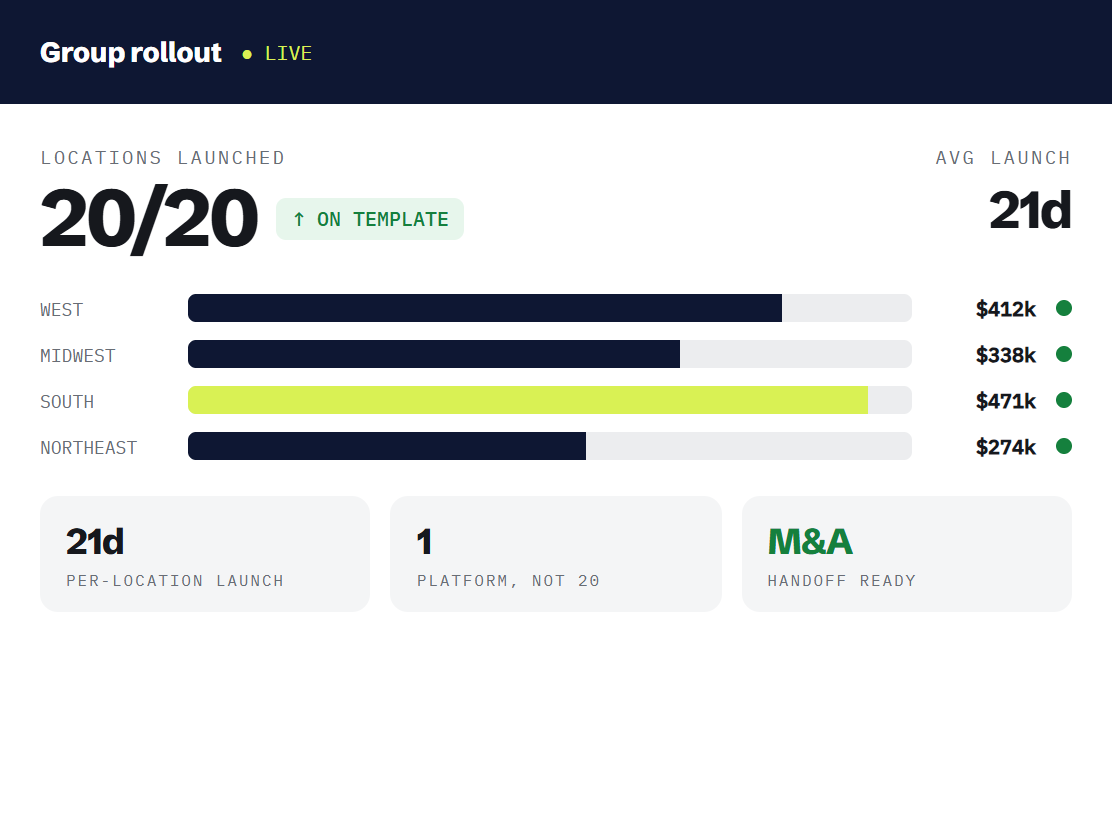
Four numbers every DSO operator can hold us to
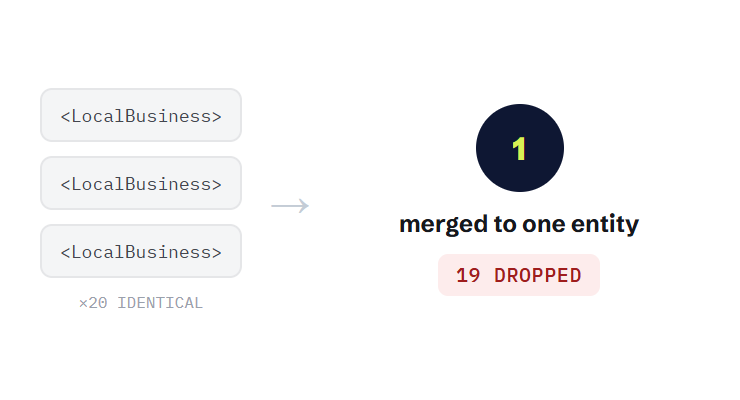
Identical LocalBusiness schema on 20 pages merges the group into one entity in Google
When every location page ships the same Dentist schema, Google merges 20 practices into one place, and 19 of them drop out of the map pack in their own zip codes. Per-location schema plus GBP sameAs is the only fix that lets each office rank in its own market.
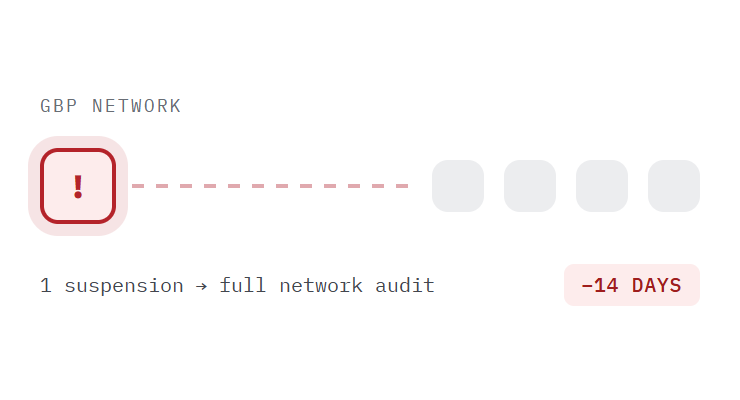
One suspended GBP triggers a network audit that costs every practice 14 days of ranking
A single flagged Google Business Profile drops the group into a network review, and every location loses map-pack rank for 10 to 14 days while the audit runs. Segmented GBP ownership plus a written audit playbook is what keeps one bad ping from taking down the whole network.
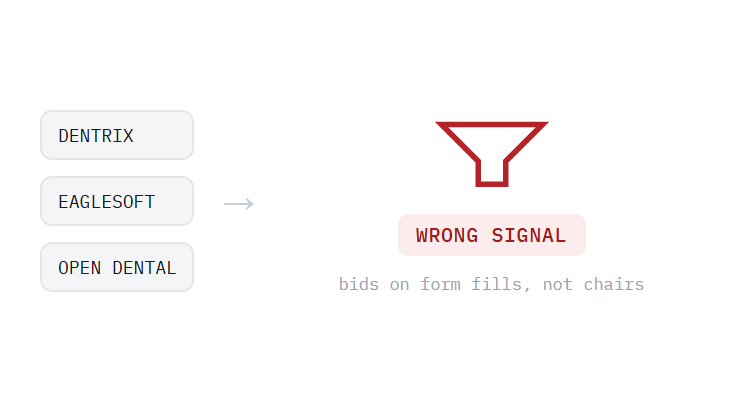
Dentrix, Eaglesoft, and Open Dental run in parallel, and ad platforms bid on the wrong signal
Most acquired practices arrive on a different PMS than the parent group runs, and ad accounts keep optimizing on form fills instead of booked patient revenue. A unified attribution layer that reads all three systems lifts cost per new patient by 40 to 60% within the first quarter.
Three outcomes every DSO rollout produces
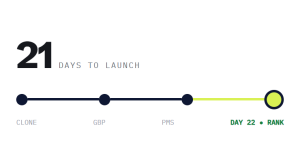
Every new dental location moves from acquired to launched in 21 days. Site clone, GBP verification, per-location schema, and PMS integration all run templated.
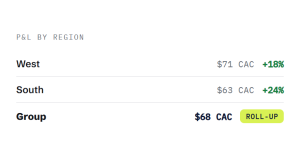
Real-time revenue attribution by market. Marketing spend, cost per new patient, and production per chair broken out per office and rolled up to the group.
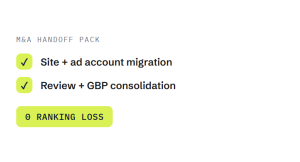
Every acquired practice runs a 30-day rebrand handoff. Site migration, ad account transfer, review consolidation, and GBP claim close with zero ranking loss.
Four stages tied to a per-location launch
Same rhythm across every DSO retainer. Each stage ends in a written deliverable your executive team can read, and the calendar does not slip because your approvals do not stack.
DSO audit that maps every location gap
Full audit of every location. GBP, site, ad accounts, reviews, and PMS integrations all mapped. Written per-location scorecard delivered to leadership by day 5. Nothing moves until it is locked.
Group architecture + master brand system
Multi-location URL architecture, per-location schema, and centralized brand system designed. Legacy vendor sunsetting and account transfer plans built. Each acquired practice keeps its identity where the goodwill has value.
De novo template + per-region rollout
Template the 21-day per-location launch. Roll the template across every existing office in priority order. Weekly ranking and booking dashboards delivered per region. Core Web Vitals green on every location.
M&A handoff + quarterly executive reviews
For each new acquisition, a 30-day rebrand handoff runs from LOI to fully consolidated with zero organic ranking loss. Quarterly written executive review covers growth thesis, KPI trends, and the next-quarter roadmap.
What you actually get from our dental DSO rollout
Fixed scope per location, fixed rollout cadence, fixed sign-offs. Every workstream below has a defined deliverable, a written sign-off, and a date on the calendar so ops, marketing, and clinical leads all know what lands when.
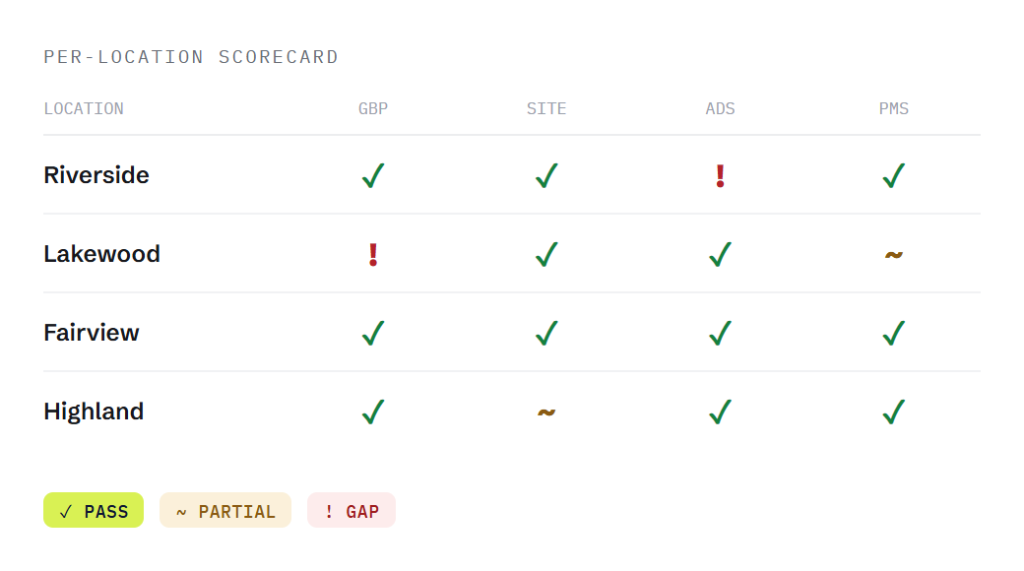
Group audit that surfaces every location gap
Two weeks of DSO ops and marketing-leader interviews, per-location scorecards on GBP, site, ads, reviews, and PMS setup, plus a written group brief your executive team signs off on before we touch a single template.
3-4 working sessions with the CEO, ops director, and marketing lead. Baseline new-patient targets, per-location production goals, and the M&A pipeline.
Every location scored on GBP health, site performance, review volume, ad account status, and PMS integration state.
Side-by-side comparison of the top 3 competing DSOs and 2 independents in each of your top markets.
Multi-location URL architecture, per-location page inventory, consolidation targets, and cutover priority order.
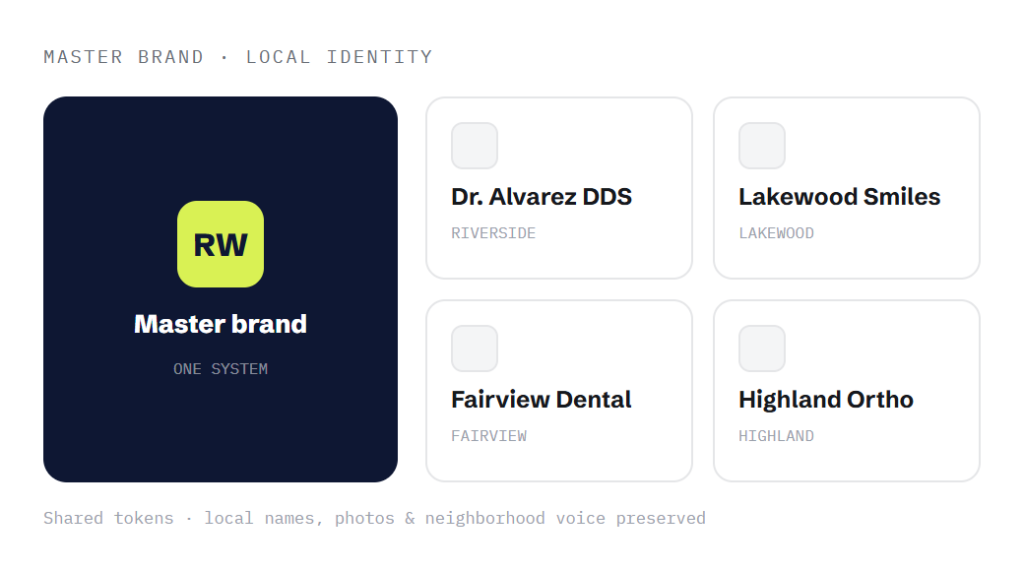
Master brand each location can still call home
A DSO-wide design system that lets every office keep its own doctor names, patient photos, and neighborhood voice while rolling up to one master brand. Legacy practice identities stay intact where the goodwill has value, and consolidate where it does not.
Type scale, color, spacing, button + form library. Documented so any location page renders on-brand by default.
Local doctor bios, office photography, neighborhood copy blocks, and legacy-name treatments where the acquired practice keeps its identity.
Home, services, team, insurance, new-patient, and contact templates. Phone view first, desktop second.
Click-through Figma prototype of the master site plus 2 sample location sites. Tested on real phones before we write production code.
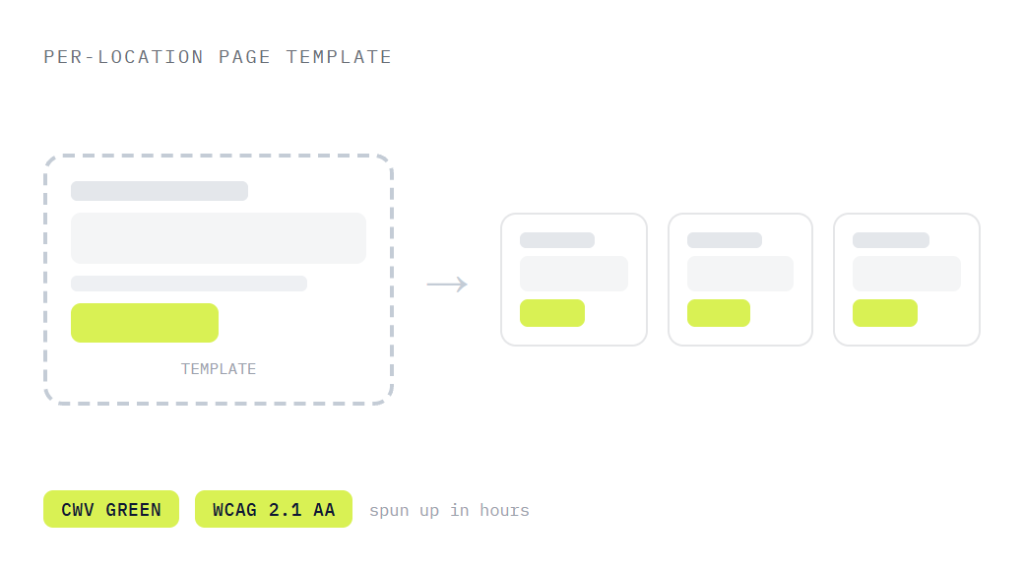
Multisite build with a per-location page template
WordPress multisite or headless Next.js with a per-location page template. New offices get spun up from the template in hours, not weeks. Core Web Vitals green on every location. WCAG 2.1 AA verified across the network.
One master repo, per-location subsite or subdirectory, shared content model, and a spin-up script that provisions a new location in under an hour.
Regional or office managers can update hours, insurance lists, and specials without a developer. Role-based permissions per location.
LCP under 1.8s, CLS under 0.05, INP under 200ms on every location subsite. Verified via Lighthouse and CrUX.
Axe automated scans on every location, manual audit on the master template, and NVDA plus VoiceOver screen-reader tests.
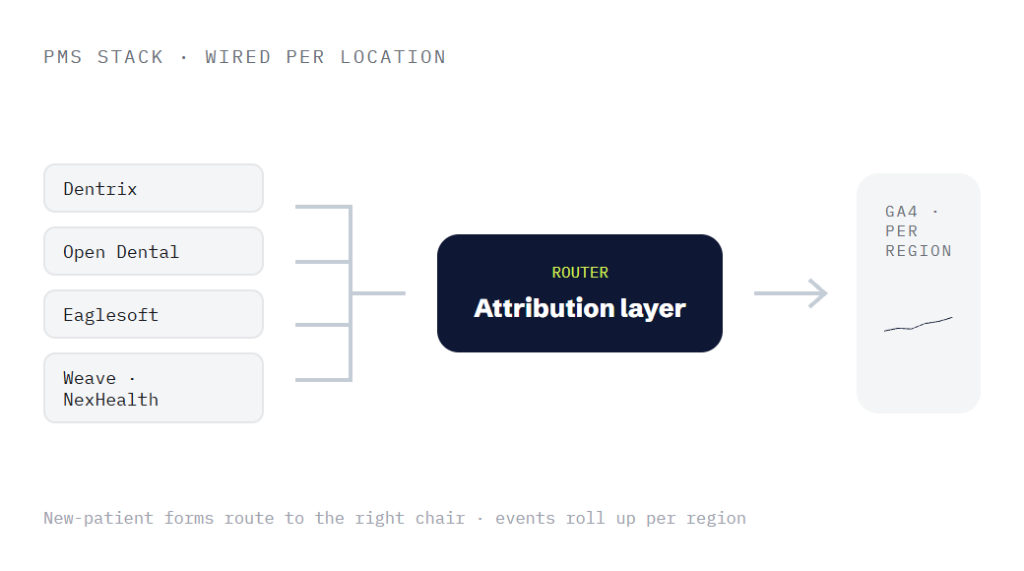
Wired into the PMS stack every practice actually runs
Dentrix, Open Dental, Eaglesoft, Weave, and NexHealth all wired per location so new-patient forms route straight into the right chair. Yardi or NetSuite feeds for the finance side. GA4 events roll up per location and per region for the executive dashboard.
New-patient forms and online booking wired into Dentrix, Open Dental, Eaglesoft, Weave, or NexHealth per location. Campaign source tagged so paid channels attribute correctly.
GA4 conversion events, Meta CAPI, and Google Ads pixels per location. Roll-up dashboard at the DSO level for cost per new patient by market.
Google Business Profile claimed and verified per office. Review platform feed piped into each location page. Star ratings visible in local SERPs.
Every PMS, review, ad, and analytics integration mapped in a README your next engineer or ops hire can read cold.
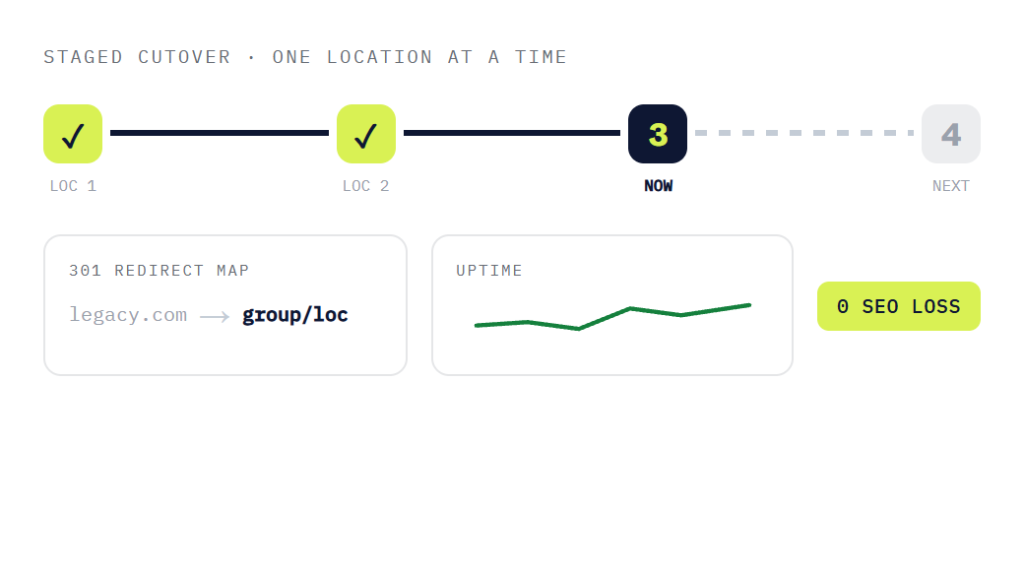
Staged rollout, one location at a time
Location-by-location cutover in priority order. Full 301 redirect map from every legacy practice domain into the consolidated architecture. Uptime and Core Web Vitals monitoring live per office from day one. Zero organic ranking loss during transition is the acceptance bar.
Every legacy practice URL mapped to the new consolidated architecture. Zero organic traffic loss on cutover day, verified against Search Console.
Uptime pings every 60 seconds per location. Weekly CWV field-data digest per office and DSO-wide.
30-day rebrand handoff runbook for the next acquired practice. LOI to fully consolidated, no ranking loss.
Design files, per-location CMS logins, repo, spin-up script, and README. Ownership sits with the DSO.
Four web design tiers for every stage of growth
Every line item listed. The quote you get is the invoice you pay. Take any tier as a project fee, or split it into the flat monthly plan.
Fast, credible site converting existing reputation.
Full booking engine: scheduling, checkout, customer reporting.
One brand, every office found, location-level tracking.
Design system the whole group launches on. Ops-team-spec integrations.
Every web design feature, tier by tier
HOVER ANY FEATURE FOR A PLAIN-ENGLISH EXPLANATIONWebsite + design +
Booking + patients +
SEO + visibility +
Care + support +
Real dental groups, real numbers
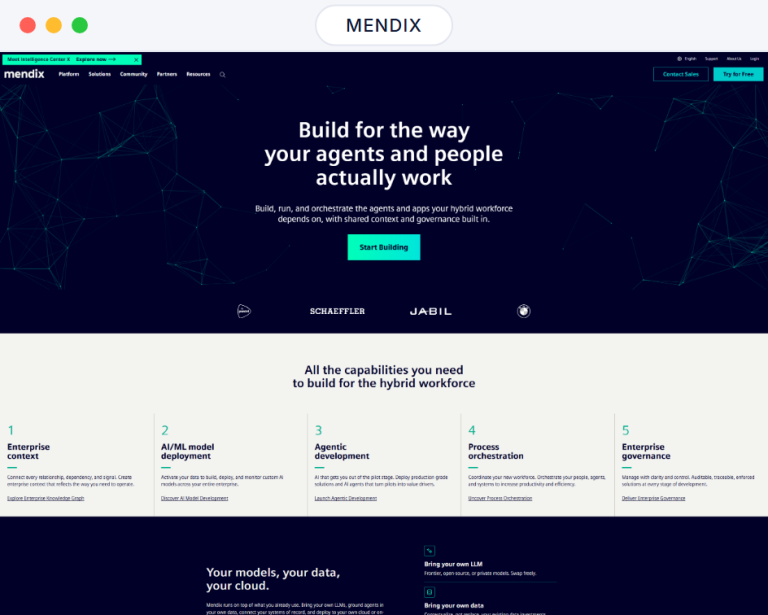
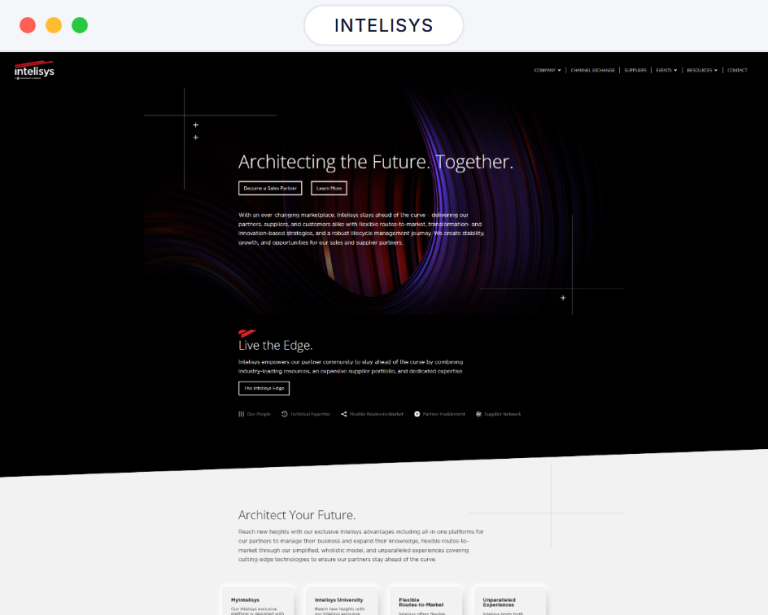

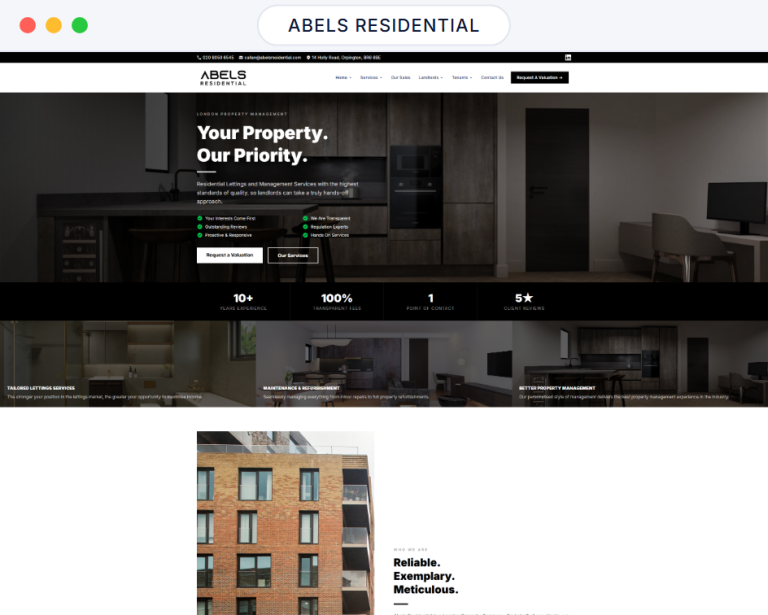
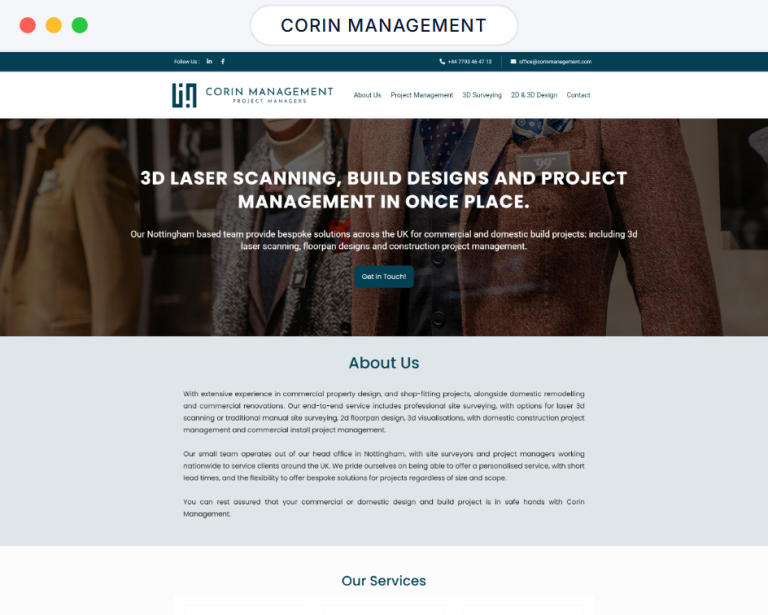
See what a $400/mo dental site could book back.
Slide in your practice numbers. Assumes a 32% relative conversion improvement, below the median gain on our dental rebuilds.
Asked by DSO operators, answered
12 years of DSO onboarding calls, 13 answers that come up every time. Anything else, ask on the strategy call.
What is a DSO in the dental industry?
+
A DSO, or Dental Service Organization, is a company that owns or supports the non-clinical side of multiple dental practices. That covers marketing, HR, billing, IT, procurement, and technology infrastructure. Dentists stay in charge of care, while the DSO runs the business layer. Some DSOs own the practice equity outright. Others sign a management services agreement and leave equity with the dentist. DSOs range from 5-practice regional groups to 800-practice PE-backed platforms. The American Dental Association tracks DSO growth as one of the fastest-changing structures in the industry. Most PE-backed platforms sit inside a group of 25 or more practices before adding a dedicated dental DSO marketing partner, and the mix of clinical autonomy versus centralized ops is where most acquisition conversations start. Group size, deal structure, and PMS stack all shape what the marketing layer needs to look like on day one, and every group we onboard gets a written scoping doc that spells out reporting cadence, per-location budget, and executive dashboard access before the retainer starts.
What is included in a dental DSO marketing retainer?
+
A dental DSO marketing retainer covers per-location websites, local SEO, Google Business Profile management per office, paid search, paid social, review response, PMS integration, and unified reporting rolled up to the group. The work treats a 20-practice DSO like one platform, not 20 one-off practices. That means one parent template with per-location child pages, per-practice schema and GBP tuned per Google Business Profile guidelines, one ad account structure with per-location conversion tracking, and one dashboard that rolls bookings and revenue by practice, region, and group. Every retainer also includes monthly reporting to the executive team, quarterly written strategy reviews, and 30-day M&A onboarding for each new acquisition. New de novo openings run on a 60-day pre-open marketing plan so day-one appointments are already scheduled. Ad spend bills through Google and Meta directly and stays under the DSO account, not the agency account, so the group keeps ownership of every conversion history and creative asset by default.
How much does dental DSO marketing cost per month?
+
Dental DSO marketing at Redefine Web starts at $3,500 per month for the platform fee plus a per-location fee for groups with 5 to 10 practices. Groups with 11 to 25 practices land in the $8,000 to $18,000 per month band. Groups over 25 practices are custom-scoped based on acquisition velocity, de novo pace, and current agency footprint. Ad spend bills through Google and Meta separately. The platform fee covers group strategy, reporting infrastructure, integration engineering, and board dashboards. The per-location fee covers ongoing SEO, GBP, review response, ad management, and call tracking for that practice. New locations added mid-contract get folded in at the standard per-location rate with a 21-day onboarding window. Contracts run in 6-month terms with 30 days notice to change tier, add locations, or move off. No setup fees on any tier, and pricing is walked through in full on the strategy call so ad spend and per-location scope can be sized against the group acquisition target for the year.
How long does it take to see results from dental DSO marketing?
+
Paid search bookings show up in weeks 2 to 3 once ad accounts, conversion tracking, and PMS integration go live. Local map-pack ranking on new locations lands in months 2 to 4 with per-location schema and GBP management. Full organic ranking gain across the group takes 6 to 9 months. Every retainer publishes a weekly dashboard from week 1 so the DSO sees leading indicators like impression share, click-through rate, and phone volume before the booked-appointment data compounds. Cost per new patient typically drops 30 to 50% inside the first quarter as unified attribution replaces form-fill optimization. Groups running a heavy acquisition schedule see the same cadence repeat per practice as the 30-day M&A handoff runs. Reporting cadence stays weekly per practice, monthly per region, and quarterly for the executive team throughout the engagement, and a mid-quarter check-in surfaces any location trending below plan before the next board pack ships.
How does the team handle M&A transitions?
+
Every M&A transition runs on a 30-day handoff runbook. Day 1 to 10 covers site migration to the group architecture, ad account transfer with historical spend and conversion data preserved, review consolidation to the group GBP, and a 301 redirect map that protects existing organic rankings. Day 11 to 20 covers PMS integration, insurance verification data, and staff training on the new patient inquiry flow. Day 21 to 30 covers QA, go-live, and reporting cutover. Redirect maps are built practice-by-practice from a full crawl so no URL is orphaned. Groups closing 4 or more add-ons per quarter get a dedicated integration lead so the M&A calendar never blocks marketing spend. Historical GBP reviews, patient photos, and legacy blog content all migrate under the group brand with per-location attribution kept intact. Zero organic ranking loss on cutover day is the acceptance bar, and Search Console alerts run through the account team for 30 days post-cutover as a safety net.
Does the rollout integrate with our PMS?
+
Yes. Dentrix, Eaglesoft, Open Dental, Curve Dental, Oryx, and Denticon integrations are supported. Integration wiring covers appointment booking API, new-patient lead push from web forms to the PMS, and revenue attribution flow from the PMS back to Google Ads and Meta. Ad platforms then bid on booked patient revenue, not just form fills. Per-location LocalBusiness schema also feeds each practice page so map-pack listings reflect the correct hours, insurance, and services per office. Groups on custom or in-house PMS platforms get a scoped integration in month 1. The engineering lead maps the data flow before onboarding starts so the reporting layer works from day one. Weave, NexHealth, and other patient-communication platforms are wired into the same layer so texts and reminders route without duplicate data entry. The integration README ships with the handoff pack so any next engineer can maintain the wiring without a rebuild, and integration test scripts run against every PMS on a quarterly schedule.
Can this dental group website rollout handle 25 or more practices?
+
Yes. Groups with 25 to 50 practices run on the Scale tier. Setup uses per-region strategists, region-specific media budgets, and consolidated Looker Studio dashboards for the executive team. Reporting rolls up bookings, cost per new patient, and revenue by location, region, and group. Nobody at the parent org has to open 30 individual dashboards. Group-level tooling includes centralized ad account structure, one review response process, and shared brand guidelines for local pages so each practice holds a consistent brand voice. The multi-location dental website program spins new offices up from the master template in hours, not weeks, so acquisition velocity never outpaces the marketing layer. Regional or office managers keep edit access on hours, insurance lists, and specials without waiting on the agency. HIPAA-aware forms and 60-second uptime pings run per location from day one, and quarterly executive read-outs cover growth thesis, KPI trends, and the next-quarter roadmap for the group.
How does the rollout handle a de novo dental practice?
+
A de novo is a new dental practice built from scratch instead of acquired. The de novo program opens organic and paid presence 60 days before the physical practice opens. Address, hours, and service list on the site publish as coming-soon content. GBP goes live 30 days before opening with a pre-open indicator. Google Ads goes live at 60 days out with pre-book messaging, so day-one patient appointments are already scheduled. Groups doing 3 or more de novos per year get faster launch cycles as the program compounds. Templated de novo playbooks include neighborhood competitor scans, insurance carrier setup, staff photo shoots, and review platform onboarding so the practice does not open with an empty review page. Every de novo goes through the same 21-day template as an acquired location, and the reporting dashboard tracks pre-open pipeline separately from post-open patient volume so leadership can gauge marketing gain against opening-day fill rate.
Do you work with private-equity-backed dental groups?
+
Yes. Roughly 60% of dental DSO marketing clients here are PE-backed platforms. That means we work inside LOI velocity, add-on integration timelines, and the reporting cadence PE sponsors expect from a marketing partner. Monthly board reporting, trailing 12-month CAC and revenue trend, and same-store versus new-store attribution are all baked into the base retainer. Groups closing 1 to 2 add-ons per quarter run on the standard 30-day M&A handoff. Groups closing 4 or more add-ons per quarter get a dedicated integration lead on the account. Sponsor updates, MOIC-aware KPI framing, and exit-ready reporting packs come standard so nothing needs to get rebuilt at diligence. Deal-team access to the marketing dashboard is scoped by role so LP investor updates can pull straight from the same source of truth the CEO and CMO use. Quarterly written reviews walk through growth thesis, per-region performance, and any capital-allocation shifts inside the marketing plan for the year ahead.
How fast can a dental DSO engagement start?
+
Engagements open with a 30-minute strategy call and a written 15-day audit of the current group marketing state. Full rollout starts 4 to 6 weeks after the audit signs off, depending on how many practices need onboarding and how tangled the existing agency footprint is. Groups with 5 or fewer practices typically launch inside 4 weeks. Groups with 25 or more practices need 8 to 12 weeks for the initial rollout so quality does not slip. The audit maps every practice organic ranking, GBP health, ad account structure, PMS integration status, and review posture. Legacy vendor sunsetting runs in parallel so nothing double-charges the group during transition. Kickoff includes an executive read-out, per-location scorecards, and a written rollout calendar so the CEO, ops director, and marketing lead all know what lands on which week. Priority order tends to lead with the highest-revenue practices so the group sees ranking and booking movement inside the first 45 days.
How do you keep brand consistency across every DSO office?
+
Brand consistency runs on a master design system with per-location kits. Type scale, color, spacing, and the button and form library live at the DSO level so every location page renders on-brand by default. Each office gets a per-location brand kit for doctor bios, real office photography, insurance list, and neighborhood copy blocks. Where an acquired practice has strong local goodwill on its legacy name, a co-branded treatment keeps that identity intact under the parent DSO. Regional or office managers can update hours, specials, and insurance without a developer, using role-based CMS permissions per location. The result is one voice across the multi-location dental website program while every practice still feels local to the patients it serves. New de novo locations spin up from the master kit in hours, and any brand refresh at the group level cascades across every location page on the same deploy so no office falls behind.
Are the new-patient forms and hosting HIPAA-aware?
+
Yes. Every new-patient form, appointment request, and inquiry route on the dental group website rollout runs through a HIPAA-aware collection layer, and hosting sits behind a signed Business Associate Agreement. Form data is encrypted in transit and at rest, routed straight into the practice PMS or CRM without dumping into a shared inbox, and access is scoped per location. Marketing analytics on protected health information sit behind CAPI and server-side tagging so identifiers never hit third-party pixels. GBP messaging, live chat, and phone tracking are also configured to keep PHI out of the ad platform and analytics layers. Any DSO handling clinical intake through the site gets a written data flow map before onboarding closes. Retention windows and deletion requests run against a documented policy so audit trails hold up if a compliance review comes through the group, and staff training on the intake flow ships in month 1 for every acquired practice.
Who owns the sites, ad accounts, and repo at the end of the engagement?
+
The DSO owns everything. Domain, DNS, repo, per-location CMS logins, GBP profiles, Google Ads and Meta accounts, review platform seats, and PMS integration keys all sit under the group at day one. Nothing gets held hostage in an agency account. Contracts run in 6-month terms with 30 days notice to move up, down, or off. On engagement close, the handoff pack ships within 10 business days and includes design files, the master repo, spin-up script for new locations, and a written README any next engineer or ops hire can read cold. Groups that later hire in-house marketing keep the platform running as-is, and the account team runs a 4-week overlap so nothing drops. Historical dashboards, ad account creative libraries, and per-location review response archives stay accessible under the DSO admin so no institutional knowledge walks out the door, and the SLA on handoff support runs 12 months post-close for any technical questions from the new team.