
Google ads management pricing lands in 4 fee models and 3 spend tiers. Flat monthly fee runs $500 to $3,500 under $10,000 in ad spend. Percentage of ad spend runs 10 to 15% above $50,000 in monthly spend. Hybrid retainer plus performance covers the middle. Hourly is a red flag on ongoing management. Every quote outside those bands hides something you’ll find in month 3.
This guide covers the 4 fee models agencies actually charge, the real 2026 market ranges for each tier, the invisible costs your finance team will find on the second invoice, and the 3 questions that separate a real google ads shop from a template farm renting your account to a bot. You’ll walk out with a checklist for reading a quote line by line and a clear map of which line items pay for themselves at your spend tier.
How Google Ads Management Pricing Actually Works in 2026
Google ads management pricing covers the labor your agency puts into your account. Ad spend covers the clicks you send to Google. Confuse those 2 numbers on your first intake call and you’ll build the wrong budget model. The management fee pays strategist and coordinator hours. The ad spend pays Google. Keep them on separate lines from day one.
What the google ads management fee actually pays for
Your google ads management fee buys strategist and coordinator hours. That time covers keyword monitoring, negative keyword sweeps, bid strategy adjustments, ad copy tests, quality score cleanup, conversion tracking maintenance, and monthly reporting. On a $2,000 fee you’re buying 10 to 15 hours of expert time. On a $5,000 fee you’re closer to 25 to 30 hours. Under $500 buys almost no human touch.
The 4 common fee models in the 2026 market
Agencies quote in 1 of 4 ways. Flat monthly fee gives you a predictable number. Percentage of ad spend scales with your media budget. Hybrid pairs a base retainer with a performance bonus. Hourly billing is rare and usually a red flag on ongoing paid media. Each model fits a specific account profile. Each has quiet weaknesses your CFO will flag if you pick the wrong one.
Where the industry standardizes google ads management cost
Under $10,000 in monthly ad spend, flat fees dominate. Between $10,000 and $50,000, hybrid models win most quotes. Above $50,000, the 10 to 15% of ad spend model becomes default. The pattern holds for one reason. At scale a flat fee undervalues the strategist time your account demands, and a pure percentage undervalues the setup work on small accounts. The market has already priced this in.
Flat Fee Google Ads Management and Who It Fits
Flat fee google ads management is the most common quote you’ll see under $10,000 in monthly ad spend. The agency picks a fixed dollar amount, invoices it every month, and eats the variance in hours worked. You get a number your finance team can plan against and a scope that stays stable through the quarter. The trade-off is that flat fees only work when the account is small enough that the hour count stays consistent month to month.
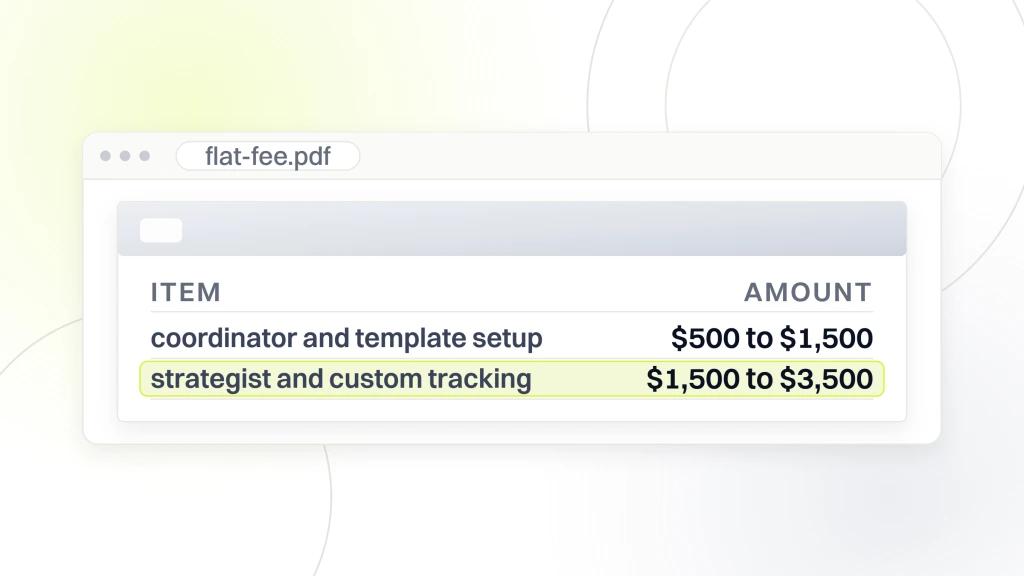
Typical flat fee ranges in 2026
Real market flat fees run $500 to $3,500 a month for accounts spending under $10,000 on media. Below $500 you’re buying automation with a human name attached. Between $500 and $1,500 you get a coordinator, a template setup, and monthly reporting. Between $1,500 and $3,500 you get a real strategist, custom conversion tracking, and bi-weekly optimization cycles. That $1,500 mark is where the quality of the work starts jumping fast.
When flat fee google ads management makes sense
Flat fees fit small local businesses, single-location practices, and any account that runs the same handful of campaigns month after month. If your ad spend is steady, your account structure is simple, and your seasonality is mild, a flat fee gives you predictability without paying an agency to guess at your growth. Ecommerce accounts and B2B programs with fast-changing spend are the wrong fit for flat billing.
Where flat fees quietly fail
Two failure modes repeat across the market. First, the agency undersells the fee, wins the contract, then quietly cuts hours worked to protect the margin. Your account gets 4 hours a month instead of the 12 the quote promised. Second, your ad spend doubles but the fee doesn’t move, and the agency doesn’t scale attention to match. You still get 15 hours of work on an account that now needs 40. Read the quote for a spend-band clause that resets fees at defined thresholds.
Google Ads Management Fee Percentage of Ad Spend
Google ads management fee percentage of ad spend runs 10 to 20% of monthly media spend, with 15% as the market default. At $10,000 in ad spend you pay $1,500 a month in fees. At $30,000 you pay $4,500. The math scales linearly. That is a feature above $50,000 in spend, where account complexity grows with budget. It is a bug under $10,000, where the workload stays flat and the fee eats budget.
Why percentage models fit scale accounts
Above $50,000 in monthly ad spend, campaign count, audience count, and conversion signal complexity all rise fast. Percentage of ad spend is the honest way to price that. A $200,000 account genuinely needs 60 to 80 strategist hours a month. Flat billing at $8,000 flat leaves the agency losing money by month 4. The percentage model keeps incentives aligned when spend and complexity move together.
The Redefine Web PPC retainer tiers
Our own PPC retainer tiers run $999, $1,499, $2,499, and from $4,500 a month. Ad spend is billed separately and flows straight to Google. Every tier includes a named strategist, conversion tracking, negative keyword sweeps, and reporting cadence matched to your spend. See the google ads management services page for the full tier breakdown. For the broader retainer options, see PPC management services.
No Contract Google Ads Management and What the Fine Print Hides
No contract google ads management sounds like a buyer-friendly offer. Sometimes it is. Real agencies that quote no-contract terms are usually confident enough in the work to keep clients on retention alone. Shops that require 12-month contracts are usually protecting themselves from a pattern of client churn. The offer says as much about the agency as it does about the deal terms.
What no-contract really means in a real google ads quote
Most no-contract quotes still require 30 days notice to cancel. That is standard. Read the quote for language about onboarding fees that get refunded if you stay past month 3, or for setup fees waived only if you commit to 6 months. The base retainer might be no-contract, yet the setup terms carry the real commitment. That is not deceptive. It is worth reading.
Why longer contracts sometimes make sense
A well-run google ads program needs 90 days to prove signal and 180 days to prove pipeline. A 12-month contract protects that runway. If the agency is willing to hold to a 12-month term with clear performance clauses that release you early on missed targets, that’s a fair trade. If the contract is 12 months with no performance clauses at all, walk away. That deal only protects the agency.
What to negotiate on either model
Whether the contract is no-commit or 12-month, negotiate 3 things. First, ad account ownership sits with you from day 1, with admin access to the agency. Second, deliverables include a written 90-day plan by end of week 2. Third, any performance clause names specific metrics and thresholds. Get those 3 in writing and the contract length matters less than most buyers assume.
Real Google Ads Management Cost Behind the Fee
Your invoice line is 1 number. The total google ads management cost of a real program is bigger, and you’ll want it mapped before your CFO asks in month 4. The fee is the visible cost. The invisible costs sit around the account and add up faster than most buyers expect. Miss them on the intake call and you’ll rebuild your budget mid-quarter.
Ad spend itself
Your Google Ads budget is the biggest line. Minimum viable spend for a competitive Search campaign is around $2,000 a month for local service businesses, $5,000 for regional B2C, and $10,000 for competitive B2B verticals. Below those numbers you cannot generate enough conversion data to optimize on any meaningful timeline. You’re technically running ads. You’re not running a program. Google’s own Google Ads billing documentation covers the mechanics of how spend is charged.
Landing page and creative production
Most agencies do not bundle landing page work in the base fee. Expect $1,500 to $5,000 as a one-time project for 2 to 4 conversion-focused pages built for A/B testing. Some agencies quote landing page work at $500 a page and call it done. Real page work that includes conversion research, wireframing, and testing runs closer to $2,000 a page. Video and image creative adds $500 to $2,000 a month on active accounts.
Tracking, tools, and platform subscriptions
Call tracking runs $50 to $300 a month depending on volume. Session replay tools add $50 to $200 a month. Reporting dashboards or BI tools add $100 to $500 a month at any real scale. Some agencies bundle these, some pass them through at cost, some skip them entirely. Ask up front which tools sit inside the fee and which invoice separately.
How Real Google Ads Programs Perform
Case study numbers are more useful than any pitch deck. Two Redefine Web clients, Rapyd Financial Network and Camu Digital Campus, show what google ads programs deliver when the fee model, the ad spend, and the strategist attention all line up. Real numbers below.
Rapyd Financial Network on a full-funnel B2B program
Rapyd Financial Network, a fintech SaaS in the payments space, ran a fragmented marketing setup with roughly 5 inbound leads a month before we rebuilt the funnel across paid search, LinkedIn, content, and a redesigned site. Twelve months in, monthly inbound leads tripled, organic traffic grew 5 times, and pipeline generation hit over £1.8 million. The paid piece paired high-intent Google Search with LinkedIn document ads to CFO and Head of Finance job titles inside their target account list.
Camu Digital Campus on persona-driven ads
Camu Digital Campus, an EdTech SaaS LMS serving K-12 and higher education, ran broad-targeted ads with manual bidding and a 0.2% LinkedIn engagement rate. After swapping to persona-driven Google and LinkedIn campaigns with structured bidding, qualified leads climbed 70%, CPA dropped 28%, and LinkedIn engagement rose to 1.2%. The fee model matched the account size. The strategist attention matched the platform mix.
What both accounts prove about google ads management pricing
The fee model doesn’t determine outcomes. The attention behind the fee does. Rapyd ran a hybrid retainer that paid for strategist depth. Camu ran a flat fee that matched their account size. Both won for the same reason. The fee model matched the work the account needed. Pick the fee model that buys you the right attention, not the cheapest number on the quote.
How to Read a Google Ads Quote Line by Line
Reading a google ads quote takes practice. Every quote follows the same 5 sections. Every quote hides something in 1 of them. Once you know where the fine print usually sits, quotes become easy to compare across agencies. Bring this checklist to your next 3 intake calls and you’ll see the pattern fast.
The scope of work section
The scope should name platforms, campaign types, ad copy volumes, and optimization cadence. Watch for vague words. "Ongoing optimization" is not scope. "Weekly bid strategy adjustments and monthly negative keyword sweeps" is scope. The vaguer the language, the less work the agency is committing to. Ask the salesperson to translate every vague line into a concrete deliverable.
The reporting section
Reporting cadence tells you how much attention the account gets. Monthly reporting almost always means monthly optimization, which is not enough on any account spending over $10,000 a month. Bi-weekly is the mid-market standard. Weekly is the scale-account standard. If a $5,000-a-month retainer only promises monthly reporting, the pricing is either padded or the work is thin.
The exclusions section
Every quote has an exclusions section, usually near the bottom in smaller text. Landing pages, creative work, tracking implementation, CRM integration, and platform subscriptions are the 5 most commonly excluded items. Leaving them off the exclusions list does not mean they’re included. Confirm inclusion in writing before you sign. Assumptions cost real money by month 2.
Where to Invest and Where to Save on Affordable Google Ads Management
Every buyer wants affordable google ads management that hits a target number. Skip the race to the lowest quote. Instead, figure out which line items pay for themselves and which you can safely trim. Get that map right and you spend 20% less without hurting the account.
Invest here
- Conversion tracking setup on day 1, always priced in a separate line.
- A named strategist who owns the account, not just a coordinator.
- Landing page work that’s built for conversion, not just for looks.
- Attribution across channels so the pipeline number is auditable.
- Weekly optimization cadence if your ad spend clears $15,000 a month.
Save here
- Video ads if your funnel doesn’t need them yet.
- Display remarketing on accounts under $5,000 in monthly spend.
- Weekly reporting on stable accounts with low seasonality.
- Fancy dashboards if your team never opens them.
- Multi-platform expansion before Google Ads is stable and profitable.
The buyer’s math check
Add your fee, your ad spend, your tools, and your creative production. Divide by your monthly qualified leads. That’s your true cost per lead, not the number on the campaign dashboard. Compare it to your close rate and average deal size. If the math doesn’t produce a positive ROI at 12 months, either the fee is wrong or the strategy is wrong. The ad spend on its own is rarely the problem.
Common Google Ads Management Pricing Mistakes Buyers Make
Buyers make the same handful of pricing mistakes every quarter. Every 1 is avoidable if you know what to look for. Every 1 costs real budget in the first 6 months. Read this list twice before you sign your next agreement.
Picking the lowest quote
The lowest quote almost never wins on total account cost. A $500 monthly fee sounds cheap until the agency spends 3 hours on your account and your CPA goes up 30%. The extra $1,500 a month a real shop would have charged you is trivial next to the media spend you burned. Compare quotes on hour count and strategist seniority, not on the invoice number.
Skipping the setup fee
Some agencies quote no setup fee to win the deal. That work still happens, and it usually happens in a rushed 8-hour window in week 1 instead of the 25 to 40 hours a proper account audit and rebuild deserves. If a shop offers zero setup fee, ask exactly how many hours they’ll put into the audit and account restructure in the first 30 days. Get the answer in writing.
Ignoring the fee-to-spend ratio
A healthy fee-to-spend ratio sits between 15 and 25% for accounts under $25,000 in monthly spend, compressing to 8 to 12% above $50,000. Above 40% your fee is eating budget that should sit in ad spend. Below 8% the agency cannot afford to give your account real attention. Both extremes fail. The ratio matters more than the absolute fee number.
Falling for the template pitch
If the intake call opens with a slide deck that names 3 competitors as "industry leaders" and then sells you the same playbook at half the price, you’re not in a strategy conversation. You’re in a template demo. If the salesperson has a slide called "our secret sauce" that turns out to be Google’s own automated bidding recommendations dressed up in agency branding, add 20% to whatever quote lands next Tuesday.
Pricing Red Flags and Green Flags on the Intake Call
The intake call is where google ads management pricing gets negotiated in the open. What the agency says and how they say it tells you almost everything about the work you’ll get. Bring these flags to every call and the pattern will show up inside 20 minutes.
Red flags to walk away from
- Guaranteed rankings, leads, or conversions inside 30 days.
- Vague scope with words like "ongoing optimization" and no hour count.
- Setup fee zero, but a 12-month commitment required.
- Ad account ownership sits with the agency, not the client.
- Reporting cadence monthly on a retainer above $3,000.
- Fee negotiable down 30% on the second call.
Green flags to lean toward
- A named strategist on the intake call, not just a salesperson.
- A written scope with hour counts by role by month.
- Setup fee itemized separately from the monthly retainer.
- Ad account ownership sits with you from day 1, admin access to the agency.
- Reporting cadence matches your ad spend tier.
- Fee holds firm and the work behind it is real.
The questions that separate real shops from template farms
Ask 3 questions and you’ll know inside a call. What’s the strategist-to-coordinator ratio on this account. What percentage of the fee is landing page and creative work versus platform management. How do you handle a recommendation that would cut our ad spend by 20%. If the answers are specific, you have a candidate. If the answers are generic, keep looking.
Google Ads Management Packages by Stage
Google ads management packages should map to your ad spend and your stage, not a rate card. The right google ads management fee at $3,000 in ad spend is not the right fee at $30,000. Match the pricing model and the fee tier to where your program sits today, not where you want it to be in 18 months. Overpay early and you waste budget. Underpay and you leave results on the table.
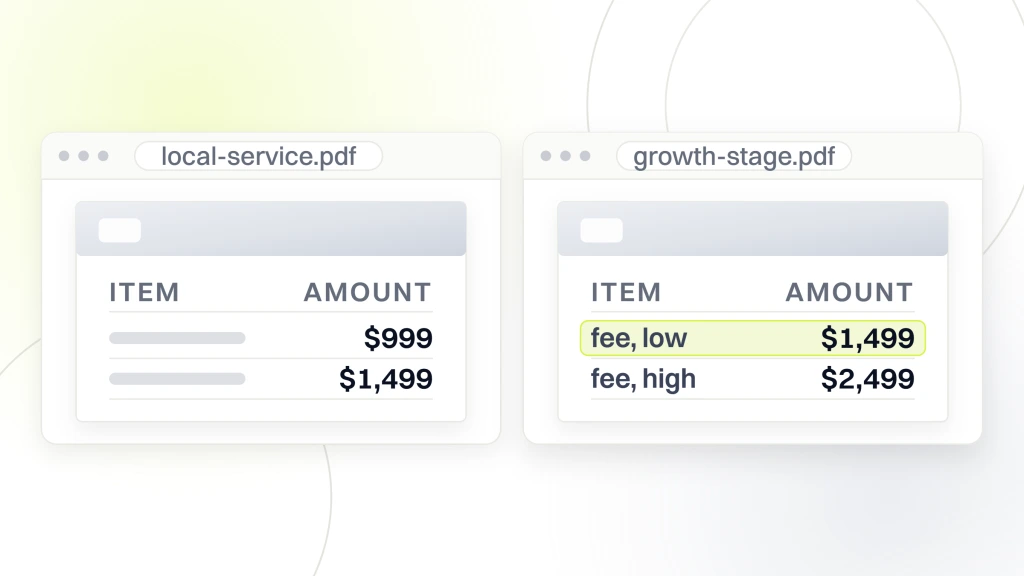
Local service business under $5,000 in ad spend
Flat fee $999 to $1,499 a month. Launch package. Search campaigns only. Monthly reporting is fine. Skip display and video. Focus every dollar on high-intent local keywords and conversion tracking that ties calls and forms to real revenue. If your ad spend clears $5,000 a month, jump to the growth tier before adding platforms.
Growth-stage company at $10,000 to $25,000 in spend
Hybrid model or percentage of ad spend. Fee $1,499 to $2,499 a month. Growth or Scale package. Search plus remarketing plus 1 secondary platform. Bi-weekly reporting minimum. Named strategist required. Landing page work included or quoted separately with clear deliverables. This tier is where the account starts earning back the fee inside 90 days.
Scale-stage program above $40,000 in spend
Percentage of ad spend at 10 to 15%. Fee from $4,500 a month. Scale or Enterprise package. Multi-platform, full-funnel, creative bundled, weekly reporting, dedicated strategist. Attribution across channels required. If the shop you’re vetting cannot show you a live closed-loop dashboard on the intake call, they are not ready for your account. Keep looking. For the B2B pipeline motion, our B2B PPC agency service page covers the specialist track, and SaaS teams should read the SaaS PPC services page.
Google ads management pricing is a fee model problem before it is a dollar problem. Solve the model first, then the number follows. If you want help pressure-testing a quote or comparing 3 agencies against your account, our team at Redefine Web runs paid programs across every fee model in this guide. Retainers land at $999, $1,499, $2,499, or from $4,500 a month, with ad spend billed separately.