
Amazon PPC management services are a niche of paid advertising with rules that punish anyone who copies the Google Ads playbook. Cost per click runs $0.50 to $4.20 by category. ACoS (advertising cost of sale) targets sit at 15 to 35%. Campaign types include Sponsored Products, Sponsored Brands, Sponsored Display, and now Sponsored TV. This guide walks the exact operating model we run on live Amazon seller accounts, from campaign structure and keyword harvesting to the ACoS math that keeps a seller profitable while ad spend scales.
You will finish this in 10 minutes with a full framework, a budget calculator by seller size, and specific numbers you can put to work this week. The same rhythm works whether you run a solo Amazon seller at $2,500 per month in ad spend or a mid-tier brand at $30,000 per month. What changes is the number of ASINs the account covers and the bid rules layered on top. The underlying discipline stays the same.
Amazon PPC management services run on ACoS-first bid discipline
Amazon paid search runs on ACoS as the primary KPI, not clicks or impressions. A campaign at 40% ACoS on a product with 45% margin turns a profit. The same campaign on a product with 30% margin loses money on every sale. Google Ads managers who move to Amazon and keep chasing conversion volume without tracking margin torch budget in weeks. This work done right treats every campaign as a margin decision, not a volume decision.
The account structure has to fit Amazon’s auction model, not a general PPC playbook. Amazon rewards accounts that harvest search terms from broad and Auto campaigns, promote the profitable ones to Exact match Manual campaigns, and add the unprofitable ones as negatives. Google Ads rewards Smart Bidding on large conversion volumes. Amazon rewards manual bid discipline on small keyword universes tied to specific ASINs. Teams that copy the Google playbook lose 30 to 50% of the budget to unprofitable click categories inside the first 90 days.
ACoS versus TACoS math
ACoS measures ad spend against ad-attributed revenue only. TACoS (total advertising cost of sale) measures ad spend against total product revenue, ad plus organic combined. A rising ACoS with a falling TACoS means paid search is driving organic ranking gains that pay back beyond the ad account. A rising ACoS with a flat or rising TACoS means the ad spend is not producing organic gains. Track both metrics side by side on every campaign. Amazon Brand Analytics and Adobe Analytics both surface the split.
Amazon PPC as brand defense
Sponsored Products on your own brand terms defends against competitor bids. Amazon lets any seller bid on any brand term. Sellers that skip brand-term Sponsored Products let competitors steal sales at a 10 to 25% discount by showing up in the top slot on brand searches. Brand-term ACoS runs 4 to 10%, so it is very profitable. The seller that adds a brand-term Sponsored Products campaign after 6 months without one typically sees a 15 to 25% bump in overall ad-attributed revenue inside 30 days from recovered brand searches.
Campaign types inside amazon ppc management services
Amazon PPC covers four campaign types. Sponsored Products are search-triggered product ads. Sponsored Brands are headline banners with the brand logo and 3 products. Sponsored Display serves retargeting and audience-based product ads. Sponsored TV runs video ads on TV screens. Each type serves a different funnel stage. Sponsored Products handles bottom-funnel conversion. Sponsored Brands handles mid-funnel brand awareness. Sponsored Display retargets cart abandoners and lookalike audiences. Sponsored TV builds top-funnel demand for larger brands.
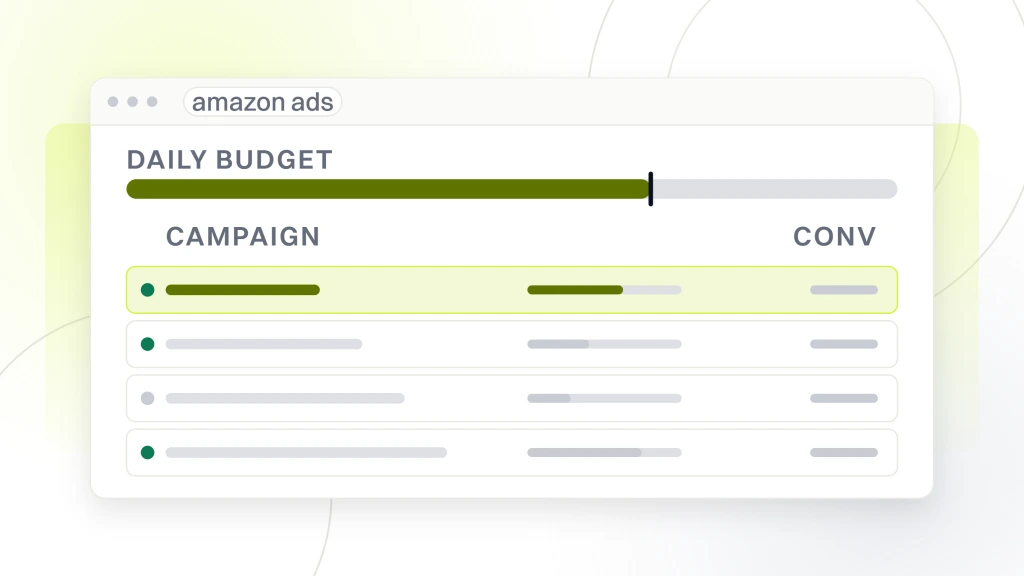
Most accounts spend 65 to 80% of the budget on Sponsored Products because it converts at the highest rate, 8 to 22%, and hits the lowest ACoS. Sponsored Brands runs at 10 to 20% of the budget for brand-registered sellers with a lineup of products worth featuring. Sponsored Display picks up 5 to 15% of the budget as a retargeting layer. Sponsored TV enters the mix only for brands with $50,000 per month plus ad spend.
- Sponsored Products: bottom-funnel search-triggered ads that close sales
- Sponsored Brands: mid-funnel headline banners for brand-registered sellers
- Sponsored Display: retargeting and audience-based product ads
- Sponsored TV: top-funnel video ads for larger brands over $50,000 in monthly spend
- Sponsored Products Auto: keyword-harvest campaigns for discovery
- Sponsored Products Manual: promoted-keyword campaigns for scale
Auto to Manual harvesting cycle
Every ASIN needs an Auto Sponsored Products campaign running to harvest search terms. Auto campaigns bid on the ASIN’s category by default and reveal which keywords customers use to find the product. Every Friday, pull the search terms report from the Auto campaign, promote the top 5 to 10 converting keywords to a Manual Exact campaign, and add the non-converting search terms as negatives to the Auto campaign. The harvest cycle produces the account’s most profitable Manual campaigns over 60 to 90 days.
Campaign structure for amazon ppc management accounts
Well-run accounts operate 8 to 20 campaigns per ASIN group, not per product. Every ASIN group needs one Sponsored Products Auto campaign for keyword harvesting, one Sponsored Products Manual Broad campaign for volume, one Sponsored Products Manual Phrase campaign for control, one Sponsored Products Manual Exact campaign for the top harvested keywords, and one Sponsored Products Product Targeting campaign to bid on complementary ASINs. Add Sponsored Brands and Sponsored Display campaigns after 30 days of data.
Sound account structure runs manual bidding for the first 60 days. Amazon’s Rule-Based Bidding needs 20 plus conversions per campaign per week to train. Most accounts hit that threshold on only a few campaigns in year one. Manual bidding with a $0.60 to $3.20 bid lets the account control spend precisely as the pipeline builds. Switch to Rule-Based Bidding or Dynamic Bidding (up or down) only after the campaign holds 20 plus weekly conversions for 3 consecutive weeks.
Brand defense campaign is not optional
Every brand-registered seller needs a Sponsored Products campaign bidding on their own brand terms. Brand-term campaigns cost $0.30 to $1.20 per click and convert at 20 to 40%. Brand defense recovers 15 to 25% of otherwise-lost ad-attributed sales. Sellers that skip brand defense let competitors steal branded traffic at a discount. Brand defense is the highest-ROI campaign in almost every Amazon account. Set it up in the first week of any new engagement.
Category defense with Product Targeting
Product Targeting campaigns bid on competitor ASINs and complementary ASINs. Bidding on competitor ASINs shows your product on the competitor’s product page. Bidding on complementary ASINs (a phone case ASIN bidding on the matching phone ASIN) captures cross-sell traffic. Product Targeting ACoS runs 25 to 45%, higher than search-triggered, but the incremental sales are usually incremental to the account. Amazon’s advertising help documentation covers the targeting mechanics.
ACoS targets and budget benchmarks for Amazon PPC
Amazon ad budgets scale by product line SKU count, not seller revenue. A solo seller with 5 SKUs runs $2,500 to $5,500 per month. A small brand with 20 SKUs runs $5,500 to $12,000 per month. A mid-tier brand with 50 SKUs runs $12,000 to $30,000 per month. A large brand with 200 SKUs runs $30,000 to $180,000 per month. Every SKU active in the account needs its own campaign structure and its own ACoS target based on that SKU’s margin.
ACoS targets vary by product margin and life-cycle stage. New product launches run at 40 to 60% ACoS for the first 60 days to build search rank and reviews. Established products with strong reviews run at 15 to 25% ACoS. Brand defense campaigns run at 4 to 10% ACoS. Mature products approaching end-of-life run at 10 to 20% ACoS to hold rank without over-investing. The average blended ACoS across a well-managed account sits at 22 to 28%.
| Seller size | Monthly budget | Target blended ACoS | Target TACoS |
|---|---|---|---|
| Solo (1 to 5 SKUs) | $2,500 to $5,500 | 22 to 30% | 10 to 18% |
| Small brand (5 to 20 SKUs) | $5,500 to $12,000 | 20 to 28% | 9 to 16% |
| Mid brand (20 to 50 SKUs) | $12,000 to $30,000 | 18 to 25% | 8 to 14% |
| Large brand (50+ SKUs) | $30,000 to $180,000 | 15 to 22% | 6 to 12% |
Weekly bid adjustments on Amazon budgets
Check ACoS every Monday morning. Amazon’s data updates on a 24 to 48 hour delay, so Monday reflects last week’s actual conversions. Adjust bids down 10 to 20% on campaigns above target ACoS. Adjust bids up 10 to 15% on campaigns below target ACoS with impression-share headroom. Accounts that check ACoS monthly instead of weekly usually see 15 to 25% of the budget drift into unprofitable clicks before anyone catches it.
Keyword harvesting rules for amazon ppc management
Keyword harvesting is the discipline that turns an average Amazon account into a great one. Every Auto Sponsored Products campaign produces search terms every week. Pull the search terms report every Friday. Look for search terms that converted 2 plus times at ACoS below target. Promote these to a Manual Exact campaign with a bid 20 to 30% higher than the winning Auto bid. Look for search terms that spent $15 plus with zero conversions. Add these as negative exact keywords to the Auto campaign.
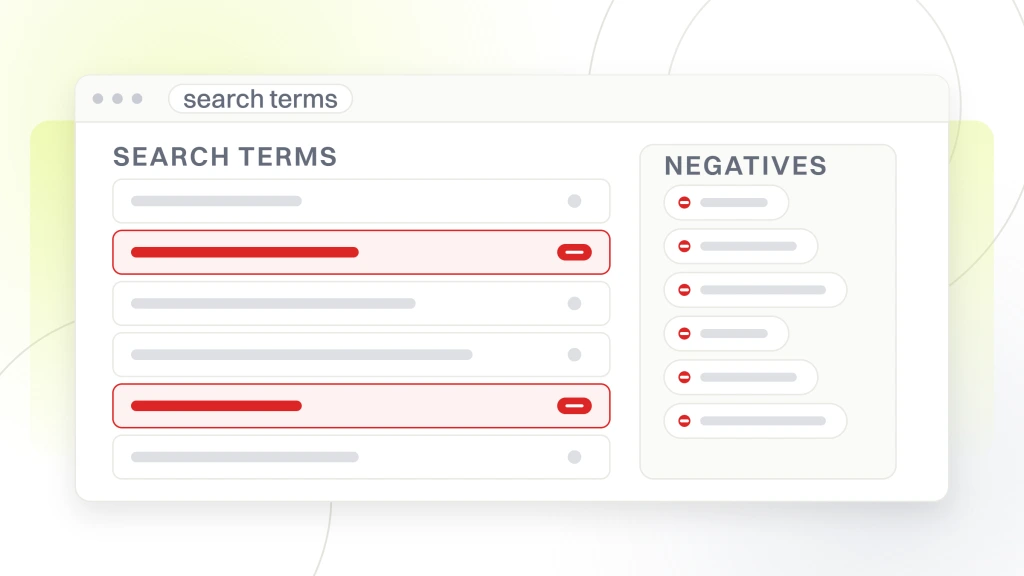
Managed Amazon PPC accounts that run the weekly harvest rhythm typically add 20 to 40 new Manual Exact keywords per month across the account in the first 90 days. That volume slows to 5 to 15 new keywords per month by month 6 as the account exhausts the discovery-stage search terms. Accounts that stop harvesting after month 3 miss 15 to 25% of the incremental profitable keywords the Auto campaigns would have surfaced with continued patience.
Long-tail versus head term profitability
Long-tail keywords (4 plus words like “waterproof running shoes for women size 8”) convert at 12 to 25% ACoS. Head terms (1 to 2 words like “running shoes”) convert at 35 to 65% ACoS on non-branded, non-established products. New Amazon accounts should skip head-term bidding entirely and focus on long-tail keyword harvest until the product has 500 plus reviews. Chasing head-term rank before the product listing has social proof burns budget without producing profitable sales.
The best Amazon PPC account we ever inherited was a garage seller in Ohio who sold custom dog collars. He tracked ACoS in a paper notebook. Every Sunday he wrote down last week’s ACoS by campaign in blue pen. Bad campaigns got a red circle. He turned off any campaign that got two red circles in a row. He moved 400 collars per month at 22% ACoS on a $3,200 monthly ad budget for 3 years running. When we asked what analytics platform he used, he showed us the notebook. His wife had drawn a smiley face on the cover. That was the entire tech stack.
Case study on amazon ppc management services for a home category brand
A home-category brand we work with runs a 40-SKU catalog of storage and organization products on Amazon. They came in at 38% blended ACoS with no brand defense campaign, one Auto campaign running for all SKUs, and no negative-keyword list. We split each product line into an Auto campaign for discovery, three Manual campaigns for match-type control, and a Product Targeting campaign for category defense. Blended ACoS dropped from 38% to 24% in 74 days without lowering ad spend, and monthly ad-attributed revenue rose 32%.
The pattern proves that discipline scales linearly. Weekly harvest. Weekly bid adjustments. Monthly campaign reallocation by ACoS. Quarterly full-funnel review including TACoS trend. The mid-tier brand at $18,000 per month and the solo seller at $2,800 per month run the same rhythm. What differs is the SKU count and the number of campaigns running in parallel, not the shape of the operating model. Brands that copy this cadence get 20 to 35% better ACoS inside 90 days.
The lesson for Amazon sellers considering PPC. Weekly discipline beats brittle automation every time on Amazon accounts. Add a $95 per month Amazon reporting tool. Add 45 minutes per week to pull the search terms reports. Add 60 minutes per month to reallocate budget by ACoS across campaigns. Those three tasks cover the whole Amazon PPC playbook. Everything else is a $299 per month rules engine that produces less than the free 90 minutes of weekly work.
Amazon PPC management software versus manual management
Automation tools (Helium 10, Sellics, Perpetua, Pacvue, Sponsored FBA) handle keyword harvesting, bid adjustments, and negative-keyword pulls. Software runs $79 to $499 per month for solo sellers and $799 to $2,400 per month for brand-tier accounts. The rule of thumb is simple. Software pays back when the account has 15 plus active campaigns and $6,000 plus in monthly ad spend. Below that threshold, manual management with a $79 per month reporting-only tool produces better ACoS at lower total cost.
Amazon PPC experts using software still audit every automated bid change weekly. Unattended software over 30 days produces 20 to 40% worse ACoS than the same account with weekly human review. The value of software is not the automation, it is the reporting. The bid rules are best set by a human operator who knows the product’s margin and life-cycle stage. Practical Ecommerce‘s marketplace coverage tracks the platform trends worth watching.
When to add software to the workflow
Add software at the 15-campaign or $6,000-monthly-spend threshold. Below that, the weekly manual harvest takes 45 to 90 minutes and produces the same result. Above that, the harvest expands to 3 to 5 hours per week manually, which is the point where software pays for itself in operator time saved. Never let software replace the weekly human ACoS review. That review is what keeps the account profitable.
In-house versus amazon ppc management agency
Under $3,500 per month in Amazon ad spend, in-house management usually wins if the seller has 5 plus hours per week protected for it. Between $3,500 and $10,000 per month, the choice depends on whether the internal team has Amazon-specific PPC depth, not just Google Ads depth. Above $10,000 per month, agency management pays back inside 90 days because the Amazon-specific reporting and harvest workload outgrows what a part-time internal marketer can maintain.
Specialist agency retainers charge $1,200 to $4,500 per month for accounts in the small and mid-tier range plus a percentage of ad spend (5 to 12% typical). General PPC agencies without Amazon specialization charge $800 to $2,400 per month but rarely understand the harvest rhythm well enough to produce a better ACoS than the internal alternative. Our PPC management services retainer starts at $999 per month at the Launch tier, scaling to $1,499, $2,499, and from $4,500 per month at Growth, Scale, and Enterprise tiers. Ad spend is billed separately. For DTC brands running both Amazon and Google Shopping, the ecommerce PPC track covers cross-channel budget allocation. The same weekly-negative discipline described here also runs behind our home services Google Ads playbook for job-based verticals.
Reference calls beat case study PDFs
When evaluating an Amazon PPC agency, ask for two reference calls from active Amazon clients on 6-month retainers. Ask the reference how often the agency runs the search terms harvest. Ask what the agency did when a campaign’s ACoS climbed above target for 21 days. Ask whether the seller sees TACoS trend data alongside ACoS in the monthly reporting. Answers under 90 seconds indicate a real operating rhythm. Answers loaded with buzzwords indicate marketing spin.
Common mistakes in amazon ppc management services
Five mistakes cost Amazon accounts 30 to 55% of their productive ad budget. Broad match without daily negative pulls. No brand defense campaign. Head-term bidding on new products without reviews. Ignoring TACoS and chasing only ACoS. Setting weekly budgets and forgetting them mid-week. Any two of the five together burn budget faster than any single mistake, so the fix order matters. Amazon PPC accounts pass or fail on how fast the operator works through this list.
Fix in this order. Add brand defense first, in the same vein as an insurance policy, because it captures existing brand searches at the lowest ACoS in the account. Switch to Manual Phrase and Exact match on the top harvested keywords second, so the biggest budget drain on high-CPC head-terms stops. Add daily negative-keyword pulls on Auto campaigns third. Wire TACoS reporting alongside ACoS fourth. Move to weekly bid adjustments fifth. Sellers that work the list in that order typically halve ACoS on the top campaigns inside 60 days without spending an extra dollar.
- Broad match without daily negatives: Auto campaigns leak budget in 24 hours if the negative list is not refreshed daily
- No brand defense Sponsored Products campaign: competitors steal branded traffic at 10 to 25% discount
- Head-term bidding on new products without reviews: burns budget at 45 to 65% ACoS with no rank payback
- Ignoring TACoS trends and chasing only ACoS: misses whether ad spend grows organic rank at all
- Weekly budget setting with no mid-week checks: lets Auto campaigns exhaust budget on Monday
- Adding Sponsored TV before hitting $50,000 monthly spend: premium format without the pipeline to feed it
- Running Sponsored Brands without brand-registered ASINs: the campaign type is only available with Brand Registry
Why the fix order matters
Brand defense has to go first because it produces the lowest ACoS in the account and every downstream calculation depends on the baseline it sets. Manual match-type promotion stops the biggest budget drain on head terms. Daily negatives on Auto campaigns catch waste inside 24 hours instead of week seven. TACoS reporting reveals whether ad spend produces organic ranking gains. Weekly bid adjustments compound the earlier fixes. Working in a different order leaves incremental profitable sales on the table.
90-day plan for amazon ppc management services
Amazon PPC management services follow a strict 90-day rhythm. Day 1 to 14 sets up brand defense, Auto campaigns per ASIN group, and the reporting stack. Day 15 to 30 runs the first three keyword harvests and promotes the top winners to Manual Exact campaigns. Day 31 to 60 layers on Sponsored Brands for brand-registered sellers, adds Product Targeting campaigns for category defense, and rebuilds the negative-keyword list. Day 61 to 90 tunes bids weekly, reallocates budget by ACoS, and runs the first monthly report comparing ACoS and TACoS against baseline.
Day 90 review compares blended ACoS against day one. Under 15% improvement is a slow start and needs a diagnostic. 15 to 30% improvement is on pace and continues the same rhythm for the next quarter. Above 30% improvement is a strong account with headroom to scale spend 20 to 30%. Amazon-specific coverage from Marketplace Pulse is the outside read worth keeping on hand.
Scaling spend after 90 days
Scale spend 20 to 30% per quarter on accounts hitting target ACoS with impression-share headroom. Faster scaling breaks bid calibration and pushes ACoS up 5 to 10 percentage points before the account absorbs the new spend. Slower scaling leaves qualified demand on the table. Every quarter the account passes target ACoS with room to grow, add 20 to 30% to the monthly budget and monitor blended ACoS during the next quarter. Amazon accounts that scale on a slow, disciplined cadence usually triple monthly spend inside 24 months without ACoS creeping up.
Turn Amazon PPC management services into a durable profit engine
Amazon PPC management services grow real sales when the operator treats ACoS as the primary KPI, harvests keywords weekly from Auto campaigns, promotes winners to Manual Exact, adds losers as negatives, wires brand defense in the first week, and audits ACoS every Monday. Everything else is layers on that foundation. Software helps at 15 plus campaigns and $6,000 plus in monthly spend. Software hurts below that. Reference calls from active clients beat case study PDFs when evaluating an agency. Reference calls also reveal the harvest rhythm the agency runs day to day.
Amazon PPC campaign work is deeply repetitive. Every Friday is the same. Pull the report. Promote the winners. Kill the losers. Adjust bids Monday morning. Do this for 3 years and the account compounds into a real profit center for the brand. Skip the discipline and the account drifts into unprofitable head terms inside 6 months. Amazon PPC work rewards patience. The weekly rhythm pays back in year 2 and year 3, not week 2 and week 3.
Amazon PPC as part of a larger ecommerce funnel
Amazon accounts benefit from tight integration with the seller’s broader ecommerce funnel. Off-Amazon retargeting via Meta Ads and Google Display can bring traffic back to Amazon listings during the launch phase. Google Shopping picks up demand for the same products at cheaper CPC on the seller’s own DTC site. Cross-channel budget allocation is the topic most sellers skip, and it is where the incremental profitable sales usually hide.