The best B2B SaaS PPC agencies do not sell you cheap clicks. They move activation rate, pipeline dollars, and CAC to LTV in a direction the board reads every quarter. This shortlist filters the market down to shops with real SaaS outcomes in the last 12 months.
SaaS paid is a different sport from services paid. The buyer journey runs 90 to 270 days. The activation curve, not the click, is the number the board asks about. Channel weighting shifts heavier toward LinkedIn Ads. A handful of shops have built the muscle to run this specialty at scale. The five to seven names on every serious shortlist are the same because those shops closed real SaaS pipeline loudly enough to publish the numbers.
What separates the best B2B SaaS PPC agencies from generic shops
Four traits every buyer can verify inside a 30 minute discovery call. Named clients in your SaaS vertical the shop can talk about in real detail. A working attribution model that ties paid to CRM stage progression. A media planner with 3 plus years of SaaS accounts on the roster. A pricing model that scales with spend without eating margin at the seed stage. Shops that pass all four are the shortlist. Everything else is a marketing site with a nice hero section.
The trap most SaaS founders fall into is judging shops by logos on the homepage. A shop with 20 SaaS logos and no B2B SaaS marketing case studies ran ads for 20 companies. A shop with 5 published case studies and public pipeline numbers owned the outcome. Weigh case study depth over logo count.
Case study depth over logo grids
Every serious shop publishes 3 to 5 SaaS case studies with real pipeline numbers, CPL benchmarks, and activation curves. Testimonial quotes without numbers are marketing pillow talk. A case study with a starting CPL of $1,936 and an ending CPL of $63 is a shop that ran the account seriously. Read the numbers, not the adjectives.
Named media planner on the account
Ask which team member owns your account and how many other accounts they run. The healthy answer is one senior media planner on 4 to 6 accounts, backed by one associate. The unhealthy answer is a rotating pod of 3 juniors on 12 accounts with the founder popping in monthly. Shops that dodge the staffing question are hiding thin bench depth.
User reviews and how to read them
Reviews on Clutch and G2 give you a first read on fit, but review count matters more than star average. Read the 3 star and 4 star reviews first. Those are where reality shows up. A shop with 60 reviews at 4.8 stars and a handful of honest 3 stars about scope creep is a healthier signal than a shop with 8 reviews at 5.0 stars. Volume plus a real distribution beats a curated 5 star showcase every time.
Read for three signals in each review. Does the reviewer name a pipeline outcome or generic praise. Does the reviewer name the assigned media planner. Does the review discuss working cadence like weekly calls and Slack response time. Reviews that hit all three tell you the shop delivers at a working level. Reviews that stay generic mean the shop collected reviews at contract signing when everyone was happy.
Clutch as the primary source
Clutch runs verified interviews on every review, which makes the platform harder to game than G2 or Google reviews. Filter by service line PPC, industry SaaS, and project size to find the closest fit to your account. Read the 20 most recent reviews per shortlisted shop. Reviews older than 18 months describe a team that no longer exists at most shops because staffing turns over.
Brand reputation signals worth checking
Brand reputation comes down to five checkable signals. Clutch star average with 40 plus reviews. G2 presence with SaaS category case studies. Press coverage in SaaStr, TechCrunch, or Search Engine Land. Public LinkedIn posts by named partners. Reference clients willing to talk on record. Score well across all five and the brand equity is real. Miss two or more and the shop is coasting on founder podcast appearances.
The gap to watch is press coverage without Clutch depth. Shops that score high on public speaking and podcast presence often score low on Clutch review volume. That gap means the founder is out selling on stage while the delivery team ships average work behind the scenes.
Automation Anywhere on enterprise SaaS PPC done right
Automation Anywhere, the global robotic process automation platform serving 2,800 plus enterprise customers, engaged Redefine Web after paying nearly $2,000 per lead on their existing paid stack. Their campaigns chased impression share, lead volume, and awareness at the same time, which produced conflicting internal KPIs across every channel. Their main call to action was a generic contact form competing against rivals offering analyst reports and free trials.
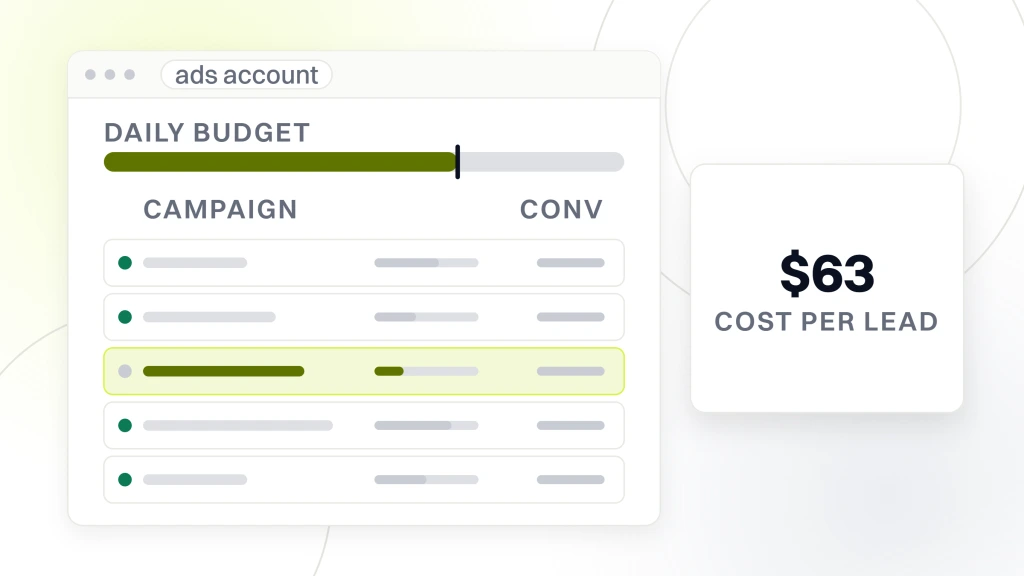
We ran a full strategy audit, separated campaigns by objective, and rebuilt the offer stack around asset gated experiences that matched buyer intent by region. Cost per lead moved from $1,936 to $63, a 97 percent reduction inside the engagement. Customer acquisition scaled 100 times, from 150 monthly to nearly 8,000 monthly leads. Ad impressions climbed 300 percent as global campaigns expanded into new markets on the same efficiency curve.
The lesson from Automation Anywhere
Offer strategy and campaign objective clarity outperform bid optimization on enterprise SaaS every time. Shops that only run keyword and bid work at the enterprise tier will hit a CPL ceiling within 90 days and blame the market. Shops that fix offer stack, audience segmentation, and CRM plumbing keep pushing CPL down for 24 plus months. Pick a shop that talks about offers and CRM wiring on the first call.
Rapyd Financial Network on coordinated fintech SaaS PPC
Rapyd Financial Network, a UK based fintech SaaS in payments and compliance, came in with fragmented marketing spread across three vendors and a CRM that was not talking to the ad platforms. Monthly inbound leads sat around 5. Pipeline attribution was broken. The paid stack was generating clicks the sales team could not tie back to booked meetings or closed revenue.
We consolidated the marketing stack under one plan. HubSpot CRM replaced the fragmented Salesforce plus Zapier setup. Offline conversions wired into Google Ads and LinkedIn Ads. The Google Ads account was restructured around high intent SaaS keywords. LinkedIn Ads targeted decision makers by title and account. Monthly inbound leads tripled to about 15. Pipeline generated hit £1.8 million in inbound value. Organic traffic climbed 5 times year over year.
LinkedIn Ads and demand gen for SaaS accounts
LinkedIn Ads is the dominant channel for B2B SaaS above Series B. The platform’s targeting layer maps directly to ICP definitions the sales team already uses. Job titles, company size, industry, and specific account lists. Shops that run LinkedIn at scale for SaaS use dedicated LinkedIn media planners, publish 3 to 5 new creative variants per week per account, and treat dark social attribution as a first class metric on the reporting deck.
Below $8,000 monthly LinkedIn spend, the platform’s minimum viable data volume is too thin to run a real testing program. LinkedIn works as a brand exposure channel at that spend but not as a pipeline generator. Push spend to $15,000 plus per month before expecting measurable qualified leads. Below that, run LinkedIn as a distribution channel for organic content and use Google Ads for direct response.
Demand gen versus demand capture split
Demand gen sits at the top of the funnel and educates. Demand capture sits at the bottom and closes. SaaS accounts run both at once, split roughly 60 percent demand gen and 40 percent demand capture at Series B and beyond. Shops that only know demand capture underperform on long cycle SaaS deals where buyers spend 6 to 9 months in research mode. Shops that only know demand gen underperform on the quarter close pressure the CRO cares about.
Pricing benchmarks across the market
Pricing scales predictably with monthly ad spend. Under $10,000 spend, expect a flat retainer of $1,600 to $4,500 per month plus the ad budget itself. From $10,000 to $60,000, retainers move to $4,500 to $12,000 per month or 12 to 15 percent of spend. Above $60,000 monthly spend, shops switch to pure percentage of spend at 10 to 12 percent with a strategy fee layered on. Enterprise SaaS above $150,000 monthly spend runs 8 to 10 percent plus a fixed strategy fee.
- Seed to Series A. $1,600 to $4,500 per month retainer plus ad spend.
- Series A to Series B. $4,500 to $12,000 per month or 12 to 15 percent of spend.
- Series B to Series C. 10 to 12 percent of spend plus a $6,000 to $12,000 strategy fee.
- Series C and above. 8 to 10 percent of spend plus a $15,000 to $25,000 strategy fee.
- Onboarding fees. $2,500 to $15,000 depending on account complexity and CRM integrations.
Onboarding scope and first 60 days
Onboarding a SaaS account runs longer than a services account because product analytics wiring takes real engineering time. A proper SaaS onboarding covers account structure build, product analytics integration, CRM offline conversion setup, landing page audit, and a first month test plan. Total scope runs 60 to 100 hours across the agency team and 8 to 20 hours on your engineering side. Any shop that promises to run ads inside 14 days is running a lead gen playbook on a SaaS account.
Attribution and CAC to LTV on the engagement
Attribution is harder on SaaS PPC accounts than services accounts because the sales cycle is long and the buyer touches 8 to 15 channels before converting. Serious shops handle this with a mix of platform attribution, self reported source on the demo form, and CRM stage progression tied to first touch and last touch channel. That triangulation surfaces the paid channel’s real contribution instead of the platform’s dashboard number.
CAC to LTV is the ratio the board reads. Blended CAC across paid channels should sit below one third of LTV for healthy SaaS unit economics. That target holds across most SaaS categories with average revenue per user between $80 and $2,500 monthly. Below the one third threshold, the paid engine is profitable at scale. Above it, the paid engine is losing money at scale. See the Google Ads offline conversion imports doc for setup that keeps the CAC number honest.
Incrementality tests as ground truth
Incrementality tests are the only attribution method that measures the true causal contribution of a paid channel. Pause a channel in a specific geography for 4 to 8 weeks and measure the change in inbound demo requests from that geography. Compare against a control geography where the channel keeps running. The gap is the incremental contribution. If your shop cannot walk you through their methodology on the first call, they are guessing at attribution.
SaaS verticals and best fit shops
Vertical fit matters more than most buyers realize. A fintech SaaS PPC account needs a shop that understands compliance heavy landing pages and long sales cycles. A dev tools SaaS needs a shop that speaks the language of engineers. A vertical SaaS in healthcare needs a shop familiar with HIPAA constraints on remarketing. Match the shop to your vertical and you save 60 to 90 days of learning curve.
Fintech tends to go to Metric Theory, Directive, or Redefine Web. Dev tools to Refine Labs or Roketto. Vertical SaaS in healthcare to Redefine Web or WebFX. HR SaaS to Directive or KlientBoost. MarTech to Directive or Single Grain. Every shortlisted shop should name 2 to 4 clients in your vertical on the first call.
Contract terms and scope worth insisting on
Contracts cluster around 6 month minimums with a 60 day out clause after the first 90 days. Anything shorter than 6 months usually means the shop plans to churn accounts fast. Anything longer than 12 months on a first contract means the shop expects a rough patch and wants to lock margin. Read the exit clause carefully because it determines what you take with you when the engagement ends.
Scope should specify the named media planner and years of SaaS experience, monthly hours committed, reporting cadence and format, ad account ownership, landing page ownership, and creative library ownership. Every one of these belongs in writing. Verbal agreements on account ownership are the fastest way to lose your ad accounts when a relationship breaks down.
Account ownership must sit with you
Every ad account the shop runs on your behalf must sit under a Google Ads Manager account and LinkedIn Ads Manager account that your company owns. Not the agency. This one line protects the ad account history, the historical performance data, and the audience segments you paid to build. Shops that fight this clause are telling you they run a fee extraction playbook.
How to pick your final shortlist among the best B2B SaaS PPC agencies
Interview three shops, one per fit dimension. Pick one specialist for the account structure conversation. Pick one full service shop for the integrated growth conversation. Pick one vertical specialized shop for the industry fit conversation. Three discovery calls at 45 minutes each. Two reference calls per shop. Total time investment is about eight hours across two weeks.
When you are ready to run the paid stack across your SaaS, our PPC management services covers account structure, offline conversion setup, monthly landing page testing, and pipeline tied reporting on a boutique retainer starting at $999 per month. For the deeper decision worksheet, see our how to choose a B2B PPC agency guide and the B2B PPC agency pricing breakdown for fee models across the market today.