You want to read b2b ppc agency reviews on Clutch and the four other directories without wasting a Saturday on 5-star testimonials that read like sales copy. This is the 12-signal filter we run on every shortlist before a first call. Each signal is a specific thing to look for on the review platform, plus what it tells you about the shop’s real delivery quality. Read through in nine minutes and you save the next two weeks of vendor discovery.
B2B PPC agency reviews are a first-pass filter, not a decision. Every review platform has some level of pay-to-play at the top of the rankings. Every shop knows how to game its own review count. Your job is to read past the polish and find the signals that reveal how the shop actually runs. Clutch is stronger than DesignRush on verified interview depth. UpCity is stronger than GoodFirms on local B2B fit. Upwork is a different animal and works only for hourly project work.
Quick proof of stakes. Our own B2B client Automation Anywhere walked in paying $1,936 per lead after 18 months with a prior shop that had glowing Clutch reviews and 4.7 stars. The reviews were 18 months old. The account manager named in them had left. Once we rebuilt the account, cost per lead dropped 97% to $63, customer acquisition scaled 100x, and ad impressions grew 300%. That gap between rosy prose and account reality is what this workflow catches.
Key takeaways
- Recency beats star average. Read the 20 most recent reviews, not the top 20 all-time.
- Named team members are the strongest signal. Same manager across 24 months means stable delivery.
- Cross-check reviewers on LinkedIn. 5 to 8 verifications per shop takes 90 seconds each.
- 90 minutes per shop across five platforms is the cheapest quality gate on a six-figure engagement.
- Turn every review claim into a reference-call question. Hedged answers mean the review overstated by 30 to 50%.
How to read Clutch b2b ppc agency reviews for real signal
Clutch is the highest-signal platform of the five. The verified-interview process pulls detail out of clients that survey forms miss. A verified Clutch review runs 400 to 900 words and names the account manager, working cadence, pipeline outcome, and one thing that broke or got fixed later in the engagement. That last detail is the tell. Shops with reviews that never mention a problem are shops that only publish the ones where nothing went wrong. Real engagements have friction. Reviews that hide friction are curated.
Sort Clutch by date and read the 15 to 20 most recent reviews per shortlisted shop. Ignore star average and focus on 12 signals that repeat across strong reviews. Named account manager, named senior lead, specific pipeline outcome with a number and a window, working cadence in weeks or months, one thing fixed later, reporting cadence, budget range, campaign types run, offer or landing page work described, tools stack named, first result window, and end-state metric versus start-state metric. Shops that score on 8 plus of the 12 across the recent window have real delivery muscle.
Named team members carry the most weight
The single strongest signal on Clutch is repeated naming of the same account manager across a 12 to 24 month window. That naming tells you the shop keeps senior operators on accounts. Shops that rotate managers every quarter score weakly, and account performance follows the rotation. If reviews from 2024 name one manager and reviews from 2025 name three different ones with no overlap, delivery quality drifted during that transition.
Read UpCity b2b ppc agency reviews for local B2B fit
UpCity is stronger than Clutch on local B2B fit. The platform’s B2B category leans toward mid-market service and product companies with regional or national footprints. Read 20 to 30 recent UpCity reviews per shortlisted shop and pattern-match on client vertical, monthly retainer range, and channel mix. UpCity clients skew toward small teams with tight budgets, so retainers under $3,000 per month surface more visibly here than on Clutch.
UpCity’s Excellence Awards signal that a shop invests in the platform relationship, not that the shop delivers better than a non-awarded shop. Treat awards as a directional cue, not a decision. Look for named account managers, retainer range disclosure, and channel mix detail. Reviews naming “Google Ads and LinkedIn Ads” as the mix are stronger than reviews naming only “digital marketing services.” Vagueness on channel mix means the client did not know what they bought.
UpCity retainer disclosure patterns
Roughly half of UpCity reviews disclose the monthly retainer range. A shop with reviews clustering at $1,500 to $3,000 per month is running a small-account book. A shop with reviews clustering at $5,000 to $12,000 per month is running a mid-market book. Match the retainer range to your own budget and you avoid the misfit of hiring a small-account shop on a $15,000 monthly need.
Callout. If a shop has zero DesignRush reviews and 40 Clutch reviews, that is not a red flag. Some shops skip DesignRush deliberately and put their reputation ops into Clutch only.
Read DesignRush b2b ppc agency reviews for cross-reference
DesignRush is a directory-plus-reviews hybrid. Placement in top categories is often influenced by directory fees, so treat category rankings as a paid signal. The individual reviews are still worth reading. DesignRush review volume per shop typically runs 10 to 30. Read every recent review on the shortlisted shop and pattern-match against the Clutch read. If DesignRush reviews contradict Clutch reviews on account manager names or working cadence, that contradiction is the signal to probe on the discovery call.
DesignRush is best used as a category cross-reference. If a shop ranks well in the B2B PPC category on DesignRush and also has strong Clutch reviews, that overlap confirms a real reputation. If a shop ranks well only on DesignRush and has thin Clutch reviews, the DesignRush rank is a paid placement, not a quality signal.
DesignRush category rank versus organic review volume
Category rank on DesignRush tells you the shop paid for placement. Review volume tells you the shop generated reviews from real clients. A shop ranking at position 3 with 8 reviews paid for placement. A shop ranking at position 12 with 40 reviews earned the reviews. The second shop is the one to probe deeper on. Rankings drift on payment cycles. Review counts do not.
Read GoodFirms b2b ppc agency reviews as supplementary volume
GoodFirms is the lowest-signal platform of the five. Review counts are typically thin. The verification step is lighter than Clutch’s. The industry focus tilts toward development and IT services more than marketing agencies. Use GoodFirms as a supplementary cross-reference. If a shop has strong reviews on Clutch and UpCity but zero presence on GoodFirms, that is not a red flag. It is a signal that the shop does not invest in that platform.
When a shop does have GoodFirms reviews, read for the same 12 signals you use on Clutch. Named account manager. Specific pipeline outcome. Working cadence detail. Reference to what was fixed later. GoodFirms reviews are typically shorter than Clutch reviews, which means fewer signals per review. Read more reviews to compensate. 30 to 40 GoodFirms reviews are worth about the same as 15 Clutch reviews for pattern recognition.
Callout. If 43 of 47 Clutch reviews name the same account manager and that person’s LinkedIn shows they left 8 months ago, walk away. The shop is selling a team member who is not on the account.
Read Upwork b2b ppc agency reviews for hourly scope only
Upwork is a different animal from the other four. Upwork is a freelance and hourly project marketplace, not a B2B agency review platform. Use Upwork reviews only if you are considering a fixed-scope PPC project. For ongoing retainer engagements, Upwork reviews are the wrong signal source.
Job Success Score on Upwork is the closest analog to a review-based reputation metric. A JSS above 95% indicates consistent client outcomes. Total earnings on the platform indicate scale. Read for pattern. Does the shop deliver on media buying projects, or only on setup and audit work? A shop with strong setup reviews but weak media buying reviews is telling you where the depth actually sits.
Upwork Job Success Score reading
A JSS below 90% on an agency profile is a red flag for freelance work. Above 95% is the threshold for consistent delivery. Between 90 and 95 is a gray zone that requires reading the specific reviews to interpret. Check whether low-scoring reviews cluster around a service line. A shop with weak reviews on ongoing management but strong reviews on setup work should be hired for setup only.
Cross-platform triangulation across five review sites
The strongest read on any shop comes from triangulating b2b ppc agency reviews across all five platforms. Shops with strong Clutch reviews plus strong UpCity plus decent DesignRush plus some GoodFirms presence plus a healthy Upwork JSS are the shops running a real business at scale. Shops with reviews concentrated on only one platform focused reputation marketing on one place. That may still be a real shop, but the concentration is a signal to probe.
| Platform | Signal strength | Best for | Read count target |
|---|---|---|---|
| Clutch | Highest | Verified B2B agency reviews | 15 to 20 recent |
| UpCity | Medium | Local B2B fit | 20 to 30 |
| DesignRush | Medium | Category cross-reference | 10 to 15 |
| GoodFirms | Low | Supplementary volume | 30 to 40 |
| Upwork | Project-scoped | Fixed-scope hourly work | All relevant projects |
Concentrated review pattern
Shops with reviews concentrated only on one platform, most often only on DesignRush or only on GoodFirms, focused reputation marketing on one place. Read those reviews with extra caution. Look for platform-specific incentives like a directory listing tied to review submission. Ask on the discovery call how the shop generates reviews and how they select which platforms to prioritize. Honest shops explain the reputation strategy without dodging.
Automation Anywhere case study on reading b2b ppc agency reviews
Automation Anywhere, a Robotic Process Automation platform serving 2,800 companies and 1,600 enterprise brands, came to us after 18 months with an agency that had strong-looking Clutch reviews on the surface. Cost per lead sat at $1,936. Global campaigns ran in English only. The main call to action was a plain contact form. On paper, the prior agency looked great. On the account, delivery had drifted.
The pattern showed up on Clutch if you knew what to look for. Named team members in older reviews were absent from newer reviews. Working cadence descriptions in newer reviews were vaguer than in older ones. Specific pipeline outcomes cited in older reviews gave way to generic praise in newer ones. Every one of those signals is a lagging indicator of delivery drift. The rebuild that followed cut cost per lead 97% from $1,936 to $63, scaled customer acquisition 100x from 150 per month to nearly 8,000 leads monthly, and grew ad impressions 300% across key global markets.
The lesson from Automation Anywhere on review reading
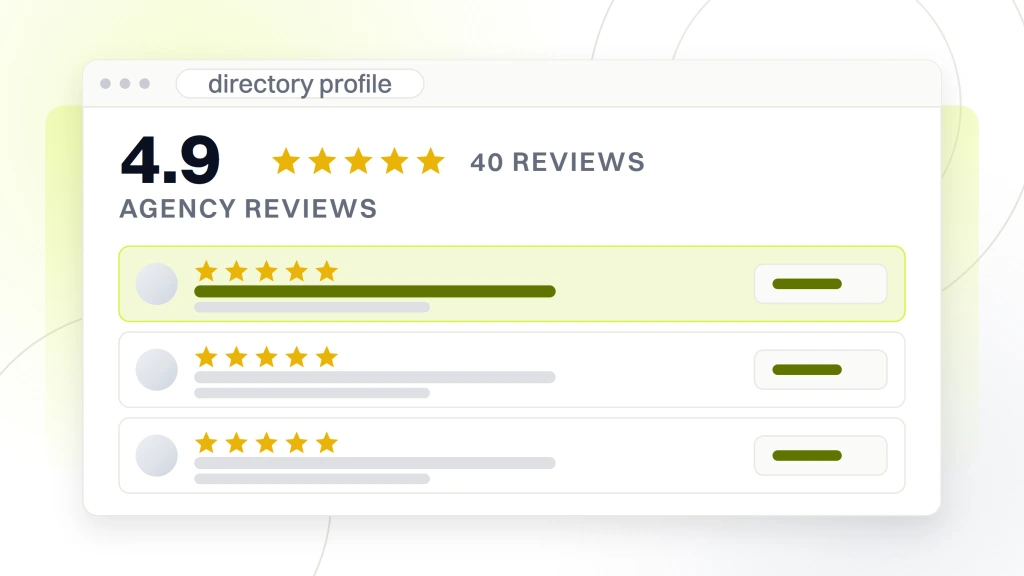
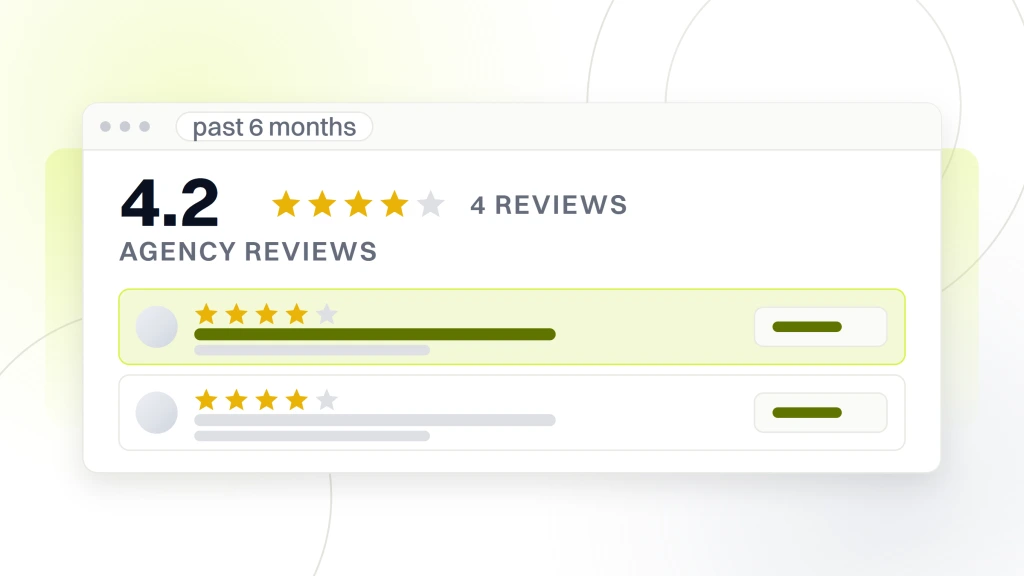
Read the 20 most recent reviews, not the top 20 all-time. Recency is the single strongest quality signal on a review platform. A shop with 40 reviews at 4.9 stars from 3 years ago and 4 reviews at 4.2 stars from the past 6 months is a shop in decline. The star average hides the trend. The recent volume and quality reveal it. Sort by date, read the last 12 months, and delivery drift shows up clearly.
Team continuity across the review window
Track named team members across a 24-month review window. Reviewers who name the same account manager over multiple years signal a stable hire. Reviewers who name different account managers each quarter signal a rotating pod or high turnover. Team continuity correlates directly with account delivery quality on B2B PPC engagements. That continuity is worth a 15 to 20% premium on the retainer.
Red flags that show up in b2b ppc agency reviews
Certain patterns repeat across all five platforms and always signal a shop worth skipping. Reviews that all sound like they were written by the same person tell you the shop coached the review requests. Reviews that never mention a specific outcome tell you the shop harvests reviews at contract-signing time. Reviews with identical timestamps within a 48-hour window tell you the shop ran a review request campaign. Any one of these is a signal to move on.
- Reviews written in identical prose style across multiple entries. Coached submissions.
- Zero negative or improvement-suggestion reviews. Filtered submissions.
- Reviews clustered in a 48-hour window. Batched submission campaign.
- All reviews cite the same three services in the same order. Templated form.
- No response from the agency on any review. Shop does not monitor reviews.
- Reviewer identities that cannot be verified on LinkedIn. Potentially fabricated.
- Review count that spiked in one quarter and flatlined. End-of-quarter push.
Reviewer identity verification on LinkedIn
Pull the reviewer name from any Clutch review and search LinkedIn. Match the person’s title, company, and tenure against the review’s claims. Reviewer identities that do not surface on LinkedIn are potentially fabricated or use pseudonyms. This verification takes about 90 seconds per review. Run it on 5 to 8 reviews per shortlisted shop and the pattern of legitimacy becomes clear.
The 90-minute b2b ppc agency reviews workflow
Time-box the review reading. Ninety minutes per shortlisted shop gets you a solid read across all five platforms. Twenty minutes on Clutch reading the 15 most recent reviews. Fifteen minutes on UpCity reading the 20 most recent reviews. Ten minutes on DesignRush reading 10 to 15 reviews. Fifteen minutes on GoodFirms reading 30 to 40 reviews. Fifteen minutes on Upwork checking JSS and top job reviews. Fifteen minutes cross-referencing named team members and pipeline outcomes across all five platforms.
Ninety minutes per shop times three shortlisted shops equals four and a half hours of review reading. That is the cheapest quality gate you can put on a six-figure paid engagement decision. Skip the workflow and you rely on gut feel from the discovery call. Gut feel is fine for personality fit but useless for predicting delivery quality on a 12-month engagement. Do the reading. See the Google Ads offline conversion imports doc for the attribution setup.
Combine b2b ppc agency reviews with reference calls
B2B PPC agency reviews are the first-pass filter. Reference calls are the second-pass confirmation. Use reviews to select the 3 shops to interview. Use reference calls to confirm the reviews were honest. Ask the shop for 2 references per shortlisted engagement. One client 12 plus months in, one client under 6 months in. Ask the specific questions the reviews raised on the platform. See our how to choose a B2B PPC agency guide for the full reference call worksheet.
Reference hedging as a red flag
Reference clients who hedge on specific questions are telling you the review claims were rosier than reality. Hedging looks like. “Well, the number was more like 20% than 30%” or “The weekly calls happened at first, but now it is more like biweekly.” Both of those are red flags. The shop overstated on the review platform. That overstatement pattern will repeat on your account. Trust the hedge. Discount the review by 30 to 50% when you hear it.
Pattern matching and shortlist selection
After 90 minutes of b2b ppc agency reviews per shop across five platforms, you have enough signal to select your final three-shop shortlist. Score each shop on the 12 signals plus the red flag checklist. Shops with 8 plus of the 12 signals present and no red flags move to the interview round. Shops with 5 to 7 signals and one red flag stay in the maybe pile. Shops with fewer than 5 signals or two plus red flags drop off the list.
When you are ready to run the paid stack across your business, our PPC management services cover account structure, offline conversion setup, and pipeline-tied reporting on a boutique retainer starting at $999 per month. For the shortlist itself, see our 17 best B2B PPC agencies breakdown and the B2B PPC agency pricing guide for the fee models across the market.
Turn b2b ppc agency reviews into a shortlist that converts
Read past the polish. Score each shop on the 12 signals across five platforms in 90 minutes. Cut the shortlist to three. Turn every review claim into a reference-call question. That workflow catches the delivery drift the star average hides, and it produces a shortlist that converts on the pitch. When you are ready to run a paid stack that reports on pipeline, not clicks, our PPC management services handle account structure, offline conversion setup, and weekly reporting on a boutique retainer starting at $999 per month.