The best SaaS PPC agencies in 2026 connect every ad dollar back to trial-to-paid conversion, customer lifetime value, and MRR. Not impressions. Not raw form fills. Not top-of-funnel MQLs that stall before activation. If a paid team can’t show you a live view of MRR sourced from each campaign, keyword group, and creative test, you’re paying a media buyer, not a growth partner. This guide ranks the best SaaS PPC agencies by the numbers that decide whether a subscription business scales profitably or drains runway inside Google Ads.
You’re probably here since your last agency piled on lead volume and wrecked CAC payback. Or your founder-led paid program stalled at $40k monthly spend and you need someone who has already run a $250k monthly budget on a SaaS account. Either way, the shortlist filters, interview questions, pricing bands, and red flags below will cut your search from 40 candidates down to 6 in about 90 minutes. Save the questions in the last section. Bring them to every intro call.
What defines the best SaaS PPC agencies in 2026
The best SaaS PPC agencies in 2026 share four traits. They report against MRR and trial-to-paid, not just cost per lead. They keep clients past the 18-month mark. They price for outcomes with named scope. And they can explain the math behind a bid change without a slide. Any shop missing one of the four is not on the shortlist.
What separates a top SaaS PPC agency from a generic B2B paid shop is a working model of the subscription economy. They know CAC payback matters more than raw CAC. They know a $180 cost per lead on a 14-day free trial is a completely different animal from a $180 cost per lead on a demo request funnel. They know net revenue retention decides whether a paid channel is worth scaling at all. If the agency you’re interviewing still counts trial signups and whitepaper downloads as equal conversions inside the Google Ads UI, you’re talking to a vendor, not a growth partner. You want a team that fires conversion events into the CRM at trial-to-paid, not at first form fill.
Trial-to-paid attribution over form fills
Trial-to-paid attribution means the agency can show sourced trials, activated trials, and converted paid subscribers from each campaign and keyword group. Form fills are a leading indicator, useful for early optimization. Paid conversions are the number your CFO cares about. The best ppc agencies for saas trial to paid conversion 2025 build server-side conversion tracking that fires the paid event back to Google Ads and LinkedIn Ads, so the platforms optimize for revenue not signups. Ask any agency on your shortlist how they close that loop. If the answer involves manual CSV uploads once a month, they can’t bid for revenue in real time.
MRR and LTV inside the dashboard
MRR sourced by campaign and LTV forecast by cohort are the two views the best ppc agencies for saas customer lifetime value keep live in a dashboard, not in a monthly PDF. Sourced MRR tells you which channels earn their spend. LTV forecast tells you how long the payback takes. Without both, the agency is optimizing for cost per lead against a moving target and calling it success. If the intro call can’t include a redacted screen share of a live MRR-by-campaign view, that is your answer on how mature the reporting really is.
Best PPC agencies for SaaS metrics and MRR reporting
The best ppc agencies for saas metrics and mrr build reporting stacks that stitch ad platform data, CRM opportunity data, and billing data into one dashboard. The dashboard shows spend, trials, paid conversions, MRR, LTV cohort, and payback period by campaign, keyword group, and audience segment. Anything less is a partial view.
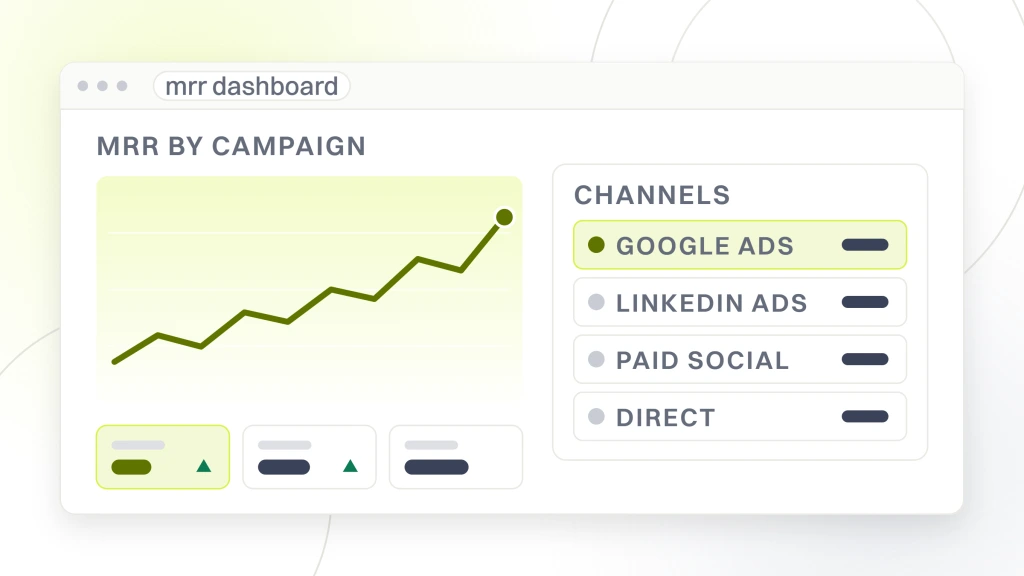
Reporting maturity is the single strongest signal on an intro call. Agencies that send a Google Sheet snapshot on day 90 will still be sending a Google Sheet on day 900. Agencies that stand up a Looker Studio or HubSpot dashboard tied to Stripe and Chargebee inside the first 30 days are the ones that can defend budget increases with a clean payback story. Ask the shortlisted agencies which billing platforms they’ve integrated before, and how many hours the integration usually takes. Real answers include specific tools. Vague answers say they’ve never done it.
The reporting stack that holds up
A working reporting stack for a SaaS PPC engagement uses the CRM as the source of truth, ad platform APIs for spend and impressions, product analytics like Amplitude or Mixpanel for activation events, and a warehouse or Looker Studio layer to join the pieces. Skip that stitch and the attribution collapses to last click, so the team optimizes toward whatever converts fastest instead of whatever produces retained revenue. The best saas ppc marketing agencies 2025 stand this stack up before spend crosses $30k monthly.
Cohort reporting for LTV forecasting
Cohort reporting groups paid conversions by acquisition month and tracks their MRR curve over 12 to 24 months. That curve tells you whether a channel produces sticky clients or churn-prone ones. A cheap cost per acquisition on a channel that churns at month three is more expensive than a higher CAC on a channel that retains for 24 months. Cohort reporting reveals that math. Ask any agency on your shortlist to show a cohort curve from a real account, even redacted. If they can’t produce one, they aren’t thinking about LTV, only about acquisition cost.
Best PPC agencies for B2B SaaS companies
The best ppc agencies for B2B SaaS companies specialize by buyer motion. Some run demo-request funnels for enterprise deals with 90-day sales cycles. Some run free-trial funnels for product-led SaaS. Some run hybrid funnels for mid-market SaaS with both motions live. Match the agency wheelhouse to your buyer motion, not to the industry claim.
Buyer motion decides tactics more than vertical does. Enterprise demo funnels need long-cycle LinkedIn Ads with account-based targeting and multi-touch sequencing. Product-led free-trial funnels need Google Ads on high-intent keywords with server-side trial-to-paid events firing back to the platform. A shop that does one motion well usually does the other one poorly, since the optimization loops are different. When you interview, ask how many active accounts they run in your motion right now. If the answer is one, keep looking. If the answer is five, take the meeting seriously. Our SaaS PPC services engagement covers what that split looks like across a mid-market client roster.
Demo-request funnels for enterprise SaaS
Demo-request PPC funnels for enterprise SaaS live mostly on LinkedIn Ads and Google Ads on category terms plus competitor bidding. Cost per demo runs $220 to $650 depending on ICP and geography. The best paid shops layer account-based targeting on top, so ad exposure focuses on the 400 or 1,200 named accounts sales is already working. Ask about matched-audience workflows, list ingestion cadence, and how the agency coordinates with SDR outreach. If the paid team doesn’t talk to the SDR team weekly, the funnel loses intent between the ad click and the SDR call.
Free-trial funnels for product-led SaaS
Free-trial PPC funnels for product-led SaaS live on Google Ads for high-intent search terms and on paid social for lookalike expansion. Cost per trial for a self-serve SaaS runs $30 to $120. The math that decides success is trial-to-paid rate, which usually sits in the 8 to 22 percent band for well-optimized funnels. If the agency you are interviewing can’t quote that number for at least three of their current accounts, they aren’t measuring the metric that matters. Trial-to-paid rate is the single biggest lever on unit economics.
Top SaaS PPC agencies and the shortlist filters
The top saas ppc agencies survive four shortlist filters. They have named SaaS clients past $5 million ARR. They report on MRR and trial-to-paid. They can walk through a case study without slides. And they answer the failure question honestly. Anything less is a vendor pretending to be a partner.
Shortlist filters for the best saas ppc agencies exist to save time. Every founder we talk to has done the exhausting 12-agency RFP and come out no closer to a decision. The four filters above cut a list of 40 candidates to 6 or 7 in about 90 minutes of research. Rank those 6 on the interview questions in the next section, and the winner is usually obvious by the third call. If two agencies score close, hire the one whose account operator you’d want to work with for 18 months. The relationship compounds.
Named references and case walk-throughs
Ask for three named SaaS references that grew MRR through paid in the last 12 months. Not testimonials on the website. Real references you can call this week. If the agency deflects or takes two weeks to schedule, that is your answer on how their calendar runs. Top saas ppc agencies have clients who will take the call, since those clients are seeing results and know the agency needs the reference to grow. Reference friction is a real signal.
Live dashboard walk-through
Ask the shortlisted agencies to screen-share a live client dashboard. Redacted account names are fine. What you want to see is the depth of segmentation, the reporting cadence, and how much of the dashboard is real-time versus manually stitched. A shop pasting screenshots into PowerPoint is a shop that reports late and reports thin. A shop with a live Looker Studio segmented by campaign, keyword group, and sales stage is a shop that runs on data. The difference shows up in month three of your engagement, when the first bid change decision has to be defended with numbers.
SaaS PPC agency pricing bands without hidden costs
Redefine Web publishes flat SaaS PPC retainer bands so buyers can compare apples to apples: $999/mo, $1,499/mo, $2,499/mo, or from $4,500/mo for the scaled tier. Ad spend is billed separately at cost, no percentage-of-spend mark-up. Any structure that hides the mark-up in the retainer is opaque by design.
Pricing bands tell you what you are buying, not what you are paying. A retainer at Agency A might buy a senior operator running one channel. The same retainer at Agency B might buy a mid-level team running three channels shallowly. Neither is inherently right. Which one you need depends on where your SaaS bleeds efficiency right now. If your Google Ads account is a mess and your LinkedIn is untouched, the single-channel operator wins. If you have decent execution everywhere and need pattern-matching across channels, the multi-channel team wins. Read the scope, not the retainer.
| Retainer band | What you get | Best fit stage |
|---|---|---|
| $999 per month | Foundation. One paid channel, monthly reporting, focused optimization | Seed, first paid channel launch |
| $1,499 per month | Growth. Two channels, biweekly reporting, landing page tests | Seed to Series A |
| $2,499 per month | Scale. Three channels, live dashboards, weekly optimization, CRM-tied MRR reporting | Series A to B, mid-market SaaS |
| Starts at $4,500 per month | Enterprise. Named team, full paid mix, custom analytics, dedicated channel leads | Series B and up, category-creation SaaS |
| Percentage-of-spend only | Incentives skewed toward bigger budgets, thin operational retainer | Rarely the right fit for SaaS |
Flat fee versus percentage-of-spend
Flat monthly retainers align agency incentives with your outcome. Percentage-of-spend models align agency incentives with your budget, which drifts the recommendation toward always spending more. For a SaaS between $30k and $300k monthly ad spend, a flat retainer is almost always cleaner. Above $300k monthly ad spend, hybrid retainers with a base plus a small percentage above a threshold work well. Below $30k monthly ad spend, a flat retainer is the only structure that keeps the math honest for both sides.
Media spend billing and mark-up transparency
Media spend billing should be transparent. Some agencies mark up the spend by 10 to 20 percent as a media buying fee. Others bill at cost and cover operational overhead in the retainer. The second model is cleaner. If your agency wants a mark-up plus a retainer, ask what the mark-up pays for that the retainer does not. If the answer is vague, negotiate the mark-up down toward zero and move the difference into the retainer as a defined scope line item.
Best PPC management companies for SaaS businesses 2026
The best ppc management companies for saas businesses 2025 operate as extensions of your growth team, not as external vendors. They join your Slack, attend your growth standups, and know your product roadmap. Weekly cadence, monthly strategy, quarterly re-scope. Anything looser and you will be surprised at the QBR.
The operational shape of the best ppc management companies for saas businesses looks the same across the shortlist. A weekly working session with the growth lead. A monthly strategy review with the CMO or founder. A quarterly business review with pipeline math, LTV cohort curves, and a rescope proposal. Anything less structured and the engagement drifts. Ask about cadence directly during the intro call. Real agencies volunteer their working rhythm. Vendors keep it vague.
Weekly working sessions over monthly reporting
Weekly working sessions with your growth lead are the operational unit that decides whether an engagement compounds or stalls. Monthly-only reporting means the agency runs on autopilot for three weeks out of four. Weekly working sessions mean bid changes get reviewed the same week, creative rotates on cadence, and landing pages get updated when the data says to. If your agency only wants to meet monthly, they are treating your account as steady state instead of as active growth. That is fine for a mature enterprise SaaS. It is wrong for anything under $10 million ARR.
Roadmap access as a signal of maturity
The best ppc management companies for saas businesses 2025 want access to your product roadmap. They want to know which feature ships next month, since that changes their creative and their landing page tests. If your agency has never asked about the roadmap after 90 days, they are running paid in a bubble. Give them the roadmap. Ask them what they will do differently with it. Their answer tells you whether they think about product-marketing alignment or only about media buying.
Leading SaaS PPC agencies and their proof of work
Leading SaaS PPC agencies show proof of work in three shapes. Numbers with source data, not screenshots. Client references who confirm the numbers on a call. And an operational walk-through of how the numbers were produced, run by the operator who did the work in the account, not the AE who owned the pitch.
Proof of work matters more in SaaS PPC than in almost any other category, since ad-account screenshots are the easiest thing in marketing to fake. Case studies get ghost-written by contractors who never touched the account. Awards get bought. What you can’t fake is a live account walk-through with the operator who ran the campaign, plus a reference call with the client who paid for it. Insist on both before signing anything. The friction the agency shows around either request tells you a lot about what the engagement will feel like at month six.
Automation Anywhere CPL restructure pattern
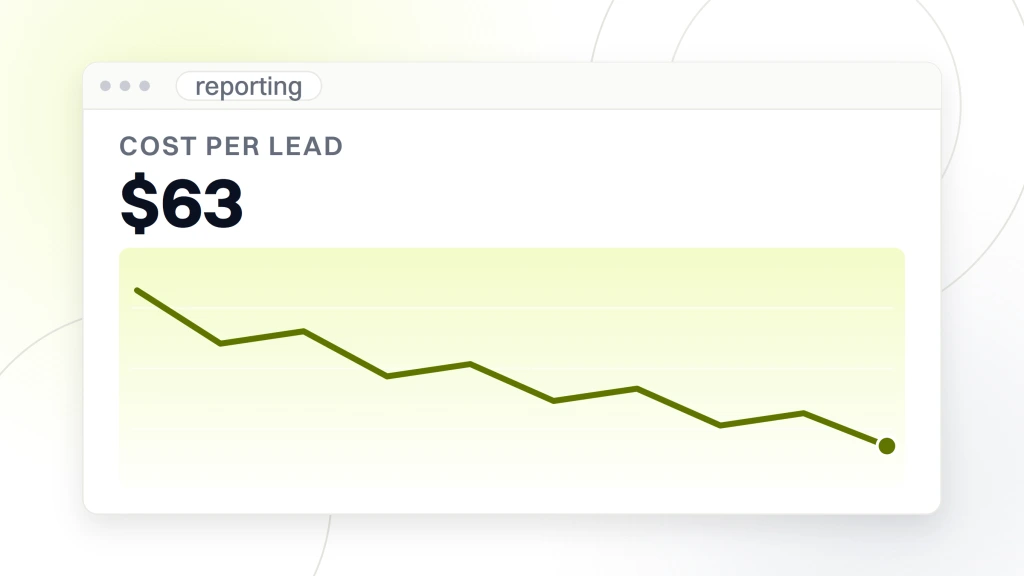
Automation Anywhere came to Redefine Web paying $1,936 per lead with campaigns chasing three conflicting KPIs at once. We ran an audit-led restructure that split campaigns by goal, rebuilt landing pages with pain-point copy, introduced a free-trial offer to compete against analyst reports, and shifted bid strategy from rank to cost-efficiency. Cost per lead dropped 97 percent to $63. Customer acquisition scaled 100x, from 150 monthly to nearly 8,000 monthly leads. Ad impressions grew 300 percent. That kind of number pattern, source-linked and reference-verified, is what proof of work looks like when the agency is real.
Rocket Software activation and launch pattern
Rocket Software, a subscription tool built to help website owners grow subscriber count, came in with a short runway, weak drip campaigns, funnel gaps, and unoptimized pricing. We rebuilt onboarding to shorten time-to-WOW, layered ConvertKit drip automation for retention, and ran a coordinated 4-channel launch across email, social, paid, and influencer. Activation rate climbed 300 percent inside 30 days. The launch pulled 3,000 clients in week one. Post-launch, the product held a steady 400+ new subscribers per day. Named case work like this, with the mechanic and the numbers together, is the proof pattern top saas ppc agencies show on demand.
Rapyd Financial Network inbound rebuild pattern
Rapyd Financial Network, a fintech SaaS in payments and compliance, had a fragmented in-house program pulling roughly 5 inbound leads per month. We ran a done-for-you inbound transformation: custom WordPress redesign, HubSpot CRM replacing a Zapier-Salesforce patch, Google Ads restructure toward high-intent SaaS keywords, LinkedIn Ads on B2B decision-makers, and SEO plus gated content. Inbound leads tripled. Pipeline crossed £1.8 million. Organic traffic grew 5x. When you interview leading SaaS PPC agencies, ask for a case where paid, CRM, and content moved together. If the answer is only paid, they are only doing paid.
Reference calls that connect on the first try
Reference calls with named clients happen fast when the agency has willing references and happen slowly when they do not. Two-day scheduling turnaround is normal. Two-week turnaround with reschedules is a signal about how the agency runs its own operations. When the call happens, ask the client three questions. What did the agency do differently in month two versus month six. What did they miss. What would the client change about the working relationship. Honest answers on all three tell you the reference is real, not coached.
Best SaaS PPC agency versus a general PPC agency
A best saas ppc agency understands subscription economics. A general PPC agency understands click-based optimization. Both can run Google Ads. Only one can defend a bid change against a payback-period argument. For a SaaS business, the difference is 12 months of runway.
The general PPC agency will hit your target cost per lead. What they will miss is that the leads they hit the target on churn at 40 percent inside month three, which torches the LTV math your CFO built the growth model around. A SaaS-specialized paid team optimizes for retained subscribers, not for form fills. That specialization shows up in three places. Bid strategy. Landing page copy that filters out the wrong-fit trials before they signup. And offline conversion imports that fire the paid event back to Google when the trial converts to paid, not when the signup happens.
Bid strategy tuned to LTV
Bid strategy for a SaaS should optimize toward LTV-weighted conversions, not raw signup counts. That means paid conversions in the ad platform have to represent expected revenue, not just a form completion. Value-based bidding on Google Ads works when the offline conversion import fires with a dollar value tied to expected LTV cohort. Without that pipe, the algorithm optimizes toward whatever keyword produces the most form fills at the lowest cost, which usually is not the same keyword that produces the most retained subscribers. Ask any shortlisted agency to explain their value-based bidding setup. If they never use the phrase, they have not built the pipe.
Landing page filtering to protect trial quality
Landing pages for a SaaS trial funnel need to filter out wrong-fit clicks before they hit the signup form. Headline copy names the target buyer. Sub-headline copy pins the use case. A mandatory work-email field with domain validation kills consumer signups. A screening question above the form filters for company size or role. The filtering costs you some raw signups. What you get back is a higher trial-to-paid rate, and that number decides whether the channel is viable at all. General PPC agencies rarely think about landing page filtering, since they optimize toward form fills instead of retained revenue.
Red flags across all best SaaS PPC agency shortlists
Every SaaS PPC agency shortlist round produces the same red flags. Cost per lead as the headline KPI. Vague scope. Unnamed teams. No client references. Pricing without a plan behind it. Any two of these together is a strong reason to move on.
Red flags are usually visible in the first 30 minutes of an intro call. The pattern below is the one we see repeatedly across founders who share bad agency stories. Save yourself the 12 months by walking away when any two of these show up in the same conversation. The agency that gives you clean answers on all six is worth a second interview. The agency that dodges four of the six is not worth the follow-up email.
- Cost per lead led every case study, with no mention of trial-to-paid or MRR
- Scope written in marketing language instead of deliverable counts and SLAs
- Named team refuses to reveal seniority or prior SaaS account experience
- References are testimonials on the website, never live phone calls
- Dashboards shown as screenshots in slides, never in a live share
- Pricing is one flat number with no linkage to scope, team, or media budget
Vague scope as the biggest predictor of a bad engagement
Vague scope is the single biggest predictor of a bad SaaS PPC engagement. It lets the agency quietly cut output when their margin gets tight. It lets you argue at every QBR about what was really delivered. Insist on scope written in deliverable counts. Two paid channels managed at a named cadence. Six new ad variants per month per channel. Four landing page tests per quarter. Weekly campaign optimization logged in a shared doc. Monthly LTV cohort review with the growth team. When the scope reads like a service level agreement, the engagement stays clean and the QBRs stay boring.
The wrong headline KPI in the pitch
If cost per lead is the biggest number on the agency’s pitch deck, they will report against cost per lead for 12 straight months. Cost per lead is the wrong headline KPI for a SaaS. Trial-to-paid rate, sourced MRR, and payback period are the numbers a SaaS growth team lives against. The best saas ppc agencies open pitch decks with those three metrics, not with cost per lead. If none of them appear in the pitch, ask why. The answer usually reveals whether the agency has ever reported against MRR for a real client, or only heard the words on Twitter. For deeper reading on how to structure a SaaS PPC strategy, see the strategy guide.
Find the top SaaS PPC agencies through the right filters
To find the top saas ppc agencies, run four filters. Named SaaS clients past $5M ARR in your buyer motion. Live MRR reporting in their dashboards. A named team of at least three operators on the account. And references that answer the phone in 48 hours. Everything else is packaging.
The finding process is usually the wrong shape at most SaaS companies. Founders start on Clutch, work through the top 20, book intro calls with 12, and get exhausted before the third meeting. Reverse the order. Write your four filters, apply them to 40 candidates, get to 6 in one focused afternoon, then run structured 45-minute intro calls with each. The intro call carries a scorecard tied to the four filters plus the 12 interview questions in the next section. The winner shows up in the scoring, not in the vibe.
Where to source the initial list of 40
Source the initial list from three places. Peer founders in your funding cohort, filtered to those who spent more than $500k on paid in the last 12 months. Directory listings like Clutch and G2, filtered to agencies with named SaaS case studies. And LinkedIn searches for growth marketers who left in-house SaaS roles for agency roles, since those operators concentrate at the agencies worth interviewing. Cross-reference the three sources. Agencies that show up on two of the three lists are the ones to interview.
The scorecard for the intro calls
The scorecard for the intro calls should have the four filters at the top, the 12 interview questions in the middle, and a free-text field at the bottom for gut-feel notes. Score each answer 1 to 5. Sum the scores. Rank the six agencies. The top two scorers get the second interview and the reference call. The others get a polite decline. Structured scoring cuts through the pitch charisma that trips up unstructured selection. The agency with the best slides is rarely the agency with the best operators.
Questions to ask on every intro call with a top SaaS PPC agency
The intro call decides more than the pitch deck does. Ask questions that make the agency reveal operational depth, reporting maturity, and honesty about weakness. 12 questions, 90 minutes, real signal.
The questions below are the ones we use ourselves when we vet growth partners. They’re ordered easiest to hardest, which surfaces the agency’s comfort level under pressure. A confident agency answers all 12 without deflecting. A struggling agency starts deflecting on the last four. The questions about failures and about MRR reporting are the most diagnostic. Any agency that claims to have no recent failure has stopped trying new things. Any agency that can’t demo a live MRR view has never truly reported against MRR.
- What is the median client tenure on your active SaaS roster right now
- Show me a live client dashboard with MRR sourced by campaign, redaction is fine
- What is the trial-to-paid rate on your top three active SaaS accounts
- Who runs my account by name and what is their prior SaaS PPC experience
- How do you handle account team continuity when someone leaves
- Walk me through your first 30-day reporting cadence and stack
- What was your most recent SaaS client failure and what did you change after
- How does your pricing tie to scope, team size, and media budget
- How do you charge for media spend and what is the mark-up structure
- Who owns the ad account, creative files, and conversion data at engagement end
- What is your termination clause and notice period
- Which three named SaaS references can I call this week
The MRR reporting question is the most diagnostic
The MRR reporting question separates the specialists from the generalists inside 60 seconds. A SaaS PPC specialist demos a live view of sourced MRR by campaign, with an LTV cohort curve underneath. A generalist explains what MRR is and offers to build a report inside 90 days. The gap between those two answers is the gap between a compound-return engagement and a wasted year. Ask the question early in the intro call. The answer tells you whether the rest of the conversation is worth having.
The failure question tells you about self-awareness
Every agency has lost a client, missed a target, or picked the wrong channel bet. A confident agency has a specific recent story, a clear articulation of what they learned, and a change to the process they implemented afterward. An unconfident agency denies failure or blames the client. Both patterns are disqualifying at a top saas ppc agencies price point. The industry gets weird about failure. The best operators talk about it directly and use the failure as a hiring signal for their own new operators.
Make the best SaaS PPC agencies shortlist work for you
The best saas ppc agencies in 2026 report against MRR and trial-to-paid, staff named teams, price transparently, and answer hard questions directly. Everything else is packaging that won’t survive the second QBR. Founders who skip the four filters end up paying the best saas ppc agencies price point for a generalist paid team.
If you take one thing from this guide, take the 12 interview questions and run them on every shortlisted agency. The pattern in the answers will tell you more than any pitch deck. If you take two things, add the four shortlist filters at the top of your research process, and cut your interview list from 40 agencies to six before you spend real time. When you’re ready to talk about the paid growth model for your SaaS in specifics, our SaaS marketing retainer lays out how our engagement works, what it costs, and what the first 90 days include. Broader industry context from Google Ads Help on conversion tracking and the annual Think with Google marketing benchmarks give you the outside baseline for the numbers referenced above. For the industry lens, see our SaaS marketing agency engagement page.