The best B2B SaaS marketing agencies in 2026 tie every activity back to pipeline, sales-accepted leads, retention, and payback period. Not brand awards. Not vanity traffic. Pipeline. This guide ranks what to look for in the top B2B SaaS marketing agencies for a subscription business, so you skip the twelve intro calls it usually takes to spot the pattern.
You’re probably reading this because a vendor promised MQLs and delivered form fills. Or you’re a founder about to hire your first outside team. Either way, this guide gives you the shortlist filters, interview questions, pricing bands, and red flags. Save the questions in the last section and go into every call with a straight face.
Leading B2B SaaS marketing agencies and their proof of work
Leading B2B SaaS marketing agencies show proof of work in three shapes. Numbers with source data, not screenshots. Client references who close the loop on the numbers. And an operational walk-through of how the numbers were produced, not just what they were.
Proof of work matters because the SaaS marketing category has more fake results than almost any other B2B services category. Screenshots get faked. Case studies get ghost-written by contractors who never touched the account. Awards get bought. What you can’t fake is a live account walk-through with the operator who ran the campaign, plus a reference call with the client who paid for it. Insist on both before signing anything.
Rapyd Financial Network case pattern
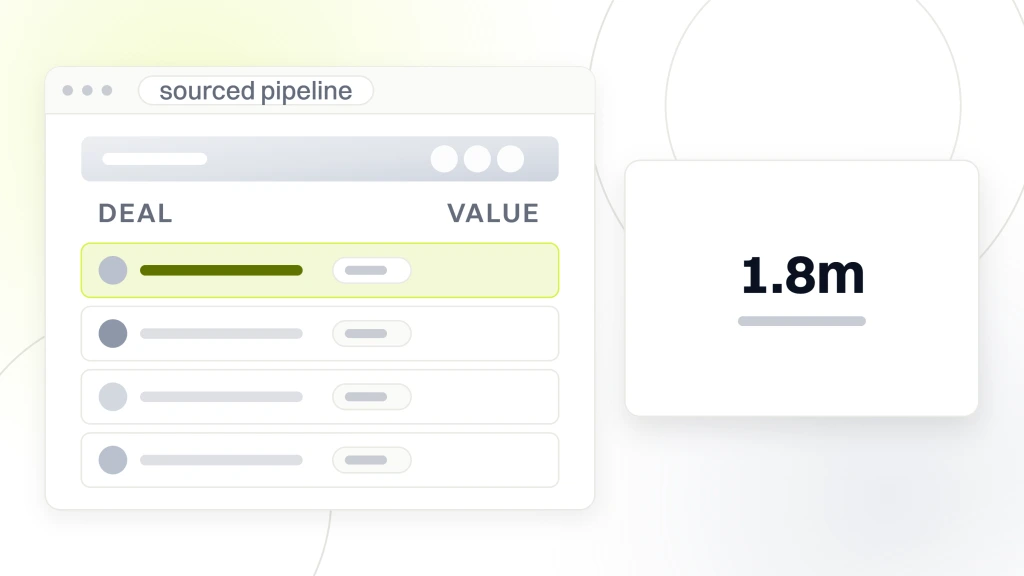
Rapyd Financial Network is a fintech SaaS that came to Redefine Web with fragmented tooling and roughly 5 inbound leads per month. We ran a custom WordPress redesign, HubSpot CRM implementation, Google Ads restructure, LinkedIn Ads targeting decision-makers, and content marketing. Over the engagement window, inbound leads tripled, we added £1.8m in sales pipeline, and organic traffic grew 5x. That kind of source-linked, reference-verified number pattern is what proof of work looks like when the agency is real. Broader benchmarks from the annual SaaStr marketing archive back the pipeline-attribution shift across the SaaS category.
Rocket Software launch pattern
Rocket Software, Inc. came to us with a SaaS subscriber-acquisition tool and a short runway. We rebuilt the onboarding funnel, ran automated drip campaigns through ConvertKit, and coordinated a 4-channel launch across email, social, paid, and influencer. The result was a 300% activation rate lift, 3,000 customers in launch week, and 400+ daily subscribers after launch. Launch-motion proof looks different from steady-state growth proof, and the top B2B SaaS marketing agencies are honest about which shape they’re strongest at. Ask which motion they’ve delivered most often.
Best digital marketing agency for B2B SaaS by company stage
The best digital marketing agencies for B2B SaaS 2026 cluster by company stage. Seed to Series A wants a founder-friendly generalist. Series B to C wants a channel specialist with pipeline reporting. Series D and up wants a strategic partner who can staff against a category-creation motion.
Company stage decides the agency profile more than industry vertical does. A seed-stage SaaS founder wants an agency partner who picks up the phone at 8pm and grinds on the first paid campaign. A Series C CMO wants an agency that runs a $40,000 monthly retainer without hand-holding. The same agency can’t serve both well. Match your stage to the agency’s stated wheelhouse. If they claim to serve every stage well, they serve none of them well.
If a shop claims to serve seed startups and Series D enterprises equally well, treat it as a warning. No operating model does both without splitting focus.
Seed to Series A picks
Pair the shortlist with a working B2B SaaS go to market playbook so the agency inherits a positioned wedge, not a blank page.
At seed to Series A, you want an agency running a $5,000 to $12,000 retainer with heavy hands-on presence and a willingness to test three or four channels in parallel until one hits. The founder is usually still writing copy and vetting campaigns weekly. Pick an agency where the person selling you is the person doing the work. Big-name agencies with account managers between the founder and the operators are wrong for this stage. So are pure freelancers with no team behind them, since your growth needs will outrun a single operator by month four.
Series B to C picks
At Series B to C, you want an agency with channel depth, pipeline reporting, and 4 to 6 people assigned to the account. The retainer is $18,000 to $32,000 per month. Scope covers paid, SEO, content, and lifecycle in some combination. Reporting cadence is weekly on operations and monthly on strategy. This is the stage where the wrong agency choice costs you 12 months of growth. Take longer on the shortlist. Interview twice. Do a paid pilot for 60 days before signing an annual retainer. Our SaaS PPC agency work is built around this Series B to C pattern.
Best digital marketing agency for B2B SaaS companies at scale
The best digital marketing agency for B2B SaaS companies at scale runs a hybrid retainer, staffs a named team past the account manager, and reports against pipeline plus net revenue retention. Retainers at this level start around $35,000 monthly and go past six figures for enterprise SaaS.
At scale, the question shifts from which agency to which agency team. You want to know the names, tenure, and availability of the operators who’ll run your account. You want to know which of them will still be there in 12 months. You want to know how the agency handles account team churn when a senior operator quits. If the answer is that they’ll find a replacement quickly, ask what quickly means. Two weeks is fine. Two months is not. Enterprise SaaS engagements live and die on team continuity.
Named team and continuity guarantees
Ask for the named team on your account, including tenure at the agency and prior account experience. Ask what happens when a team member leaves. Ask about the escalation path for a stalled campaign. Enterprise B2B SaaS marketing needs a bench, not a single hero operator. If the agency can’t produce a named team on paper, they’re staffing your account against whoever has bandwidth that month, which is a slow-motion disaster for a growth-stage SaaS.
Reporting depth and access
At scale you want direct dashboard access, not a monthly PDF. You want the CRM tie-in that shows sourced pipeline by campaign and by sales stage. You want data cuts by segment, geography, and account tier. You want the ability to run your own queries when the exec team asks a question at 6pm on a Wednesday. An agency that gates dashboard access behind an account manager is an agency that’s slow when speed matters most. Ask for founder-level or director-level dashboard access on day one, in writing.
The single most common thing we see on agency intro calls is the pitch deck slide titled “Our Process” followed by a 5-step diagram where step three is called alignment or partnership. Close the browser tab. Real agencies talk about pipeline math, retention curves, and CAC payback. The pitch deck says everything about the operator behind it. A plain slide with the phrase pipeline-attributed spend beats a beautifully designed slide with the phrase strategic growth partner every single time.
How top-rated B2B SaaS marketing agencies compare on price and scope
Top-rated B2B SaaS marketing agencies vary widely on price for the same nominal scope. Retainer size alone tells you almost nothing. The real variance comes from team seniority, reporting depth, media spend billing structure, and content production model. Compare on outcome per dollar spent, not on the headline retainer number.
Price comparison for B2B SaaS marketing agencies isn’t a simple grid. The same $20,000 retainer might buy you a senior operator running paid at one shop, a mid-level team running content at another, and a full-service junior team at a third. Which is the right buy depends on what your SaaS needs right now. The table below gives the shape of what to expect at each price band. The specific inclusions in your proposal should be much more concrete.
Under $12,000 per month, expect a 1 or 2 person team on 1 channel. Above $32,000, insist on a named team of 4 to 6 with weekly pipeline reporting.
| Retainer band | What you get | Best fit stage |
|---|---|---|
| $5K to $12K per month | Solo operator or 2-person team, 1 channel focus, monthly reporting | Seed to Series A |
| $12K to $18K per month | 3-person team, 2 channels, weekly reporting, quarterly strategy | Series A to early B |
| $18K to $32K per month | 4 to 6 people, 3 channels, live dashboards, quarterly QBRs | Series B to C |
| $32K to $60K per month | Named team of 6 to 10, full channel mix, CRM-tied pipeline reporting | Series C to D |
| $60K plus | Enterprise account team, custom analytics, category-creation strategy | Series D and up |
| Percentage-of-spend only | Incentives skewed to bigger budgets, thin retainer for real work | Usually the wrong fit |
Media spend billing and pass-through
Media spend should pass through the agency’s platform or your own accounts. Either is fine. What matters is the mark-up transparency. Some agencies mark up ad spend 15 to 20% as a media buying fee. Others charge no mark-up and cover their operational cost in the retainer. The second model is cleaner. If the agency wants a mark-up plus a retainer, ask what the mark-up covers that the retainer doesn’t. If the answer is vague, negotiate the mark-up down to zero and add the difference to the retainer as a defined scope item.
Content production and licensing
Content produced under the retainer should be yours outright, with full transfer of copyright and source files. Some agencies retain rights so they can reuse patterns across clients. That’s fine for anonymized frameworks. It’s not fine for finished pieces you paid to produce. Read the IP clause. If it’s vague, get it in writing that finished content transfers to you at delivery, and that source files, working documents, and design files come with the transfer.
Best digital marketing agencies for B2B SaaS 2026 by vertical
Vertical experience is a real filter for B2B SaaS marketing. Fintech, healthtech, martech, devtools, and vertical SaaS each have compliance, buyer, and sales cycle patterns that a generalist agency will miss. Ask for named vertical clients, not just industry claims.
Vertical fit shows up in three places. Ad copy that speaks the buyer’s actual language. Content strategy that respects the sales cycle length. And compliance awareness on landing pages, particularly for regulated verticals. A fintech landing page written by an agency without fintech experience trips the compliance team on day one and gets rewritten by legal. The rewrite costs you 2 weeks and a lot of goodwill. Pick an agency that’s already learned those lessons on someone else’s account.
Never hire an agency for a regulated vertical without a named client in that vertical. Compliance rewrites cost 2 weeks of momentum and quiet goodwill.
Fintech SaaS specialists
Fintech SaaS marketing agencies need to understand compliance-heavy ad copy, longer buying committees, and the tension between marketing narrative and product reality. Rapyd Financial Network is the pattern we reference here, since the fintech buying cycle averages 90 to 180 days and the committee usually has 4 to 7 people. That shape breaks generic B2B playbooks. If you’re hiring for fintech, ask what the agency knows about payments, compliance disclosures, and the difference between a product-marketing narrative and a sales-enablement one.
Vertical SaaS specialists
Vertical shops win when they treat B2B SaaS product marketing as the operating layer, not a deliverable at the end of the retainer.
Vertical SaaS marketing, whether for coaching platforms, EdTech, environmental asset management, or healthcare, needs an agency that will invest 60 to 90 days in learning the buyer. Simply.Coach ran an SEO plus paid restructure with us and saw 80% organic lead growth and 120% paid lead growth in 48 days. Scannable, an environmental asset SaaS, ran Meta plus webinar promotion and hit a 92% CPL reduction with 7 new clients in 6 months. Both accounts required deep vertical learning. Ask any agency you shortlist how they onboard a new vertical, and how long that ramp takes before campaigns go live.
Red flags across every top B2B SaaS marketing agency shortlist
Every shortlist round produces the same red flags. Vague scope. Unnamed teams. No client references. Vanity metrics in the pitch deck. Pricing without a plan behind it. Any 2 of these together is a strong reason to move on.
Red flags are usually visible in the first 30 minutes of an intro call, if you know what to listen for. The pattern below is the one we see repeatedly across founders who share bad agency stories. Save yourself the 12 months by walking away when any 2 of these show up in the same conversation. The agency that gives you clean answers on all 6 is worth another interview. The agency that dodges 4 of the 6 isn’t worth the follow-up email.
Two red flags together in one intro call is a walk-away. One is fixable. Two means the operating model is broken and you’ll pay for it later.
- Scope written in marketing language instead of deliverable counts and SLAs
- Named team refuses to reveal seniority or prior account experience
- References are testimonials on the website, not live phone calls
- Dashboards shown as screenshots in slides, never in a live share
- Reporting cadence is monthly PDF, never weekly working session
- Pricing is 1 flat number with no linkage to scope or team size
Vague scope as the biggest predictor
Vague scope is the single biggest predictor of a bad engagement. It lets the agency reduce output when their margin is tight and lets you argue at the end of every quarter about what was actually delivered. Insist on scope written in deliverable counts. 12 blog posts per quarter. 6 landing pages per month. 2 paid channel audits per year. Weekly campaign optimization on named accounts. When the scope reads like a service level agreement instead of a marketing brochure, the engagement stays clean.
Vanity metrics in the pitch
Vanity metrics in the pitch deck are a preview of the reporting you’ll get later. If the agency leads with impressions, reach, or engagement rate, they’ll report on those same metrics at the QBR. Pipeline metrics, retention math, and CAC payback are what a B2B SaaS marketing agency should lead with. If those numbers don’t appear in the pitch deck at all, ask why. The answer usually reveals whether the agency has ever reported against pipeline for a real client.
Where the top-rated B2B SaaS marketing agencies invest their own retainer
The top-rated B2B SaaS marketing agencies invest their own retainer in team, tooling, and content research. Team seniority drives quality. Tooling drives reporting depth. Content research drives strategy. If none of those 3 show up in the agency’s operations, you’re paying for slides.
Where the agency puts its own money is a leading indicator of what your engagement will feel like. Agencies that invest in tooling like HubSpot Enterprise, Segment, and custom reporting warehouses can deliver pipeline reporting on day 30. Agencies that skimp on tooling deliver a Google Sheet on day 90. Agencies that invest in team seniority retain talent past 24 months. Agencies that flip juniors in and out of accounts churn client relationships. Ask what the agency spent on internal tools last year. The number tells you a lot.
Team tenure under 12 months is a churn signal. Ask for average operator tenure at the agency before you sign anything long-term.
Team seniority as the core investment
Team seniority means the operator running your account has more than 3 years of B2B SaaS marketing experience and more than 18 months at the agency. Anything less and you’re paying for a learning curve on someone else’s dime. Ask the average tenure of operators at the agency. If the number is under 12 months, the agency is churning talent and your account will feel it in the second quarter, when the person you liked hands off to someone new.
Tooling and reporting stack
The reporting stack should include CRM tie-in, ad platform APIs, product analytics like Amplitude or Mixpanel, and a warehouse or Looker Studio layer that stitches them together. Without that stack, pipeline attribution is impossible past a certain volume. The top B2B SaaS marketing agencies invest in this stack since they can’t deliver retention and pipeline reporting without it. If your agency uses only ad platform native reporting, they can’t see past the last click, which means their optimization decisions run blind on anything past 30 days.
Questions to ask on every intro call with a top B2B SaaS marketing agency
The intro call decides more than the pitch deck does. Ask questions that make the agency reveal their operational depth, reporting maturity, and honesty about weaknesses. 12 questions, 90 minutes, real signal.
The questions below are the ones we use ourselves when we vet strategic partners. They’re ordered from easiest to hardest, which surfaces the agency’s comfort level with hard questions. A confident agency answers all 12 without deflecting. A struggling agency deflects on the last 4. The questions about weaknesses and failures are the most diagnostic. Any agency that claims to have no recent failure has stopped trying new things, which is a slow death for a marketing operator.
- What’s the median tenure of a client on your active roster right now
- Show me a live client dashboard, redacted for account name is fine
- What’s the sourced pipeline number for your top account last quarter
- Who runs my account by name, and what’s their prior B2B SaaS experience
- How do you handle account team continuity when someone leaves
- Walk me through your reporting cadence for the first 90 days
- What was your most recent client failure and what did you change after
- How does your pricing tie to scope, team, and outcomes
- How do you charge for media spend and what’s the mark-up structure
- Who owns the content, source files, and data at engagement end
- What’s your termination clause and notice period
- Which 3 named references can I call this week
The failure question is the most diagnostic
The failure question tells you whether the agency has honest self-awareness. Every agency has lost a client, missed a target, or picked the wrong channel bet. A confident agency has a specific story about a recent one, a clear articulation of what they learned, and a change to the process they made afterward. An unconfident agency denies failure or blames the client. Both are disqualifying at a top B2B SaaS marketing agency level. The industry gets weird about failure. The best operators talk about it directly.
The termination clause reveals their confidence
The termination clause reveals how confident the agency is in their ongoing value. A 30-day notice period is standard and healthy. A 90-day notice period signals the agency knows they won’t earn the last month of the contract. A no-cause termination clause with 30 days is the sign of an agency confident enough to let you leave if the work stops delivering. Read the termination clause before you read anything else in the contract. It tells you what the agency believes about their own retention.
Making your shortlist of the best B2B SaaS marketing agencies work
The best B2B SaaS marketing agencies in 2026 report against pipeline, retain clients past 12 months, name their teams, and answer hard questions directly. Everything else is packaging. If you take 1 thing from this guide, take the 12 interview questions and run them on every shortlisted agency. The pattern in the answers tells you more than any pitch deck.
If you take 2 things, add the 4 shortlist filters at the start of your research process, and cut your interview list from 40 agencies to 6 before you spend real time. And when you’re ready to talk about your SaaS growth model in specifics, our SaaS marketing retainer plans lay out how our engagement works, what it costs, and what the first 90 days look like. Broader industry data from Gartner Marketing and the annual Forrester Research B2B benchmarks give you the outside baseline for the numbers we use above.