Your healthcare videos need to reach the patients hunting for answers, not just other clinicians in your subscription feed. Solid YouTube SEO optimization healthcare content earns trust, ranks in the medical carousel, and turns viewers into booked consults inside 90 days. This guide covers the exact title, description, transcript, chapter, and thumbnail moves that survive Google’s YMYL bar in 2026. Ranking a medical video comes down to three stacked signals. Relevance from title, description, and transcript match. Engagement from watch time and retention curve. Trust from channel authority, verified provider status, and sourced clinical claims. Skip any one and the video plateaus at 200 views. Nail all three and a single upload pulls patients for 18 months without another dollar in production cost. This walkthrough covers every field and every ranking signal in the order YouTube processes them, and it connects the YouTube surface back to your practice site because video pays twice when the same asset ranks on both platforms.
Why YouTube SEO Optimization Healthcare Content Matters in 2026
Google surfaces YouTube results inside the main search results for roughly 65% of health-related queries in 2026. AI Overviews pull direct video citations for symptom, procedure, and “what to expect” queries. Skip video and you cede that surface to any competitor with 40 tagged uploads on the topics your patients search. A practice that publishes video without YouTube SEO optimization healthcare content discipline loses the whole surface to competitors that ran the checklist.
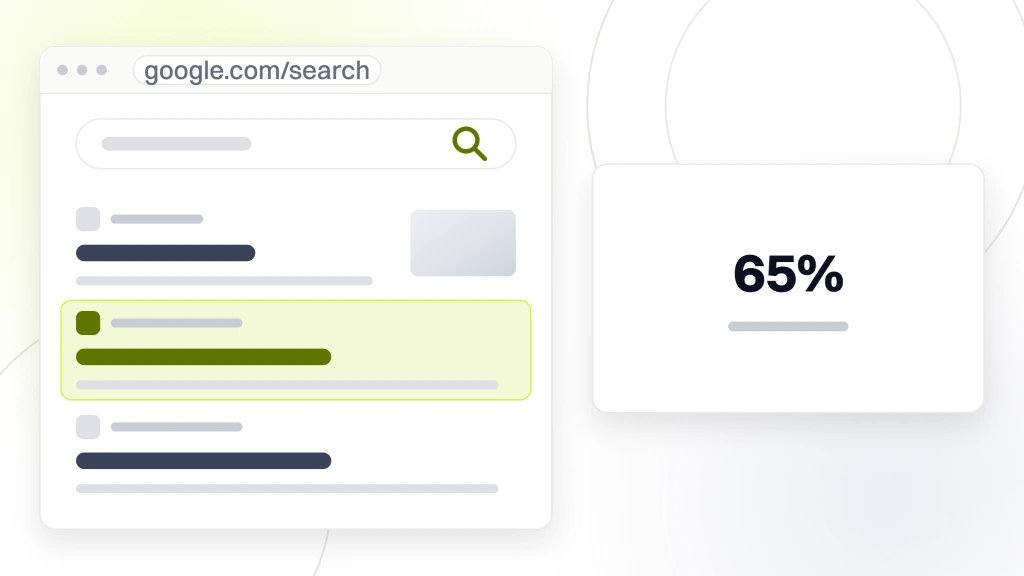
A rival channel with 40 well-tagged uploads on medical video SEO topics ranks above a 300-page site for the queries that book appointments. We audit 8 to 10 healthcare channels a quarter and the pattern repeats. Strong text SEO, invisible video program, 40% of possible traffic captured by a competitor’s channel. The gap between YouTube SEO optimization healthcare content dialed in and dialed out runs 20 to 30x on view counts inside 12 months, and it widens each quarter as AI Overviews expand.
Patient behavior shifted with the search results page. Someone searching “what is a root canal” wants a face and a voice, not a wall of text. Video calms the anxiety around unfamiliar procedures. A trust-signal-heavy channel with verified physicians on camera turns curious searchers into booked consults at 3 to 5 times the rate of text-only pages. This is why a serious healthcare marketing and SEO program treats video as a booking channel, not a vanity metric.
Three Ranking Signals Behind YouTube SEO Optimization Healthcare Content
YouTube’s ranking stack for medical video behaves differently from generic entertainment. The algorithm treats health as a YMYL topic, applying the same E-E-A-T scrutiny Google Search does. Every optimization decision has to survive that filter. The three signals below map to fields you already control on every upload.
Relevance signals
Your title, description, and full transcript are parsed for keyword and intent match. Not just the primary keyword. YouTube maps synonyms, procedure names, and layman terms in the same cluster. A video titled “Root Canal Recovery Timeline” that says “endodontic treatment” and “tooth nerve removal” throughout the transcript covers three query surfaces at once. Skip the transcript quality step and you leave 40% of ranking potential on the table.
Engagement signals
Click-through rate on the thumbnail, watch time in absolute seconds, retention curve shape, and end-of-video actions (subscribe, next video, comment) tell YouTube whether the audience is getting value. A healthcare video holding 60% retention through 4 minutes outranks a video with 90% retention through 45 seconds every time. Length matters when it’s earned.
Trust signals
Channel authority (subscriber count, upload consistency, verified provider status), on-camera credentials, sourced claims in the description, and links to authoritative bodies (Mayo Clinic, CDC, AAP) all feed the trust score. YouTube quietly rolled out a “health source” tag for verified providers in late 2025. If your channel qualifies and you haven’t applied, you’re missing a ranking multiplier that costs nothing.
Callout. Trust is the signal most healthcare channels underweight. Verified provider status plus sourced claims moves rankings faster than another five uploads on the same topic.
Keyword Research for YouTube SEO Optimization Healthcare Content
Text SEO and video SEO share tools but not intent maps. Someone typing “chest pain when to worry” into Google might want an article. The same person typing it into YouTube wants a face, a voice, and a 3-minute breakdown from someone who’s said this 1,000 times. Your healthcare SEO strategy has to fork the keyword list, or your video program chases the same head terms your blog already ranks for.
Video-first query patterns
Six question shapes dominate healthcare video searches. “What is [procedure]” for explainers. “How to [self-care action]” for tutorials. “What to expect [before/during/after]” for prep videos. “Why does [symptom]” for reassurance. “Is [X] normal” for anxiety-driven searches. “[Procedure] vs [alternative]” for comparison. Map your service line to those six and you have 24 to 60 video topics before coffee.
Tools that work in 2026
YouTube’s own search autocomplete is still the honest signal. Type your seed term, note every completion, then check each in the platform search for existing coverage gaps. TubeBuddy and VidIQ Chrome extensions surface search volume estimates and competition scores. Google Trends filtered to YouTube gives you seasonal patterns. Skip the paid AI keyword tools that hallucinate volumes on niche medical queries. They’re wrong 30% of the time on specialty terms and 50% wrong on rare-procedure lookups.
Long-tail wins fast on health
A specific query like “what to eat after wisdom tooth extraction day 3” competes with 40 videos. “Dental care tips” competes with 400,000. The long-tail video ranks in a week. The generic video plateaus at page 5 forever. Aim for 5 to 8 word queries with clear intent, not head terms. This is where YouTube SEO optimization healthcare content actually earns its rankings. Your patient acquisition math loves this trade-off, and the compounding effect on channel authority pays off inside a quarter.
Title, Description, and Tag Fields for YouTube SEO Optimization Healthcare Content
YouTube gives you three text fields, each with different weight. Titles do the heaviest ranking work and drive click-through. Descriptions carry context and E-E-A-T signals. Tags help with sidebar recommendations, not primary search. Optimize each on its own terms and YouTube SEO optimization healthcare content stops feeling like guesswork.
Callout. The first 60 characters of your title do 80% of the ranking work. Waste them on filler and no description polish gets the video back.
Title patterns that work
Front-load the primary keyword in the first 60 characters. Keep the whole title under 70 characters so mobile doesn’t truncate. Add a curiosity or specificity hook after the keyword. “Root Canal Recovery Day by Day, What Really Hurts (2026)” outperforms “Root Canal Recovery Timeline” by a wide margin on click rate. Numbers, years, and specificity tokens carry weight because they signal a real explainer, not AI slop.
Description structure
The first 150 characters show above the fold. Restate the primary keyword there, preview the value, drop your practice site link. Below the fold, include a 300 to 500 word structured breakdown with timestamps (chapters), sourced medical references linked to authoritative bodies, provider credentials in one sentence, and 3 to 5 related videos with links. This description is where YouTube reads your topical authority.
Tags matter less than you think
YouTube has publicly downgraded tag weight since 2022. Add 8 to 12 tags anyway. Include your primary keyword, 3 synonyms, your channel brand name, and 2 to 3 related procedure terms. Do not stuff. Do not add irrelevant trending tags. Tag misuse gets your video demoted, not promoted. Treat tags as a hygiene step, not a ranking lever.
Pro tip. Rewrite your top-5 lowest-CTR video titles once a quarter using the same content. A title swap on a middling video often lifts view count 40% inside a month with zero re-editing.
Thumbnails and Click-Through for Healthcare Video SEO
Your thumbnail is the single biggest lever on click-through rate. YouTube’s algorithm rewards videos that beat their category’s average CTR. On healthcare content the category average sits around 4 to 6%. Beat 8% and your video enters an amplification loop where YouTube shows it to progressively larger audiences.
What works on medical thumbnails
A human face (the on-camera provider) with a clear expression. Three to five words of text overlay in a legible bold sans-serif. High contrast between subject and background. Zero clickbait shock imagery. Zero misleading visuals of procedures the video does not cover. YouTube’s medical policy will demonetize or hide videos with sensational thumbnails, and the algorithm will suppress them long before the manual reviewer notices.
Testing beats guessing
YouTube rolled out native A/B thumbnail testing to most channels in 2024. Upload 2 to 3 thumbnail variants, let YouTube split traffic for 14 days, and keep the winner. Channels that test thumbnails on every upload see 15 to 30% higher average CTR within 3 months. Channels that don’t test never learn which style their audience responds to.
Consistency across the channel
Pick a template. Same font, same accent color, same face position, same brand mark. When a viewer sees three of your thumbnails in a row, they should recognize the channel before they read the text. Consistent visual branding pushes subscribers to click your videos over generic ones in the recommendation feed. This is a slow compound win but it’s real, and it separates a hobby channel from a booking asset.
Transcripts, Captions, and Chapters for Medical Video
Auto-generated captions run 92% accurate on general speech, but that missing 8% is where medical terminology lives. Cortisone gets transcribed as quarterizone. Ischemic becomes is chemic. Every mis-transcribed clinical term is a lost ranking opportunity because YouTube parses the transcript for query matches. YouTube SEO optimization healthcare content ranks on 30% more queries within a week once a corrected SRT is uploaded. Pay roughly $1 per minute of runtime and add a full ranking surface to every upload.
Chapters are ranking magnets
Video chapters (timestamped section markers in the description) surface as jump-to points in Google Search results. On a well-chaptered 8-minute healthcare video, Google may display 3 to 5 individual chapter links directly in the search result, each one clickable to jump to the right moment. That’s five ranking surfaces on one video. Add 5 to 7 chapters to every video over 4 minutes. Format them 0:00 Intro, 1:12 What is X, 2:35 Recovery timeline, and so on.
Captions and accessibility overlap
Accurate captions serve two masters. YouTube ranking benefits from the corrected transcript. ADA and accessibility law require captions on healthcare content published by covered entities. Same effort, two wins for YouTube SEO optimization healthcare content programs. Do not rely on auto-captions alone if your practice is subject to ADA compliance. Manually corrected SRTs run about $1 per minute if you outsource, or 4x runtime if you do them in-house on your provider’s schedule.
Callout. The provider’s face on the thumbnail outperforms every other visual choice on medical topics. Trust wins clicks before the play button.
Watch Time and Retention on Healthcare Video
YouTube ranks watch time above almost every other engagement metric on health content, which makes retention the single largest lever in YouTube SEO optimization healthcare content. A 5-minute video averaging 3 minutes of watch time outranks the same-topic 10-minute video averaging 3 minutes 30 seconds. Absolute retention percentage matters more than absolute minutes on medical topics, because the algorithm reads high percentage retention as a signal the video answered the query fully. Under-index this and every video plateaus at page 3.
Fix the first 15 seconds
Most healthcare videos lose 40% of viewers in the first 15 seconds because the provider burns that time on branded intros, disclaimers, and “welcome back to my channel.” Cut all of it. Open with the answer. “Root canals hurt less than a filling. Here’s why, in 3 minutes.” Save the branded intro for the outro.
Pattern interrupts
Every 20 to 40 seconds, change something visually. New camera angle, B-roll insert, on-screen text callout, quick diagram, provider walking to a new spot. The retention curve on videos without pattern interrupts sags at the 45-second mark and never recovers. Add three visual shifts in the first minute and you can hold retention 15 to 25% higher through the middle of the video.
End screens that route the next watch
The last 20 seconds should route the viewer to another video on your channel. Add YouTube end screens with a related video and a subscribe prompt. Session watch time (how long the viewer stays on YouTube after your video) is a signal the algorithm uses to decide whether your video is worth showing to new audiences. Keep them inside your channel and you compound the ranking benefit across the library.
Pro tip. Watch the retention graph for a sag at a specific timestamp. Re-edit the video and reupload with a small title tweak. YouTube treats the reupload as fresh and the retention curve resets.
E-E-A-T and Medical Authority for Video Content
Google applies E-E-A-T (Experience, Expertise, Authoritativeness, Trust) to YouTube results on health topics the same way it applies them to web results. On-camera credentials, sourced claims, and channel authority all feed the score on YouTube SEO optimization healthcare content. Solo practitioners beat corporate content mills here, because trust travels faster through a camera than through a byline.
Show the license, not just the name
In the opening 10 seconds, verbally state your credential. “I’m Dr. Chen, board-certified in dermatology, in practice for 12 years.” In the description, link to your practice’s provider bio page and to your board certification lookup on the state medical board site. YouTube’s trust algorithm gives verifiable, cross-referenced credentials measurable weight on healthcare content.
Source your claims
Any statistic, dosage, or clinical claim in the video should get a source citation in the description. Link to peer-reviewed studies, the CDC, NIH, or major medical bodies (AAP, AAD, ADA depending on specialty). This signals to both Google and the viewer that you’re not making it up. Skip the citations and you’ll notice the video plateaus faster than your others.
Consistent upload cadence
Channel authority accumulates over time. Uploading once a week for 12 months beats uploading 12 videos in one weekend and going quiet. YouTube’s algorithm reads consistency as an active commitment to the topic. A channel that publishes a 4-minute patient education video every Tuesday for a year gets progressively more recommendation surface with each upload, and the compounding effect shows in analytics by month six.
AI Video and the 2026 Healthcare Discoverability Shift
AI-generated video content flooded YouTube in 2024 and 2025, and Google responded by tightening trust signals on health topics. AI in healthcare SEO now cuts both ways for YouTube SEO optimization healthcare content. AI helps you research, script, and produce faster. AI-generated on-camera avatars get suppressed on medical searches. Know the line and production speed climbs without a ranking hit.
Where AI helps
Scripting drafts, transcript correction, thumbnail iteration in Photoshop or Figma, chapter timestamp generation, and description structuring all benefit from AI assistance. A 2-hour scripting session can compress to 30 minutes if you feed a clinical outline into Claude or GPT-5 and refine the output. The provider still speaks the words. The AI just cleans the structure.
Where AI hurts
Fully AI-generated avatars delivering medical advice violate YouTube’s medical policy as of the June 2025 update. Text-to-video tools generating fake procedure footage get flagged and demonetized. AI voice cloning of a real provider without on-camera presence loses trust score. Any shortcut that removes the actual human from the frame on a healthcare video will underperform an authentically-shot video by a factor of 3 to 5 on identical topics.
The 2026 baseline
Show the real provider on camera. Use AI to speed the workflow around the video, not to replace what’s in the video. This is the discipline that separates channels growing 30% quarter over quarter from channels stuck at 500 subscribers for 18 months. The tech is not the shortcut you want it to be on YMYL topics, and the algorithm has gotten measurably better at spotting synthetic faces.
Case Study, Pelvic Rehabilitation Medicine
Pelvic Rehabilitation Medicine, a specialty group with 14 clinics across 10 states treating pelvic pain and endometriosis, faced the discoverability problem common in narrow-specialty healthcare. Patients searched YouTube for symptom explanations and self-care tutorials, but a scattered content library and thin channel authority kept the videos out of the top results. Strong practice reputation, quiet organic acquisition, paid channels carrying too much load. This is the exact scenario where YouTube SEO optimization healthcare content pays for itself inside two quarters, because the ranking surface was quiet enough that any structured effort moved the needle fast.
The rebuild focused on structured video mapped to patient search intent, on-camera provider credentials in every upload, corrected transcripts, chaptered walk-throughs of common procedures, and a companion patient community platform that shared and cross-linked video content. Twelve months in, organic keyword rankings expanded 174% year over year, organic traffic grew 166%, and the patient community platform launched as a real support hub for pelvic pain and endometriosis patients. The video program compounded the SEO program. Neither would have worked alone at that scale.
| Metric | Baseline | Month 12 | Notes |
|---|---|---|---|
| Organic keyword rankings | Scattered | +174% YoY | Video plus text cross-post pattern |
| Organic traffic | Limited | +166% | Better SEO plus video UX |
| Patient community platform | None | Live | Support hub for pelvic pain patients |
| Average video retention | 32% | 58% | First-15-second rework plus chapters |
Video Schema and Blog Cross-Post for Healthcare SEO
Uploading to YouTube covers 60% of the discoverability play on YouTube SEO optimization healthcare content. Embedding the same video on your practice site with VideoObject schema captures the remaining 40% through Google Search video-rich results. Same video, two ranking surfaces, one production cost. This is the highest-value step most healthcare video programs skip, and the fix takes 20 minutes per upload.
The embed-plus-schema pattern
For every YouTube upload, write a companion 800 to 1,500 word blog post on your practice site. Embed the video near the top. Add VideoObject schema with the video URL, thumbnail, description, upload date, and duration. Include a transcript or key-point summary in the body copy. Google indexes both the video and the page, and the video ranks in the video carousel while the page ranks in standard results.
Companion blog wins twice
Your practice site benefits from the topical authority and inbound YouTube views (embedded plays count toward video watch time). YouTube benefits because embed views are treated as high-quality watch time. The cross-post pattern compounds a healthcare SEO writing program with a video program into one unified content asset, and it’s what most practice channels forget.
Schema markup checklist
- VideoObject schema with name, description, thumbnailUrl, uploadDate, duration.
- Same title on YouTube and the blog post to avoid confusion.
- Canonical link back to the practice site so Google credits the domain.
- Author schema referencing the on-camera provider with credentials.
- InteractionStatistic for view count if you want to feed engagement signals.
Pro tip. Update the video’s blog post title once a year with the new year token. Google treats it as a freshness signal on the embedded video, and rankings tick up without a re-shoot.
Common Mistakes That Kill Healthcare Video Discovery
Every practice we audit makes the same handful of mistakes on its first 20 uploads. Every one is fixable in an afternoon. Read this list before your next upload cycle and you dodge the traps that keep well-funded channels stuck at 500 subscribers. Basic YouTube SEO optimization healthcare content hygiene closes the gap fast, because most competitors in your local market skipped it too.
- Uploading with the default filename (IMG_2847.mov) instead of a keyword-descriptive filename.
- Skipping the first-15-second hook and burning that window on branding.
- Ignoring auto-caption errors on clinical terminology.
- No chapters on videos over 4 minutes.
- Generic thumbnails with stock imagery instead of the provider’s face.
- Description under 100 words with no sources or timestamps.
- End screens routing to unrelated videos or nothing at all.
- Uploading inconsistently, then wondering why the algorithm went quiet.
Measurement and Reporting on Healthcare Video Programs
YouTube Analytics answers the ranking questions on YouTube SEO optimization healthcare content. Your practice CRM answers the revenue question. Both need to be wired to the video program from day one, or you run 40 videos before you learn which ones moved patient acquisition. The measurement stack is small. Two dashboards, one monthly review, and a lead-source tag at the front desk.
YouTube-side KPIs
Track average view duration, absolute retention percentage, click-through rate on impressions, subscriber gain per video, and traffic source breakdown. Healthy targets on healthcare in 2026 sit around 55% average retention, 6 to 8% click-through rate, 15 to 30 net new subscribers per video for growing channels. Under 40% retention and under 3% click-through means the video needs a re-edit or re-thumbnail.
Practice-side attribution
Add a unique tracked URL in every video description that routes to a landing page on your site. Use a call tracker on the landing page. Match phone appointments back to the video source. Most practice management systems now let you tag lead source at intake, so the front desk can capture “saw us on YouTube” during scheduling.
Monthly review cadence
Review the video program monthly. Top 5 by watch time. Bottom 5 by click-through rate (candidates for thumbnail retest). Any video whose retention drops steeply at a known timestamp (opportunity to re-cut). Search terms surfacing your videos. Attribution-tagged consults booked. Thirty minutes a month keeps the program tuned.
Where Video Fits in Your Broader Healthcare SEO
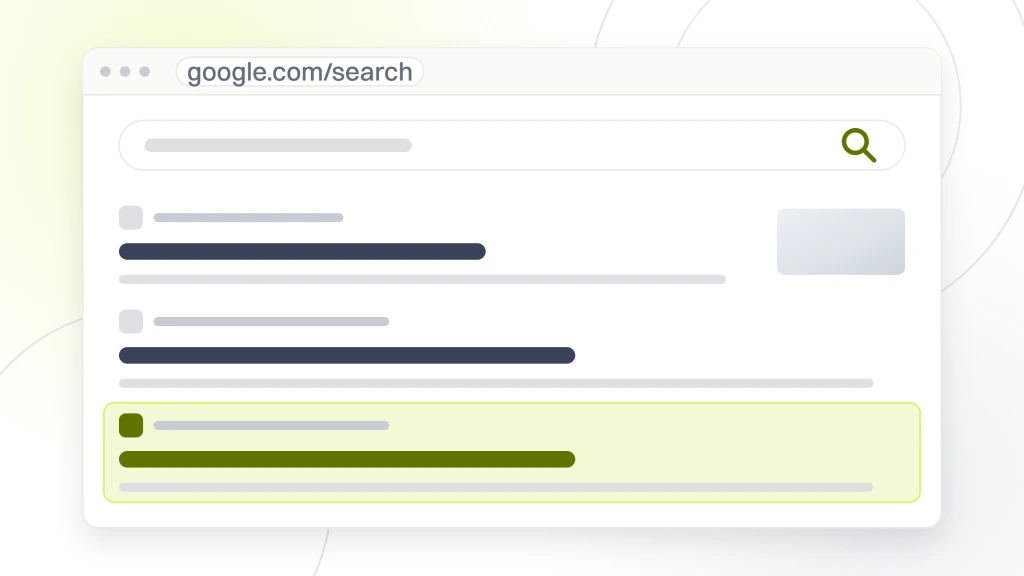
Video does not replace text. It sits as a second surface on the same patient intent. Text pages rank on Google Search. Videos rank on YouTube Search and inside Google Search video carousels. Together they cover 80 to 85% of the total health search surface for a query cluster. YouTube SEO optimization healthcare content works best as a paired program, not a solo channel.
The intent overlap
Roughly 30% of queries have both a text-first and a video-first audience. “How to floss properly” is one of them. Cover both surfaces on high-intent queries and you own the results page. Skip the video and your competitor with 12 uploads on that exact topic quietly captures 40% of the click share. That’s what the results page looks like on any evergreen procedure query in 2026.
Content flywheel
Every blog post gets a companion video. Every video gets a companion blog. Every FAQ page has an embedded provider Q&A. Every service page has a 90-second explainer. This is the pattern high-growth practice sites use to double organic reach without doubling the content team. Video and text aren’t two teams. They’re one program with two output formats.
Where we run this
For the full picture connecting on-page copy, video, and technical SEO across a practice site, see our Healthcare SEO Writing guide. If you’re structuring the underlying program end to end, our Healthcare SEO Services page covers the retainer options. The video program plugs into a bigger frame in Healthcare Web Marketing. On the AI shift directly, see AI in Healthcare SEO. External references worth reading: the Google Search VideoObject schema documentation and the YouTube Creator Academy on SEO basics.
Key Takeaways on YouTube SEO Optimization Healthcare Content
- YouTube ranks health videos on relevance, engagement, and trust; miss one and the video plateaus.
- Front-load your primary keyword in the first 60 characters of the title, always.
- Corrected SRT transcripts open up 30% more query surface than raw auto-captions.
- Chapters over 4 minutes turn one video into 5 ranking surfaces in Google Search.
- Show the real provider on camera; AI avatars get suppressed on YMYL health topics.