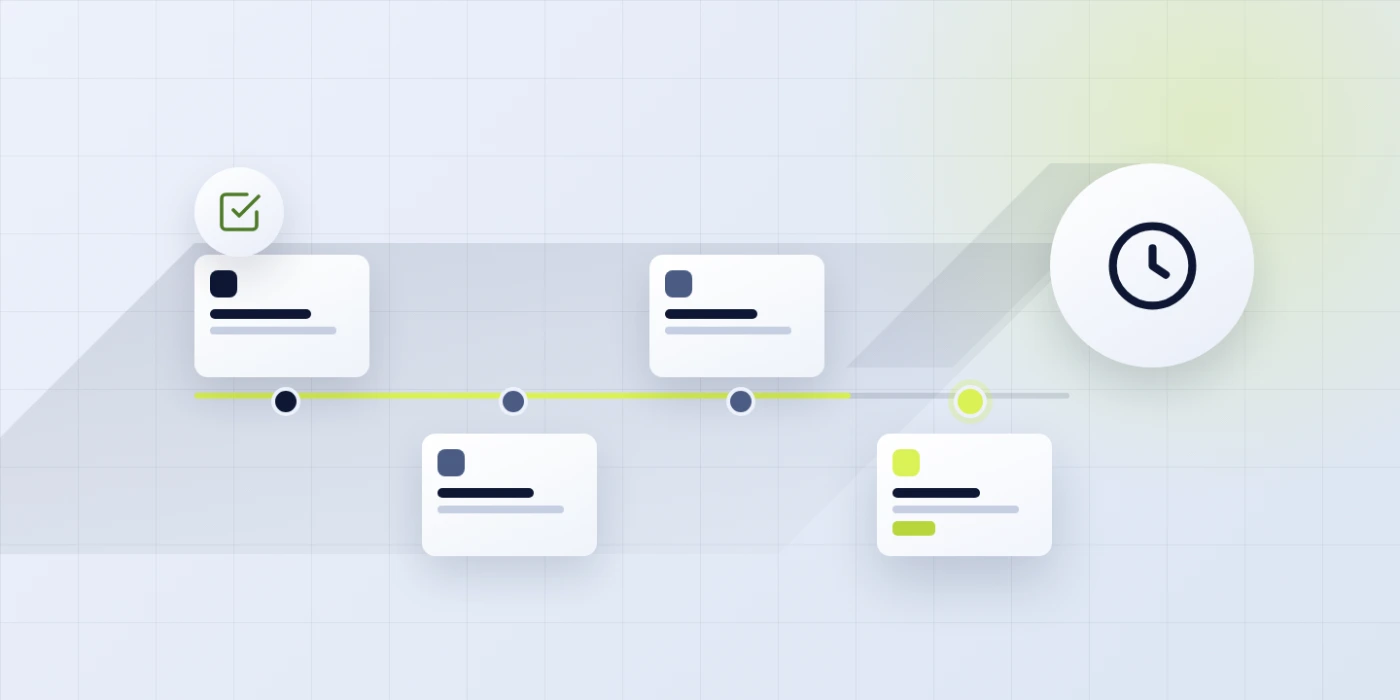
E-commerce ppc advertising for a Shopify or WooCommerce store in 2026 runs across 4 surfaces at once. Google Shopping and Performance Max cover the buyer typing a product query. Meta Advantage+ and TikTok Ads reach the buyer scrolling. Amazon Sponsored Products picks up the buyer already shopping. The retailer pays only when a shopper clicks, and the auction math behind each click looks different on every platform. Any store past $10K a month in ad spend is running 3 or 4 of these in parallel, not one.
The guide below covers how each auction works, what triggers a Shopping impression versus a Meta impression, and what a working ecommerce ppc services engagement delivers each month. Abigail Ahern grew ecommerce revenue 179% and paid-social ROAS to 3,000% inside a 12-month window by ditching discount-led ads for premium creative and category SEO, and the mechanics that got them there are the same mechanics every DTC store needs before spending another dollar on Google Ads.
Bid strategies inside e-commerce ppc advertising accounts
Every platform in the ecommerce PPC stack offers its own menu of bid strategies. Manual CPC. Enhanced CPC. Target CPA. Target ROAS. Maximize Conversions. Maximize Conversion Value. Lowest Cost. Target Cost. Picking the right one at the right stage of the account is roughly half the daily work on a paid media specialist’s desk.
Choosing between Target ROAS and Maximize Conversion Value
Target ROAS works once the account has a stable conversion history, revenue values firing on every purchase, and 30 or more conversions a month. Maximize Conversion Value is the right pick when the account is still learning and volume matters more than efficiency. A new Shopping campaign should sit on Maximize Conversion Value for the first 30 days, then move to Target ROAS after the auction learns the audience. Target CPA has no place in the DTC stack, that’s why revenue-based bidding wins on almost every account. It optimizes to unit count instead of revenue, and revenue-based bidding rewards a $300 order the same as a $12 candle.
Guardrails that keep automated bidding honest
Every automated bid strategy runs inside guardrails a specialist sets. Maximum daily budget. Maximum cost per click ceiling on top campaigns. Location targeting narrowed to shipping zones. Ad schedule limited to hours the customer service team can respond. Product segments the campaign is allowed to bid on. Guardrails stop Target ROAS from chasing cheap conversions on out-of-stock SKUs. Set them at setup and re-audit them monthly, since campaign-level changes routinely drift them wider than the specialist expects.
Budget decisions inside e-commerce ppc advertising
Every store setting up paid media faces the same 3 budget calls. How much per platform. How much per campaign inside each platform. How to shift budget when a channel outperforms or drops. These decisions run every 7 to 14 days on a working account. Skip them and the account settles into a stable-but-suboptimal spend curve for months.
Starting budgets by store revenue
Stores under $50K in monthly revenue start at $2K to $5K a month in ad spend. Stores between $50K and $250K in monthly revenue run $5K to $20K in ad spend. Stores past $250K a month reinvest 15% to 25% of revenue back into paid media. These are starting points, not universal targets. Product margin, LTV, and inventory levels move the math. A subscription skincare brand with 70% gross margin runs a very different spend curve from a 25% margin apparel brand.
Rebalancing budget across platforms
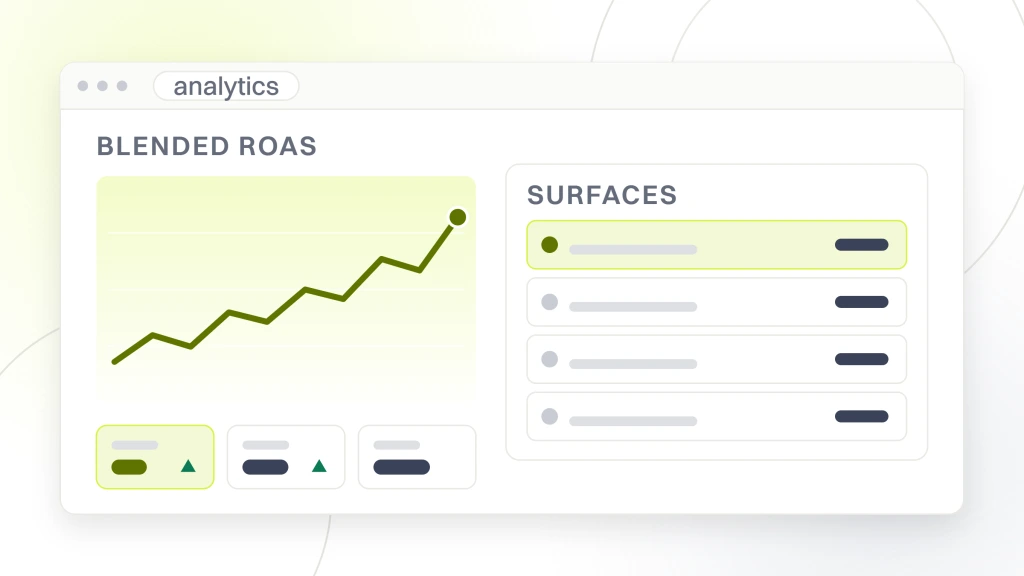
Every 30 days the specialist pulls blended ROAS by platform from Triple Whale or Northbeam and moves 10% to 20% of budget from the worst-performing platform to the best. Not more than 20% (bigger shifts reset learning phases across every campaign inside that platform). Not less than 10% (smaller shifts do not move the needle). A 10% to 20% monthly rebalance keeps blended ROAS climbing 30% to 60% above the pre-engagement baseline inside 6 months.
Tracking basics every DTC paid account needs
Every scale decision here rests on tracking. Broken tracking sends the wrong signal to Smart Bidding and Advantage+, and the model burns budget on cheap clicks that never turn into paid orders. Every serious campaign launch starts with a tracking audit that closes the loop from ad click to Shopify or WooCommerce purchase with matching revenue value on both ends.
Server-side event forwarding
iOS 14 and browser privacy changes cut client-side event coverage 20% to 40% between 2021 and 2024. Server-side event forwarding through a GTM server container or Shopify’s server-side pixel restores most of that coverage. Every store past $15K in monthly ad spend should run server-side tagging on Google Ads, Meta CAPI, and TikTok Events API. Per Google’s server-side tagging guide, stores that switch see 15% to 25% more matched conversions surfaced to the ad platforms.
Attribution tools that pull the truth out
Triple Whale, Northbeam, Rockerbox, and Polar Analytics run multi-touch attribution across Google, Meta, TikTok, and Amazon. License costs sit at $199 to $900 a month depending on the store’s monthly revenue. Serious paid media engagements use one of them since the last-click reports inside each platform overstate the platform’s own contribution by 30% to 60%. Store owners should price paid media against blended ROAS pulled from a real attribution tool, not against whatever a single ad platform reports on itself.
Common mistakes inside PPC advertising for ecommerce
Every store owner running paid media for the first time makes 3 or 4 of the mistakes below. Every specialist auditing a new account finds 5 or 6 of them. Skipping the ones you can catch upfront saves 30 to 60 days of budget waste and a lot of frustrated Monday calls.
- Running one campaign across every product category. Category-level bidding is impossible without campaign splits.
- No brand Search campaign defending brand queries. Competitors bid on your brand and pull 10% to 20% of traffic away.
- Product feed with generic titles and no GTIN. Impression share caps below 40% regardless of bid.
- Meta Advantage+ Shopping without a product catalog uploaded. The system runs on interest audiences only and delivery drops 40%.
- Last-click ROAS reports treated as truth. Blended ROAS almost always tells a different story.
- Creative refresh cadence of once a quarter. Meta and TikTok performance decays inside 14 days on stale creative.
Store owners field a steady stream of low-priced autopilot pitches, usually a rebadged Smart Bidding wrapper priced around $99 to $199 a month. These wrappers rarely include a human specialist, feed maintenance, or creative production, and the account still needs all 3 to scale past the first learning phase. A working DTC paid program in 2026 needs a specialist reviewing the account weekly, not a dashboard promising zero labor.
Fixes that pay back inside 30 days
Split campaigns by product category. Wire up brand Search at a low bid ceiling. Rewrite the top 100 product titles inside the Merchant Center feed. Upload the product catalog to Meta Business Manager. Install Triple Whale or Northbeam. Set a creative refresh cadence of 4 to 6 assets per week on Meta and TikTok. Every one of these fixes pays back inside 30 days on a store spending over $5K a month in ads, and skipping them lets blended ROAS drift down through the next quarter.
Platform mix inside a working DTC paid stack
Not every platform belongs on every DTC account. The mix depends on average order value, product category, buyer intent, and inventory depth. A stack that fits a $180 skincare bundle looks nothing like a stack that fits a $28 candle refill.
When Google Shopping and PMax lead the mix
Google Shopping and PMax lead when buyers search by product query at the moment of purchase. Hardware, home goods, replacement parts, and any category with strong query volume. Shopping alone covers 40% to 60% of Google Ads spend on these accounts. PMax layers on top for 20% to 30% more, running across Display, YouTube, and Discover. Boogie Board ran Google Ads with $650K in managed spend and hit $31 cost per sale with a 11% conversion rate gain, all through tighter keyword targeting and optimized landing pages.
When Meta and TikTok carry the load
Meta Advantage+ and TikTok Ads carry the load on discovery-driven categories. Apparel, jewelry, beauty, home decor. Any category where a buyer sees the product first and searches for it second. Advantage+ Shopping catalog campaigns account for 50% to 70% of Meta spend on these accounts. TikTok Spark Ads and Video Shopping Ads fill the rest of the discovery layer. Creative refresh matters most on these 2 platforms since ad fatigue kills delivery inside 14 days on stale hooks.
When Amazon Sponsored Products earns a slot
Amazon Sponsored Products earns a slot when the store already sells on Amazon at 10% or more of total revenue. It earns a slot on branded product categories where Amazon buyers search the brand name directly. Sponsored Brands headline placements defend the brand keyword. Sponsored Display retargets Amazon shoppers who viewed but did not buy. Amazon Ads work is a separate discipline from Google and Meta paid media, and most DTC agencies farm it out to an Amazon-specific partner.
Timeline to see real results from paid media
Store owners arrive with wildly different expectations. Some expect a 5x ROAS in week one after a proposal promised it. Others expect nothing since prior vendors let them down. Real outcomes sit in a narrow window shaped by category, ad spend, and how clean the tracking is on day one. The bands below reflect roughly 40 e-commerce accounts we manage or have audited in the last 18 months.
Month-by-month what to expect
Month 1 covers tracking QA, feed audit, campaign restructure, and the first creative refresh. Blended ROAS often dips 10% to 20% during learning phases. Month 2 brings the first real signal as the model learns on cleaner data. Month 3 is where most stores hit break-even against ad spend plus retainer. Months 4 through 6 are the compounding window, and blended ROAS climbs 30% to 60% above the pre-engagement baseline. Skip the tracking and feed audit in month 1 and every downstream number lands 3 to 5 months late.
Returns by category with clean tracking
Apparel and lifestyle. 3x to 5x blended ROAS by month 6. Home decor and furniture. 4x to 8x by month 6, driven by higher average order value. Beauty and skincare. 2.5x to 4x on first purchase, 6x to 10x on lifetime value once subscription flows work. Consumer electronics. 3x to 5x on high-margin SKUs, 1.8x to 2.5x on commodity items. Per Think with Google’s paid search benchmarks, e-commerce accounts running Smart Bidding on clean tracking outperform industry averages 40% to 60% on cost per acquisition.
In-house versus outsourced DTC paid media
Every store owner eventually asks whether to run paid media in-house or hire an agency. The answer depends on ad spend, in-house creative capacity, and whether the founder has time to review reports every Monday. Below $15K a month in ad spend, an agency retainer wins on math since the tool licenses alone eat $500 to $900. Above $100K, a hybrid model with an in-house lead plus agency oversight usually wins.
Tool license math for in-house
Triple Whale ($199 to $900 a month), DataFeedWatch ($100 to $800), Optmyzr ($250 to $500), and Adalysis ($150 to $300) sit at $700 to $2,500 a month in stack costs for a single in-house lead. Agencies spread those license costs across 15 to 20 accounts, so per-account share drops to $50 to $130. That’s one of the biggest cost efficiencies an agency delivers on e-commerce work. Founders who insist on in-house tooling below $30K in monthly ad spend usually pay 3x what the account needs.
When in-house wins
In-house wins when the store spends over $100K a month, custom conversion logic needs daily internal collaboration, and the founder wants permanent paid media capability on the team. Even then, an agency oversight arrangement catches blind spots a solo in-house lead misses. Full replacement of external oversight rarely pays off below $300K in monthly spend. Our PPC management services team runs into this decision often with mid-market Shopify stores.
What retainers actually cost in 2026
Redefine Web PPC retainers sit at $999, $1,499, $2,499, and from $4,500 per month depending on the number of platforms, campaign count, and reporting cadence. Ad spend is billed separately from the retainer. Simple single-platform Shopping accounts fit the $999 tier. Mid-market stores running Google plus Meta plus one more platform sit at $1,499 or $2,499. Full-stack DTC programs with 4 platforms, weekly reporting, and dedicated creative production sit at from $4,500 per month and up.
Feed hygiene for DTC paid accounts
Product feed quality drives 40% to 60% of Google Shopping performance and 25% to 40% of Meta Advantage+ performance. A feed with generic titles, missing GTINs, and thin descriptions caps impression share below 40% no matter how high the bid climbs. Feed work is unglamorous, and it’s the single highest-return hour in the account.
Product title structure that wins impressions
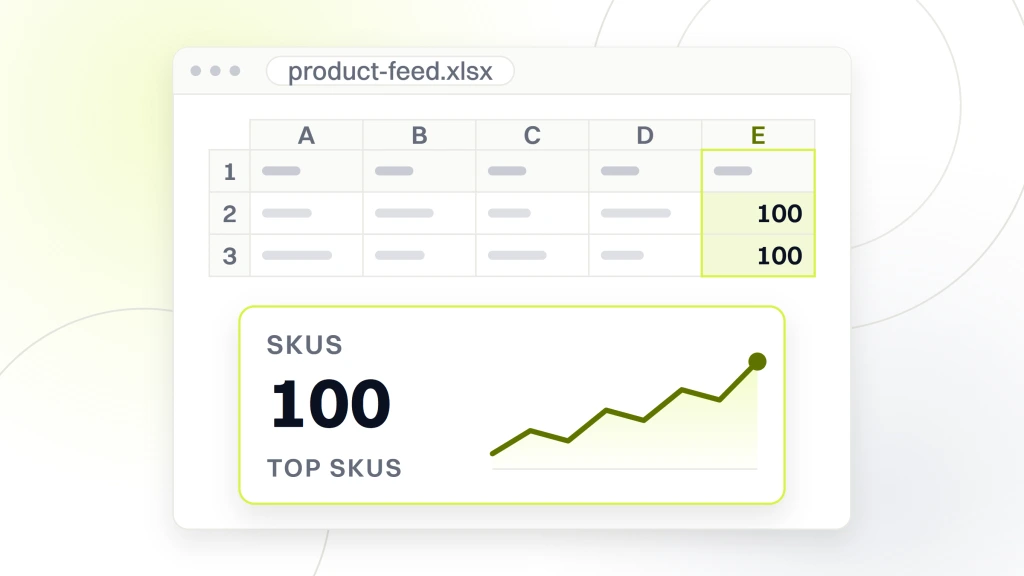
The winning title structure runs Brand + Product Type + Attribute + Size + Color inside the first 70 characters. Google Shopping cuts titles at 70 characters on mobile SERPs, so anything past that never shows. Rewrite the top 100 SKUs first, since they drive 60% to 80% of feed impressions on most stores. A weekend of feed rewrites often grows Shopping impressions 30% to 50% inside 14 days, and cost per click drops 15% to 25% at the same time.
Feed management tools worth the license fee
DataFeedWatch, Feedonomics, and Channable handle multi-channel feed formatting for Google Shopping, Meta, TikTok, Amazon, and Microsoft. Licenses sit at $100 to $800 a month depending on SKU count. Stores past 1,000 SKUs need a feed tool since manual CSV maintenance breaks inside a week. Stores under 500 SKUs can run on Shopify’s native Google channel plus a spreadsheet for the first 6 months of scale.
Wrapping up e-commerce ppc advertising as a discipline
Ecommerce ppc advertising in 2026 is not one platform. It’s a stack (Google Shopping and PMax, Meta Advantage+, TikTok, Amazon) that a human specialist runs on top of clean tracking, a healthy product feed, and a creative refresh cadence baked into the plan. Every platform runs its own auction. Every auction rewards quality signal as much as bid. Skip either and the paid stack quietly drifts.
Real accounts see 3x to 8x blended ROAS inside 6 months when the specialist, the tracking, and the creative rotation all show up every week. RAFZ Cirkulära Interiörer grew conversion rate 28% and cut page load from 15+ seconds to 2 after a lightweight WooCommerce rebuild paired with a product-focused homepage. That’s the kind of foundation paid media compounds on. Ask 3 vendors for line-item scopes, look for the campaign structure they name upfront, and pick the one that names both bid strategy and creative refresh cadence in writing. Redefine Web offers a fixed-scope Ecommerce PPC Agency for DTC Brands package with the full stack included, plus a Google-first Google Ads Management Services program and a broader Ecommerce Marketing Agency for DTC and Shopify Brands retainer.
For DTC founders buying paid search for the first time, our plain-language walkthrough of what is ppc in ecommerce covers the auction, the channel mix, and the first budget math before any of the tactical playbooks above apply.