Founders asking what is ppc in ecommerce usually ask it after the first paid campaign flops. A Shopify hair care brand spent $4,200 in six weeks trying Google Ads with no plan, no product feed, and a hunch that Meta was better anyway. Then the founder pulled the report. The account had spent $3,100 on branded search terms the store already ranked for organically, $900 on broad match Shopping with no negatives, and $200 on a single Meta boost that produced 3 sales. Return on ad spend was 0.8. That failure mode is what any DTC founder buying paid search for the first time walks into, and it is why a plain-language answer matters before the first dollar goes into the account. Our writeup on seo vs ppc for ecommerce compares the two channels on timeline, cost, control, and budget split by revenue stage.
This guide answers what is ppc in ecommerce for a founder buying paid search for the first time. Channels. Auction and cost math. A budget starting point. Bidding types. Landing pages. The honest math on return on ad spend. Every number below runs on real DTC accounts our team scoped across 2024 and 2025. Our writeup on benefits of ppc in ecommerce covers the payback profile and DTC mistakes that undercut those benefits inside the first 90 days. Beginners newer to the space should read the fashion PPC fundamentals guide for the channel basics before scaling.
What is ppc in ecommerce and why it matters
What is ppc in ecommerce comes down to a simple trade. The store pays each time a shopper clicks the ad, and the platform runs an auction against other advertisers to decide which ad shows and what the click costs. Every DTC brand past $50,000 annual revenue runs some version of PPC in ecommerce across search, social, or marketplace ads. The mechanics are boring on paper and unforgiving in a live account. That’s why the founders who read the model before spending outperform the ones who wing it.
The pay-per-click model in one paragraph
PPC in ecommerce means the store bids on keywords, audiences, or product targeting, and only pays the platform when a shopper clicks. Google Search, Google Shopping, Meta ads on Facebook and Instagram, TikTok Shop, and Amazon Sponsored Products all run some version of the same auction model. The store sets a max cost per click or a target return on ad spend, and the platform decides in real time which ad wins the impression.
A skincare brand paying $1.40 per click for the phrase vitamin c serum enters an auction against 12 other advertisers bidding on the same phrase. The winning ad usually pairs the highest bid times the highest quality score, which the platform calculates from ad relevance, landing page speed, and historical click-through rate on that keyword or audience. Bid alone rarely wins the ppc in ecommerce auction. Quality signals do the rest of the work.
Why ecommerce brands run PPC alongside organic channels
DTC brands run PPC in ecommerce since organic channels take 6 to 12 months to produce meaningful traffic, and revenue does not wait that long. PPC produces traffic on day one at a predictable cost. A store selling $60 candles that converts paid traffic at 2.5% and pays $1.20 per click needs 40 clicks per sale, which costs $48 per order at the top of the funnel. If the average order value is $95 and gross margin is 65%, the store nets $61.75 per order before paid spend, then $13.75 after ad cost. That math works.
The math fails when click cost exceeds the margin per order. That’s why the budget and bid discipline covered later in this guide matter more than the platform pick. Our writeup on ecommerce ppc advertising covers the tactical mechanics under the same auction model.
The five PPC channels every ecommerce brand runs
Five paid channels cover 90% of DTC ad spend on ppc in ecommerce in 2026. Picking the mix decides the first year of PPC in ecommerce more than any single tactical choice inside a campaign. Each channel serves a different point in the buying journey, and stacking them without a plan burns budget faster than any weak ad copy will. Founders who pick two channels well beat founders who pick five channels badly every quarter our team audits.
Google Search plus Google Shopping
Google Search and Google Shopping together capture the shopper who already knows what they want and is typing the product into search. Branded search protects the store name from competitors bidding on it. Non-branded search plus Shopping catches the phrase vitamin c serum for oily skin at $1.40 to $3.20 per click. Shopping ads pull product images, price, and star rating from the Merchant Center feed, which makes feed quality the biggest lever on cost per click at that channel.
A DTC brand starting with a $2,000 monthly Google budget should split roughly 30% branded search, 40% Shopping, and 30% non-branded search across the first 90 days, then rebalance based on the search terms report at day 45. The 45-day checkpoint catches wasted spend before the second month compounds it. Founders who wait until day 90 to look at that report usually forfeit 20% to 35% of the quarter’s budget on queries the store never intended to bid on.
Meta, TikTok Shop, and Amazon Sponsored Products
Meta advantage-plus shopping catches cold audiences at the top of the funnel with lookalike targeting and dynamic creative. TikTok Shop turns impulse discovery into a native checkout on the platform. Amazon Sponsored Products reaches marketplace-first buyers who never visit the DTC site directly. A brand running all three plus Google usually sees Meta and Google carry the first $8,000 of monthly spend, TikTok Shop scale next if the product photographs well in short-form video, and Amazon Sponsored Products layer on when the SKU catalog exists on the marketplace.
Retail media on Walmart Connect, Target Roundel, and Instacart Ads matters for household and grocery categories with strong retail distribution but rarely lands as a first channel. Our writeup on best ppc platforms for ecommerce covers the channel selection framework in more depth.
How the ecommerce PPC auction and cost per click really works
The ppc in ecommerce auction runs a second-price format most of the time. The highest bidder wins the impression but pays a penny more than the second-highest bid multiplied against ad quality. The click cost the store sees on the invoice is almost never the max bid the store entered at setup, which trips up first-time buyers within the first billing cycle.
Ad Rank quality score and why cheap clicks exist
Ad Rank on Google Ads multiplies max bid by quality score, expected click-through rate, ad relevance, and landing page experience. A store with a fast product page, tight keyword-to-ad-to-landing-page match, and strong historical click-through rate can win the auction at a lower max bid than a competitor with a slower page and weaker relevance. Cheap clicks exist since Google rewards ad quality with lower cost per click.
A brand that fixes its Core Web Vitals from 4.2 second Largest Contentful Paint down to 2.1 seconds usually sees cost per click drop 15% to 30% within 6 weeks without touching the bid strategy. Meta runs a similar auction where creative quality and relevance score reduce the effective cost per thousand impressions when they perform well against the audience. Speed and creative quality carry more of the invoice than the bid ever will.
What a click really costs on the invoice
Average cost per click on ppc in ecommerce varies by category, channel, and match type. Branded search for a mid-size DTC brand runs $0.30 to $1.20. Non-branded search runs $1.20 to $4.50. Google Shopping runs $0.65 to $2.80. Meta cost per thousand impressions runs $8 to $22, which translates to $0.90 to $2.50 per click depending on creative quality. TikTok Shop cost per click runs $0.30 to $1.10 on beauty and apparel categories. Amazon Sponsored Products click cost runs $0.70 to $2.20.
These are directional numbers our team pulled from 40-plus DTC accounts our media buyers manage across 2024 and 2025. Your account will land somewhere inside the range once ad quality and audience relevance stabilize.
PPC in ecommerce budget math for a first-time DTC brand
Budget math on PPC in ecommerce works backward from margin per order, not forward from a percentage of revenue. Founders who set the budget as a share of revenue almost always over-spend on channels the margin cannot support and under-spend on channels that would compound faster. The right starting point is a break-even ad spend calculation, then a stage-matched budget range built on top of that number.
The break-even cost per order calculation
Break-even cost per order equals gross margin per order minus fulfillment cost minus a target contribution margin. A DTC coffee brand selling $45 bags at 62% gross margin nets $27.90 per order before shipping. If shipping and fulfillment cost $6.20 per order, the store nets $21.70 available for paid acquisition. Setting a target contribution margin of 15% of revenue means the store keeps $6.75 per order and can spend $14.95 per order on paid ads at break-even growth.
Any PPC campaign holding cost per acquisition under $14.95 grows the store without eroding margin. Any campaign past $14.95 pulls contribution margin negative and cannibalizes profitability inside the same quarter it looks like a win in the dashboard. That single number is the guardrail every founder should tape to the wall before opening the Ads Manager.
Recommended first monthly budget by store stage
| Store revenue | Monthly ad budget | Channel priority | Management model | Target return on ad spend |
|---|---|---|---|---|
| Under $250k | $800 to $2,000 | Google Shopping plus branded search | Founder-run or freelance | 3.5x to 5x |
| $250k to $1M | $2,000 to $5,000 | Google Shopping, non-branded search, Meta prospecting | Freelance or small agency | 3.0x to 4.5x |
| $1M to $3M | $5,000 to $15,000 | Google full stack, Meta full funnel, TikTok Shop test | Agency retainer | 2.8x to 4.0x |
| $3M to $10M | $15,000 to $60,000 | All five channels plus retail media test | Agency pod or in-house plus fractional | 2.5x to 3.5x |
| Past $10M | $60,000 plus | Full omnichannel with incrementality testing | Named in-house team plus agency | 2.2x to 3.2x |
Read the table against the store’s current revenue, not the aspirational number planned for next year. A $180,000 store on a $5,000 monthly ad budget burns cash faster than the incremental orders can pay it back. A $2.5 million store on an $800 monthly ad budget caps growth at 8% year over year, since the budget cannot cover the auction density the category demands. Match spend to stage plus one, not to ambition three stages ahead. Our writeup on ecommerce ppc management covers the operational cadence each budget band needs to run at.
Bidding strategies and campaign types on ecommerce PPC
Bidding strategy is where first-time buyers of ppc in ecommerce waste the most money. Picking manual cost per click without account history produces underspent budgets. Picking maximize conversions on a new account with no conversion data produces broad, wasteful spend. The right strategy shifts as the account learns. Skipping the sequence below is the single most common reason a founder-run account stalls between month two and month four.
Bid strategy progression across the first six months
- Weeks 1 to 3. Manual cost per click at conservative bids to collect click and conversion data without wasting spend.
- Weeks 4 to 8. Maximize clicks with a max cost per click cap once enough click data exists to inform the cap.
- Weeks 9 to 16. Maximize conversions once at least 30 conversions have been recorded in the last 30 days.
- Weeks 17 to 26. Target return on ad spend once 50 conversions per month exist in the campaign with tracked revenue values.
- Month 7 onward. Performance Max on Google plus advantage-plus shopping on Meta once the account has stable ad quality and the feed is clean.
- Any tier. Brand campaigns always run separate manual bidding so branded search does not cannibalize non-branded budget under automated strategies.
Campaign types matter alongside bid strategy. Search campaigns target keywords the shopper is actively typing. Shopping campaigns target product-level searches through the Merchant Center feed. Performance Max blends both plus display, YouTube, and Discover into a single automated campaign. Meta advantage-plus shopping blends prospecting and retargeting audiences. Discovery campaigns on Google reach broader intent on Gmail, YouTube home, and Discover feed. A first-time buyer should master Search plus Shopping before touching Performance Max, since the automated campaigns need clean conversion data to work well and rarely produce that data on their own.
Shopping feeds product data and PPC for ecommerce sites
Shopping feed quality decides more of ppc in ecommerce Shopping performance than any bid change will. Merchant Center pulls product data from the store’s feed, and the completeness plus accuracy of that feed drives cost per click, impression share, and ad quality across every Shopping and Performance Max campaign the account runs. A weak feed cannot be rescued by a strong bid strategy, and feed hygiene is the first place our team looks in any audit of a struggling account.
The feed attributes that move performance
Complete product titles carrying brand, product type, and key attributes at the front usually win 20% to 40% higher click-through rate than truncated titles. Rich product descriptions covering material, size, use case, and differentiator raise ad quality even though shoppers rarely see the full description in the ad. Google product category assignment matters for auction eligibility on category-specific searches. Google product taxonomy fields including gtin, mpn, and brand let the platform match products to the shopper’s query. Image quality above 800 by 800 pixels with white backgrounds usually clicks 30% higher than lifestyle images at the same slot. Custom labels let the account segment products by margin, seasonality, or performance tier for targeted bidding without splitting the feed.
Feed automation tools and management cadence
Shopify sends product data to Merchant Center through the native Google and YouTube app or through third-party feed tools like DataFeedWatch or Feedonomics. WooCommerce and BigCommerce use similar connector apps. Feed management cadence runs weekly for stores under $2 million revenue and daily for stores past $2 million. Broken product URLs, missing images, and disapproved products in Merchant Center should trigger alerts to the account owner within 24 hours.
The 12-item product feed audit template our team uses covers title structure, description depth, image quality, category assignment, GTIN, availability, price accuracy, custom labels, product identifier settings, mobile landing page speed, structured data on the product page, and negative keyword sweep against irrelevant categories. Run it end to end at day 30, day 90, and day 180. The compounding effect on cost per click across a full year is usually worth two months of paid budget in recovered spend.
PPC ecommerce landing pages and product page conversion
Ad quality is only half the ppc in ecommerce equation. Landing page conversion rate decides how much revenue each click really produces. A store with a 1.4% product page conversion rate needs 71 clicks per sale. The same store at 3.2% conversion rate needs 31 clicks per sale. Same ad budget. Half the cost per acquisition. Our team treats the landing page as part of the paid media stack, not a separate design project the store handles later.
What a converting PPC ecommerce landing page carries
A converting ppc in ecommerce landing page opens with a clear product hero image, price, and add-to-cart button visible above the fold on mobile. Trust signals sit within one thumb scroll. Verified review score, shipping and return terms, and a payment method row. Detail follows in scrollable blocks covering ingredient or spec grid, use case scenarios, and a comparison against the two closest alternatives. Frequently asked questions live at the bottom of the page to catch objection-mode buyers.
Mobile page load under 2.5 seconds Largest Contentful Paint keeps ad quality high on Google. A DTC apparel brand that moved product page LCP from 4.1 seconds to 1.9 seconds saw Meta cost per acquisition drop 22% and Google Shopping cost per click drop 18% inside 6 weeks with no bid changes. The Swedish circular-interior brand RAFZ Cirkulära Interiörer worked with our team on a store rebuild that pulled conversion rate up 28% on a post-launch curve, using the same landing-page fundamentals paired with a cleaner Merchant Center feed. Numbers from the RAFZ engagement come from the case study CSV our team maintains internally.
Dedicated PPC landing pages versus product pages
Google Search and Shopping ads should send traffic to the product page itself. The URL match matters for ad quality, and shoppers arriving from a product-intent search expect the product page they clicked. Meta advantage-plus shopping usually converts better on the product page too, since the ad already carries the product image and price. Dedicated PPC landing pages built off the main storefront are useful for prospecting audiences on Meta cold campaigns, product launch campaigns with a countdown offer, and category-level campaigns pulling from multiple SKUs. A DTC beauty brand running a Meta prospecting campaign for a serum bundle usually converts 15% to 30% higher on a dedicated bundle landing page than the standard collection page, since the landing copy speaks to the audience the ad targeted.
Measuring return on ad spend when you buy ecommerce PPC
Return on ad spend closes the loop on any answer to what is ppc in ecommerce. Numbers on ppc in ecommerce that never get read against real revenue turn into dead weight in the quarterly review. Accounts that never get measured against real revenue become perpetual expense lines the founder cannot justify at annual budget review. The right measurement stack tracks four numbers per channel per month at minimum, and reads them against a blended target set at the beginning of the quarter, not adjusted mid-cycle to make the report look better.
The four numbers that decide honest performance
The four numbers per channel per month. Platform-reported return on ad spend, GA4-attributed revenue from the paid channel, blended return on ad spend across all paid channels combined, and new customer acquisition cost calculated by dividing paid spend by new customer count. Platform-reported numbers usually inflate 20% to 60% above what GA4 shows, since platforms count click-through and view-through conversions the store never really caused. GA4 shows the more conservative picture.
Blended return on ad spend across all paid divided by total revenue tells the founder whether paid is compounding or fighting itself through channel cannibalization. New customer acquisition cost separates repeat buyer economics from cold buyer economics, which matter for lifetime value modeling.
Do you need an agency for PPC for ecommerce sites
Whether a DTC brand needs an agency for PPC for ecommerce sites depends on ad spend and operational maturity. Under $3,000 monthly ad budget and a technical founder, in-house works fine. Past $5,000 monthly ad spend, the daily bid management and creative refresh usually exceed founder capacity within two quarters, and the numbers start slipping in ways the founder does not catch until the quarterly review.
When in-house PPC honestly works
In-house ppc in ecommerce works when the founder or a marketing hire can dedicate 8 to 12 hours weekly to the accounts. That covers weekly bid adjustments, negative keyword sweeps, feed audits, ad copy refresh, and creative testing on Meta. Tools including Google Ads Editor, Meta Ads Manager, and Shopify’s native analytics cover most of the workflow. A DTC brand with a technical founder running $1,500 monthly on Google Shopping plus $1,000 monthly on Meta prospecting can hold return on ad spend between 3.2 and 4.5 across the first year without an agency.
The wheels come off past $5,000 monthly ad spend, since the volume of tests, audience refresh, and creative production usually overwhelms a single operator in-house. That’s the pain point most founders hit at month five or six, right when the campaign data would compound if the operator had time to work it.
When an agency retainer starts paying for itself
PPC retainers at Redefine Web run $999 per month for founder-scale accounts, $1,499 per month for stores adding Meta prospecting on top of Google Shopping, $2,499 per month for the mid-market DTC bracket, and from $4,500 per month for the multi-channel omnichannel program. Ad spend is billed separately from the retainer. The break-even math on any of these tiers usually needs a 10% to 20% improvement in return on ad spend for the fee to pay for itself. Competent PPC operators clear that break-even within 90 days on most accounts through better bid discipline, faster creative testing, and platform-specific hygiene the founder rarely has time for.
Six-month contracts are standard, since paid channel optimization takes at least 90 days to stabilize the account, and swapping vendors quarterly resets the learning phase each time. Our ecommerce PPC agency hub covers the retainer scope our team runs for DTC brands at each budget band.
Common mistakes around what is ppc in ecommerce spend
Every failed answer to what is ppc in ecommerce we audit shows the same handful of mistakes. Founders buying paid search for the first time repeat them, since the platforms rarely warn against them at setup. Screening for the patterns before signing an agency or launching an account saves 3 to 6 months of wasted budget on the same lessons every other DTC founder has already paid to learn.
The six mistakes we see most often
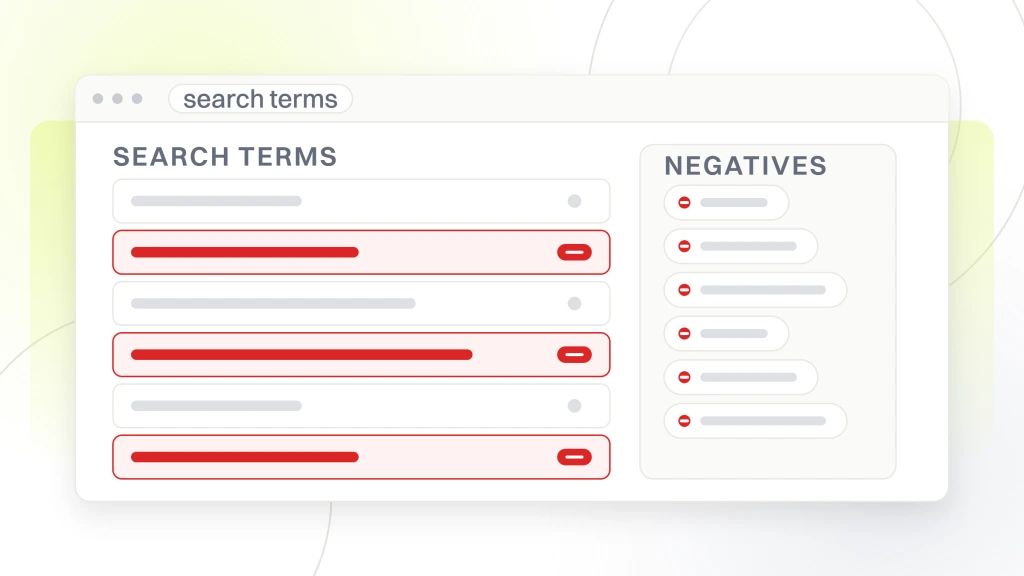
- Running broad match without negative keyword lists. Broad match keywords match search terms the store never intended to target, which burns 30% to 50% of budget on irrelevant clicks in the first month.
- Ignoring the product feed. Incomplete titles, missing GTINs, and disapproved products cap Shopping impression share regardless of bid strategy.
- Running Performance Max on a new account. PMax needs 30 to 50 conversions per campaign per month to optimize. New accounts rarely have that data, so PMax scatters spend across weak inventory.
- Setting target return on ad spend too high. Target return on ad spend above 5.0 usually chokes the campaign, since the bidder cannot find enough auctions that clear the threshold.
- Skipping negative keyword sweeps. Search term reports show wasted spend on irrelevant queries every week. Not sweeping them leaves 15% to 25% of budget on the table.
- Judging performance before day 21. Platform machine learning needs 14 to 21 days to stabilize on a new campaign. Pausing a campaign at day 10 for underperformance resets the learning cycle and wastes the setup investment.
Every one of the six mistakes above shows up in our audits of failed DTC accounts we replace. Founders who screen for the patterns before launching filter out most of the underperformance before it happens. The remaining variance comes down to product-market fit and creative quality, which sit outside the platform mechanics but influence outcomes as much as the bid strategy does. Google Ads Help maintains a reference guide to Smart Bidding that covers the automated strategies covered above in official platform language.
A real PPC for ecommerce sites program in production
A DTC skincare brand selling clean-formulation serums came to our team with $780,000 annual managed ad spend across Google Shopping, Google Search, and Meta prospecting. Conversion rate had flatlined at 1.9% for three quarters. Cost per acquisition sat at $38 against a break-even ceiling of $28. The founder wanted cost per acquisition inside the break-even ceiling without cutting revenue growth, and the internal team was out of ideas after the last agency swap produced no meaningful change in 90 days.
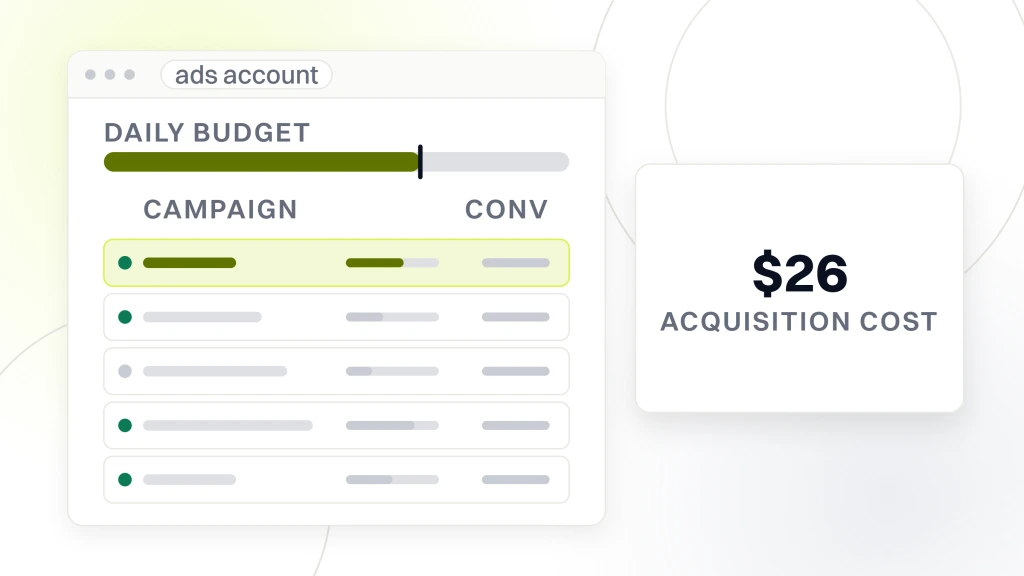
Our team scoped a 90-day audit followed by a six-month program. The audit found a Merchant Center feed missing 38% of GTIN values, a Meta pixel double-firing on checkout for one product line, a Google Shopping negative keyword list with 8 entries when the search terms report had produced 220 candidate negatives across the previous quarter, and a Performance Max campaign consuming 42% of Google budget without conversion path visibility. The 90-day rebuild fixed the feed, deduplicated the Meta pixel, rebuilt the negative keyword sweep to run weekly, split PMax into asset-group segments by margin tier, and introduced dedicated Meta advantage-plus shopping prospecting audiences pulling from top customer lookalikes.
Over the following six months, conversion rate climbed from 1.9% to 2.4%, cost per acquisition dropped from $38 to $26, and the brand held the $780,000 annual managed ad spend at improved return. The engagement compounded across the following year as creative testing cadence stabilized and audience refresh moved to a monthly cycle. The program produced measurable improvement inside the first six months, which is what an honest PPC for ecommerce sites program should deliver for the fee the brand paid.
Where PPC in ecommerce fits the growth stack
Answering what is ppc in ecommerce well puts the store at the top of the paid growth stack. Every downstream tactic including email flows, SMS marketing, and retention automation compounds off the customer base PPC brings in, or fights against a paid mix that acquires customers with weak lifetime value. Founders that pick channels matched to their catalog and margin compound month over month. Founders that pick channels since a competitor mentioned them at a conference burn budget on audiences the product cannot serve well.
Six-month contracts on paid media retainers are standard, since the account learning cycle plus creative test cadence rarely stabilizes inside 90 days. Retainers at Redefine Web start at $999 per month for founder-scale accounts, step up through $1,499 and $2,499 per month as the media mix expands, and reach from $4,500 per month for the full omnichannel program. Ad spend is billed separately. Match spend to stage plus one. Buy scope specificity, not marketing language. Hold the retainer through at least two quarters before judging outcomes.
Match the channel mix to margin per order, not to platform trends the industry press keeps hyping. Read the return on ad spend numbers weekly. Sweep negative keywords weekly. Refresh creative every three to four weeks. That is the operating cadence every honest answer to what is ppc in ecommerce runs against.