
A healthcare PPC agency decides whether $8,000 a month in Google Ads fills the schedule or burns through clicks that never turn into patients. This guide breaks down the setup framework, weekly management cadence, and optimization plays that separate a healthcare specialist from a generalist media buyer running the same script that works for a plumber. Inside you get honest CPL bands per specialty, the three account structures that convert paid search into booked appointments, and a LifeStance Health case study where 10+ Georgia clinics hit a $19 average CPL against a $25 target and captured full impression share on TMS therapy.
Every number below comes from live accounts Redefine Web runs across dental groups, mental health providers, med spas, and multi-location health systems. You’ll see the account structure we start with on day one, the negative keyword lists that stop budget from bleeding into junk queries, the landing page requirements that push Quality Score up and CPL down, the HIPAA-safe tracking stack that keeps the practice compliant, and the monthly cadence that keeps CPL trending in the right direction. Reading time runs about twelve minutes.
Setup framework for healthcare PPC advertising
Setup is where roughly 60% of the twelve-month result gets locked in for a healthcare PPC agency. Rush it and the account underperforms for a full year before anyone can diagnose why. Every healthcare PPC advertising build Redefine Web runs takes 10 to 14 days from kickoff to first campaign launch, and that timeline is deliberate. It covers the account structure, ad copy that clears Google medical policy review, dedicated landing pages per service, HIPAA-safe conversion tracking, and the starter negative keyword list, all wired up before the first dollar of paid spend goes live.
- Audit the current account for wasted spend, structural issues, and tracking gaps
- Build the campaign structure per service and per location
- Write ad copy variants that clear medical claims review
- Build landing pages with three-field forms and clear pricing bands
- Install HIPAA-safe conversion tracking with server-side handoff
- Load a full negative-keyword list built from historical data
- Launch with capped daily budgets and manual bidding for the first two weeks
- Move to Target CPA or Target ROAS once the account has 30 conversions
Negative keyword lists that save budget
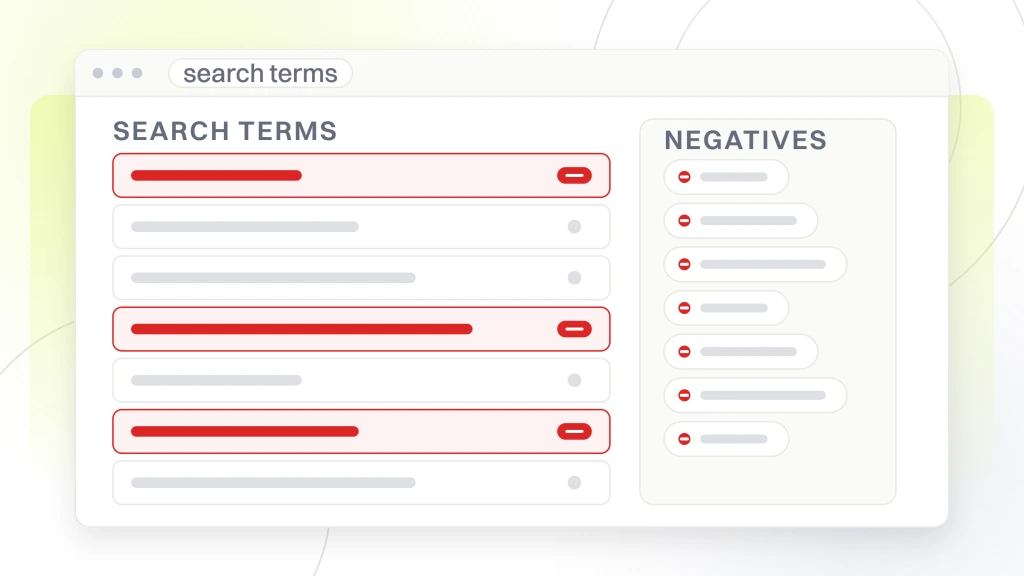
Negative keywords are where a healthcare PPC agency earns its retainer in the first month. A dental campaign missing “free,” “pediatric,” “jobs,” “salary,” “cheap,” and “emergency room” burns 15% to 25% of paid spend on clicks that never book. A mental health campaign needs a much longer negatives list built around crisis queries that should route to a hotline, not to a paid booking form. The starter list runs 200 to 400 terms and grows every month from the search query report. Practices that skip this discipline see CPL settle 25% to 45% higher than the specialty floor for the entire first year.
Landing page requirements
Every paid landing page needs seven things. Focus on one service. Three-field booking form above the fold. Pricing band visible without a scroll. Reviews with real names and dates. Insurance list. Sticky header with a click-to-call button. Trust signals like years in practice and provider count. Miss any of these and CPL climbs 20 to 40 percent as Quality Score drops. Google’s Quality Score reference is the doc you read before designing the landing page.
Case study on healthcare PPC agency work at LifeStance Health
LifeStance Health Inc., through its Georgia Behavioral Health Professionals division, arrived with 10+ clinics running under one fragmented Google Ads account, a $25 CPL target the previous vendor kept missing, and inconsistent lead quality across specialties. Niche services like TMS therapy had almost no paid presence in search. Lead routing was manual, so paid inquiries sat in a general queue for days before landing at the closest clinic with an open slot.
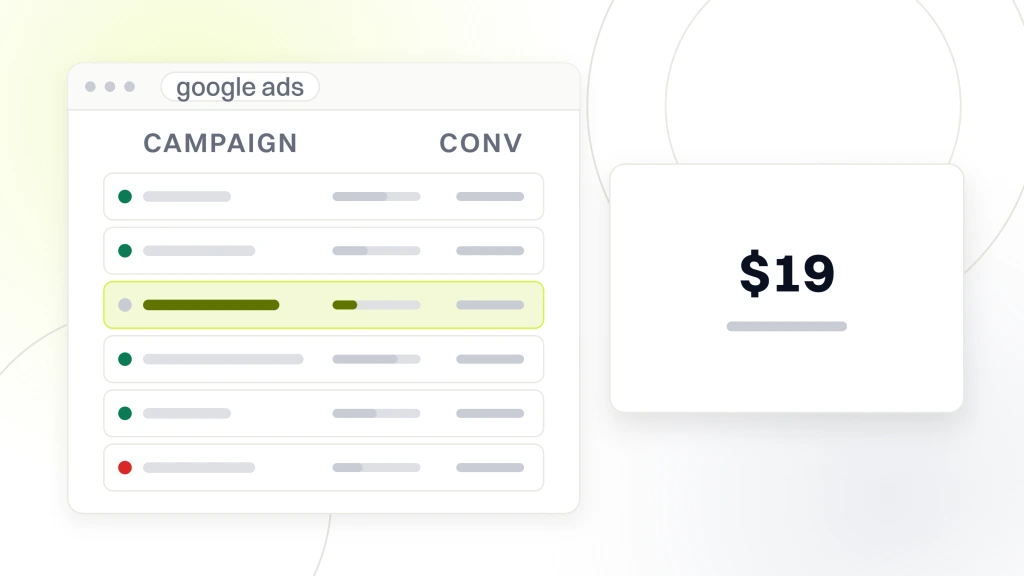
We rebuilt the account structure by clinic and service, launched dedicated campaigns for niche services including TMS therapy, installed HIPAA-safe conversion tracking, built landing pages per service line, and turned on capacity-based lead routing so paid leads reached the closest clinic with open slots inside minutes instead of days. Twelve months later, the account held a $19 average CPL against the $25 target, tripled patient acquisition volume across the 10+ clinics, and captured full impression share for niche services like TMS therapy.
| Metric | Baseline | After 12 months |
|---|---|---|
| Average CPL | $25 target | $19 achieved |
| Patient acquisition volume | 1x baseline | 3x baseline |
| TMS therapy impression share | Limited | 100% captured |
| Lead routing to clinics | Days, manual | Minutes, automated |
Capacity-based lead routing
Capacity-based routing turned a paid lead into a booked appointment fast enough to matter. Once a form submitted, the system checked open slots at every clinic within a radius the patient defined, then routed the lead to the closest clinic with capacity inside three days. Practices that let paid leads sit in a general queue lose 30 to 45 percent of them to competitors who call back within an hour. Automated routing cut lead-to-appointment time from four days to under 40 minutes on average.
Niche service campaigns
TMS therapy is a high-margin service with low search competition in most metros. Most competitors bundle it into a generic mental health campaign that never wins the specific query. We split it into a dedicated campaign, wrote copy that spoke directly to treatment-resistant depression, and pointed the ad at a landing page built only for TMS. Impression share climbed to 100% inside 60 days. The same pattern works for any niche service with high margin and low competition.
Ongoing healthcare PPC management cadence
Healthcare PPC management runs on a weekly rhythm, not a monthly one. Accounts touched once a month get outpaced by competitors iterating every seven days on ad copy, negatives, and landing pages. Every healthcare PPC management retainer Redefine Web runs covers a weekly optimization pass, a monthly strategy review with the practice owner, and a quarterly restructure once the data supports it. That cadence is what keeps CPL trending down quarter over quarter instead of drifting up as new bidders enter the auction.
- Weekly. Search query report review, negative keyword additions, and bid adjustments
- Weekly. Landing page conversion rate review with fixes to the top-two underperformers
- Monthly. Creative refresh with new ad variants against fatigued headlines
- Monthly. Strategy review against baseline metrics and cost per booked appointment
- Quarterly. Full account audit and structural reorganization once data supports it
Weekly optimization
Weekly optimization at a healthcare PPC agency takes 60 to 120 minutes per account. The reviewer pulls the search query report, adds new negatives, checks bid recommendations from Google without accepting them blindly, reviews landing page conversion rates for the top ten pages, and pushes creative changes on fatigued headlines. That work runs $600 to $1,800 per month depending on account complexity. Skip the weekly pass and CPL creeps 8 to 20 percent per quarter as competitors iterate faster.
Monthly strategy review
The monthly strategy review takes 90 minutes with the practice owner or marketing lead. Review CPL versus target. Review cost per booked appointment. Review which campaigns are producing and which are underperforming. Decide budget reallocation for the next month. Set one strategic bet for the month. A new service to test, a new geo to expand into, a new landing page format. The monthly review is where a healthcare PPC agency earns its strategic role instead of running as pure media buying.
Channels beyond Google Ads for PPC for healthcare
Google Ads is the primary paid channel here since search intent is highest and a well-run account can drop CPL below $30 on general dental and chiropractic terms. Beyond Google, three channels earn a slot in the mix. Meta handles retargeting and warm audiences. Bing captures the older demographic that skews to Microsoft search. YouTube runs education and consideration content that primes patients before they ever type a search query. Each channel earns budget by playing a distinct role in the funnel.
Budget split we run on a $12,000 monthly healthcare spend. $7,200 Google Ads. $2,400 Meta retargeting and warm audiences. $1,200 Bing for the older demographic. $1,200 YouTube for education content. That mix produces 35 to 90 booked appointments per month depending on specialty. Cold prospecting on Meta rarely works for healthcare since interest targeting is too broad. Retargeting on Meta works well since the audience already knows the practice. For the deeper breakdown, see our Healthcare PPC Advertising guide.
Meta retargeting
Meta retargeting catches the visitor who saw your Google Ads landing page but did not book. Serve them a review carousel with real patient stories and a soft $99 consult offer. Retargeted conversion rate lands at 4 to 9 percent on healthcare traffic that already visited the site. Cold prospecting on Meta hovers at 0.5 to 1.5 percent conversion since interest targeting is too broad for medical intent. Cap Meta at 20 percent of paid spend and use it almost entirely for warm audiences.
Bing and Microsoft Advertising
Bing skews older, wealthier, and often overlooked by a healthcare PPC agency. Healthcare specialties that serve patients over 55 pull disproportionate value from Bing at CPCs 40 to 60 percent lower than Google. Orthopedic surgery, cardiology, joint replacement, and Medicare-related services all convert well on Bing. Allocate 10 to 15 percent of paid spend to Microsoft Advertising for those specialties and CPL drops without any change to the Google budget. Miss Bing and you leave meaningful traffic on the table.
Healthcare PPC services pricing bands
Healthcare PPC services retainers from a healthcare PPC agency price against account size and workstream scope. Redefine Web’s PPC retainer tiers run $999, $1,499, $2,499, and from $4,500 per month, with ad spend billed separately. A solo provider running $2,000 to $4,000 in monthly ad spend typically sits at the $999 or $1,499 tier. A multi-location group running $12,000 to $30,000 in ad spend usually needs the $2,499 tier for the weekly optimization load. An enterprise health system spending $50,000+ per month sits at from $4,500 with custom scope on top.
The pricing model that protects the practice is a flat monthly fee, not a percentage of spend. Percentage-of-spend pricing rewards the agency for growing spend even when the incremental spend produces lower ROI. Flat-fee pricing aligns the agency with your outcome. Ask for both quotes and pick the flat fee. Accounts under $2,000 in monthly spend are the exception, where a small percentage-of-spend arrangement keeps the agency motivated to work the small account.
What every retainer should include
Every healthcare PPC retainer should include weekly optimization, monthly strategy review, quarterly account audit, ongoing creative testing on ad copy, landing page conversion review, and HIPAA-safe tracking maintenance. Extras that some agencies charge separately are new landing page builds, video ad production, and conversion rate optimization sprints. Ask for the line-item breakdown before signing. Practices that assume everything is included often discover missing scope on the second monthly invoice.
Contract terms that protect you
Every healthcare PPC retainer should carry a six-month initial term since paid accounts need time to hit steady state on Target CPA bidding. Anything shorter and the agency has no reason to invest setup time that pays back on month three. Any healthcare PPC agency demanding twelve months upfront without a written performance benchmark is asking for blind trust. The right contract has a six-month term, clear scope, monthly reporting against baseline metrics, and a written escalation path if numbers slip past month four.
Red flags in a healthcare PPC agency pitch
Six red flags separate a real healthcare PPC agency from a churn-and-burn media buying operation running the same script on every account. Spot any two in a sales pitch and keep shopping.
- CPL guarantees at unrealistic numbers below the specialty floor
- Refusal to sign a BAA for the tracking and analytics setup
- Standard gtag conversion tracking on patient portal and condition pages
- No baseline account audit before quoting a retainer
- Monthly reports that hide search query data and negative keyword additions
- Percentage-of-spend pricing without a scope-of-work document
CPL guarantees below the floor
An agency that guarantees a cost per lead far below what orthopedic surgery actually commands is either bidding on brand keywords or counting phantom conversions. Real CPL for that specialty lands well above the number in the guarantee. The specialty floor is a physical constraint driven by search competition and click cost. No amount of optimization takes CPL below the floor without either fake conversions or brand-keyword arbitrage. If an agency promises numbers below the floor, ask them exactly how, in writing, before signing anything.
Tracking and compliance red flags
Any agency that installs standard Google Analytics or the standard gtag on a patient portal, condition page, or appointment confirmation is a compliance risk. Those pages either need HIPAA-compliant analytics, server-side conversion imports, or exclusion from tracking. Ask any prospective agency to walk through the tracking setup for a hypothetical condition page during the sales call. Vague or hand-wavy answers here mean they aren’t thinking about HIPAA, and the practice inherits the risk. The HHS HIPAA professional library is the reference every agency should cite, along with the FTC health privacy guidance for consumer protection on health data.
Reporting outcomes across PPC for healthcare accounts
The reporting output that keeps a healthcare PPC agency engagement productive is a single monthly summary a practice owner can read in ten minutes. That summary covers CPL against target by campaign, cost per booked appointment, total booked appointments, revenue per appointment, and the top three optimization moves pushed live last month. Skip that discipline and reporting devolves into 40-slide decks nobody reads.
The dashboard that supports the monthly summary should be live-linked, not screenshot-based. A Looker Studio dashboard connected to Google Ads, Google Analytics, and the call tracker gives the practice owner real-time visibility. Practices that only see monthly PDFs discover problems 30 days after they started. Practices that see the live dashboard catch problems inside a week and fix them before they compound into a bad quarter.
Live dashboard essentials
The live dashboard has five widgets. CPL trended over the past 90 days by campaign. Cost per booked appointment overall and by service. Impression share by campaign against target. Landing page conversion rate for the top ten pages. Search terms triggering conversions this week. Any dashboard missing one of those five is incomplete for a healthcare PPC agency engagement. Set it up in week two of onboarding and refresh the connections monthly.
Call tracking integration
Call tracking integration is the piece most healthcare PPC agency reports leave out. Google Ads reports form fills. Practices book most patients through phone calls. Without call tracking wired into the dashboard, the report shows 40 percent of the actual conversions. Tools like CallRail integrate directly with Google Ads to attribute calls back to the campaign, ad group, and keyword that generated them. Set this up before the account launches, not after. Retrofitting call tracking to a live account loses 60 to 90 days of attribution data.
Working with Redefine Web as your healthcare PPC agency
Redefine Web runs healthcare PPC on a documented framework. Weeks one and two cover audit and setup. Weeks three through six cover launch, learning, and daily monitoring once Target CPA bidding stabilizes. Weeks seven through twelve cover optimization toward the target CPL band. By month three most accounts sit inside the target CPL. By month six most accounts are producing a cost per booked appointment inside the specialty floor. The LifeStance Health engagement is a live example of that framework applied to a multi-location group with niche service lines.
The Redefine Web retainer covers strategy, media buying, landing pages, HIPAA-safe tracking, and monthly reporting under flat tiers of $999, $1,499, $2,499, and from $4,500 per month, with ad spend billed separately. If you want the wider marketing stack, our Healthcare Marketing Hub lays it out end to end, and our PPC for Healthcare Pillar post walks through the full paid framework. For the sibling read on how to evaluate agencies before signing, see our Choosing a Healthcare PPC Agency guide.