Google ads management indianapolis accounts run on a Marion County map, a mixed metro of local trades, HVAC crews, dental practices, IU Health medical groups, mid-market B2B firms, and DTC retailers stretching from Fishers to Greenwood. Cost per click across the Indianapolis DMA sits 15% to 30% below the national average for most service verticals. That gap gives local advertisers real cost control. Poorly run accounts still waste 30% to 55% of spend on the wrong queries, wrong ZIPs, and wrong device targeting. Well-run accounts book leads at $45 to $180 each depending on vertical and hold those numbers steady across a full year of retainer work.
This guide walks the operating model our team runs on live Indianapolis Google Ads accounts. Vertical benchmarks, campaign structure, negative keyword shape, conversion tracking, and the monthly cadence that keeps the phone ringing at plumbers, HVAC crews, dentists, law firms, and B2B software companies across Central Indiana. Every number here traces to accounts we manage today across metro Indianapolis and to plumbing, chiropractic, and ecommerce accounts we run in other markets with the same operating model. Pair this guide with the PPC Management Services program at Redefine Web if you want the build run for you by a team that has done 200-plus accounts.
Google ads management indianapolis has its own market shape
The Indianapolis DMA covers roughly 2.1 million people across 9 counties. Marion County holds the urban core. Hamilton, Hendricks, Johnson, and Boone counties hold the ring suburbs where median household income runs 30% to 55% higher than the urban core. Auction pressure varies by county. Downtown Indianapolis auctions run 20% to 35% hotter than Fishers or Carmel for the same head terms. Auction pressure in Greenwood and Plainfield runs 10% to 15% below the urban core. Any Indianapolis account without county-level bid modifiers usually wastes 15% to 25% of spend on soft-conversion ZIPs across the DMA.
The vertical mix that dominates Indianapolis auctions
Home services dominate Marion County Google Ads spend. HVAC, plumbing, roofing, and electrical crews compete against national franchise brands and hyperlocal shops for the same emergency queries. Healthcare and dental push hard through the ring suburbs where household income supports elective care. Legal spend concentrates on personal injury and family law with cost per click running $45 to $120 for head terms. B2B software companies clustered around 116th Street and Meridian carry lower auction pressure but tighter attribution rules to keep procurement happy.
Seasonality on the Indianapolis map
Indianapolis Google Ads seasonality tracks the school calendar and the weather calendar together. HVAC peaks span June through August plus the January to February cold snap. Roofing peaks after the April through June storm window. Dental books strongest in January when insurance benefits reset and again in August when families schedule back-to-school visits. Legal stays flat year-round with a slight February to March spike tied to tax season debt anxiety. Shops that plan monthly budgets around a flat annual number usually miss the seasonal peaks and overpay through the flat months. Our Google Ads management pricing guide walks the seasonal budget math in detail.
Google ads management indianapolis pricing across account sizes
Pricing at Redefine Web runs on four tiers. $999, $1,499, $2,499, and from $4,500 a month, with ad spend billed separately. Sub $5,000 monthly spend fits the $999 or $1,499 tier depending on campaign count and reporting depth. Mid-market accounts spending $5,000 to $25,000 monthly per month price at $2,499 or the $4,500 tier. Enterprise accounts spending over $25,000 monthly sit at $4,500 a month or higher with a percent-of-spend component only where the workload actually scales with the budget. Percentage-of-spend fee models drift out of alignment as spend rises past $20,000 monthly because the workload flattens while the fee keeps climbing.
Solo trade and single-location retail
A single-location Indianapolis home services shop spending $3,500 monthly on Google Ads should expect the $999 or $1,499 tier. That covers 1 active campaign, a negative keyword file, weekly bid tuning, monthly reporting, and 1 small landing page test per quarter. Shops paying more than $1,200 monthly for a $3,500 spend account usually get a scope that includes retargeting, GA4 event configuration, or a second campaign for a secondary service line. Anything cheaper than $999 monthly usually gets bot-driven optimization with no local knowledge behind the account.
Multi-location and mid-market
Mid-market Indianapolis accounts running $8,000 to $20,000 monthly in Google Ads spend should budget the $2,499 or $4,500 tier. That covers 3 to 6 campaigns, active Shopping or Performance Max where the vertical supports it, weekly optimizations, monthly executive reporting, quarterly landing page testing, and dedicated account strategist time. Multi-location retail groups running 4 to 8 stores across metro Indy tend to sit at the $4,500 tier because store-level conversion tracking adds workload. The Google Ads product documentation at support.google.com covers Shopping and Performance Max setup for shops evaluating the shift.
Enterprise and B2B
Enterprise B2B accounts based in Indianapolis usually spend $25,000 to $90,000 monthly on Google Ads. Management fees at that scale price from $4,500 monthly under a flat fee model, or 8% to 12% of spend for accounts that grow steadily. Scope covers offline conversion imports from CRM, pipeline attribution back to keyword, quarterly incrementality testing, and executive briefings on paid channel spend across leadership. B2B accounts that treat Google Ads as brand build without pipeline attribution usually cancel the retainer inside 12 months because the executive team cannot read the return.
Campaign structure that actually books calls in Indianapolis
The campaign structure that produces booked calls for Indianapolis service accounts follows service-line separation, not brand-versus-nonbrand separation. Each service line gets its own campaign. Emergency service, routine maintenance, install work, and warranty work each run in their own campaign so budget pacing tracks the profit margin of each service line. Accounts built around a single “everything” campaign usually spend 40% to 60% of budget on the lowest-margin queries because Smart Bidding pushes toward the cheapest conversion, not the most profitable one. Berks Plumbing grew Google Ads conversions 99% and dropped cost per acquisition 67% after a rebuild that separated emergency plumbing, drain cleaning, water heater, and sewer work into 4 dedicated campaigns.
Ad group and match type discipline
Ad groups inside each campaign hold 5 to 12 keywords in a single tight theme. Phrase match and exact match do the heavy lifting on service accounts. Broad match sits paused on new accounts and comes back only after 90 days of exact-match conversion data has trained the account. Broken match type discipline is the number one cause of wasted spend on inherited accounts.
Location targeting for Marion County
Location targeting for Marion County accounts should use presence only, not presence or interest. Google defaults new campaigns to presence or interest, which serves ads to users searching about Indianapolis rather than users in it. That default costs a plumbing account $15 to $25 per irrelevant click. Flip every Search campaign to presence only on day one. Add county-level bid modifiers next. Hamilton County usually gets a +15% to +25% modifier because the household income supports higher-margin work. Downtown ZIPs inside Marion County usually get a -10% to -15% modifier because the head-term auction runs hot without a matching conversion rate.
Bidding strategy selection
Bidding strategy selection for Indianapolis accounts follows the conversion volume in the account. Accounts under 15 conversions per month sit on manual CPC or maximize clicks until the volume clears the training threshold. Accounts with 15 to 30 monthly conversions move to maximize conversions with a bid cap. Accounts with 30+ monthly conversions move to target cost per acquisition. Accounts with 50+ conversions in ecommerce move to target return on ad spend. Boogie Board managed $650,000 in ad spend at a $31 cost per conversion and 11% conversion rate after the account crossed the conversion volume threshold that let target return on ad spend take over from manual CPC.
Conversion tracking that closes the loop on Indianapolis accounts
Conversion tracking is the difference between a Google Ads account that reports and a Google Ads account that optimizes. Every Indianapolis account should route conversions through Google Tag Manager, wire call tracking through CallRail, and import offline conversions from the CRM for any account with a sales cycle over 30 days. Accounts running without those 3 layers usually see cost per lead drift 20% to 40% above the vertical benchmarks in this guide because Smart Bidding cannot optimize toward a signal it never receives.
Google Tag Manager setup
Google Tag Manager sits between the website and Google Ads and holds every conversion tag in one container. Form submissions, phone clicks, chat opens, appointment bookings, quote requests, and thank-you page loads each fire as separate conversion actions. Category and value settings on each conversion action tell Smart Bidding how much each conversion is worth. Accounts without value settings treat a $95 tune-up call the same as a $9,500 install lead, which sends the algorithm chasing the cheapest option every time.
Call tracking for local services
Call tracking for Indianapolis local services runs through CallRail with dynamic number insertion on the website and static tracking numbers on Google Business Profile. Every call over 60 seconds counts as a qualified lead conversion. Every call under 60 seconds counts as a click event but not a conversion. That split keeps Smart Bidding trained on the real revenue signal rather than every wrong-number call from a spam bot. Pain Cure Clinic grew new patient appointments 205%, averaging 122 monthly against a 40 baseline, after call tracking replaced a paper intake log that missed 30% to 40% of the actual call volume from ads.
Offline conversion imports for B2B
Offline conversion imports for B2B pull qualified lead status, sales-accepted status, and closed-won status back from the CRM into Google Ads on a nightly schedule. That import lets Smart Bidding optimize toward closed revenue rather than form fills. Indianapolis B2B accounts running $15,000+ monthly spend without offline imports typically waste 30% to 45% of the budget on form-fill traffic that never closes. The import runs on a nightly cron with the click ID and offline conversion value passed through the Google Ads API.
Negative keyword lists that stop wasted spend fast
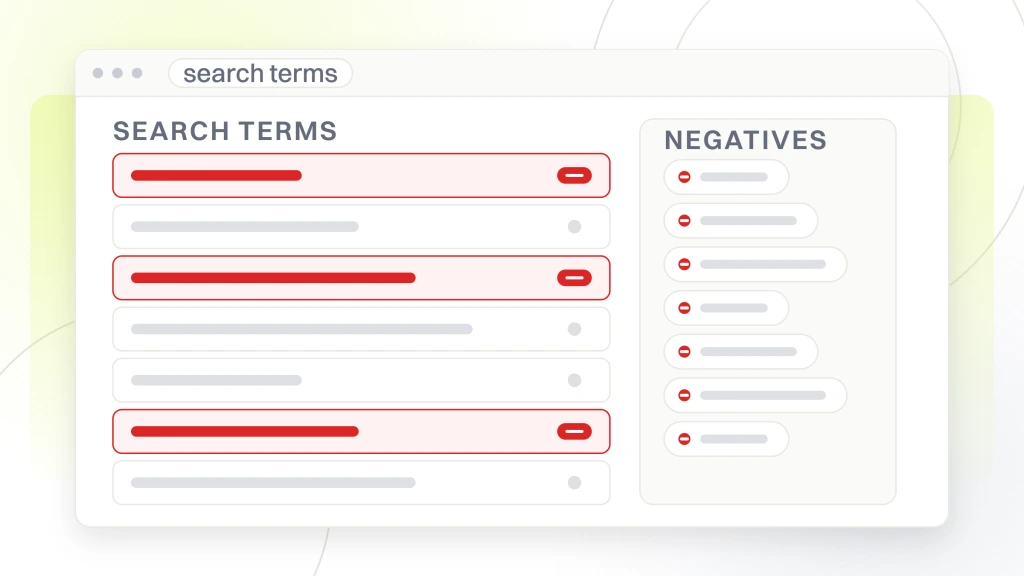
Negative keyword lists are the single fastest recovery lever on any inherited Indianapolis account. A typical inherited account carries 200 to 800 negatives, most of them added reactively over years of search term reviews. A properly built account carries 1,500 to 4,000 negatives across a shared library that every campaign inherits. That gap is the reason inherited accounts waste 15% to 30% of monthly spend the first week we get the account. Adding a well-built shared library recovers most of that waste inside 14 days without touching a bid.
Cross-account shared lists
Cross-account shared negative lists hold the universal junk that every service account should exclude. Job seeker terms, DIY terms, cheap terms, free terms, image terms, video terms, and Wikipedia terms belong on the universal list. Every new Indianapolis account inherits the universal list on day one, then adds vertical-specific lists on top. Home services accounts add a home-services negative library. Dental accounts add a dental negative library. Legal accounts add a legal negative library that filters out the pro bono, self-help, and true-crime traffic that hits legal head terms constantly.
Search term review cadence
Search term review runs weekly on every Indianapolis account. The review pulls the last 7 days of search terms, sorts by cost descending, and flags every term without a conversion for negative or bid adjustment consideration. Reviews under 30 minutes catch the biggest waste drivers. Reviews over 60 minutes usually get lost in low-cost long-tail terms that do not move the account materially. Discipline in the weekly cadence matters more than the depth of any single review. Optmyzr blog at optmyzr.com covers search term automation for accounts that want to layer scripting on top of the manual review.
Query mining for new keywords
Query mining for new keywords is the flip side of the negative review. Every search term review also flags high-converting search terms that are not yet added as exact match keywords in the account. Those terms get promoted to their own exact match keywords in the matching ad group. That promotion pattern is how the account grows its exact match keyword base month over month without the account manager guessing at what to add. The keyword base grows from the actual buyer language, not from the account manager’s assumptions.
Cost per lead benchmarks across Indianapolis verticals
Cost per lead benchmarks for Indianapolis Google Ads accounts vary widely by vertical. Emergency plumbing runs $45 to $95 per booked call. HVAC installs run $85 to $180 per qualified estimate lead. Roofing runs $95 to $220 per qualified inspection lead. General dentistry runs $65 to $140 per new patient consultation. Cosmetic dentistry runs $150 to $380 per consultation. Personal injury legal runs $180 to $650 per qualified case intake. B2B software runs $180 to $450 per marketing qualified lead depending on sales cycle length. Accounts running 20% to 40% above these benchmarks usually have a fixable configuration issue rather than a structural market problem.
Home services benchmark table
Home services benchmarks across metro Indianapolis follow a tight range on any account with proper structure. Emergency plumbing sits at $45 to $95 per booked call with 8% to 14% conversion rate. HVAC repair sits at $65 to $120 per booked call with 6% to 11% conversion rate. HVAC install sits at $85 to $180 per qualified lead with 4% to 8% conversion rate because the sales cycle involves an in-home estimate. Roofing sits at $95 to $220 per lead with 3% to 7% conversion rate. Electrical sits at $55 to $110 per booked call with 7% to 12% conversion rate. Accounts inside these ranges are healthy. Accounts outside these ranges need audit work before spend increases.
Healthcare, dental, and legal benchmark reads
Healthcare, dental, and legal benchmarks for Indianapolis accounts sit meaningfully higher than home services because the click cost is higher and the sales cycle is longer. General dentistry cost per new patient consultation runs $65 to $140. Cosmetic dentistry consultation cost runs $150 to $380. Chiropractic new patient booking runs $45 to $110 in Indianapolis with a 10% to 18% consultation-to-booked-appointment rate. Personal injury legal case intake runs $180 to $650 per qualified case. Family law consultation runs $95 to $240 per booked consultation. B2B software marketing qualified lead runs $180 to $450 depending on the sales cycle length and the vertical of the buyer.
A local plumbing case that mirrors Indianapolis account patterns
Gwinnett Area Plumbers ran on the same operating model our team applies to Indianapolis home services accounts. Their inherited account carried the same failure pattern most Marion County shops carry when they change agencies. Generic ad copy, unsegmented service lines, no ad extensions, no dedicated landing pages, no call tracking, no conversion reporting the owner could read. Every dollar of spend disappeared into a black box the prior agency had built around the account. The owner had no way to answer the basic question of whether the account was worth the monthly retainer.
What we restructured on the account
We built a fresh Google Ads PPC strategy with 10 service-specific ad groups targeting high-intent local keywords. Every relevant ad extension went live to maximize ad presence on the results page. We built new dedicated landing pages aligned with user intent and optimized to convert clicks into phone calls or form submissions. Advanced call tracking pixels captured every inbound call from the ads. The reporting layer surfaced qualified leads, ad clicks, conversion rate, and cost per lead in one weekly one-page pacing note the owner could actually read.
The 4-month result
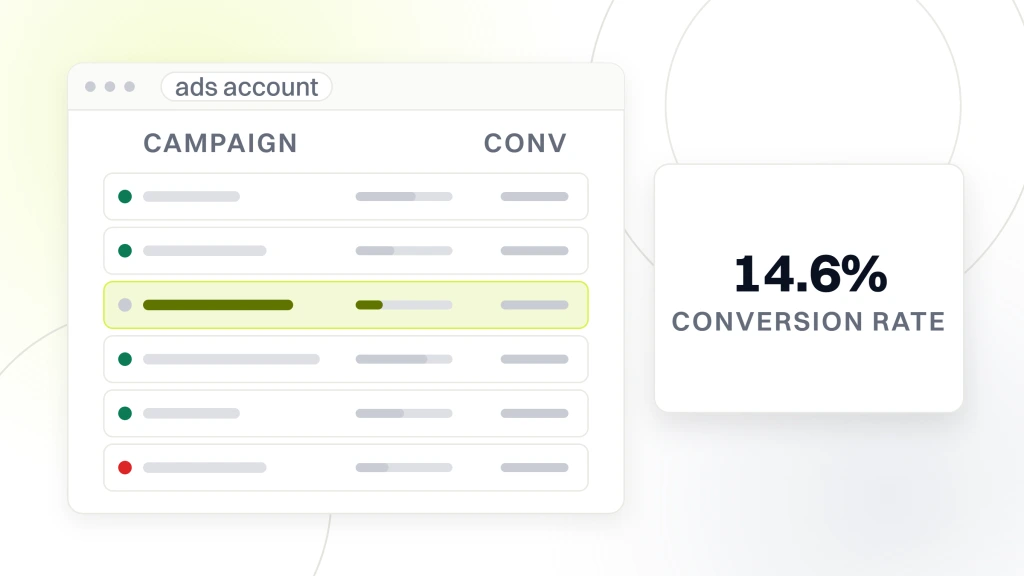
Gwinnett Area Plumbers booked 141 qualified plumbing leads across 4 months on the rebuilt account. Ad clicks totaled 968 highly targeted clicks across the 10 service-specific ad groups. Conversion rate finished at 14.6%, well above the plumbing industry benchmark of 6% to 10% for local service auctions. Cost per lead stayed inside the target range every month of the engagement. The same pattern applies directly to Indianapolis plumbing, HVAC, and roofing accounts. Service-line segmentation, dedicated landing pages, call tracking, and a weekly reporting rhythm the owner reads. Berks Plumbing followed the same operating model and grew Google Ads conversions 99% while cutting cost per acquisition 67% across the engagement. Both cases match what a well-run Indianapolis home services account looks like when the structure and tracking layers are locked in from day one.
Landing pages that turn Indianapolis clicks into booked calls
Landing pages for Indianapolis Google Ads accounts should live outside the main website navigation and load in under 2.5 seconds on mobile. Each landing page maps to one service line and one campaign. Homepage-as-landing-page pattern usually cuts conversion rate 40% to 60% on service accounts because the page tries to answer too many questions at once. Google Ads quality score also drops when the landing page URL does not match the ad’s specific service intent. Practices running homepage landing pages usually see the click cost drift 15% to 30% higher than campaigns pointing at a dedicated page.
Above-the-fold structure
Above-the-fold structure on any Indianapolis landing page holds 4 elements. Headline that names the service and the city, a subhead that names the outcome and the timeframe, a click-to-call button sized for a thumb on mobile, and a trust bar with reviews or credentials. Everything else moves below the fold. Accounts that stuff hero sliders, video backgrounds, or heavy imagery above the fold usually see mobile bounce rate climb past 60% because the page takes too long to render on a 4G connection.
Below-the-fold trust building
Below-the-fold trust building on a service landing page runs 4 sections. Service explanation in 60 to 90 words, 3-column benefits list, review carousel with 3 to 5 real customer quotes, and a service area map with the specific Indianapolis suburbs served. ProCare Sports lifted engagement 30% and grew daily unique visitors to 20+ with a brand-aligned redesign that put credentials, service explanation, and real reviews in the same below-the-fold pattern. The same structure ports directly to Indianapolis chiropractic, dental, and med spa accounts.
Form design and mobile flow
Form design on the landing page runs 4 fields maximum on mobile. Name, phone, service needed, and preferred callback time. Every field beyond 4 cuts form completion rate 8% to 12%. The submit button sits sticky at the bottom of the form on mobile so the user never has to scroll to submit. Confirmation runs immediately with a thank-you message and an automatic call from the shop within 15 minutes during business hours. That 15-minute callback rule is the single biggest driver of consultation-to-booked-appointment rate on any Indianapolis service account.
Local Service Ads as a companion channel for Indianapolis service accounts
Local Service Ads sit above the paid Google Ads block at the top of the search results and charge per qualified lead rather than per click. Indianapolis home services accounts should run Local Service Ads in parallel with Google Ads Search for maximum coverage of the top of the page. Cost per lead on Local Service Ads runs $25 to $85 for plumbing, HVAC, roofing, and electrical in Indianapolis, which is 30% to 50% below the equivalent cost per lead on Google Ads Search. The tradeoff is volume. Local Service Ads deliver 40% to 60% of the lead volume of a well-run Google Ads Search campaign in the same vertical.
Google Guaranteed background check
Google Guaranteed background check is the entry requirement for Local Service Ads eligibility. The check runs on business registration, insurance, licensing, and owner background verification. Timeline runs 5 to 14 business days for most Indianapolis service verticals. Practices that skip the check cannot show in the Local Service Ads block at all. Cost of the check is bundled into the monthly Local Service Ads fee and runs about $50 to $100 monthly depending on vertical.
Review pace and verification
Review pace on the Google Business Profile drives Local Service Ads rank position more than any other factor. Practices need 5 to 10 new verified reviews per month to hold a top position in the Local Service Ads block. Reviews from customers who booked through Local Service Ads count double toward the rank algorithm. Pain Cure Clinic grew reviews 162% and lifted Google rating from 4.3 to 4.9 stars through a systematic review request cadence tied to every booked appointment. That review base ports directly to Local Service Ads eligibility and rank position.
LSA dispute workflow
LSA dispute workflow is the recurring operational task Local Service Ads requires. Every week 5% to 15% of the leads that get charged are actually bad leads that should be disputed. Wrong number, wrong service, spam, or outside service area. Practices that skip the weekly dispute review pay for those bad leads. Practices that dispute reliably get credit back inside 7 days on 60% to 80% of disputes. That credit rate is the difference between a Local Service Ads channel that pays for itself and one that quietly loses budget every month.
The monthly cadence that keeps Indianapolis accounts steady
Monthly cadence on any Indianapolis Google Ads retainer follows a predictable rhythm. Week 1 handles bid tuning, negative keyword additions, and search term review. Week 2 handles ad copy refresh, extension review, and landing page conversion rate work. Week 3 handles the mid-month reporting draft, budget pacing check, and campaign structure adjustments if the month is trending soft. Week 4 handles the executive report, next-month planning, and quarterly strategy scoping if that quarter closes at month end. This cadence produces steady booked lead volume rather than choppy monthly swings.
Reporting rhythm and pacing
Reporting rhythm on Indianapolis accounts includes a weekly one-page pacing check emailed to the owner. The check covers spend to date, projected spend by end of month, conversions to date, cost per lead running week over week, and any budget adjustments needed to stay on target. Monthly executive reports run 4 to 8 pages covering the same numbers plus vertical benchmarks, competitive intel from Auction Insights, and a next-month plan. Owners who read the weekly pacing note usually catch overspend issues in week 2 rather than at month end. Guidance from the Small Business Administration at sba.gov covers baseline advertising rules that apply to any small business marketing spend across Indiana.
Quarterly strategy work
Quarterly strategy work covers full account audits, competitive positioning against Auction Insights top 5 competitors, landing page conversion rate testing plans, seasonal budget rebalancing, and executive team briefings on paid channel performance. This quarterly work sits inside the retainer scope for mid-market and enterprise tiers. Solo trade accounts usually add it as scoped project work at $800 to $2,500 per quarter depending on account complexity. The work pays back through 15% to 30% efficiency gains in the following quarter.
Bid strategy transitions
Bid strategy transitions between manual CPC, maximize clicks, target cost per acquisition, and target return on ad spend follow the conversion volume triggers discussed earlier. Transitions get scheduled for the second week of a month to give the account 3 weeks of the new strategy before the next monthly report. Shops that flip bid strategies mid-month or reactively during a soft week usually see conversion volume oscillate rather than stabilize. Discipline in strategy transitions matters more than the choice of strategy itself.
Working with a partner on Indianapolis paid search
Our team runs Google Ads accounts for Indianapolis shops as part of an integrated PPC program. Coverage includes account structure, weekly optimization, monthly reporting, landing page conversion rate work, call tracking configuration, and offline conversion imports for B2B accounts. The retainer scope runs $999, $1,499, $2,499, and from $4,500 a month with ad spend billed separately. Shops should scope this at the start of a quarter rather than mid-quarter because bid strategy changes and campaign restructures benefit from a full 90 day training window.
What the retainer produces alongside the ad account
The retainer alongside the Google Ads account produces the landing page infrastructure, call tracking configuration, Google Tag Manager setup, and reporting rhythm that convert clicks into booked jobs. Standalone Google Ads spend without the wrapper usually produces 20% to 40% worse cost per lead than accounts running the full stack. Shops already on the retainer add Google Ads as a layer with modest incremental scope. Shops without the retainer usually need to add it before layering paid search across the account. Our Google Ads Management Services page covers the wider scope.
When to start the engagement
Start the engagement when the shop has capacity to handle 20% to 40% more booked jobs per month within 90 days of launch. Accounts running Google Ads without dispatch capacity usually book leads that go unserved and generate poor reviews. Sequence matters. Capacity first. Campaign structure second. Paid spend third. Shops that reverse the sequence usually cancel the retainer inside 6 months because the leads exceed the shop capacity and the customer experience suffers. Sound capacity planning across the crew ahead of the launch keeps the return on investment predictable across the retainer window.
A final read on google ads management indianapolis
Indianapolis paid search works well for shops with the right service capacity, the right campaign structure, and the right measurement discipline. The Indianapolis DMA gives local advertisers real cost per click savings against national averages, but only if the account uses county-level bid modifiers, tight negative keyword lists, and dedicated landing pages. Shops running any of those three layers poorly usually see cost per lead drift 20% to 40% above the vertical benchmarks in this guide. Fix the three layers and the account tends to hold the target cost per lead across a full year of retainer work.
The deciding factor is not the ad spend itself. It is the campaign structure, negative list shape, tracking setup, landing page infrastructure, and monthly cadence around the spend. Shops that invest in the wrapper turn Google Ads into a predictable booking channel. Shops that skip the wrapper usually see the account underperform for 6 to 12 months before canceling the retainer. See our Google Ads conversion tracking with Google Tag Manager guide for the tracking layer setup that pairs with an Indianapolis account rebuild.
Shops scoping their next quarterly buy should map their vertical against the benchmark ranges in this guide, confirm the campaign structure follows service-line separation, and build the tracking layer with CallRail, Google Tag Manager, and offline conversion imports for B2B before increasing spend past the training threshold. Google Ads without the tracking layer looks like a guessing game. Google Ads with the tracking layer becomes a spreadsheet decision that renews or cancels based on real cost per booked job numbers rather than on vibes from the front desk. The right sequence keeps the total paid program predictable across the campaign window and gives the owner a clear read on whether the next dollar routes to Search, Local Service Ads, retargeting, or landing page work.
What does google ads management indianapolis actually cost per month?+
Pricing at Redefine Web runs $999, $1,499, $2,499, and from $4,500 a month with ad spend billed separately. Sub $5,000 monthly spend fits the $999 or $1,499 tier. Mid-market accounts spending $5,000 to $25,000 monthly sit at $2,499 or the $4,500 tier depending on campaign count and reporting depth. Enterprise accounts spending over $25,000 monthly usually sit at $4,500 or higher with offline conversion imports and executive briefings folded into the scope. Percentage-of-spend fee models drift out of alignment once spend crosses $20,000 monthly because the workload flattens while the fee keeps climbing.
How long does google ads management indianapolis take to book real leads?+
Indianapolis Google Ads accounts typically start booking real leads inside 14 to 21 days of launch on a properly structured build. The first 90 days cover the training window where Smart Bidding gathers enough conversion data to hit the target cost per acquisition. Gwinnett Area Plumbers went from a broken inherited account to 141 qualified plumbing leads in 4 months at a 14.6% conversion rate on 968 ad clicks. Accounts running without call tracking or without dedicated landing pages usually take 90 to 120 days to reach the same lead volume because the platform cannot optimize toward a signal it never receives.
Is google ads management indianapolis worth it for a small local shop?+
Indianapolis paid search is worth it for a small local shop that can handle 20% to 40% more booked jobs per month within 90 days of launch. Cost per click across the Indianapolis DMA sits 15% to 30% below the national average for most service verticals, which gives solo trades and single-location retailers real cost control. A $3,500 monthly ad budget paired with a $999 or $1,499 retainer typically books 15 to 45 qualified leads a month depending on vertical. Shops without dispatch capacity for that lead volume see the leads go unserved, which hurts reviews and wastes the retainer.
How does google ads management indianapolis differ from a national agency?+
Running the account with a partner who knows the Indianapolis DMA means county-level bid modifiers, negative ZIP lists for soft-conversion suburbs, and Marion County landing page copy that mentions Fishers, Greenwood, Carmel, Plainfield, and Zionsville. A national agency running the same account usually skips the county bid modifiers, treats the whole DMA as one flat geo, and writes generic landing page copy that does not mention Indianapolis at all. Berks Plumbing dropped cost per acquisition 67% and grew ad conversions 99% after a service-focused rebuild with local page copy replaced the prior generic setup.
What ad spend should I start with for google ads management indianapolis?+
Ad spend for an Indianapolis Google Ads account should start at $2,500 to $3,500 monthly for a solo trade or single-location retail account. That budget covers one active Search campaign, a small retargeting layer, and enough conversion data for Smart Bidding to train inside 60 days. Mid-market accounts running 3 to 6 service lines should budget $6,000 to $15,000 monthly across the campaigns. B2B accounts with a 90-day sales cycle should start at $8,000 to $20,000 monthly because the platform needs 60 to 100 qualified leads a month to train a target cost per acquisition bid strategy without oscillating.
How do I pick the right agency for google ads management indianapolis?+
Pick the right Indianapolis PPC agency by asking for 3 client references in your vertical with account access to verify the numbers, a written scope with campaign count and reporting cadence, and a fee model that stays flat as spend scales rather than sliding to a percent-of-spend markup. Ask whether the audit at onboarding runs a 14-point checklist or a canned template. Ask who runs the account weekly. If the answer is a rotating pool of overseas analysts, walk. Redefine Web runs Indianapolis accounts inside the same PPC retainer scope as the rest of the country, with a named account strategist and a written weekly report every Monday.