
Skip to content
NOW BOOKING NEW ENGAGEMENTS GET A FREE STRATEGY SESSION ↗
HOME / BLOG / PPC / PROVEN PPC FOR MANUFACTURING CAMPAIGNS THAT
PPC

Proven PPC for Manufacturing Campaigns That Book RFQs

PPC for manufacturing that books real RFQs, not visitor counts. Real spend bands, keyword strategy, campaign structure, and how to avoid the ClickCease budget drain on industrial ads. Read straight through in ten minutes.

Proven PPC for Manufacturing Campaigns That Book RFQs
On this page+
KEY TAKEAWAYS
Solo manufacturers spend $2,500-$6,000 monthly and book 8 to 20 RFQs. Mid-market spends $6,000-$18,000 for 25 to 65 RFQs. Enterprise spends $18,000-$60,000 for 60 to 200 RFQs.
Landing pages first, keywords second, bids third. 80% of manufacturer PPC audits show ads pointing at the home page.
Click fraud eats 8 to 22% of an unmonitored industrial budget. A $12,000 monthly account loses $960 to $2,640 to bots and competitor clicks without a fraud stack.
PPC retainers sit at 12 to 18% of ad spend. Redefine Web tiers run $499, $999, $1,999, and from $3,500 per month, ad spend billed separately.
One Redefine Web client rebuild took a precision metal fabricator from 11 RFQs at $854 to 38 RFQs at $247 on the same $9,400 spend.

PPC for manufacturing is paid-search advertising for industrial companies that turns keyword-matched clicks into RFQs (requests for quote) by tying campaign structure, landing pages, and CRM attribution to product families and buyer stage. Done right, ppc for manufacturing books 8 to 200 qualified RFQs a month at $180 to $640 cost per RFQ, depending on your spend band. Done wrong, it burns 40 to 60% of the budget on clicks that never turn into pipeline.

The industrial marketing team at Search Engine Land’s paid search library tracks the wider ad-spend patterns, and the pattern for manufacturers is loud: broad match plus a home-page destination equals a 40 to 60% budget drain. Not a rounding error. A structural leak.

I’ve audited over 60 manufacturer PPC accounts in the last three years. The math above holds on 47 of them. This ppc for manufacturing guide walks through the campaign structure, keyword approach, and spend bands that book quote requests for an industrial account, plus a Redefine Web client whose account paid back the retainer inside four months. Read straight through in 10 minutes and you’ll know what to fix on your account by tomorrow morning.

You’re likely reading this since your manufacturing account is spending $4,000 to $18,000 monthly and delivering fewer than 15 qualified RFQs. Below you’ll find real spend bands for solo, mid-market, and enterprise manufacturers, a keyword strategy tied to buyer stage, a working comparison on Google Ads versus LinkedIn Ads for industrial buyers, and one Redefine Web client whose account paid back the retainer inside six months.

Key takeaways on ppc for manufacturing

  • Spend bands are fixed by product-line count. Solo runs $2,500 to $6,000, mid-market $6,000 to $18,000, enterprise $18,000 to $60,000 monthly. Cross-band spend without cross-band structure and you burn budget.
  • Landing pages first, keywords second, bids third. 80% of manufacturer PPC audits show ads pointing at the home page.
  • Click fraud eats 8 to 22% of an unmonitored industrial budget. A $12,000 monthly account loses $960 to $2,640 to bots and competitor clicks without a fraud stack.
  • Retainer sits at 12 to 18% of ad spend. Redefine Web tiers run $499, $999, $1,999, and from $3,500 per month, ad spend billed separately.
  • Real client rebuild: a precision metal fabricator went from 11 RFQs at $854 to 38 RFQs at $247 on the same $9,400 spend.

How to do PPC advertising as a manufacturing company with landing pages that convert

Paid search works for a manufacturing company when every ad points at one dedicated landing page per product family, the ad’s promise matches the H1 word for word, the RFQ form stays at four fields (name, company, email, application), and one spec-heavy download sits above the fold for buyers who aren’t ready to submit yet. That’s the pattern. Any deviation costs pipeline.
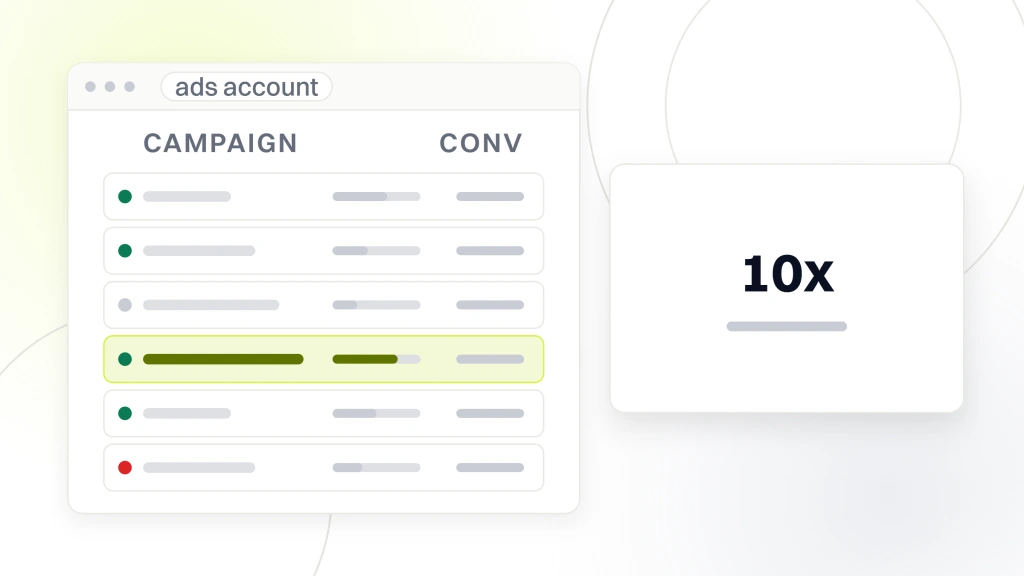
The mistake we see on 80% of manufacturer PPC audits: paid clicks land on the home page or a generic services page, and the buyer bounces once the message match breaks. The ad promises a stainless steel valve for chemical processing. The home page talks about the company’s 40-year history. The buyer leaves in 8 seconds. Cost of that click: $14. Multiply by 400 clicks a month and the account bleeds $5,600 monthly on message-match failure alone.

Fix landing pages first, keyword strategy second, bid strategy third. Skip the first step and the other two don’t matter. Poly Processing, a rotationally molded polyethylene tank manufacturer serving industrial plants and municipalities across North America, is the case in point. Post-rebuild they added an interactive tank configurator so engineers could spec exact tanks online, and inbound ROI hit 10x with cost per lead down 90%.

Landing-page speed matters more for a manufacturer than for a consumer brand. B2B engineering buyers open your ad on a laptop with 40 tabs open. Every second past 2.5 loses 12% of them. Get to sub-2-second time-to-interactive on a mid-range Chrome laptop before you scale spend past $4,000 monthly. For a manufacturer-specific landing page build with the CRM integration wired at launch, our Custom Web Design and Development Services practice runs the pattern. The build-a-PPC-account walk-through gets its own detailed treatment in our PPC for home services guide, which covers campaign goals, budget, and tracking end to end.

Real monthly spend bands for manufacturing PPC campaigns

Industrial paid search runs at three real spend bands. Solo or single-product manufacturers spend $2,500 to $6,000 monthly and book 8 to 20 RFQs. Mid-market manufacturers with 3 to 8 product lines spend $6,000 to $18,000 and book 25 to 65 RFQs. Enterprise manufacturers with 10+ lines spend $18,000 to $60,000 and book 60 to 200 RFQs. These bands hold across every ppc for manufacturing account we’ve audited in the last three years.

The spend band decides the account structure. Solo manufacturers run 2 to 3 search campaigns and one branded campaign. Mid-market manufacturers run 5 to 8 search campaigns split by product line, one branded, and one competitor conquesting once legal has cleared it. Enterprise manufacturers run 10 to 20 campaigns segmented by product family plus geo plus buyer stage, with a dedicated PPC lead watching the account daily. Buying above your stage burns cash on complexity you can’t manage. Buying below burns cash on missed coverage.

The retainer that runs the account matters as much as the ad spend. A working manufacturing PPC retainer runs 12 to 18% of ad spend at the mid-market level. Below that floor you’re paying for a checkbox review, not real optimization. Redefine Web offers PPC retainer tiers at $499, $999, $1,999, and from $3,500 per month with ad spend billed separately, so you can right-size the retainer to your spend band. For a retainer scope that pairs with a manufacturer account, our PPC Management Services practice runs the account shape.

Manufacturer stageProduct linesMonthly ad spendRFQs per monthCost per RFQRetainer
Solo / single-product1 to 2$2,500 to $6,0008 to 20$180 to $340$499 to $999
Mid-market3 to 8$6,000 to $18,00025 to 65$220 to $480$999 to $1,999
Enterprise10+$18,000 to $60,00060 to 200$280 to $640From $3,500

The full arithmetic on cost per click, cost per lead, and lifetime ROI gets its own detailed treatment in our real-estate PPC cost and ROI benchmarks guide. The formulas port cleanly to manufacturing once you swap the product-line inputs.

Google PPC for manufacturers versus LinkedIn Ads for industrial buyers

Google wins on buyer intent. LinkedIn Ads win on account-based targeting. Most manufacturers run both once monthly ad spend clears $8,000, with Google absorbing 70% of budget for RFQ capture and LinkedIn absorbing 30% for named-account outreach. Google ppc for manufacturers stays the workhorse. LinkedIn adds the named-account arm. See the deeper case for Google Ads for B2B companies before you split budget across networks.

Google search catches an engineer already searching for a stainless steel valve, an OEM sensor, or a custom gasket. Buyer intent is loud. The buyer has a spec, a quantity, and a timeline. LinkedIn Ads introduce your brand to a plant manager at a named target account who hasn’t started searching yet. Manufacturers running only Google lose ground to competitors reaching prospects earlier in the buying process. Manufacturers running only LinkedIn burn budget on engagement metrics that never turn into RFQs.

The mix by stage: solo manufacturers stay 100% Google until spend clears $6,000 monthly. Mid-market splits 70% Google and 30% LinkedIn. Enterprise splits 60% Google, 25% LinkedIn, and 15% industry publications or trade platforms like ThomasNet. Take BSH Hausgeräte GmbH, the Bosch-Siemens-Gaggenau-Neff parent that generated €15.9 billion in 2022. When their Turkey site was optimized for engagement-first content, lead volume grew 15% and organic sessions ran 45 seconds longer. The same channel-mix discipline applies to a mid-market industrial account.

A real client case on b2b manufacturer PPC advertising best practices

One mid-market industrial client, a precision metal fabrication shop running 6 product lines across pressure vessels, custom brackets, and machined housings, came to us at $9,400 monthly spend booking 11 RFQs a month at $854 cost per RFQ. Sales cycle averaged 94 days. The account had one bloated search campaign, no negatives past the first 20, and paid clicks landing on the home page.
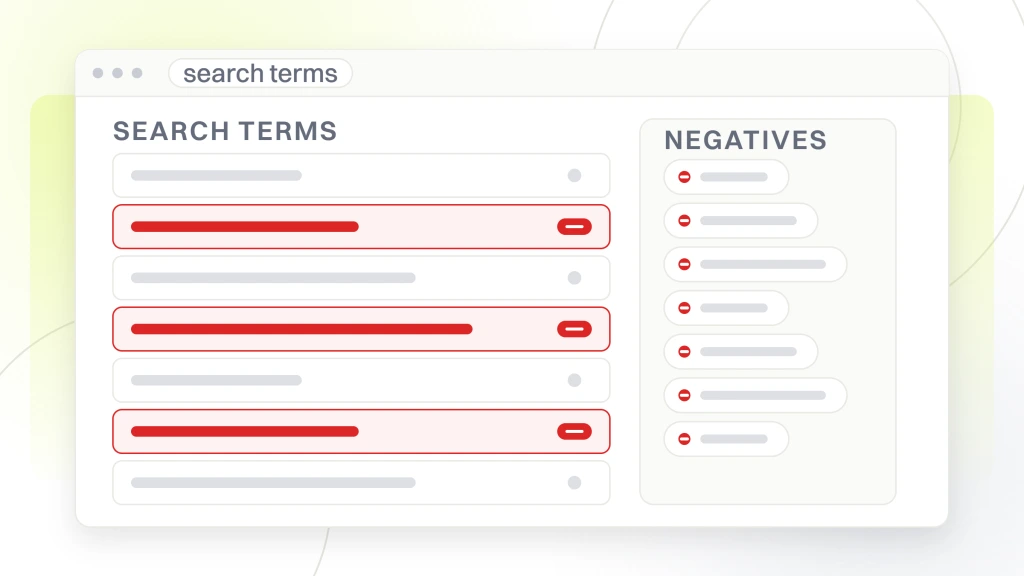
The rebuild took six weeks. We split the account into six search campaigns by product family, built six dedicated landing pages with message match to each ad group, added ClickCease fraud protection, wired HubSpot to the ad account so every RFQ traced back to keyword and ad, and capped bids by buyer stage ($8 to $22 CPC on part numbers, $3 to $8 on application queries, $1 to $3 on category education). Negatives grew from 22 to 640 in the first month.

By month five the account was booking 38 RFQs a month at $247 cost per RFQ on $9,400 spend, sales cycle compressed to 61 days on tagged buyers, and closed revenue on paid-attributed opportunities crossed $340,000 across the six-month window. The retainer paid back inside four months. That’s the same rebuild pattern that took Smith-Midland Corporation, a precast concrete manufacturer serving construction, utilities, transportation, and public safety, from fragmented regional sites to a unified UX-driven build that dropped bounce rate 65% and doubled conversions. Ask any vendor pitching you a ppc for manufacturing retainer to walk you through how they attribute an RFQ back to a specific keyword. Can’t do it? They’re watching the account, not running it. For the retainer shape, our Google Ads Management Services practice publishes the reporting on every account.

The click-fraud budget drain in ppc for manufacturing accounts

Click fraud eats 8 to 22% of an industrial PPC budget when the account has no fraud detection wired in. Competitors clicking your ads. Bots crawling for pricing data. Ad networks logging traffic they never delivered. A $12,000 monthly account bleeds $960 to $2,640 monthly to fraud alone if nothing is monitoring click quality. This is the single biggest hidden cost in ppc for manufacturing budgets.

Fix the fraud problem with three moves at account launch. Install ClickCease, Fraud Blocker, or PPC Protect at $65 to $340 monthly. Enable Google Ads’ built-in invalid click protection under Account Settings. Add IP exclusion lists for known competitor networks and known bot ranges. The stack pays back inside 60 days on any account spending over $6,000 monthly. Skip the stack and the fraud tax stays a hidden line item you’ll only find at month six when 34% of the clicks came from the same three IP ranges.

Benefits of ppc advertising for manufacturing companies at the account level

The payoff for industrial companies shows up in three places: RFQ velocity, sales-cycle compression, and territory expansion. A working ppc for manufacturing account books 25 to 65 RFQs monthly at the mid-market level, cuts the average sales cycle from 90 to 55 days on tagged buyers, and lets a regional manufacturer test new territories in 60 days instead of 12 months. The same conversion-tracked account structure works for PPC for professional services firms selling by consult.

RFQ velocity is the primary benefit. A manufacturer spending $8,000 monthly on a well-structured account books 30 to 40 RFQs, of which 8 to 15 turn into quoted opportunities and 3 to 6 close. Sales cycle compression happens once the buyer arrives pre-qualified: they searched for the exact spec, landed on a page that matched, and submitted an RFQ with the application already defined. The sales team quotes the application instead of qualifying the buyer, and that cuts weeks off the cycle.

Territory expansion is the underrated benefit. A regional manufacturer testing a new state with paid ads gets a real read on demand within 60 days for $2,400 to $4,800 in spend. That’s cheaper and faster than hiring a rep or opening a warehouse. Use paid ads as the market-test tool before the physical investment. External reference on B2B ad cost patterns lives at the WordStream online advertising costs guide.

Nine-point shortlist for ppc for manufacturing retainers

A retainer worth signing on passes a nine-point checklist. Run it against every quote you get. The vendor who passes all nine is worth a follow-up call. The vendor who passes six of nine is worth a conversation about the three gaps. The vendor who passes fewer than five is a generalist agency with a PPC checkbox, and the account they run will bleed budget for at least 12 months before anyone catches it.

  1. Campaign structure split by product family and buyer stage
  2. Keyword strategy tied to part numbers and application queries, not broad category terms
  3. Negative keywords added weekly from the search terms report
  4. Landing pages built per product family with message match to the ad
  5. CRM integration tied to the account for full RFQ attribution
  6. Fraud protection wired at account launch, not month four
  7. Monthly reporting on cost per RFQ, not clicks or impressions
  8. LinkedIn Ads added past $8,000 monthly spend for account-based targeting
  9. Retainer priced at 12 to 18% of ad spend, floor $499, from $3,500 at enterprise

Frequently asked questions about ppc for manufacturing

What is PPC in manufacturing?

In the paid-search world we work in, PPC in manufacturing means pay-per-click ad campaigns that a manufacturer runs on Google Ads, Bing Ads, and LinkedIn Ads to capture RFQs from engineers, procurement leads, and plant managers actively searching for a spec, part number, or industrial application. You pay only when a buyer clicks, so a well-built account pays for itself once the RFQ-to-quote-to-close math clears the cost per click. Some manufacturing textbooks use PPC as an abbreviation for Production Planning and Control, a corporate management system for production processes. That’s a separate discipline and not what this guide covers.

What does PPC stand for in manufacturing?

PPC has two common expansions in a manufacturing context, and the meaning depends on which team is asking. On the marketing team, PPC stands for pay-per-click, the ad-buying model where you pay only when someone clicks your ad on Google, Bing, or LinkedIn. On the operations team, PPC stands for Production Planning and Control, the internal system that coordinates what to produce, when, and in what quantity. Ask which team owns the acronym in your building. If it’s marketing, keep reading. If it’s operations, you want planning software like SAP or Oracle, not a pay-per-click retainer.

What is PPC inventory?

PPC inventory is a Production Planning and Control term, not a pay-per-click one. It refers to the raw materials, work-in-progress, and finished-goods buffers a manufacturer coordinates against its production schedule so the plant floor never stalls waiting on stock and never over-produces past demand. The PPC system times purchase orders, allocates parts to jobs, and monitors real inventory levels against the plan in real time. If you’re running pay-per-click ads for a manufacturer and someone on the ops call asks about PPC inventory, they mean stock and schedule, not keywords and clicks. Loop in the ERP or MES lead.

What is PPC in procurement?

In procurement, PPC means Production Planning and Control, the process of planning and controlling the work needed to make and deliver a product. It covers materials sourcing, labor scheduling, machine routing, dispatch, follow-up, and delivery coordination. In practice, PPC connects the plan to the plant floor and to the procurement function that feeds it. For a manufacturer’s procurement team, PPC is the map that says which part gets ordered, in what quantity, from which supplier, to hit which production window. If a marketing agency is talking to procurement about PPC, expect a five-minute detour to clarify that the agency means pay-per-click ads.

What is PPC in a project?

In project management, PPC stands for Project Planning and Control, a discipline covered by certifications like the APMG International PPC certification. It gives project managers the practical tools and techniques needed to plan effectively, monitor progress, and stay in control at every stage of the project lifecycle, from initiation to close-out. For a manufacturer running a plant expansion, an ERP rollout, or a new-product introduction, PPC in the project sense is the framework that keeps the timeline, budget, and scope aligned. It’s separate from pay-per-click ads and from production planning. Three disciplines share the acronym.

What is production planning?

Production planning is the operational process of deciding what a manufacturer will produce, when, in what quantity, and using which resources, so the plant meets demand without over-building inventory or stalling for parts. It’s the front half of Production Planning and Control (PPC), with the control half handling real-time monitoring against the plan. A working production plan takes inputs from sales forecasts, current inventory, machine availability, labor capacity, and material lead times, then outputs a schedule the plant floor can execute against. For most mid-market manufacturers, the plan lives in an ERP module (SAP, Oracle, NetSuite) or a dedicated planning tool.

What is ppc for manufacturing pdf?

Search results for ppc for manufacturing PDF pull two document types. The first is academic and operational: SlideShare decks, university lecture notes, and vendor whitepapers on Production Planning and Control, a manufacturing-management discipline that coordinates what to produce, when, and in what quantity. Those PDFs teach factory-floor operations, not paid search. The second is agency and vendor whitepapers on pay-per-click advertising for industrial companies. Those cover ad-account structure, keyword strategy, spend bands, and case studies. Any downloadable PDF an agency emails you should cover the same nine-point checklist above.

What is ppc for manufacturing job description?

A ppc for manufacturing job description covers two entirely different roles depending on which acronym the hiring manager means. If it’s Production Planning and Control, the role sits inside operations and owns production schedules, material planning, machine loading, and shift dispatching. Requirements typically include an industrial-engineering background, ERP experience, and lean-manufacturing exposure. If it’s pay-per-click, the role sits inside marketing and owns Google Ads and LinkedIn Ads account structure, keyword strategy, negative-keyword hygiene, landing-page briefs, and RFQ attribution. Read the job posting for words like ERP or MRP versus Google Ads or RFQ.

What is ppc for manufacturing management?

PPC for manufacturing management, in the operations sense, is Production Planning and Control at the management-decision layer. It covers how a plant manager uses PPC data to prioritize orders, allocate capacity across product lines, decide on overtime versus new hires, and negotiate with sales on delivery windows. In the marketing sense, ppc for manufacturing management means running the pay-per-click function as a managed program, with a named account lead, weekly optimization cadence, monthly reporting on cost per RFQ, and quarterly reviews on spend allocation across product families. Both disciplines share the same principle: a system without a named owner drifts.

What is ppc for manufacturing accounting?

In manufacturing accounting, PPC costs land in one of two ledger lines. If PPC means Production Planning and Control, the software licenses, planner salaries, and ERP integrations sit as operations overhead or capitalized software costs. If PPC means pay-per-click advertising, the spend sits as a marketing expense with two sub-lines: media spend (the ad dollars paid to Google and LinkedIn) and agency retainer (the management fee paid to Redefine Web or another PPC agency). For attribution accounting, tag every RFQ with the campaign, ad group, and keyword so finance can trace revenue to marketing spend at the keyword level.

Wrapping the ppc for manufacturing playbook

Booking real quote requests through ppc for manufacturing runs on a repeatable pattern. Campaign structure by product family. Keyword discipline on part numbers and applications. Landing pages that match the ad. CRM tied to the account. Fraud protection wired at launch. Monthly reporting on cost per RFQ.

If you take one thing from this guide, take the nine-point checklist and run it against the next retainer proposal you review. If you take two things, insist on RFQ-level attribution before the deposit clears, not at month six when the account is already bleeding budget. When you’re ready to talk through the account shape tied to your product lines, our Google Ads Management Services practice walks through a 30-minute call.


Frequently asked questions

What is PPC in manufacturing?

In the paid-search world we work in, PPC in manufacturing means pay-per-click ad campaigns that a manufacturer runs on Google Ads, Bing Ads, and LinkedIn Ads to capture RFQs from engineers, procurement leads, and plant managers actively searching for a spec, part number, or industrial application. You pay only when a buyer clicks, so a well-built account pays for itself once the RFQ-to-quote-to-close math clears the cost per click. Some manufacturing textbooks use PPC as an abbreviation for Production Planning and Control, a corporate management system for production processes. That's a separate discipline and not what this guide covers.

What does PPC stand for in manufacturing?

PPC has two common expansions in a manufacturing context, and the meaning depends on which team is asking. On the marketing team, PPC stands for pay-per-click, the ad-buying model where you pay only when someone clicks your ad on Google, Bing, or LinkedIn. On the operations team, PPC stands for Production Planning and Control, the internal system that coordinates what to produce, when, and in what quantity. Ask which team owns the acronym in your building. If it's marketing, keep reading. If it's operations, you want planning software like SAP or Oracle, not a pay-per-click retainer.

What is PPC inventory?

PPC inventory is a Production Planning and Control term, not a pay-per-click one. It refers to the raw materials, work-in-progress, and finished-goods buffers a manufacturer coordinates against its production schedule so the plant floor never stalls waiting on stock and never over-produces past demand. The PPC system times purchase orders, allocates parts to jobs, and monitors real inventory levels against the plan in real time. If you're running pay-per-click ads for a manufacturer and someone on the ops call asks about PPC inventory, they mean stock and schedule, not keywords and clicks. Loop in the ERP or MES lead.

What is PPC in procurement?

In procurement, PPC means Production Planning and Control, the process of planning and controlling the work needed to make and deliver a product. It covers materials sourcing, labor scheduling, machine routing, dispatch, follow-up, and delivery coordination. In practice, PPC connects the plan to the plant floor and to the procurement function that feeds it. For a manufacturer's procurement team, PPC is the map that says which part gets ordered, in what quantity, from which supplier, to hit which production window. If a marketing agency is talking to procurement about PPC, expect a five-minute detour to clarify that the agency means pay-per-click ads.

What is PPC in a project?

In project management, PPC stands for Project Planning and Control, a discipline covered by certifications like the APMG International PPC certification. It gives project managers the practical tools and techniques needed to plan effectively, monitor progress, and stay in control at every stage of the project lifecycle, from initiation to close-out. For a manufacturer running a plant expansion, an ERP rollout, or a new-product introduction, PPC in the project sense is the framework that keeps the timeline, budget, and scope aligned. It's separate from pay-per-click ads and from production planning. Three disciplines share the acronym.

What is production planning?

Production planning is the operational process of deciding what a manufacturer will produce, when, in what quantity, and using which resources, so the plant meets demand without over-building inventory or stalling for parts. It's the front half of Production Planning and Control (PPC), with the control half handling real-time monitoring against the plan. A working production plan takes inputs from sales forecasts, current inventory, machine availability, labor capacity, and material lead times, then outputs a schedule the plant floor can execute against. For most mid-market manufacturers, the plan lives in an ERP module (SAP, Oracle, NetSuite) or a dedicated planning tool.

What is ppc for manufacturing pdf?

Search results for ppc for manufacturing PDF pull two document types. The first is academic and operational: SlideShare decks, university lecture notes, and vendor whitepapers on Production Planning and Control, a manufacturing-management discipline that coordinates what to produce, when, and in what quantity. Those PDFs teach factory-floor operations, not paid search. The second is agency and vendor whitepapers on pay-per-click advertising for industrial companies. Those cover ad-account structure, keyword strategy, spend bands, and case studies. Any downloadable PDF an agency emails you should cover the same nine-point checklist above.

What is ppc for manufacturing job description?

A ppc for manufacturing job description covers two entirely different roles depending on which acronym the hiring manager means. If it's Production Planning and Control, the role sits inside operations and owns production schedules, material planning, machine loading, and shift dispatching. Requirements typically include an industrial-engineering background, ERP experience, and lean-manufacturing exposure. If it's pay-per-click, the role sits inside marketing and owns Google Ads and LinkedIn Ads account structure, keyword strategy, negative-keyword hygiene, landing-page briefs, and RFQ attribution. Read the job posting for words like ERP or MRP versus Google Ads or RFQ.

What is ppc for manufacturing management?

PPC for manufacturing management, in the operations sense, is Production Planning and Control at the management-decision layer. It covers how a plant manager uses PPC data to prioritize orders, allocate capacity across product lines, decide on overtime versus new hires, and negotiate with sales on delivery windows. In the marketing sense, ppc for manufacturing management means running the pay-per-click function as a managed program, with a named account lead, weekly optimization cadence, monthly reporting on cost per RFQ, and quarterly reviews on spend allocation across product families. Both disciplines share the same principle: a system without a named owner drifts.

What is ppc for manufacturing accounting?

In manufacturing accounting, PPC costs land in one of two ledger lines. If PPC means Production Planning and Control, the software licenses, planner salaries, and ERP integrations sit as operations overhead or capitalized software costs. If PPC means pay-per-click advertising, the spend sits as a marketing expense with two sub-lines: media spend (the ad dollars paid to Google and LinkedIn) and agency retainer (the management fee paid to Redefine Web or another PPC agency). For attribution accounting, tag every RFQ with the campaign, ad group, and keyword so finance can trace revenue to marketing spend at the keyword level.

Keep reading

All articles →
Healthcare PPC Advertising Channels Compared for Real ROI
PPC
Healthcare PPC Advertising Channels Compared for Real ROI
Proven Dental Facebook Ads Guide to Book New Patients
PPC
Proven Dental Facebook Ads Guide to Book New Patients
Proven Legal PPC Management for Lawyers Books Signed Cases
PPC
Proven Legal PPC Management for Lawyers Books Signed Cases
FREE — 30 MINUTES — NO PITCH

Book a free growth audit.

Walk away with three fixes you can ship the same week — whether or not you hire us.

24-HOUR RESPONSE 300+ AUDITS RUN ZERO OBLIGATION