Do google ads work for b2b? For most B2B accounts, yes, but only when the campaign is built for pipeline and closed revenue, not for clicks and form fills. The channel reads brilliantly for some B2B categories and reads badly for others, and the difference sits inside the account setup, the offline conversion feed, and the landing page skeleton. Most agencies will not tell you which category your business is in before they invoice you.
You get an honest ROI framework, the pros and cons of the channel, the moments where Google Ads underperforms LinkedIn or content marketing, the role of display ads in a B2B funnel, and the employer branding angle most B2B teams skip. Every section maps to real accounts our team runs from $8K to $180K per month. Read this before you spend another dollar on Google Ads.
Do Google Ads Work for B2B With Real Buyer Intent
The answer for your B2B account lives or dies on buyer intent. Buyers already searching for your category (with phrases like enterprise contract management software or B2B payments platform) sit inside the Google Ads sweet spot. Buyers who do not yet know your category exists sit outside it, and no budget will pull them in through search.
Look at your Search Console and your keyword planner data first. If your top 10 category phrases each show 500 to 5,000 monthly searches, Google Ads has room to work. If your top 10 phrases show fewer than 100 monthly searches, the channel will always feel starved and LinkedIn Ads or industry publications will beat it on cost per opportunity. That volume check tells you 70 percent of what you need to know.
Google Ads for B2B Sales Cycles Over Six Months
Long B2B sales cycles change how paid search performs for B2B accounts. A 9 to 18 month sale means the form fill on day one is not the metric that decides account health. Google Ads still works, but the reporting shifts. You track pipeline generated by touch, not revenue closed inside 90 days. Bidding shifts to the qualified lead signal, then to the opportunity signal once you have 60 to 90 days of qualified lead volume.
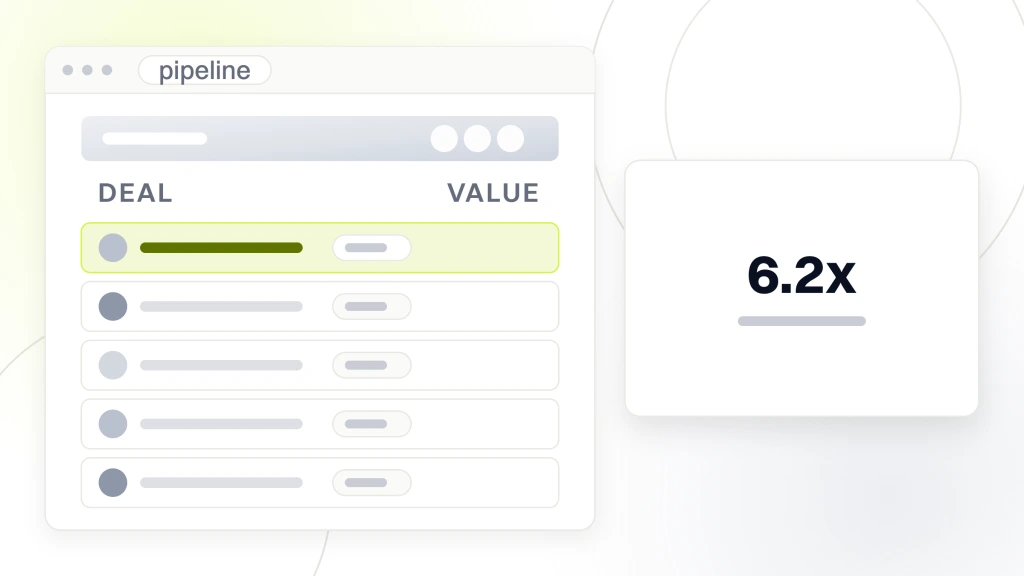
Complex enterprise deals need offline conversion imports wired from day one. Without them, smart bidding chases whatever form fill looks cheapest, which is usually the least qualified buyer segment. On a real B2B account we audited last quarter, wiring offline conversions from HubSpot back into Google Ads turned a 1.4x return on ad spend account into a 6.2x return account inside 90 days.
How Google Display Ads Drive Marketing Results for B2B
Display for B2B splits into two outcomes. Run it like a consumer campaign with generic banners and open placements, and it drains budget at conversion rates under 0.3 percent. Run it with custom intent audiences, tight placements, and a remarketing focus, and it becomes the strongest awareness layer in the paid stack.
The best use of Google Display Ads for B2B sits in three jobs. Remarketing to search-campaign visitors who did not convert. Custom intent audiences targeting competitor URLs and category keywords. Placement targeting on industry news sites where your buyer already reads. Anything outside those three jobs usually underperforms compared to redirecting the budget to search or LinkedIn.
Remarketing that converts B2B visitors
Every B2B visitor who lands on a pricing page, a case study, or a comparison page is a remarketing candidate. Build separate remarketing lists for each page type and serve different creative to each. Pricing-page visitors get a demo CTA with a proof number. Case-study visitors get a similar-case snapshot. Comparison-page visitors get a differentiator matrix. Remarketing conversion rates on tightly segmented lists usually hit 8 to 20 percent, versus 1 to 3 percent for generic site-wide remarketing.
Custom intent audiences for prospecting
Custom intent audiences on Display let you target buyers who search category keywords or visit competitor URLs. Feed the audience 15 to 30 category keywords and 10 to 20 competitor URLs. The audience becomes a proxy for active buyers. Attach it to a Display campaign with strong creative and remarketing follow-up. Expect a 20 to 40 percent gain in qualified lead rate compared to generic in-market audiences. Detailed setup lives in our B2B PPC Agency service page.
Placement targeting on industry sites
Placement targeting lets you pick sites where your buyer already reads. Industry trade publications, professional association sites, and category news outlets typically outperform open Display network placements by 3x to 6x on conversion rate. Build a placement list of 40 to 80 sites for your category. Bid up. Watch performance weekly and prune the underperformers. This is the tactic most B2B teams skip because it takes an hour of research to build, and the tactic that separates decent Display campaigns from great ones.
Google Ads Employer Branding B2B Use Cases
Employer branding is the Google Ads use case most B2B teams skip. Talent is the second-biggest budget line after product for most B2B companies, and Google Ads reaches candidates on category, city, and role-specific queries. A well-built employer campaign reduces recruiter fees, shortens time-to-hire, and improves candidate quality.
The pattern is direct. Build a campaign targeting queries like software engineer jobs in your city, product manager careers, or engineering culture blog. Send traffic to a dedicated careers landing page with your employer value proposition, team photos, benefits summary, and open role list. Track applications as conversions. Set a target cost per application aligned with your talent budget. Most B2B companies see cost per application of $40 to $120, which is 5x to 15x cheaper than a recruiter placement fee.
Careers page structure that converts candidates
The careers landing page needs the same skeleton as a demo landing page with different content. A headline naming your company and role type. Employer value proposition with a proof number. Team photos, not stock. Benefits summary specific to the role. Open role list with clear next steps. Testimonials from current team members with names and roles. Candidates read the way buyers read. Generic careers pages tank conversion the same way generic demo pages do.
Separating talent spend from demand spend
Run employer branding campaigns in a separate Google Ads account or MCC sub-account. Never mix hiring conversions with demand conversions in the same account, because smart bidding will average across both and starve one of them. Reporting also stays cleaner when finance can see talent spend as a separate line from demand spend. Every B2B company running this pattern reports easier board conversations six months in.
Google Ads B2B Marketing Effectiveness Metrics That Matter
B2B Google Ads effectiveness lives or dies on which metrics you track. Track platform metrics like clicks and impressions and you get a channel that looks busy and produces no pipeline. Track pipeline metrics and you get a channel that shows up in the board deck. The metrics that matter sit in the CRM, not inside Google Ads.
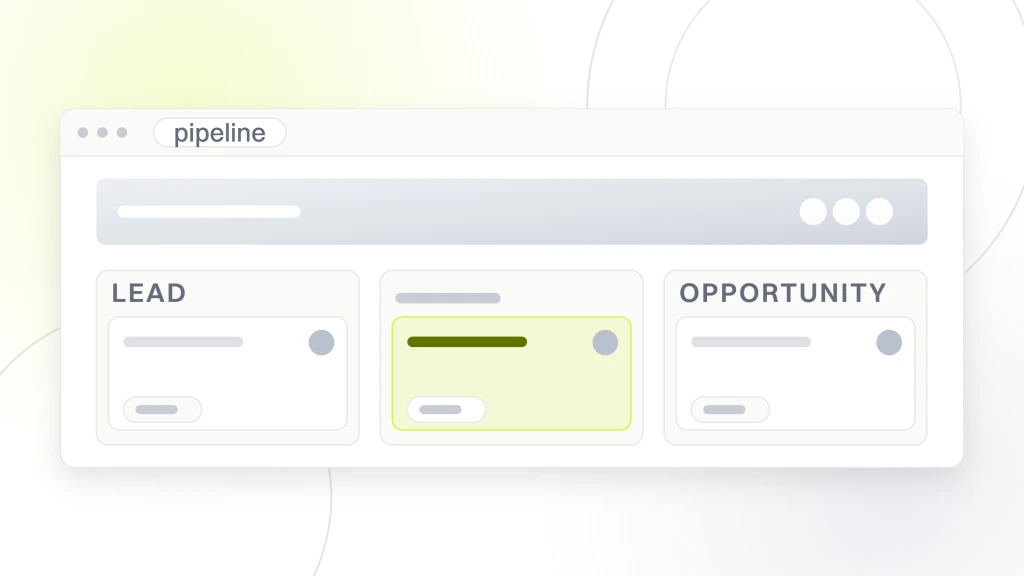
The four metrics that decide whether Google Ads is working in your B2B account are cost per qualified lead, qualified lead to opportunity rate, opportunity to closed-won rate, and pipeline generated per dollar spent. Every other metric is either an input into those four or a distraction. Build your reporting around those four and every optimization conversation becomes measurable.
Pipeline metrics leadership actually asks about
Leadership does not ask about click-through rate. Leadership asks how much pipeline Google Ads produced this month, what the cost per opportunity was, and what closed. Structure reporting to answer those three questions on page one of every monthly report. If you cannot show pipeline attributed to Google Ads on page one, your reporting is broken and your attribution probably is too.
Input metrics that predict pipeline
Leading indicators of pipeline health include search impression share on buying-intent keywords, form fill rate on landing pages, and qualified lead percentage of total form fills. Watch these weekly. When any drops 20 percent below the trailing average, act inside 5 business days. Waiting a month usually costs 2 to 3 weeks of avoidable pipeline loss. Weekly reviews prevent the slow drift that kills accounts quietly.
A Real B2B Google Ads Effectiveness Case Study
Automation Anywhere is a global leader in Robotic Process Automation serving 2,800+ companies and 1,600+ enterprise brands. They came to Redefine Web paying nearly $2,000 per lead. Campaigns chased impression share, lead volume, and awareness all at once, which produced a tangle of conflicting internal KPIs. Their main call-to-action was a plain contact form while competitors offered analyst reports, white papers, and free trials. Strong product, unsustainable acquisition economics.
Our team ran a structured multi-phase rebuild. First, a strategy audit that separated campaigns by objective (branded, competitor, category intent) so smart bidding stopped averaging across conflicting goals. Second, an Insightly CRM implementation that fed lead status back into Google Ads through offline conversion imports. Third, a landing page system with conversion-focused calls-to-action across the funnel. Fourth, email automation and nurture sequences that moved qualified leads through consideration. The results moved fast.
Automation Anywhere headline numbers
Cost per lead dropped from $1,936 to $63, a 97 percent improvement in acquisition efficiency. Customer acquisition scaled 100x, from around 150 per month to nearly 8,000 leads monthly. Ad impressions grew 300 percent as smart bidding stopped fighting the account’s own conflicting signals. Those numbers came from wiring the account for pipeline signal, not from raising the budget.
Why the fix worked
The wiring gap between marketing metrics and sales metrics is the pattern most B2B Google Ads audits find. Form fills climb inside Google Ads while sales sees lead quality drop. Offline conversion imports fix it so smart bidding optimizes against pipeline signal.
Google Ads vs Other B2B Channels
Google Ads sits inside a portfolio of B2B channels. Picking Google Ads over another channel comes down to buyer stage, budget size, and sales cycle. Google Ads captures active intent. LinkedIn Ads generates new demand. Content marketing builds category authority. Events surface high-intent late-cycle buyers. Running one and ignoring the rest usually caps growth at half of what a balanced portfolio delivers.
The most common mistake is running only Google Ads because the return on ad spend numbers are the easiest to prove. That approach caps you at whatever search demand exists in your category. If search demand is already saturated by your ads, adding budget makes cost per lead worse without adding leads. Rotating budget into LinkedIn, content, or events grows the total market instead. Pair it with the B2B Google Ads lead generation post to keep pipeline steady. Our SaaS PPC Services covers the split.
Google Ads vs LinkedIn Ads
Google Ads captures active demand from buyers already searching. LinkedIn Ads generates new demand from buyers who are not yet searching. Our Google Ads vs LinkedIn Ads for B2B guide runs the head-to-head math. On the same spend, Google Ads produces 2 to 4 times more form fills and 1.5 to 2 times more qualified leads. LinkedIn produces smaller volume at higher cost per lead but reaches buyers earlier and works well for account-based marketing programs. Most mature B2B programs run both channels with 60 to 75 percent of paid spend on Google and 25 to 40 percent on LinkedIn.
Google Ads vs content marketing
Google Ads is a variable-cost channel with immediate visibility. Content marketing is a fixed-cost channel with delayed visibility. On a 12-month horizon, content marketing usually beats Google Ads on cost per lead once organic rankings compound. On a 30-day horizon, Google Ads always wins. Run both. Use Google Ads to test which keywords and pain points convert, then feed those learnings into your content strategy. Our B2B SaaS Marketing Agency Tied to Pipeline covers the full playbook for pairing both.
Getting Started With Google Ads B2B Marketing Effectiveness
If you have decided Google Ads is worth trying for your B2B company, the first 90 days matter more than any other period in the account’s life. Set it up wrong and you spend 6 months undoing damage. Set it up right and every optimization after is compounding gains.
Weeks 1 to 4 are foundation. Conversion tracking. Offline conversion imports. Customer match list uploads. Landing page audit. Keyword research and negative list build. Weeks 5 to 8 are launch. Three intent-tiered campaigns live with 20 to 40 keywords each. Two responsive search ads per ad group with 15 headlines. Landing pages live. Weeks 9 to 12 are optimization. Search terms review weekly. Negative keyword additions. Ad copy iteration. First round of landing page testing. That sequence turns a new account into a working pipeline channel by day 90. See our B2B Google Ads strategy for the campaign structure that books demos.
The first 30 days checklist
Install Google Ads conversion tracking with values for every conversion action. Wire offline conversion imports from your CRM with a daily or weekly upload schedule. Upload closed-won, qualified lead, and MQL customer match lists. Build a shared negative keyword list of 400 to 800 terms including job seeker and consumer phrases. Audit landing pages for the B2B skeleton (proof, pricing signals, form, FAQ block). Set up UTM tagging so the CRM captures campaign, ad group, and keyword on every lead. Draft ad copy testing headlines that name roles, outcomes, and objections. Build initial keyword lists for buying-intent, solution-intent, and research-intent tiers.
Budget planning for the first quarter
Budget for the first 90 days needs to hit 30 to 50 conversions per campaign per month for smart bidding to work. On a B2B account with $150 target cost per lead, that means $4,500 to $7,500 per campaign per month as a floor. Run one campaign at that floor before scaling to three. Doubling budget inside a single month re-trains smart bidding for 2 to 4 weeks and costs 15 to 30 percent efficiency during the transition. Scale in 15 percent monthly increments instead.
Red Flags That Mean Google Ads Is Not Working for Your B2B
Some accounts run for a year and never produce pipeline. If any of the following red flags describe your account after 90 to 180 days of a proper build, Google Ads may not be the right channel for your category, or the account has structural problems that need external eyes. Waiting another quarter to see if things change usually costs another $30K to $80K in avoidable spend.
- Cost per qualified lead is 3x or more your target after 6 months of optimization.
- Qualified lead to opportunity rate is under 8 percent despite CRM discipline.
- Search impression share on buying-intent keywords is under 30 percent and budget is not the constraint.
- Every campaign relies on the same landing page because you cannot afford dedicated ones.
- Offline conversion imports have never been wired despite 12 months of internal discussion.
- The sales team cannot name a single deal that came from Google Ads in the last quarter.
- Reporting shows platform metrics but never pipeline or revenue.
When to bring in external help
If three or more red flags describe your account, an external audit usually pays for itself inside 60 days. Look for someone who will do the audit at a fixed fee and share the findings whether or not you engage them further. Anyone who audits for free with a pitch to manage the account has a conflict of interest. A proper audit takes 8 to 15 hours and produces a specific fix list. The Google Ads help hub also covers the technical basics. For deeper coverage of smart bidding logic, see smart bidding fundamentals, and for offline conversion setup see the offline conversions guide.
When to shift budget to another channel
If the audit finds no structural fixes and cost per qualified lead is still 3x target, the category is probably wrong for Google Ads. Shift 50 to 70 percent of the budget to LinkedIn Ads with account-based targeting, content marketing with SEO, or event sponsorship. Keep 30 to 50 percent on Google Ads for brand defense and buyers who do search. Reassess in 6 months.
The Final Answer on Do Google Ads Work for B2B
Do google ads work for b2b? For most B2B companies in mature categories with defined buyer intent, yes, and the channel becomes the most measurable pipeline source in the stack. For new categories or under-resourced sales teams, Google Ads produces expensive learnings and mediocre pipeline. Answer the question with pipeline math, not with guesswork.
Pick the four or five diagnostic questions that match your account’s biggest issues right now. Answer them with your sales team and your finance team. That conversation usually decides the next 12 months of your paid strategy. When you want a second set of eyes, our Google Ads Management Services and PPC Management Services cover full-account audits and management.