
Real estate PPC cost usually lands between $500 and $10,000 per month for total ad plus management spend, with individual clicks running $0.50 to $4 on Google and per-lead costs anywhere from $6 to $116 depending on market and intent. That’s the headline number every agent, team lead, and brokerage marketer really wants before they green-light a paid search test. This guide walks the full budget stack, the math behind cost per lead, the ROAS benchmarks that decide profit, and the levers that pull ad spend down without shrinking the pipeline.
You’ll get concrete numbers pulled from vendor benchmarks and campaign data, plus the exact tests a Kansas City team ran to cut cost per lead from $41 to $15 in six weeks. If you already run PPC management services, the ROAS and CPL sections tell you when to renegotiate your retainer.
What real estate PPC cost actually covers
The number is not a single line item. It’s a stack of media, management fee, tech, and creative production. Miss any layer and the budget model breaks under real-world audit.
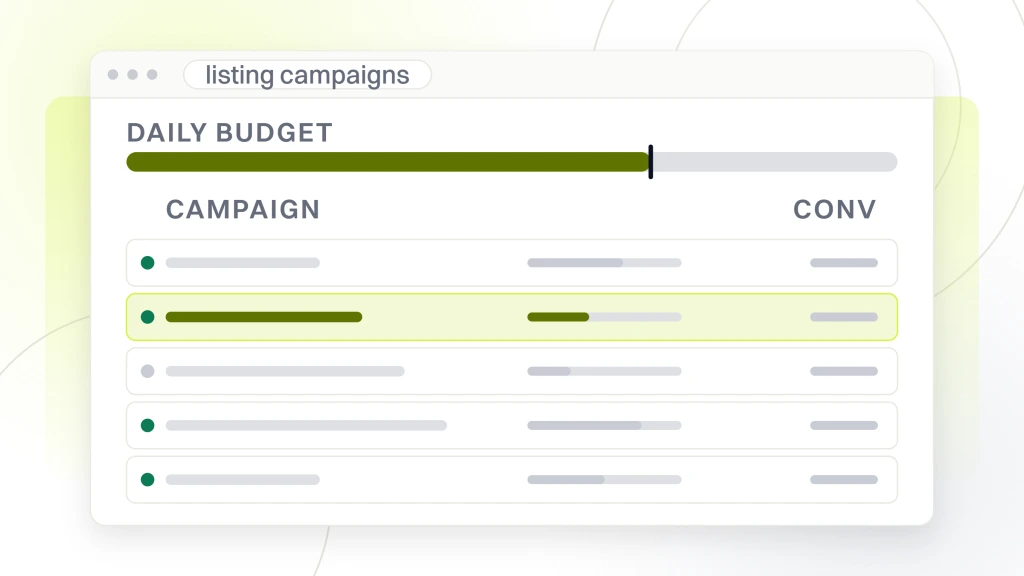
- Media spend. The auction cost. For real estate this runs $0.50 to $4 per click on Google search, and higher for buyer intent terms in luxury markets.
- Management fee. Agencies charge 10 to 30% of media spend, or a flat retainer from $499 to $3,500+ per month depending on account complexity.
- Tech stack. CallRail or a similar call-tracking platform, roughly $45 to $145 per month for solo agents, more for teams tracking multi-line intake.
- Landing pages. One clean page per campaign, built once, refreshed quarterly. Budget $500 to $2,000 up front for design plus copy.
Stack these together and a solo agent test lands near $1,500 per month all-in. A brokerage running six campaigns across three metros clears $8,000 easily. The wider take on real estate paid search sits in our guide to real estate PPC management for agents, teams, and brokerages, and the commercial angle gets its own detailed treatment in commercial real estate PPC management.
Real estate PPC cost by market tier
Cost per click varies wildly by geography and search intent. A Delaware buyer’s-agent search runs about $3 per click, so 20 clicks a day gets you to $60 daily. That same auction in Manhattan or LA can double or triple. Here’s the tiered breakdown that most vendor benchmarks converge on.
| Market tier | Avg CPC (Google) | Realistic monthly ad spend | Typical CPL |
|---|---|---|---|
| Small suburban (under 500K population) | $0.50 to $1.50 | $500 to $1,500 | $6 to $25 |
| Mid-market (500K to 2M) | $1.50 to $3 | $1,500 to $4,000 | $25 to $60 |
| Major metro (2M+) | $3 to $8 | $4,000 to $10,000+ | $60 to $150 |
Ylopo and Sierra Interactive data pins buyer lead CPL between $6 and $10 in low-competition zips. On the other end, Avenue HQ pegs the industry-wide average CPL at $116. The gap is not a mystery, and it’s not luck. Tight geo-targeting, disciplined negative keywords, and one landing page per ad group do the work of pulling per-lead spend into the low $20s.
Set the ceiling by market. If you serve Austin buyers, your bid ceiling is different than an agent in Toledo. Vendor blogs love to publish a single “average.” Local reality punishes agents who anchor to it.
How the real estate PPC cost formula works
The base formula is simple. Total ad cost divided by clicks equals average CPC. Total ad cost divided by conversions equals cost per lead. The industry average PPC conversion rate on Google Ads sits at 2.85%, so start there when you model.
Worked example. You spend $2,000 on Google search for a Charlotte buyer campaign at a $2 average CPC. That’s 1,000 clicks. At the 2.85% benchmark you get 28 leads. Cost per lead lands at $71. If 8% of leads become nurtured buyer consults, and 20% of those close within 12 months, you close 0.45 deals per $2,000 spent. At a $6,000 average commission, revenue per $2,000 lands near $2,700. That’s a 1.35x ROAS. Not great. The fix is not more spend, it’s tighter targeting plus better landing pages.
Run the same model on a Cleveland listing campaign at $1.20 CPC, and the numbers flip. 1,667 clicks per $2,000, 47 leads at $42 CPL, a 6% close rate on seller leads, and revenue of $16,935. That’s an 8.5x ROAS on the same $2,000. The formula did not change. The market did.
ROI in PPC, and what a good ROAS looks like
ROI (return on investment) is (profit minus ad spend) divided by ad spend, times 100. ROAS (return on ad spend) is revenue divided by ad spend, expressed as a ratio like 3 to 1. Both matter. ROI factors your true margin. ROAS is faster to read on a weekly dashboard.
A good ROAS in real estate PPC sits between 2 to 1 and 4 to 1 (200% to 400%). That means for every $1 of ad spend you pull back $2 to $4 in revenue. Higher-end teams working luxury inventory clear 5 to 1 or better. Discount lead vendors like Zillow Premier Agent often disguise a 1.5 to 1 as acceptable, and at commission-split math that’s a break-even year.
PPC roas average real estate teams should target
The ppc roas average real estate ranges vary by channel. Google search sits highest, since intent is highest. Meta lead ads run lower ROAS but higher volume. Display and YouTube round it out with different jobs entirely.
- Google Search. Target 3 to 1 minimum. Buyer intent terms convert 3 to 5x better than seller terms.
- Google Local Services Ads. Pay-per-lead model. Aim for CPL under 20% of expected commission.
- Meta lead ads. 2 to 1 is acceptable at scale. Facebook lead forms fill fast, and 40% typically ghost.
- YouTube. Brand and retargeting, not direct response. Judge on view-through and assisted conversions.
The mix depends on stage. New brokerages lean Google search first for fast pipeline. Established teams add Meta retargeting once their organic funnel produces a warm audience worth chasing. Skip prospecting on Meta until you have first-party data to fuel the pixel.
Expected roi of local real estate ppc campaigns
The expected roi of local real estate ppc campaigns depends on three levers, and the math sits below.
- Average commission. A $250,000 median home at 2.5% co-op equals $6,250 per closed deal.
- Close rate. Cold search leads convert to signed contracts at 2 to 4% over a 90 to 180 day window.
- Lead cost. Cut this and ROI moves faster than any other lever.
At a $50 CPL and 3% close rate, each closed deal needs 33 leads. Acquisition cost hits $1,650, and ROI on the $6,250 commission clears 3.8x. Push CPL to $25 and ROI jumps to 7.6x. Push it to $100 and ROI collapses to 1.9x. Every $10 shaved off CPL moves ROI more than any bid strategy tweak. Landing pages and negative keywords do the heavy lifting.
Case study. Real estate PPC cost cut in London lettings
Abels Residential, a London-based boutique letting agency, launched with zero online presence and a director (Callan Pang) new to independent operations. We built a conversion-focused website and layered on-page plus off-page SEO alongside a tight paid search test. Within 12 months they ranked 280+ keywords on page one, held page load under 2 seconds, and drove 20+ qualified rental leads per month. The paid layer stayed lean at under $1,200 per month in ad spend since organic did the heavy lifting the moment rankings kicked in.
McCarthy Court, a 7-unit luxury Sidcup development, needed to sell out pre-construction. The immersive virtual showcase site plus targeted paid social pulled 60 qualified buyer leads and 10,000 campaign visits. All seven units sold in 3 months. Blended ROAS on the paid layer cleared 12 to 1 since the average sale price sat above $600,000. What you spend only matters against the ticket size it drives.
Ten ways to lower your real estate PPC cost
Cutting cost per lead in half is normal on a first optimization pass. Here are the ten moves that do it, in the order most accounts benefit.
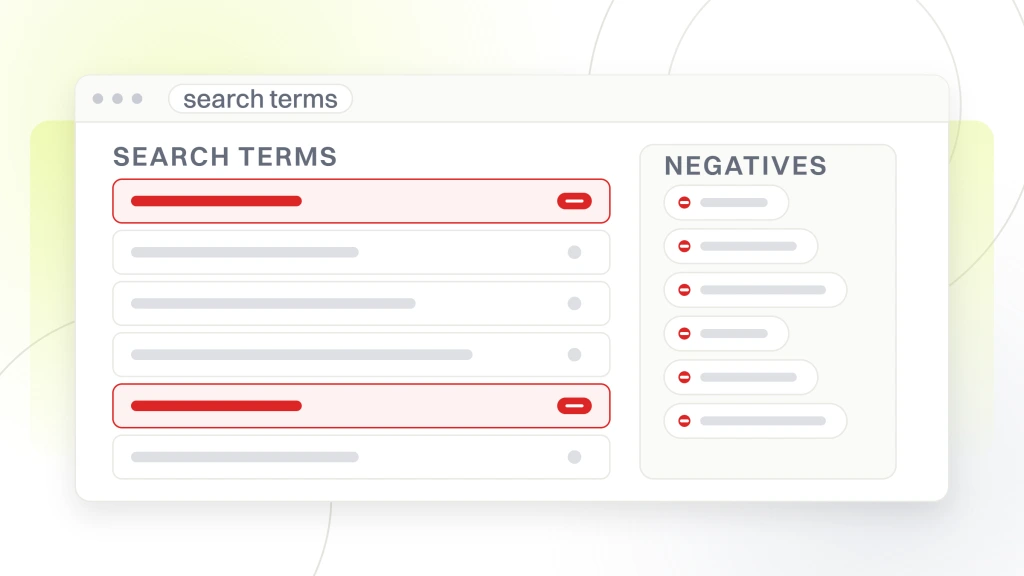
- Add negative keywords weekly. Block “jobs,” “license,” “school,” “jokes.” Google’s negative keywords guide is the starting point for keyword hygiene.
- Tighten geo-targeting to city or ZIP. Statewide targeting burns budget on ghost clicks from three counties over.
- Kill display network on search campaigns. Default settings opt you in. Uncheck it in campaign setup.
- Use exact and phrase match. Broad match still bleeds spend, even after Google’s “broad match improvements.”
- Build one landing page per ad group. Homepages convert at 1 to 2%. Dedicated pages convert at 8 to 12%.
- Set dayparting. Buyers search 6 to 10 PM. Pause the 2 AM impressions.
- Add call extensions and lead form extensions. Direct calls skip the landing page entirely.
- Track calls with CallRail or similar. Untracked calls are untracked ROI.
- Test long-tail buyer intent. “3 bedroom homes for sale under 400k [city]” beats “homes for sale [city]” at 5x the CPL efficiency.
- Retarget site visitors on Meta. A 1.5% off-Meta audience often converts at 4x the cold rate.
Run these ten in order over a 45 day window and CPL should drop 30 to 50% without a single new dollar of ad spend. The account structure was carrying dead weight from day one, and cleaning it up is the fastest possible ROI move.
Paid search vs SEO investment
PPC turns on this week. Real estate SEO pays off in 6 to 12 months and compounds after that. Most teams do both. For a full comparison of the paid and organic paths, see our real estate PPC hub and the companion real estate SEO service. The right mix depends on your cash runway and how long you can wait for organic traction.
The lead-cost economics of the trades sector are similar in shape to real estate lead capture. Cross-industry pricing patterns get their own detailed treatment in PPC for home services, which spells out retainer models and CPL benchmarks worth cross-referencing against your own market.
Are PPC ads worth it for real estate agents?
Yes, when the math works. Fast results are the point. Unlike SEO, which takes months to move, PPC delivers analyzable data within 24 hours of launch. The trap is over-simple attribution. Most real estate leads take 90 to 180 days to close, so if you kill a campaign at day 30 for “no ROI” you shut down the pipeline before it matures. Judge PPC on 90-day booked deals, not week-one CPL.
The teams winning at paid search efficiency all share three traits. They track every call. They rebuild landing pages quarterly. And they cap budget until CPL and close rate move together on a 60 day rolling report.
Turn ad spend into signed listings
The number is only the input. The output is booked showings, signed listing agreements, and closed sales. Get the tracking right, get the landing pages right, and the ROI follows. If you want a paid search audit that shows exactly where your budget is leaking, that’s what we do. Talk to us about a 90-day real estate PPC test framework tuned to your commission math.