
A website SEO agency should build your site when you are rebuilding anyway and nobody on your side can settle an argument between a designer and a search lead. It should not when the site you have still converts and the gap between you and the results beating you is referring domains. The route is the decision. The supplier comes after.
Get the route wrong and you live with it for three years. Buy one firm for both when the site was fine, and you funded a rebuild you did not need on a stack somebody else picked. Buy two when one would have done, and every template decision needs somebody on your side to settle it. Neither mistake shows up until the invoices stop.
What a website SEO agency is, and how it differs from an SEO agency
Start with deliverables, not adjectives. One firm holding both scopes owes you wireframes, a page template set, a CMS build, content migration, a redirect map and launch QA, then the technical audit, page mapping, on-page work, content, links and reporting.
The difference is access. A pure-play search firm works on a site whose code somebody else owns, and its changes ship through whoever maintains it. A firm that does both holds commit access to the repository and is in the room when templates are decided.
The category answers to more names than it has buyer’s guides. An SEO web company, an SEO web agency, a web development and SEO company, an SEO web design firm, a web design SEO agency. One supplier, both scopes. The wider field sits under search engine optimization companies.
Here is how invisible that distinction is in the public record. First Page Sage ranks more than 90 SEO agencies on six weighted factors, from SEO and GEO proficiency at 25 percent down to year founded at 10 percent. Not one of those six First Page Sage criteria asks whether the firm can change your website.
Why a firm that does both is telling you whether to buy both
Redefine Web builds websites and runs the search work on them. That is exactly the kind of firm this article is about, so the central question here is whether you should buy what we sell, and we have a direct commercial reason to want one answer to win.
What that costs us shows up in the shape of the page. The argument for one firm gets one section. The argument against gets a longer one. The costs of our own route get a section with nothing attached to soften them, and twice below the recommendation is to hire somebody else. The sales version lives on the website design and SEO package page, and it is not this.
Run the same test on any page arguing this question, including ones written by firms that only sell search. Count the sections. If the case for takes half the article and the objections arrive as a note near the end, you are reading a brochure with headings on it.
The decisions a rebuild forces, and who is holding each one
Two suppliers work fine when each is good and somebody on your side is accountable for the join between their scopes. That person has to read a redirect map, refuse a design decision on search grounds, and hold both invoices. An unowned join produces a launch where neither supplier is wrong and your traffic is down.
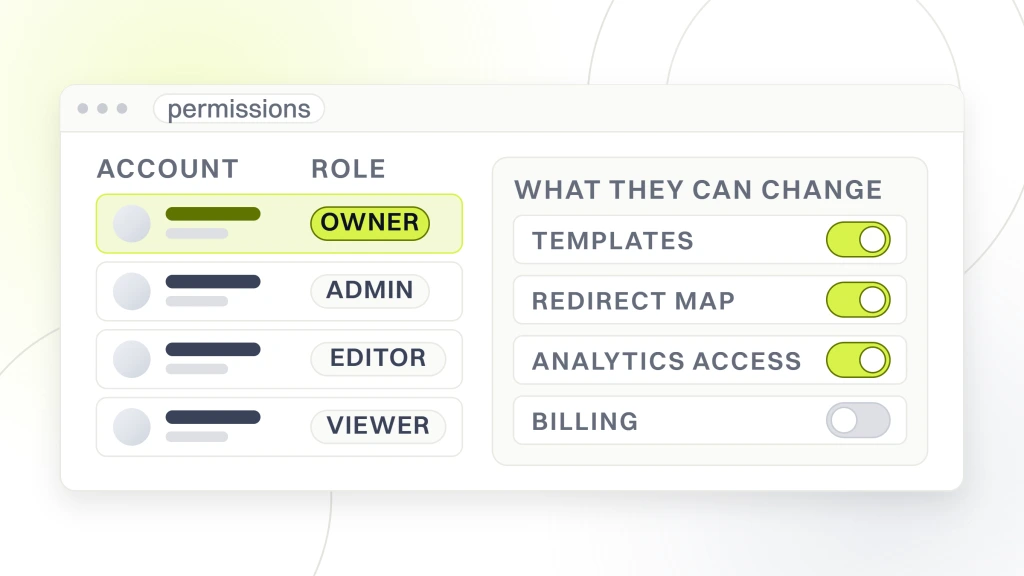
Redirects and structured data are the failure points everybody names. Three more decide as much. The URL structure is settled at sitemap approval. The page template set is settled at design signoff, fixing how much text sits above the fold. The CMS field model is settled at build kickoff, deciding whether your team can edit a title tag without a developer.
The first check is whether you are rebuilding regardless. Read the proposal for a new template set, a new CMS, or a URL change. If any is in scope, every decision above is live. That question gets four paragraphs in the guide to choosing an SEO agency on this site, and this article starts where they stop.
The second check is arbitration. If you cannot name who settles a fight between a designer wanting no text above the fold and a search lead wanting an H1 there, one scope settles it inside a team’s escalation path. The third is size, counted in templates. Three or four generate fewer decisions than the meetings to coordinate two firms. The fourth is a platform migration, where the content model, the URL map and the render path are one task.
When a combined firm is the wrong choice, and what to buy instead
Six situations, each with its check. Run them against your site and your proposal, not your industry.
The site you have still works. Pull the last 90 days, ask whether the pages people land on still convert, then crawl the templates for anything a fix would not solve. If both hold, a rebuild is a cost with no search reason under it.
The design job is really a rebrand. The check is the deliverable list. A name, a logo system or photography direction means you are buying brand work, judged by people who never open a crawl.
Links decide your market. Open the results above you and ask whether they lead on their pages or on referring domains. If the pages look like yours and the counts do not, no template change closes that gap, which is where search engine optimization consultants earn their money.
You have a rendering or migration problem. Load a key page with JavaScript disabled and view the source. If the main content is not in the HTML, or your URL map is the deliverable, a dedicated technical SEO audit goes further than a builder shipping templates.
Somebody already maintains the site. Ask whether anyone on your team holds commit access and ships changes in a normal week. If yes, the build half is bought, and buying it again makes that developer a spectator.
The search problem and the build budget sit on different timelines. Check your budget for a funded build line this year. If the rebuild is next year’s plan while the search problem is this quarter’s, one scope makes the search work wait.
Here is the recommendation, for the situation easiest to check. Your site was built in the last two or three years, the pages people land on still convert, and the results beating you lead on referring domains rather than pages. Hire two firms. Keep the site and whoever maintains it, and buy the search work from a specialist.
That case is not only made by firms selling one discipline. Orbit Media does both design and marketing yet positions publicly on being website-focused rather than broad, citing client language about agencies claiming a hundred services with website design as one.
What you give up by hiring one firm for both
You pay a full rate for a weaker half. In most firms selling both, one discipline is the strong one and the other is priced to win the work, which makes it a loss leader with a real cost. The weaker half arrives as generic content, thin link work, or templates nobody tested against a crawl.
There is no second read on the build. The firm that chose the template reports on whether the template works, and the redirect map goes live with nobody outside the project checking it against a crawl of the old URLs. Two suppliers review each other at no charge, and one supplier removes that review.
Your switching cost doubles. Leaving a search supplier means moving reporting access and a content calendar. Leaving one that built the site means moving the repository, the hosting, the theme and every integration on it.
You lose an argument you were getting at no charge. Two suppliers disagree in front of you, and the disagreement is information nobody invoices for. A designer saying the search recommendation will wreck the page, and a search lead saying the design will bury the content, hand you the tradeoff. Inside one firm it reaches you settled.
The firm grades its own rebuild. A drop after go-live can be an index refresh, a seasonal pattern, or a template that dropped the internal link module, and the supplier naming which one shipped that template. That applies to Redefine Web as much as to anyone selling this route.
How to tell a web studio with an SEO add-on from a firm that does both
Count the case studies before you book a call. Sort every project on the firm’s work page into three piles, design outcomes, search outcomes, and both in one engagement. Nearly all design means the search side is an attachment sold to protect the build. Nearly all search means the build side exists to stop clients leaving. A real share carrying both means the halves have worked together.
Then get the hours. Ask how the proposed hours divide by workstream across the first 90 days, and which line gets cut first if the budget moves. A good answer names each workstream, puts hours against it, and volunteers what drops first. A bad answer is one monthly figure with a service list under it, meaning the hours go to whichever project is on fire.
Last, get the name of the person accountable for search performance once the site is live. A good answer joins before wireframes start and stays afterwards. A bad answer is the account manager, who relays what the team said. First Page Sage weights senior staff experience at 10 percent and never asks whether that staff includes anybody who can change a template.
What it costs to buy the site and the SEO from one firm
Nobody publishes this comparison, and the absence is the finding rather than a hole in the research. Firms selling both publish service lists, not prices. No public figure prices a website build, so anyone telling you one invoice beats two, either way, is guessing in their own favor.
| What you are pricing | What the public record shows | Source, and what kind of number it is |
|---|---|---|
| Hourly rate for search work | Bands from $25 to $49 through $300 and up, plus Undisclosed | Clutch US SEO directory, read September 2026, self-declared profile fields on a directory that earns on the referral |
| Minimum project size for search work | $1,000, $5,000, $10,000 and $50,000 and up | Clutch US SEO directory, read September 2026, declared by the firms and never audited |
| A website build | No figure | No permitted public source prices a build, and the minimums above are not build prices |
| One invoice against two | No figure | Nobody publishes the comparison, so you build it |
Read the first two rows as what firms say about themselves. Treating one band as the going price is how a proposal gets approved for the wrong reason, and those minimums are search firm minimums, not build prices.
Build the comparison yourself, in hours. Ask each firm for its quote as hours by workstream plus a monthly hour budget, then divide the fee by the band it declares. The top band Clutch displays, $300 and up, is more than ten times the bottom band of $25 to $49. The same arithmetic settles what ongoing search work actually costs.
What is in a combined web design and SEO package, and what a cheap tier drops
A combined package is two scopes fastened together, and the fastening is where a cheap tier gives way. Build side, discovery, wireframes, a template set, a CMS build, content migration, a redirect map, launch QA. Search side, a technical audit, keyword and page mapping, on-page work, content, link work, monthly reporting. Every SEO agency package here is a subset.
The line items that vanish first are the ones you cannot see on launch day. Content migration becomes a copy and paste. The redirect map becomes a bulk rule rather than a page by page mapping, sending whole sections of old URLs to the homepage. Template-level structured data goes, because nothing reveals its absence unless you test. Link work becomes a directory submission list. Pre-launch baselining goes too.
Ask which of those five is in your tier, by name. A firm with a page by page redirect process describes it in one sentence. A firm without one talks about best practice. For the build side tier by tier, the web design packages breakdown goes further.
What a website SEO agency should be able to answer before you sign
These only make sense when one firm holds both scopes. A question that would work unchanged on a pure-play search firm is doing no work here.
| Ask this | A good answer contains | The reply that ends the call |
|---|---|---|
| When does your search team see the wireframes | Before design signoff, with a named reviewer | After the design is approved, or at launch |
| Who writes the redirect map, and when is it reviewed | A named person, drafted at content freeze, checked against a crawl | The developers handle that at launch |
| Show me the hour split by workstream for 90 days | Hours per workstream, with the line cut first named | One monthly figure and a service list |
| Who is accountable for search performance 90 days after launch | A named person on the account before wireframes and after go-live | Your account manager looks after that |
| What is your pre-launch baseline | A crawl, a rankings snapshot and traffic taken before staging | Reporting starts once the site is live |
| On the day I leave, what do I take and what stays | Repository, hosting, theme license and redirect map, in writing | We would work that out at the time |
Two replies matter most. If the search team first sees the work after design signoff, the templates were built with no search input. If reporting begins at launch with no baseline, nobody can say later whether the rebuild helped or hurt.
Red flags when one firm builds and optimizes
The search scope starts on the go-live date. If the search line in the proposal begins where the build line ends, the templates were designed with no search opinion in the room and much of the first quarter is repair.
A free trial offered on the build. A trial works on a retainer because the work is reversible. A free wireframe or homepage design is a hook, and walking away afterwards costs you the project rather than a month.
A flag we fail, and you should hold us to it. Ask how many links the search side placed in the last year and by what method. Link acquisition is the thinnest part of what Redefine Web sells. If links decide your market, buy the search half somewhere else.
A second flag we fail. When one firm runs the build and the reporting, reporting slips whenever a launch slips. Our own monthly reports have gone out late in launch-heavy months. Ask any firm that does both what happened the last time a launch date moved.
Because a combined firm grades its own rebuild, keep one measurement it does not control. Set up a free rank tracker on your priority terms the week before staging goes up, picking one from our comparison of free SEO tools.
Who owns the site when you leave, and what you can actually take with you
The category does not answer this, and every item below is cheap to agree in a proposal and expensive to argue in a termination.
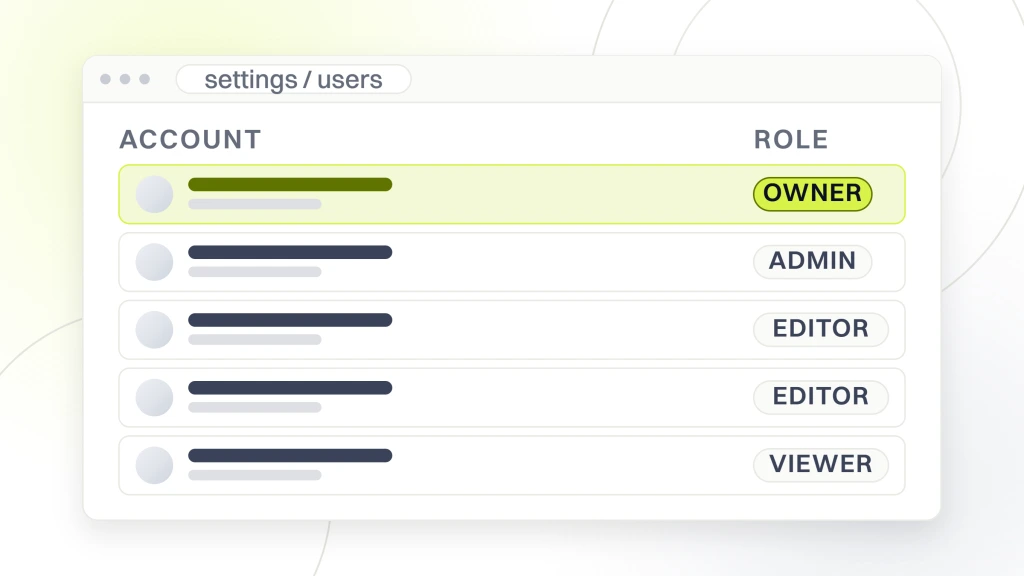
The repository and the hosting accounts. Ask whose account the repository lives in. The answer you want is an organization you own, with the firm added as a collaborator and removable by you. Hosting and DNS the same. Accounts in the firm’s name with you as a contact means somebody else’s billing dispute can switch your site off.
The license on anything proprietary. This is where the category actually breaks. If the firm built a theme, a page builder or a plugin its other clients also run, ask in writing whether the license survives the relationship. Perpetual and transferable is one answer. A license ending with the contract is another, and the site you paid for stops being yours to maintain.
Content, redirects and analytics. Content and page structure should export in a standard format with the field structure intact, not a database dump nobody can open. The redirect map should arrive as a file at launch. Analytics, Search Console and tag manager belong in your own account.
Whether firing the firm means rebuilding. It does when the theme license ends with the contract, when the CMS is one the firm wrote, or when the build only runs on hosting that firm operates. It does not when the site runs on a standard CMS, on a theme you hold a transferable license to, in hosting under your own name. Ask which your proposal produces, in the document. For what it is worth, the position published on our own package page is a standard CMS transferred to your account at launch, which is a claim to put in a contract rather than take from a post.
When your site is already built and you only need the SEO
A lot of readers who get this far should stop shopping for a rebuild. If your templates render the main content in the HTML, your forms convert, and page speed is not what holds you back, the build is not your problem. Proposals open with a rebuild because it is the largest line item a firm can sell.
What you need instead is search work scoped inside the site you own. Price it as hours against your templates, with a named developer contact on your side and a change process that does not need a redesign to edit a title tag. A best SEO agency B2C list leans toward content and category pages, a business-to-business list toward technical depth. Neither starts with a rebuild.
If that describes you, buy the search work on its own. That is what the SEO services scope exists for, and the first thing any provider should produce is a diagnosis of the site you have rather than a plan to replace it.
Where a specialist beats us
In most firms selling both disciplines one is a loss leader, and being honest means naming ours. At Redefine Web the weaker half is link work. We do far less of it than a pure-play firm, our published work leans toward some verticals, and the revenue half of our reporting needs CRM access we do not always get.
So here is the second recommendation, for a reader we can describe precisely. The results above you lead on referring domains, your site is under three years old and still converting, and you have a developer maintaining it. Hire two firms. Buy the search work from a specialist whose published work is link-led, and keep the site where it is. Give that specialist a named developer contact and a fixed monthly hour budget.
What we would do first, whichever way you are leaning, is spend money on a diagnosis instead of a proposal. Crawl the site you have and pull three numbers. How many indexable pages render their main content in the HTML. How many carry a title tag and an H1 that describe the page rather than the company. How many old URLs return a redirect chain or a 404. Then open the results above you for the term that matters most and ask whether they lead on pages or on referring domains. A site failing the crawl and sitting behind on pages is a build problem. A site passing the crawl and behind on referring domains is a link problem, and a rebuild is an expensive way to avoid buying links.
Do the reading, then pick the route, then pick the firm. That order survives three years. The other lasts until the first invoice you resent. If you want the reading done for you, start with a free website audit.