Redefine Web

Ecommerce SEO Audit Built for Shopify, Woo, and BigCommerce Stores

Our ecommerce SEO audit names every product, category, and collection fix your store needs to rank. You get a written report, a ranked roadmap, and a 30-minute walkthrough. Average ecom store owner uncovers 72 fix-worthy items on the first audit across Shopify, Woo, BigCommerce, and Magento.

$999+
per month · published
4
PLATFORMS · SHOPIFY WOO BC MAGENTO
FREE
COST OF YOUR ECOMMERCE AUDIT
72 ITEMS AVG ECOM AUDIT · WRITTEN + RANKED
ECOM AUDIT REPORT
START HERE

Get your ecommerce SEO audit.

This field is for validation purposes and should be left unchanged.
Name(Required)

Free. Written report in 24 hours, yours to keep.

Trustpilot4.7/5★★★★★
Clutch5.0/5★★★★★
Google5.0/5★★★★★
DesignRush4.9/5★★★★★
GoodFirms5.0/5★★★★★
F6S5/5★★★★★
4.9 WEIGHTED AVERAGE · VERIFIED BY ECOM STORES WHO PAID US

Three ways your store rankings are stuck and no tool has told you

If any of these looks familiar, the free SEO audit names the fix and what it's worth before you spend a dollar.
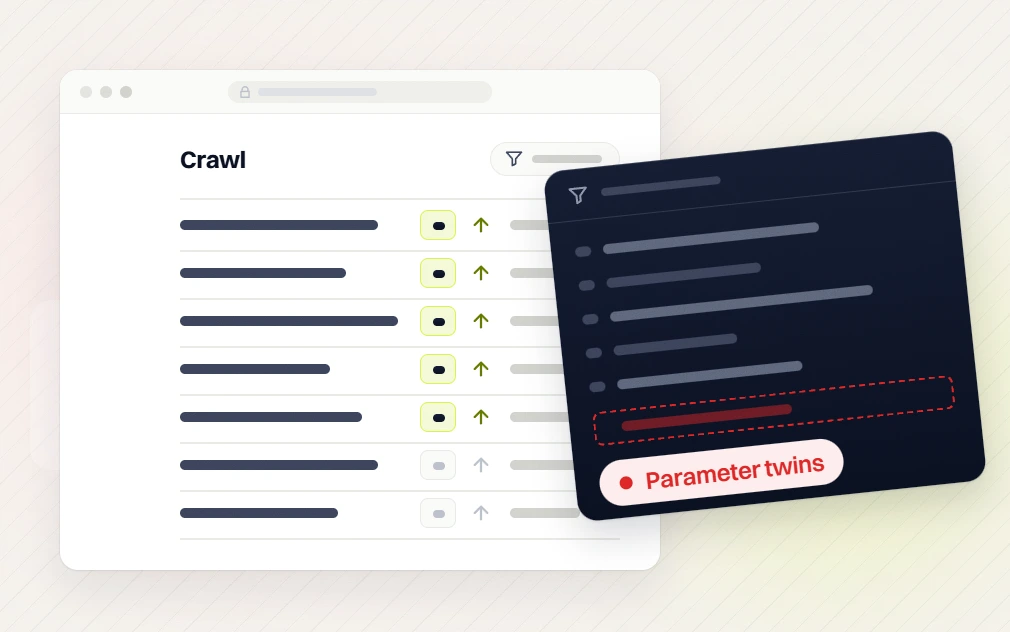
Ecommerce SEO audit Crawl list beside a filter panel flagging a row as Parameter twins
PROBLEM 01 · FACETED NAV CHAOS

Faceted URLs eat your crawl budget and cannibalize category pages

Every color, size, and price filter spawns a new URL. Google crawls 40,000 near-duplicate variants and skips the money pages. An ecommerce SEO audit maps the canonical rules on every ?color=red and ?size=xl variant, flags the pages you should noindex, and hands you the exact robots and canonical patches your store needs.

✓FACETED URLS CRAWLED · MONEY PAGES SKIPPED
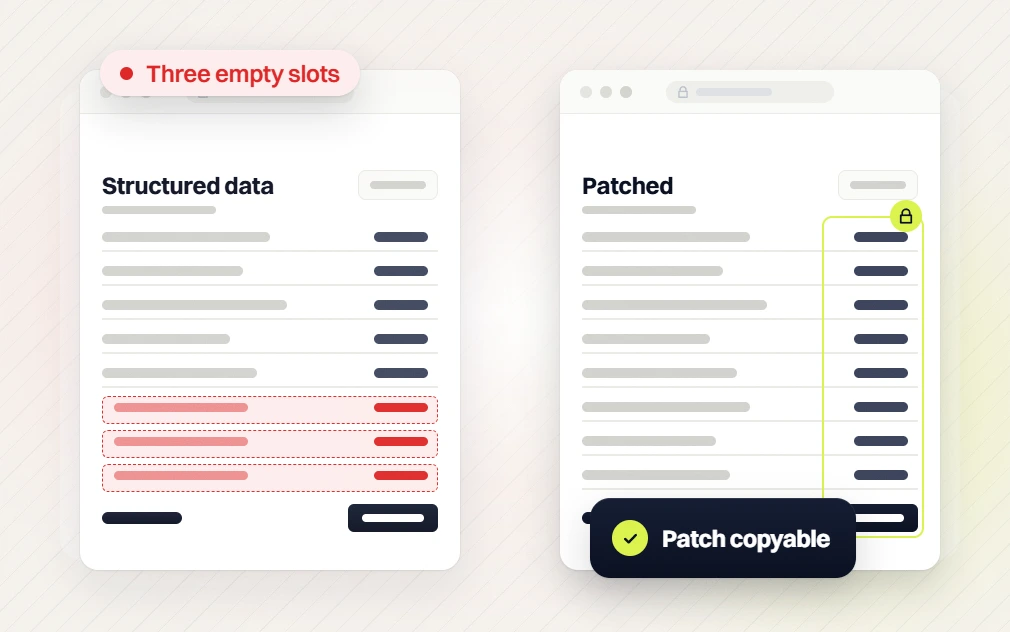
Ecommerce SEO audit Structured data table flagged Three empty slots beside a Patched table, Patch copyable
PROBLEM 02 · PRODUCT SCHEMA BROKEN

Product schema is missing or broken and rich results never trigger

Rich results drop off. Star ratings, price, and stock disappear from the SERP snippet. An ecom SEO audit checks every Product, Offer, and AggregateRating markup on your PDPs against Google Search Central rules, names the broken fields, and gives you a schema patch you can push live the same afternoon.

✓RICH RESULTS OFF · CTR DOWN
Ecommerce SEO audit phone page flagged Thin copy beside a phone shop with Deep copy and Add to cart
PROBLEM 03 · THIN CATEGORY COPY

Category and collection pages rank behind Amazon on your own SKUs

Your money categories carry 45 words of copy above a grid of 60 products. Amazon carries 800 words and outranks you on your own brand keywords. Our ecommerce SEO audit maps every category and collection page against the top 5 SERP rivals, names the word-count gap, and drops in the buyer-question outlines you need to close it.

✓CATEGORY COPY UNDER 100 WORDS

Three outcomes every ecommerce SEO audit report delivers

Three numbers we sign against on every SEO program. Each one is a launch criterion, not a hope.
Ecommerce SEO audit findings card with two flagged rows on top and a Ranked by impact badge

A ranked fix list mapped to product, category, and collection URLs

Every finding written in plain English, ranked by revenue impact, with the exact PDP, PLP, or collection page it hits. Your dev team starts on Monday.
Ecommerce SEO audit search card with a highlighted rising result and a Cross the first page badge

First-page gains on money SKUs inside 90 days after fixes go live

Stores that applied the top 20 fixes from our ecommerce SEO audit saw first-page movement on 12 to 20 SKU keywords inside 90 days. Real numbers, tracked in Search Console.

Ecommerce SEO audit page, mail, user and check items turning into a checked list with a Handed on badge

A written report you keep, forever

The PDF is yours the day it lands. Hand it to any Shopify partner, Woo dev, or new agency. No proposal gate, no upsell wall, no expiring access.

Four stages, 24 hours, one written sign-off

Fixed scope, written sign-offs, dates on the calendar. Every ecommerce SEO audit runs the same four stages so you know what lands on which day. Nothing slips.

HOUR 1

Store access and scope lock

You send your store URL, your revenue targets, and the competitors you want compared. You share Search Console, GA4, your Shopify or Woo admin, and any rank tracker, read-only. We confirm the audit scope in writing.

✓SIGN-OFF: SCOPE + ACCESS
HOURS 7-10

Technical crawl and product feed audit

Full crawl scored against Core Web Vitals, indexation, faceted-nav canonicals, JS-rendered PDPs, and product feed health. Every technical blocker logged with a fix path and the expected rank impact.

✓TECH FINDINGS LOGGED
HOURS 10-17

On-page, content, and schema audit

Every money PDP, category, and collection page checked for intent match, title formula, breadcrumb schema, review schema, and buyer-question depth. Content gaps mapped to the SKU searches you should be winning.

✓CONTENT MAP DRAFTED
HOURS 17-24

Report build and walkthrough

Findings written up in a PDF, ranked by revenue impact and mapped to product URLs. A 25-minute call walks your team through the top 20 fixes and agrees the first three to push live.

✓REPORT + WALKTHROUGH DONE

What you actually get from our ecommerce SEO audit

Five workstreams. Every line item listed here lands in the written report. No hidden phase-two column, no retainer upsell before the fix list is yours.
Ecommerce SEO audit PDP signals checklist with pass and fail rows and an Expected movement badge
WEEKS 1–2

PDP audit that names every product page blocker

The product section of the ecommerce SEO audit checks every PDP against Google Product signals. Title formulas, review schema, price and stock markup, image alt, LCP on the hero image, and internal links from category pages. Each finding maps to the SKU URL and the expected rank movement.
PHASE DURATION
PDPs SCORED
SIGN-OFF
PRODUCT SCHEMA LIVE
✓GATE · VARIANT CANONICALS SET
// DELIVERABLES
✓
PDP title and meta formula auditevery money PDP checked against the product + brand + qualifier formula, gaps and rewrites listed per SKU.
✓
Product, Offer, and AggregateRating schemaevery PDP schema field validated for coverage, syntax, and rich-result eligibility per Google rules.
✓
Variant canonical and duplicate auditcolor, size, and material variant URLs mapped to the correct canonical target so equity pools on one PDP.
✓
PDP internal linking reviewcategory-to-PDP and PDP-to-PDP link paths audited so top-selling SKUs get the equity they earn.
✓
Product image and alt auditPDP image alt, file name, format, and hero-image LCP reviewed against Core Web Vitals and image-search rules.
✓
Out-of-stock and 404 recoveryout-of-stock and delisted SKUs audited for the right handling: keep, redirect, or 410 the URL.
Ecommerce SEO audit Copy blocks editor with an image block, text lines and a Then the stub badge
WEEKS 2–3

Category and collection audit that closes the word-count gap

Category and collection pages carry the money queries and most stores hide them behind 40 words of copy. Our audit scores every PLP against the top 5 SERP rivals for intent match, word count, header structure, breadcrumb schema, and internal links from the top nav.
PHASE DURATION
PLPs SCORED
SIGN-OFF
COPY GAPS MAPPED
✓GATE · BREADCRUMBS FIXED
// DELIVERABLES
✓
Category page word-count auditevery money category scored against the top 5 SERP rivals for word count, header depth, and buyer-question coverage.
✓
Collection landing page reviewseasonal and buyer-intent collections audited for evergreen keyword targeting and internal link paths.
✓
Breadcrumb schema auditBreadcrumbList schema checked on every PLP for hierarchy, position, and rich-result eligibility.
✓
PLP title tag and H1 reviewevery category title scored on CTR patterns, length, and focus keyword placement against SERP rivals.
✓
Nav and hub link pathstop-nav and mega-menu link paths audited so money categories sit two clicks from the homepage.
✓
Pagination and infinite-scroll auditpagination rules, rel=next, and JS scroll patterns checked for crawlability and canonical drift.
Ecommerce SEO audit Parameter rules dashboard with upward arrows and A rule per parameter badge
WEEKS 3–4

Faceted nav audit that stops crawl budget waste

Filters spawn URLs. ?color=red&size=xl&price=under-50 multiplies into 40,000 near-duplicates and Google skips your money categories. Our ecommerce SEO audit maps every facet, names the canonical target per parameter, and hands you the robots and canonical patches you push live the same week.

PHASE DURATION
FACETS MAPPED
SIGN-OFF
CANONICALS SET
✓GATE · CRAWL SAVED
// DELIVERABLES
✓
Facet URL parameter inventoryevery filter and sort parameter logged with a canonical, noindex, or index rule per parameter.
✓
Crawl budget reviewlog-file analysis on 30 days of Googlebot hits so you see the URLs it wastes budget on.
✓
Canonical target rules per facetclean canonical rules per filter type so equity pools on the money category, not on 40,000 variants.
✓
Robots.txt and noindex planrobots rules for /cart/, /checkout/, /search/, and low-value facets patched so crawl budget hits money URLs.
✓
Indexable facet content rulesfacets you should index for keyword targeting flagged with the copy and title patterns they need.
✓
Duplicate content reportnear-duplicate PLP variants flagged with a consolidation plan and redirect map per SKU family.
Ecommerce SEO audit two phone shop screens with Add to cart buttons and a One fix path badge
WEEK 4

Product feed and schema audit that turns rich results on

Rich results and Shopping listings run on feed and schema health. Our audit checks Merchant Center feed errors, GTIN and MPN coverage, Product schema against Google Search Central rules, and review and rating markup on every PDP. Findings map to feed patches and schema fixes.
PHASE DURATION
FEED HEALTH SCORED
SIGN-OFF
SCHEMA VALIDATED
✓GATE · RICH RESULTS ON
// DELIVERABLES
✓
Merchant Center feed auditevery error, warning, and disapproval in your Merchant Center feed logged with the exact SKU fix path.
✓
GTIN, MPN, and brand coverageproduct identifiers audited across the SKU catalog so Google matches your PDPs to buyer searches.
✓
Product schema field validationProduct, Offer, price, availability, and delivery schema checked field by field against Google rules.
✓
Review and rating markupaggregate rating and review schema audited on every PDP so star ratings trigger in the SERP snippet.
✓
Free listing eligibility checkPDP structured data and feed health checked for Google free listings eligibility across the SKU catalog.
✓
Organization and Store schemaOrganization, Store, and LocalBusiness markup validated for brand-panel and knowledge-graph coverage.
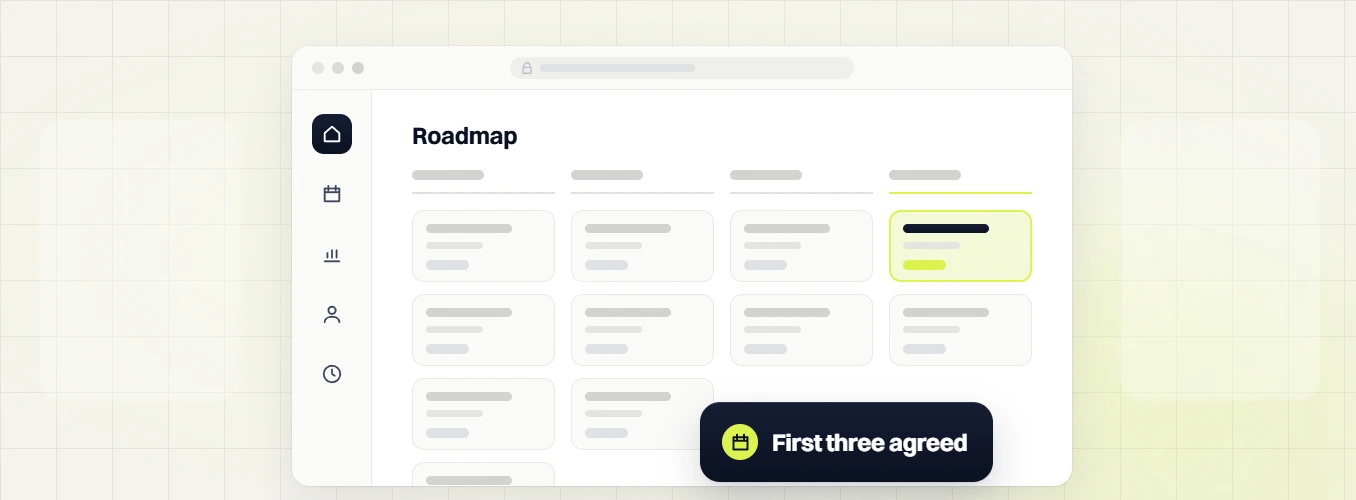
Ecommerce SEO audit Roadmap board in four columns with a highlighted card and a First three agreed badge
PHASE 5

A written ecommerce SEO audit report

The final deliverable is a PDF plus a 30-minute walkthrough call. Findings ranked by revenue impact, fixes listed with the product URL and the expected rank movement. Yours to keep, share, or hand to any Shopify partner, Woo dev, or new agency.

PHASE DURATION
WRITTEN PDF
SIGN-OFF
30-minute WALKTHROUGH
✓GATE · YOURS TO KEEP
// DELIVERABLES
✓
Written PDF reportevery finding written up with the product URL, the fix, and the expected rank impact scored 1 to 5.
✓
Prioritized fix roadmaptop 20 ecommerce fixes ranked by revenue impact and time-to-implement so your dev team knows where to start.
✓
30-minute walkthrough calllive call with the auditor to ask questions, agree the first 3 SKU-page fixes, and plan the rollout together.
✓
Search Console + Merchant Center snapshotcoverage, performance, and Shopping feed status captured the day of the audit with a written fix note.
✓
SERP rival benchmark scorecardside-by-side scorecard versus your top 5 SERP rivals on PDP, PLP, feed, and schema signals.
✓
Follow-on retainer proposaloptional attached scope if you want us to apply the fixes, priced from our SEO packages tiers.
Request your ecommerce SEO audit.Written report in 24 hours
  • FIXED SCOPE
  • 72 ITEMS AVG
  • WRITTEN REPORT YOU KEEP
Request Your Ecom SEO Audit No card needed. No sales call required.
Case studies See all case studies

Real stores, real ecommerce SEO audit fixes, real ranking gains

Each one includes where the client started, what we changed and what happened.

Homepage of Boogie Board, a Ecommerce · Reusable Writing Tablets business, shown in a browser window
Ecommerce · Reusable Writing Tablets

Drove sales for Boogie Board at a $31 cost per conversion, at scale.

Boogie Board, the brand behind the first reusable writing tablet, had loosely targeted Google Ads. Its landing pages undersold the product, and it had no follow-up for repeat buyers. We sharpened keyword targeting, added LinkedIn Ads, optimized landing pages and set up lead magnets and automated follow-ups. Conversion rates rose 11% and cost per conversion reached $31 across $650K in managed ad spend.

Read the Boogie Board case study →
11%
Conversion rate
$31
Cost per sale
$650K
Managed budget
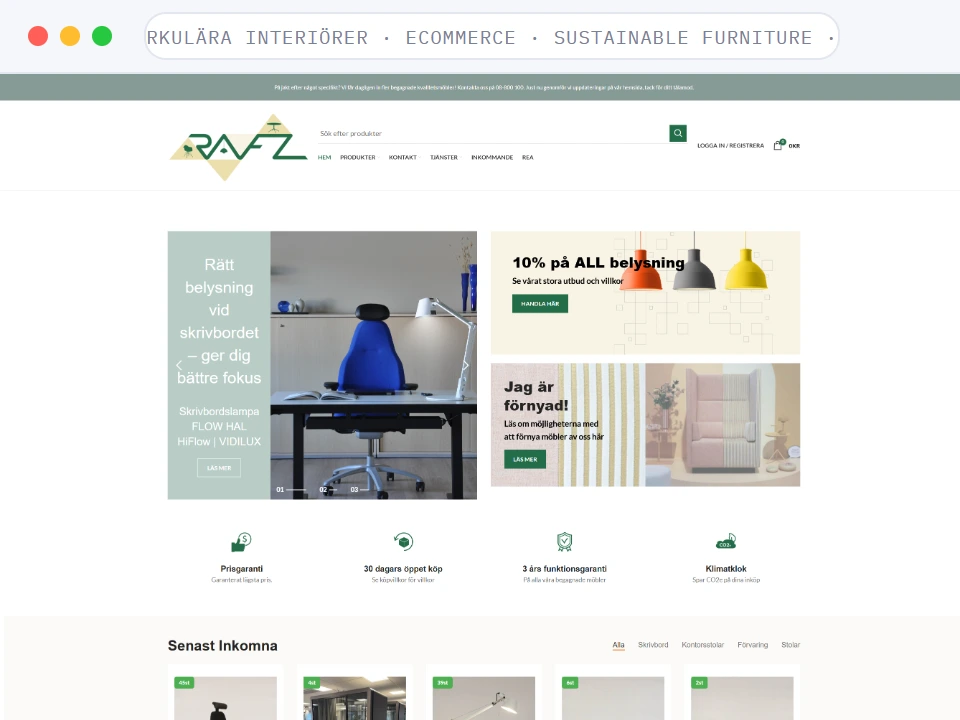
Homepage of RAFZ Cirkulära Interiörer, a Ecommerce · Sustainable Furniture · Sweden business, shown in a browser window
Ecommerce · Sustainable Furniture · Sweden

Grew RAFZ conversions 28% with a rebuild that loads in 2 seconds.

RAFZ Cirkulära Interiörer sells eco-friendly furniture in Sweden. Its site was heavy with plugins and took 15+ seconds to load, and shoppers left their carts. We rebuilt it on a light custom theme, tuned WooCommerce, added the place2place API and a repaint feature, and refocused the homepage on products. The site now loads in 2 seconds, server requests fell 82% and conversions rose 28%.

Read the RAFZ Cirkulära Interiörer case study →
+28%
Conversion rate
2s
Page load
-82%
Server requests
Homepage of Chervin Furniture & Design, a Custom Furniture · Ontario business, shown in a browser window
Custom Furniture · Ontario

Drove 2.3× keyword rankings and 54% annual traffic growth at Chervin Furniture.

Chervin Furniture & Design makes custom cabinetry and furniture and has three Ontario showrooms. Years of marketing on social media alone brought uneven engagement and poor leads. We built a 12-month SEO roadmap, content shaped by the sales team, Google Ads, digital PR and local SEO for the showrooms. Keyword rankings grew 2.3× from 2022 to 2023, and website traffic grew an average 54% a year.

Read the Chervin Furniture & Design case study →
2.3×
Keyword rankings
+54%
Annual traffic
+51%
Year-1 organic

CLIENT WORDS

The team split our national spend by store catchment. Every location got its own landing page and creative. Booked eye exams up 47% inside two quarters with the same media budget.

Karen Williams
Head of Marketing, Vision Express
Verified via NPS survey
+47% booked eye exams Per-store attribution
Vision Express website homepage in a browser window, a prescription sunglasses offer above eye exam booking and eyewear
1 / 10

Selected clients we've run full marketing programs for

  • Armanino
  • BSH
  • Delicate Dental
  • Government Legal Department
  • Hightop Health
  • LifeStance Health
  • Marmalade
  • Montegra Capital Resources
  • Noelle Collins Dental Clinic
  • Oxford Capital
  • Paquin & Carroll Insurance
  • PCO Bookkeepers & M&A Specialists
  • Peaceful Mind Psychology
  • Peak Accounting Solutions
  • Pelvic Rehabilitation Medicine
  • RiverSaaS Capital
  • Rosenbaum Personal Injury Lawyers
  • Smile Design Dentistry
  • Stanhope Capital Group
  • Stella Maris
  • Tilghman Builders
  • Toyota
  • Uptime
  • VP Dental & Medical Supplies
  • Wilentz Attorneys at Law

See what a better organic conversion rate is worth

Move the sliders to your numbers. No ad spend in this one, it works from the organic traffic you already have.

Added revenue per month
/mo

What a 20% improvement on your current conversion rate adds, on today's traffic. Rankings are assumed flat, so nothing here depends on new traffic arriving.

Free · Written findings · Yours to keep

Common questions on the ecommerce SEO audit process

Straight answers on pricing, timelines, deliverables, and what you get in the written report. If your question is not here, book the scoping call.

PREFER TO TALK?
hello@redefineweb.com →

An ecommerce SEO audit runs in five stages that any store team can follow. Start with a full crawl using Screaming Frog or Sitebulb and log every 4xx, 5xx, redirect chain, duplicate title, and thin product page across the SKU catalog. Second, open Google Search Central and pull Search Console coverage errors, Core Web Vitals status, and top losing SKU queries for the last 90 days. Third, score every money PDP, category, and collection page against the top 5 SERP rivals for intent match, header depth, and word count. Fourth, validate Product, Offer, AggregateRating, and BreadcrumbList schema on every PDP and category page. Fifth, review the backlink profile and internal link paths so category equity flows to your top-selling SKUs. Rank every finding by revenue impact, name the exact URL it hits, and hand the fix list to a dev who can push canonicals, robots rules, and schema patches inside a week.

ChatGPT can help draft parts of an ecommerce SEO audit but it cannot replace a real one. It has no access to your live Google Search Console, no crawl data, no log files, and no Merchant Center feed status. Ask it to review a PDP title formula, generate a Product schema patch, or write a category page copy outline and it does a solid job. Ask it to score 500 product pages against SERP rivals and it hallucinates rankings, word counts, and URLs. The right workflow is a hybrid model. Run Screaming Frog for the crawl, pull Search Console and Merchant Center for the truth data on live store performance, then feed that structured input into ChatGPT to draft the copy rewrites and schema patches per URL. That way the audit finds real store issues and the AI speeds up the fix write-up. Bring the real data first, then let the language model help with the report drafting and the dev handoff notes.

Ecommerce SEO is the set of technical and content practices that get product pages, category pages, and collection pages ranking on Google without paid ads. It covers Product schema, canonical rules on faceted URLs, PDP title formulas, category page word count, breadcrumb schema, review and rating markup, Merchant Center feed health, Core Web Vitals on the PDP hero image, and internal linking from category pages down to top-selling SKUs. An ecommerce SEO audit is how a store owner learns which of those signals are broken and how to fix them without guesswork. Well-optimized ecom stores earn free traffic from Google Shopping listings, organic SERP rankings on SKU keywords, image search, and rich results with stars, price, and stock badges. Stores that skip ecom SEO leave that traffic on the table and pay Google Ads for every visitor they could have earned organically. The audit is the diagnostic that shows you how much of that traffic you are leaving behind.

For an ecommerce SEO audit, five tools cover 90% of the work across the SKU catalog. Screaming Frog SEO Spider handles the technical crawl, canonical checks, and duplicate title mapping across every product URL. Google Search Console is the source of truth on impressions, clicks, coverage errors, and Core Web Vitals status on your live PDPs and category pages. Ahrefs or Semrush Site Audit runs the automated technical scan and gives you the backlink profile against your top 5 SERP rivals. Google Merchant Center Help tools flag feed errors and Shopping listing disapprovals across the catalog. Sitebulb or a log-file analyzer like OnCrawl shows the crawl budget waste on faceted URLs and low-value filter paths. Pair them with the free Rich Results Test and PageSpeed Insights and you can run a solid audit yourself over a weekend. The hard part is not the tool list, it is knowing which 20 findings to act on and which 180 tool warnings to ignore because they never move a store ranking.

To run an ecommerce SEO audit of a website, work through the same five stages every time. Stage one, run a full crawl with Screaming Frog and export every 4xx, 5xx, redirect chain, thin page, and canonical mismatch across the SKU catalog. Stage two, pull Google Search Console data on the last 90 days: coverage errors, top losing queries, Core Web Vitals status, and manual actions. Stage three, score every money PDP, category, and collection page against the top 5 SERP rivals for header structure, intent match, and word count. Stage four, validate Product, Offer, AggregateRating, and BreadcrumbList schema on every PDP and category page against Google Search Central rules. Stage five, review the backlink profile and internal link paths so equity flows to top-selling SKUs. Rank every finding by revenue impact, name the exact URL, and hand the fix list to a Shopify partner, Woo dev, or in-house team who can push the patches inside seven business days.

Ecommerce SEO audit pricing across the industry runs from $499 for a small-store review to $2,500 or more for an enterprise or multi-brand engagement across large catalogs. The Redefine Web ecommerce SEO audit is free, whatever the catalog size. You get the written report, the ranked fix list, and the 30-minute walkthrough call with the auditor who ran the review. No retainer required on the audit itself, and you keep the written report forever to hand to any dev. What moves the number other vendors quote is SKU count, platform, and whether a human reads the catalog or a scanner does. If you want us to apply the fixes after, our monthly SEO retainers start at $999 per month and reconcile against the audit fix roadmap.

Yes, and for stores under $10,000 in monthly organic revenue, DIY is often the right call to make first. The tools you need are free or near-free: Google Search Console, Screaming Frog free tier for up to 500 URLs, PageSpeed Insights, and the Rich Results Test. Block a full weekend, work the five stages in order, and log every finding in a spreadsheet with the URL, the fix, and the expected rank impact. What DIY misses is context. A professional ecommerce SEO audit compares your findings against the top 5 SERP rivals per money keyword and tells you which 20 fixes actually move rank versus the 180 that read important in a tool export but change nothing on your live store. If you have the time to learn what matters, you can do it yourself. If you want a ranked fix list ready for a Shopify partner or Woo dev to act on this Monday, book the audit and get seven days of your time back.

SEO audits are structured reviews of a website against current Google ranking signals. An ecommerce SEO audit narrows the scope to product pages, category pages, collections, faceted navigation, product feeds, and Product schema, on top of the general technical, content, and link work every site needs to compete. The point is to find every issue holding rankings back, name the exact PDP or PLP it affects, and hand the store owner a prioritized fix list a dev can act on this week without guesswork. A proper audit runs across five workstreams: technical health, on-page structure, content depth, product feeds and schema, and off-page authority signals. The deliverable is a written report, not a live dashboard. Written because you want a document you can hand to a Shopify partner, a Woo agency, or an in-house team six months later and still act on with confidence and no version drift. Dashboards go stale the day the tool subscription lapses. Written reports do not.

Ecommerce SEO audit pricing depends on catalog size and platform choice. Across the industry a store under 200 SKUs on Shopify or Woo is quoted around $499, a store under 2,000 SKUs around $999, and a multi-brand or international catalog over 2,000 SKUs from $2,500. The Redefine Web ecommerce SEO audit is free at every one of those catalog sizes, and every audit includes the written report plus a 30-minute walkthrough call with the auditor. Scope still scales with the catalog. A small store gets technical, PDP, and a top 20 category review. A larger catalog adds products, categories, faceted nav, feeds, and schema scored against SERP rivals. Multi-brand and international stores add log-file analysis, deeper competitor benchmarks, and an executive walkthrough call. Anything above $5,000 for a single-brand catalog under 5,000 SKUs is retainer padding. If you want fixes applied after, our monthly SEO retainers start at $999 per month.

Perform an ecommerce SEO audit in five stages inside 24 hours. Hour 1, lock the platform, catalog size, revenue targets, and top competitor list on a 30-minute scoping call, then share Search Console, GA4, admin access, and any rank tracker credentials. Hours 7 to 10, run a full crawl with Screaming Frog, log-file analysis on 30 days of Googlebot hits, and score Core Web Vitals on the PDP hero image across 20 sample pages. Hours 10 to 17, audit every money PDP, category, and collection page for intent match, title formula, breadcrumb schema, review markup, and internal linking from category hubs. Also validate the Merchant Center feed and Product schema against Google rules. Hours 17 to 24, write the report, rank the top 20 fixes by revenue impact per URL, and run a 30-minute walkthrough call with the store owner and their dev team. Every stage ends with a written sign-off so the store owner knows what has landed and what comes next.

You perform an ecommerce SEO audit by running structured checks against every ranking signal Google uses on product and category pages. The checks are ordered by revenue impact per URL. Start with the technical layer: crawl the site, log every 4xx, 5xx, redirect chain, and duplicate title, then check indexation on money PDPs and canonical rules on faceted URLs. Move to on-page: score every PDP, category, and collection page against SERP rivals for intent match and word count. Validate schema next: Product, Offer, AggregateRating, BreadcrumbList, and Organization markup on every applicable page. Check the Shopify SEO settings or Woo SEO plugin config so basics like title formulas and sitemap generation are set correctly. Close with off-page: backlink profile quality, toxic link risk, and internal linking maps. Log every finding with the URL, the fix, and the expected rank impact, then rank by revenue impact so the store owner sees the top 20 fixes first.

For WooCommerce SEO work, the best tool stack pairs Rank Math or Yoast SEO for on-page settings with Screaming Frog for the technical crawl and Google Search Console for the truth data. Rank Math handles Product schema, breadcrumb schema, title formulas, and XML sitemap generation on Woo out of the box. Screaming Frog surfaces every duplicate title, thin PDP, and canonical mismatch across the SKU catalog. Search Console shows you which SKU queries are winning and which are losing rank. Add Ahrefs or Semrush for the backlink audit and rival benchmark. For an ecommerce SEO audit of a Woo store, we also review WooCommerce-specific plugins like the product feed manager against the WooCommerce docs to verify Merchant Center compliance. Skip the free automated audit tools that promise a score. They flag 200 warnings that rarely move a ranking. Use the paid stack, run the human review, and act on the top 20 fixes.

To do SEO for an ecommerce store, work in four layers. Layer one, technical: fix crawl budget waste on faceted URLs with clean canonicals, patch robots rules on /cart/ and /checkout/, and score Core Web Vitals on the PDP hero image. Layer two, on-page: rewrite every money PDP title with the product + brand + qualifier formula, expand thin category pages past 500 words of buyer-question copy, and validate BreadcrumbList schema on every PLP. Layer three, schema and feeds: patch Product, Offer, and AggregateRating markup on every PDP, then check Merchant Center for feed errors so free listings and Shopping ads run clean. Layer four, off-page: earn 4 to 8 backlinks per quarter from relevant publications and internal-link from category hubs to top-selling SKUs. An ecommerce SEO audit is the diagnostic that names which layer to fix first. Without the audit, most store teams patch the wrong layer and rankings stay flat for another six months.