SaaS Marketing Retainer Plans That Move MRR
Bundled monthly retainer for pre-seed, seed, and Series A SaaS. One accountable SaaS growth lead runs product-led SEO, LinkedIn ABM, Google Ads, G2 and Capterra placement, onboarding flows, and HubSpot pipeline reporting. Plans from $499/mo with a 6-month initial term.
Three numbers every SaaS founder can hold us to
Amplitude shows 73% of trial signups never hit the aha moment before day 7 falls off
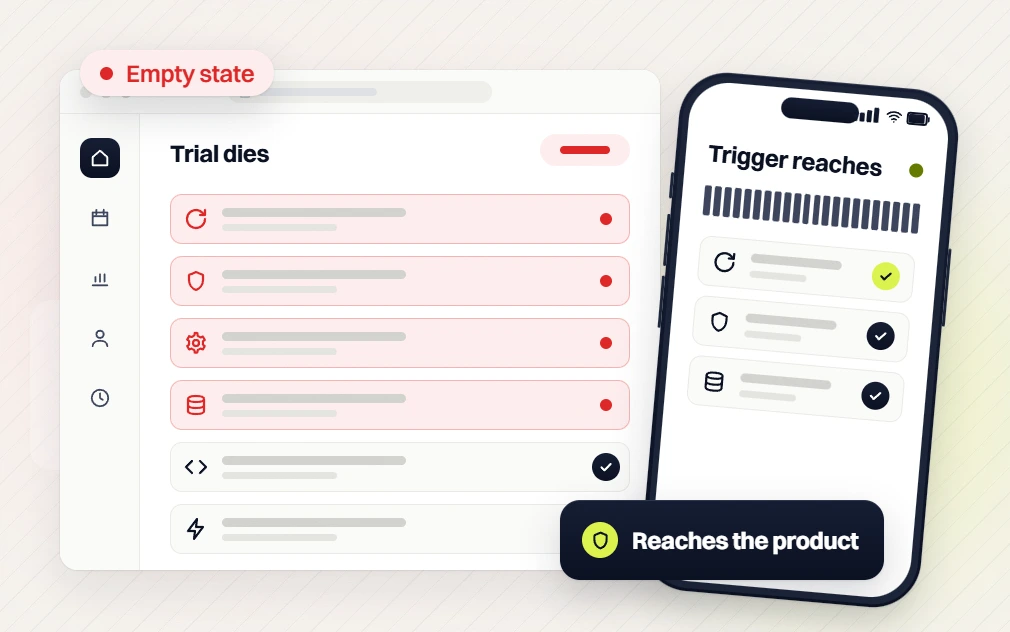
Signups fire in Segment, HubSpot marks the MQL, sales chases the email, and nothing closes. The trial dies at empty state because nobody wired the activation-event nurture flow into the product surface.
ChartMogul cohort churn breaks the 3:1 CAC:LTV benchmark and payback stretches past 18 months
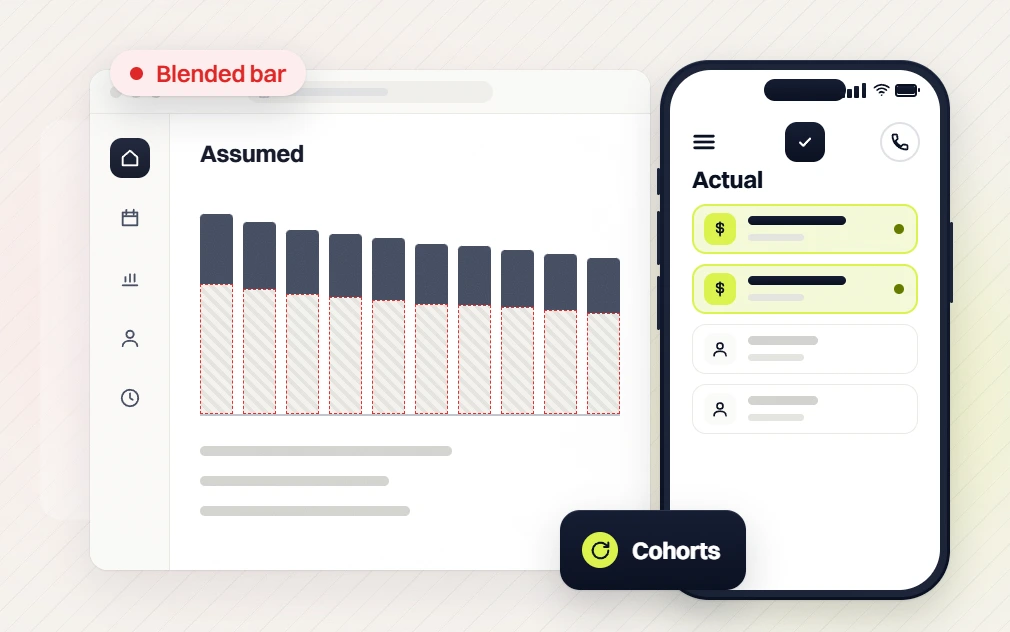
Cohort churn runs 40% above the deck. Blended CAC:LTV drops to 1.6:1 and payback breaks the SaaS Capital benchmark. Every paid channel gets defunded before the flywheel compounds.
B2B SaaS deals close 6 to 9 months out and the agency gets zero credit in Salesforce
Sales-led ACV cycles run 6 to 9 months. Agencies vanish before Salesforce fires the closed-won event. The channel that sourced the deal loses funding to the channel that touched it last week.
Three outcomes every SaaS retainer produces
Product-led SEO, category content, and comparison landers built around real buyer intent. Every MQL tagged by source and target-buyer fit in HubSpot.
Onboarding email flows, PQL nurture tied to Amplitude or Mixpanel product events, and integration-activation prompts push trial users past day 7.
You stop paying five vendors for one confused deck. A named SaaS growth lead owns the roadmap, runs the work, and reports MQL, PQL, and net-new MRR.
Four stages. Every step ends in a sign-off
Fixed scope, fixed cadence, fixed accountability. Nothing moves to the next stage until your founder or growth lead signs off in writing.
Full audit + HubSpot baseline
Site, ad accounts, email flows, and review-site presence scored against pipeline from booked demos. 30-page report with the top 3 pipeline-moving fixes.
12-month roadmap
Quarterly roadmap sized against product-line profitability. Higher-ACV segments get priority weight. Written ARR projection per quarter.
One named growth lead runs it
Google Ads, LinkedIn ABM, product-led SEO, G2/Capterra, category content, and onboarding all executed by a single SaaS growth lead. No handoffs. One number to call.
Quarterly scale review
Founder + growth lead review of demos booked, closed-won ARR, and next-quarter budget. Every shift signed off before it runs.
What you actually get from our SaaS marketing retainer
Five phases, every item listed. Fixed scope, defined deliverable per phase, written sign-off on the calendar.
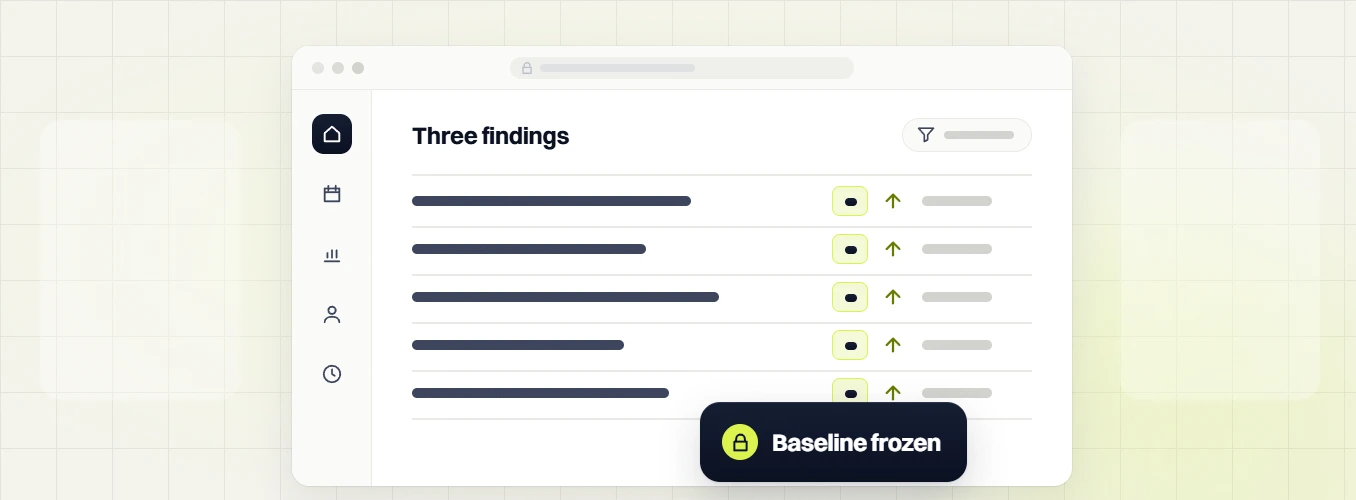
Week one audit + HubSpot baseline pulled
Site, ad accounts, email flows, and review-site presence all audited against pipeline from booked demos. Written 30-page report with the top 3 pipeline-moving fixes signed off by founder + growth lead before we spend a dollar.
Google Ads, LinkedIn, SEO, G2/Capterra, and email flows scored against pipeline and ARR impact.
HubSpot, Salesforce, Segment, and Amplitude data captured as day-one attribution baseline.
Every finding, every prioritized fix, every ARR projection in writing; founder and growth lead sign off.
What we do first is signed off, not sprung on you; prioritized by ARR impact and fix-time.
G2 grid position, review velocity, and category leaderboard benchmarked against the top three competitors.
Where click IDs stop being tracked, where HubSpot stage sync breaks, where closed-won never fires back.
12-month roadmap tied to product-line profitability
Weeks 2 and 3 build a 12-month quarterly roadmap sized against your product-line and ICP profitability. Higher-ACV segments get priority weight over volume plays. Every quarter has a written ARR projection so leadership sees what should hit pipeline.
Q1 to Q4 planned by campaign, category cluster, and content piece; every quarter has an explicit sign-off gate.
Higher-ACV tiers lead. SMB self-serve layered as base load, not headline focus, so ARR compounds first.
Q1, Q2, Q3, Q4 targets sized against real category data plus your fulfillment and CS capacity.
How much goes to Google Ads, LinkedIn, product-led SEO, and content each month; adjusted quarterly on what performs.
Which content, comparison page, or ROI calculator most moves higher-ACV deals past the buying committee.
Install-base segmented by tier and activation depth; upsell and cross-sell cadence written up front.
Every channel run by one named SaaS growth lead
From month 1, Google Ads, LinkedIn ABM, product-led SEO, G2/Capterra, category content, and onboarding flows are all executed by a single accountable SaaS growth lead. No handoffs between agencies. No cross-team blame. One number to call.
Every paid channel run by the same lead; attribution built once, not fought over across pods.
Organic, category grid, review-site, and integration marketplaces coordinated as one connected program.
Monthly editorial calendar tied to category keyword priority and buying-committee objections in the deal cycle.
Trial nurture, PQL sequences on in-product events, and upsell follow-up all wired to your HubSpot and Amplitude.
Ad copy, keywords, landing pages, PLG activation prompts; every test measured against a demo-booked number.
Every G2 and Capterra review answered inside 24 hours in a voice matched to your brand tone.
Weekly testing tied to HubSpot-verified demos booked
Every week, cross-channel testing runs against HubSpot-verified demos booked. Ad copy, landing page CVR, keyword targeting, review-request timing, retention cadence; every test measured against the number that pays your bills.
Every demo booked tagged to the click, keyword, or PQL trigger that drove them.
What we tested last week, what won, what went live this week; three-line summary, no dashboard hunt.
A/B tests on hero, offer, form, and demo-request placement; measured against demos booked only.
If product-led SEO is compounding faster than PPC, budget moves; every shift signed off in the monthly report.
Two new ad copy variants per campaign per month; losing creative rotated off within 14 days of first data.
Negatives, ICP filters, and audience layering tuned weekly to the searches that book higher-ACV pipeline.
Quarterly scale reviews tied to closed-won ARR
Every 90 days, the founder and growth lead review what demos booked drove, what closed-won ARR looks like, and what next-quarter budget should look like. Scale decisions are grounded in your HubSpot and capacity, not agency spend targets.
Demos booked by channel, closed-won ARR from marketing, cost per demo; all HubSpot-verified.
Ad spend and content velocity sized against your CS and AE bandwidth; no overspending past what you can close.
Explicit sign-off on next quarter allocation across channels; no surprise invoices, no hidden shifts.
Rolling 12-month view of ARR growth, CAC trend, LTV trend, and payback months; founder-first metrics.
When a SaaS is ready for product two, launch prep runs in parallel with the current retainer, no re-onboarding.
Roadmap for pushing higher-ACV segments (mid-market, enterprise) up in the mix as CS capacity opens.
Four retainer tiers for every stage of growth
Pick the tier that matches your practice stage. Move up or down anytime with 30 days notice. Ad spend billed separately at pass-through, never through us.
Solo practices, one growth program, not five vendors.
Solo or two-provider, adding paid + monthly recall on Foundation.
Two to four providers, high-ticket cases. Adds Meta + nurture.
Multi-location or premium groups. Per-location run, rollup reports.
Every retainer feature, tier by tier
HOVER ANY FEATURE FOR A PLAIN-ENGLISH EXPLANATIONContent +
SEO +
Paid media +
Reviews + reputation +
Reporting + strategy +
Real SaaS teams, real numbers
See what a $400/mo dental site could book back.
Slide in your practice numbers. Assumes a 32% relative conversion improvement, below the median gain on our dental rebuilds.
Asked by SaaS founders, answered
From real quote calls with SaaS founders and growth leads. Anything else, ask on the strategy call and get an answer in the first 5 minutes.
How much does a marketing retainer cost?
+
A retainer at Redefine Web starts at $499/mo on Foundation and scales through $999 Growth and $1,999 Scale. Custom Enterprise scope for multi-product SaaS and ABM-heavy motions starts from $3,500/mo. Ad spend is billed separately at pass-through, direct to your card, so retainer dollars fund people and playbooks rather than media.
Foundation is priced for pre-seed and seed SaaS proving the funnel with product-led SEO, category content, and G2 profile work. Growth adds paid acquisition once demo booking is repeatable. Scale layers LinkedIn ABM once ACV supports it, roughly $30K+ annual contract value. Market rates for a B2B SaaS retainer run $1,250 to $50,000 per month depending on ARR stage, ICP width, and channel mix, per SaaSHero 2026 pricing benchmarks. Redefine Web sits on the lower half of that curve because tiers are productized and delivered by a single named growth lead per account, not a pod that turns over every quarter.
What is a marketing agency retainer?
+
A marketing agency retainer is a fixed monthly fee paid to an agency for an ongoing scope of work, in exchange for a defined set of deliverables and a named team owning the account. For a SaaS retainer, that scope usually includes product-led SEO, category content, paid acquisition, review-site management, and pipeline reporting wired into HubSpot or Salesforce.
Retainers replace one-off projects with a compounding partnership. The agency knows the ICP, the product, the pricing tiers, and the sales cycle, so month 6 output is sharper than month 1. Buyers get predictable spend, prioritized roadmap, and one number to call. Agencies get the runway to invest in original research, category positioning, and content assets that pay back over 6 to 12 months. A retainer contrasts with hourly billing, where every hour is negotiated, and with project work, where the relationship ends at delivery. Most SaaS retainers run 6 to 12 months minimum term before converting to a rolling month-to-month engagement with a written cancellation notice.
What is B2B SaaS marketing?
+
B2B SaaS marketing is the discipline of driving qualified pipeline, closed-won ARR, and net-retention for software companies selling to other businesses. It spans product-led SEO, category content, comparison landers, LinkedIn ABM, Google Ads, G2 and Capterra placement, trial and freemium onboarding flows, PQL nurture, and closed-loop attribution from click to closed-won inside HubSpot, Salesforce, or Marketo.
Unlike B2C SaaS marketing, B2B motions optimize for annual contract value, buying committees of 3 to 8 stakeholders, and 90 to 180-day deal cycles. Marketing owns MQL to SQL handoff, sales-enablement content, and post-close expansion loops. A B2B SaaS retainer bundles these motions under one growth lead so the founder is not stitching together five vendors and getting one confused deck. Every playbook gets wired to closed-loop reporting so leadership sees which channel sourced which deal. See HubSpot developer docs for the CRM plumbing behind the closed-loop reporting used to prove pipeline attribution to leadership every month.
What is the budget for B2B SaaS marketing?
+
Budgets for B2B SaaS marketing scale with ARR stage. Pre-seed and seed SaaS (ARR under $1M) typically run $2,000 to $8,000 per month all-in, split across a lean retainer plus modest paid spend. Series A SaaS ($1M to $10M ARR) run $10,000 to $30,000 per month combined. Series B and later ($10M+ ARR) run $30,000 to $150,000 per month across paid, content, and events.
The rule of thumb is 10 to 20% of ARR spent on marketing during high-growth years, tapering to 6 to 10% at scale. A retainer at Foundation ($499/mo) plus $2,000 in paid spend fits a pre-seed budget. Growth ($999/mo) plus $5,000 to $10,000 spend fits seed to Series A. Scale ($1,999/mo) plus $15,000 to $30,000 spend fits Series A to Series B. Enterprise custom scope from $3,500/mo covers Series B and beyond. Every tier maps ad spend and content velocity to CS and AE bandwidth so revenue capacity keeps pace with pipeline, and no dollar goes out the door on channels a customer-success team cannot support.
What is the average marketing budget for SaaS companies?
+
The average marketing budget for SaaS companies is 10 to 15% of ARR, per SaaS Capital and OpenView benchmark reports. Early-stage SaaS (pre-Series A) often runs above 20% of ARR as founders invest ahead of the growth curve. Post-Series B SaaS trims to 6 to 10% as CAC efficiency becomes the board metric. Public SaaS companies average 8 to 12% of revenue on sales and marketing combined.
Inside that budget, roughly 40% funds people (agency, in-house, contractors), 40% funds paid acquisition (Google Ads, LinkedIn, review-site placement), and 20% funds content, tools, and events. A retainer sits inside the people bucket. Foundation covers 1 growth lead running the full stack. Growth adds paid acquisition management on top of retainer scope. Scale adds LinkedIn ABM and a media buyer. Redefine Web caps retainer scope at what one accountable growth lead can own end-to-end, so buyers get one throat to choke instead of a pod that hands off every 90 days.
What is included in a SaaS marketing retainer?
+
This retainer covers product-led SEO, category content, G2 and Capterra profile management, onboarding email flows, and monthly HubSpot pipeline reporting for every tier. Growth and Scale add Google Ads management, LinkedIn ABM, comparison and use-case landing pages, PQL nurture on in-product events, and bi-weekly reporting. Enterprise adds a dedicated growth lead, programmatic use-case SEO, account-based Google and LinkedIn campaigns, and a rollup dashboard for go-to-market leadership across regions.
Every tier includes a named SaaS growth lead who owns the roadmap and shows up on the monthly call with real numbers. Every tier includes a written 30-page audit in week 1, a 12-month quarterly roadmap in weeks 2 and 3, and a quarterly scale review from month 3 onward. Every tier includes closed-loop attribution setup, so click IDs, UTM discipline, and offline conversion imports push closed-won status back to Google Ads and LinkedIn every 24 hours. Sign-off gates keep the founder in control at every stage of the retainer.
How long does a SaaS marketing retainer contract last?
+
The initial term is 6 months on every tier of the retainer. SaaS marketing playbooks like product-led SEO, LinkedIn ABM, G2 category positioning, and HubSpot attribution wiring need 90 to 180 days to compound before pipeline signal is real. Shorter terms starve the flywheels before they show. Six months gives time for organic keywords to rank, LinkedIn audiences to season, and closed-loop reporting to have enough closed-won data to matter.
After month 6, the retainer converts to 30-day rolling with cancel-any-time written notice. No 12-month or 24-month lock, no cancellation fee, no scope penalty for downgrading. If a 90-day roadmap target on closed-won ARR from marketing-sourced pipeline is missed by more than 20%, the growth line is credited back the next month while the fix runs. Every quarterly review includes an open discussion on whether to renew, upgrade, downgrade, or wind down, so the founder decides on the numbers rather than the invoice.
How fast will a SaaS marketing retainer produce booked demos?
+
Google Ads on the Growth or Scale tier typically produces first demos booked inside 14 to 21 days after launch. Cost per qualified demo stabilizes in month 2 to 3 as Google learns the ICP audience and the pipeline reporting confirms which demos convert to closed-won. Product-led SEO compounds slower: first ranking movement on category keywords lands in month 3 to 4, and real organic pipeline lands in month 6 to 9.
LinkedIn ABM on Scale tier lands first named-account meetings in month 2. G2 profile optimization on Growth typically lifts category-search inbound by 20 to 40% inside 60 days. This is why the 6-month initial term matters. Pipeline signal from any single channel is real by month 3; compound signal across the mix by month 6. Every retainer includes weekly test cycles measured against demos booked in HubSpot, so budget shifts between channels are based on real conversion data rather than vanity metrics or gut calls from prior quarters.
Does the retainer wire into HubSpot, Salesforce, or Marketo?
+
Yes. HubSpot, Salesforce, and Marketo attribution wiring are supported on every tier of the retainer. Setup covers three layers: click IDs on the ad platforms (gclid, li_fat_id, msclkid), UTM discipline on every campaign, and offline conversion imports that push closed-won status back to Google Ads and LinkedIn every 24 hours so bid strategies learn from real revenue outcomes, not just form-fills.
In HubSpot, campaign influence maps to deal stages, not just first-touch, so multi-touch attribution reflects how B2B SaaS deals actually close. In Salesforce, campaigns and opportunity contact roles get wired so revenue reporting rolls up cleanly to the board. In Marketo, program membership and success paths get aligned with pipeline stages. Output is a monthly view of cost per qualified pipeline, cost per closed-won ARR, and CAC payback in months. Live testing follows HubSpot support best practices, so the setup passes vendor audits without rework.
Does the retainer run Google Ads and LinkedIn ABM to demos booked?
+
Yes. Growth and Scale retainers include Google Ads management wired to demos booked as the primary conversion event. Scale layers LinkedIn ABM once ACV supports it (roughly $30K+ ACV, per SaaS pricing benchmarks). Google Ads scope covers search, retargeting, YouTube for higher-ACV categories, and Performance Max where appropriate for install-base upsell.
LinkedIn ABM scope covers Sponsored Content, Message Ads on target-account lists, and Conversation Ads for BDR handoff. Enterprise adds account-based Google campaigns and a dedicated media buyer inside the retainer for spend above $25K per month. Every ad campaign is wired to a demo-booked conversion in HubSpot, not a form-fill or a page-view, so bid strategies optimize on real pipeline signal. Weekly written test notes cover what ad copy won, what keyword sets got refined, and where budget shifted between channels. Ad spend is billed pass-through at cost, direct to the buyer’s card, so retainer dollars fund strategy and execution, not media markup.
Does the retainer cover G2, Capterra, and review-site placement?
+
Yes on Growth tier and above. G2 and Capterra drive 20 to 40% of category-search traffic in most SaaS categories, so review-site presence is a first-class channel in the retainer. Scope covers profile optimization, category selection strategy (Leader, High Performer, Momentum grid positioning), paid placement bidding for Sponsored Category listings, and review acquisition flows across the install base.
Review flow triggers on an in-product NPS event. Customers who score 9 or 10 get a G2 review request; low scores get a customer-success intervention instead, so review velocity does not come at the cost of churn signal. That single flow adds 15 to 40 verified reviews per quarter on most SaaS accounts. G2 Buyer Intent data on Scale gets layered into LinkedIn ABM for warm-account targeting, so buyers shopping the category get retargeted with the right message at the right time. Every month the retainer report shows category rank movement, review count, and Sponsored Category conversion cost.
Can a SaaS marketing retainer work for PLG SaaS or only sales-led SaaS?
+
Both, and hybrid. For PLG (product-led growth) SaaS the retainer centers on activation, trial-to-paid conversion, and expansion loops. The signup surface gets tuned, empty-state and time-to-value nudges get wired in Amplitude or Mixpanel, and comparison content gets written to convert on organic intent. Core Web Vitals get audited against web.dev/vitals so the signup funnel is not losing conversions to slow LCP or layout shift.
For sales-led SaaS the retainer centers on qualified demo generation, LinkedIn ABM, intent data from 6sense or Clearbit, and sales-enablement content that shortens the deal cycle. Hybrid SaaS (self-serve SMB, sales-assisted mid-market) runs both funnels in parallel with separate reporting. Around 60% of current SaaS retainers are hybrid, which is why every tier ships with a demo funnel and an activation funnel reported side by side. The growth lead assigned to the account picks the primary motion during the 6-month initial term and layers the secondary once the primary is proven.
Can we switch tiers mid-contract as ARR grows?
+
Yes. Moving from Foundation to Growth, or Growth to Scale, takes effect on the next billing cycle with 30 days written notice. No re-onboarding fee, no scope reset, no penalty. A seed SaaS on Foundation at $499/mo that closes a Series A can move to Growth or Scale in month 4 without missing a beat on execution or reporting.
Downgrades work the same way but with a written scope-reduction plan so key channel work does not drop mid-quarter. Enterprise pricing from $3,500/mo is custom-quoted against ARR stage, ICP count, and global-market rollout scope. Tier fit is revisited every quarterly review, so the retainer scales with the SaaS instead of forcing the founder to break the contract and re-shop the market. Every tier includes the same named growth lead, the same reporting cadence, and the same closed-loop attribution setup, so the only thing that changes on upgrade is scope width and paid-channel depth.