SaaS SEO Services to Turn Search Demand into Signed ARR
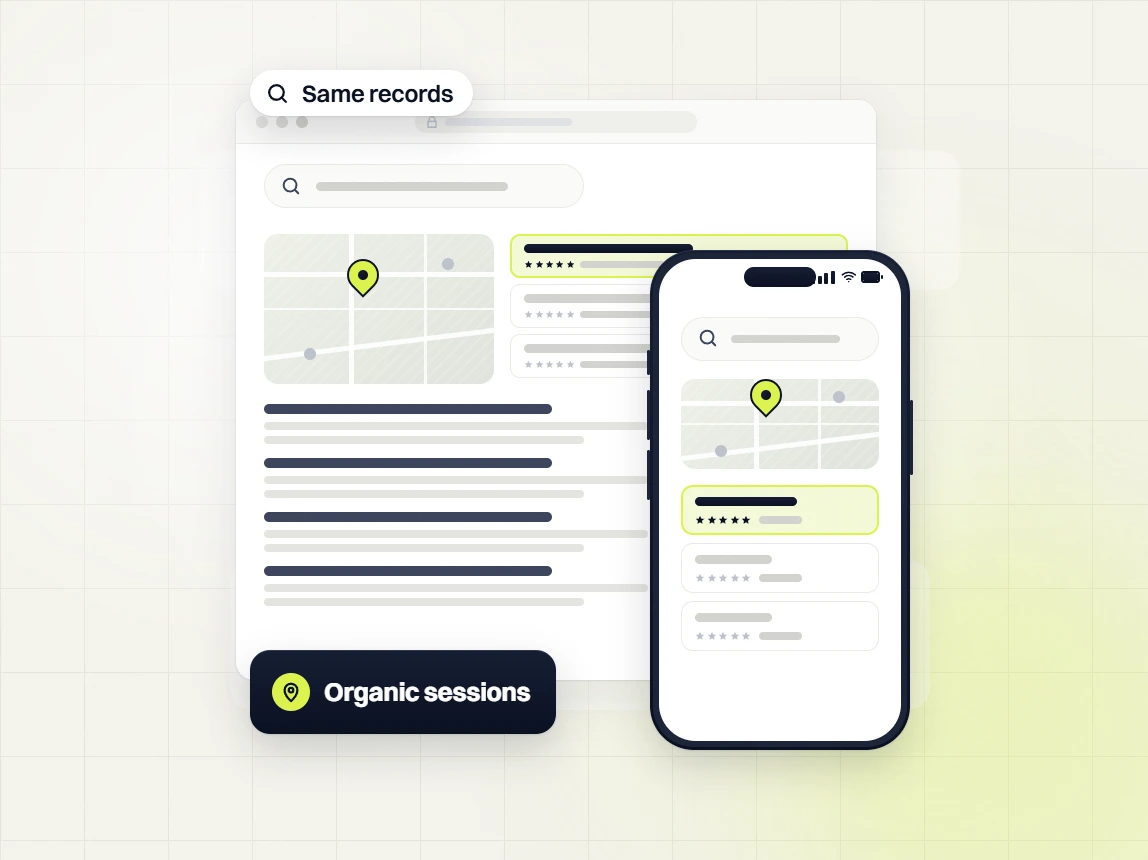
SEO built for SaaS. Category content, use-case pages, technical fixes, and authority links wired straight to demo requests you can trace in your CRM. Ranking gains inside 4 to 6 months, and reporting that ties every organic session to closed ARR.
Three ways SaaS teams lose pipeline to search
You publish nothing for vs and alternative queries at the exact click your rivals win
38% of bottom-funnel SaaS queries carry "vs" or "alternative" intent. You publish none of them, so every buyer shortlist skips your product at the moment they pick a demo.
Your integrations, use-cases, and category pages are three URLs, not 2,400
Programmatic SEO needs 200 to 400 integration pages, 50 to 150 use-case pages, and 20 to 60 category pages. You carry one generic /integrations index and lose every long-tail query.
Google reads your demo pages as thin. No product SME is credited
Post-Helpful Content Update, pages with product SME quotes rank 4x more. Your demo pages carry no author byline, no changelog, no dated screenshot.
Three outcomes every SaaS SEO program produces
Category, use-case, comparison, and integration pages mapped to your CRM closed-won deals. Real buyer intent data, not a generic keyword tool pull.

Job-to-be-done landing pages built around your ICP workflow. Each page goes live with search intent, schema, internal links, and demo CTA in one quarter.
Monthly reports show organic sessions, demos booked, opportunities, and closed ARR by cluster. Attribution wired into HubSpot, Salesforce, or Close.io.
Four stages, every step ends in a sign-off
Fixed scope, weekly release cadence, monthly reporting. Nothing moves to the next stage until your team signs the gate deliverable.
Audit that exposes every gap
Technical audit of the current site (Core Web Vitals, crawl budget, indexation, schema, internal links). Content audit against your CRM closed-won keyword clusters. Backlink profile review. Competitor benchmark against 5 direct rivals.
Keyword strategy tied to revenue
A 12-month editorial and technical roadmap built from CRM closed-won data, not a raw keyword tool export. Every cluster ships with a target keyword, intent, URL, and CRM-tied conversion goal.
On-page + technical fixes live weekly
Weekly release cadence. On-page rewrites, schema, internal linking, use-case page builds, Core Web Vitals fixes, indexation cleanup, and log-file crawl budget optimization through GitHub, Linear, or Jira.
Digital PR, citations, monthly reports
Digital PR outreach for authority links from SaaS press, citation cleanup, review flow, and weekly rank tracking. Monthly report shows organic sessions, demos booked, opportunities, and closed ARR by keyword cluster.
What you actually get from our SaaS SEO services
Fixed scope, weekly release cadence, monthly reporting tied to closed ARR. Every phase has a defined deliverable, a written sign-off, and a date you can put on the calendar with your VP Marketing.
Audit that exposes every gap
You walk out of week 2 with a 25 to 35 page audit signed off by your VP Marketing, RevOps lead, and CTO. Technical crawl (Screaming Frog + Sitebulb), content audit against CRM closed-won clusters, backlink profile review, and competitor benchmark against 5 direct rivals get you there.
Screaming Frog and Sitebulb crawl. Indexation, canonical, hreflang, schema, redirect chains, and Core Web Vitals baseline against CrUX field data.
Every ranking page scored against CRM closed-won keyword clusters. Prune, rewrite, consolidate, or keep. Decision documented per URL.
Ahrefs and Majestic export. Toxic-link disavow list, competitor gap analysis, and priority list of publications for authority link outreach.
Side-by-side comparison of 5 direct rivals on keyword coverage, page-one share, backlink velocity, and content velocity by cluster.
GSC, GA4, and CRM data pulled to baseline the current state so month-over-month gains carry a clean before-and-after.
Every gap ranked by impact and effort so week 3 opens with a clear release backlog for your dev team.
Keyword strategy tied to revenue
A 12-month editorial and technical roadmap built from your CRM closed-won data. Category, use-case, comparison, integration, and jobs-to-be-done clusters mapped to funnel stage. Every cluster ships with a target keyword, search intent, target URL, target ranking date, and CRM-tied conversion goal.
Category, use-case, comparison, integration, and JTBD clusters. Every cluster tied to funnel stage, target URL, and CRM conversion goal.
10 to 15 use-case and integration page briefs. Target keyword, search intent, target URL, internal linking plan, schema type, and demo CTA.
Prioritized backlog in Linear or Jira. Each ticket has effort, impact estimate, and target release week for your dev team.
GSC, GA4, HubSpot, Salesforce, Attio, or Close integration plan. UTM taxonomy, event tracking, and closed-loop reporting schema.
Every seed cluster tied to a real closed-won account in your CRM so the roadmap tracks pipeline, not vanity keywords from a tool export.
Top 20 keyword gaps against your 5 named rivals sequenced across quarters so the first content pushes hit the highest-yield queries.
On-page and technical fixes pushed live weekly
Weekly release cadence. On-page rewrites, schema, internal linking, use-case page builds, technical Core Web Vitals fixes, indexation cleanup, and log-file crawl budget optimization. Every ticket runs through your dev workflow so your team sees what went live and why.
Title tags, H1s, meta descriptions, and body content rewritten on the highest-traffic pages. Search intent alignment, keyword targeting, and internal linking.
SoftwareApplication, Product, FAQPage, BreadcrumbList, Review, and Organization schema. Validated against Google structured data tool.
LCP under 2.5s, CLS under 0.1, INP under 200ms. Image optimization, render-blocking JS elimination, critical CSS, and font strategy.
Job-to-be-done landing pages published every 2 weeks. Every page goes live with schema, internal links, demo CTA, and CRM-tied conversion event.
Cluster-first internal links wired from top-of-funnel content into your use-case, comparison, and demo pages so topical authority flows correctly.
Server log analysis to find crawl waste on stale URLs and redirect chains, then a fix list your dev team can push in a single sprint.
Digital PR, citations, review flow every month
Authority link outreach to SaaS press (TechCrunch, VentureBeat, category publications), guest contributions to SaaS category publications, citation cleanup, and review flow across G2, Capterra, TrustRadius, and Software Advice. No PBNs, no expired-domain buyouts, no black-hat links. Every link is earned.
Targeted outreach to SaaS press and category publications. Data studies, product launches, and category commentary pitched for authority links.
Bylined pieces placed on SaaS category publications your ICP already reads. Every piece includes contextual link to a target use-case page.
Review generation flow wired into your CRM. Post-onboarding, post-renewal, and post-support review requests trigger automatically.
Consistent NAP across every SaaS directory (G2, Capterra, TrustRadius, Software Advice, GetApp). Duplicate listings claimed or removed.
Data reports, benchmarks, and interactive tools built from your product data. Each asset seeded to press for authority backlinks.
Category podcast and roundup outreach so your product and CMO voice show up on the shortlists buyers already read.
Weekly rank tracking and monthly reports
Weekly rank tracking across your target cluster keywords. Monthly report shows organic sessions, demos booked, opportunities created, and closed ARR by keyword cluster. Attribution wired into HubSpot, Salesforce, Attio, or Close so the CFO sees the number, not just the CMO.
Ahrefs or SEMrush rank tracker on target cluster keywords. Weekly movement summary emailed every Monday to your marketing team.
Written recap: organic sessions, demos booked, opportunities created, closed ARR by keyword cluster. Delivered by the 5th of every month.
Live dashboard in HubSpot, Salesforce, Attio, or Close. Every organic session tagged, every demo request tied to landing page and cluster.
On-site or Zoom QBR with your VP Marketing and RevOps lead. Roadmap adjustment for next quarter based on CRM closed-won signal.
Monthly one-pager that fits your board deck with organic pipeline sourced, weighted, and closed dollars in a single view.
Sudden rank drops, indexation loss, or CVR shifts trigger an alert to your Slack the same day so nothing sits for a month.
Four SEO tiers for every stage of growth
Pick the tier that matches your practice today. Move up or down with 30 days notice. Hover any feature name for a plain-English explanation of what it moves in your funnel.
Single-location testing local SEO, or recovering from a bad agency.
Growing brands owning the local pack. Organic tied to bookings.
Two to ten locations, organic across service areas and lines.
Enterprise or 11+ locations. Systematic SEO for new openings.
Every SEO feature, tier by tier
HOVER FOR DETAILPages + content +
SEO + local +
Reporting + analytics +
Support + onboarding +
Compliance + enterprise +
Team + service level +
Other +
Real SaaS teams, real numbers
Common SaaS SEO questions
From real quote calls. Anything else, ask on the call, answered in the first 5 minutes.
What is SEO for SaaS?
+
SEO for SaaS is the practice of ranking a software company’s marketing site for the category, use-case, integration, and vs queries that fit the ideal buyer. The goal is not raw traffic. The goal is qualified pipeline. A working SaaS SEO program produces product-qualified leads, sales-qualified leads, demo requests, and closed ARR your RevOps team can trace back to one organic session, keyword cluster, and landing page. At Redefine Web, every retainer wires attribution into HubSpot, Salesforce, Attio, or Close from day one. Google’s own SaaS SEO guidance sits inside its official Search Central documentation, which every retainer runs against as the technical baseline. Category, comparison, and integration pages carry the highest revenue weight for a B2B SaaS, so those get built first. Traffic from generic top-of-funnel keywords gets deprioritized until the buying-committee pages rank. That order of operations is what separates a real SaaS SEO program from a content mill.
What is SEO in SaaS?
+
SEO in SaaS runs on five pieces stacked in this order. First, a technical crawl and Core Web Vitals audit so Google indexes every page fast. Second, a content map built from your CRM closed-won data, not a raw keyword export. Third, use-case, integration, vs, alternative, and category pages pushed live every week. Fourth, digital PR and product-led linkable assets that earn category authority. Fifth, multi-touch attribution wired into your CRM so every ranking gain traces back to an ARR line item. Core Web Vitals thresholds and current pass criteria are documented on web.dev/vitals, and every SaaS SEO retainer we run measures against those numbers monthly. The five pieces work only when run in that order. Content before technical fixes wastes writer hours on pages Google cannot crawl. Content before attribution wastes marketing budget on keyword clusters that never convert to demos.
What are the 4 types of SEO?
+
The 4 types of SEO that matter for a SaaS SEO program are technical SEO, on-page SEO, off-page SEO, and content SEO. Technical SEO covers site speed, indexation, schema, and Core Web Vitals so Google can crawl every page. On-page SEO covers title tags, headings, internal links, and search-intent alignment on every URL. Off-page SEO covers authority link earning through digital PR and guest contributions. Content SEO covers category, use-case, comparison, integration, and jobs-to-be-done pages built off CRM closed-won data. Every Redefine Web SaaS SEO retainer runs all four every month. Skipping any one breaks the compounding pipeline math for a B2B software business with a 12-month sales cycle. Most agencies over-index on content SEO and skip the technical and off-page pieces, then wonder why rankings stall at page 2. The four pieces run in parallel, not in sequence, once the audit closes.
How important is SEO in a SaaS business?
+
For a SaaS business, SEO is not a channel. It is a compounding asset on the balance sheet. Every ranking page keeps producing demos month after month without a fresh ad spend, which is the only acquisition motion that scales without the CAC line item blowing up. Public SaaS companies like HubSpot, Monday, and Ahrefs pull 60% to 80% of their pipeline from organic. Series A and B teams that build the SEO base early usually cut their blended CAC by 30% to 50% inside 18 months. The compounding math is what makes SEO the highest-return acquisition channel over a 24-month window. Paid search stops the day the credit card stops. Organic keeps producing pipeline the day, week, and year after the ad budget dries up. Every Redefine Web SaaS SEO program reports closed ARR by cluster so the CFO sees the compounding asset, not a marketing expense.
Is SEO dead or evolving in 2026?
+
SEO is not dead in 2026. It is evolving. Google’s AI Overviews, SGE, and Perplexity results now sit above the classic 10 blue links, so the SaaS SEO game moved from raw ranking to being cited inside AI answers, comparison snippets, and product-led knowledge panels. That change rewards SaaS teams with real E-E-A-T signal, first-hand product screenshots, dated changelogs, and product SME bylines. Every Redefine Web SaaS SEO retainer credits a real product SME on every page and monitors AI Overview citation share weekly. Public data from HubSpot and other public SaaS teams shows organic still drives 60% to 80% of pipeline in 2026, up from 55% to 70% in 2022. The channel is bigger, not smaller. What changed is the winners. Thin AI-generated content lost 40% to 70% of visibility in 2024 and 2025. Product-led SaaS pages with real SME quotes gained the share.
What is SaaS content marketing?
+
SaaS content marketing is the discipline of publishing category, use-case, jobs-to-be-done, comparison, and integration pages that match the exact search queries a software buyer runs. It sits inside the SaaS SEO program, not next to it. Every Redefine Web retainer builds content off your CRM closed-won data so topics track back to real pipeline, not vanity keywords. Content gets written by writers with 3+ years in your vertical, reviewed by a product SME, and pushed live every week. That cadence produces 30 to 60 net-new indexable pages a quarter. Every published piece carries a demo CTA, schema markup, internal links to the closest use-case page, and a CRM-tied conversion event so the number of demos it generates is visible in your marketing report by the 5th of the next month. Vanity metrics like word count or blog post count get replaced with pipeline dollars sourced per cluster.
Who are the biggest SEO companies?
+
The biggest SEO companies serving SaaS include WebFX, Victorious, Siege Media, Directive, First Page Sage, and Redefine Web on the mid-market and enterprise side. Bigger does not always mean better fit for a Series A to Series C SaaS. The bigger firms often assign junior account managers and templated deliverables. Redefine Web focuses on a smaller SaaS SEO book, 40 active retainers at any time, so every program gets a lead with 6+ years of B2B SaaS experience. Pricing spans $499/mo Foundation to $3,500+/mo Enterprise. What separates a working SaaS SEO agency from a big generalist is the CRM attribution, the weekly release cadence, and the roadmap built off your closed-won data, not a raw keyword tool export. Ask any shortlisted agency for the last 5 SaaS retainers, the closed ARR delta over 12 months, and the CRM-tied attribution report. That single ask filters 80% of the field.
How much do SaaS SEO services cost?
+
SaaS SEO services at Redefine Web start at $499/mo and go up to $3,500+/mo for Series C and public SaaS teams. Foundation ($499/mo) fits pre-Series A. Growth ($999/mo) fits Series A. Authority ($1,999/mo) fits Series B. Enterprise (from $3,500/mo) fits Series C+ and public SaaS. Every tier is a monthly retainer with 30 days written notice to move up, move down, or cancel. Zero setup fees. Every deliverable, seat, and backlink is yours to keep on day one and the day you leave. Tier fit gets decided on the kickoff call against your ARR, current organic share, and target cluster count. Most SaaS teams start on Growth or Authority. Series C companies with a rebrand or platform migration start on Enterprise. The tier can move quarterly with a written note, so no team gets locked into a tier that no longer fits the next stage of ARR growth.
How long does SaaS SEO take to produce results?
+
Median time to first page-one ranking across the last 20 Redefine Web SaaS retainers is 4 to 6 months. Median time to first demo booked from organic is month 3 to 4. Median time to material ARR contribution is month 6 to 9. SaaS SEO is not overnight. It beats the 9 to 12 month agency norm through weekly on-page and technical fixes pushed live, not quarterly, and a content map built from your CRM closed-won data. Programs that follow the plan compound month over month from month 6 forward. Every retainer runs a written monthly report so your VP Marketing and CFO see the ranking gain, demo count, opportunity count, and closed ARR by cluster. The 4 to 6 month window applies to comparison and use-case pages targeting buying-committee queries. Category pages targeting head terms take 9 to 15 months. Both timelines are shorter than the industry norm.
What is programmatic SEO for SaaS?
+
Programmatic SEO for SaaS is the practice of using structured data and templates to publish hundreds or thousands of long-tail landing pages, one per query a buyer might type. The three page types that carry the most SaaS ARR are integration pages, use-case pages, and alternative pages. A working program covers 200 to 400 integrations, 50 to 150 use cases, and 20 to 60 category pages. Every Redefine Web SaaS SEO retainer scopes a programmatic build off your closed-won data, publishes the templates, and monitors indexation weekly. Programmatic without CRM data produces thin pages Google ignores. Programmatic with CRM data produces pages tied to real buyer intent that rank and convert. The build sits inside your existing CMS or a headless layer wired into your marketing site. First 100 pages go live in weeks 5 to 8. The full library rolls out over 12 to 18 months as indexation and rank data proves each cluster.
What is included in a SaaS SEO retainer?
+
Every Redefine Web SaaS SEO retainer runs on five pieces so the program produces demos on a predictable cadence. Audit and strategy covers a technical crawl, content audit, backlink review, competitor benchmark, and a 12-month roadmap. On-page and technical covers a weekly release cadence, schema, Core Web Vitals, and use-case pages. Content production covers category, use-case, comparison, integration, and JTBD pages. Digital PR covers authority outreach, guest contributions, and a G2 or Capterra review flow. Reporting covers weekly rank tracking, monthly executive report, and CRM attribution wiring. Every deliverable ships with a written sign-off, a date on the calendar, and a defined output tied to a target keyword cluster. Nothing runs off a template. Every retainer scopes off your CRM data, your product SME calendar, and your current ranking baseline pulled from Ahrefs and Search Console during week 1 of the audit phase.
Do you integrate SaaS SEO with our CRM?
+
Yes. Every Redefine Web SaaS SEO retainer wires multi-touch attribution into HubSpot, Salesforce, Attio, or Close. Every organic session gets tagged. Every demo request ties back to a landing page and keyword cluster. Every opportunity ties to first-touch and last-touch. Every closed-won ARR line item is traceable back to the content piece that started the funnel. Your VP Marketing gets a monthly report that shows organic sessions, demos, opps, and closed ARR in one view. Your CFO gets a defensible CAC and payback number on the SEO line. The CRM wiring runs through native integrations, UTM taxonomy, event tracking, and closed-loop reporting schema so the numbers survive a rebrand, a CRM migration, or a marketing leadership turnover. Every dashboard is built inside your CRM instance, not on a third-party tool that gets ripped out on renewal day. You own the reporting stack from day one.
Can you redesign our SaaS website without losing rankings?
+
Yes. Every Redefine Web SaaS site rebuild runs through a 5-step SEO preservation process. Rank inventory pulls the full Search Console and Ahrefs data. A 1-to-1 redirect map covers every old URL to the new home, no 302s and no chains. Content parity keeps every ranking asset intact on the new build. Schema migration carries SoftwareApplication, Product, FAQPage, and Review markup over cleanly. Post-launch, Search Console and rank tracker monitoring runs for 90 days so any drop gets caught inside 48 hours and rolled back before it costs pipeline. The preservation process runs on every rebuild, from a small marketing site refresh to a full platform migration off WordPress or into Webflow or Next.js. Every ranking URL on the old site gets a documented decision on the new site. Nothing gets orphaned. Nothing gets 404-ed. That single discipline is what saves the ARR line during a rebrand.
How do you handle E-E-A-T for SaaS demo pages?
+
Post-Helpful Content Update, Google reads anonymous SaaS marketing pages as thin. Every Redefine Web SaaS retainer credits a real product SME on every category, use-case, comparison, and demo page. Author bio links to LinkedIn. Product screenshots carry a last updated date inside 90 days. Changelog and release notes get cross-linked from every feature page. Third-party proof from G2, Capterra, and Trustpilot gets embedded with review schema. That first-hand E-E-A-T signal earns 4x more visibility on demo-intent queries than plain marketing copy. E-E-A-T is not a one-time fix. Every quarter, product SME bylines get refreshed. Every changelog entry gets tied to the feature page it updates. Every review that comes into G2 gets flagged for embed. The compounding signal is what pushes demo pages from page 3 to page 1 over a 6 to 9 month window. Skipping this piece caps every other SaaS SEO gain.