Beauty SEO Services That Rank on Ingredient, Routine, and Comparison Queries
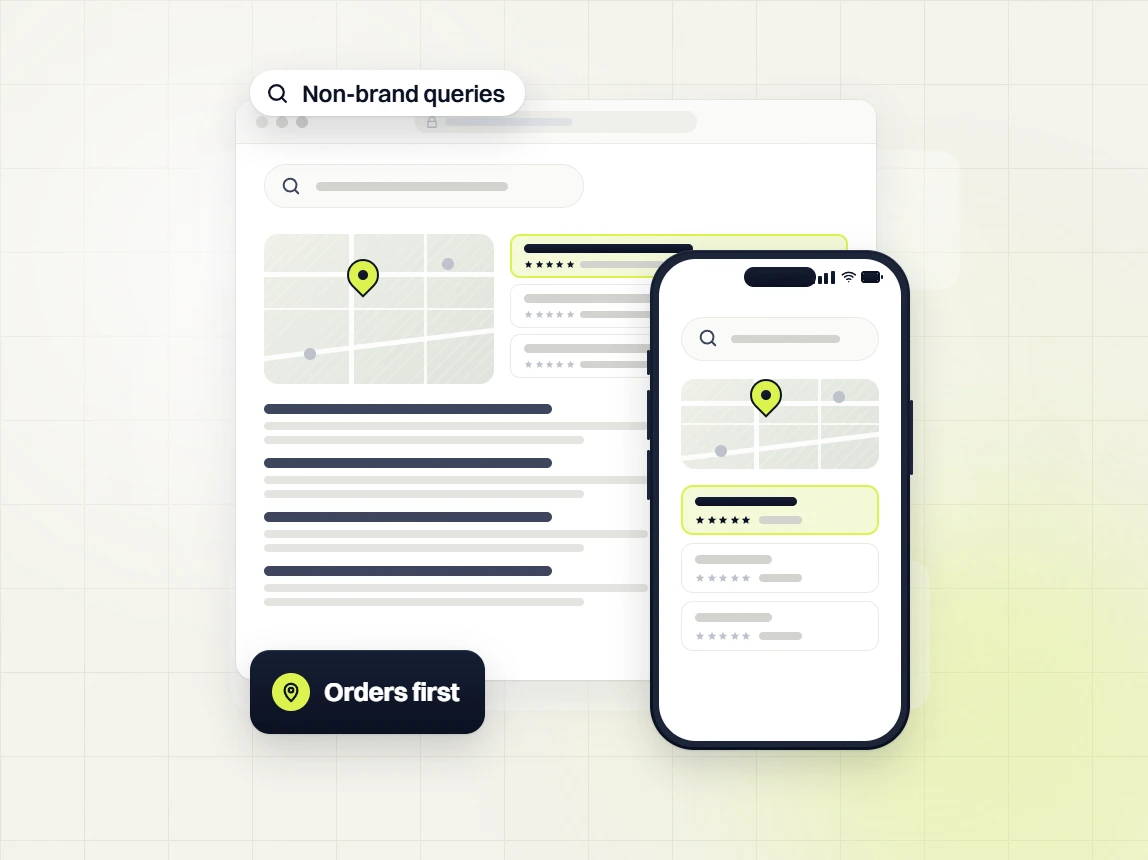
Beauty SEO services from Redefine Web rank skincare, makeup, haircare, and fragrance brands on the searches shoppers type before they add to cart. Ingredient hubs, brand-defense clusters, PDP schema, and Shopify technical fixes push category pages onto page one. Every monthly report reads Shopify orders first, traffic second. Median organic cost per new customer sits at $18 once the fixes go live.
Three ways your beauty brand loses organic revenue to search
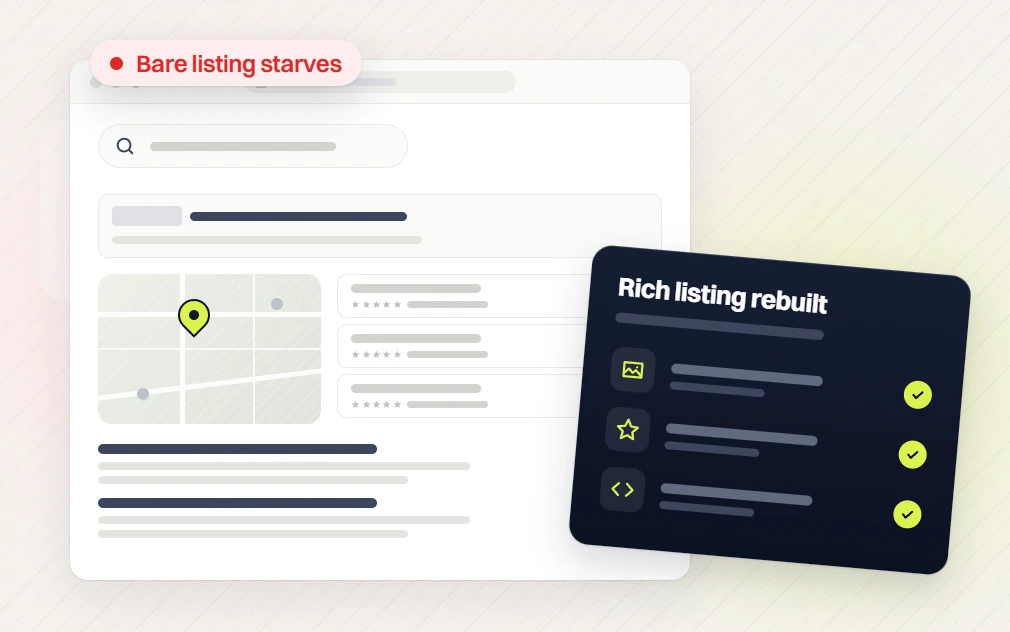
Ingredient pages have zero product, review, or FAQ schema on any SKU
Product pages launch with no schema. Sephora and Ulta rich results eat the click. A single hero SKU that ranks page one without Product, Review, or FAQ schema loses 200 to 900 visits a month against retailers that carry your product. Every retainer opens with a full schema rebuild across every PDP and ingredient hub.
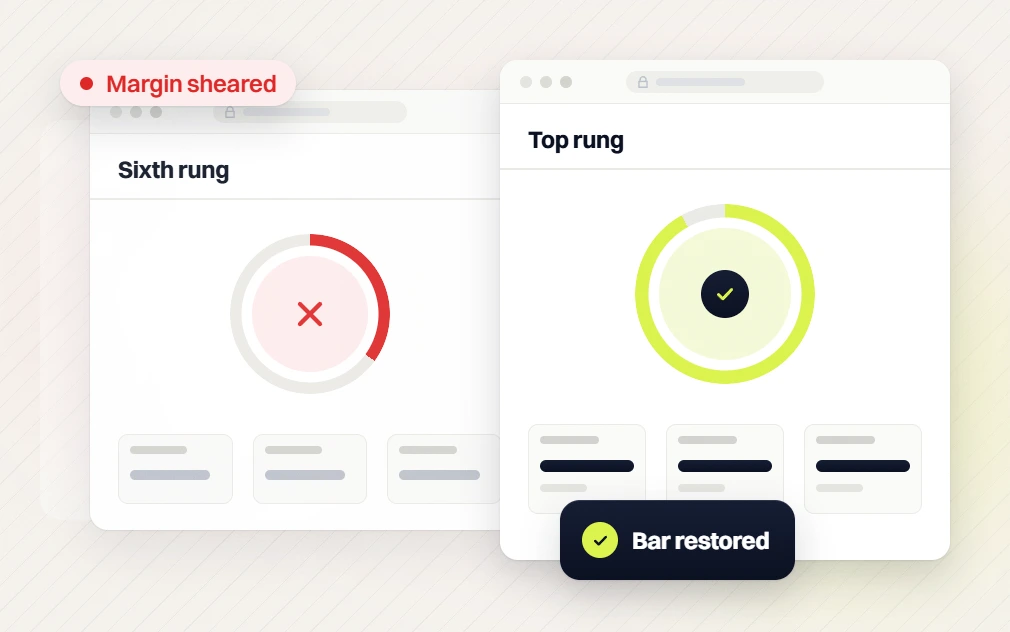
Sephora and Ulta outrank you on your own brand plus product queries
Sephora, Ulta, and Amazon rank 1 through 5 on your brand plus SKU query. Your PDP sits at position 6. Margin gap runs 22 to 40% per unit because retailer PDPs collect the click and you eat the wholesale cost. Brand-defense clusters push your own PDP back to rank 1 inside 90 days.
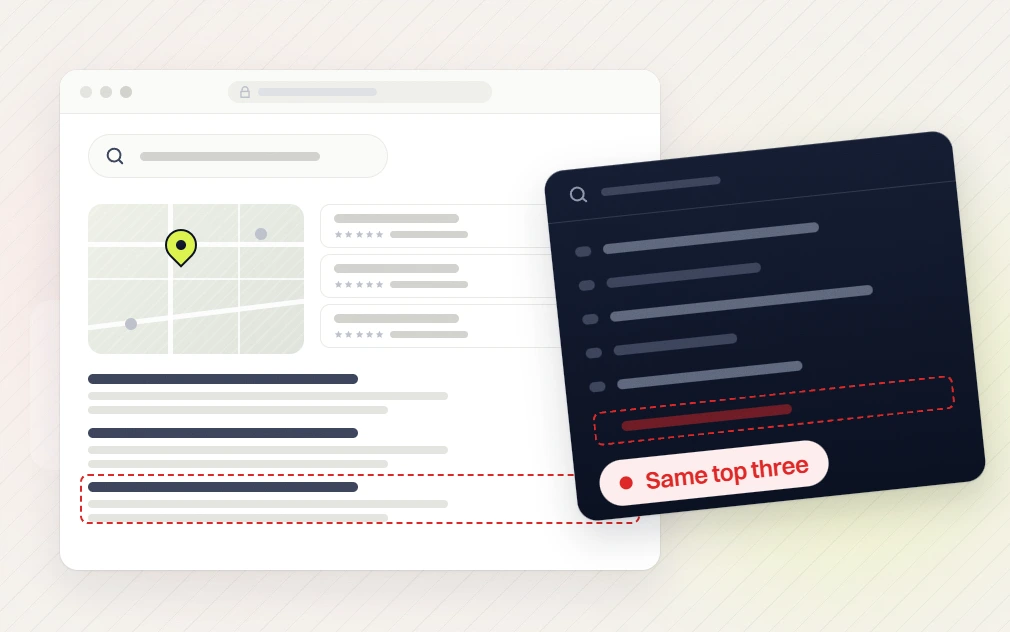
Reddit threads and buyer-guide articles rank above your product pages
72% of "best skincare for X" queries surface Reddit, Byrdie, or Allure in the top 3 organic results. Your PDP will not rank on comparison intent without a seeded Reddit thread, a founder-signed ingredient article, and PR placements in beauty publications. The retainer runs that play from month 2 onward.
Three outcomes every beauty SEO retainer produces
Ingredient hubs, routine content, and technical fixes put your beauty SEO pages in front of shoppers already searching to buy inside your category.
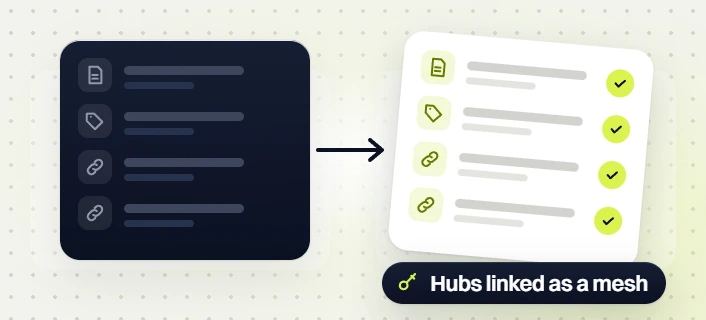
One PDP per hero SKU, one hub per hero ingredient. Every page ships with Product, Review, and FAQPage schema plus a tight internal link map today.

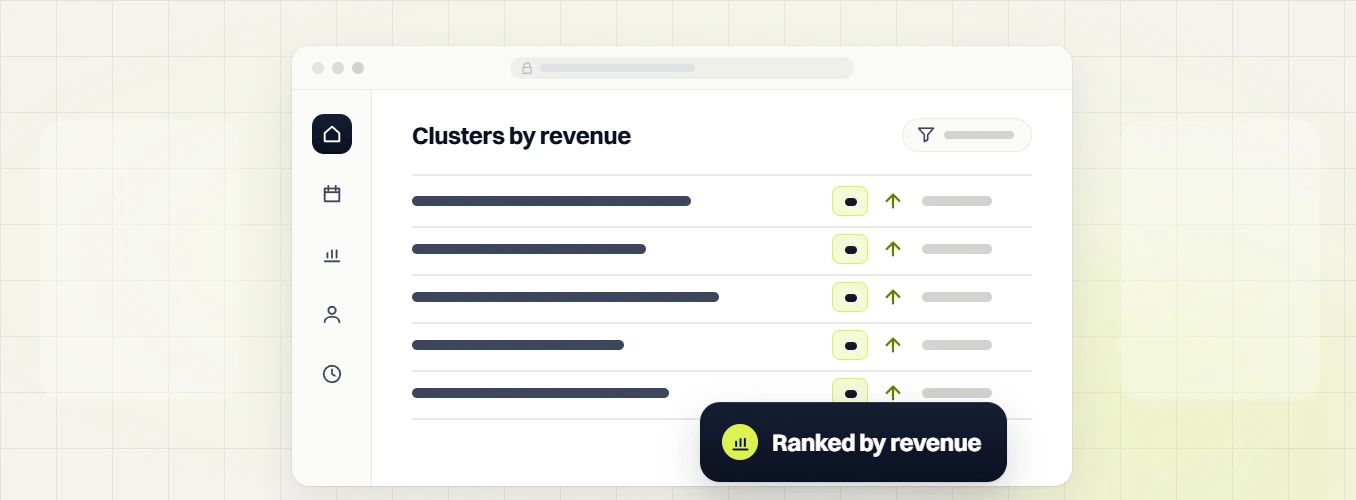
Weekly rank tracker plus a monthly written report tied to Shopify Plus verified orders. You see which query bought which order, not raw keyword counts.
4 stages. Every step ends in a sign-off
Fixed scope, written sign-offs, dates on the calendar. Nothing moves to the next stage until your leadership signs the gate deliverable.
Audit that exposes every gap
Technical audit against Core Web Vitals and indexation, content audit against 15 beauty category clusters, backlink audit including toxic-link disavow, and store audit covering GBP, review posture, and NAP consistency across category directories. Everything scored, sized, and prioritized in a written 30-page report.
Keyword strategy tied to category revenue
We build the beauty and skincare keyword cluster map covering clean skincare and 14 more category clusters, then lay every keyword against search intent (transactional, commercial, informational). Each cluster gets an MRR projection so you know which content pays back first.
On-page and technical fixes pushed live weekly
Category and collection pages written, Product, Store, and FAQPage schema added, thin content expanded, broken links repaired, Core Web Vitals pushed to green, XML sitemap and robots.txt optimized. Every push goes into your Monday written report.
Scale and report tied to Shopify orders placed
Digital PR, review flow, and citation cleanup run monthly from month two. Weekly rank tracking across 300+ keywords, monthly report ties organic traffic to Shopify Plus verified orders. Every dollar of SEO spend traces to real revenue.
What you actually get from our beauty and skincare SEO services
Five workstreams, every item listed. Nothing lives in a proposal appendix or a phase-two column.
Diagnose before we prescribe
Every beauty SEO engagement opens with a full audit across four disciplines, scored and prioritized by revenue impact. You see the fixes that pay back first, the toxic links pulling rankings, and the local footprint gaps your competitors are exploiting. Sign-off before any content or link work starts.
crawl, indexation, render blocking, LCP, CLS, and INP scored against beauty competitors in your category.
clean skincare, actives, retinol, sunscreen, haircare, fragrance, color cosmetics, and 8 more category clusters.
every referring domain scored, spam and PBN patterns flagged, disavow file drafted for Google Search Console upload.
GBP completeness, NAP consistency across beauty-relevant directories, review velocity, and Q&A coverage.
Product, Review, FAQPage, BreadcrumbList, and LocalBusiness markup validated against Rich Results.
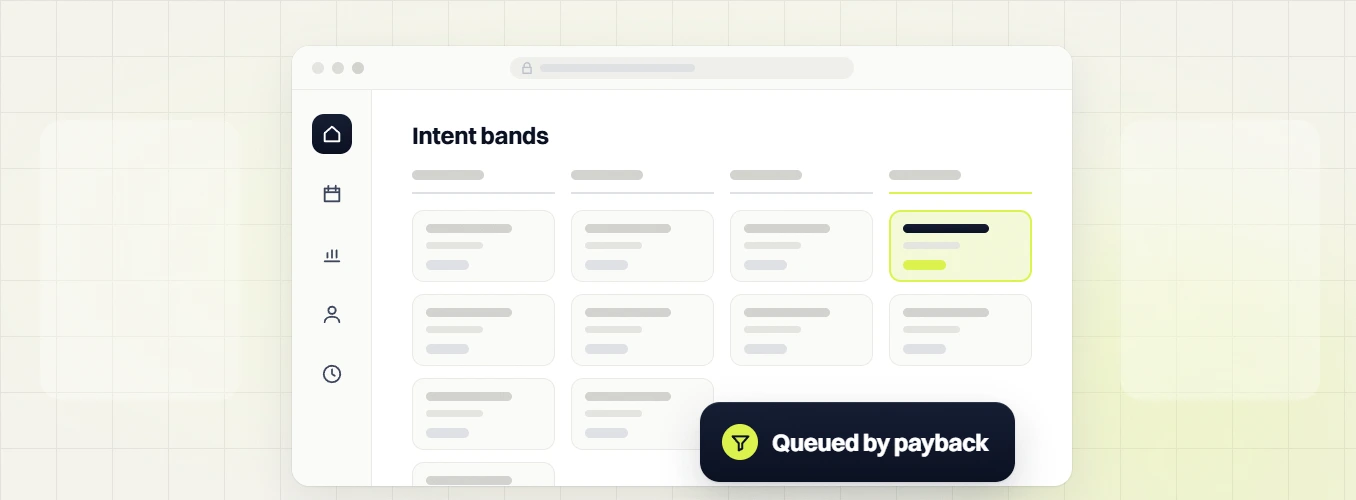
every fix scored by effort, traffic, and orders placed value. First 90-day queue signed off before work goes live.
Keyword strategy tied to category revenue
We build the beauty and skincare keyword cluster map covering clean skincare and 14 more category clusters, then lay every keyword against search intent. Each cluster gets an MRR projection so you know which content pays back first. Signed off before content production starts.
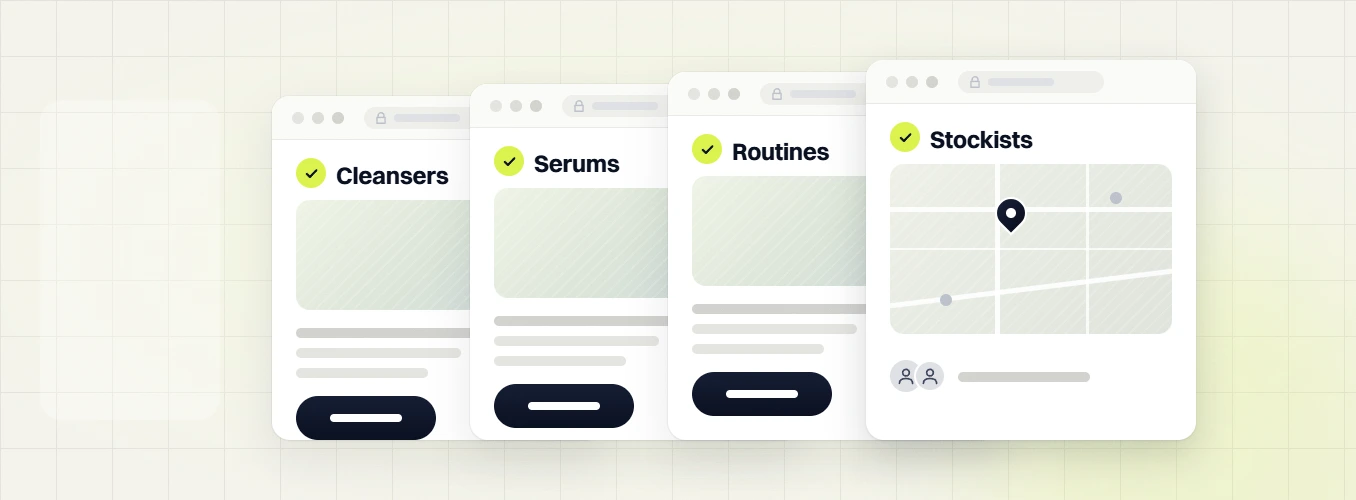
every target category gets a pillar page plus supporting pages plus FAQ nodes, sized against realistic monthly search volume.
transactional (clean skincare), commercial (best clean skincare 2026), and informational (how to choose) mapped to page templates.
12-month editorial calendar with quarterly review cadence. Every piece has a target keyword, word count, and revenue projection.
which clusters go live first, expected traffic and orders placed impact, and the sign-off form you approve before work starts.
one hub per hero ingredient (retinol, niacinamide, hyaluronic acid, vitamin C) with routine and skin-type modifiers mapped.
every brand plus SKU query mapped with the PDP and content updates needed to push Sephora and Ulta below your own pages.
On-page and technical fixes pushed live weekly
Category and collection pages written, Product, Store, and FAQPage schema added, thin content expanded, broken links repaired, Core Web Vitals pushed to green, XML sitemap and robots.txt optimized. Every push goes into your Monday written report.

4 pages per week. Clean skincare and the top 15 category clusters covered by month 3, all in-house written.
Product, Store, FAQPage, BreadcrumbList, Review, and LocalBusiness schema on every page, validated in Rich Results.
broken links repaired, thin pages expanded, Core Web Vitals pushed to green (LCP under 1.8s, CLS under 0.05, INP under 200ms).
400 to 700 words per PDP with ingredient list, concern, routine step, and skin-type match named on-page.
4 to 6 questions per product page sourced from Amazon Q&A and Sephora reviews on your top competitors, wired to FAQPage schema.
every Monday: what went live last week, what pushes this week, and rank movement across the 15 priority clusters.
Digital PR, citations, and review flow running every month
Digital PR earning coverage in category publications and buyer-guide sites, review flow tuned for volume and rating growth, citation cleanup across category directories, and toxic backlink disavow submitted to Google Search Console. Ongoing from month two.

4 earned placements per quarter average. Category publications, buyer guides, editorial gift lists, and guest posts placed by a real PR lead.
post-purchase review capture on Yotpo, Junip, or Okendo tuned for rating and volume growth. GBP posts and Q&A on cadence.
category directories verified with consistent NAP across every listing. Duplicate profiles removed by the reference desk.
monthly disavow file submitted to Google Search Console. Prevents spam penalties before they cap rankings.
cosmetic chemist or licensed esthetician author profiles wired to your ingredient pages so E-E-A-T rises across the domain.
seeded Reddit AMA threads plus founder-signed ingredient articles push your brand into buyer-guide SERPs.
Weekly rank tracking, monthly report tied to Shopify orders
Every month. Weekly rank tracking across 15 category clusters and 300+ target keywords. Monthly report ties organic traffic to Shopify Plus verified orders placed so every dollar of SEO spend traces to real revenue, not vanity impressions.
rank movement across 300+ target keywords grouped by category cluster. Alerts fire if any priority keyword slips more than 2 positions.
organic traffic, orders placed from organic, cost per orders placed (verified in Shopify Plus), and next-month plan.
every organic order tagged to the query that drove it. Cost per order placed tracked against your paid channels.
monthly delta vs Sephora, Ulta, and your 3 closest DTC competitors on every money term.
every 90 days we present rank movement, revenue attribution, and the next 90-day queue to your leadership team.
GBP, Search Console, GA4, Tag Manager, and Shopify Analytics stay in the brand accounts. You leave, the footprint stays.
Four SEO tiers for every stage of growth
Pick the tier that matches your practice today. Move up or down with 30 days notice. Hover any feature name for a plain-English explanation of what it moves in your funnel.
Single-location testing local SEO, or recovering from a bad agency.
Growing brands owning the local pack. Organic tied to bookings.
Two to ten locations, organic across service areas and lines.
Enterprise or 11+ locations. Systematic SEO for new openings.
Every SEO feature, tier by tier
HOVER FOR DETAILPages + content +
SEO + local +
Reporting + analytics +
Support + onboarding +
Compliance + enterprise +
Team + service level +
Other +
Real beauty brands, real numbers
See what a $400/mo dental site could book back.
Slide in your practice numbers. Assumes a 32% relative conversion improvement, below the median gain on our dental rebuilds.
Common beauty SEO questions
Straight answers on pricing, timelines, schema, and what actually ships each month. If your question is not here, book the audit call.
Is SEO actually worth it?
+
For a beauty or skincare brand, yes. Ecommerce SEO returns 5 to 12x the retainer over 24 months at the AOV and repeat rate typical for skincare and cosmetics. Organic traffic compounds, unlike Meta and TikTok where spend equals traffic. A $999 per month beauty SEO services tier that lands 15,000 organic sessions and 300 orders at $65 AOV returns roughly $19,500 in monthly revenue by month 12. Blended cost per new customer drops 25 to 40% inside 9 months when SEO runs alongside paid, not instead of it. Google publishes the ranking spec every beauty brand competes for at Search Central. Organic search still drives 40 to 55% of DTC beauty discovery traffic, so cutting SEO usually shrinks the top of the funnel inside 90 days. If your paid channels are your only source of new orders, an SEO retainer is the highest-return line item you can add to the marketing budget.
Is SEO dead or evolving in 2026?
+
SEO is evolving fast, not dead. In 2026, beauty SEO services now target two surfaces. Classic Google organic still ranks product pages, ingredient hubs, and comparison pages. Generative engine optimization on ChatGPT, Perplexity, and Google AI Overviews is a second surface where ingredient and routine answers get pulled and cited. Our program writes for both. Structured data, tight subheads that answer one question each, and a sourced numeric claim in the first paragraph win on both surfaces. Author schema signed by a cosmetic chemist or licensed esthetician raises E-E-A-T for the whole domain. AI Overview citation rate on our beauty retainers runs 12 to 24% of tracked queries by month 6. Classic organic still drives 40 to 55% of DTC discovery traffic, so we build for both at once. Any agency writing off classic SEO in 2026 is guessing. Any agency ignoring AI Overviews is guessing too. Both surfaces get the same monthly report tied to Shopify orders.
How much should I expect to pay for SEO?
+
Beauty SEO services at Redefine Web start at $499/mo and scale to from $3,500/mo for enterprise portfolios. Four tiers priced against category competition and catalog size. Foundation ($499/mo) fits an emerging brand under $1M ARR. Growth ($999/mo) suits a scaling single-brand DTC. Authority ($1,999/mo) covers established multi-line beauty brands. Enterprise (from $3,500/mo) fits portfolio holdcos and multi-market rollouts. Every tier ships the same reporting spine tied to Shopify orders placed. Market rates across beauty SEO agencies run $1,000 to $8,000 per month for a real program with a named lead, weekly deliverables, and monthly written reporting. Anything below $500 per month is usually a template audit plus a directory push, not a program. Retainers run on 6-month terms, then roll month to month with 30 days written notice. Onboarding fee folds into month 1. No lock-in penalties past the initial term. Pricing scales with catalog size, target category competition, and market count. A single-brand DTC in a niche category ranks faster and cheaper than a portfolio holdco with 4 brand domains and international rollouts.
What are the 4 types of SEO?
+
The 4 types of SEO covered inside a beauty SEO services retainer are technical SEO, on-page SEO, off-page SEO, and local SEO. Technical SEO covers Core Web Vitals, indexation, Shopify Liquid render speed, and schema. On-page covers PDP copy, ingredient hubs, category collections, internal links, and title tags. Off-page covers beauty publication PR, Reddit AMA seeding, review flow on Yotpo or Okendo, and toxic backlink disavow submitted to Google Search Console. Local SEO covers Google Business Profile, NAP consistency, and category directory citations for brands with physical retail counters or a flagship store. Every retainer runs all four disciplines in parallel from month one. See the Core Web Vitals spec Google uses for the technical scoring gates. All four disciplines feed the same monthly Shopify orders report, so you can see which type of SEO delivered which slice of revenue in any given month. Every discipline reports to the same monthly Shopify orders number, so the retainer never turns into 4 separate deliverables that never meet.
How long does beauty SEO take to show ranking results?
+
First ranking movement on ingredient and long-tail routine searches lands in 6 to 8 weeks. Meaningful organic sessions and orders show by month 4. Category-defining terms like best moisturizer for oily skin, hyaluronic acid serum, and retinol vs retinal usually rank on page 1 by month 4 to 6. Compounding organic revenue and a drop in blended cost per new customer of 25 to 40% land by month 6 to 9. Any beauty SEO agency quoting page 1 in 30 days is guessing. Real progress inside the first 90 days is measured in indexed pages, schema validation, Core Web Vitals passing, and clusters ranking in positions 20 to 50 with a clear track to page 1. Enterprise catalogs and highly competitive categories like retinol serum can take 9 to 12 months to hit the top 3. Timelines shorten for brands with strong existing domain authority and lengthen for new domains launched inside the last 6 months.
How do you do SEO for a beauty product page on Shopify?
+
Product page SEO on Shopify for a beauty SKU means 4 things done on every product. First, 400 to 700 words of copy naming the ingredient list, the concern it treats, the routine step it fits, and the skin type match. Second, Product schema with GTIN, brand, price, availability, and aggregate rating populated. Third, Review schema pulled from Yotpo, Junip, or Okendo through their app integrations. Fourth, an FAQ block with 4 to 6 questions taken from Amazon Q&A and Sephora reviews on your top competitors. Shopify default themes ship with 3 fixable SEO issues (duplicate URLs between /products/ and /collections/products/, missing product schema on some templates, and slow Liquid rendering on collection pages) we clean up in the first 30 days. See Shopify Help for the platform SEO reference. Every PDP in the catalog runs through the same 4-step template inside the beauty SEO services retainer. New PDPs added to the catalog inside the retainer term get the same 4-step template applied inside the following month at no extra scope.
What schema markup do beauty product pages need?
+
A beauty PDP needs Product, Review, AggregateRating, BreadcrumbList, and FAQPage schema at minimum. Ingredient hubs need Article schema plus HowTo where a routine is explained. Category pages need BreadcrumbList plus ItemList. Every schema block gets validated against Google Rich Results before it ships. Product schema populates GTIN, brand, price, availability, and rating so listings pull rich results (star ratings, price, availability) into the SERP. Review schema pulls verified reviews from Yotpo, Junip, or Okendo through their app integrations. FAQPage schema wraps the 4 to 6 questions on the PDP so they surface as expandable answers in Google. Beauty SEO retainers rebuild schema across every PDP and ingredient hub in the first 60 days. This is one of the top 3 quick wins on almost every audit we run. Missing product schema on a Shopify PDP can cost 200 to 900 organic visits a month against retailers who have the same product with schema populated.
How do you build an ingredient hub for a skincare brand?
+
An ingredient hub is a pillar page for a hero ingredient (retinol, niacinamide, hyaluronic acid, vitamin C, salicylic acid) that ranks on ingredient searches, links out to your PDPs, and cites peer-reviewed sources. Each hub covers what the ingredient does, who it fits, concentration ranges, routine placement, side effects, and 3 to 5 product picks from your own catalog. Word count runs 1,500 to 2,500 with 6 to 10 H2s, tight subheads answering one question each, and Article plus HowTo schema wired to the head. Author profile signed by a cosmetic chemist or licensed esthetician. Compliance follows FDA cosmetics labeling rules so no drug claims slip in. Ingredient hubs are the number one unbranded traffic driver on every beauty SEO services retainer we run. A single hub on niacinamide 10% can pull 8,000 to 25,000 monthly organic sessions once it ranks in the top 3. Every hub gets refreshed every 6 months so citation stack, product picks, and search-intent match stay current.
What KPIs do you report on for beauty SEO?
+
The monthly written report ties every metric to Shopify Plus verified orders. The spine covers organic sessions, organic orders placed, organic revenue, cost per organic order, rank movement across 300+ tracked keywords grouped by category cluster, AI Overview citation rate, backlinks earned, and schema validation status. Weekly rank movement is a lagging metric. Shopify orders placed is the leading metric we optimize against. Vanity metrics like impressions and raw keyword counts get logged but never lead the report. Alerts fire if any priority keyword slips more than 2 positions in a week. Quarterly reviews present rank movement, revenue attribution, and the next 90-day queue to your leadership team. Every organic order gets tagged to the query that drove it so cost per order is tracked against your paid channels head to head. Reporting stack pulls from Search Console, GA4, and Shopify Analytics into a single Looker Studio view your team owns.
How does a beauty SEO agency handle contracts and cancellation?
+
Beauty SEO services from Redefine Web run on a 6-month term with monthly billing. The first 30 days cover the technical audit, keyword strategy, and 90-day queue sign-off. Months 2 through 6 push category pages, PDP rewrites, schema, PR, and reporting. After month 6, the retainer rolls month to month and either party can cancel with 30 days written notice. Onboarding fee is folded into month 1. No lock-in penalties past the initial term, no early termination fees inside the term, no clawback of work delivered. If measurable rank movement on your priority ingredient or comparison cluster does not land by day 90, the retainer keeps running at no cost until it does. Ownership stays with the brand. Every asset ships into your accounts (GBP, Search Console, GA4, Shopify Analytics) so if you leave, the footprint stays. Content library, backlink profile, and schema all belong to you. If you cancel, we hand off a full documentation pack covering every schema change, every published page, and every earned link.
How many revision rounds are included per deliverable?
+
Every PDP rewrite, ingredient hub, category page, and PR article ships with 2 revision rounds inside the beauty SEO services retainer. Round 1 is a full markup pass. Round 2 is a polish pass after your team has seen live copy on staging. Turnaround runs 3 to 5 business days per round. Anything past 2 rounds is scoped into the next month at no extra cost if the change fits inside the monthly page cadence. Structural rewrites (changing the target keyword, changing the ingredient focus) count as a new page and reset the count. Reporting deliverables ship final on the first Monday of every month with a same-week Q&A window. Every asset lives in your brand accounts under version control so you can roll back any change without an agency ticket. Priority queue for revisions matches the priority queue for new content, so nothing waits behind a queue of net-new pages.
How do you defend a beauty brand against Amazon and Sephora?
+
Brand defense for a beauty label starts with 3 plays. First, rank your own PDP above Amazon, Sephora, and Ulta for brand plus product queries (yourbrand plus vitamin C serum). Second, own the brand plus reviews query with review schema, Trustpilot, and a Reddit AMA thread. Third, own the brand plus ingredients query with a founder-signed ingredient page per hero SKU. Do those 3 first, then move to unbranded ingredient and routine content that pulls new shoppers in at 60 to 80% lower cost per acquisition than paid social. The margin gap between your own PDP and a Sephora PDP is 22 to 40% per unit at retail, so brand-defense clusters are the top 3 quickest-payback play on any beauty SEO retainer. Every gain traces back to Shopify orders placed, not vanity impressions. Retailer domains have decades of authority, so the fix is content depth plus schema plus review volume, not link spam.
How do you find keyword gaps against beauty competitors?
+
Competitor keyword gap analysis runs in month 1 of every beauty SEO services retainer. We pull 3 to 5 direct DTC competitors plus Sephora, Ulta, and Amazon into an Ahrefs and Semrush cross-check. Every keyword ranking positions 1 to 20 on a competitor but positions 21+ or unranked on your domain lands in the gap file. The file gets sized against monthly search volume, intent (transactional, commercial, informational), and MRR projection. The top 90-day queue picks the terms with the highest MRR-per-effort ratio. Each becomes a PDP rewrite, an ingredient hub, or a routine article depending on intent. Gap analysis runs monthly after month 1 so new competitor moves get caught inside 30 days. Direct DTC competitors get read weekly for new PR placements and content launches. Retailer domains get read monthly for category page changes on your top 20 SKUs. Every keyword in the gap file gets a projected time-to-page-1, cost estimate, and expected orders-placed value before it enters the queue.