Beauty skincare web design built to convert first-time shoppers
Shopify and WooCommerce storefronts for skincare, makeup, haircare, and fragrance brands, wired with a routine builder, PDP conversion pattern, Recharge subscription, and Klaviyo capture at launch. Stores convert at 3.4% on average and score 95+ on mobile PageSpeed.
Three ways your current storefront is losing shoppers
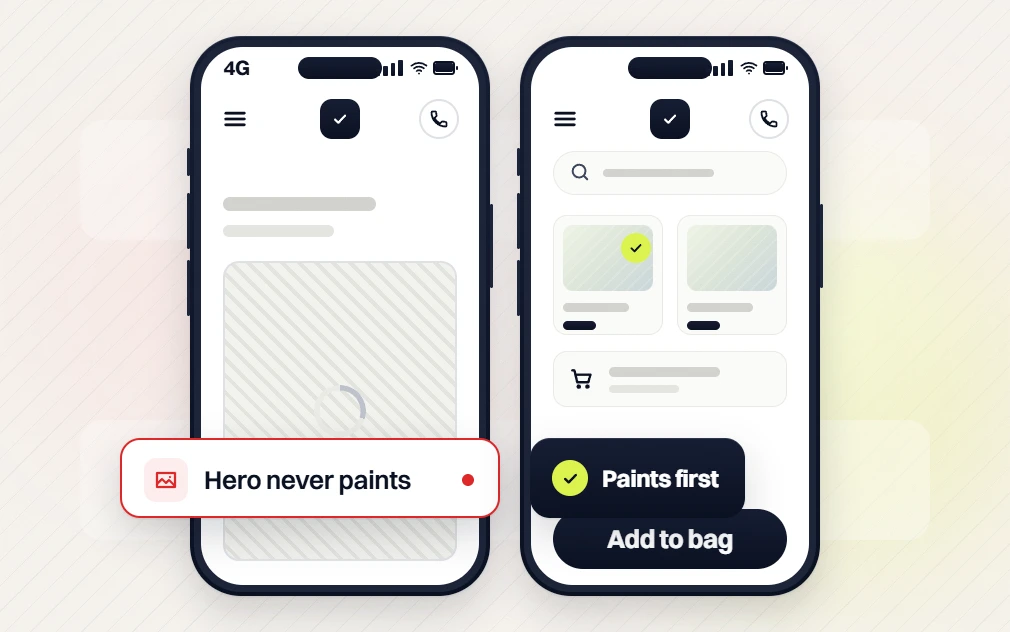
Autoplay hero video pushes LCP past 5 seconds, and paid clicks bounce
A full-bleed hero MP4 pushes LCP to 5.4s on 4G. Instagram and TikTok traffic bounces before add-to-cart paints, and every dollar of ad spend pays for a scroll that never happens. A poster-frame hero with deferred video keeps LCP under 2.5 seconds and holds those clicks on-site.
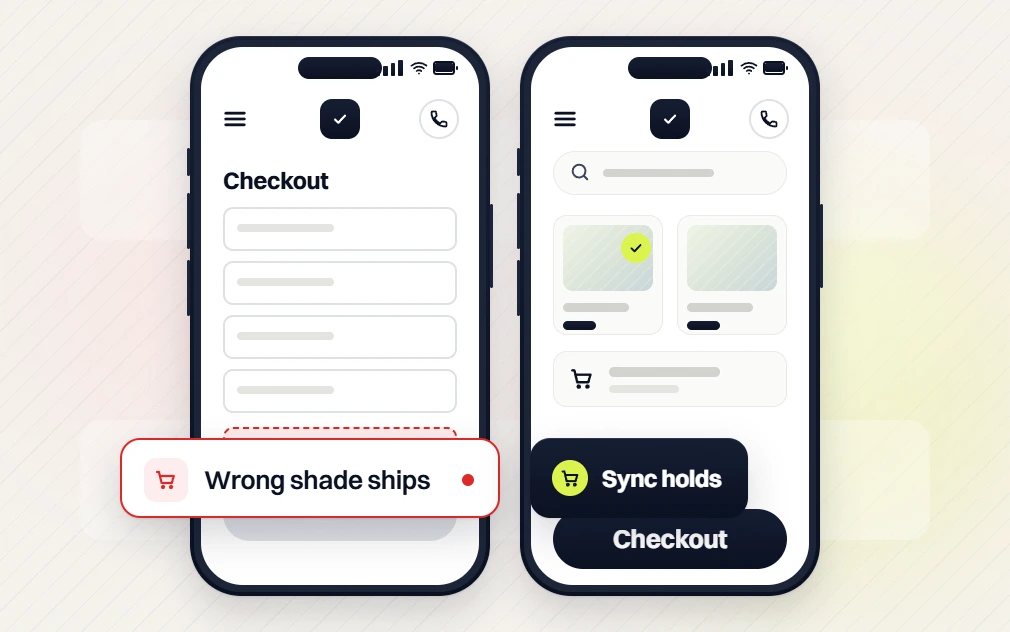
Shade, tone, and ingredient variants break sync back to Shopify
Shopify caps variants at 100 per product, and Sanity or Contentful syncs fail silently once you cross that line. Returns spike to 12%, PDPs render the wrong hero image, and support tickets pile up. A metafield-driven variant layer keeps sync clean and lets you scale to 300+ SKUs without breaking the cart.
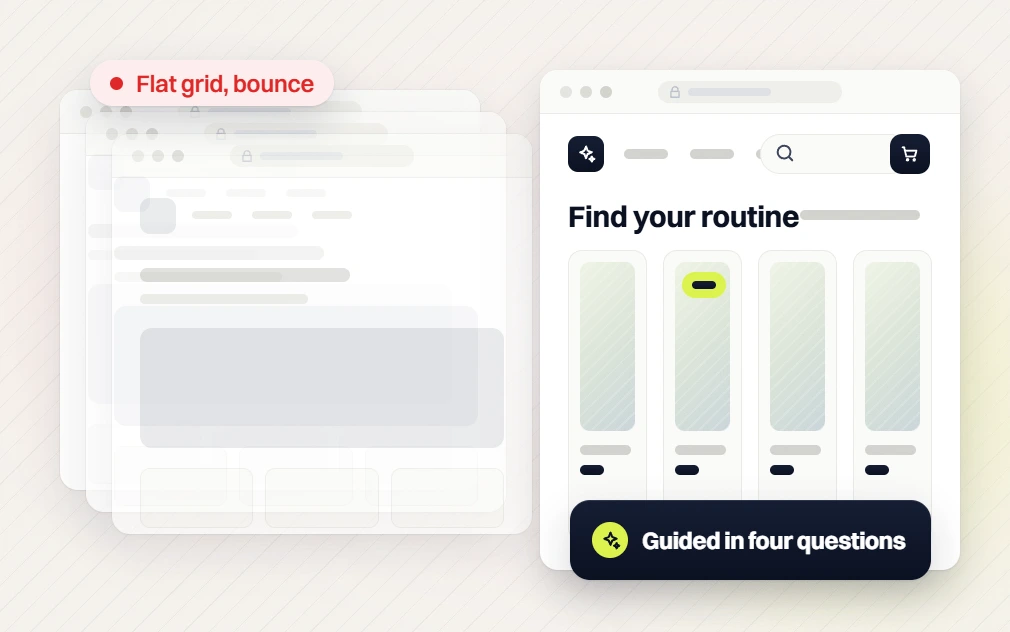
No quiz-based product finder, so first-time shoppers add nothing to cart
Skincare buyers arrive knowing the problem (acne, dryness, hyperpigmentation), not the product. A flat catalog grid confuses them, they bounce, and check out on Sephora. A 4-question skin quiz that maps to a 3-product routine bundle raises AOV 3.2x and pushes email opt-in 42%.
Three outcomes every beauty build produces
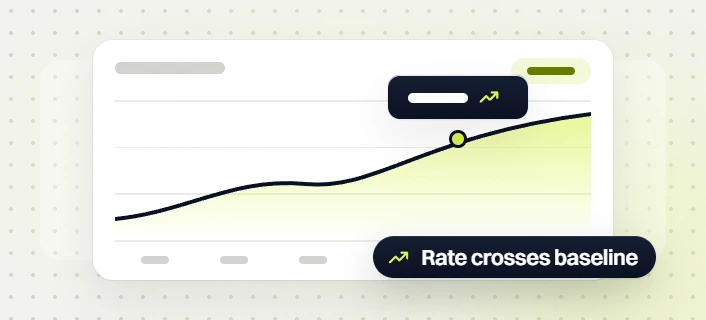
A conversion-first PDP, qualifying UX, and a shortened Shopify checkout beat your current baseline in the first 60 days on paid traffic reliably.

Every page launches with beauty schema, ingredient and benefit metadata, plus buying-intent slugs on collection and PDP URLs. Zero add-on retainer.
Your name on the domain, your logins on Shopify, Klaviyo, and Recharge, your team trained on the platform. Walk away with the storefront whole at no exit fee.
Four stages. Every step ends in a sign-off
Fixed scope, fixed timeline, fixed outcomes. Nothing moves to the next stage until your founder, ops lead, and marketing lead sign the gate deliverable.
Discovery that earns the brief
Brand interviews, technical audit of your current storefront, competitor benchmark of 5 category brands, Shopify Plus data mapping. Output is a 20-30 page brief your leadership signs before design starts.
Design built against your storefront
Mobile-first design system with PDP conversion patterns and cart or subscribe flow baked in from wireframe. Every component engineer-validated the same week it is drawn. You walk away with an editable Figma file.
Engineering + integrations
Shopify Plus with Liquid + Hydrogen by default, headless Next.js when subscription flow asks for it. Core Web Vitals green at launch. Klaviyo, Recharge, Yotpo, GA4, CAPI, TikTok wired with server-side backup.
Launch + 30 days of monitoring
Production DNS cutover, 301 map from the old site, uptime and Core Web Vitals monitoring live. Daily orders, errors, and CWV watched for 30 days. Day 31 you take the keys or roll into a maintenance retainer.
What you actually get from our beauty skincare web design
Fixed scope. Fixed timeline. Fixed outcomes. Every item below is a signed deliverable, not a proposal appendix.

Designed around the beauty buyer decision
Custom design for your brand, not a template with your logo swapped in. Every PDP is built around the choice a skincare shopper is making: skin type answered, ingredient dosage visible, subscribe-and-save never more than one tap away. You approve wireframes on real content before any visual design starts.
PDPs answer skin type, ingredient dosage, and routine placement above the fold, not buried in a tab.
you approve the layout on real content before a pixel of visual design, and the design before any code.
the 15% subscribe toggle, routine-bundle upsell, and GWP cart pattern designed in from the wireframe stage.
a shot list for hero, ingredient, texture, and lifestyle so the site sells your brand, not stock imagery.
contrast, focus states, alt text, and form labels audited before launch, with an axe and manual keyboard report.
skincare, makeup, haircare, fragrance: each vertical gets a layout built for that buyer question.
Built to load before shoppers bounce
The build runs on Shopify Plus with Liquid + Hydrogen by default, or headless Next.js when your subscription flow needs it. Nothing goes live below 95 mobile Lighthouse, because Instagram and TikTok traffic decides in the first two seconds. Core Web Vitals are an acceptance criterion, not a wish.
Liquid + Hydrogen by default, headless Next.js when subscription flow asks for it. No page-builder bloat.
image pipeline, CDN, and lazy-load tuned until the gate passes; under 2 seconds on 4G before we hand it off.
daily backups, WAF, malware scans, and a 99.9% uptime commitment included in the monthly retainer.
core and dependency patching handled on a schedule, with rollback-safe deploys on staging first.
every change previewed on a private copy of the storefront before it touches production or paid traffic.
Klaviyo, Recharge, Yotpo connect through documented abstraction layers, not fragile third-party plugins.
Launches optimized, not SEO-ready
Keyword mapping comes from real skincare searches in your category, every hero SKU gets its own page, and beauty-specific schema is wired in from day one. Copy is written from a brand-owner interview in your voice, never recycled skincare filler.

one page per hero SKU and category, mapped from real skincare searches in your buyer segment.
schema and metafield structure so search engines and Google Shopping read the site the way buyers do.
Product, Review, FAQ, and Breadcrumb schema so PDPs earn stars, prices, and rich results in SERPs.
your brand voice, edited for search intent, not recycled skincare boilerplate you have seen 30 times.
journal or blog seeded with 6 buying-intent posts (ingredient guides, routine builders, skin type decoders).
every existing URL mapped and redirected so current rankings transfer instead of resetting on launch day.
Wired into the systems your storefront runs on
Subscribe-and-save is on every PDP with a 15% toggle and one-click pause. Recharge, Skio, or Shopify Subscriptions installed by default. Every order, PDP add, and quiz completion is tracked to its source and reconciled monthly, so reporting is in orders and subscribers, not sessions.
15% toggle, 30 to 90-day cadence, one-click pause, and a swap-a-product link so churn stays under 30%.
welcome, abandoned cart, browse abandonment, and post-purchase flows tied to the skin quiz answers.
4-question skin quiz mapping to a 3-product routine bundle. Raises AOV 3.2x and email opt-in 42%.
every event fired with server-side backup, iOS-14-aware attribution, no PHI in ad platforms.
star ratings visible in organic SERPs, real photo reviews on PDP, UGC piped into collection pages.
orders placed, subscribers gained, AOV, and CAC by source. The number your CFO can check against Shopify.
Launch is a checklist, care is included
Go-live happens on a scheduled window with QA signed off, never a Friday afternoon. Your team learns the storefront in two 30-minute sessions, and the monthly retainer covers hosting, security, PDP edits, and Klaviyo flow tweaks so nothing decays after launch.
device matrix, PDP, cart, quiz, and the 95+ mobile Lighthouse pass signed off before go-live.
GA4 events, Meta CAPI, and Shopify reporting running at launch, not "phase two" or "post-launch scope".
where orders land, how subscription cadence works, what to do when a shipment hits a hold.
PDPs, collections, journal posts, and seasonal drops editable by ops without a developer or ticket.
hosting, SSL, backups, security patching, uptime monitoring, and PDP + flow edits inside the retainer.
Shopify, Klaviyo, Recharge, and Yotpo registered under your email with admin access from day one.
Four web design tiers for every stage of growth
Every line item listed. The quote you get is the invoice you pay. Take any tier as a project fee, or split it into the flat monthly plan.
Fast, credible site converting existing reputation.
Full booking engine: scheduling, checkout, customer reporting.
One brand, every office found, location-level tracking.
Design system the whole group launches on. Ops-team-spec integrations.
Every web design feature, tier by tier
HOVER ANY FEATURE FOR A PLAIN-ENGLISH EXPLANATIONWebsite + design +
Booking + patients +
SEO + visibility +
Care + support +
Real beauty brands, real numbers
See what a $400/mo dental site could book back.
Slide in your practice numbers. Assumes a 32% relative conversion improvement, below the median gain on our dental rebuilds.
Common beauty storefront questions
From real quote calls. Anything else, ask on the call and get an answer in the first 5 minutes.
How much does a beauty skincare web design project cost?
+
Beauty skincare web design runs $1,500 on the Launch tier, $3,500 to $18,000 on Growth for a subscription-first Shopify build, and $7,500 and up on Scale for Shopify Plus with wholesale, quiz-driven personalization, and international expansion. Every quote is fixed-price with a signed SOW, not a rolling monthly bill. Payment splits into 40% at kickoff, 30% at design sign-off, 30% at launch. Industry averages sit at $10,000 to $50,000 for a custom skincare store, so Growth lands mid-market with more inclusions. Launch tier is right for founders with 3 to 5 SKUs pre-Shopify, and includes a 12-block PDP, subscribe-and-save wiring, Klaviyo welcome flow, and beauty schema. Growth adds the 4-question quiz finder, Recharge or Skio subscription, TikTok Shop, Meta CAPI, and content for 20 collection and product pages. Scale covers Shopify Plus wholesale, international expansion, custom checkout, and ERP or PIM sync. Every tier includes 30 days of post-launch monitoring, so you never pay again to fix launch-week bugs. See the current Shopify store setup guide for what a base Shopify plan covers before agency work starts.
Can I sell beauty products on Shopify?
+
Yes. Shopify supports every beauty category, including skincare, cosmetics, haircare, and fragrance, and clears FDA cosmetic labeling when you set the right compliance metafields. Shopify Payments accepts all major cards, and the platform connects to Instagram Shopping and TikTok Shop natively, which is where 74% of beauty buyers discover new brands. We handle store setup, subscription wiring with Recharge or Shopify Subscriptions, Klaviyo flows, and product schema so your PDPs surface in Google beauty results from day one. If you sell products with drug claims (SPF, acne treatment with 2% salicylic acid, dandruff shampoo), those are OTC drugs under FDA rules and need drug-facts labeling, batch NDC, and a registered establishment. Standard cosmetics (moisturizer, lipstick, fragrance) skip most of that but still need ingredient list in decreasing order, net contents, and manufacturer contact info per the FDA cosmetics labeling rules. Growth tier includes the metafield template that stores all of that so PDPs render compliant labels automatically. Most beauty brands under $5M revenue run on Shopify, not Shopify Plus.
Is selling skincare online profitable?
+
Yes, when unit economics hold. Private-label skincare hits 65% to 78% gross margin at the SKU level, and subscription orders push customer lifetime value 3.4x above one-time buyers. The trap is CAC. Meta and Google clicks for skincare run $8 to $32, so first-order margin often lands negative. The site has to convert subscribe-and-save on the first PDP visit for the model to work. That is what the 12-block PDP and quiz finder are for. Brands that hit profitability inside 12 months tend to share three traits: a subscribe-and-save rate above 22% of PDP add-to-carts, a repeat purchase rate above 34% by month 3, and organic traffic at 25% or more of sessions by month 6. Miss any two and the paid CAC eats every dollar of margin. Growth tier goes live with quiz-driven subscribe placement, Klaviyo retention flows, and beauty-specific SEO on every collection page, which is the fastest path to those three numbers on a lean marketing budget without piling on paid spend.
Is WooCommerce better than Shopify for a skincare brand?
+
WooCommerce wins on customization when you need custom subscription logic, complex bundle pricing, or a headless PIM setup. Shopify wins on speed to launch, subscription apps (Recharge, Skio, Shopify Subscriptions), and beauty-specific themes. For most skincare brands under $5M annual revenue we recommend Shopify because 80% of skincare-specific apps (Ordergroove, Yotpo, Okendo, Junip, Klaviyo) integrate faster. WooCommerce is the pick when you need full data control or run bundled B2B wholesale alongside DTC. Shopify beats WooCommerce on Core Web Vitals out of the box because Shopify hosts and CDNs the frontend, so you inherit sub-2.5s LCP without a plugin stack. WooCommerce needs managed WordPress hosting, a caching plugin, and an image CDN before it competes on speed. Every $1M in annual revenue adds roughly 400 hours of dev time on WooCommerce that Shopify absorbs into the platform fee. If you plan to sell in more than one currency at launch, Shopify Markets makes that a one-day setup where WooCommerce needs a Multilingual and Multi-Currency plugin plus geo-detection code.
Does Sephora use Shopify?
+
Sephora runs parts of the business on Shopify Plus for online stores. Other beauty brands on Shopify Plus include ILIA, Kylie Cosmetics, Fenty Beauty, Hismile, and Beauty Heroes. The pattern is consistent: when a beauty brand scales past $10M revenue, they migrate off Magento or WooCommerce onto Shopify Plus for checkout stability and the app ecosystem. If you plan to hit $10M+ within 3 years, we start you on Shopify (not Plus) and migrate at $5M so PDP schema and Klaviyo flows carry over cleanly. The migration path is smooth because Shopify Plus is the same admin, same themes, same apps, and same Liquid template language as the base Shopify plan. What changes is checkout customization, wholesale channel access, higher API limits, and a dedicated launch manager. Growth tier builds are architected so nothing needs to be rewritten during the Plus migration. Sub-agency work on Fenty and Kylie is public knowledge through the Shopify developer docs case studies.
What is a good conversion rate for a skincare ecommerce site?
+
Industry average for beauty ecommerce sits at 2.5% to 3.5% site-wide on Shopify. Premium skincare ($60+ price point) converts lower at 2.0% to 2.8%. Mass-market skincare converts higher at 3.0% to 4.0%. Well-optimized PDPs with real photo reviews, ingredient tables, and skin-quiz targeting hit 5% to 7%. We build to a 3% to 5% launch conversion rate on paid traffic and iterate to 5% to 7% in the 90-day post-launch window with heatmap and session data. The three biggest levers on conversion rate are page speed (every 100ms shaved off LCP under 2.5 seconds gains add-to-cart 2% to 4%), subscribe-and-save placement (above-fold sticky beats footer by 3.1x), and quiz-to-PDP routing (skin-type-matched product recommendations convert at 4.7x flat catalog browsing). We track every one against Core Web Vitals thresholds at launch and in the 30-day monitoring window so gains do not slip after go-live day. Below-2.0% site-wide conversion is our trigger to run a full PDP re-audit within the first week of the new baseline landing to catch it.
Can I sell skincare from home with just a Shopify store?
+
Yes, and 63% of the skincare brands we launch start from home or a shared kitchen. What matters legally is FDA cosmetic labeling (ingredient list in decreasing order, net weight, contact info) and a batch-tracking system for recalls. Insurance is separate. We handle the storefront, subscription setup, and Klaviyo automations. You handle formulation, batch logs, and fulfillment (or plug in ShipBob or Ryder for 3PL when volume clears 200 orders per month). Home-based cosmetics manufacturing is legal in most US states with two caveats: a separate work area from the family kitchen for GMP compliance, and product liability insurance at $1M minimum before you scale past $50K annual revenue. California and Oregon add extra rules under Prop 65 for ingredient disclosure. Shopify handles sales tax on your behalf when you exceed the state nexus thresholds. Storefront-side we build the metafield template that stores batch numbers, expiration dates, and ingredient percentages on every PDP so a recall is a single-click store admin action, not a legal scramble.
What makes a skincare product page actually convert?
+
A skincare PDP that converts at 3% to 5% has 12 blocks in this order: hero image with ingredient callout, skin-type tags, subscribe-and-save toggle, texture video (5 to 10 seconds), ingredient dosage table, before-and-after real photos, star rating with review count, expandable clinical study data, routine-bundle upsell, shipping and return terms, sticky add-to-cart on mobile, and an FAQ block. Flat template PDPs with 40 words of copy and one hero shot bounce 62% of paid traffic. We build the 12-block layout as the Growth tier default. The two highest-impact blocks are the subscribe-and-save toggle (adds 22% to 30% of orders when placed above the fold with a 15% incentive) and the ingredient dosage table (raises trust and cuts return rate 18% because customers know what they are buying). The texture video is the biggest surprise: a 7-second clip of the cream applying and absorbing pushes conversion 24% over static hero image alone. All 12 blocks stay under a 2.5-second LCP because they lazy-load below the fold.
How do I set up subscribe-and-save for a skincare brand?
+
We install Recharge, Skio, or Shopify Subscriptions on every PDP with a 15% discount toggle, 30 to 90-day cadence based on product usage, and a one-click pause. Most beauty subscriptions lose 42% of subscribers by month 3, so retention flows in Klaviyo (upcoming order preview, skip-a-shipment link, swap-a-product link) matter more than the discount. Target subscribe rate is 22% to 30% of PDP add-to-carts. Below 22% we rework the toggle placement, copy, and default cadence. The Klaviyo growth blog publishes benchmark data for beauty subscription retention every quarter, and we build against those numbers. The three most common setup mistakes are hiding the subscribe toggle below the add-to-cart button (kills conversion by 60% versus above-fold), a fixed 30-day cadence on every product (customers churn when the second bottle arrives before they finish the first), and no easy skip link in the account portal (drives ticket volume and one-star reviews). We build the correct pattern on every PDP in Growth and Scale tiers and monitor for 30 days after launch to catch drop-off before it compounds.
How long does a beauty skincare web design project take?
+
Growth tier Shopify builds go live in 6 to 10 weeks: 1 week discovery and PDP wireframes, 2 weeks design, 3 to 4 weeks build (theme, subscriptions, Klaviyo flows, quiz finder), 1 week QA and accessibility audit, 1 week soft launch. Scale tier Shopify Plus builds with wholesale and international run 12 to 16 weeks. Launch tier goes live in 2 to 3 weeks for a 5-PDP starter. Launch date is locked in the SOW with a 5% invoice credit per week if we slip on our end. Timelines slip when brand assets arrive late (photography, ingredient copy, brand guidelines are the top 3), so kickoff week ends with a shared asset tracker and named owners on your team. Every stage ends with a written sign-off before the next stage starts, so no work is quietly rebuilt after launch. Rush timelines are possible on Growth (5 to 6 weeks) when your team can turn feedback in 24 hours, but we do not recommend rush on Scale because international tax and wholesale flows need real QA time.
Do I need FDA approval to sell cosmetics?
+
No FDA approval is required for standard cosmetics before you sell them in the US. Skincare, makeup, haircare, and fragrance are regulated under the FD&C Act but not pre-approved by the FDA. You are responsible for product safety, ingredient labeling in decreasing order, net contents, and manufacturer or distributor contact information. Products with drug claims like SPF, acne treatment, or antiperspirant cross into OTC drug rules and do need FDA registration and a National Drug Code. The 2023 MoCRA law added new duties: register your facility with the FDA every 2 years, list every product, keep safety substantiation records for each ingredient, and report serious adverse events within 15 days. Read the current FDA cosmetics regulation to confirm what applies to your line before you launch. Storefront-side we build the metafield template that renders your ingredient list, net weight, and manufacturer info on every PDP so labels stay accurate as your catalog grows and reformulates.
Do I need a license to sell beauty products online?
+
You need a state business license or seller’s permit to collect sales tax where you have nexus, plus a resale certificate if you buy inventory wholesale. No federal license is required to sell standard cosmetics online. Some states add cottage-industry or home-manufacturing rules if you make products yourself: California, Florida, and Texas each have their own registration, but most states let you sell online with just a general business license and sales-tax setup. If you sell products with drug claims (SPF, acne, dandruff), those need FDA facility registration under MoCRA. If you build to Canada or the EU, cosmetic notification with Health Canada or the EU Responsible Person portal is required before your first order crosses the border. Shopify collects and remits sales tax automatically in most US states once you cross the economic-nexus threshold (usually $100,000 or 200 transactions per year). Insurance is separate from a license: product liability at $1M minimum is standard before scaling. We do not offer legal advice but we build the storefront so tax and compliance flow through Shopify natively.