Chiropractor marketing retainer plans that enroll care plans, not just visits
One retainer that runs content, local SEO, Google Ads, GBP, review automation, and care-plan nurture. Chiropractor marketing retainer plans from $499 per month on a 6-month initial term, quarterly reviews built in.
Four numbers every chiropractic owner can hold us to
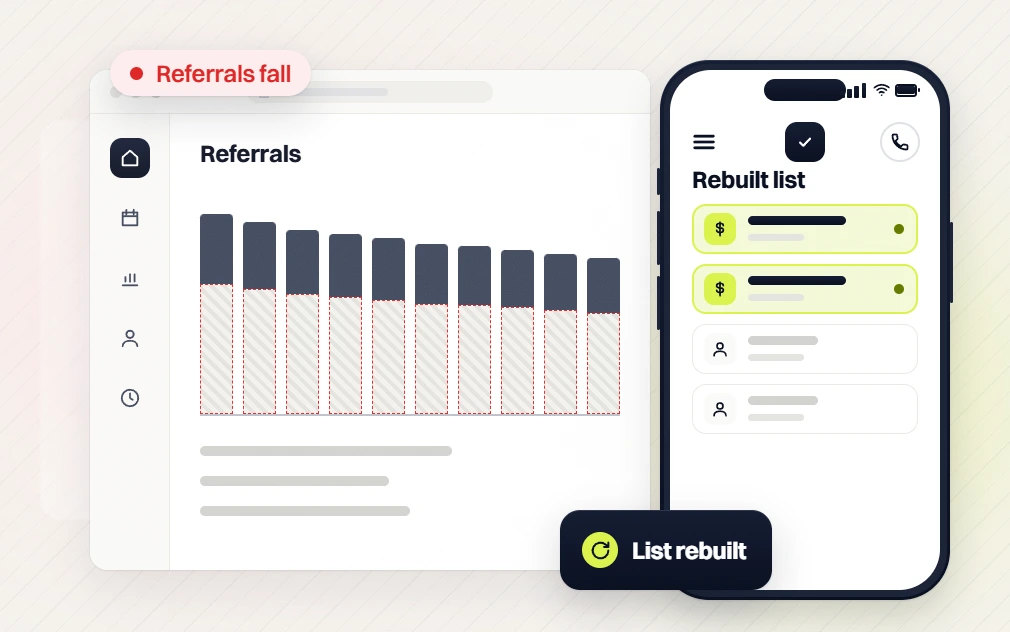
Personal injury attorney referrals shrink as the retainer stays glued to Google Ads clicks
PI referrals drop 47% as the retainer keeps buying $85 PI clicks. Nobody rebuilds the attorney list. Attorney partnerships need quarterly outreach and reciprocal case content, not another paid campaign chasing the same click.
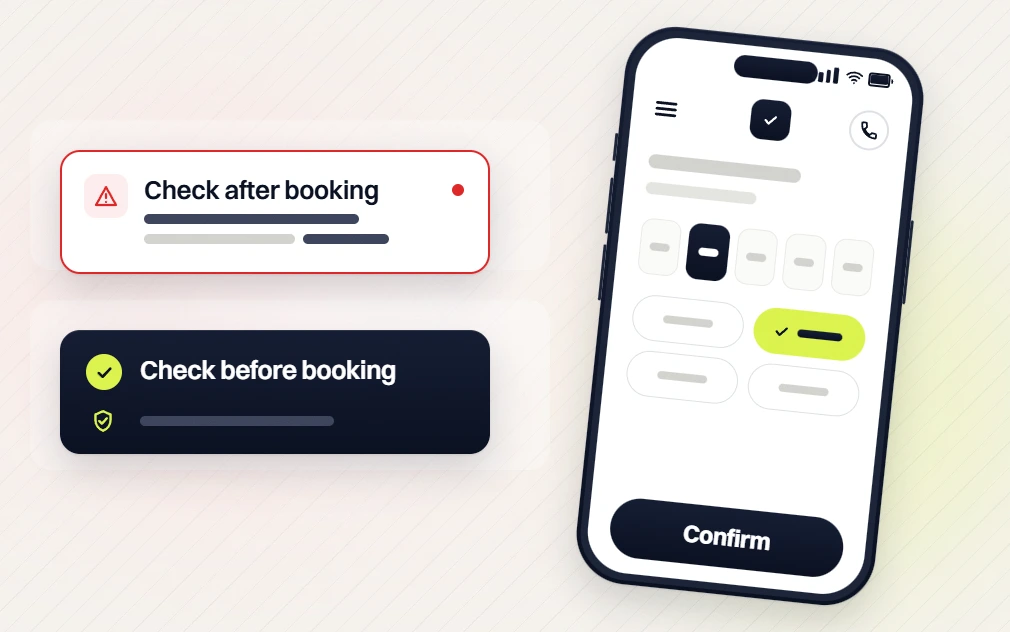
Insurance verification email kills the new-patient booking 24 hours before first visit
A 4-page insurance form the night before ghosts 38% of first-time patients. CAC balloons on ghosts. Text-first eligibility checks pull the friction off the site before the patient books, not after.
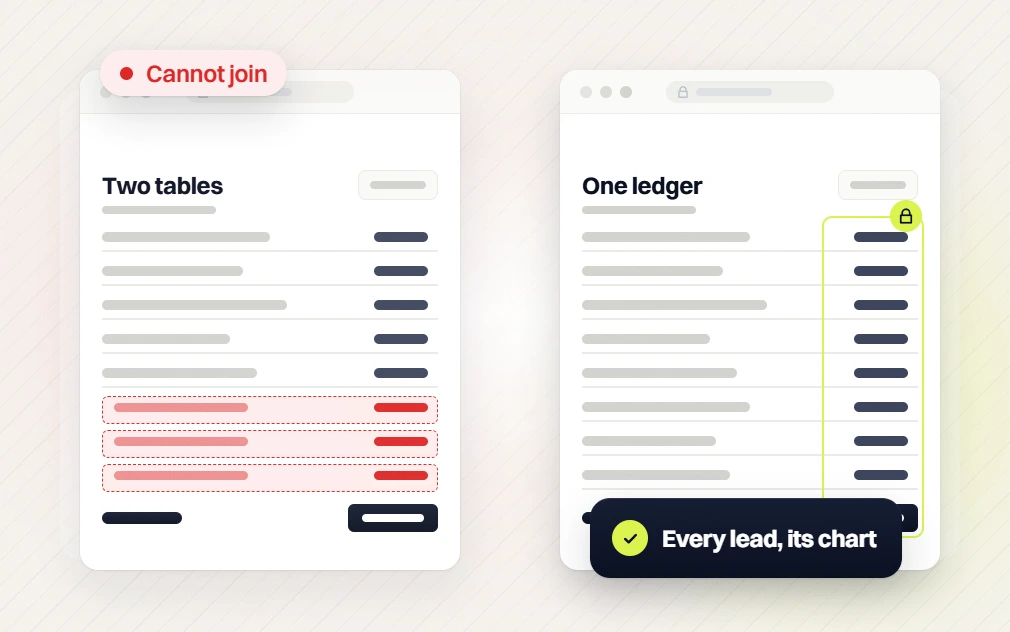
Retainer reports 40 leads, ChiroTouch shows 15 patients, no one can match the rows
Retainer counts 40 leads. ChiroTouch shows 15 patients. 62% of leads never match to a chart. PMS-matched lead ledgers close the gap so every reported lead ties back to a real first visit in ChiroTouch, Jane, Genesis, or ChiroFusion.
Three outcomes every chiropractic retainer produces
Content, local SEO, GBP, and paid media run from one plan. Every new consult traces to the source in a shared dashboard, so you know which channel to fix.

Post-consult nurture, wellness landing pages, and financing content. Care-plan enrollment moves past 45% of first visits inside the first 90 days.

Stop paying five vendors for one confused report. A named lead owns the roadmap, pushes work live, and reports on care-plan and cash-pay wins each month.
Four stages, every step ends in a sign-off
Fixed scope, fixed cadence, fixed accountability. Nothing moves to the next stage until your leadership signs off on the phase deliverable.
Full practice audit + ChiroTouch baseline
Site, GBP, ad accounts, ChiroTouch, and review flow all audited against appointment-booked revenue. Written 30-page report with the top 3 revenue-moving fixes signed off by owner + ops lead before we spend a dollar.
12-month roadmap tied to service profitability
Quarterly roadmap sized against service profitability. Care-plan enrollment and decompression get priority over one-visit adjustments because LTV is 10x. Every quarter has a written revenue projection so you know what should hit the pipeline.
Every channel running under one named lead
Google Ads, Meta, Local SEO, GBP, content, email, and retention flows all executed by a single accountable chiropractic retainer lead. No handoffs between agencies. No cross-team blame. One number to call.
Quarterly scale review
Weekly test cycles tied to ChiroTouch-verified appointments booked. Quarterly review with owner + ops lead showing what appointments drove, what closed revenue looks like, what next-quarter budget should be.
What you actually get from our chiropractor marketing retainer
Five phases, every item listed. Fixed scope, defined deliverable per phase, written sign-off on the phase gate.
Full brand audit + ChiroTouch baseline in week one
Week one. Site, ad accounts, review flow, and email flow all audited against appointment-booked revenue. Written 30-page report with the top 3 revenue-moving fixes signed off by owner + ops lead before we spend a dollar.

Google Ads, Meta, SEO, email, and review flow all scored against appointment-booked revenue impact for the practice.
ChiroTouch, Jane, Genesis, or ChiroFusion booking and appointment data captured as day-one baseline for attribution.
Every finding, every prioritized fix, every revenue projection in writing. Owner + ops lead both sign off on scope.
What we do first is signed off, not sprung on you; prioritized by dollar impact and time-to-fix on the practice roadmap.
GBP counts, review velocity, and pack position benchmarked against the top three chiropractic practices in your zip code.
Where clicks stop being tracked, where PMS data stops being pulled, where the gap between them costs booked patients.
12-month roadmap tied to service profitability
Weeks 2 and 3 build a 12-month quarterly roadmap sized against your service profitability. Care-plan enrollment leads because LTV is 10x a single adjustment. Every quarter has a written revenue projection so you know what should hit the pipeline.
Q1 to Q4 planned by campaign, cluster, and content piece; every quarter has an explicit sign-off gate on scope.
Care plans, decompression, and rehab lead. Single adjustments and hygiene layered as base load, not headline focus.
Q1, Q2, Q3, Q4 targets sized against real market data plus your practice capacity for the year ahead.
How much goes to Ads, SEO, content, and GBP each month; adjusted quarterly based on what performs against booked patients.
Which content, offer, or landing page most moves higher-ticket care plans past first consult and into signed enrollment.
Dormant patients segmented by last-visit date and treatment type; win-back cadence written up front for the practice.
Every channel run by one named chiropractic lead
From month 1, Google Ads, Meta, Local SEO, GBP, content, and retention flows are all executed by a single named chiropractic lead. No handoffs between agencies. No cross-team blame. One number to call.

Every paid channel run by the same lead; attribution built once, not fought over across two vendors.
Organic, local pack, review flow, and citations all coordinated as one connected chiropractic program.
Monthly editorial calendar tied to keyword priority and care-plan drivers on your practice management system.
Dormant-patient sequences, post-treatment review requests, and recall follow-up wired to your ChiroTouch or Jane.
Ad copy, keywords, landing pages, GBP posts; every test measured against a booked-appointment number, not clicks.
Every Google review answered inside 24 hours in a voice matched to your chiropractic practice tone and brand.
Weekly testing tied to PMS-verified appointments
Every week, cross-channel testing runs against ChiroTouch-verified appointments. Ad copy, landing page CVR, keyword targeting, review request timing, and retention cadence all measured against the number that pays your bills.
Every appointment booked tagged to the click, keyword, or reactivation trigger that drove the patient in.
What we tested last week, what won, what went live this week; three-line summary, no dashboard hunt.
A/B tests on hero, offer, form, and time-slot picker; measured against booked appointments only, not clicks.
If SEO is compounding faster than PPC, budget moves; every shift signed off in the monthly retainer report.
Two new ad copy variants per campaign per month; losing creative rotated off within 14 days of first read.
Negatives, geo caps, and audience layering tuned weekly to the searches that book higher-ticket care plans.
Quarterly scale reviews tied to real revenue
Every 90 days, owner and ops lead review what appointments drove, what closed revenue looks like, what next-quarter budget should be. Scale decisions grounded in your ChiroTouch and capacity, not agency spend targets.
Appointments booked by channel, revenue from marketing, cost per appointment; all ChiroTouch-verified numbers.
Ad spend and content velocity sized against your practitioner capacity and chair bandwidth; no overspend.
Explicit sign-off on next quarter allocation across channels; no surprise invoices, no hidden shifts.
Rolling 12-month view of MRR growth, CAC trend, LTV trend, and production growth; owner-first metrics.
When a group is ready for site two, prep runs in parallel with current retainer, no re-onboarding tax.
Roadmap for pushing higher-margin care plans (decompression, rehab, wellness) up in the mix as capacity opens.
Four retainer tiers for every stage of growth
Pick the tier that matches your practice stage. Move up or down anytime with 30 days notice. Ad spend billed separately at pass-through, never through us.
Solo practices, one growth program, not five vendors.
Solo or two-provider, adding paid + monthly recall on Foundation.
Two to four providers, high-ticket cases. Adds Meta + nurture.
Multi-location or premium groups. Per-location run, rollup reports.
Every retainer feature, tier by tier
HOVER ANY FEATURE FOR A PLAIN-ENGLISH EXPLANATIONContent +
SEO +
Paid media +
Reviews + reputation +
Reporting + strategy +
Real practices, real numbers
Asked by chiropractic owners, answered
From real quote calls with chiropractic practice owners. Anything else, ask on the strategy call and get an answer in the recap.
How much does a marketing retainer cost?
+
A retainer at Redefine Web runs $499 to $1,999 per month across three published tiers, with Enterprise quoted from $3,500 for multi-location groups. Foundation at $499/mo covers a solo DC office with content, local SEO, GBP, and review automation. Growth at $999/mo is where most single-location practices land once they add Google Ads and monthly care-plan nurture. Scale at $1,999/mo fits two-to-four provider offices layering Meta ads, cash-pay funnels, and bi-weekly booking-funnel tests. The tier moves with practice stage, not with your ad spend. We do not skim a percentage of media. Ad accounts stay in your name. Every plan runs a 6-month initial term, then rolls with 30 days notice after. Media budget lives in your Google Ads account at pass-through cost. The retainer fee is what you pay Redefine Web for the labor, tools, PMS integration, and the named lead who owns the account end to end. No setup fee on Foundation or Growth. Scale and Enterprise carry a one-time onboarding charge covering PMS mapping and multi-location GBP work.
What are the marketing strategies for chiropractors?
+
Five strategies move the needle for a chiropractic practice. Local SEO and a fully-optimized Google Business Profile, review automation from your PMS, a two-step booking funnel on the site, Google Ads on high-intent terms like “chiropractor near me” and “auto accident chiropractor,” and an email or SMS nurture that walks warm leads toward care-plan enrollment. The retainer runs all five under one roof so the channels feed each other. Reviews improve GBP rank, GBP feeds Google Ads Quality Score, ads bring the consult in, and nurture turns single visits into signed care plans over the first 90 days. Practices that split these channels across three or four vendors report the same complaint: no one owns the number, every vendor blames the last, and the monthly report is a screenshot dump instead of a decision. One retainer, one lead, one dashboard fixes that structure without buying five subscriptions. The retention math is what compounds. First-year care-plan enrollment past 45% pushes lifetime value ten times higher than a single-visit booking.
What is a marketing retainer?
+
A marketing retainer is a fixed monthly fee that buys a defined scope of ongoing marketing work, versus per-project or hourly billing. For a chiropractic practice, a monthly retainer usually covers content, local SEO, Google Business Profile management, review automation, Google Ads management, and a monthly reporting call. The buyer gets predictable spend, a named account lead, and a written scope of what runs each month. The agency gets committed revenue to staff a stable team. Our retainer opens on a 6-month initial term with 30 days notice after, so both sides have enough runway to see SEO and Google Ads compound before either party walks. Media spend is billed separately at pass-through cost and stays in your account. Retainer fees at Redefine Web start at $499/mo Foundation and top out at $1,999/mo Scale for single or small-group practices. Enterprise pricing from $3,500/mo covers multi-location groups with per-location GBP, cross-location attribution, and a dedicated reporting stack. What is fixed is the scope. What moves month to month is which tests are running, not what the retainer covers.
How to market your chiropractic practice?
+
The fastest way to market a chiropractic practice is to concentrate on the three channels that book new patients within 60 days. Google Ads on wellness and injury search terms, an optimized Google Business Profile with monthly posts and review requests, and a booking page that loads in under 2 seconds on mobile per Core Web Vitals. Layer local SEO content pieces on “chiropractor near me,” “auto accident chiropractor,” and city-plus-condition queries once the paid stack is stable. Add a text-based post-visit nurture sequence tied to your PMS to move first visits into care-plan enrollment. The retainer runs the full stack under a single named lead so the channels feed each other instead of competing for credit. The trap most solo DCs fall into is running one channel at a time and waiting three months to see whether it works. Running SEO, GBP, and Google Ads in parallel from month one gets you signal on all three by month 2 to 3, which is when the retainer starts to pay for itself in booked consults.
What is the profit margin for a chiropractor?
+
Independent chiropractic practices in the US average 20 to 30 percent net profit margin after payroll, rent, insurance, and marketing. Solo DCs running cash-pay care plans and decompression often clear 35 to 45 percent margin at maturity. Insurance-heavy practices land closer to 15 to 22 percent from billing overhead. The ratio that matters more than gross margin is marketing spend as a share of revenue. Most established chiropractic practices sit at 5 to 10 percent, which is what a retainer at $999 to $1,999 per month, plus $2,000 to $5,000 in Google Ads media, works out to for a $60,000/month single-location office. Startup practices often push to 12 percent for the first 24 months to accelerate patient flow and GBP review velocity. Care-plan mix is the biggest lever on net margin. A practice at 45% care-plan enrollment runs a fundamentally different P&L than one at 15%, even with the same monthly consult count. The retainer roadmap prioritizes care-plan drivers over single-visit adjustments for exactly that reason.
What are the patient retention strategies for chiropractors?
+
Chiropractic patient retention runs on three levers, per American Chiropractic Association guidance. First, a written care plan handed to the patient at consult one, with a follow-up cadence tied to treatment goals. Second, an automated post-visit sequence that requests a Google review, schedules the next appointment, and drops a wellness article three days out. Third, quarterly reactivation waves aimed at patients whose last visit was 90 to 180 days ago. On our retainer, retention flows are wired into your PMS at week one, so the same platform that books the new patient also holds the reactivation calendar. Practices that run all three levers hold 60 to 75 percent of first-year patients into year two. Practices that run zero or one lever hold 15 to 25 percent. The retention math is the same math as acquisition math. Every patient you retain into year two is a patient you do not have to reacquire through paid ads, which is what makes retention the highest-margin marketing work in the entire stack.
How to create a monthly marketing plan?
+
A workable monthly marketing plan for a chiropractic practice starts by picking one lead metric for the month. Booked new-patient consults, care-plan enrollments, or reactivations. Every channel spend and content piece maps back to that metric. Split the plan into four buckets: paid media budget with expected CAC, organic content calendar with keyword targets, GBP and review actions with volume targets, and retention sequences with reactivation targets. Add a written weekly review slot, a monthly report tied to booked appointments, and a quarterly re-plan against practice capacity. The retainer runs this exact plan under a single named lead, so leadership sees one document, one number, and one accountable owner instead of five vendor decks. The plan template we hand new retainer clients in week two is a one-page monthly scorecard: lead metric at the top, four channel rows underneath, expected numbers on the left, actual numbers on the right, notes at the bottom. Anything more complex slows leadership down. Anything less loses accountability.
What are the 5 P's of a marketing plan?
+
The 5 P’s of a marketing plan are Product, Price, Place, Promotion, and People. For a chiropractic practice, Product is your service mix (adjustments, decompression, rehab, cash-pay wellness). Price is your cash-pay and insurance rate structure plus care-plan packages. Place is where you show up: your booking page, GBP, Google Ads, and local content. Promotion is the offer, ad copy, email nurture, and review requests. People is the front desk staff and DC team that turn the booked consult into a signed care plan. The retainer runs the last two P’s for you and hands leadership the levers on the first three, so every marketing dollar ties back to a service and a real price. The trap in most agency reports is stopping at Promotion. A retainer that reports on impressions and clicks without a P&L view of Product mix and Price hides the answer to why booked consults are up but revenue is flat. Our monthly report reconciles all 5 P’s against your PMS numbers, not agency dashboards.
What are some effective marketing ideas for chiropractors?
+
Six ideas book chiropractic patients without gimmicks. First, a personal-injury landing page tied to attorney co-marketing signals. Second, a text-first insurance pre-check that clears the ghost booking risk before the patient shows. Third, a weekly GBP post cycle with real patient photos, not stock. Fourth, a decompression or scoliosis treatment page targeting condition-plus-city keywords. Fifth, a bi-weekly A/B test on the booking form time-slot picker. Sixth, an automated SMS reactivation flow triggered 120 days after the last visit. The retainer runs all six as a coordinated program instead of six one-off tactics, and reports each one against booked appointments in your PMS rather than clicks or impressions. Every idea on the list has a booking metric attached in the roadmap. If a tactic cannot be tied to a booked-appointment number inside 60 days, it does not go on the plan. That rule is what keeps the retainer scope from bloating into 20 vendors and one confused monthly report.
How long before the chiropractor marketing retainer starts booking new patients?
+
Google Ads on the Growth tier usually books its first new-patient consult inside 14 to 21 days from launch, once tracking and the landing page are live. Local SEO and GBP work compounds slower. Map-pack visibility on core queries like “chiropractor near me” tends to move in weeks 6 to 10. Steady organic consult flow lands by month 4 to 6. Personal injury cases run on their own clock. PI intake from paid takes longer to attribute since the average lead-to-signed timeline is 30 to 90 days. We report on lead volume and signed-case volume separately so PI does not look broken when the pipeline is just delayed. The 6-month initial term exists for this reason. SEO and PI attribution both need at least two full quarters to prove the model. Practices that book on Foundation see slower absolute numbers from the retainer stack. Growth is where the real Google Ads lift lands, and Scale is where cash-pay funnels start compounding into care-plan enrollment.
Does the retainer integrate with ChiroTouch, Genesis, or Jane?
+
Yes. ChiroTouch, Genesis, Platinum System, ChiroFusion, and Jane are all supported for review automation, appointment attribution, and offline conversion imports. The engineering lead maps your PMS in week one so post-visit SMS review requests, GA4 booked-visit imports, and the reporting dashboard all pull from the same source. If you are on a niche or older PM system, we integrate through the calendar layer instead. Google Calendar, iCal, or Acuity feeds handle appointment attribution when direct PMS access is not available. Enterprise adds custom BigQuery or Snowflake pipelines when a multi-location group needs to roll spend, bookings, and revenue into one view. The integration is what separates this retainer from a generic health-vertical agency. Without a PMS tie, agency dashboards show clicks and form fills. Practices see the ones that turned into a booked appointment on the schedule. That gap is where most reporting lies, and closing it is week-one work on every retainer we launch.
Does the retainer cover Google Business Profile and map-pack ranking?
+
Yes. GBP is core to every Foundation tier and above. Solo practices get monthly GBP posts, service page optimization, Q&A management, and category audits. Multi-location practices on Scale and Enterprise get per-location GBP management with unique posts and review response for each unit. Map-pack ranking on “chiropractor near me” and city-plus-condition queries usually starts moving in weeks 6 to 10 once citations are cleaned up, reviews start compounding, and GBP posts run weekly. We target the three-pack, not just organic rank. Review velocity is the fastest lever. Practices on our retainer average 4 to 8 new Google reviews per month within the first quarter. Response cadence matters. Every review, positive or negative, gets a written response inside 24 hours in a voice that matches your practice. Photos, service categories, hours, and Q&A all stay current. The GBP audit at week one documents where the profile is under-optimized and what map-pack competitors are doing to hold rank on your core city keywords.
Can the retainer handle a personal-injury heavy practice?
+
Yes, on Growth tier and above. PI is one of the highest-CPC verticals in Google Ads. Keywords like “auto accident chiropractor” and “car accident injury chiropractor” run $18 to $65 per click depending on market. That rules out the Foundation tier ad-free stack for a PI-first practice. PI campaigns need dedicated landing pages with attorney co-marketing signals, a call-tracking layer that separates PI intake from wellness inquiries, and creative that speaks to the accident-first audience without sounding like a law firm ad. We run PI as a separate campaign structure with its own CAC target, usually $180 to $400 per signed case, reported against your PMS-verified case ledger. Attorney outreach is quarterly, not one-off. Every quarter we run a targeted list of local personal-injury and workers-comp attorneys with reciprocal case content and a written co-marketing offer. Case content lives on the site under a PI-specific hub so paid traffic and attorney referrals land on the same conversion path.
Is a chiropractor marketing retainer better than hiring in-house?
+
An in-house marketing coordinator at a chiropractic office costs $52,000 to $75,000 fully loaded and covers one role well. GBP, social, and admin tasks are the honest ceiling. What breaks in-house is the specialist stack. A part-time coordinator cannot double as a Google Ads media buyer, an on-page SEO writer, a CRO analyst, and a PMS integration engineer at the same time. A retainer at $499 to $1,999 per month replaces that specialist stack. You get a named chiropractic lead plus behind-the-scenes access to media buyers, SEO writers, and engineers, all pooled across the agency chiropractic book. The math works when you compare loaded coordinator cost against Growth tier plus $3,000 in managed ad spend. The break-even case for hiring in-house lands around $50,000/month in practice revenue with a stable payer mix. Below that, the specialist stack outperforms a solo hire. Above that, most groups run a hybrid: an in-house coordinator on GBP and admin, plus the agency retainer on paid media and SEO.