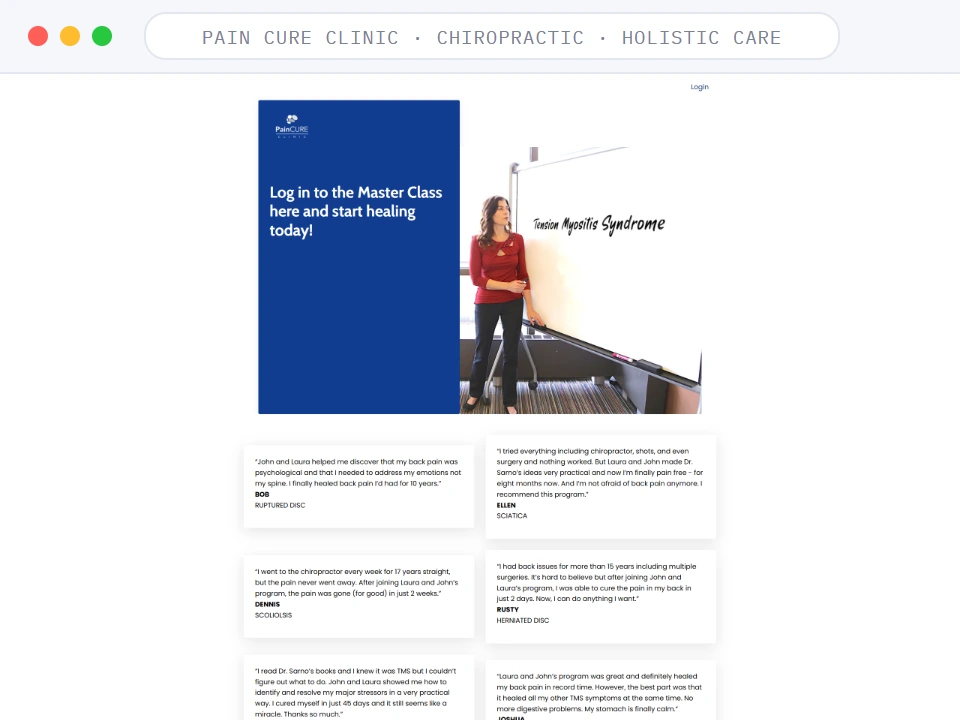
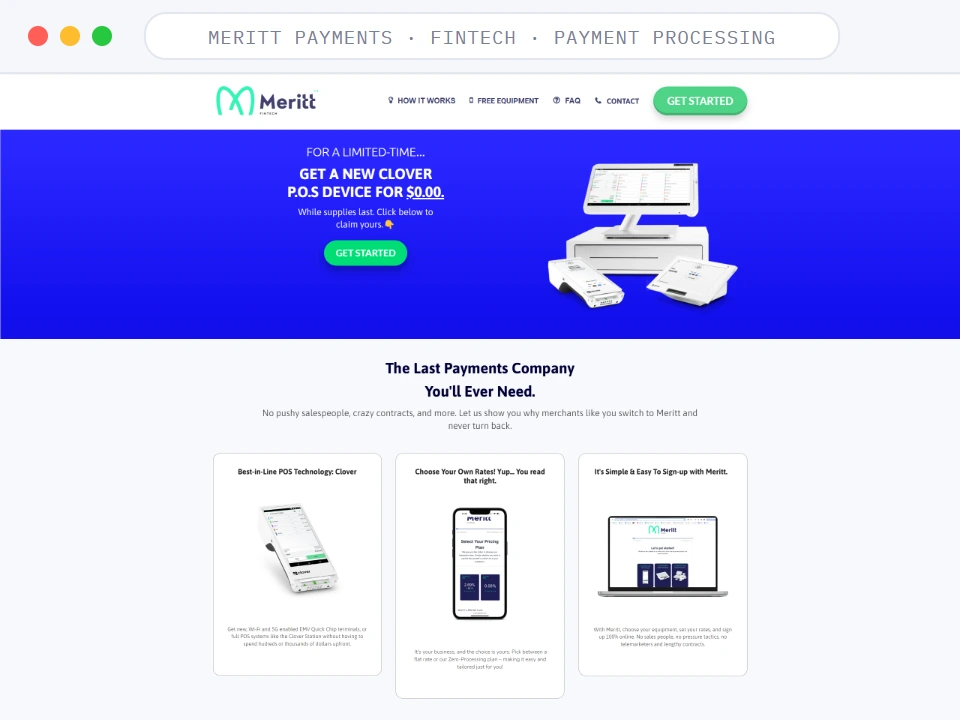
Chiropractor Website Design Services to Book More Patients
Chiropractor website design built for how patients in pain decide. Click-to-call in the header. A page for each condition, insurance clarity above the fold, and online booking wired straight into Jane App or ChiroTouch. Builds start at $1,500 and go live in 4 to 8 weeks.
Three ways chiropractic sites lose bookings before patients start
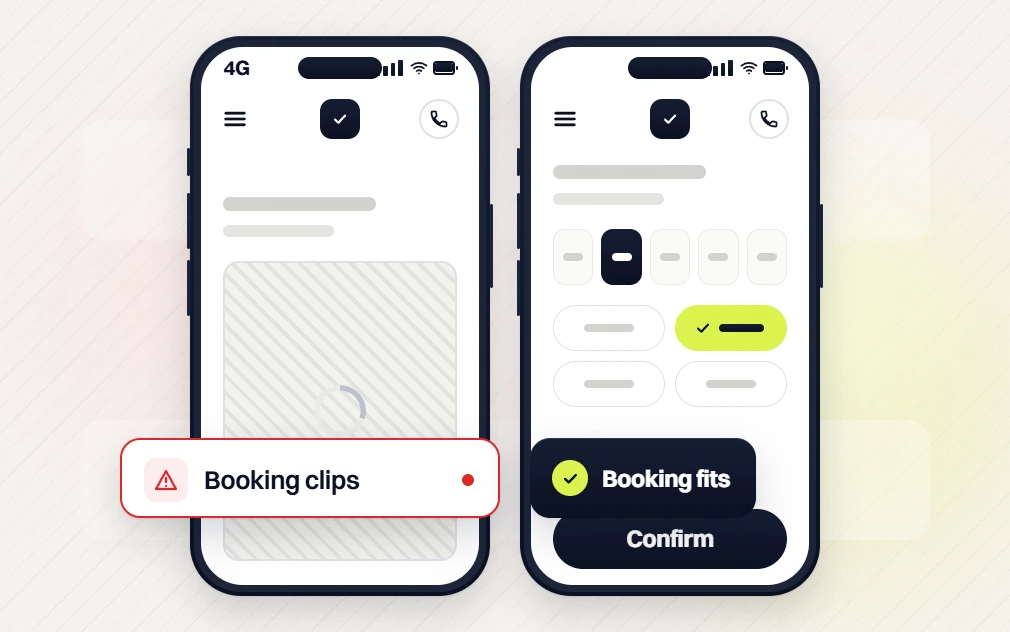
Jane App and ChiroTouch iframes crash on mobile Safari
Jane App and ChiroTouch iframes clip on 375px screens and drop half of new-patient starts. 52% of mobile bookings never hit step 2. The stock widget is the fastest install and the slowest booking flow. Every dropped mobile session is a booked visit going to the practice up the road.
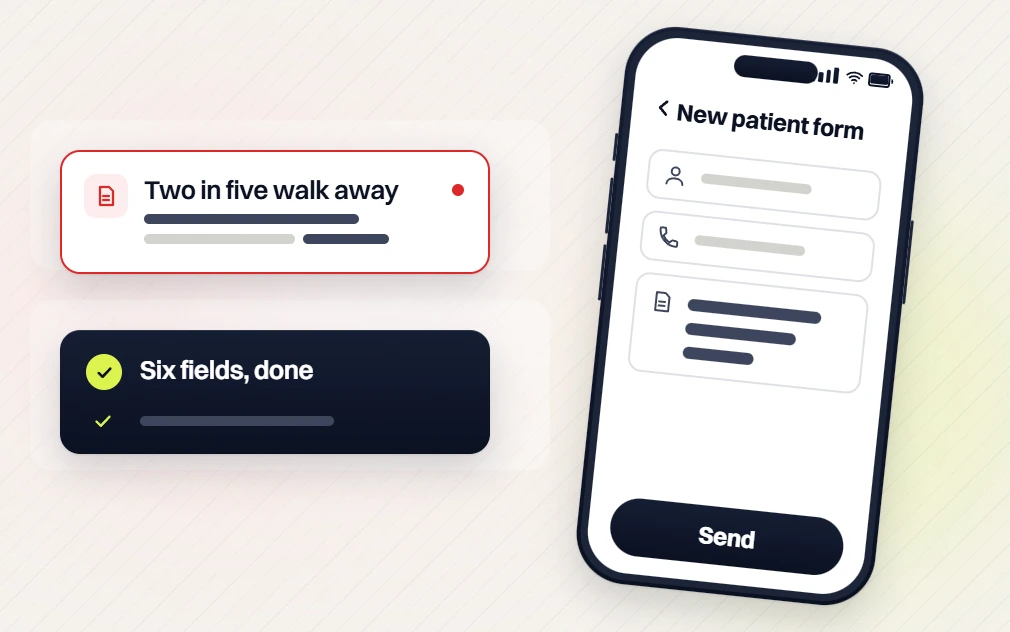
Personal injury intake asks for adjuster info before the first save
Most chiropractic sites push a 24-field PI intake form on page one. 38% of personal injury leads bail before the first save. PI is the highest-value chiropractic case type and the easiest one to lose to a form built for a claims processor, not a patient in pain.
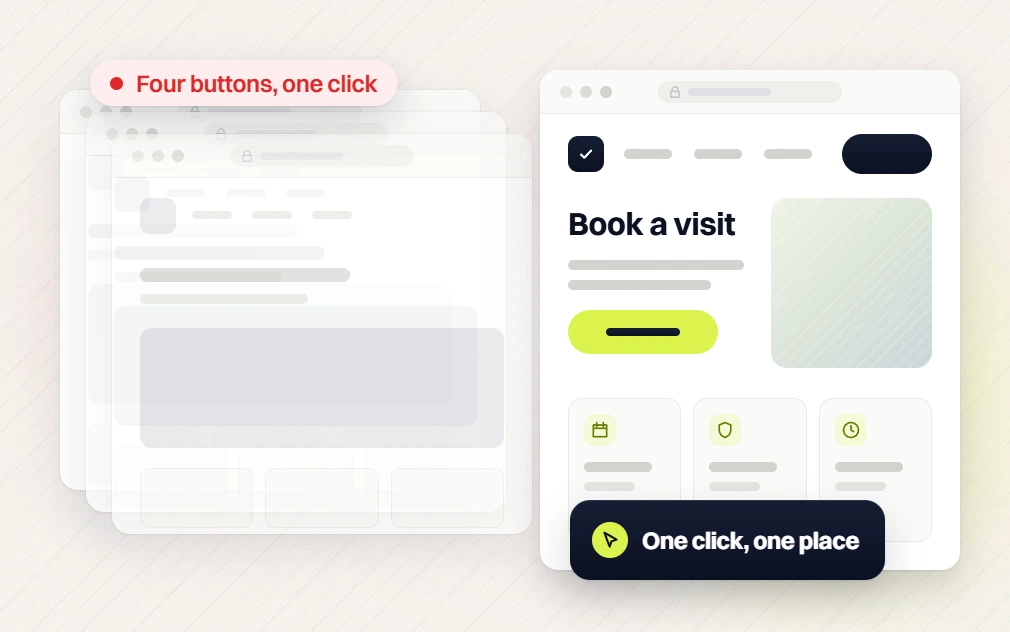
Local Services Ads send paid clicks to your homepage instead of a lander
Google LSA clicks land on a generic homepage and burn $25 to $85 per click. Purpose-built landers convert 4.1x higher on the same traffic. One offer, one button, one dropdown. Every LSA campaign needs its own lander or the ad spend pays for a page that was not built for the click.
Three outcomes every chiropractor web design build delivers
Pain-first landers, one-thumb booking, and copy that qualifies the patient before the form loads. Every build beats the old baseline within 60 days.
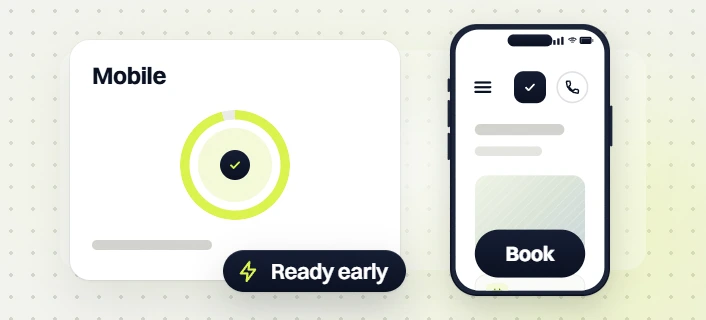
Physician and MedicalWebPage schema, condition-mapped metadata, and search intent in the URL slug. Ready for map-pack ranking on day one, not day 180.
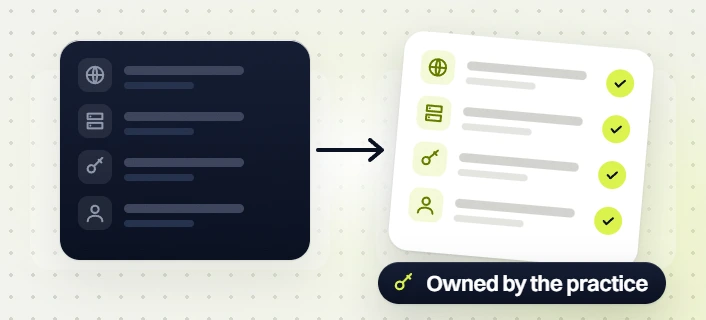
Your domain, your CMS logins, your Figma file. GBP, Search Console, GA4, and Tag Manager stay in your accounts. Walk away any time with the site intact.
Four stages. Every step ends in a sign-off
Fixed scope, written sign-offs, dates on the calendar. Nothing moves to the next stage until the deliverable is approved. Your calendar does not slip.
Discovery that earns the brief
A 20-30 page brief signed off by owner, ops lead, and marketing lead. Practice interviews, technical audit of your current site plus GBP plus ad accounts, competitor benchmark of 5 chiropractic peers, and ChiroTouch data mapping. Nothing moves until it is locked.
Design built around your patient in pain
Mobile-first design system with conversion patterns baked in from wireframe stage. Every component engineer-validated the same week it is drawn. You get a Figma file your team owns, not a slide deck you cannot edit.
Engineering + integrations that survive your next ChiroTouch upgrade
WordPress with custom PHP or Next.js by default. LiteSpeed and edge CDN, Core Web Vitals treated as an acceptance criterion, WCAG 2.1 AA verified before launch. ChiroTouch, Genesis, ChiroFusion on the PMS side. GA4, Meta CAPI, Google Ads pixels wired in.
Launch, then daily monitoring live from day one
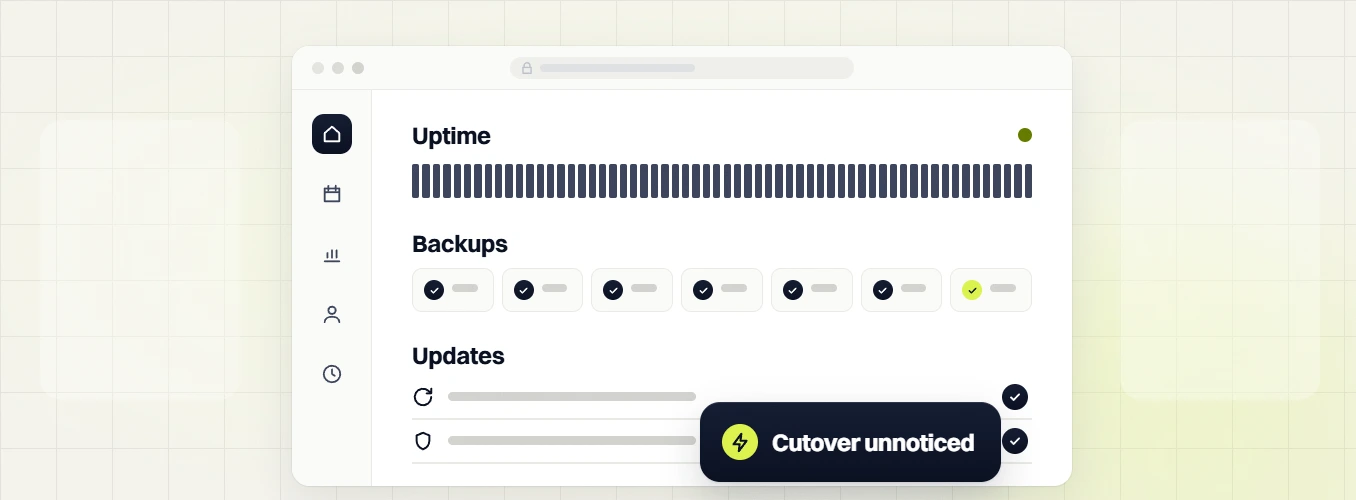
Production DNS cutover, 301 map from the old site, uptime and Core Web Vitals monitoring live, and a 30 to 90 day post-launch support window. On day 31 you take the keys and go, or roll into a maintenance retainer.
What you actually get from our chiropractor web design services
Five workstreams, every item listed. Nothing lives in a proposal appendix or a phase-two column.
Design that fits how patients decide
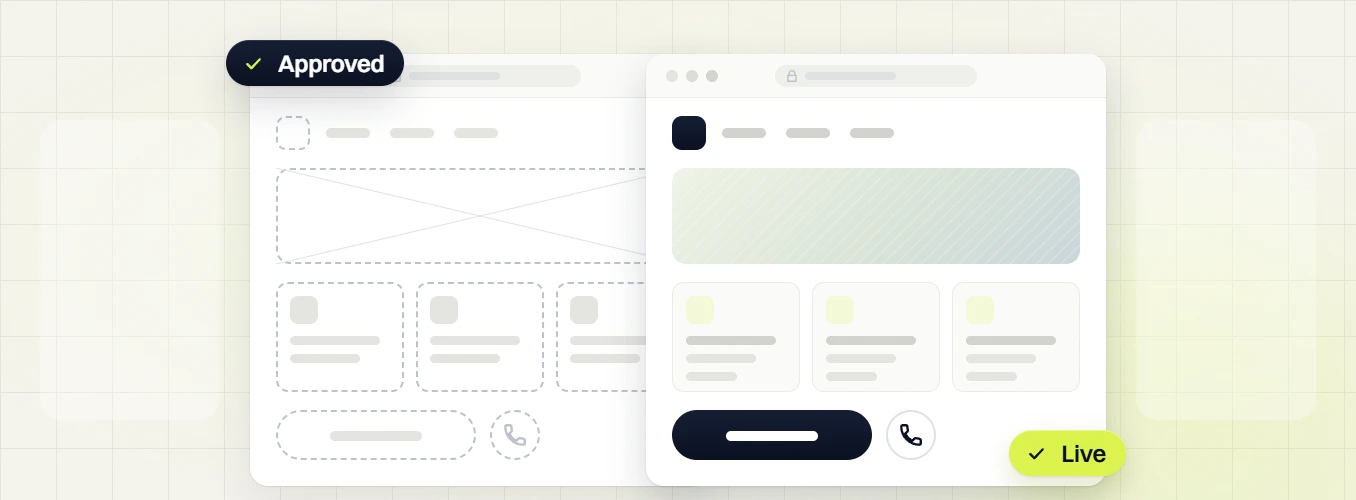
Every chiropractor site opens on a mobile screen with a patient in pain. Design starts at 375px, not at a desktop grid. Conversion patterns get built into wireframes, not bolted on at the end. You get a Figma file your team owns from day one and a component library that any future developer can pick up without a rewrite.
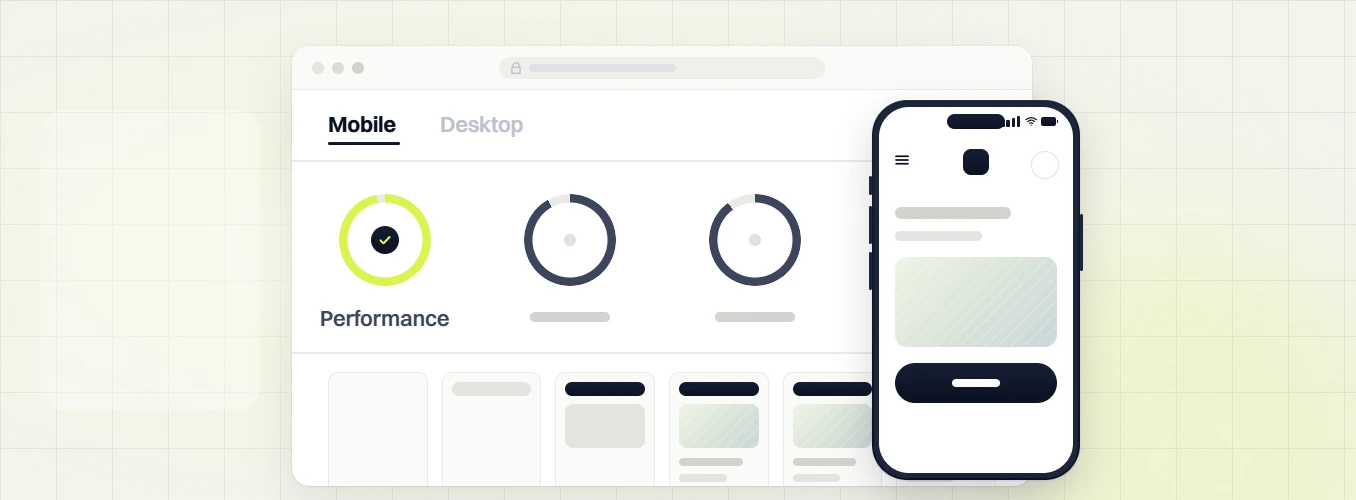
built at 375px, then scaled up. Not the reverse. Every layout survives a thumb-only booking flow.
buttons, forms, cards, sticky headers, and condition-page templates that you own after handoff.
pain-first hero, one-thumb booking, insurance clarity above the fold, click-to-call sticky in the header.
your team, adjusting rooms, providers. Stock chiropractic photos flag Google's duplicate-content filter.
WCAG 2.1 AA colors, focus states, and keyboard flow validated at design, not caught at QA.
every field a copywriter or clinician will edit lives in the Figma file, not in a Google Doc appendix.
WordPress or Next.js built to survive PMS upgrades
Chiropractic sites live inside a stack that changes every 6 months. Jane App pushes API updates, ChiroTouch rewrites its widget, LiteSpeed ships a cache change. We pick technology and patterns that absorb those upgrades without breaking new-patient booking flow. Core Web Vitals green, WCAG 2.1 AA verified, LCP under 1.8s on a real Pixel over LTE.
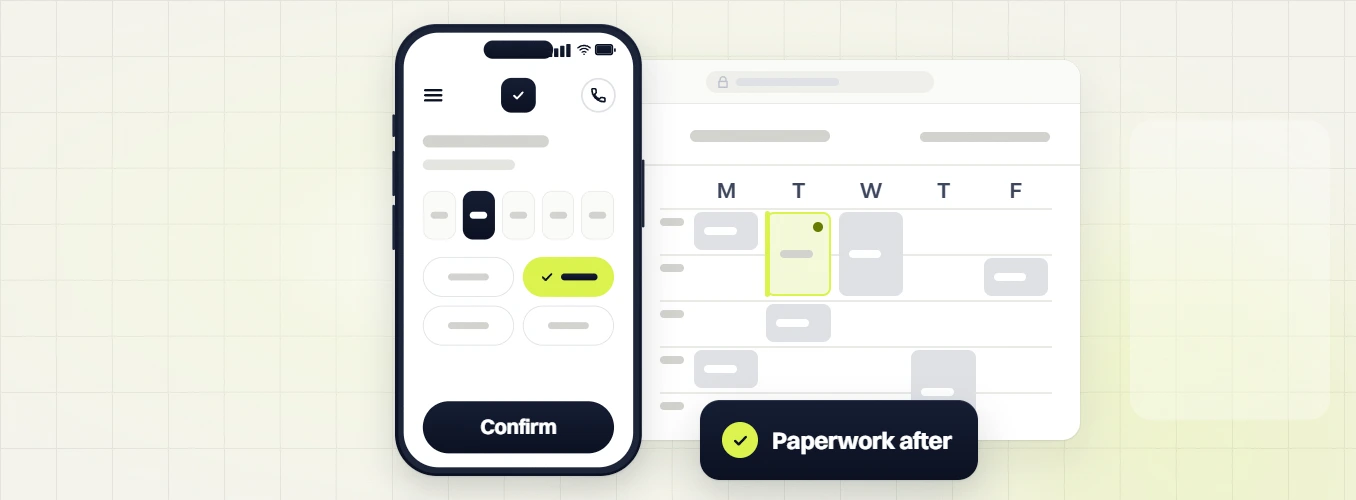
the theme is written for your practice, not stitched from a page builder that drops 40 plugins.
multi-location groups, headless CMS setups, and marketing sites needing edge rendering.
LCP under 1.8s, CLS under 0.05, INP under 200ms on the acceptance test. Not a hope.
intake and booking route through servers we manage; email sends via Paubox, LuxSci, or MailHippo.
native booking UI that calls the PMS API in the background so mobile does not crash on iframe.
wired without duplicated events, with server-side capture where the pixel breaks first.
A booking flow that fits on one thumb
The booking flow is the reason the site exists. Everything else supports it. We build a native front-end UI that calls Jane App or ChiroTouch in the background, avoiding the mobile iframe crash that drops 52% of stock widget bookings. Personal injury intake splits into a two-step form: book first, paperwork after. New-patient offers surface in the hero and follow the visitor down the page.
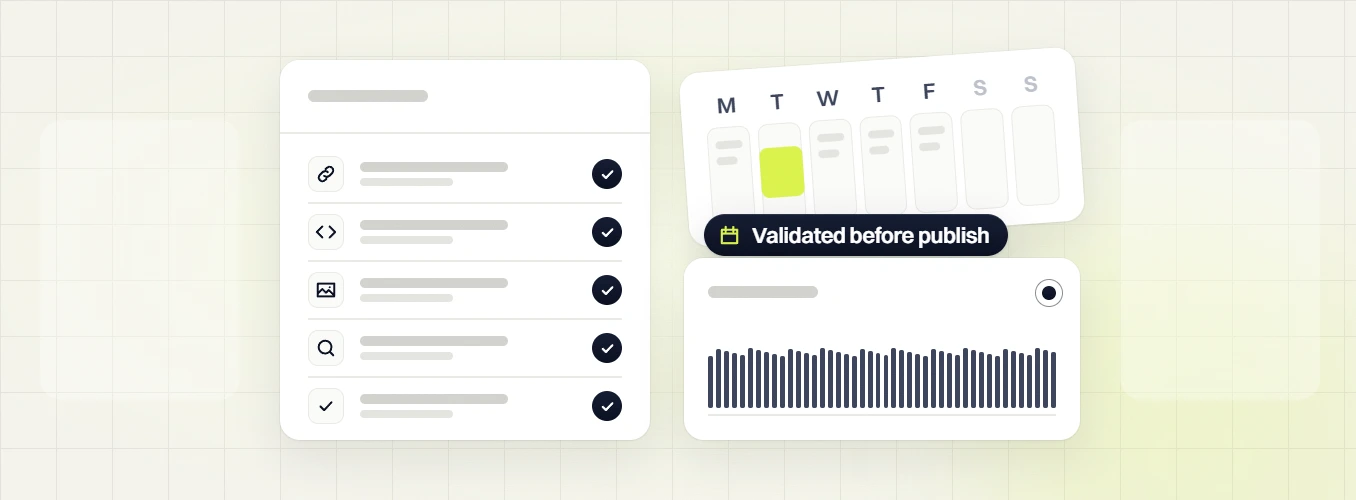
calls Jane or ChiroTouch in the background so no iframe, no crash, no lost sessions on iOS Safari.
book the visit first, paperwork after. Cuts the 38% PI bail-rate in half in most builds.
top 12 payers plus Medicare and cash-pay. Patients quit sites when they cannot see coverage.
one-click dial from every scroll position. Older patients call before they book online.
$47 exam, free consult, or posture screen surfaces first paint. Repeats in the sticky footer.
one offer, one button per Google Local Services Ads campaign. 4.1x conversion over homepage traffic.
Every page ready to rank at launch
Chiropractic sites lose 6 months of ranking when SEO is bolted on after launch. We build search intent into the URL slugs, put Physician and MedicalWebPage schema on every page, and write a condition page per treatment cluster at launch. Doctor bios run 600+ words with credentials and technique certifications so E-E-A-T scores start earning trust from day one.
back pain, sciatica, herniated disc, whiplash, prenatal, sports injury, auto/PI. 1,500+ words each.
validated with Google Rich Results Test on every page before publish. Author schema on bios.
credentials, education, technique certifications, review date. YMYL E-E-A-T floor covered.
patient reviews structured for map-pack stars and answer-box eligibility.
`/sciatica-treatment/` not `/services/service-3/`. Ranks on the query, not a category ID.
Chiropractor primary category, 3 secondaries, services listed, Q&A seeded from front-desk logs.
A launch that does not vanish rankings
The DNS cutover is where most chiropractic site rebuilds lose organic traffic. We map every ranking URL from the old site, stage the redirects, run a pre-launch crawl comparison, and flip DNS on a Tuesday morning so Search Console has the full week to reindex. Post-launch monitoring runs daily for 14 days: 404s, impression drops, and Core Web Vitals field data all watched.
every URL, every ranking, every internal link inventoried before a single redirect is written.
old-to-new mapping approved by your team before staging goes to production. No orphaned redirects.
crawler runs against staging with the old sitemap to catch every miss before DNS.
not Friday, not Monday. Tuesday gives Search Console the week to reindex before weekend traffic.
404s, impression drops, and CWV field data monitored for 14 days post-launch.
you take the keys on day 31 or roll into maintenance at $199 to $499/mo.
Four web design tiers for every stage of growth
Every line item listed. The quote you get is the invoice you pay. Take any tier as a project fee, or split it into the flat monthly plan.
Fast, credible site converting existing reputation.
Full booking engine: scheduling, checkout, customer reporting.
One brand, every office found, location-level tracking.
Design system the whole group launches on. Ops-team-spec integrations.
Every web design feature, tier by tier
HOVER ANY FEATURE FOR A PLAIN-ENGLISH EXPLANATIONWebsite + design +
Booking + patients +
SEO + visibility +
Care + support +
Real practices, real numbers
See what a $400/mo dental site could book back.
Slide in your practice numbers. Assumes a 32% relative conversion improvement, below the median gain on our dental rebuilds.
Common chiropractor web design questions
Straight answers on cost, timeline, PMS integrations, HIPAA, and what actually gets built. If your question is not here, book the audit call.
How much does chiropractor website design cost?
+
Chiropractor website design at Redefine Web runs $1,500 to $25,000+ per project as a one-time fixed fee. Launch is $1,500 for a solo DC with 5 to 8 pages, HIPAA-aware booking, and on-page SEO. Growth is $3,500 for practices adding condition pages (spinal decompression, prenatal, sports, PI/auto). Scale is $7,500 for multi-location groups. Enterprise starts at $25,000 for franchise systems and DSO-style networks. Every tier is fixed-price with a written scope. Ongoing care plans run $199 to $499/mo and are billed separately from the build. Industry-wide, chiropractic site costs range from $40/mo templates up to $5,000 to $15,000 for a custom agency build. Template shops like ChiroMatrix, Perfect Patients, and DreamCo bundle the site into a subscription and keep the code. Our fixed-price build hands over the site, the Figma file, and the CMS logins on the day we go live. If your budget sits under $1,500, a starter template makes more sense than a stripped-down custom build. See the four website design tiers for the full inclusion list.
What makes a good chiropractor website?
+
A good chiropractor website is fast, mobile-first, and built around booking new patients. Eight elements matter: a new-patient offer ($47 exam, free consult, posture screen) in the hero; a visible insurance carrier list; condition pages for back pain, neck pain, sciatica, headache, sports injury, and auto/PI; doctor bios with Physician schema; click-to-call in the sticky header; a booking button on every service page; patient reviews with LocalBusiness schema; and mobile LCP under 1.8 seconds. Skip stock hero images because Google flags near-duplicate content across template sites. The American Chiropractic Association recommends listing credentials, technique certifications, and specialty focus areas in a doctor bio, and this feeds the E-E-A-T signals Google uses to sort local results. Google Business Profile guidance also asks for NAP consistency between the site footer and the GBP listing, which the theme handles, not a plugin. A custom build converts 3 to 4 times the visitors of a stock template on the same traffic.
How long does a chiropractor website take to build?
+
Launch and Growth tier chiropractor websites go live in 4 to 8 weeks. Scale builds run 8 to 12 weeks. Enterprise builds run 12 to 20 weeks depending on integrations and per-location page count. A typical Growth build looks like this: week 1 kickoff and sitemap, weeks 2 to 3 wireframes, weeks 4 to 5 design, weeks 6 to 7 WordPress build and Jane or ChiroTouch API wiring, week 8 QA, accessibility scan, and DNS flip. Industry-standard timing for a custom chiropractic site sits at 4 to 8 weeks. If a vendor quotes 24 hours or 5 days, it is a stock template not a custom build. Timeline slips almost always come from client-side delays: photography, insurance carrier lists, doctor bio copy, or PMS access. We schedule those pulls into the discovery week so the design and engineering weeks stay clean. Every stage ends in a written sign-off, and nothing moves until the deliverable is approved. Your launch calendar does not slip on our end, and the discovery week catches most timeline risks before they hit design.
Does chiropractor website design integrate with ChiroTouch, Jane App, or Genesis?
+
Yes. Redefine Web integrates with your practice management software, scheduler, and CRM. Supported systems: ChiroTouch, Genesis Chiropractic Software, ChiroFusion, Jane App, ChiroSpring, Cash Practice, Platinum System, PayDC, and Zocdoc. Launch tier includes one embedded scheduler for new-patient booking. Growth tier adds a native front-end booking UI that calls the ChiroTouch or Jane API in the background, which avoids the mobile iframe crash that drops 52% of stock widget bookings on 375px screens. Scale and Enterprise tiers add two-way sync, HIPAA-aware form routing, and appointment-status callbacks to your CRM. If your PMS is not on this list, the Growth tier still supports a custom API build for any vendor with a documented REST endpoint. Every integration is tested on a Pixel and an iPhone SE over LTE before launch. The booking flow is the reason the site exists, so we test it the same way patients use it.
Is a chiropractic website template better than a custom design?
+
A template goes live faster and costs less up front. A custom chiropractic website design books patients at 3 to 4 times the rate and ranks better for local intent. Templates from ChiroMatrix, Perfect Patients, or DreamCo arrive with a stock booking widget, generic doctor headshots, and an identical page structure across every clinic that bought the template. Google is good at spotting near-duplicate sites, and if two clinics in the same city run the same template, only one ranks in the local pack. A custom build gets you a native mobile booking flow, unique condition pages, real doctor photography, and the E-E-A-T signals Google rewards on healthcare queries. Templates also lock you into a subscription: the code stays with the vendor and cancellation kills the site. A custom Redefine Web build hands over the domain, the CMS, the Figma file, and the analytics logins the day we launch. For a solo DC under 400 patient visits a month, a template can work as a starter. Every practice above that volume outgrows a template within a year.
How do I build a chiropractic website that converts new patients?
+
Build the site around one job: booking the first visit. Start with a mobile-first design at 375px, put a new-patient offer in the hero, and wire booking to the Jane or ChiroTouch API instead of dropping in an iframe. Add condition pages for the top 6 to 10 conditions you treat. Write doctor bios of 600+ words with credentials and technique certifications for E-E-A-T. Publish Google reviews with LocalBusiness schema. Test Core Web Vitals (LCP, CLS, and INP) on real devices, not just Chrome DevTools. Route intake through a HIPAA SMTP relay like Paubox, LuxSci, or MailHippo. Push the site live, then track PMS-side bookings weekly, not vanity traffic. The four numbers that matter on a chiropractic site: mobile LCP under 1.8s, booking-form completion rate above 55%, new-patient bookings per 100 sessions above 3.5%, and cost per booked visit under $35 on paid traffic. A custom build tuned to those four numbers outperforms a template on every measurable axis.
Do chiropractor web design services include HIPAA and WCAG accessibility?
+
Yes. Every build goes live with HIPAA-aware form handling and WCAG 2.1 AA accessibility. Both are floor requirements, not add-ons. Chiropractors are healthcare providers, and non-compliance opens the door to regulatory risk and ADA lawsuits. HIPAA-aware coverage: intake and booking forms route through servers we manage with encrypted storage, email sends via a HIPAA SMTP relay (Paubox, LuxSci, or MailHippo), and a signed BAA is available on request. WCAG 2.1 AA coverage: axe DevTools scans on every template, NVDA plus VoiceOver testing on hero and booking flows, real-user keyboard nav checks, and a color contrast audit at design not at QA. On the accessibility side, ADA lawsuits against small medical practices have risen every year since 2018 and the settlement floor is now $10,000 to $25,000 plus a remediation order. Building the site accessible from wireframe stage is cheaper than a rebuild after a demand letter. Both HIPAA and WCAG are documented in a launch report so you have the paper trail.
Does a chiropractor website need to be mobile-first?
+
Yes. Over 70% of chiropractic patient searches happen on a phone, and Google indexes the mobile version first. Mobile-first chiropractor web design means every page is built for a 375px viewport before desktop layout gets touched. Booking works with a thumb. Insurance dropdowns fit on one screen without a two-finger zoom. Click-to-call is pinned to the header. Doctor headshots load under 1 second on LTE. Core Web Vitals sit in the green: LCP under 1.8s, CLS under 0.05, INP under 200ms. Local Pack ranking depends on it because Google Business Profile listings show a mobile screenshot preview to searchers on a phone, and a slow or clipped mobile view drops your click-through rate before the patient ever sees the site. Practices that switch from a desktop-first template to a mobile-first custom build usually see a 40 to 90 percent gain in booking-form completions on the same traffic. Mobile-first is not a design preference. It is the way patients in pain look for a chiropractor at 9 pm on a Tuesday.
What should a chiropractic website include?
+
A chiropractic website that books new patients needs eight elements. One, an above-the-fold new-patient offer with a one-click booking button. Two, an insurance carrier list or dropdown for your top 12 payers plus Medicare and cash-pay. Three, condition pages for back pain, neck pain, sciatica, headache, sports injury, auto/PI, prenatal, and pediatric. Four, doctor bios of 600+ words with Physician schema, credentials, and technique certifications. Five, click-to-call in a sticky header. Six, patient reviews with LocalBusiness schema, ideally pulled live from your Google Business Profile via the Google Business Profile API. Seven, a HIPAA-aware intake flow with encrypted routing. Eight, mobile LCP under 1.8s. Skip stock hero photos and 24-field PI forms on step one. Every build we deliver covers all eight from launch day. The order matters. New-patient offer first because the visitor is deciding whether to book you or the practice up the road. Insurance clarity second because pricing is the number one drop-off point.
Can a chiropractor web design agency migrate our site without losing SEO?
+
Yes. Chiropractic site migrations make up around 60% of our chiropractor web design agency work. Standard migration protocol preserves organic rankings through URL mapping, 301 redirects, canonical management, and pre-launch crawl comparison. Steps: full crawl of the current site to inventory every ranking URL and its keyword; build a redirect map from old to new; migrate content with H1, meta, and internal-link parity; run a staging crawl against the map; DNS flip on a Tuesday morning; monitor Search Console for 404s and impression drops daily for 14 days. Ranking recovery averages 21 days for a clean migration. If a chiropractor website loses more than 15% of organic traffic 30 days post-launch, the redirect map is broken. Common causes are template-to-custom migrations where the old site used query strings the new URLs cannot match one-to-one, or where the old sitemap contained hundreds of thin condition pages that need to consolidate. We fix both at the discovery stage, before the redirect map is written. No chiropractor web design agency migration should lose sustained organic ranking.
What software do chiropractors use for scheduling and patient records?
+
Most chiropractors use one of eight practice management systems: ChiroTouch, Genesis Chiropractic Software, ChiroFusion, Jane App, ChiroSpring, Cash Practice, Platinum System, or PayDC. ChiroTouch and Jane App are the two dominant scheduling platforms and are the two we integrate with most often on chiropractor website design builds. ChiroTouch is on-premises with a REST API for booking and a mobile widget that clips on iOS Safari at 375px. Jane App is cloud-based, mobile-friendlier, and cheaper to run for a solo DC. Zocdoc and MyChiroPractice add a marketplace-style booking layer that sends leads to the site. On the website side, integration means one of two patterns: an embedded iframe or a native API booking UI that reads and writes to the PMS in the background. The iframe is faster to install and drops 40 to 60 percent of mobile bookings. The native API build is what we default to on Growth tier and above. Your PMS choice does not have to change to get a modern site.
What KPIs should a chiropractic website report every month?
+
Track five KPIs on a chiropractor site build: new-patient bookings (from the PMS, not from Google Analytics), cost per booked visit on paid traffic, booking-form completion rate, mobile LCP, and Local Pack ranking on your top 8 condition keywords. Vanity metrics like page views and average session duration correlate weakly with new-patient revenue. What matters is the PMS-side booking count and the cost per booked visit. Redefine Web delivers every build with GA4, Google Tag Manager, and a Looker Studio dashboard that pulls booking data from ChiroTouch, Jane App, or Genesis. Reports run monthly with a 30-minute review call. If the numbers slide, the dashboard shows which page or campaign moved. Practices on the Growth tier and above get quarterly SEO reviews that map ranking movement against condition-page updates. If a KPI misses target for two consecutive months, we recommend the specific site or campaign change and reset the baseline. Ownership of every reporting account stays with your team.