Ecommerce Website Maintenance That Keeps Your Store Fast and Stable
Managed maintenance and hosting for DTC brands, Shopify Plus stores, and WooCommerce headless setups from $199/mo. Klaviyo and Recharge flow QA, Merchant Center feed diff, monthly Core Web Vitals report, BFCM war room, and a 99.99% written uptime SLA on Enterprise.
Three ways your current maintenance vendor is losing you orders
Shopify theme updates break Klaviyo, Recharge, and Bold app hooks silently
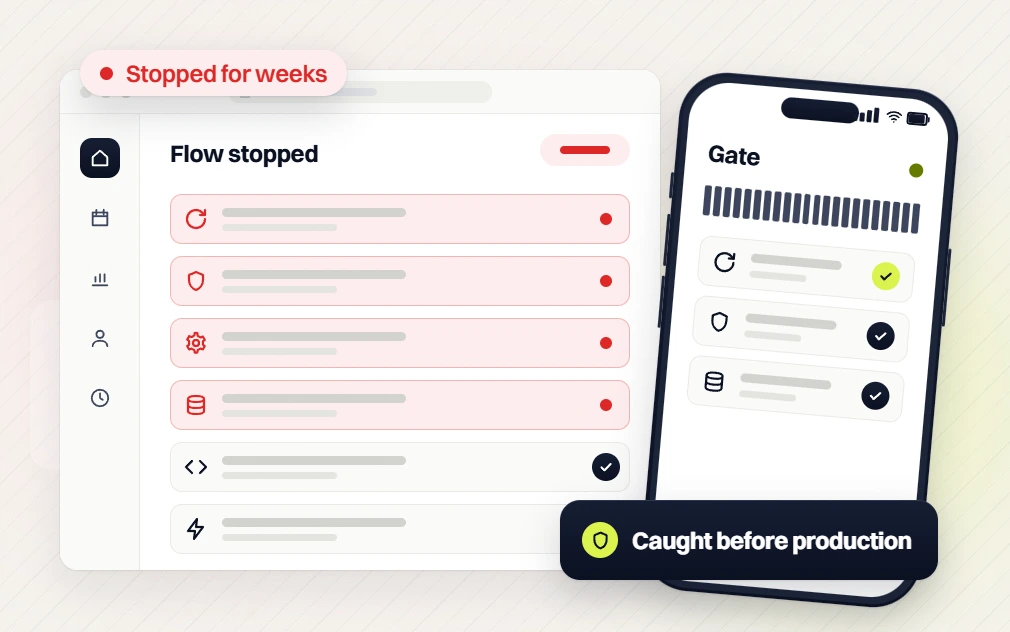
Shopify theme pushes overwrite the Klaviyo and Recharge snippets. Flows stop firing until sales dip and someone traces it. 42% of theme updates cause at least one silent integration break on a store with 15+ apps.
Merchant Center disapprovals spike after every theme or app change
New product templates drop GTIN or break image URLs. Merchant Center pauses Shopping 5 to 7 days later. Median loss: $1,415/week on a mid-scale DTC brand until the feed is repaired.
Mobile checkout speed drops every time a new app or pixel gets installed
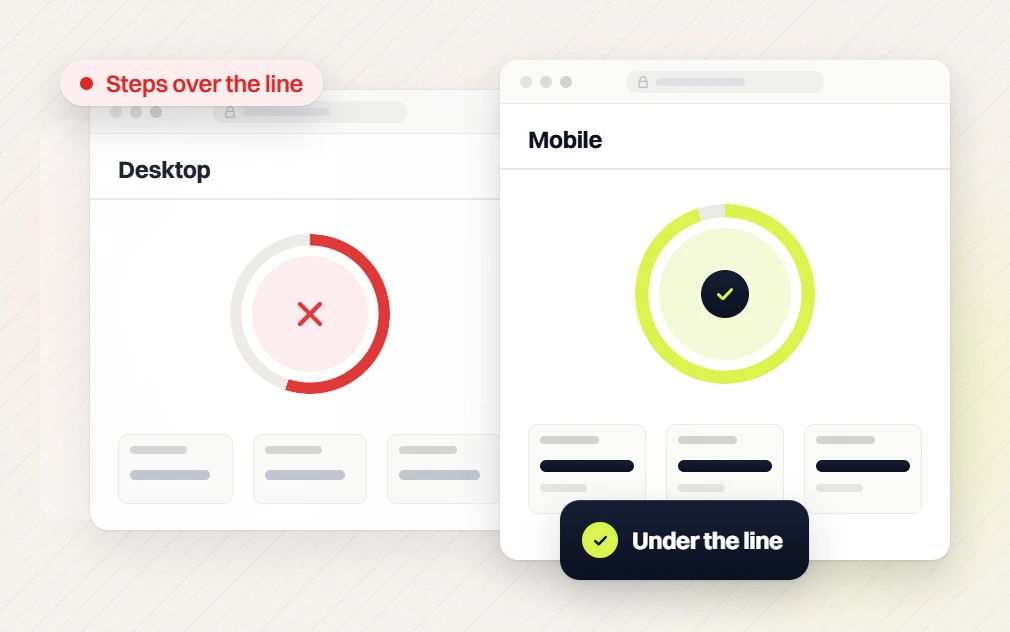
Every Klaviyo, Meta, TikTok, and Attentive pixel adds header script weight. LCP creeps past 4.8 seconds on mobile. Mobile CVR drops 12 to 18% before anyone notices, because desktop looks fine in QA.
Three outcomes every ecommerce maintenance retainer produces
Real humans on call every hour. If your storefront drops, we know before shoppers do. 99.99% uptime SLA with automatic service credits if we miss the number.
Web application firewall, daily malware scans with auto-quarantine, weekly patching, quarterly PCI SAQ prep, and Consent Mode v2 checks on every ecommerce plan.
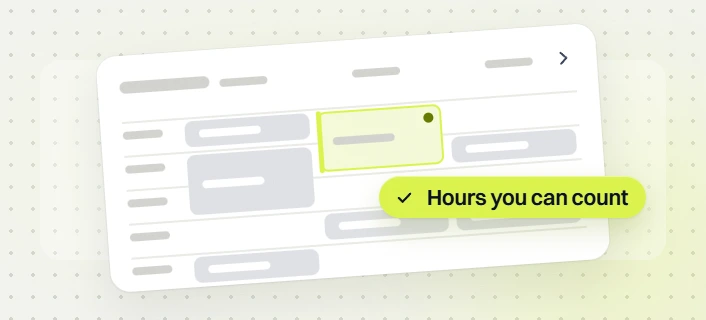
Performance tune-ups, image and CDN work, plus dedicated content edit hours each month. 2 hours on Essential, 5 on Premium, and 10 hours on Enterprise.
Four stages. Every step ends in a sign-off
Onboarding gets you access, credentials, and a full baseline scan on day one. From there, infrastructure, monitoring, and monthly reporting run without your input until you need something changed.
Access + baseline scan + first backup
Site admin, hosting, DNS, Shopify collaborator or WooCommerce API keys logged with rotation schedule. Off-site backup taken and restored on staging to prove it works before anything else touches the store.
Managed hosting + CDN + WAF
Managed WordPress or LiteSpeed hosting for WooCommerce and headless. Cloudflare CDN with edge cache. WAF blocking bot and brute-force traffic before it reaches the origin. 99.99% written SLA with credits if we miss.
Patches tested on staging first
Core, plugin, and app updates tested on staging before they touch production. Rollback under 5 minutes if a patch breaks checkout. Klaviyo and Recharge hooks regression-tested on every theme release.
Uptime + malware + speed watched
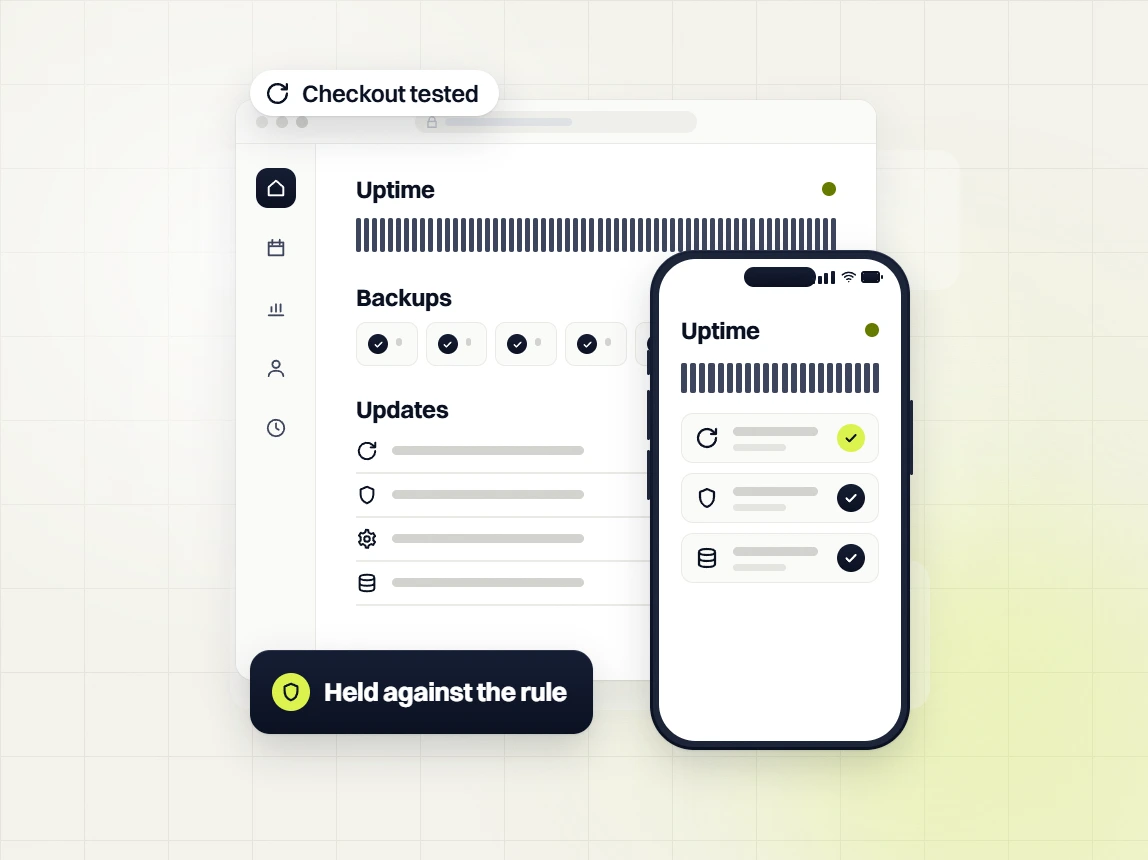
5 global POPs pinging your site, forms, and checkout webhook every 60 seconds. Malware scan every 24 hours with auto-quarantine. Named engineer paged inside 30 minutes if anything trips, nights and weekends included.
What you actually get from our ecommerce website maintenance
Five phases, every item listed. Fixed scope, defined deliverable per phase, written sign-off on the calendar.
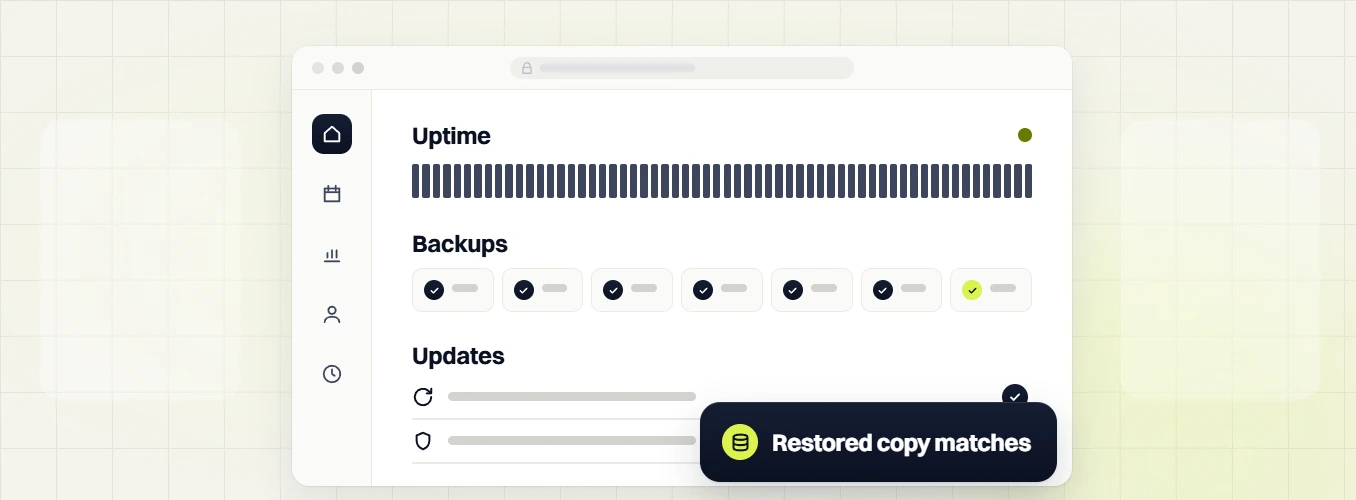
Access, baseline scan, and first backup on day one
Day one covers access, credentials, and a full baseline security, speed, and accessibility scan documented in writing. First off-site backup taken and verified on staging before we change anything. Nothing you have to think about after the kickoff call.
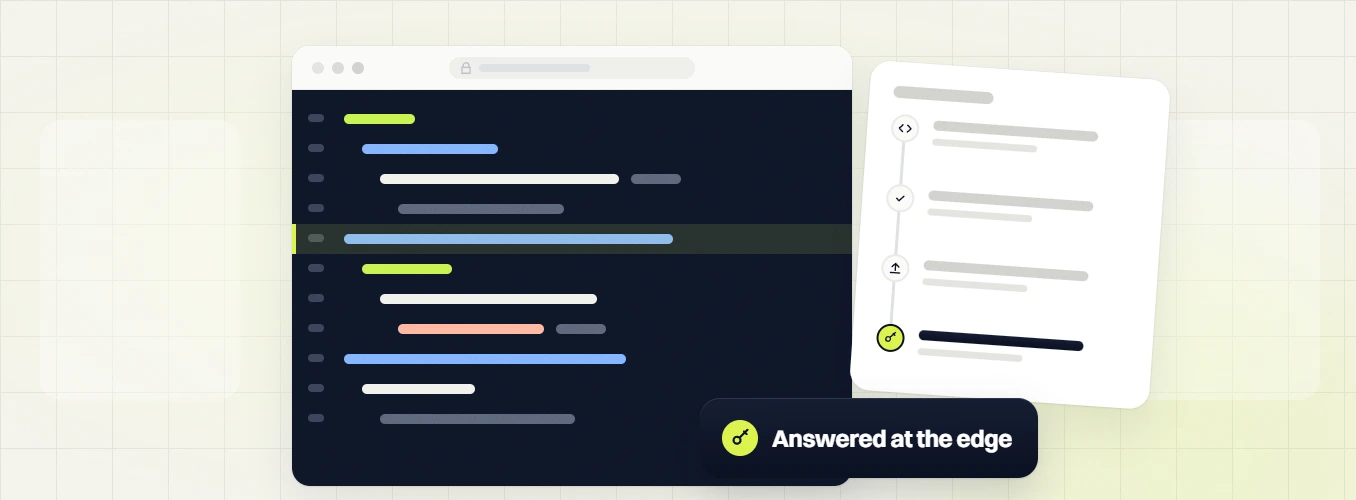
Site admin, hosting, DNS, Shopify collaborator, analytics, and CRM API keys all logged with a rotation schedule.
Nightly backup running before end of day one. First backup restored on staging to prove it works.
Security posture, Core Web Vitals baseline, plugin and theme health, disk usage, accessibility gaps. All captured before we touch anything.
Emergency numbers, ticket process, 30-minute-response coverage. Founder and ops lead both have it.
Every Shopify or WooCommerce app catalogued with version, license, dependency, and business owner.
Payment gateway posture, cookie consent banner state, Consent Mode v2 wiring on GA4 and Google Ads.
Managed hosting, CDN, and edge cache on your production domain
Managed WordPress or LiteSpeed hosting for WooCommerce and headless setups. Cloudflare CDN with edge cache so a visitor gets HTML from a POP nearby, not from a single origin. WAF blocks bot and brute-force traffic before it reaches your site. 99.99% written SLA with credits if we miss.
Isolated resources with proper caching, PHP tuning, and object-cache sized for your traffic.
Cloudflare plus CDN so a visitor gets HTML from a POP nearby, not from a single origin.
Bot traffic, brute-force login attempts, and known-bad IP ranges blocked at the edge. No traffic tax on your origin.
Auto-renewed SSL plus HSTS. Mixed content flagged and fixed. Search Console and Google Ads never break because of a cert expiry.
Theme deploys via Shopify CLI or GitHub integration with a versioned rollback path on every push.
Origin sized for BFCM peak, not average traffic. September load test at 5x summer peak documented in writing.
Weekly core + plugin patches tested before they touch prod
Every week, core, plugin, and app patches tested on staging before they touch production. If a patch breaks checkout, rollback in under 5 minutes. Small content edits included on every tier. Email your account manager, no ticket forms, no queue.
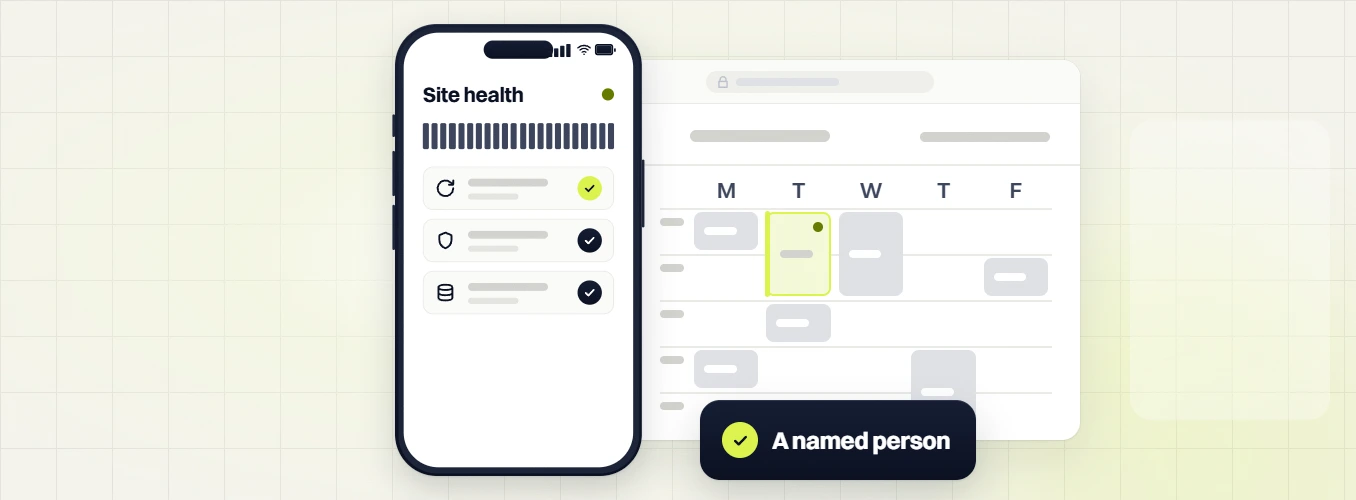
Patched to current stable weekly. Never behind by more than one minor release on WooCommerce and headless setups.
Every third-party plugin update tested on staging with real form and checkout submissions before production.
Every Shopify theme deploy runs the Klaviyo, Recharge, and Bold hook regression suite before it goes live.
PDP copy tweaks, hero image swaps, promo bar edits, redirect adds, size guide additions. All covered inside the plan.
Weekly feed diff, disapproval alerts, and same-day GTIN, price, or image fixes so Shopping never pauses on you.
Every deploy has an automated rollback path. Failed patches revert without a support ticket war room.
Uptime, speed, and malware watched every 60 seconds
24/7 coverage. Uptime pings every 60 seconds from 5 global POPs. Malware scan every 24 hours with automatic quarantine. Speed check hourly. If anything trips, a named engineer responds inside 30 minutes even on nights and weekends.
5 global POPs (US, EU, APAC) pinging your site, forms, and checkout webhook. False-positive filtering built in.
Full-site scan against known malware signatures and WordPress-specific IOCs. Auto-quarantine and founder notified same-hour.
Core Web Vitals and full-page load tracked hourly. Regressions surfaced before they hit CrUX field data.
On-call engineer paged if anything trips. Real human, not a chatbot. Applied to 60+ stores in production.
Payment gateway and consent banner posture reviewed every 90 days. Written snapshot in the monthly report.
Synthetic iPhone SE and Pixel checkout tests running on schedule so mobile CVR regressions surface fast.
One monthly report tied to real ecommerce metrics
Every month, one clear report showing uptime, average page load, patches applied, edit tickets closed, and any incidents with root cause and fix. Sent to the founder and ops lead. Read in 90 seconds.
Monthly uptime against 99.99% SLA. Credit auto-issued if we miss.
Real-user data from Chrome UX Report. Not lab scores. What your customers actually experience on their phones.
What we patched, what we edited, what stayed the same. Full audit trail in case anything comes up later.
Zero incidents most months. When something does happen, root cause and fix documented in writing, sent inside 48 hours.
Weekly feed diff summary, disapprovals fixed same-day, and current Shopping impression coverage per hero SKU.
From September onward, monthly BFCM readiness checklist showing load-test pass, war-room rota, and rollback plan.
Four maintenance tiers for every stage of growth
Pick the tier that matches your practice size. Move up or down anytime with 30 days notice. No setup fees. Hover any feature name for a plain-English explanation.
Established practices with stable traffic and no active paid spend.
Practices running active SEO or paid spend that need real protection.
High-spend practices where every PageSpeed point is a CPA point.
Enterprise or 5+ locations. White-label or regulated workloads.
Every maintenance feature, tier by tier
HOVER FOR DETAILUptime + security +
Content maintenance +
Performance + tech +
SEO + local +
Reporting + analytics +
Compliance + enterprise +
Team + service level +
Real ecommerce brands, real numbers
Asked by ecommerce founders, answered
From real quote calls with DTC and Shopify Plus founders. Anything else, ask on the strategy call and get an answer in the first 5 minutes.
What is eCommerce maintenance?
+
Ecommerce website maintenance is the ongoing work that keeps a store fast, safe, and selling. That means uptime monitoring at 60-second intervals, weekly patches on your platform, app, and plugin stack, security scans, off-site backups, checkout regression tests, integration QA on Klaviyo and Recharge, Merchant Center feed diff, PCI posture, and monthly reporting. On a real DTC or Shopify Plus store, this is where a stray theme push or pixel install stops costing you orders. Generic care plans skip most of the ecommerce-specific pieces. A proper ecommerce plan wires the integrations, the checkout, the tracking, and the compliance into one covered scope with an SLA. Redefine Web runs this on rolling monthly retainers from $199 with hosting bundled on WooCommerce and headless setups. See the Shopify Help Center for the platform-side scope. Then map ours on top for the parts Shopify does not cover, like Klaviyo flows and Google feed diff.
How to maintain an e-commerce website?
+
Run ecommerce website maintenance on a fixed weekly cadence. Patch core, plugins, and apps on staging first, then roll to production once the checkout regression suite passes. Ping uptime every 60 seconds from at least 3 regions. Scan for malware daily. Back up off-site every night and test the restore monthly. Diff the Merchant Center feed every week and fix disapprovals same-day. QA Klaviyo, Recharge, and Bold flows after every theme deploy. Track Core Web Vitals from real Chrome UX Report field data, not lab scores. Review PCI posture and Consent Mode v2 every quarter. Send one clear monthly report covering uptime, page load, patches applied, tickets closed, and any incidents with root cause and fix. Founders should read it in 90 seconds. Use Google’s Core Web Vitals guide for the field-data benchmarks we track against on every store. Anything below the green threshold gets a fix ticket the same week.
Which hosting is best for an eCommerce website?
+
The best ecommerce website hosting depends on your platform. Shopify and Shopify Plus stores run on Shopify’s own infrastructure, and it is already tuned for peak carting traffic. Nothing to migrate. WooCommerce and headless WordPress stores need managed hosting with LiteSpeed or Nginx, isolated resources, an object cache sized to your catalog, and Cloudflare CDN with edge cache on top. Shared budget hosts choke during BFCM, so pick managed hosting with a written uptime SLA and a WAF at the edge. On Redefine Web ecommerce website maintenance plans, hosting is bundled on WooCommerce and headless setups from $199/mo, with 99.99% uptime SLA on Premium and above and automatic service credits if we miss the number. Cloudflare handles the DDoS shield, bot filtering, and static asset speed at the edge. See the Shopify developer docs if you are on Shopify and want to compare stack coverage before switching. For WooCommerce or headless, the audit call maps your traffic pattern to the right tier.
How much does it cost to host an eCommerce website?
+
Ecommerce website hosting costs $199 to $499 a month at Redefine Web when bundled inside a maintenance plan. That covers managed WordPress or LiteSpeed for WooCommerce and headless, Cloudflare CDN, WAF, DDoS shield, SSL renewal, image optimization, and Core Web Vitals monitoring. Shopify stores host on Shopify’s own infrastructure, which is included in your Shopify subscription, so our fee covers the maintenance work on top rather than the host itself. Standalone managed hosting on other providers runs $20 to $150 a month, but you still need someone to patch, monitor, back up, and secure it. Once you add real security posture, feed diff, checkout QA, and 30-minute response, the standalone approach lands at a higher all-in cost than a bundled plan. See the Merchant Center Help Center for the feed side, which we cover inside every ecommerce plan at no extra cost, along with same-day disapproval fixes and BFCM feed cleanup starting each September.
Do WordPress websites need maintenance?
+
Yes, every WordPress site needs maintenance, and an ecommerce WordPress site needs it more than a brochure site. Core, PHP, MySQL, and every plugin ship security patches. Unpatched WordPress and WooCommerce plugins are the top vector for card skimmers and admin takeovers. Skipping updates for a quarter puts you one broken checkout away from a full rebuild. On an ecommerce store, the maintenance surface also covers payment gateway health, checkout regression, tax and shipping calculator checks, SSL renewal, subscription plugin QA, and Consent Mode v2 for GA4 and Google Ads. Without a weekly cadence, one plugin update kills the checkout and every hour offline costs 40 to 60 orders. Ecommerce WordPress maintenance runs $199 to $499 a month at Redefine Web with weekly patches on staging first, rollback under 5 minutes, and a written 99.99% uptime SLA on Premium and Enterprise. Backups run nightly off-site with monthly restore tests to prove the file is real.
Is WordPress good for eCommerce?
+
WordPress is good for ecommerce when you run WooCommerce or a headless setup on managed hosting with a real maintenance plan behind it. It gives you full control of the checkout, the tax and shipping logic, subscription plugins, product data, and the CRO surface. That control is worth more than a hosted platform for stores over $500K a year in revenue that need bespoke funnels or B2B pricing tiers. It falls down when the site runs on cheap shared hosting and no one is patching. Then the store is one plugin update away from a broken checkout and lost sales. Shopify is a better fit for smaller stores that want zero infra work. Once the store is on WordPress or WooCommerce, treat ecommerce website maintenance as a fixed monthly cost, not a scramble. Redefine Web runs WooCommerce and headless stores from $199/mo with weekly patches, uptime SLA, integration QA, and Merchant Center feed diff baked into every tier from day one.
What does it cost to maintain a website monthly?
+
Website maintenance runs $50 to $2,000 a month depending on scope and stack. A brochure WordPress site with basic backups and updates lands around $50 to $150 a month. An ecommerce store with integrations, uptime SLA, checkout QA, feed diff, and PCI posture starts at $199 a month and scales with order volume. Enterprise stores with a 99.99% SLA, quarterly accessibility audits, BFCM war room, and 10 monthly edit tickets run around $499 a month at Redefine Web. Custom multi-store or Shopify Plus setups are quoted after a short audit call. Cheap plans that only cover core updates fail on ecommerce because every plugin push and pixel install can break the checkout. A real ecommerce website maintenance plan covers the integration surface, the tracking, and the incident response, so a stray push does not cost you a Black Friday. Every tier is monthly rolling with 30 days notice, so you can move up, down, or out anytime.
How much does ecommerce website maintenance cost per month?
+
Ecommerce website maintenance at Redefine Web runs $199/mo for Essential, $299/mo for Premium, and $499/mo for Enterprise. Hosting is bundled on every tier. Multi-store and Shopify Plus setups are quoted after a short audit call. Most growth-stage DTC brands land on the $299 Premium tier because it covers Shopify or WooCommerce patching, Klaviyo and Recharge health checks, weekly Merchant Center feed diff, monthly Core Web Vitals report, PCI posture, and 5 edit tickets a month. Enterprise adds an SLA, quarterly accessibility audits, BFCM war room, and 10 edit tickets. Every tier is rolling monthly after the initial 6-month term with 30 days cancellation notice. You keep the store, hosting, tracking, customer data, code repo, and app credentials at all times. Nothing gets held hostage on cancel. Move up or down anytime as order volume changes, add ad-hoc project hours for a checkout rebuild or subscription funnel test, or drop to caretaker for a slow season.
What is included in an ecommerce website maintenance plan?
+
Every ecommerce website maintenance plan covers uptime monitoring at 60-second intervals, SSL renewal, Shopify or WooCommerce core patching, app and plugin updates on staging first, nightly off-site backups, malware scanning, and a set block of edit tickets each month. Ecommerce-specific work sits on top of that: Klaviyo and Recharge flow QA after every theme change, Merchant Center feed diff each week, GA4 and Consent Mode v2 checks, checkout regression tests on iPhone SE and Pixel, and PCI posture reviews each quarter. BFCM prep runs from September on every tier. Load testing at 5x summer peak, third-party script audit, war-room rota, and rollback plan documented in writing. Monthly reporting covers uptime, average page load, patches applied, tickets closed, and any incidents with root cause. Everything the store needs to keep selling, in one covered scope with a written SLA. No overage bills at month-end and no support tickets that sit for days.
What happens when our ecommerce store goes down?
+
Yes. Essential includes 2 edit tickets a month. Premium includes 5 with same-day turnaround on standard requests. Enterprise includes 10 tickets each month. Tickets cover PDP copy edits, hero swaps, promo bar work, product image updates, meta title tweaks, redirect adds, and small feature builds like a size guide or a shipping calculator. Deeper CRO work like a full PDP redesign, checkout rebuild, or a subscription funnel test runs as a separate project scoped from the audit. We do not run out the clock on retainer hours to bill you for a project. Every ticket lands in the monthly report with time spent, files touched, and result. Edit hours roll over one month if you do not use them. Two months if you flag it in advance. The Klaviyo blog has good pattern references, see Klaviyo Blog for the flow templates our team ships from during onboarding and quarterly reviews.
Do ecommerce care plans include content, product, and CRO edits?
+
Yes. PCI compliance sits at the platform level on Shopify and Shopify Plus and gets QA tested on every release. On WooCommerce, we run quarterly PCI SAQ prep, HTTPS enforcement, and Stripe or Braintree posture checks. WCAG 2.1 AA accessibility audits run on Premium and Enterprise. Cookie consent, GDPR, and state privacy banners get monitored as regulations change. Consent Mode v2 on GA4 and Google Ads is validated each quarter so paid tracking does not drift on your ecommerce reports. Enterprise tier adds a written accessibility statement update each year. Every compliance check lands on the monthly report with pass or fail against the previous quarter. If posture drops on any item, a fix ticket opens the same week with the deadline in writing. On WooCommerce, we log every plugin that touches PII and rotate their credentials on the schedule. Nothing sits stale between quarterly reviews, and every rotation is documented in the audit trail for the annual review.
Are ecommerce care plans PCI and accessibility aware?
+
Yes. PCI compliance sits at the platform level on Shopify and Shopify Plus and gets QA tested on every release. On WooCommerce, we run quarterly PCI SAQ prep, HTTPS enforcement, and Stripe or Braintree posture checks. WCAG 2.1 AA accessibility audits run on Premium and Enterprise. Cookie consent, GDPR, and state privacy banners get monitored as regulations change. Consent Mode v2 on GA4 and Google Ads is validated each quarter so paid tracking does not drift. Enterprise tier adds a written accessibility statement update each year. Every compliance check lands on the monthly report with pass or fail against the previous quarter. If posture drops on any item, a fix ticket opens the same week with the deadline in writing. On WooCommerce, we log every plugin that touches PII and rotate their credentials on the schedule. Nothing sits stale between quarterly reviews, and every rotation is documented in the audit trail.
Can we cancel or pause the maintenance plan?
+
Yes. Plans run on a rolling 30-day cancellation window after the initial 6-month term. You keep the store, hosting, tracking, customer data, code repo, and app credentials. Nothing gets held hostage on our side of the retainer. Hosting migration off our stack is straightforward on WooCommerce, and the migration playbook goes to the team you move to. Shopify stores just drop the retainer with no extra step. Pause options exist for seasonal brands. If the store goes dark from January to April, we run a $99/mo caretaker plan covering security patches and uptime only, then reactivate the full plan when the season starts back up. Cancel does not trigger a re-onboarding fee if you come back inside 12 months. Access, credentials, and app inventory stay on file in a secure vault so a restart takes days, not weeks. Every retainer is monthly rolling and every cancel gets confirmed in writing the same day.
How do you prep an ecommerce store for BFCM?
+
BFCM prep starts every September. Week 1 is a real traffic-load test at 5x the store’s summer peak. Week 2 is checkout stress test, third-party script audit, and Klaviyo, Recharge, and Bold flow QA. Week 3 is Merchant Center feed cleanup and GA4 event validation. Week 4 is a war-room dry run. Black Friday through Cyber Monday runs on a named on-call rota with 15-minute response. If checkout throws a 500 or Shopify Plus rate-limits an app, we are in the incident before the first customer support ticket lands. Post-mortem inside 5 business days. Rollback paths documented on every release from October 1 forward so a bad push reverts in under 5 minutes. Origin scaled to peak, not average traffic. Every ecommerce website maintenance plan on Premium and Enterprise gets the full prep at no extra cost, including hero SKU tracking, creative freeze dates, and a named ops lead paged if anything trips overnight.