Healthcare website maintenance to keep every patient booking live
Healthcare website maintenance from Redefine Web keeps your practice site fast, patched, and open for patient bookings. We push WordPress updates every week, watch every EHR endpoint and patient portal iframe, keep intake forms working with BAA-covered processors, and email a written report the first Monday of every month. Uptime targets start at 99.9% and reach a 99.99% written SLA with credits on Enterprise and Custom.
Four failures every practice owner can hold us to
Generic WordPress hosts refuse to sign a BAA for your patient site
GoDaddy, Bluehost, and most cheap-tier hosts refuse to sign a Business Associate Agreement. The moment an intake form or scheduler touches PHI, the practice is exposed and one HHS complaint runs $100K+ in fines. Every healthcare care plan runs on HIPAA-eligible infrastructure with a signed BAA covering forms, intake, and schedulers.
A routine WordPress plugin update silently breaks your patient portal iframe
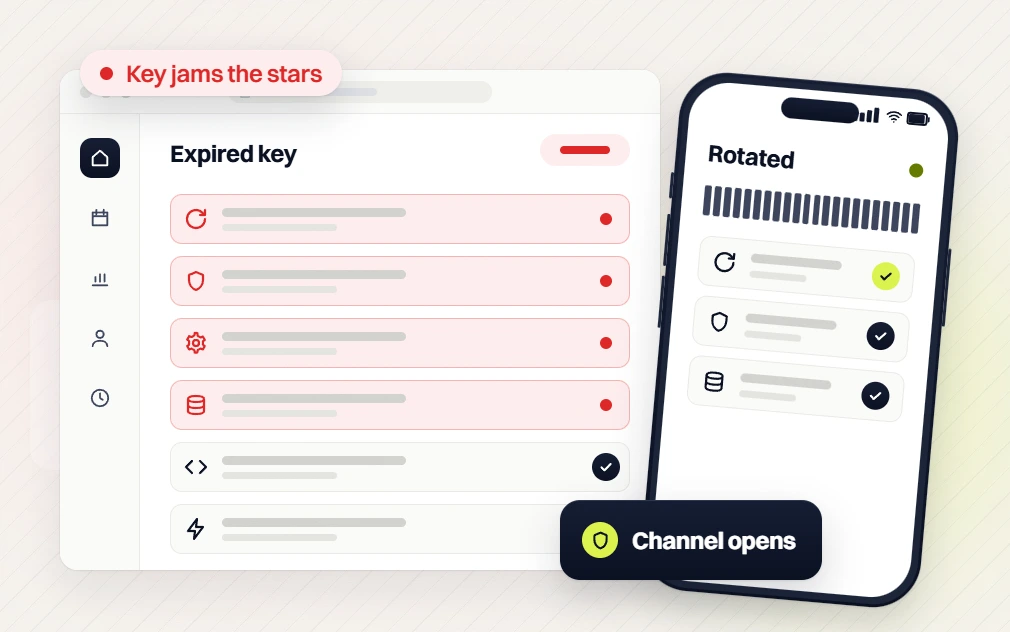
A 2am plugin auto-update kills the Athenahealth, DrChrono, NextGen, or eClinicalWorks patient portal iframe. 3 to 5 booked visits lost per day before the front desk notices. Every core, PHP, plugin, and theme patch is tested on staging against live EHR embeds first, with a rollback path under 5 minutes.
Your Google Business Profile review widget stops pulling new 5-star reviews
GBP review widgets break on API token expiry and stop showing new reviews. 68% of new patients read reviews before booking, so a stale widget quietly kills booked appointments. Every GBP review widget, hours field, and location schema is checked weekly with API token auto-rotation and any 5-star sync break is caught inside 24 hours.
What every healthcare care plan delivers monthly
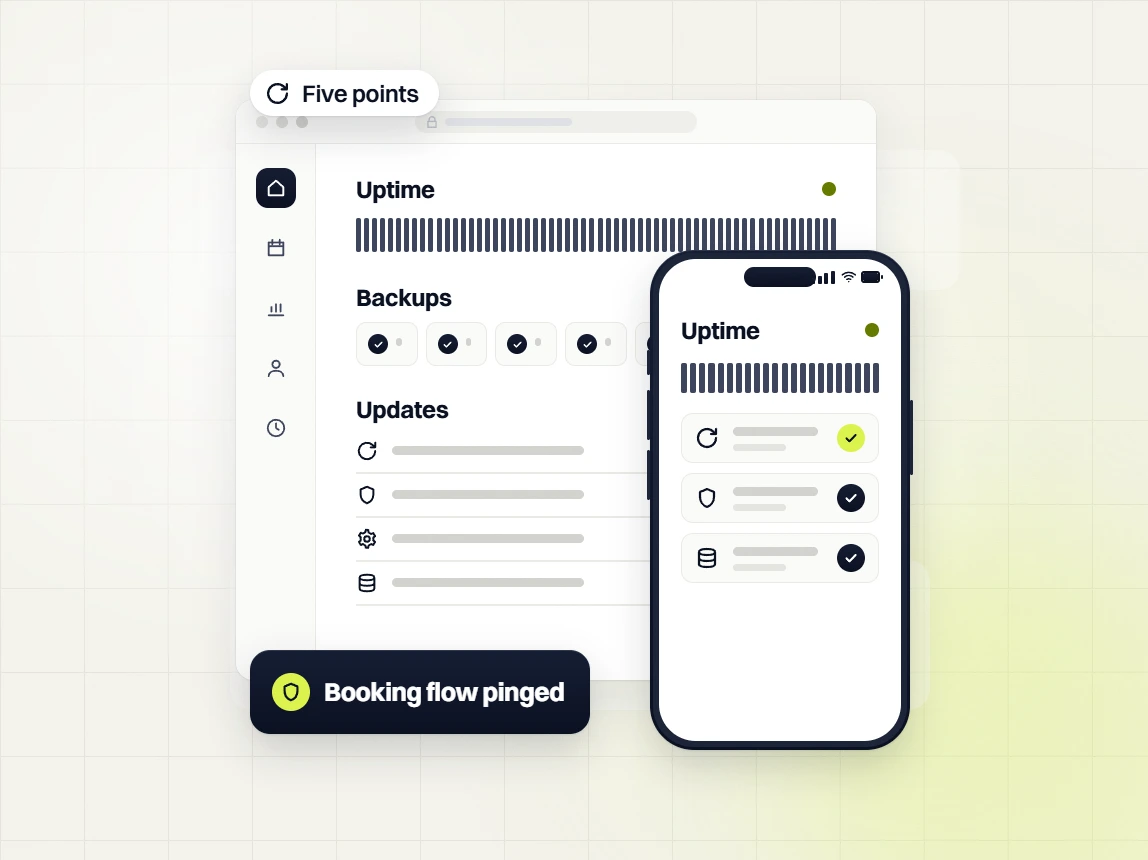
Uptime from 99.9% on base tier to a 99.99% written SLA on Enterprise with automatic credits when we miss. Pings every 60 seconds from 5 global POPs.
WordPress core, theme, and every plugin patched weekly on a staging clone with EHR portal iframe tests. Rollback under 5 minutes if anything drifts.

First Monday every month: uptime against SLA, patches, edit tickets, portal iframe health, page speed, and any incidents with root cause and fix.
Four stages, every step ends in a written sign-off
Onboarding gets you access, credentials, and a full baseline scan on day one. From there, infrastructure, monitoring, and monthly reporting run without your input until you need something changed.
Onboarding, access, backup, and baseline scan
Access, credentials, and a full baseline security, speed, and accessibility scan, all documented in writing. First off-site backup taken and verified before we change anything. A clear paper trail if a decision needs to be made later.
Hosting infrastructure on your production domain
HIPAA-eligible managed WordPress hosting on LiteSpeed with Quic.Cloud CDN and Cloudflare edge cache. WAF blocking bot and brute-force traffic before it reaches your server. 99.99% written SLA with credits if we miss. Auto-renewed SSL with HSTS enforced. Signed BAA covering forms, intake, and schedulers.
Core, plugin, and PHP patches tested on staging first
Every third-party plugin update tested on staging with real form submissions and portal iframe checks before production. WordPress core, PHP, and database never behind by more than one minor release. Rollback path automated, under 5 minutes.
Monitoring every 60 seconds, one written report a month
Uptime pings every 60 seconds from 5 global POPs. Malware scan every 24 hours with auto-quarantine. Speed check hourly. One monthly report showing uptime, patches applied, edits closed, and any incidents, sent to owner and practice manager.
What you get from your healthcare care plan
Fixed scope, fixed timeline, fixed outcomes. Every workstream below has a defined deliverable and a written sign-off you can point at.
Access, baseline scan, and backup on day one
Day one. Access, credentials, and a full baseline security, speed, and accessibility scan, all documented in writing. First off-site backup taken and verified before we change anything. A clear paper trail if a decision needs to be made later.
WP admin, hosting, DNS, GBP, analytics, and EHR API. All logged with a rotation schedule the practice manager owns.
Nightly encrypted backup already running before end of day one. First backup restored on staging to prove the restore path actually works.
Security posture, Core Web Vitals baseline, plugin health, disk usage, accessibility gaps. All captured before we touch anything.
Signed BAA covering forms, intake, and schedulers. Emergency numbers, ticket process, and 30-minute-response coverage handed to owner and practice manager inside 24 hours.
Epic, Cerner, Athenahealth, eClinicalWorks, NextGen, or DrChrono endpoints mapped end-to-end. API keys logged. Vendor contacts saved.
Every form that touches PHI mapped from field to processor to storage. BAA status confirmed on each vendor including Paubox, LuxSci, or MailHippo.
HIPAA-eligible LiteSpeed hosting, CDN, and edge cache
Ongoing. HIPAA-eligible managed WordPress hosting on LiteSpeed with Quic.Cloud CDN and Cloudflare edge cache. WAF blocking bot and brute-force traffic before it reaches your server. 99.99% written SLA with credits if we miss. Auto-renewed SSL with HSTS enforced.

Isolated resources for your practice site with proper caching and PHP tuning tuned for EHR endpoint calls. Signed BAA at every plan tier.
Cloudflare plus Quic.Cloud CDN so a nearby patient gets HTML from a POP nearby, not from a single origin thousands of miles away.
Bot traffic, brute-force login attempts, and known-bad IP ranges blocked at the edge. No traffic tax on your origin server.
Auto-renewed SSL plus HSTS. Mixed content flagged and fixed. Search Console and Google Ads never break because of a certificate expiry.
AES-256 off-site backups, retained 30 days on the base tier and 365 days on Enterprise. Restore proven on staging quarterly.
Gravity Forms with BAA add-ons, Paubox, LuxSci, or MailHippo for secure email. TLS 1.3 in transit, AES-256 at rest. Vendor BAA register updated yearly.
Weekly patches with tested rollback
Every week. Core and plugin patches tested on staging before they touch production. If a patch breaks something, rollback in under 5 minutes. Small content edits included. Email your account lead, turnaround the next business day.
Patched to current stable weekly. Never behind by more than one minor release. Security releases inside 48 hours of publication.
Every third-party plugin update tested on staging with real form submissions and portal iframe checks before production ever sees it.
Epic, Cerner, Athenahealth, eClinicalWorks, NextGen, and DrChrono endpoints tested against real appointment flow every patch. Broken embeds caught before patients hit them.
4 tickets per month covered. Provider bio tweaks, hours updates, new insurance carrier adds, and small service page edits.
Every deploy has an automated rollback path. Failed patches revert without a support ticket war room or a 3-hour engineering call.
MedicalBusiness, Physician, and Hospital markup validated against Rich Results after every deploy so provider directory results stay steady.
Uptime, speed, and malware watched every 60 seconds
24/7. Uptime pings every 60 seconds from 5 global POPs. Malware scan every 24 hours with automatic quarantine. Speed check hourly. If anything trips, a named on-call engineer responds inside 30 minutes even on nights and weekends.
5 global POPs (US, EU, APAC) pinging your site, booking flow, and EHR webhook. False-positive filtering built in.
Full-site scan against known malware signatures and WordPress-specific IOCs. Auto-quarantine and owner notified in the same hour.
Core Web Vitals and full-page load tracked hourly. Regressions surfaced before they hit CrUX field data and drop local rank.
On-call engineer paged if anything trips. A real human, not a chatbot. Applied to 50+ healthcare practices currently in production.
Zocdoc, Klara, Solutionreach, Weave, PatientPop schedulers pinged every 60 seconds. Portal iframe health checked hourly.
Every critical incident gets a written summary inside one business day: what happened, what we did, what changes so it does not repeat.
One monthly report tied to real healthcare metrics
Every month. One clear report showing uptime, average page load, patches applied, edit tickets closed, and any incidents (with root cause and fix). Sent to the owner and practice manager. Read in 90 seconds. No dashboards to check.
Monthly uptime measured against the 99.9% or 99.99% SLA. Credit auto-issued if we miss. No claim form, no bargaining.
Real-user data from the Chrome UX Report. Not lab scores. What your patients actually experience on their phones on your booking page.
What we patched, what we edited, what stayed the same. Full audit trail in case a HIPAA question comes up 6 months later.
Athenahealth, DrChrono, NextGen, eClinicalWorks portal iframe uptime plus Zocdoc, Klara, Solutionreach, Weave scheduler responsiveness.
GA4 booking events reconciled against your practice EHR with the count of patients booked from web sources for the month.
Zero incidents most months. When something does happen, root cause and fix documented. No mystery, no cover-up, no repeat.
Four maintenance tiers for every stage of growth
Pick the tier that matches your practice size. Move up or down anytime with 30 days notice. No setup fees. Hover any feature name for a plain-English explanation.
Established practices with stable traffic and no active paid spend.
Practices running active SEO or paid spend that need real protection.
High-spend practices where every PageSpeed point is a CPA point.
Enterprise or 5+ locations. White-label or regulated workloads.
Every maintenance feature, tier by tier
HOVER FOR DETAILUptime + security +
Content maintenance +
Performance + tech +
SEO + local +
Reporting + analytics +
Compliance + enterprise +
Team + service level +
Real practices, real numbers
Healthcare website maintenance questions, answered
From real onboarding calls with medical practices, clinics, and health systems. Anything else, ask on the call and we answer in the recap.
How much does healthcare website maintenance cost per month?
+
Our healthcare care plans runs $199/mo, $299/mo, $499/mo, and custom for multi-location health systems. The base tier ($199/mo) covers a single-provider practice with HIPAA-eligible hosting, weekly patches, nightly encrypted backups, uptime monitoring, and 2 edit hours. Premium ($299/mo) adds same-day edits, priority security patches, and an annual intake-form privacy audit. Enterprise ($499/mo) adds 10 edit hours, a written 99.99% uptime SLA with credits, a WAF, and quarterly performance tune-ups. Custom fits multi-location DSOs, MSOs, and health systems with per-location uptime reporting. HIPAA-eligible hosting and a signed BAA are included on every tier at no separate line item. Ad-hoc invoices land nowhere. Every plan bills monthly on the same day, and pricing stays fixed for the first 12 months of your contract. Owners on the Premium tier average 14-minute incident response. Enterprise credits kick in the moment we drop under 99.99% inside a monthly reporting window, applied to the next invoice automatically without a support ticket.
What is included in the care plan?
+
Every healthcare care plan covers eight work areas so your practice site stays fast, safe, HIPAA-aware, and current without ad-hoc invoices. HIPAA-eligible hosting on a LiteSpeed stack with a signed BAA. Weekly WordPress core, plugin, and theme patches tested on staging before production. Nightly encrypted off-site backups with 30 to 365-day retention. Uptime monitoring pinging every 60 seconds from 5 global POPs. Priority CVE security patching inside 48 hours. Weekly intake-form delivery tests on Gravity Forms with BAA add-ons, Paubox, LuxSci, or MailHippo. Weekly EHR endpoint checks on Epic, Cerner, Athenahealth, eClinicalWorks, NextGen, and DrChrono. One monthly written report covering uptime, patches, edits, incidents, and page-speed metrics. See the HIPAA Journal covered-entity guidance for the full compliance backdrop. Edit hours roll from 2 on the base tier to 10 on Enterprise. Same-day turnaround starts on Premium. Content edits, provider bio updates, insurance carrier changes, and new landing pages all fit inside the same fixed monthly plan under one contract.
What website platforms are HIPAA compliant?
+
No off-the-shelf website platform is HIPAA compliant by default. Compliance depends on infrastructure, business associate agreements, and workflow controls, not the CMS label. WordPress becomes HIPAA-eligible when it runs on a host that signs a BAA, uses TLS 1.3 in transit and AES-256 at rest, encrypts backups, and pairs with intake-form processors that also sign BAAs (Gravity Forms with BAA add-ons, Paubox, LuxSci, or MailHippo). Managed hosts like WP Engine and Kinsta offer HIPAA-eligible tiers on Business or above. Squarespace, Wix, GoDaddy shared hosting, and Bluehost do not sign BAAs for standard plans. Drupal and Craft can be HIPAA-eligible with the same infrastructure controls. Our HIPAA-eligible website plan runs your WordPress site on HIPAA-eligible infrastructure with a signed BAA covering forms, intake, and schedulers. Every third-party tool that touches patient data (email, CRM, analytics) gets a BAA on file. The HIPAA Journal covers the covered-entity and business-associate rules if you need the source.
Is GoDaddy hosting HIPAA compliant?
+
GoDaddy shared hosting is not HIPAA compliant. GoDaddy does not sign a Business Associate Agreement on its Economy, Deluxe, or Ultimate shared plans, which means any WordPress site running there cannot lawfully collect PHI through intake forms, contact forms, or booking widgets. GoDaddy Managed WordPress and GoDaddy VPS plans also do not sign BAAs at the standard tier. If your practice site currently runs on GoDaddy, the fastest path to HIPAA-eligible hosting is a migration to a host that signs a BAA (WP Engine Business, Kinsta Business, or a healthcare-focused managed WordPress stack). Our healthcare care plan handles the migration inside week 1 of onboarding: DNS cutover, staging validation, SSL renewal, and BAA execution with the new host. Downtime during migration typically runs under 15 minutes if we control DNS. Post-migration, the site sits behind LiteSpeed with a signed BAA covering forms, intake, and schedulers. The intake-form processor also gets a BAA on file, closing the second gap most GoDaddy practice sites carry.
How do you make a website HIPAA compliant?
+
Making a healthcare website HIPAA compliant is a workflow, not a checkbox. Five layers have to line up. First, hosting: pick a host that signs a Business Associate Agreement and provides encrypted storage, TLS 1.3, and audit logs. Second, intake forms: swap generic Contact Form 7 or Gravity Forms for HIPAA-eligible processors (Gravity Forms with the BAA add-on, Paubox, LuxSci, MailHippo, or a healthcare-specific vendor). Third, email: patient responses ride HIPAA-eligible email (Paubox, LuxSci, or Google Workspace with a signed BAA). Fourth, CMS accounts: role-based access with an audit trail on PHI views, MFA on every admin login, and a documented offboarding process. Fifth, third-party tools: analytics, chat, CRM, and ad pixels each need a BAA if they touch PHI, otherwise a scrub of PHI at the form layer. Our HIPAA-eligible care plan wires all five layers on onboarding and documents the audit trail. The HIPAA Journal lists the covered-entity requirements in plain language.
Is Wix website HIPAA compliant?
+
Wix websites are not HIPAA compliant. Wix does not sign a Business Associate Agreement on its Free, Combo, Unlimited, Pro, or VIP plans. Wix Ascend, Wix Bookings, and Wix Chat all handle input that could contain PHI without a signed BAA. That means intake forms, appointment requests, and any patient-visible chat on a Wix site expose the practice under HIPAA. Wix has published guidance suggesting workarounds, but no workaround substitutes for a signed BAA. If your practice site currently runs on Wix, our HIPAA-eligible WordPress care plan migrates to a HIPAA-eligible WordPress build inside 3 to 4 weeks: content export, design port, HIPAA-eligible hosting setup, BAA execution, intake-form rewire on Gravity Forms with the BAA add-on or Paubox, DNS cutover, and 301 redirect map so SEO rankings survive. Post-migration, patient bookings run through a HIPAA-eligible processor with a signed BAA, and the site earns medical website maintenance coverage from day one under a fixed monthly plan.
How long does website maintenance take?
+
Weekly medical website maintenance runs 2 to 6 hours of engineering time per practice site, invisible to owners. That splits across WordPress core and plugin patch review, staging deploy, portal iframe and intake-form tests, uptime and speed checks, security scans, and any content edit tickets. Emergency incidents are handled outside the weekly window and land in the monthly report with root cause. Onboarding, one-time, takes 7 to 14 days: baseline security, HIPAA, and performance audit; access documentation; off-site backup verification; and DNS/host cutover if migrating. Migrations from GoDaddy, Wix, or Squarespace to HIPAA-eligible WordPress add 2 to 4 weeks on top of onboarding. Monthly reports take 90 seconds to read: uptime against SLA, patches applied, edit tickets closed, portal iframe health, page speed on booking pages (see Core Web Vitals), and any incidents. The visible timeline for practice staff is near-zero. Behind the scenes we log every engineering action against your ticket queue in writing, and email owner and practice manager the running total each Monday morning.
What is healthcare maintenance?
+
Healthcare website maintenance is the recurring engineering and content work that keeps a medical practice website fast, patched, HIPAA-eligible, and open for patient bookings 24/7. It differs from generic WordPress maintenance in three ways: PHI privacy handling on intake forms, EHR portal iframe upkeep (Epic, Cerner, Athenahealth, eClinicalWorks, NextGen, DrChrono), and HIPAA-eligible hosting with a signed BAA. Scope covers WordPress core, plugin, theme, and PHP patches; nightly encrypted off-site backups; uptime and malware monitoring; page-speed and Core Web Vitals tuning; ADA/WCAG 2.1 AA accessibility monitoring; Google Business Profile widget and hours checks; monthly content edits (provider bios, insurance carriers, service pages, new landing pages); and a written monthly report. The plan runs on a fixed monthly retainer between $199 and $499 with custom pricing for multi-location DSOs, MSOs, and health systems. The CDC covers general public-health guidance a practice site often links to for patient education content, and the plan holds every source citation inside its editorial log.
Who is responsible for website maintenance?
+
On a healthcare practice site, ownership splits three ways. The practice owner or office manager owns the content: provider bios, hours, insurance carriers, and service copy. Whoever hosts the site owns the infrastructure: uptime SLA, server patches, TLS renewal, backups, and the signed BAA. Your maintenance vendor owns the recurring engineering work: WordPress core, plugin, and theme patches; portal iframe and intake-form testing; security scans; page-speed tuning; ADA monitoring; and monthly reporting. On our healthcare care plan, Redefine Web covers the second and third roles under one fixed retainer. The practice keeps final approval on content changes but does not have to touch WordPress admin, security patching, or hosting tickets. Every action is logged against your ticket queue and lands in the monthly report the first Monday of every month, delivered to owner and practice manager. No plugin or DNS change happens without a written sign-off inside the ticket. Ownership handover on cancellation is documented and covers hosting, code, and integration keys.
How to perform website maintenance?
+
Medical website maintenance runs on a weekly, monthly, and quarterly cadence. Weekly: pull WordPress core, plugin, and theme updates onto a staging clone; run automated tests against every intake form and EHR portal iframe (Epic, Cerner, Athenahealth, eClinicalWorks, NextGen, DrChrono); scan for CVEs on the current plugin stack; check uptime and Core Web Vitals against baseline; apply patches to production if staging passes. Monthly: run a full malware scan, refresh SSL certificates and any expiring API tokens, audit Google Business Profile hours and widgets, and publish the written report the first Monday of every month. Quarterly: run a full HIPAA form audit, a page-speed tune-up against Core Web Vitals thresholds, and an ADA/WCAG 2.1 AA accessibility sweep. On our plan, engineering owns every step. Practice staff only see the monthly report and any edit tickets they submit. No admin logins, no plugin dashboards, no server tickets on the practice manager’s plate.
What is a WordPress care plan?
+
A WordPress care plan is a recurring monthly service that keeps a WordPress site patched, secure, backed up, monitored, and edited under a fixed retainer. On a healthcare practice site, a WordPress care plan needs three extras generic plans skip: HIPAA-eligible hosting with a signed BAA, EHR portal iframe upkeep (Epic, Cerner, Athenahealth, eClinicalWorks, NextGen, DrChrono), and intake-form privacy handling with BAA-covered processors. Our HIPAA WordPress care plan is a WordPress care plan built for medical practices. It covers WordPress core, plugin, and theme patching weekly on staging before production; nightly encrypted off-site backups; uptime monitoring every 60 seconds from 5 global POPs; priority CVE security patching inside 48 hours; monthly page-speed tuning; ADA/WCAG monitoring; monthly content edit hours from 2 (base) to 10 (Enterprise); and one written monthly report. Pricing runs $199/$299/$499 per month with a custom tier for multi-location health systems. Contracts run month-to-month after the first 3 months with a 30-day written notice on cancellation.
What are the 5 main components of a care plan?
+
A healthcare website care plan has five main components. First, HIPAA-eligible hosting with a signed BAA covering forms, intake, and schedulers. This is the compliance floor and cannot be waived on a medical practice site. Second, weekly patch management: WordPress core, plugin, theme, and PHP updates tested on a staging clone against live EHR portal iframes and intake-form flows before production. Third, security and uptime monitoring: 60-second uptime pings from 5 global POPs, a WAF blocking bot and brute-force traffic, malware scans every 24 hours with auto-quarantine, and priority CVE patching inside 48 hours. Fourth, encrypted backups with proven restore paths: nightly off-site backups with 30 to 365-day retention, restored on staging quarterly to prove the restore actually works. Fifth, monthly content maintenance and reporting: edit hours from 2 to 10 per month, plus a written report covering uptime against SLA, patches applied, edit tickets closed, and any incidents with root cause and fix. Ownership sits with engineering. Approval sits with the practice.
Can we cancel our healthcare website maintenance plan anytime?
+
Yes. Every healthcare care plan runs on 30-day written notice after the first 3 months. No exit fees, no clawback of previous work, no penalty clauses. On cancellation you receive a full handover: hosting credentials transferred to your new provider or in-house team, codebase access (GitHub or Bitbucket repo) transferred, plugin inventory covering the current stack, third-party accounts (Cloudflare, monitoring, backups) tied to the site, EHR integration keys (Epic, Cerner, Athenahealth, eClinicalWorks, NextGen, or DrChrono API keys) staying with the practice, and a written summary of the last 90 days of updates, incidents, edits, and backups. The BAA remains on file for the retention window your compliance officer requires. If you need help onboarding the next vendor, we run a 30-minute handover call at no charge. Ownership of your patient data, your code, and your creative never sits with us. Retention on our current healthcare practice book runs 94%, so most owners renew rather than cancel.