Manufacturing website design that turns spec searches into real RFQs
Sites for contract manufacturers, industrial suppliers, and B2B component makers. Single-plant shops up to multi-facility groups. Every build launches with a filterable product catalog wired to your ERP or PIM, spec-driven RFQ forms with CAD and STEP file upload, ISO 9001 and AS9100 trust signals in the hero, and a 4 to 6 week timeline you can plan around. Fast pages score 95+ on mobile and convert 6.4% of engineer visits into qualified RFQs on average.
Three ways your current site loses qualified RFQs
Engineers bounce when the catalog hides behind a PDF
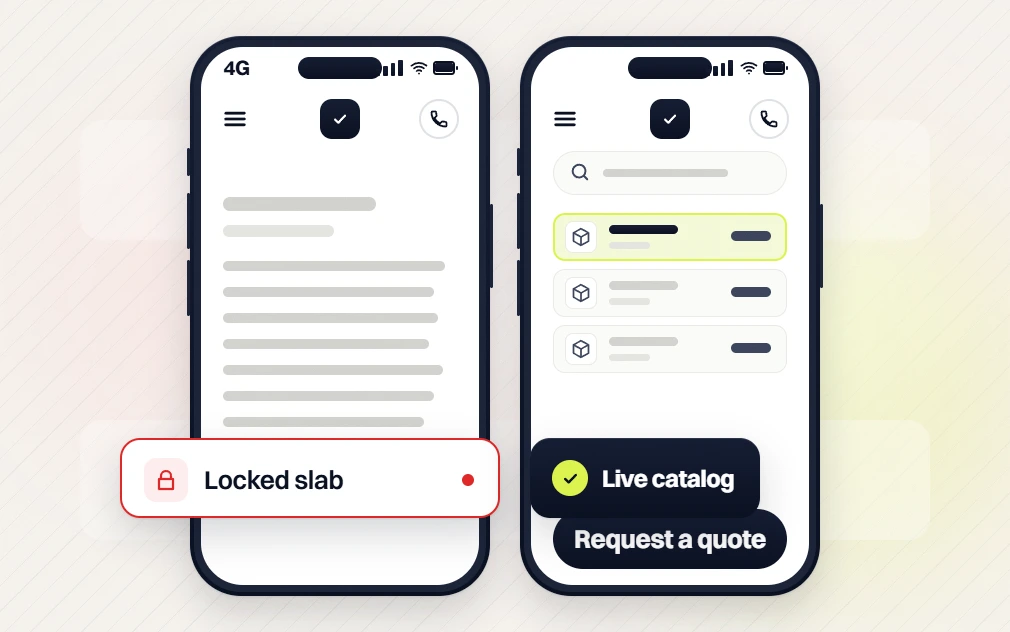
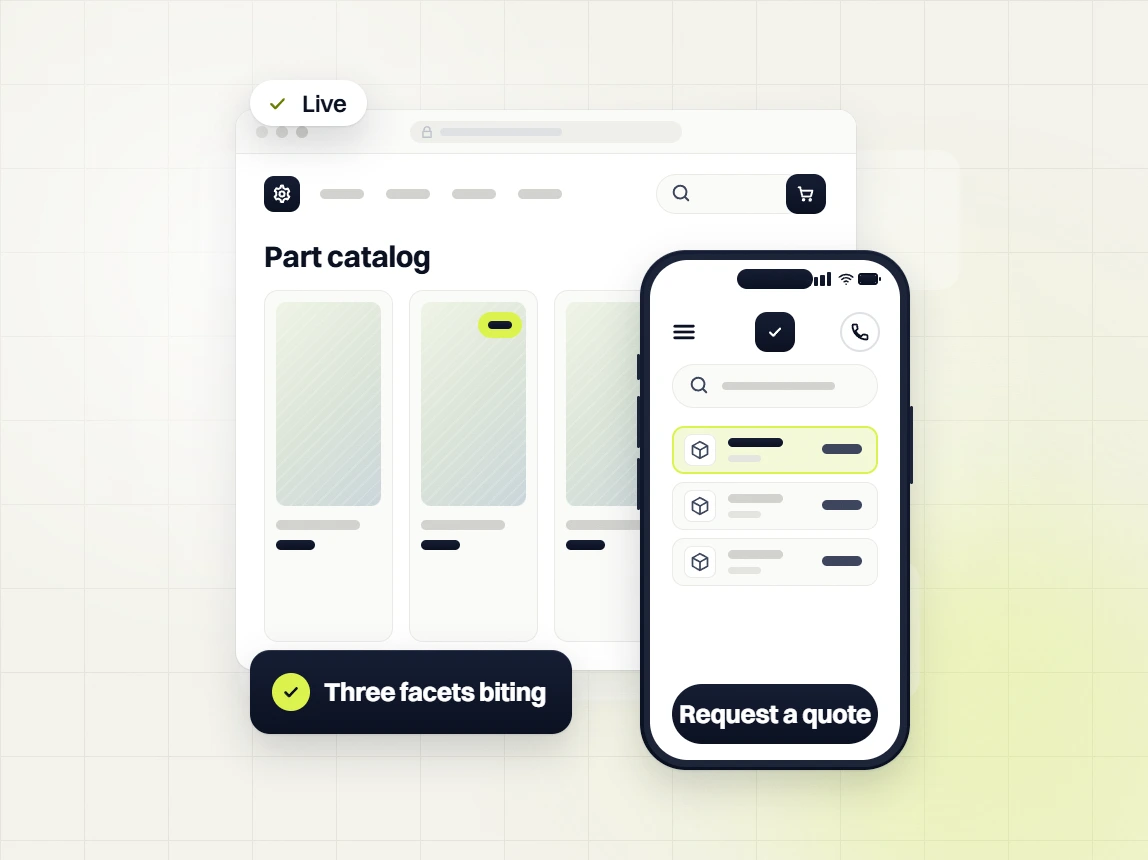
Engineers arrive with a part number or a tolerance spec and expect to filter by material, dimension, or SKU family in one screen. When the catalog lives inside a 40 MB PDF or a login wall, 68% of them close the tab and open a competitor. A live product catalog with real filter facets, downloadable spec sheets, and STEP file links keeps the engineer on the page long enough to hit the quote button.
Generic contact forms bury real quote requests
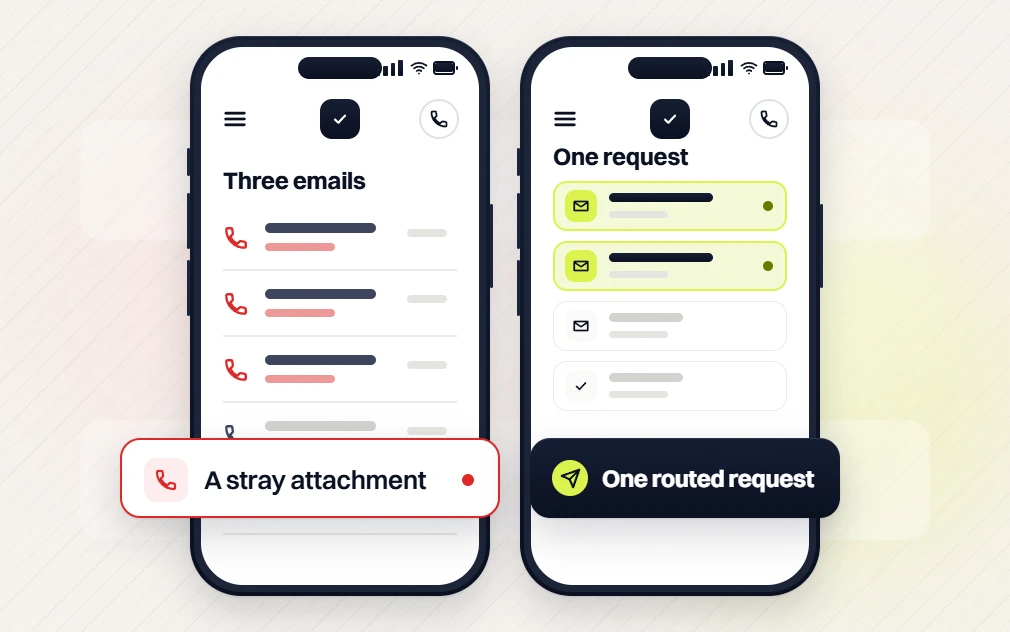
Procurement teams want to attach a drawing, name a target quantity, and pick a tolerance class in one form. Sites that route every request through a 4-field contact form force buyers to email a PDF separately and lose the thread. A real RFQ form with CAD or STEP file upload, part-number lookup, quantity ranges, and delivery date routes the request straight to your engineering inbox with the spec attached.
Sites miss ISO 9001, AS9100, and material certifications
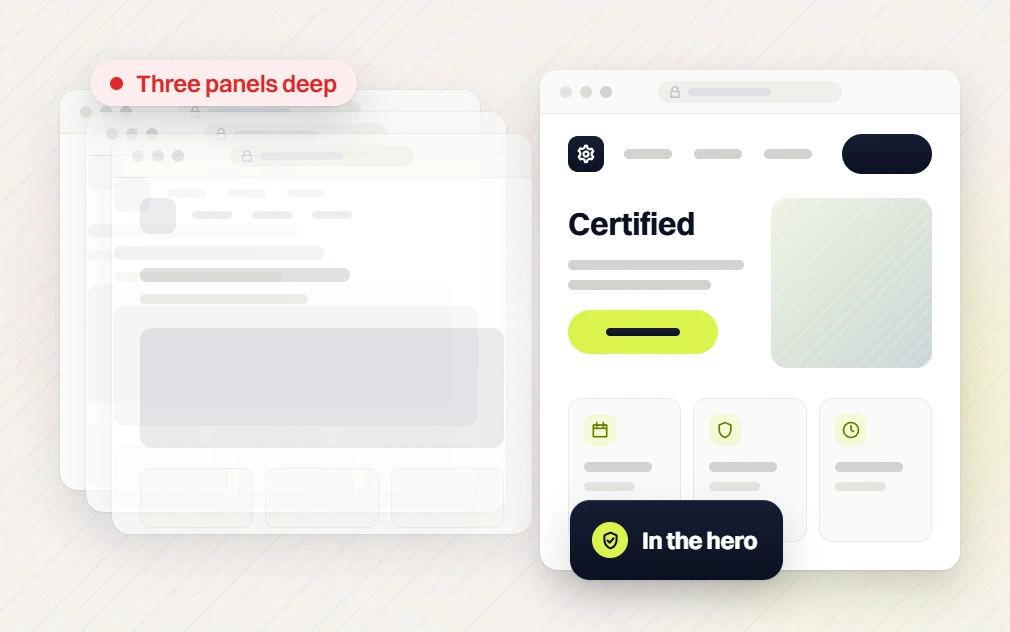
Procurement short-lists get built from ISO 9001, AS9100, ITAR, and PPAP compliance stamps before the phone rings. Sites that bury certifications on a hidden "About" page fail the first pass of the vendor audit. Every manufacturing site we build lands with the certification block wired into the hero, material capabilities named on every product page, and tolerance ranges published against real drawings.
Three outcomes every manufacturing web design engagement produces
Filterable manufacturing website design catalog, spec-driven RFQ with CAD upload, capability pages that route qualified RFQs to your engineer inbox in 90 days.
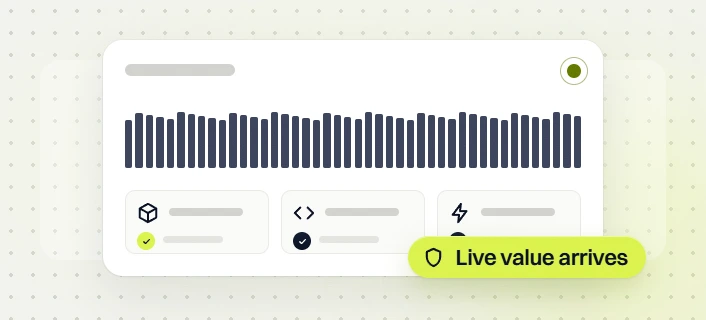
Every product page pulls live stock, lead time, and price tiers from NetSuite, Epicor, SAP Business One, Infor, or Fishbowl through a documented layer.
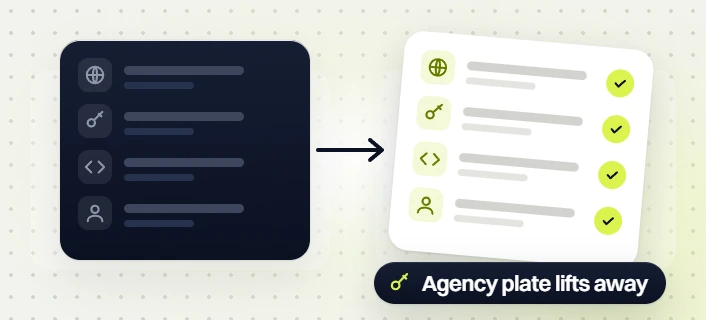
Your domain, CMS logins, WordPress admin, ERP keys, Figma file all in your name. Team trained on the platform. Walk away whole if you ever leave the agency.
Four stages. Every step ends in a sign-off
Fixed scope, fixed timeline, fixed outcomes. Nothing moves to the next stage until your engineering lead signs the gate deliverable, and every milestone lands on a calendar date.
Discovery that earns the brief
A 20 to 30 page brief signed by owner, engineering lead, and inside sales lead. Owner interview, technical audit of your current site, product catalog inventory, ERP or PIM review, and a benchmark of 5 direct competitors on Thomas Net and IndustryWeek. Nothing moves until it is locked.
Design built for the engineer with a spec sheet open
Mobile-first design system with filterable catalog, RFQ form with CAD upload, distributor portal patterns, and ISO 9001 or AS9100 trust block baked in from wireframe. Every component engineer-validated the same week it is drawn. You walk away with an editable Figma file your team owns.
Engineering that survives your next ERP swap
WordPress on LiteSpeed by default. Headless Next.js when the SKU count or distributor roster demands it. Core Web Vitals treated as an acceptance criterion. NetSuite, Epicor, SAP Business One, Infor, or Fishbowl wired to the product catalog, GA4, and marketing automation plugged in with server-side backup.
Launch and 30 days of post-live watch
Cutover runs off-hours with the whole team on a bridge. Search Console, error logs, RFQ submissions, and Core Web Vitals watched daily for 30 days. On day 31 you take the keys and go, or roll into a website maintenance retainer.
What you actually get from our manufacturing web design services
Fixed scope. Fixed timeline. Fixed outcomes. Each phase below has a defined deliverable, a written sign-off, and a date on the calendar.
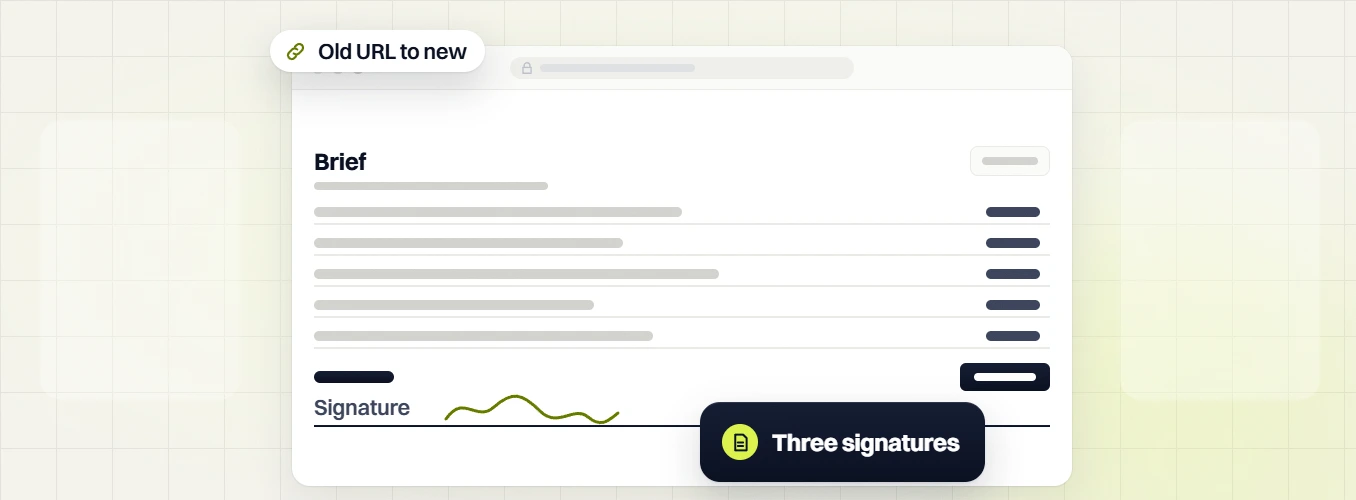
One week. Brief signed by owner, engineering, and inside sales
Owner interview, technical audit of your current site, ERP or PIM plus analytics plus CRM stack, competitor benchmark of five direct peers on Thomas Net and IndustryWeek, and product catalog data mapping. The output is a written brief your owner, engineering lead, and inside sales lead sign off on before we design a pixel or write a line of code.
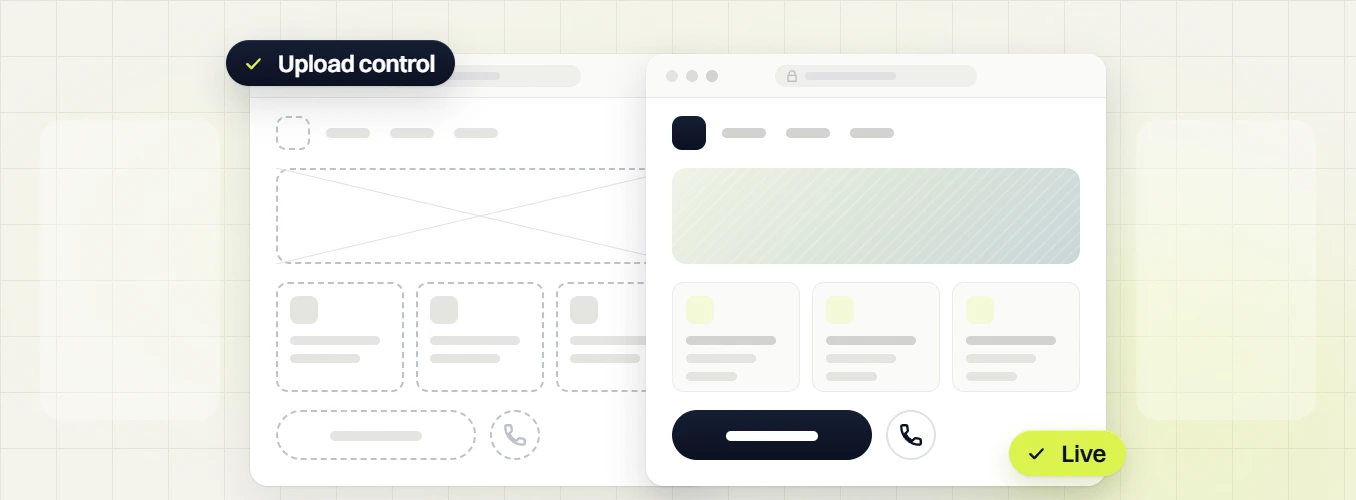
One hour with owner plus engineering plus inside sales leads to lock brand voice, capability position, and non-negotiable product categories.
Core Web Vitals baseline, WordPress theme review, product catalog audit, ERP or PIM connection check, and analytics wiring audit.
Five direct competitors scored on catalog UX, RFQ flow, spec sheet accessibility, and Thomas Net or IndustryWeek presence.
SKU families, part number logic, material capability tags, and tolerance ranges mapped to the new site before design starts.
Full page inventory with URL structure. Part-number pages carry forward with the same URLs so long-tail organic rankings hold through the migration.
A 20 to 30 page document. Owner, engineering lead, and inside sales lead sign before anything else moves.
Weeks 2 to 3. Mobile-first manufacturing design system
Mobile-first design system with filterable product catalog, spec-driven RFQ form, and ISO 9001 or AS9100 trust block baked in from the wireframe stage. Every component validated by the engineer in the same week it is drawn. You get a Figma file your team owns, not a slide deck you cannot edit.
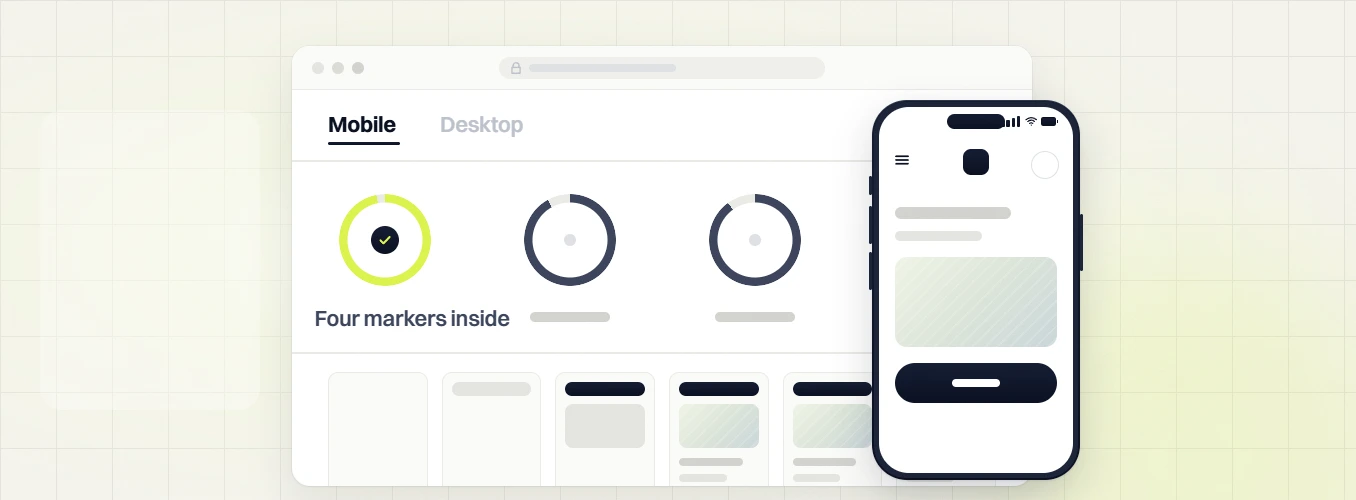
Standard RFQ path, sample request path, and distributor pricing request path all surface from the hero. CAD, STEP, IGES, or PDF drawing upload above the fold.
Real filter facets by material, dimension, tolerance class, and SKU family. Part-number search returns a spec sheet, downloadable STEP file, and quote button in one screen.
ISO 9001, AS9100, ITAR registration, RoHS or REACH compliance stamps wired on hero and every product page. Ranks stronger for vendor-audit search terms.
Optional distributor login area with tiered pricing, bulk order history, and part-number quick-order. Available on Scale and Enterprise tiers.
Full component library, design tokens, and page templates handed over. Your team can add new SKU families and capability pages without touching code.
Spec sheet library, tolerance tables, material property PDFs, and CAD downloads housed in a searchable resource center that ranks on long-tail engineer queries.
Weeks 3 to 5. Core Web Vitals as acceptance criterion
WordPress with a custom theme by default. Headless with Next.js when SKU count or distributor roster demands it. LiteSpeed or edge CDN, Core Web Vitals as an acceptance criterion (not a wish), WCAG 2.1 AA verified before launch. Nothing goes live without hitting the numbers.
Default stack for most manufacturers. Fastest launch, tight NetSuite or Epicor integration, and the tightest GA4 wiring.
For regional groups or multi-plant manufacturers with a shared parent brand. Same speed and Core Web Vitals bar across every facility page.
Available on Scale and Enterprise tiers where SKU count above 10,000 or distributor roster size justifies the added stack.
LCP under 1.8s, CLS under 0.05, INP under 200ms on mobile. Verified in Lighthouse and CrUX before DNS goes live.
Axe DevTools scan, manual audit, NVDA and VoiceOver screen-reader passes before go-live. ADA drift covered by maintenance plan.
Organization schema on the home page, Product schema on every SKU page, and manufacturer metadata wired for Google Merchant and part-number rich results.
Weeks 4 to 5. Every tool wired with a documented abstraction layer
NetSuite, Epicor, SAP Business One, Infor, or Fishbowl integration. GA4, HubSpot or Pardot marketing automation, Thomas Net feed sync, and distributor portal wiring. RFQ forms and inbound calls route into the CRM with campaign-source tagging. Built with documented abstraction layers so the next ERP swap is days, not months.
NetSuite, Epicor, SAP Business One, Infor, or Fishbowl wired to the product catalog with real stock, lead time, and tiered pricing. Same for Akeneo or Salsify on the PIM side.
Product data feed to Thomas Net and IndustryWeek maintained from the same catalog source of truth. Zero drift between site and directory listing.
HubSpot, Pardot, or Marketo wired to the RFQ form. Engineer registration triggers spec sheet nurture, procurement RFQs route straight to inside sales.
Salesforce, HubSpot CRM, or Microsoft Dynamics wired to every RFQ. Deal source, campaign, and part-number requested captured on the record.
Optional distributor login area with tiered pricing, bulk order history, and part-number quick-order. Wired to the same ERP source. Available on Scale and Enterprise.
CallRail or CallTrackingMetrics wired to GA4 with campaign-source tagging on every inbound call. Attribution survives iOS 17 and cookie loss.
Week 6. Cutover, 301 map, and 30-day watch
Production DNS cutover, 301 map from the old site, uptime plus Core Web Vitals monitoring live, and a 30 to 90 day post-launch support window. Your team keeps the design files, the CMS logins, and the repo. Walk away with the site whole if you ever leave.
Whole team on a bridge for cutover. Search Console, error logs, RFQ submissions watched hourly for the first 24 hours after DNS flip.
Every legacy URL mapped before cutover. Part-number pages, capability pages, and blog carry over. Zero 404s on organic winners.
Core Web Vitals, RFQ submissions, GA4 conversions, and error logs reviewed every business day for 30 days after DNS goes live.
Pingdom, Better Uptime, or your tool of choice wired to Slack or SMS with hourly check across the catalog and RFQ flow.
30 days on Launch, 60 days on Growth, 90 days on Scale and Enterprise. All bugs, all RFQ form tweaks, all product page swaps included.
Design files, CMS logins, WordPress admin, ERP integration keys, GA4, and repo all in your name at handoff. Agency access removed on day 91.
Four web design tiers for every stage of growth
Every line item listed. The quote you get is the invoice you pay. Take any tier as a project fee, or split it into the flat monthly plan.
Fast, credible site converting existing reputation.
Full booking engine: scheduling, checkout, customer reporting.
One brand, every office found, location-level tracking.
Design system the whole group launches on. Ops-team-spec integrations.
Every web design feature, tier by tier
HOVER ANY FEATURE FOR A PLAIN-ENGLISH EXPLANATIONWebsite + design +
Booking + patients +
SEO + visibility +
Care + support +
Real manufacturers, real numbers
Common manufacturing web design questions
Straight answers on cost, timeline, platform, RFQ flow, ERP integration, and ADA compliance. Call or email if we missed yours.
How much does a manufacturing website cost?
+
Manufacturing web design at Redefine Web runs from $1,500 on Launch to $30,000 and up on Enterprise. Every project is a fixed-price quote, not a monthly bill. Launch is a WordPress site for single-plant contract manufacturers or industrial suppliers with a filterable product catalog, one RFQ form with CAD upload, and ISO 9001 trust block wired in. Growth adds ERP or PIM sync through NetSuite, Epicor, or SAP Business One, a spec sheet library, and CRM wiring for every RFQ. Scale adds a distributor portal, per-capability landing pages, and headless Next.js where the SKU count justifies it. Enterprise adds multi-facility roster, custom ERP API work, and full GA4 attribution across sales cycles that run 30 to 180 days. Ongoing website maintenance is a separate plan starting at $199/mo.
What is included in manufacturing website design services?
+
Every build includes site design on WordPress or headless Next.js, a filterable product catalog with material, dimension, tolerance, and SKU-family facets, a spec-driven RFQ form with CAD or STEP file upload, ERP or PIM sync through NetSuite, Epicor, SAP Business One, Infor, or Fishbowl, marketing automation hooks through HubSpot, Pardot, or Marketo, a technical resources hub with spec sheets and CAD downloads, and Core Web Vitals in the green at launch. Every site also lands with ISO 9001, AS9100, ITAR, RoHS, or REACH certification blocks wired on hero and every product page, and content patterns that let non-designer team members add new SKU families and capability pages without touching code.
What conversion rate should a B2B manufacturing site hit?
+
Well-built manufacturing sites convert 4% to 8% of qualified engineer visits into RFQs on average. Our manufacturing web design average is 6.4% across the last 90 sites we built. Real numbers depend on catalog depth, tolerance-class complexity, and whether the RFQ form accepts a CAD or STEP file above the fold. Contract manufacturers with a defined capability list convert higher (7% to 10%) because engineers self-qualify on the catalog page. Custom fabricators and job shops convert lower (3% to 5%) because the sales cycle runs 60 to 180 days after the first RFQ. Sites that surface certifications on the hero consistently convert higher than sites that hide them because procurement short-lists get built on ISO 9001 and AS9100 stamps. We baseline your current numbers before we start.
How long does a manufacturing website design project take?
+
Timeline runs 4 to 6 weeks on Launch, 6 to 8 weeks on Growth, 8 to 12 weeks on Scale, and 12 to 16 weeks on Enterprise. Every project has a signed timeline before we start, and every milestone (wireframe sign-off, design sign-off, catalog data sign-off, staging review, go-live) carries a calendar date. If a milestone slips because of a client-side delay (part-number photos, spec sheet PDFs, ERP export access), the timeline pauses and restarts at the next handoff. Manufacturing projects usually run longer than home services or CPG projects because catalog data volume and ERP wiring add real engineering hours.
Do you build manufacturing websites on WordPress or headless?
+
Every build launches on WordPress or headless Next.js depending on your SKU count, ERP stack, and distributor roster. WordPress fits most manufacturers under 10,000 SKUs: fastest launch, tight NetSuite or Epicor integration, and the tightest GA4 wiring. WordPress multi-site fits regional groups above $10M or with a multi-facility roster. Headless Next.js fits shops with a heavy custom stack, a PIM like Akeneo or Salsify, or an SKU count above 10,000. Both options launch page-speed optimized, mobile-first, and Core Web Vitals in the green. Headless is available on Scale and Enterprise tiers where the SKU count and distributor complexity justify the added engineering hours.
Does the site integrate with our ERP or PIM?
+
Yes. ERP and PIM integration is included on every build from Growth up. NetSuite, Epicor, SAP Business One, Infor, and Fishbowl are all supported natively on the ERP side. Akeneo and Salsify on the PIM side. Real stock, lead time, and tiered pricing surface on the product page because engineers who see a live availability window submit RFQs 3 to 5 times more often than those who see a “call for quote” placeholder. Standard RFQ paths, distributor pricing paths, and sample request paths all get separate forms. Part-number-specific spec sheet downloads, RFID or barcode lookup for reorders, and CAD or STEP file attachment are all wired at the form level. Most manufacturers see qualified RFQ volume climb 25% to 45% inside 90 days of the new catalog going live.
Do we own the manufacturing website at handoff?
+
Yes. Every build goes live in your brand name with your logins. The WordPress admin, hosting, GA4 property, ERP integration keys, marketing automation account, Thomas Net feed, tracking pixels, and every integration sit in your name at handoff. Redefine Web has agency access only. If you leave, you leave with everything: theme source files, design files, ERP integration documentation, and full runbook. 30 to 90 days of post-launch support is included with every build. After that, ongoing website maintenance moves onto a monthly plan starting at $199/mo, or you take it in-house. Your call.
How much do companies charge to design a website?
+
Website pricing swings wide across the market. Freelancers charge $1,500 to $8,000 for a basic small-business site. Boutique agencies charge $10,000 to $50,000. Enterprise agencies charge $100,000 and up for multi-brand rollouts. Manufacturing website design sits higher than a generic small-business build because catalog data, RFQ form logic, ERP or PIM integration, and ISO or AS9100 trust signals all add real engineering hours a small-business site does not carry. Redefine Web quotes fixed-price on every project: $1,500 on Launch for single-plant contract manufacturers, $6,000 on Growth with ERP or PIM sync, $12,000 on Scale with distributor portal and headless Next.js option, and $18,000 and up on Enterprise with multi-facility roster and custom ERP API work. Every quote is a one-time build cost, not a monthly retainer. Ongoing website maintenance moves to a separate plan starting at $199 per month. Buyers can move up or down a tier with 30 days notice. No setup fees. No lock-in on the build itself.
What is the best website design company?
+
The best manufacturing website design company for your shop is the one that has built sites for your exact vertical, wired your exact ERP, and can show real RFQ volume numbers from live client sites. Ask for three specific things when you shortlist an agency: a manufacturing-only portfolio (contract manufacturers, industrial suppliers, B2B component makers), a written RFQ conversion rate average across their last 20 sites, and a full deliverable list that names catalog UX, spec sheet library, distributor portal, and ERP integration by platform. Redefine Web has launched 90+ manufacturing sites with a 6.4% average spec-to-RFQ conversion rate across shops running NetSuite, Epicor, SAP Business One, Infor, and Fishbowl. Every project ships with fixed-price scope, a written 4 to 6 week timeline, and a 30 to 90 day post-launch watch window. Engineering leads, procurement teams, and owners all sign off on the brief before we design the first pixel or write a line of code.
Does the site include a product configurator and CAD download portal?
+
Yes, on Growth tier and up. Product configurators let engineers pick material, dimension, tolerance class, and finish then generate a valid part number with a live quote. CAD download portals let engineers grab STEP, IGES, DWG, or native SolidWorks files after a short registration form. Both patterns are wired to the RFQ form so the engineer who downloads a spec sheet, opens the CAD in their assembly, and hits “request quote” arrives in your inside sales inbox with the part number, quantity, target date, and file already attached. Configurator complexity depends on your SKU family logic. A shop with 200 fastener SKUs and 5 material options is a 2 week configurator build. A shop with 3,000 machined components and 12 tolerance classes takes 6 weeks. Every configurator is wired to your ERP or PIM so the part number generated on the site is the same one your engineering lead sees on the production floor. No drift between site quote and shop-floor build.
How do you handle ISO, AS9100, and ITAR compliance signals on the site?
+
Certification trust blocks land in the hero on every manufacturing website design we build. ISO 9001, AS9100, ITAR registration, RoHS, and REACH compliance stamps sit above the fold with the current registration number and a link to the registrar record where public. Procurement teams building a vendor short-list check ISO and AS9100 first, and sites that bury certifications on a hidden About page fail the first pass of a vendor audit. We pull registration numbers straight from the ISO registrar database and keep them current through the maintenance plan. AS9100 aerospace shops get an extra callout on every capability page and product page. ITAR-registered shops get a separate contact path for controlled-item RFQs with domestic-buyer verification wired into the form. Material capability tags (aluminum, stainless, titanium, Inconel, PEEK), tolerance ranges, and finish options all render on product pages so buyers self-qualify on the spec sheet before they hit the quote button on a capability they need.
Does the RFQ form integrate with HubSpot, Salesforce, or a PIM?
+
Yes. Every RFQ form routes into your CRM with the part number, quantity range, tolerance class, delivery date, and CAD file attached to the deal record. HubSpot, Salesforce, Microsoft Dynamics, and Pardot are all supported natively on every build tier. Marketo, Zoho, and Pipedrive are supported through documented middleware. Campaign source, landing page, and paid or organic channel land on the deal record so your inside sales team knows the RFQ came from the aerospace capability page after a Thomas Net click. PIM integration through Akeneo or Salsify keeps product data in one place: SKU family, part number logic, material, tolerance, and downloadable spec sheet all pull from the PIM through a documented abstraction layer. When your engineering lead adds a new SKU family in the PIM, the product page, RFQ form, and Thomas Net feed all update within an hour. Zero drift between source of truth and any customer-facing surface.
Is the site ADA and WCAG 2.1 AA compliant at launch?
+
Yes. Every manufacturing web design ships WCAG 2.1 AA compliant at launch and stays compliant through the maintenance plan. Axe DevTools scan, manual keyboard audit, and NVDA plus VoiceOver screen-reader passes run before DNS cutover. Color contrast on capability pages and RFQ forms passes AA on every state (default, hover, focus, error). Form field labels, ARIA landmarks, and skip links pass a manual audit. Real accessibility beats a badge in the footer, and structured data on product pages helps assistive tech read the catalog. See the Google Search Central docs for the structured-data schemas we wire. Ongoing accessibility drift (a broken alt tag on a new product photo, a new form field without a label) gets caught by the monthly maintenance scan and fixed inside the plan. ADA lawsuits against B2B manufacturing sites are climbing, and a compliant build at launch cuts your exposure to zero on the day DNS goes live.
How does the site handle mobile speed for buyers in the field?
+
Every build ships with Core Web Vitals in the green: LCP under 1.8s, CLS under 0.05, and INP under 200ms on 4G mobile. Field buyers (a plant engineer on a shop floor, a procurement lead in a distributor warehouse, a facilities manager on a job site) hit the site on cellular and expect a spec sheet to load in under 2 seconds. LiteSpeed cache, edge CDN through Cloudflare or Bunny, WebP or AVIF images, and lazy-loaded CAD file previews all wire in by default. Real numbers are verified in Lighthouse and Chrome UX Report data before DNS goes live, not after. Slow mobile pages hurt organic ranking on Google (mobile-first indexing) and hurt RFQ conversion on the ground. A field engineer who waits 6 seconds for the catalog to load abandons the session 40% of the time. Every product page, capability page, and RFQ form is speed-tuned for the field buyer, not just the desktop procurement lead sitting on office fiber.