Optometrist marketing retainer plans that fill exam chairs every month
One retainer that runs content, local SEO, Google Ads, GBP, review automation, and optical funnels for your practice. Optometrist marketing retainer plans and packages from $499 per month with quarterly reviews built in, cancel with 30 days notice.
Four numbers every optometry owner can hold us to
Patients bounce when your VSP, EyeMed, and Davis widget stacks three iframes before booking
VSP, EyeMed, and Davis widgets load 3 iframes. Median bounce runs 38% on the insurance page alone.
Google Ads charges $147 per lead because RevolutionEHR never fires a booked-exam conversion back
RevolutionEHR does not push booked exams to Google Ads. Cost per real patient runs 3-5x reported.
LensCrafters, Warby Parker, and 1-800 Contacts pick off your annual-exam patients between visit 12 and 15
LensCrafters and Warby Parker pick off skipped-recall patients. Practices lose 42% by month 15.
3 outcomes every optometry retainer produces
Content, local SEO, GBP, and paid media running from one shared plan. Every booked exam traces to its source in a shared dashboard. Fix the channel.
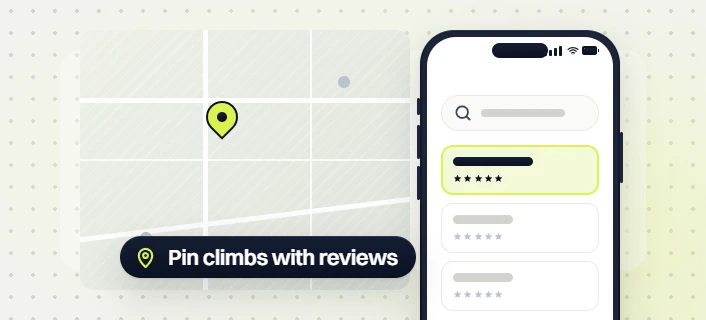
Post-visit SMS review requests, tracked GBP posts, and 24-hour response per location. Retainer practices add 30+ verified Google reviews inside 90 days.

Stop paying five vendors for one confused report. A dedicated retainer lead owns the roadmap, does the work, and reports booked-exam and optical numbers.
Four stages, every step ends in a sign-off
Fixed scope, fixed cadence, fixed accountability. Nothing moves to the next stage until your leadership signs off.
Full practice audit + PMS baseline
Site + GBP + ad accounts + PMS + review flow all audited against booked-exam revenue. Written 30-page report with the top 3 revenue-moving fixes signed off by owner + office manager before we spend a dollar.
12-month roadmap tied to specialty profitability
Quarterly roadmap sized against specialty profitability. Dry eye, myopia management, and scleral lenses get priority over routine exams because case value is 4-8x. Every quarter has a written MRR projection so you know what should hit the PMS.
Every channel running under one named lead
Google Ads + Meta + LSA + Local SEO + GBP + content + reactivation all executed by a single accountable lead. No handoffs between agencies. No cross-team blame. One number to call.
Quarterly scale reviews tied to exam + optical revenue
Weekly test cycles tied to PMS-verified booked exams. Quarterly review with owner + office manager showing what booked exams drove, what optical revenue closed, what next-quarter budget should look like.
What you actually get from our optometry marketing retainer
Fixed scope. Fixed timeline. Fixed outcomes. Each phase below has a defined deliverable, a written sign-off, and a date on the calendar.
Full practice audit + PMS baseline in week one
Week one. Site + GBP + ad accounts + PMS + review flow all audited against booked-exam revenue. Written 30-page report with the top 3 revenue-moving fixes signed off by owner + office manager before we spend a dollar.
Google Ads + Meta + SEO + GBP + reactivation systems all scored against booked-exam revenue impact.
RevolutionEHR, Compulink, Crystal PM, or Uprise booking + optical revenue data captured as day-one baseline.
Every finding, every prioritized fix, every revenue projection in writing. Owner + office manager both sign off.
What we do first is signed off, not sprung on you. Prioritized by dollar impact and fix-time.
VSP, EyeMed, Davis, Spectera integrations checked for booking flow load speed and mobile paint under 2 seconds.
Every patient past 10 months on last exam pulled from the PMS as the day-one reactivation list to work.
12-month roadmap tied to specialty profitability
Weeks two through three. 12-month quarterly roadmap sized against your specialty profitability. Dry eye, myopia management, and scleral lenses get priority over routine exams because case value is 4-8x. Every quarter has a written MRR projection so you know what should hit the PMS.
Q1-Q4 planned by campaign, cluster, and content piece. Every quarter has an explicit sign-off gate.
Dry eye, myopia, scleral, ortho-K first. Routine exams and vision-plan patients layered as base load, not headline focus.
Q1 target, Q2 target, Q3 target, Q4 target, sized against real market data and your chair capacity.
How much goes to Ads, SEO, content, GBP each month. Adjusted quarterly based on what performs.
VSP and EyeMed patients get local SEO plus reactivation. Cash-pay and specialty get the paid budget where case value is 4-8x higher.
Local OMDs, pediatricians, and primary care offices identified as scleral, myopia, and dry eye referral sources for outreach.
Every channel running under one named lead
Ongoing month 1+. Google Ads + Meta + LSA + Local SEO + GBP + content + reactivation all executed by a single accountable lead. No handoffs between agencies. No cross-team blame. One number to call.
Every paid channel run by the same lead. Attribution built once, not fought over between vendors.
Organic + local pack + review flow + citations all coordinated as one program with weekly GBP posts.
Monthly editorial calendar tied to keyword priority and optical-case drivers like dry eye and myopia.
Annual recall sequences, post-exam review requests, and optical follow-up wired to RevolutionEHR or Compulink.
Weekly GBP posts, SMS review requests through Weave or Solutionreach, and 24-hour response on every location review.
Dedicated pages for dry eye, myopia, scleral, and Ortho-K with a booking flow that paints under 2 seconds on mobile.
Weekly testing tied to PMS-verified booked exams
Every week. Cross-channel testing tied to PMS-verified booked exams. Ad copy, landing page CVR, keyword targeting, GBP post cadence, recall SMS timing, every test measured against the number that fills exam chairs.
Every booked exam tagged to the click, keyword, or reactivation trigger that drove it back into the PMS record.
What we tested last week, what won, and what went live this week. Written for owner + office manager review.
A/B tests on hero, offer, form, and time-slot picker, measured against booked exams and not raw form fills.
If SEO is compounding faster than PPC, budget moves. Every shift signed off in the monthly report to the owner.
New Google Ads copy and Meta creatives shipped every two weeks. Underperforming ads pulled before they burn budget.
Month 10 vs month 11 SMS send timing tested against Weave and Solutionreach open rates and re-book rate on lapsed cohorts.
Quarterly scale reviews tied to exam + optical revenue
Every 90 days. Quarterly review with the owner + office manager showing what booked exams drove, what optical revenue closed, what next-quarter budget should look like. Scale decisions grounded in your PMS and your chair capacity, not agency spend targets.
This quarter: booked exams by channel, optical revenue captured, and cost per booked exam, all PMS-verified.
Ad spend + content velocity sized against your chair capacity and optician bandwidth. No overspending past what you can serve.
Explicit sign-off on next quarter allocation across channels. No surprise invoices, no hidden shifts, all on paper.
12-month rolling report showing MRR growth, CAC trend, optical capture rate, LTV trend. Owner-first metrics only.
Dry eye vs myopia vs scleral case share tracked quarter over quarter to move mix toward higher-margin specialty programs.
When chair utilization crosses 85%, the roadmap opens up per-location GBP, per-location ads, and programmatic specialty pages by ZIP.
Four retainer tiers for every stage of growth
Pick the tier that matches your practice stage. Move up or down anytime with 30 days notice. Ad spend billed separately at pass-through, never through us.
Solo practices, one growth program, not five vendors.
Solo or two-provider, adding paid + monthly recall on Foundation.
Two to four providers, high-ticket cases. Adds Meta + nurture.
Multi-location or premium groups. Per-location run, rollup reports.
Every retainer feature, tier by tier
HOVER ANY FEATURE FOR A PLAIN-ENGLISH EXPLANATIONContent +
SEO +
Paid media +
Reviews + reputation +
Reporting + strategy +
Real practices, real numbers
Common retainer questions
Straight answers on retainer scope, pricing, PMS wiring, specialty programs, and how fast booked exams start showing up in your calendar.
What is a retainer in marketing?
+
A marketing retainer is a fixed monthly fee that covers a defined scope of services for the same practice month after month. For an optometry retainer that scope typically covers local SEO on the practice site, Google Business Profile posts and review generation through Google’s GBP verification guidelines, Google Ads on the Growth tier and up, content tied to specialty programs like dry eye and myopia management, and monthly PMS-verified reporting. Redefine Web retainer tiers run $499, $999, $1,999, and from $3,500 per month. Ad spend bills through Google and Meta at pass-through with no percentage-of-spend markup on the retainer invoice. Unlike project work that ends when a website ships, a retainer is a compounding partnership. Every month the content library, the review count, the local pack position, and the ad-account learning stack up. That means month 12 always costs less per booked exam than month 1, and your team gets the benefit.
How does a marketing retainer work?
+
A marketing retainer works as a fixed monthly agreement where a set scope of deliverables runs every month for a set fee. On our retainer you get a written 12-month roadmap, one named lead running every channel, weekly execution, and a monthly PMS-verified report on booked exams and optical revenue. Ad spend on Google and Meta bills separately at pass-through with no percentage-of-spend markup. Contract length is a 3-month minimum on Foundation and Growth, month-to-month after that with 30 days notice. If you cancel, every asset built (landing pages, ad accounts, content library, GBP work) transfers to you at no cost. You keep the work. Onboarding starts week one with a 30-page written audit, week two locks the roadmap with owner and office-manager sign-off, and month one starts live channel execution. From there the retainer runs in weekly test cycles with a monthly written report to the owner plus a 30-minute review call on the last Friday of every month.
How much does a marketing retainer cost?
+
A marketing retainer at Redefine Web runs $499 per month on Foundation, $999 per month on Growth, $1,999 per month on Scale, and from $3,500 per month on Enterprise. Most single-location optometry practices land on Growth. Growth adds Google Ads management, monthly landing page tests, and a patient recall email flow. Multi-location groups and specialty-heavy practices move to Scale or Enterprise. Ad spend on Google and Meta bills direct to your card at pass-through. No percentage-of-spend markup. Retainer covers only the labor and platform work. That gives you a predictable monthly optometrist marketing retainer number for the CFO or the owner-operator to plan against. Foundation fits solo practices that just want local SEO, GBP, and content compounding. Growth adds paid channel management. Scale layers Meta ads, bi-weekly booking-flow tests, and a strategy call cadence. Enterprise covers per-location groups and programmatic specialty SEO for regional or DSO-adjacent practices with 5+ locations.
What is the 3 3 3 rule in marketing?
+
The 3-3-3 rule is a common copy framework: capture attention in 3 seconds, hold interest for 30 seconds, deliver the core message inside 3 minutes. For optometry marketing that means a hero above the fold that names the offer (annual exam, dry eye, myopia management, scleral) in one line, a supporting subhead that removes the top objection (insurance accepted, mobile booking, same-week appointments), and a landing page that gets a patient to the booking button in under 3 scrolls. Every landing page we build on the retainer runs a 3-second read-aloud test and paints to interactive under 2 seconds on mobile. The rule matters most on paid traffic where cost per click can run $5 to $15 on high-intent optometry keywords. If a page burns 3 seconds loading a plan-eligibility widget, the click bounces and the ad dollar walks out with it. Fast, clear, single-offer landing pages win here every time.
What are the 5 P's of a marketing plan?
+
The 5 P’s of a marketing plan are Product, Price, Place, Promotion, and People. Applied to an optometry practice: Product covers exam types plus specialty programs (dry eye, myopia management, scleral, Ortho-K); Price covers cash-pay ranges and how vision-plan reimbursement is framed on the site; Place covers your GBP, map pack presence, and driving-radius targeting; Promotion covers Google Ads, Meta, LSA, content, and reactivation; People covers the front-desk phone script and the retainer lead who runs it end to end. The AOA practice marketing library covers the fundamentals in real depth for owners. On the retainer we translate the 5 P’s into a written quarterly plan tied to specialty case value and chair capacity. Product-market fit gets tested every quarter against real booked-exam numbers pulled from your PMS record, not against agency vanity metrics like impressions or reach. Each of the 5 P’s has an owner and a review date.
How to create a monthly marketing plan?
+
Start with the number that matters (booked exams by channel from your PMS baseline). Sort your specialty programs by case value: scleral, myopia, dry eye, cash-pay routine, insurance routine. Assign each channel one owner. Google Ads gets brand plus high-intent local. Local SEO gets a monthly GBP post cadence plus one specialty page. Content gets 2-4 posts tied to the quarter’s keyword priority. Reactivation runs a 12-month SMS + email loop for lapsed patients. Every task lands on a shared calendar with a due date and owner. A working optometrist monthly marketing plan sits on one page and shows every launch, budget, expected booked-exam contribution, and reporting cadence by channel. The plan gets reviewed on the last Friday of every month with the owner and office manager together. Actual booked-exam numbers pulled from the PMS decide what stays, what scales, and what pauses next month. No launch runs on gut feel, and every dollar has a channel owner.
How to market an optometry practice?
+
Start with three channels that book new-patient exams fastest: Google Business Profile with weekly posts and review generation, Google Ads on brand and high-intent local terms, and a booking flow that loads under 2 seconds on mobile. Layer content around specialty programs like dry eye, myopia management, scleral lenses, and Ortho-K where case value runs 4-8x an insurance exam. Wire every conversion back to RevolutionEHR, Compulink, or Crystal PM so you measure booked exams and optical revenue, not form fills. The American Academy of Ophthalmology also publishes patient-education content you can adapt for parent-facing myopia funnels and pediatric education. Once the basics run, add referral outreach to local pediatricians and primary-care offices for scleral and myopia cases, plus a monthly educational post on your GBP. Reactivate lapsed patients past month 10 with SMS. Every optometrist marketing retainer we run bakes those steps into a fixed monthly rhythm that any practice size can hold, from a solo doctor to a 12-location group.
How to make 300k as an optometrist?
+
Getting an optometry practice to $300K+ personal owner draw comes down to case mix, chair capacity, and marketing. Move the schedule off routine insurance exams and toward specialty programs where case value runs 4-8x higher: dry eye evaluation and treatment, myopia management (Ortho-K, atropine, MiSight), scleral lenses, and premium optical. A well-run retainer books specialty consults through Google Ads and content, holds map-pack position on core exam terms, and reactivates lapsed patients before they walk into a chain. That combination typically shifts case mix 15-25% toward cash-pay inside the first 12 months, which is where owner draw actually grows over time. Chair capacity matters too. A practice that fills a single doctor to 90% on cash-pay specialty runs a very different P&L than one running 12-minute vision-plan exams all day. The retainer roadmap sizes ad spend against your real chair capacity and optician bandwidth every quarter, not against agency spend targets or vanity numbers.
Will AI replace optometrist?
+
AI is already doing autorefraction, fundus grading, and dry-eye imaging analysis. It is not going to replace the licensed exam, the medical decision, or the person a patient trusts in the chair. What AI does change is how a practice competes for patient attention. Marketing that used to rely on generic content ranks lower against AI-answer boxes. The retainer we run leans harder into first-party content (real practice photos, real doctor bylines, real patient reviews, specialty programs described by the doctor who does them). That original, expert content is what ranks and what earns the patient trust AI cannot manufacture on its own for a local practice. Google’s own quality guidelines already reward first-hand practitioner content, and structured data on doctor pages plus review schema help AI-answer surfaces cite your practice as the source instead of a directory site or a national chain that outbids you on brand search terms.
How fast will an optometry marketing retainer start booking exams?
+
Google Ads on Growth or Scale typically produces first booked exams inside 14 to 21 days after activation, once tracking, negatives, and landing pages go live. Cost per new patient stabilizes in months 2 to 3 as bidders learn. Local SEO and GBP compound slower. Map pack movement on core exam terms usually shows in 60 to 90 days, and organic bookings from specialty pages compound from month 4 forward. Reactivation SMS to lapsed patients books exams in the first week it runs. Every timeline is tracked against a PMS baseline pulled during week one so the optometry marketing retainer reports on real booked-exam movement, not clicks or impressions. If a channel misses its 90-day projection by more than 20%, budget shifts to a channel that is beating projection instead. That decision goes on paper in the monthly report with owner sign-off, not verbally in a call or a slide.
Does the retainer integrate with RevolutionEHR, Compulink, and Crystal PM?
+
Yes. RevolutionEHR, Compulink, Crystal PM, Uprise, Officemate, and My Vision Express are all supported for integration. Integration wiring pushes new-patient web leads into the PMS and pulls completed appointments back out as offline conversions to Google Ads and Meta. That closes the loop so Google Ads optimizes on booked exams instead of form fills. Every monthly report shows booked exams, cost per booked exam, and captured optical revenue by channel, all reconciled against the PMS record. Call tracking runs through a HIPAA-conscious setup that follows the HIPAA Journal guidance on protected health information in analytics. Data leaves the PMS on a nightly cron job. Nothing patient-identifiable ever goes to Google or Meta as raw data. Only aggregate booked-exam counts and offline conversion IDs tied to the original ad click get sent up to the platforms. Every optometrist marketing retainer includes this wiring at no extra one-time build fee for the practice.
What are the KPIs on an optometrist marketing retainer?
+
Every retainer reports the same six KPIs monthly: PMS-verified booked exams by channel, cost per booked exam, optical revenue captured per exam, specialty case count (dry eye, myopia, scleral), map-pack rank on core exam terms, and review velocity (verified Google reviews added per location). Vanity metrics like clicks and impressions get logged but never lead the report. The monthly call runs 30 minutes: 10 minutes on last month results, 10 minutes on this month tests, 10 minutes on next quarter roadmap. Owner and office manager both attend and both sign off on any budget shift between channels or spend increases in writing before it happens. Quarterly reviews add year-over-year comparisons, chair-capacity utilization, LTV trend on cash-pay specialty patients, and next-quarter budget allocation. Every number ties back to booked exams the PMS can prove, not agency dashboards that count the same opportunity twice across click, form-fill, and phone call attribution windows.
What happens to my ads accounts, GBP, and content if I cancel the retainer?
+
You own every asset the retainer builds. Google Ads, Meta Ads, Google Business Profile, landing pages, content library, review-generation flow, PMS integration wiring, and monthly reports all sit inside accounts you own from day one. On day one we take manager-level access, not ownership. If you cancel with 30 days notice, we hand back full admin access and archive our copies of every report. You keep the tracked booking data, the content, the pages, and every optical case-value model built during the retainer engagement. Nothing gets held hostage, no exit fee, no rebuild cost for the next agency or in-house hire, ever. The 30-day notice window covers a clean handoff: final data pull, campaign pause or transfer, GBP admin swap, and a written summary of what ran, what worked, and what the new owner or in-house team should keep running after we step out of the accounts entirely at the end.