Optometrist website maintenance to keep every eye exam booking live
Optometrist website maintenance from Redefine Web keeps your practice site fast, patched, and open for eye exam bookings. We push WordPress updates every week, watch every LocalMed and Solutionreach integration, keep intake forms working, and email a written report the first Monday of every month. Uptime targets start at 99.9% and reach a 99.99% written SLA with credits on Enterprise and Custom.
Four numbers every optometrist owner can hold us to
LocalMed, Solutionreach, and Weave booking widgets fail silently after WordPress updates
A quiet WordPress plugin or core update kills the LocalMed, Solutionreach, or Weave booking widget. 40 to 90 eye exam visits lost at $200 first-visit before the front desk notices. Every widget tested weekly on staging before any patch ever reaches your production domain.
Free form plugins store patient intake with vendors that never signed a BAA
Intake, contact lens ordering, and vision insurance eligibility forms save patient data with vendors that never signed a Business Associate Agreement. One state AG complaint runs $50K+ in fines. Every intake form routed through a BAA-backed processor with encrypted transport and a yearly privacy audit.
VSP, EyeMed, and Davis Vision insurance verification forms break after plugin updates
A plugin update quietly kills VSP, EyeMed, or Davis Vision eligibility field logic. Patients hit a broken form, abandon the exam booking, and call a competitor. 1 in 4 optometry sites we audit show insurance forms silently failing. Weekly form-logic tests catch the drift before patients do.
What every optometrist care plan delivers every month
Uptime from 99.9% base to a 99.99% written SLA on Enterprise, with auto credits if we miss. Pings every 60 seconds from 5 POPs. On-call humans, not bots.
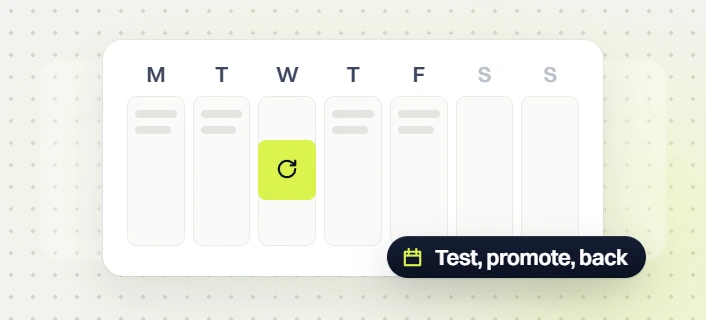
WordPress core, theme, and plugins patched weekly on staging with real booking-widget tests. LocalMed, Solutionreach, and Weave checked live. 5-min rollback.
First Monday every month: uptime vs SLA, patches, edit tickets, booking-widget health, page speed, GBP posts, and any incidents with fixes. 90-second read.
Four stages, every step ends in a sign-off
Onboarding gets you access, credentials, and a full baseline scan on day one. From there, infrastructure, monitoring, and monthly reporting run without your input until you need something changed.
Onboarding, access, backup, and baseline scan
Access, credentials, and a full baseline security, speed, and accessibility scan, all documented in writing. First off-site backup taken and verified before we change anything. A clear paper trail if a decision needs to be made later.
Hosting infrastructure on your production domain
Managed WordPress hosting on LiteSpeed with Quic.Cloud CDN and Cloudflare edge cache. WAF blocking bot and brute-force traffic before it reaches your server. 99.99% written SLA with credits if we miss. Auto-renewed SSL with HSTS enforced.
Core, plugin, and PHP patches tested on staging first
Every third-party plugin update tested on staging with real form submissions and eye exam booking flow before production. WordPress core, PHP, and database never behind by more than one minor release. Rollback path automated, under 5 minutes.
Monitoring every 60 seconds, one written report a month
Uptime pings every 60 seconds from 5 global POPs. Malware scan every 24 hours with auto-quarantine. Speed check hourly. One monthly report showing uptime, patches applied, edits closed, and any incidents, sent to owner and practice manager.
What you actually get from our optometrist website maintenance
Fixed scope, fixed timeline, fixed outcomes. Every workstream below has a defined deliverable and a written sign-off you can point at.
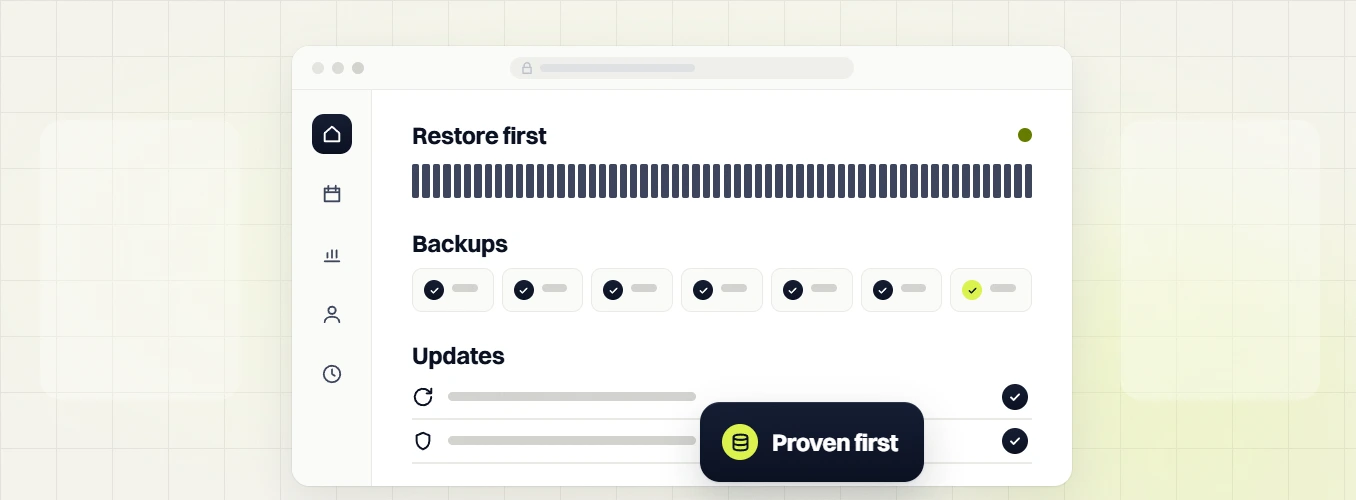
Access, baseline scan, and backup on day one
Day one. Access, credentials, and a full baseline security, speed, and accessibility scan, all documented in writing. First off-site backup taken and verified before we change anything. A clear paper trail if a decision needs to be made later.
WP admin, hosting, DNS, GBP, analytics, and EMR API. All logged with a rotation schedule the practice manager owns.
Nightly backup already running before end of day one. First backup restored on staging to prove the restore path actually works.
Security posture, Core Web Vitals baseline, plugin health, disk usage, accessibility gaps. All captured before we touch anything.
Emergency numbers, ticket process, and 30-minute-response coverage. Practice manager and owner both have it inside 24 hours.
LocalMed, Solutionreach, Weave, RevenueWell, or Zocdoc widget mapped end-to-end. API keys logged. Vendor contacts saved.
Every form that touches patient data mapped from field to processor to storage. BAA status confirmed on each vendor.
LiteSpeed, CDN, and edge cache on your domain
Ongoing. Managed WordPress hosting on LiteSpeed with Quic.Cloud CDN and Cloudflare edge cache. WAF blocking bot and brute-force traffic before it reaches your server. 99.99% written SLA with credits if we miss. Auto-renewed SSL with HSTS enforced.
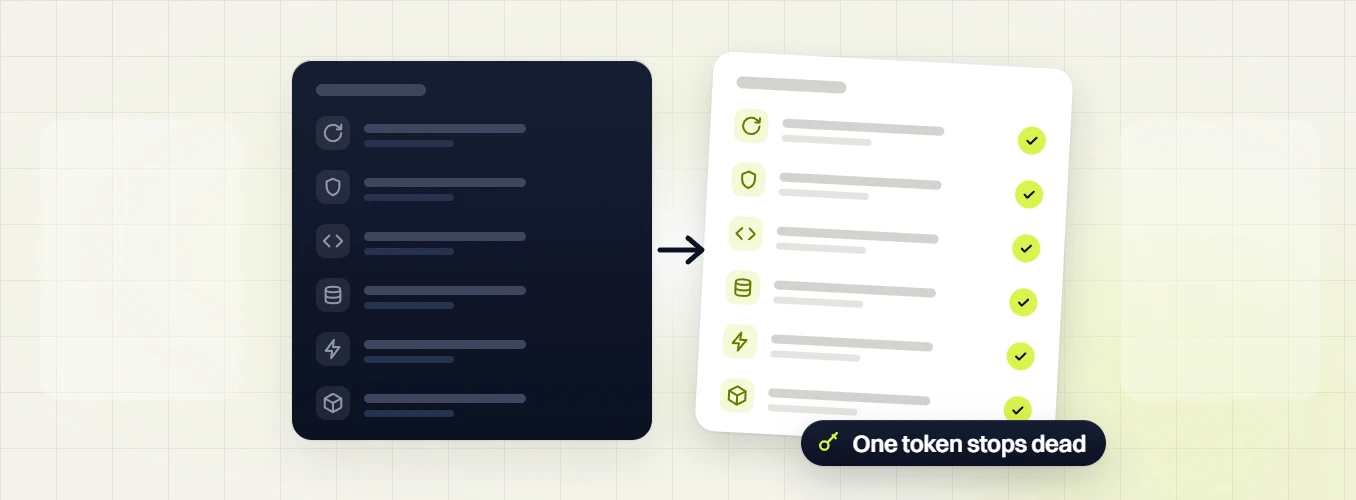
Not shared, not cheap-tier. Practices run on isolated resources with proper caching and PHP tuning tuned for booking-widget calls.
Cloudflare plus Quic.Cloud CDN so a nearby patient gets HTML from a POP nearby, not from a single origin thousands of miles away.
Bot traffic, brute-force login attempts, and known-bad IP ranges blocked at the edge. No traffic tax on your origin server.
Auto-renewed SSL plus HSTS. Mixed content flagged and fixed. Search Console and Google Ads never break from a certificate expiry.
Off-site, encrypted, retained 30 days on the base tier and 90 days on Premium and above. Restore proven on staging quarterly.
Gravity Forms with BAA add-ons or custom TLS 1.3 flows. Encrypted at rest. Vendor BAA register updated yearly for every processor.
Weekly patches with tested rollback
Every week. Core and plugin patches tested on staging before they touch production. If a patch breaks something, rollback in under 5 minutes. Small content edits included. Email your account lead, turnaround the next business day.
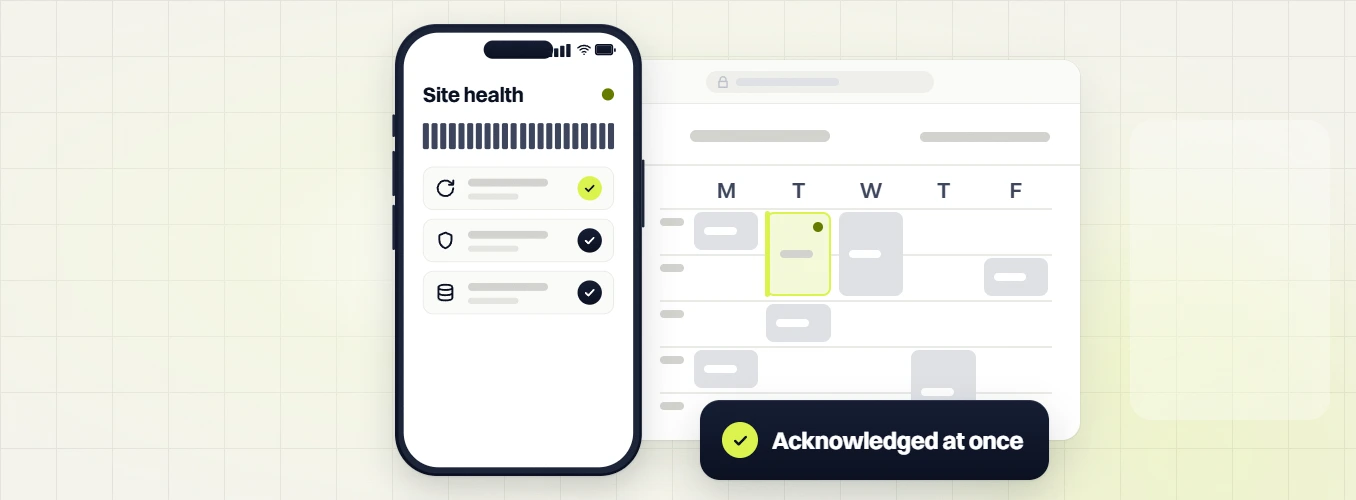
Patched to current stable weekly. Never behind by more than one minor release. Security releases inside 48 hours of publication.
Every third-party plugin update tested on staging with real form submissions and eye exam booking flow before production ever sees it.
LocalMed, Solutionreach, Weave, RevenueWell, and Zocdoc tested against real eye exam appointment flow every patch. Broken widgets caught before patients hit them.
4 tickets per month covered. Copy tweaks, image swaps, hours updates, new vision insurance carrier adds, and small treatment page edits like dry eye or myopia management.
Every deploy has an automated rollback path. Failed patches revert without a support ticket war room or a 3-hour engineering call.
LocalBusiness, MedicalBusiness, and Optometrist markup validated against Rich Results after every deploy so map-pack rankings stay steady.
Uptime, speed, and malware watched every 60 seconds
24/7. Uptime pings every 60 seconds from 5 global POPs. Malware scan every 24 hours with automatic quarantine. Speed check hourly. If anything trips, a named on-call engineer responds inside 30 minutes even on nights and weekends.
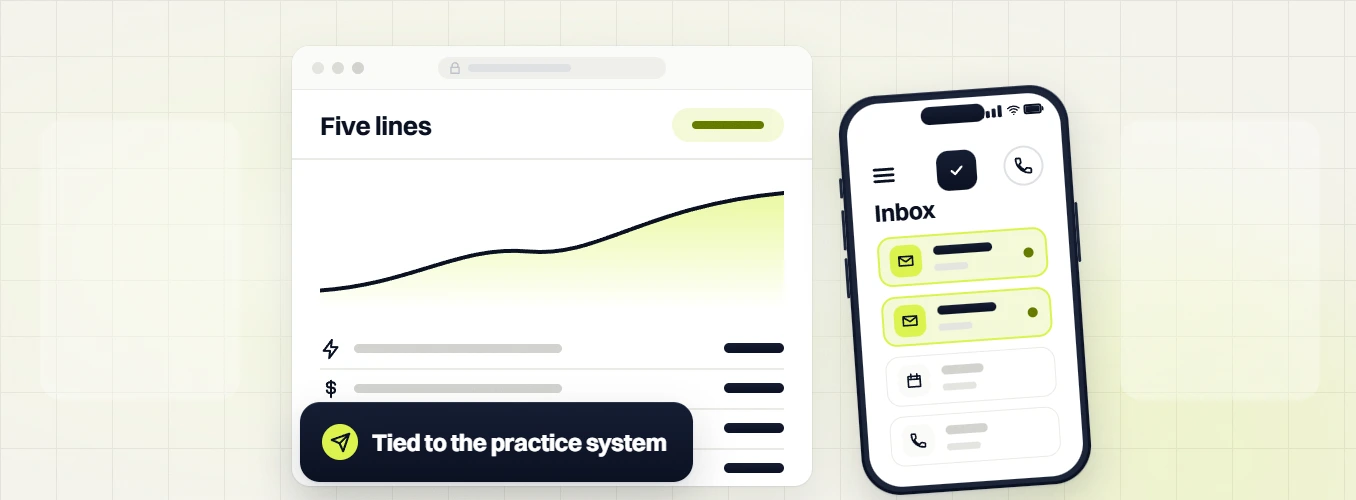
5 global POPs (US, EU, APAC) pinging your site, eye exam booking flow, and booking-widget webhook. False-positive filtering built in.
Full-site scan against known malware signatures and WordPress-specific IOCs. Auto-quarantine and owner notified in the same hour.
Core Web Vitals and full-page load tracked hourly. Regressions surfaced before they hit CrUX field data and drop map-pack rank.
On-call engineer paged if anything trips. A real human, not a chatbot. Applied to 25+ optometry practices currently in production.
Daily Google Business Profile check for hijacked hours, suspended listings, or unauthorized category changes on your practice listing.
Every critical incident gets a written summary inside one business day: what happened, what we did, what changes so it does not repeat.
One monthly report tied to real practice metrics
Every month. One clear report showing uptime, average page load, patches applied, edit tickets closed, and any incidents (with root cause and fix). Sent to the owner and practice manager. Read in 90 seconds. No dashboards to check.
Monthly uptime measured against the 99.9% or 99.99% SLA. Credit auto-issued if we miss. No claim form, no bargaining.
Real-user data from the Chrome UX Report. Not lab scores. What your patients actually experience on their phones on your eye exam booking page.
What we patched, what we edited, what stayed the same. Full audit trail in case a compliance question comes up 6 months later.
LocalMed, Solutionreach, Weave, RevenueWell, or Zocdoc uptime, missed bookings recovered, and any vendor-side API changes we absorbed.
GA4 booking events reconciled against your practice EMR with the count of patients booked from web sources for the month.
Zero incidents most months. When something does happen, root cause and fix documented. No mystery, no cover-up, no repeat.
Four maintenance tiers for every stage of growth
Pick the tier that matches your practice size. Move up or down anytime with 30 days notice. No setup fees. Hover any feature name for a plain-English explanation.
Established practices with stable traffic and no active paid spend.
Practices running active SEO or paid spend that need real protection.
High-spend practices where every PageSpeed point is a CPA point.
Enterprise or 5+ locations. White-label or regulated workloads.
Every maintenance feature, tier by tier
HOVER FOR DETAILUptime + security +
Content maintenance +
Performance + tech +
SEO + local +
Reporting + analytics +
Compliance + enterprise +
Team + service level +
Real practices, real numbers
Optometrist website maintenance questions, answered
From real onboarding calls with optometry practices. Anything else, ask on the call and we answer in the recap.
How much does optometrist website maintenance cost per month?
+
Optometrist website maintenance from Redefine Web runs $199/mo, $299/mo, $499/mo, and custom for multi-location groups. The base tier ($199/mo) covers a single-doctor practice with hosting, weekly patches, nightly backups, uptime monitoring, and 2 edit hours. Premium ($299/mo) adds same-day edits, priority security patches, and an annual intake-form privacy audit. Enterprise ($499/mo) adds 10 edit hours, a written 99.99% uptime SLA with credits, a WAF, and quarterly performance tune-ups. Custom fits multi-location DSOs with per-location uptime reporting and a dedicated optometry developer. Hosting is included on every tier. No separate Kinsta or WP Engine bill.
What does website maintenance include?
+
Optometrist website maintenance covers hosting, weekly WordPress core and plugin patches on a staging clone, nightly encrypted off-site backups, uptime monitoring pinging every 60 seconds from 5 global POPs, security scans, priority CVE patching inside 48 hours, weekly intake-form delivery tests on Gravity Forms or Formstack, weekly booking-widget checks on LocalMed, Solutionreach, Weave, RevenueWell, and Zocdoc, EMR endpoint checks on RevolutionEHR, Compulink, and Crystal PM, small content edit hours, monthly Google Business Profile posts, VSP, EyeMed, and Davis Vision eligibility form logic checks, and one monthly written report. Every plan covers eight work areas so the practice site stays fast, safe, private, and current without ad-hoc invoices. The American Optometric Association covers practice standards, but nothing on WordPress uptime, plugin CVEs, or booking widget drift. That gap is exactly what an optometrist website maintenance plan closes for a practice, month over month, with a single fixed line item and one owner in writing.
How much maintenance does WordPress need?
+
An optometrist website running WordPress needs weekly attention, not monthly, and not quarterly. Four moving parts drive that cadence. First, WordPress core, PHP, and plugin CVEs land every week and unpatched sites get compromised inside 90 days per HIPAA Journal reporting on healthcare-adjacent breaches. Second, optometry booking widgets like LocalMed, Solutionreach, Weave, and RevenueWell break silently when either side pushes an update, and a broken widget costs 40 to 90 eye exam visits a month. Third, intake and contact-lens ordering forms carry health-adjacent patient data and need weekly delivery proof plus encrypted transport plus a BAA on file. Fourth, Google factors page-speed signals into local rankings per web.dev Core Web Vitals, so a slow optometry site drops on optometrist near me and eye exam near me queries. Optometrist wordpress maintenance handled weekly keeps every one of those risks off the practice manager desk, and off the owner inbox at 9pm on a Friday.
Do you offer optometrist website hosting inside the maintenance plan?
+
Yes. Optometrist website hosting is included on every tier at no separate line item. The stack runs LiteSpeed (4x faster than Apache on WordPress workloads, handles up to 100k monthly page views on the base tier), Quic.Cloud CDN for global edge caching, DDoS protection, image optimization, automatic SSL renewal, PHP 8.x with MySQL 8, and one-click staging on every tier so every update is tested before it hits production. Enterprise and Custom upgrade to managed WordPress hosting equivalent to Kinsta or WP Engine, with higher resource limits, redundant caching, and a 15-minute incident investigation window. Uptime is measured monthly by external monitoring.
How is optometrist WordPress maintenance different from generic WordPress maintenance?
+
Optometrist WordPress maintenance carries three layers of workflow generic shops skip. Intake-form privacy: patient intake, contact lens ordering, and vision insurance eligibility forms carry health-adjacent data. An optometry-specific shop signs BAAs with the form processor and encrypts transport and storage. Generic shops treat forms as any other form. Booking-widget upkeep: LocalMed, Solutionreach, Weave, RevenueWell, and Zocdoc widgets break the moment WordPress core or a plugin releases an update. An optometry maintenance service tests the widget weekly and coordinates vendor-side updates. Vision insurance form logic: VSP, EyeMed, and Davis Vision eligibility fields break after plugin updates. Generic shops find out the widget has been down 3 weeks when patients stop calling.
What happens if our optometrist website goes down?
+
Uptime monitoring on every plan pings your site every 60 seconds from three geographic regions. If two consecutive pings fail, an alert fires to the on-call optometry developer. Response time by tier. Base tier ($199/mo): 1-hour response in business hours, 2-hour otherwise, 99.9% uptime target. Premium ($299/mo): 14-minute average incident response, 99.9% uptime target. Enterprise ($499/mo): 2-hour critical-incident SLA with credits, 99.99% uptime SLA. Custom: 1-hour critical-incident SLA with per-location uptime reporting. Standard flow: confirm the outage, check host, DNS, SSL, and application layer, isolate and fix, restore from backup if the fix runs past 30 minutes.
Do your plans include content edits?
+
Yes. Every tier includes monthly content edit hours turned around in 24 hours (same-day on Premium and above). Base tier: 2 hours per month covering doctor bio tweaks, hours updates, new vision insurance carrier adds, and small treatment page copy edits like dry eye or Optomap imaging. Premium: 5 hours per month with same-day turnaround, plus seasonal offer swaps, new blog post publishing, and Google Business Profile post writing. Enterprise: 10 hours per month, plus new landing page creation off existing templates, per-treatment offer testing on myopia management or orthokeratology, and monthly SEO content refresh. Custom: scoped to your plan, no set cap, with new page creation and multi-location content coordination. Critical bug fixes run in 4 hours.
Are your optometrist website care plans HIPAA-aware?
+
Yes. Every care plan runs on privacy-aware infrastructure by default. Premium and above add an annual intake-form privacy audit. Custom covers multi-location workflow reviews. Privacy-aware means: intake-form processors run Gravity Forms with BAA-covered add-ons, Formstack, or custom TLS-encrypted flows checked weekly. Redefine Web facilitates BAAs with your form processor, host, and any third-party tool touching patient data. TLS 1.3 on the site, encrypted at rest on the form processor. Role-based CMS accounts with audit trail on patient data views. Premium and above get a written intake-form privacy audit yearly showing every point where patient data enters, moves, or leaves the practice site.
Can we cancel our plan anytime?
+
Yes. Every plan runs on 30-day written notice after the first 3 months. No exit fees, no clawback of previous work, no penalty clauses. On cancellation you get a full handover: hosting credentials transferred to your new provider or in-house team, codebase access (GitHub or Bitbucket repo access) transferred, plugin inventory covering the stack, custom code, and any accounts (Cloudflare, monitoring, backups) tied to the site, booking-software integration keys (LocalMed, Solutionreach, Weave, RevenueWell, or Zocdoc API keys) staying with the practice, and a written summary of the last 90 days of updates, incidents, edits, and backups.
Do you provide optometrist website maintenance for sites you did not build?
+
Yes. About 40% of our maintenance practices are on sites we did not originally build. Onboarding starts with a full security, performance, and privacy audit so the baseline is documented before we take over. The audit covers security posture (WordPress core version, plugin CVEs, admin user audit, file permissions, malware scan), performance baseline (page-speed audit, hosting stack review), intake-form privacy (every form that captures patient data mapped end-to-end), booking-widget health (LocalMed, Solutionreach, Weave, RevenueWell, or Zocdoc integration tested), EMR endpoint checks (RevolutionEHR, Compulink, or Crystal PM), and backup state (existing backups verified as restorable). The written audit lands on day 7. Priority fixes are handled inside week 2.
How to do website maintenance?
+
Website maintenance runs in six clear steps for an optometry practice. One: clone the production site to staging so every patch is tested before it touches live. Two: apply WordPress core, PHP, theme, and plugin updates on staging, then run real form submissions and a full eye exam booking flow through LocalMed, Solutionreach, Weave, or RevenueWell to prove the booking still lands. Three: run a full malware scan, a Core Web Vitals check, and an accessibility spot-check against WCAG 2.1 AA. Four: take a fresh nightly encrypted off-site backup and verify the restore path on staging so a failed patch has a proven path back. Five: push tested changes to production with an automated rollback in under 5 minutes if anything drifts. Six: log the ticket, close it in writing, and roll the change into the monthly report sent to the owner and practice manager. Optometrist wordpress maintenance done this way keeps every LocalMed, VSP, EyeMed, and Davis Vision path working without a war-room call.
How long does WordPress maintenance take?
+
Weekly WordPress maintenance on an optometry site takes 60 to 90 minutes of engineering time per week when nothing has drifted. Onboarding runs 5 to 7 business days and covers access transfer, credential rotation, a full baseline security and Core Web Vitals scan, first off-site backup with a verified restore on staging, a written intake-form privacy map, and a booking-widget inventory tied to LocalMed, Solutionreach, Weave, RevenueWell, or Zocdoc. Weekly cadence: 20 minutes of patching on staging, 15 minutes of real booking-widget smoke tests, 10 minutes of Core Web Vitals check, 15 minutes of push plus post-deploy verification, and 10 minutes of ticket logging. Monthly reporting adds 30 minutes. Critical incidents run on a 30-minute response inside business hours and a 2-hour SLA otherwise on Base and Premium. Enterprise and Custom carry a 2-hour written SLA on all incidents with credits. Optometrist wordpress maintenance is engineered for zero surprises, not a rescue call every quarter.
How do you monitor Compulink, RevolutionEHR, and Crystal PM integration health?
+
Yes. Optometrist website care plans cover EMR endpoint checks on Compulink, RevolutionEHR, and Crystal PM as part of weekly monitoring, not just quarterly review. Every plan tests the read endpoints the practice site uses for appointment lookup, doctor bio pulls, or eligibility routing so a silent EMR API change never breaks patient-facing booking. Where the practice runs Solutionreach or Weave alongside the EMR, the handoff is tested end to end from form submission to appointment write. If an endpoint returns 4xx or 5xx twice inside 24 hours, an alert fires to the on-call engineer, root cause is logged inside a business day, and the EMR vendor is contacted before the front desk hears from a frustrated patient. EMR integration health lands on the monthly report, tier by tier, with response codes and latency. Enterprise and Custom add quarterly per-endpoint response-time trending so a slow endpoint is caught before it becomes a broken booking. Optometrist website care plans treat the EMR as first-class infrastructure.
What do the monthly maintenance reports cover?
+
Every plan reports on uptime against SLA, patches applied, edit tickets closed, booking-widget health across LocalMed, Solutionreach, and Weave, page-speed on money pages, Google Business Profile posts, and incidents with root cause and fix. The report lands the first Monday of every month on one page, readable in 90 seconds, sent to the practice owner and manager. Enterprise and Custom add Core Web Vitals field data per web.dev, booked-patient reconciliation against the practice EMR, and per-location breakdowns for multi-site groups. Reporting tool: a Redefine Web hosted dashboard plus a static PDF archived monthly for compliance and board review. Cadence: monthly, always on the first Monday of the month. Ad hoc reports are available on request for board meetings or annual audits. Optometrist website care plans never leave the practice manager wondering what the maintenance retainer bought that month, and never leave the owner surprised at renewal. Every number reconciled, every incident owned, every patch signed off in writing.