Pet products web design that turns first-time visitors into subscribers
Pet products web design for food, treats, supplements, and wellness brands on Shopify and WooCommerce. Every store launches with variant pickers above the fold, Recharge subscribe-and-save wired from day one, ingredient sourcing on the PDP, and 98+ mobile PageSpeed. Stores convert at 3.8% on average, verified against tracked orders.
Three ways your current store loses first orders
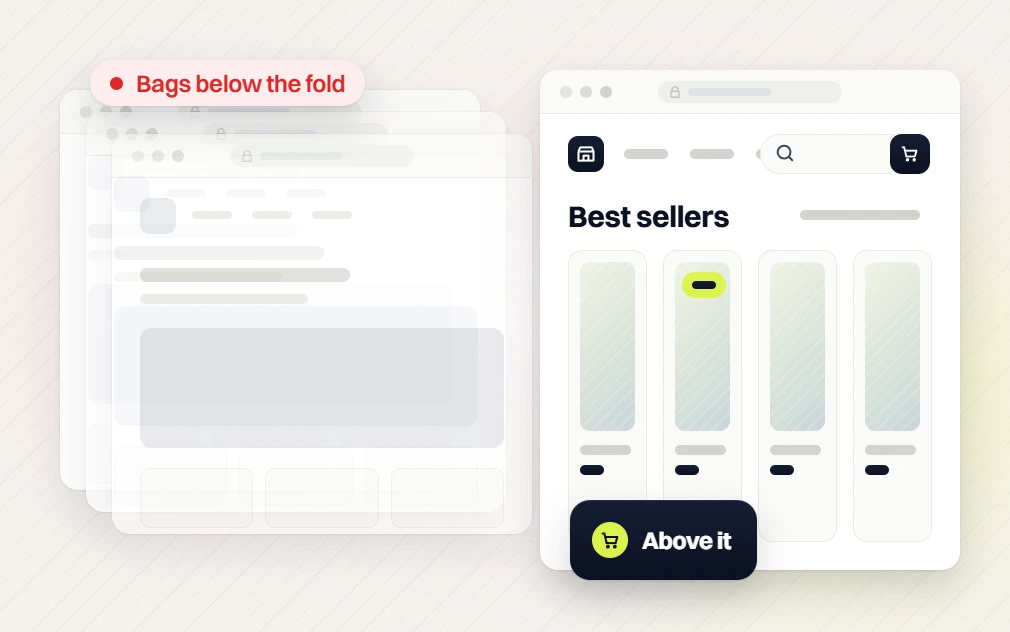
Shopify PDP buries weight, flavor, and breed variants below the fold
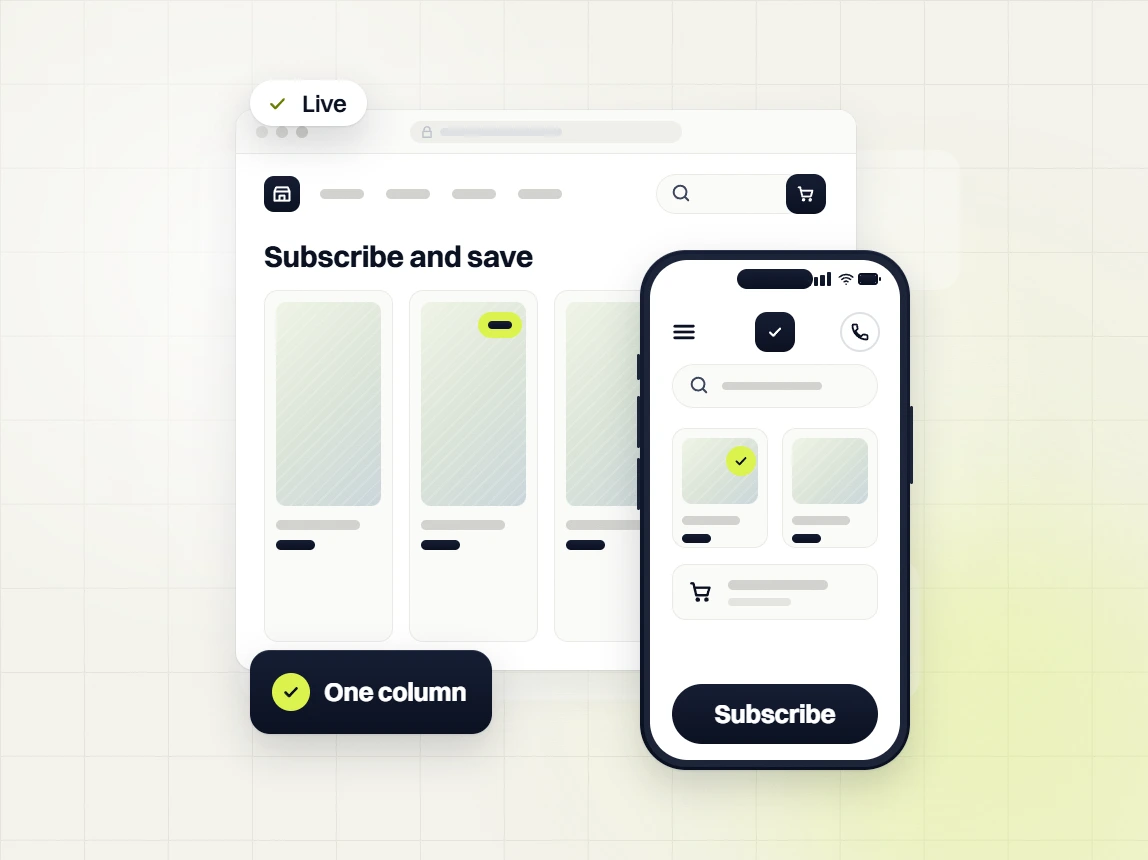
Pet parents open the PDP on a phone to pick between a 15 lb bag and a 30 lb bag. When the variant picker sits below the description block, 43% of mobile visitors bounce back to Google. Move the variant picker above the fold with weight, flavor, and breed size shown as clear buttons and add-to-cart moves inside 90 seconds.
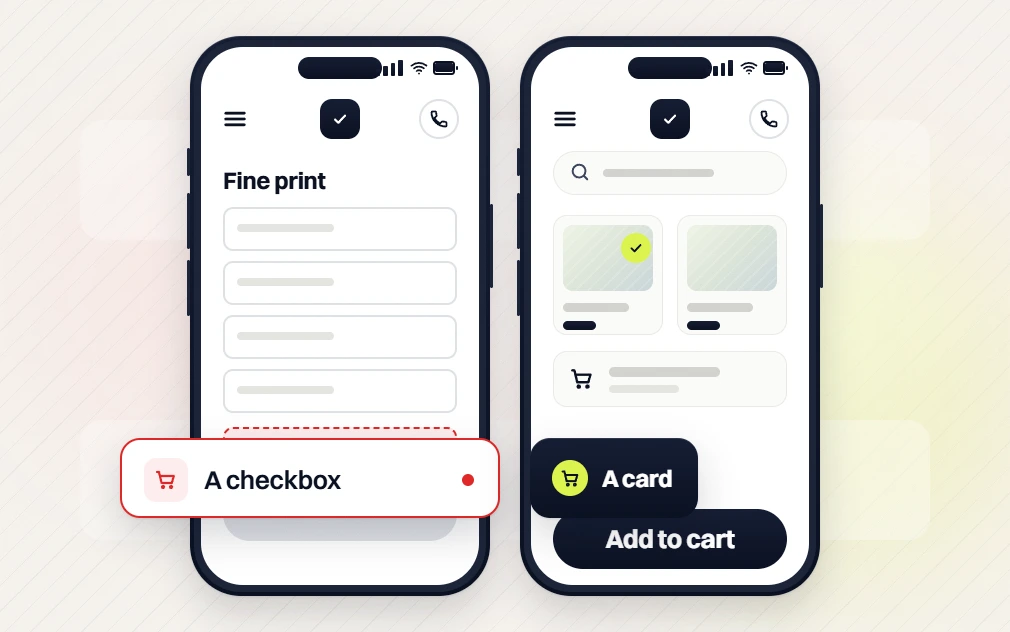
Recharge widget reads like a legal disclaimer, not a save-money offer
The default Recharge widget on Shopify reads as a checkbox with fine print. Subscribe-and-save take-rate sits at 8%. Rebuild it as a visual card that shows the real dollar savings, the reorder cadence, and the skip-anytime promise and the take-rate climbs to 24%. That single card moves subscription LTV more than any Klaviyo flow.
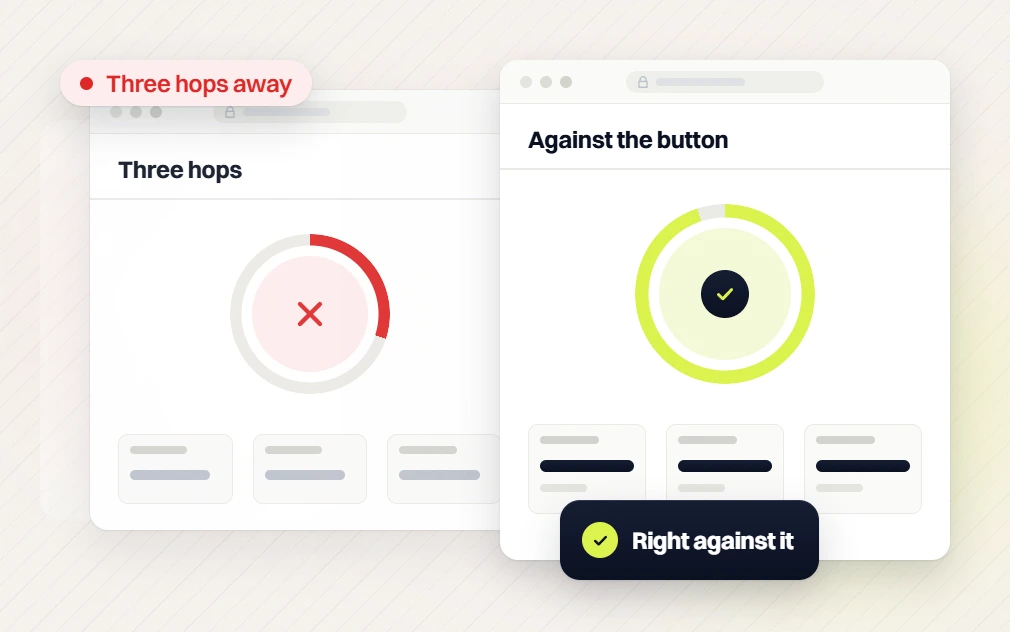
Ingredient sourcing story lives on the About page, not the PDP
Pet parents want to know where the salmon oil came from, whether the chicken is human-grade, and whether the recipe is AAFCO-compliant. When that story lives on the About page three clicks from the buy button, add-to-cart drops. Move sourcing and feeding-guide blocks onto the PDP itself and trust reads the second the shopper lands.
Three outcomes every pet products web design build produces
Variant pickers above the fold, a Recharge subscribe card with real dollar savings, and a shorter checkout move visitor-to-order past 3.8% inside 60 days.
Every page goes live with product schema, buying-intent URL slugs, and pet ecommerce web design copy tuned for Google. No SEO retrofit six months later.

Your name on the domain, the Shopify admin, Recharge, Klaviyo, and the Figma file at handoff. Walk away with the store whole if you decide to leave.
Four stages. Every step ends in a sign-off
Fixed scope, fixed timeline, fixed outcomes. Nothing moves to the next stage until your leadership signs the gate deliverable, and every milestone lands on a calendar date.
Discovery that earns the brief
A 20 to 30 page brief signed by founder, ops lead, and marketing lead. Brand-owner interview, technical audit of your current storefront plus Shopify plus analytics plus ad accounts, competitor benchmark of 5 category peers, and Shopify data mapping. Nothing moves until it is locked.
Design built against your storefront, not a Dribbble reel
Mobile-first design system with PDP conversion patterns and cart plus subscribe flow baked in from wireframe. Every component engineer-validated the same week it is drawn. You walk away with an editable Figma file your team owns.
Engineering plus integrations that survive your next Shopify upgrade
Shopify with Liquid plus Hydrogen components by default. Headless Next.js when the subscription flow demands it. Core Web Vitals treated as an acceptance criterion. Recharge, Klaviyo, ShipStation on the subscription side, GA4, Meta CAPI, and review platform wired in with server-side backup.
Launch and 30 days of daily monitoring
Cutover runs off-hours with the whole team on a bridge. Search Console, error logs, Shopify orders, and Core Web Vitals watched daily for 30 days. On day 31 you take the keys and go, or roll into a website maintenance retainer.
What you actually get from our pet products website design services
Fixed scope. Fixed timeline. Fixed outcomes. Each phase below has a defined deliverable, a written sign-off, and a date on the calendar.
Two weeks. Brief signed by founder, ops, and marketing
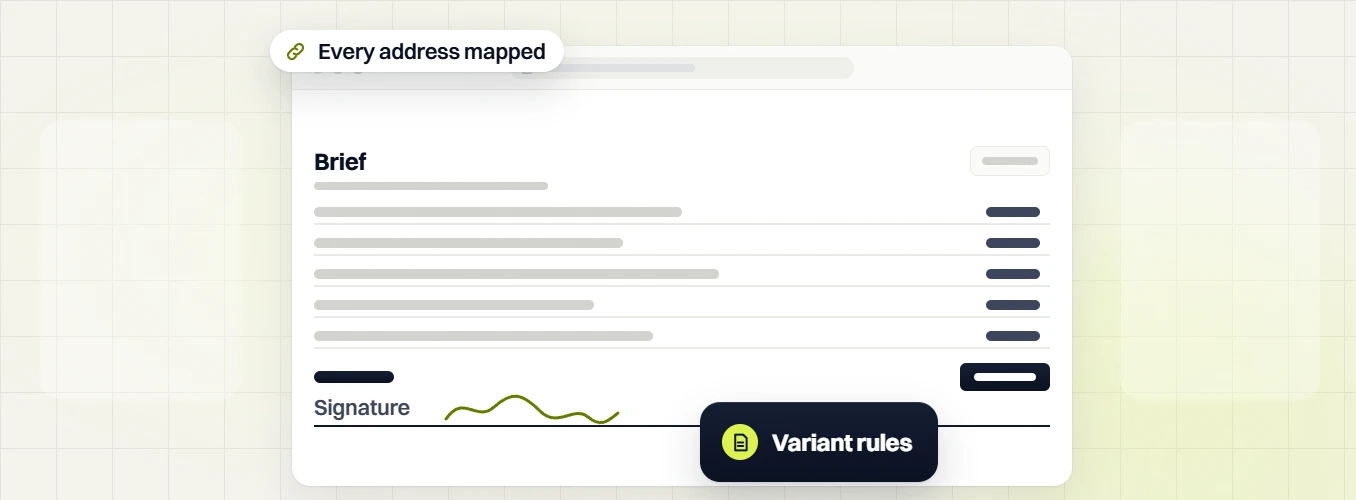
Brand-owner interview, technical audit of your current storefront, Shopify + analytics + ad accounts, competitor benchmark of 5 category peers, and Shopify data mapping. The output is a written brief your founder, ops lead, and marketing lead sign off on before we design a pixel or write a line of code.
Three to four working sessions with founder, ops lead, and creative lead. How pet parents currently discover you and why they convert or bounce.
Current site, Shopify theme, ad accounts, analytics, subscription posture, pixel setup, and performance baseline against Core Web Vitals.
Side-by-side comparison of 5 category brands on mobile PDP path, subscription flow, ingredient story surface, and organic visibility for target buying-intent queries.
SKU taxonomy, variant rules (weight, flavor, breed size), collection architecture, and Recharge subscription plan mapping locked to the new store before design starts.
Full page inventory with URL structure. Buying-intent slugs (grain-free-dog-food, salmon-oil-for-cats) carry forward so organic rankings hold through the migration.
A 20 to 30 page document. Founder, ops lead, and marketing lead sign before anything else moves.
Weeks 3 to 6. Mobile-first pet DTC design system
Mobile-first design system with PDP variant picker, Recharge subscribe-and-save card, and ingredient sourcing block baked in from the wireframe stage. Every component validated by the engineer in the same week it is drawn. You get a Figma file your team owns, not a slide deck you cannot edit.
Weight, flavor, and breed-size variants surfaced above the fold as clear buttons. Add-to-cart moves inside 90 seconds instead of 5 taps.
Visual save-money card next to the one-time price. Real dollar savings shown, reorder cadence set, skip-anytime promise visible.
Sourcing map, sourcing story, AAFCO compliance callout, and allergen flags built onto the PDP. Trust reads the second the shopper lands.
Feeding calculator tied to pet weight and age. Size chart for collars, beds, and apparel with clear measurement guides.
Full component library, design tokens, and page templates handed over. Your team can swap seasonal drops and new SKUs without touching code.
Real-pet photo reviews with breed and weight tags surfaced on PDP and collection pages. Star ratings visible in organic SERPs.
Weeks 7 to 12. Core Web Vitals as acceptance criterion
Shopify with Liquid plus Hydrogen components by default. Headless Next.js when the subscription flow or catalog size demands it. LiteSpeed or edge CDN, Core Web Vitals as an acceptance criterion (not a wish), WCAG 2.1 AA verified before launch. Nothing goes live without hitting the numbers.
Default stack for most pet DTC brands. Fastest launch, tight Recharge integration, and the tightest GA4 wiring.
For brands with deep WordPress content marketing or existing WP infrastructure. Same speed and Core Web Vitals bar as Shopify.
Available on Scale and Enterprise tiers when catalog size or subscription throughput justifies the added stack.
LCP under 1.8s, CLS under 0.05, INP under 200ms on mobile. Verified in Lighthouse and CrUX before DNS goes live.
Axe DevTools scan, manual audit, NVDA and VoiceOver screen-reader passes before go-live. ADA drift covered by maintenance plan.
Product schema on every PDP, Organization schema on the home page, and Review schema on collection pages. Star ratings visible in organic SERPs.
Weeks 8 to 10. Every tool wired with a documented layer
Recharge, Klaviyo, Yotpo, ShipStation integrations. GA4, Meta CAPI, TikTok pixel, and Google Ads pixel wired with server-side backup. Amazon and Chewy marketplace feeds keep inventory in sync. Built with documented abstraction layers so the next platform swap is days, not months.
Subscribe-and-save card on PDP, customer portal with skip and swap, and Klaviyo churn-save flows on failed billing. Stay AI and Ordergroove supported as swap options.
Welcome, abandoned cart, browse abandon, post-purchase, and churn-save flows wired to Shopify order data with campaign-source tagging.
Real-pet photo reviews with breed and weight tags surfaced on PDP and collection pages. Review request texts fire 14 days after delivery.
Codisto or Shopify Marketplace Connect keeps inventory, pricing, and orders in sync between Shopify, Amazon Seller Central, and Chewy. One source of truth.
TikTok Shop widget on PDP so viewers of your unboxing content can check out in-app. Meta shop feed synced to Instagram and Facebook.
GA4 conversion events, Meta CAPI, TikTok, and Google Ads pixels wired with server-side backup. iOS-17-aware attribution survives cookie loss.
Week 13. Cutover, 301 map, and 30-day watch
Production DNS cutover, 301 map from the old store, uptime plus Core Web Vitals monitoring live, and a 30 to 90 day post-launch support window. Your team keeps the design files, the Shopify admin, and the repo. Walk away with the store whole if you ever leave.
Whole team on a bridge for cutover. Search Console, error logs, and Shopify orders watched hourly for the first 24 hours after DNS flip.
Every legacy URL mapped before cutover. Grain-free-dog-food, salmon-oil-for-cats, hip-and-joint-supplement all carry over. Zero 404s on organic winners.
Core Web Vitals, Shopify orders, GA4 conversions, and error logs reviewed every business day for 30 days after DNS goes live.
Pingdom, Better Uptime, or your tool of choice wired to Slack or SMS with hourly checks across the PDP and checkout flow.
30 days on Launch, 60 days on Growth, 90 days on Scale and Enterprise. All bugs, all subscription card tweaks, all PDP swaps included.
Design files, Shopify admin, Recharge, Klaviyo, Yotpo, GA4, and repo all in your name at handoff. Agency access removed on day 91.
Four web design tiers for every stage of growth
Every line item listed. The quote you get is the invoice you pay. Take any tier as a project fee, or split it into the flat monthly plan.
Fast, credible site converting existing reputation.
Full booking engine: scheduling, checkout, customer reporting.
One brand, every office found, location-level tracking.
Design system the whole group launches on. Ops-team-spec integrations.
Every web design feature, tier by tier
HOVER ANY FEATURE FOR A PLAIN-ENGLISH EXPLANATIONWebsite + design +
Booking + patients +
SEO + visibility +
Care + support +
Real pet brands, real numbers
Common pet products web design questions
Straight answers on cost, timeline, platform, PDP variant picker, Recharge subscription, and ADA compliance. Call or email if we missed yours.
How much does pet products web design cost?
+
Pet products web design at Redefine Web runs from $1,500 on Launch to $25,000 and up on Enterprise. Every project is a fixed-price quote, not a monthly bill. Launch is a Shopify starter build for single-collection brands with 5 to 25 SKUs, one PDP pattern, click-to-cart above the fold, and Klaviyo wired in. Growth adds Recharge subscribe-and-save with real dollar savings visible, a breed and weight recommendation quiz, and a real-pet review system. Scale adds unlimited SKUs, multi-species architecture (dog, cat, small pet), veterinarian endorsement callouts, and custom subscription logic tied to bag weight and pet age. Enterprise adds headless Hydrogen or hybrid architecture, wholesale B2B tiers, marketplace feed sync, and SLA-backed uptime. Ongoing website maintenance runs on a separate monthly plan starting at $199/mo, or you take the store in-house on day 91. Pricing sits in the SOW before the first invoice.
Every quote line ties to a deliverable on the SOW. If a line is missing, the price does not include it.
What is included in pet ecommerce web design services?
+
Every build includes site design on Shopify or WooCommerce, a PDP with variant picker for weight, flavor, and breed size above the fold, a Recharge subscribe-and-save card with real dollar savings shown, an ingredient sourcing block with sourcing story and AAFCO callout, a feeding-guide chart, a size chart for collars and apparel, Klaviyo email plus SMS flow wiring, a full ADA WCAG 2.1 AA pass, 98+ mobile PageSpeed, a 301 redirect map from the old store, and post-launch analytics. Optional add-ons include a TikTok Shop widget, Amazon and Chewy marketplace feed sync through Codisto or Shopify Marketplace Connect, and a quiz-based product recommender that returns a filtered SKU shortlist based on species, weight, age, and diet type. Every component sits in the SOW with a fixed price and a calendar date, not a rolling window.
Every deliverable ships with a written acceptance test. If a component fails the test, we rebuild it before we invoice for that milestone.
What conversion rate does a pet brand web design build hit at launch?
+
Post-launch pet DTC stores from our roster average 3.8% visitor-to-order conversion in the first 60 days, versus a 1.4% industry baseline from Shopify Plus benchmark reports. The gain comes from three levers: variant picker above the fold, Recharge subscribe-and-save with real dollar savings shown, and a 98+ mobile PageSpeed that stops the pre-cart bounce. Every number is tracked in GA4 with server-side events, not last-touch guesses. Emergency-need SKUs like joint supplements and calming treats book higher (4.5% to 6%) because pet parents with an anxious dog or a senior cat convert on the first visit. Baseline your current numbers before we start. On day 30 we send the first report against your baseline; on day 60 we send the second. If the number does not move, the levers get rebuilt at no extra cost. That commitment sits in the contract.
Baseline runs on your last 90 days of Shopify orders. New numbers land in the same GA4 property, no vendor lock.
How long does a pet products website design project take?
+
Six to ten weeks for a Shopify starter build with 5 to 25 SKUs, 10 to 14 weeks for a full DTC rebuild with Recharge, Klaviyo, a custom PDP variant picker, and content migration, and 16 to 22 weeks for headless Hydrogen builds with ERP or 3PL integration. The date on the SOW is the date you launch, not a rolling window that drifts every two weeks. Discovery runs weeks 1 to 2, design weeks 3 to 6, build weeks 7 to 12, QA and content weeks 12 to 13, then DNS flip. Every milestone (wireframe sign-off, design sign-off, staging review, go-live) carries a calendar date signed by your founder, ops lead, and marketing lead. Nothing moves to the next stage until the current one is signed. If a milestone slips, we cover the calendar gap at no extra cost. Late is on us, not on you.
Every calendar date lands in a shared Notion or Asana board your team owns. No status meetings, no email chains, no surprise slips.
Do you build pet products web design on Shopify or WooCommerce?
+
Both. Shopify handles 80% of the pet DTC builds we do because the app ecosystem for pet is deep: Recharge and Stay AI for subscriptions, Rebuy for cross-sell, Yotpo for reviews, Klaviyo for email and SMS, TikTok Shop for social checkout, and Codisto or Shopify Marketplace Connect for Amazon and Chewy feed sync. WooCommerce fits when the brand needs custom B2B tiers, deep WordPress content marketing, or existing WordPress infrastructure your team already maintains. We pick the platform against your SKU count, subscription mix, and content-to-commerce ratio, not against a preferred vendor kickback. See the Shopify help center for a full breakdown of the Shopify plan tiers. The wrong platform pick costs you six months of migration pain later. The right one runs for the next five years.
The pick lives in the discovery brief before design starts, so the trade-offs are documented for your team to reference later.
Migration includes redirect map and content port before DNS flips.
Do you integrate Recharge for pet food subscription flows?
+
Yes. Recharge is our default for pet food, treats, and supplement brands because 42% of pet DTC revenue comes from repeat subscription orders. We wire the widget as a subscribe-and-save card on the PDP with real dollar savings visible, build the customer portal with skip and swap flows, and set up Klaviyo for churn-save emails on failed billing and pre-cancel. Stay AI and Ordergroove are supported alternatives when the brand already runs one of those. Subscription LTV climbs 3.2x in year one on average across our pet roster once the card, the portal, and the churn-save flows are wired. Pet parents want to skip a shipment when the bag is still half-full, swap flavors between orders, and change delivery cadence without a support ticket. The portal handles all three in one screen.
Reporting on subscription MRR, churn, and skip rate lands in a Klaviyo dashboard your ops lead reviews weekly.
Portal styling matches the storefront so pet parents stay on-brand from cart to renewal.
Do we own the pet products website at handoff?
+
Yes. Every build goes live in your brand name with your logins. The Shopify admin, hosting, GA4 property, Recharge, Klaviyo, Yotpo, TikTok Shop, and every pixel key sit in your name at handoff. GitHub or Bitbucket repo under your organization from day one. Redefine Web has agency access only. If you leave, you leave with everything: theme source files, design files, and full documentation. 30 to 90 days of post-launch support is included with every build. After that, ongoing website maintenance moves onto a monthly plan starting at $199/mo, or you take it in-house on day 91. Agency access is revoked the same day. Your call. The contract locks all of this in writing before the first invoice, so ownership is not a negotiation later.
Handoff includes a two-hour walkthrough with your ops lead so nothing is a mystery on day 91 when we step off.
Every key sits under your billing card so we cannot hold anything hostage after handoff.
What is AAFCO pet food?
+
AAFCO stands for the Association of American Feed Control Officials, the group that writes model rules for pet food labels sold in the United States. An AAFCO-compliant recipe carries a nutritional adequacy statement (complete and balanced), a life-stage claim (growth, maintenance, all life stages), and a guaranteed analysis panel. Pet parents look for that panel before they add a bag to the cart. In a pet brand web design build, we push the AAFCO statement, the ingredient sourcing story, and the guaranteed analysis onto the PDP itself, not the About page. Weight, flavor, breed size, and life stage sit above the fold as clear buttons. See the AAFCO reference for how a compliant label reads. The FDA animal and veterinary rules cover the federal side. Both live on the PDP for every food, treat, and supplement brand we build.
The AAFCO block and the FDA link update in one place. If a recipe changes, the compliance callout follows the SKU.
Why is Shopify better than WooCommerce?
+
Shopify wins for most pet DTC brands because the app ecosystem for pet is deep and the launch window is short. Recharge and Stay AI handle subscriptions, Rebuy handles cross-sell, Yotpo handles reviews, Klaviyo handles email, and Codisto handles Amazon plus Chewy feed sync. WooCommerce wins when the brand already runs deep WordPress content, wants tight custom B2B tiers, or needs a stack a WordPress team can maintain in-house. In our pet ecommerce web design work, roughly 80% of builds land on Shopify and 20% on WooCommerce. We pick the platform against the SKU count, the subscription mix, and the content-to-commerce ratio, not against a preferred vendor kickback. The Shopify help center covers the day-one setup steps. Neither platform is universally better. The right pick is the one your team can run for the next five years.
The right pick sits in the discovery brief, signed by your founder, ops lead, and marketing lead before we design a pixel.
What is the difference between Klaviyo and Shopify?
+
Shopify is the ecommerce platform. It runs the storefront, the checkout, the payments, the product catalog, and the order database. Klaviyo is the email and SMS marketing platform that sits on top of Shopify. It reads the order data, the browse data, and the subscription data, then fires welcome flows, abandoned cart flows, browse abandon flows, post-purchase flows, and churn-save flows on failed billing. In a pet products website design build we wire both from the first day. Klaviyo pulls Recharge subscription events for churn-save, GA4 conversion events for source tagging, and Yotpo review requests 14 days after delivery. See the Klaviyo developer docs for the API and event schema. The two run together. Shopify handles the store, Klaviyo handles the relationship after the first order.
Both platforms carry version-locked configs in the repo so a swap in year three is a weeks-long job, not a months-long one.
How much does an e-commerce website cost?
+
For a pet products web design build, our fixed-price quotes run from $1,500 on Launch to $25,000 and up on Enterprise. Broad-market ecommerce quotes range wider. A DIY Shopify theme with a template costs a few hundred dollars plus the Shopify plan. A freelance designer runs $3,000 to $10,000 for a Shopify build with light custom work. A specialist agency (like ours) runs $8,000 to $60,000 depending on subscription complexity, SKU count, multi-species architecture, headless requirements, and marketplace feed sync. Custom builds with headless Hydrogen or a Next.js front end sit at $18,000 and up. Ongoing website maintenance runs on a separate monthly plan starting at $199 a month. Ask for a fixed scope, a fixed timeline, and a written sign-off on the brief before you compare quotes. A cheap number on a broken scope costs more than a fair number on a locked scope.
Ask us to send the SOW template. Every line is priced against a deliverable, not against a vague retainer.
Is there a monthly subscription for dog food?
+
Yes. Recharge, Stay AI, and Ordergroove all run monthly (or 4, 6, and 8 week) subscription plans for dog food, treats, and supplements on Shopify. Recharge is our default because 42% of pet DTC revenue comes from repeat subscription orders, and the Shopify app integration is the tightest. In a pet brand web design build we wire the widget as a subscribe-and-save card on the PDP with real dollar savings visible, build the customer portal with skip and swap flows, and set up Klaviyo for churn-save emails on failed billing. Pet parents want to skip a shipment when the bag is still half-full and swap flavors between orders. If your storefront makes that hard, you lose the second order. Subscription LTV climbs 3.2x in year one on average across our pet roster once the card, the portal, and the churn-save flows are wired.
Skip and swap flows are inside Recharge itself, not a support ticket. Every event pipes into Klaviyo for churn-save.
How to start an online pet shop?
+
Lock the brand, the SKU shortlist, and the supplier before the storefront. Pet parents buy on trust: AAFCO panels on food, sourcing story on treats, veterinarian endorsements on supplements. Pick Shopify unless you already run WordPress at scale. Wire Recharge from day one so the first subscribe-and-save order lands the same week the store goes live. Klaviyo covers welcome, abandoned cart, and post-purchase flows. Add Yotpo for real-pet photo reviews and Codisto or Shopify Marketplace Connect for Amazon and Chewy feed sync when you have inventory to spare. A pet ecommerce web design build with those wired takes 6 to 14 weeks depending on catalog size. See the Shopify setup guide for the day-one steps. Then run paid on Meta and TikTok against the buying-intent SKUs (grain-free dog food, salmon oil for cats, hip-and-joint supplement) that convert on the first visit.
Ask us for the launch checklist. It is the same one we ran on the last 22 pet DTC stores we built.
What KPIs does Redefine Web report on a pet products website design build?
+
We report against the numbers that move revenue. Visitor-to-order conversion rate on the hero SKUs, PDP add-to-cart rate against the variant picker, Recharge subscribe-and-save take-rate, mobile PageSpeed, LCP, CLS, INP, and organic sessions on the buying-intent slugs (grain-free dog food, salmon oil for cats, hip-and-joint supplement). Reporting runs in GA4 with server-side events, not last-touch guesses. The first report lands the day the store is 30 days live and covers the 60-day post-launch window. After that reporting cadence is monthly on a website maintenance plan or one-shot on the fixed-price build. Every metric on the report ties to a lever your team can pull the same week (PDP tweak, subscribe card copy, Klaviyo flow edit). Numbers without levers are decoration. Numbers with levers are how a pet brand web design build earns its price back.
Numbers ship on the same day of the month, every month, so trend lines are comparable across quarters.