
Affordable ppc management is possible if you know what to trim and what to protect. The trimmable pieces are custom reporting dashboards, agency-side account tooling passed through as line items, and quarterly business reviews longer than 20 minutes. The pieces to protect are weekly search term reviews, conversion tracking QA, ad copy testing, and landing page work. Every dollar cut from those 4 buckets shows up as wasted ad spend inside 60 days.
Real numbers help. A home services client pushed Google Ads conversions up 99% with a 67% lower cost per acquisition on a fixed-scope retainer. Gwinnett Area Plumbers cleared 141 qualified leads in 4 months at a 14.6% conversion rate. Neither account paid enterprise fees. Both got affordable ppc management done right, with the 4 protected pieces in scope and the fluff cut. Retainers ran between $999 and $2,499 per month, which lines up with typical PPC management cost bands for accounts this size. Reporting stayed short. Weekly discipline stayed high. Nothing exotic and nothing padded.
Conversion tracking is the pillar of every affordable ppc management engagement
Every affordable engagement stands or falls on conversion tracking. Broken tracking equals blind optimization equals wasted spend, and a small business account cannot absorb that leak. Every serious engagement starts with a week-one tracking audit. Nothing else gets touched until tracking is clean.
Common tracking breaks to catch first
Duplicate form submissions firing twice on thank-you pages. Missing GA4 events on the checkout page. Google Ads conversion tag installed on the wrong page. Phone call tracking through a Google forwarding number that drops after 30 days. Offline conversion imports never wired up. Every affordable ppc management engagement finds 2 or 3 of these in week 1 and fixes them before touching a bid. Quality score depends on clean tracking as much as on ad relevance.
Offline conversions for lead-gen accounts
Lead-gen accounts need offline conversion tracking to close the loop between click and closed sale. Every form submission is a lead. Every qualified lead is worth 10x an unqualified one. Every closed sale is worth 100x. Wiring the CRM back into Google Ads via offline conversion imports tells Smart Bidding which lead types actually became revenue. That’s the difference between a 3x return and a 6x return over 6 months.
Red flags in cheap ppc proposals sold as affordable ppc management
Every founder shopping around eventually gets a proposal at $199 per month with a promise of a 15x return. That is not affordable ppc management. That is a sales pitch with a Slack channel behind it. The red flags below catch the majority of cheap proposals dressed up as affordable ones.
- Fees below $500 per month with a promise of full PPC management. That budget covers 3 hours per month at any senior rate. Not full management.
- No conversion tracking audit in month 1. Every serious engagement starts there.
- Vague reporting cadence with no specific weekly and monthly schedule.
- No mention of landing page testing anywhere in scope.
- Account owned by the agency instead of the client through an MCC link.
- Setup fees over $2,500 for a small business account without a real landing page rebuild attached.
- Percentage-of-spend pricing on accounts under $10,000 in monthly ad spend that forces the agency to inflate spend for their own fee.
Every founder gets 1 really tempting pitch. A 20x return in month 1 for $149 a month with a 2-week onboarding. The math says the specialist is either operating a call center in a spare bedroom or forwarding the account to a bidding tool with a smiley-face logo. Neither ends well for the ad account.
What green flags look like
A green flag is a written scope with the 4 protected buckets called out. Another is a transparent reporting cadence. Weekly one-pager, monthly summary, quarterly strategy call. Another is a documented onboarding that specifies the tracking QA pass in week 1. Another is a contract giving the client full account ownership through an MCC link. And another is a specialist load below 15 accounts per lead, so nobody drowns.
What belongs in the scope of affordable ppc management
Scope discipline is where affordable retainers earn their keep. A tight scope makes the fee sustainable for the agency and the results reliable for the client. A vague scope invites feature creep, which pushes the agency into corners where they pad hours or drop quality. Small business PPC programs live or die on that discipline.
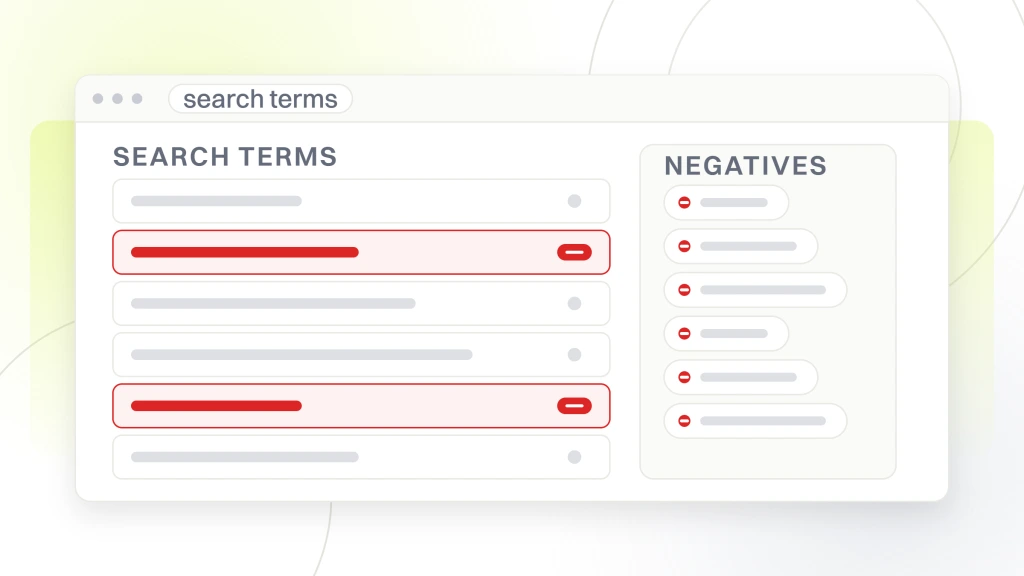
Weekly deliverables inside affordable ppc management
Weekly search term report review with negative keyword additions. Bid tuning on top campaigns by device and geo. Ad copy variant management with 1 test running per ad group. Landing page performance snapshot. Weekly one-page report delivered by Friday afternoon. Weekly deliverables occupy roughly 3 to 5 hours of specialist time. That is the working core of the engagement.
Monthly deliverables inside affordable ppc management
Monthly summary report tying spend to leads and revenue where the data exists. Monthly 20-minute strategy call to plan the next 30 days of tests. Quarterly landing page rebuild if performance signals warrant. Monthly deliverables occupy roughly 3 to 5 hours of specialist plus strategist time. That is enough for real strategic direction without dragging into billable-hours theater. Anything extra sits behind a change order the client approves case by case, which keeps the base retainer honest for both sides. A written scope in a shared doc rules out the mid-quarter drift where a small business owner starts asking for a landing page rebuild inside a search-only retainer. Small scope changes stay small when both sides can point to the doc.
Channel choices for affordable ppc management programs
Affordable programs pick 1 or 2 channels and run them well instead of 5 channels run poorly. Google Search is the default for high-intent bottom-funnel demand. Local Service Ads for home services accounts. Microsoft Ads for B2B accounts that want cheaper clicks. Meta for warm remarketing where the audience already exists. Everything else is optional and usually cut on smaller budgets.
Google Ads plus Local Service Ads is the small business default
Home services accounts see the strongest return from Google Ads plus Local Service Ads together. Google Ads captures search intent across service and emergency keywords. LSA captures booking-ready calls at a lower blended cost. D&F Plumbing ran an omni-channel program layering both plus Meta and OTT, and produced 149% annual call-volume growth across 5 years. That pattern replicates well at smaller scale when the 2 Google channels stay in scope.
Microsoft Ads as a quiet win
Microsoft Ads runs 30 to 50% cheaper per click than Google Ads for many B2B verticals. Adding Microsoft as a parallel channel costs a manager 2 hours per week and often produces 15 to 25% of total leads at a lower blended cost. For affordable programs on B2B accounts, Microsoft is the underrated add-on that pays for itself inside 60 days. Skip it on B2C accounts under $5,000 in monthly spend where the audience overlap is thin.
Metrics that matter inside an affordable ppc management retainer
Reporting suites can display 200 metrics. A working manager watches roughly 10. The rest are noise. The 10 that matter split into 3 groups. Spend efficiency, quality signals, and revenue outcomes. Everything else is decoration. Founders shopping affordable retainers should ask which 10 metrics the manager tracks weekly. Fuzzy answers mean the account probably runs on autopilot.
Six spend and quality metrics
Cost per click, cost per conversion, click-through rate, quality score, search impression share lost to budget, and search impression share lost to rank cover spend efficiency and quality signals. Track these 6 every Monday. Any drift over 15% week-over-week triggers a root-cause pass. Quality score below 6 on a top-spend keyword flags a landing page or ad copy problem worth an afternoon of work.
Four revenue outcomes
Cost per acquisition, return on ad spend, revenue attributed to paid, and cost per qualified lead. These 4 are what a founder pays attention to. A weekly one-line summary keeps the founder oriented without pulling them into every micro-decision. Renewal happens when these 4 stay green over rolling quarters, not when the click-through rate looks pretty on a slide. The Monday one-pager should be readable in 90 seconds, and any month where 2 of the 4 numbers slide 2 weeks in a row triggers a strategy call before the monthly review.
Timeline to see real results from affordable ppc management
Founders arrive at affordable ppc management with wildly different expectations. Some want a 20x return in month 1. Others expect nothing. Real outcomes sit in a narrow window shaped by industry, spend level, and how well conversion tracking is wired up. The bands below reflect roughly 40 accounts we currently manage or have audited in the last 18 months.
What each month typically shows
Month 1 shows setup and tracking work with modest volume changes. Month 2 shows the first real signal as negative keywords compound and Smart Bidding learns. Month 3 is where most accounts hit break-even against the retainer plus ad spend. Months 4 through 6 are where compounding kicks in and cost per acquisition drops meaningfully. Any account expecting a 10x return in week 2 is running on hope rather than math.
Returns by industry inside an affordable band
Home services (plumbing, HVAC, electrical) sees 4x to 7x on ad spend after 6 months on an affordable retainer. Legal (personal injury) sees 3x to 5x with high cost per lead but high closed-case values. Healthcare (dental, med spa) sees 3x to 6x after landing pages get rebuilt. E-commerce depends heavily on product margin. 2x to 4x at the low end, 6x to 10x on high-margin niche products. According to Think with Google paid search benchmarks, disciplined accounts consistently outperform industry averages by 40 to 60% on cost per acquisition.
DIY versus affordable ppc management for small business owners
A founder can run a small Google Ads account under $2,000 per month in 5 to 7 hours a week if they know what to look at. Above $3,000 per month, the account outgrows a founder attention span and starts wasting spend. The break-even point where affordable outsourcing pays for itself lives right around the $3,000 to $5,000 monthly spend mark.
Where DIY still works
DIY works when the founder has a technical bent, the account has 1 campaign with 20 keywords or fewer, and the founder can commit 5 hours per week to the account. Below that threshold, DIY beats a cheap outsourced retainer, since the founder cares more than a $90-an-hour specialist juggling 25 accounts. Above that threshold, DIY starts costing more in wasted spend than an affordable retainer would.
Where affordable outsourcing wins
Affordable outsourcing wins when the account spends over $3,000 per month, has multiple campaigns across service lines, and needs conversion tracking QA that requires a Google Tag Manager pass. A $1,499 affordable retainer at that account size returns $3,000 to $6,000 in freed spend inside 90 days. Our PPC management services team does this work most weeks. The founder gets weekly hygiene without paying for enterprise deliverables, and the compounding effect kicks in around month 3 when the negative keyword lists have matured.
Contract terms that protect the client on affordable ppc management
Contract terms decide whether the client owns the account or the agency does. Ownership is not a premium feature. Every serious agency at every price tier gives the client full ownership of the Google Ads account through an MCC link. Any language keeping the agency in control after termination is a warning, not a discount.
Ownership clauses to require
The contract must give the client ownership of the Google Ads account, the tracking pixels, the ad creative, and the historical data. The MCC link should transfer or terminate on request within 24 hours. Historical performance data should export in machine-readable format on request. Ad creative should belong to the client, not the agency, so the brand voice moves cleanly if the engagement ends.
Exit terms that read fair on both sides
A 30 to 60 day exit clause protects both sides. Kill fees over 1 month of retainer are a warning. Any language that makes the client pay for optimization work already done in the current month is fair. Any language that keeps the client on the hook for future months after termination is not. Read the contract twice, and ask a lawyer if the language is fuzzy. A one-page addendum spelling out ownership and exit terms adds nothing to the fee and saves a lot of pain if the engagement ends.
Making affordable ppc management work for you
Affordable ppc management works when the scope stays disciplined and the 4 protected buckets stay in scope. Weekly search term reviews. Conversion tracking QA. Ad copy testing. Landing page work. Everything else is optional and often cut on smaller budgets. Retainers from $999 to $2,499 per month cover the working core for accounts spending under $10,000 in monthly ad spend, with enterprise programs starting at $4,500 when the scope grows.
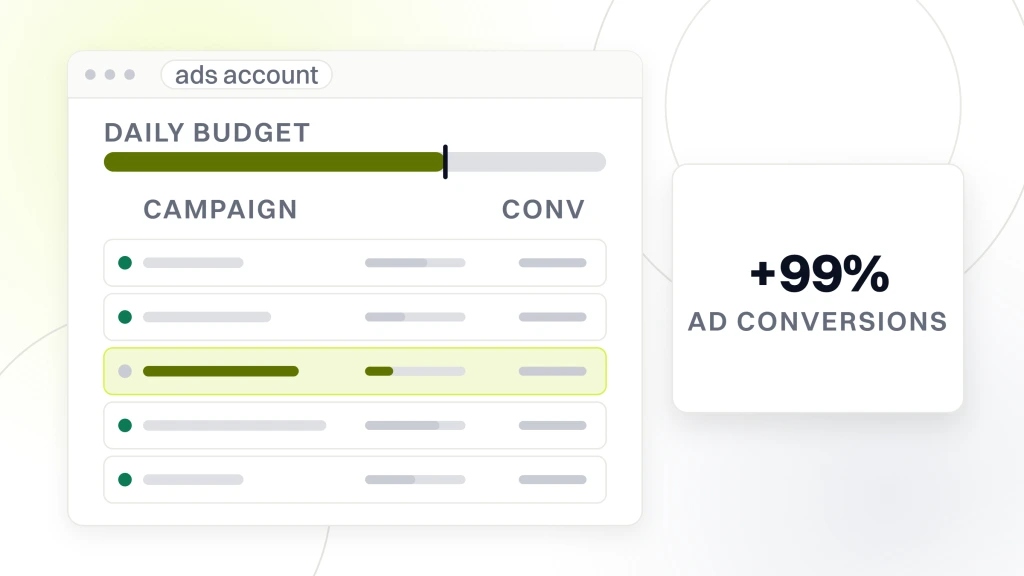
Small business owners tend to overestimate the value of custom dashboards and underestimate the value of weekly hygiene. Flip that math and the retainer pays for itself inside 3 months. Redefine Web offers a fixed-scope PPC management services package priced for small business budgets, a Google-specific Google Ads management services package, and a B2B-focused B2B PPC agency program for mid-market accounts. The trap most small businesses fall into is signing a $199 retainer that sounds like a bargain and losing $4,000 in wasted spend across the next 6 months. A $1,499 retainer that returns $8,000 in freed spend beats a $199 retainer that returns nothing. Every week. Every quarter.
The home services client story is the shortest version of this story. A single-page site, cold PPC campaigns, and no offline conversion tracking, replaced by service-segmented ad groups, verified-review LSAs, and clean tracking on a fixed monthly fee. Ad conversions rose 99% over the 12-month window and cost per lead dropped 67%. Organic users climbed 75% on top of that. No enterprise dashboards, no quarterly business reviews. Just the 4 protected buckets and weekly discipline.
Book a call and we’ll walk through the last 3 affordable retainers we set up, line by line, with the exact scope and the exact numbers each account produced across the first 6 months of running paid ads under a fixed monthly fee. That call is free and takes 20 minutes.